Image
Mar 14, 2006
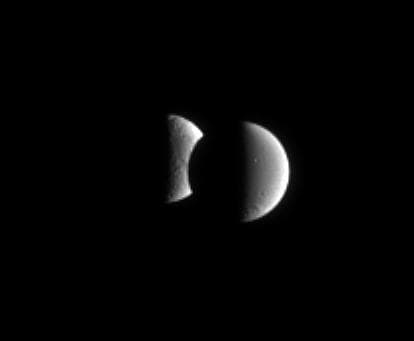
Taking a Bite Out of Tethys
Dione steps in front of Tethys for a few minutes in an occultation, or mutual event. These events occur frequently...
JPL
Image
Aug 31, 2006
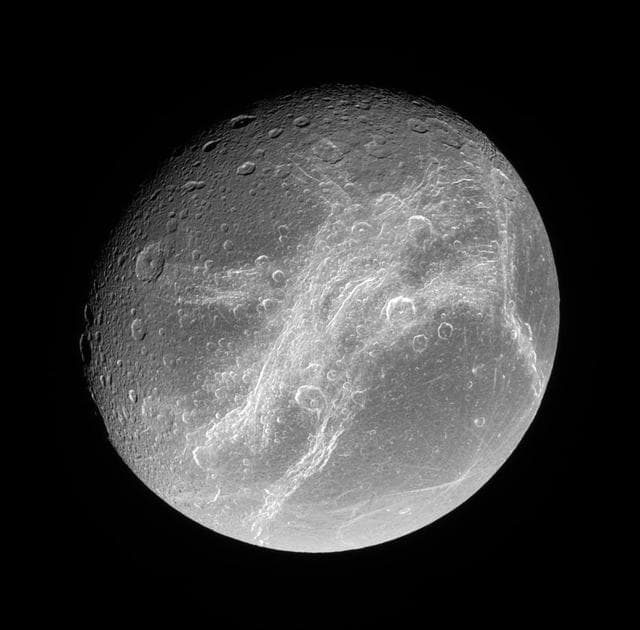
Incredible Cliffs
This splendid view showcases Dione tortured complex of bright cliffs. At lower right is the feature called...
JPL
Image
Feb 20, 2017
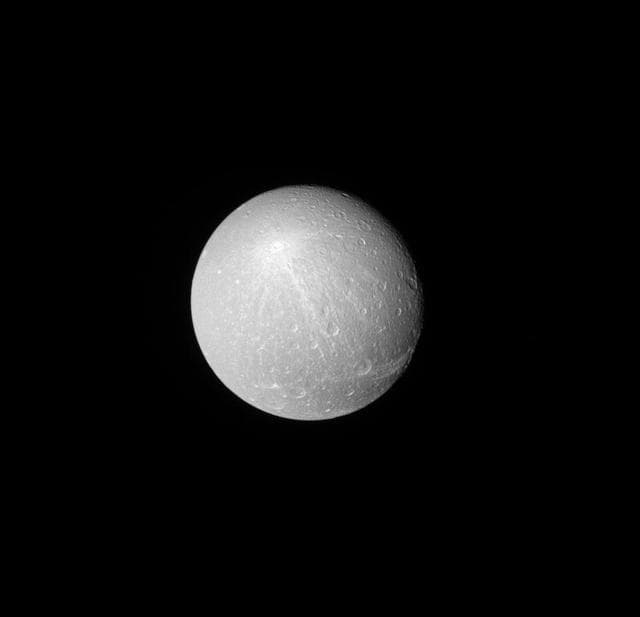
Rays of Creusa
When viewed from a distance with the sun directly behind NASA Cassini, the larger, brighter craters really stand out...
JPL
Image
Dec 20, 2004
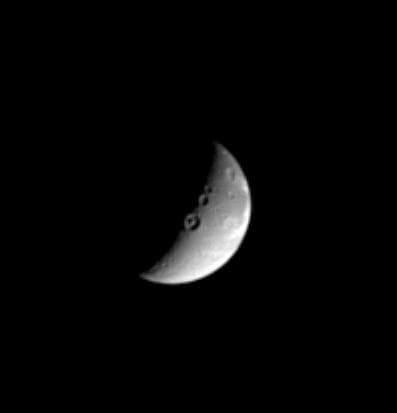
Craters 'Twixt Day and Night
Three sizeable impact craters, including one with a marked central peak, lie along the line that divides day and...
JPL
Image
Jan 30, 2012
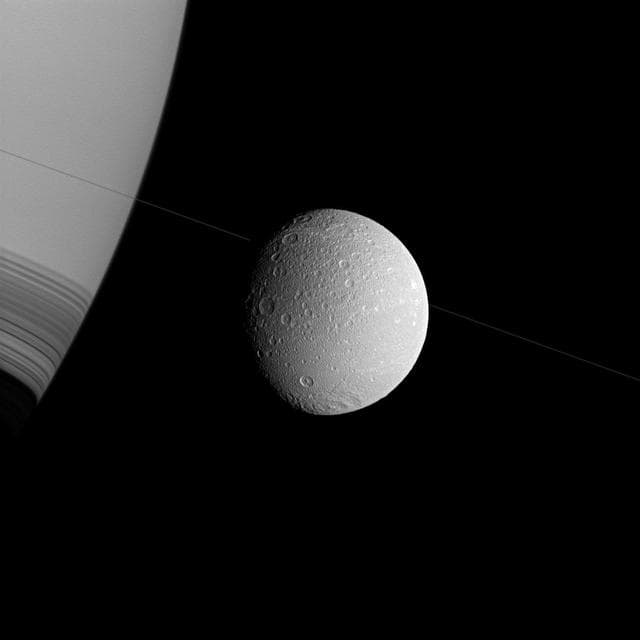
Dione on a Diagonal
Saturn and Dione appear askew in this view from NASA Cassini spacecraft, with the north poles rotated to the right,...
JPL
Image
Dec 22, 2011
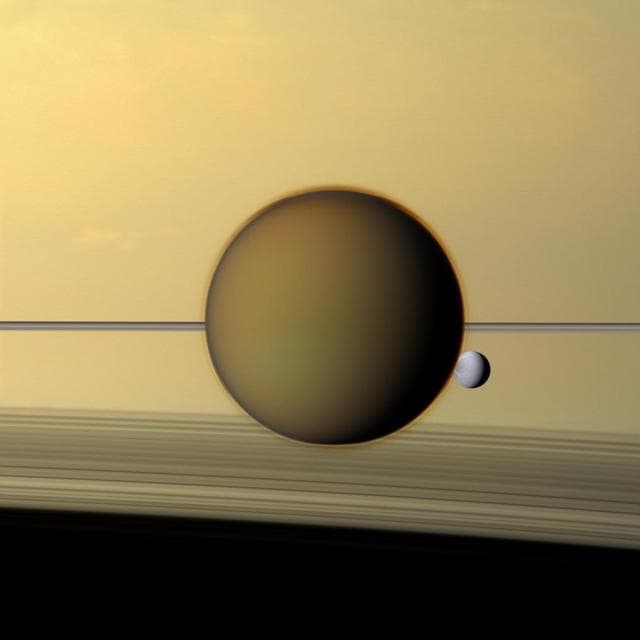
Titan and Dione
Saturn fourth-largest moon, Dione, can be seen through the haze of the planet largest moon, Titan, in this view of...
JPL
Image
Dec 22, 2005
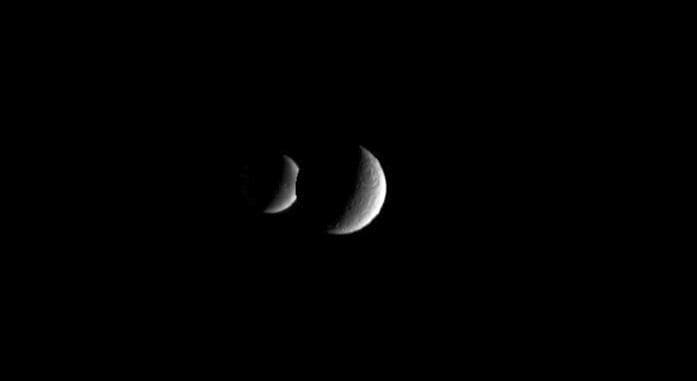
Rhea Eclipses Dione Animation
This animation show two crescent moons dance around Saturn as far-off Dione slips behind its sibling moon Rhea
JPL
Image
May 3, 2010
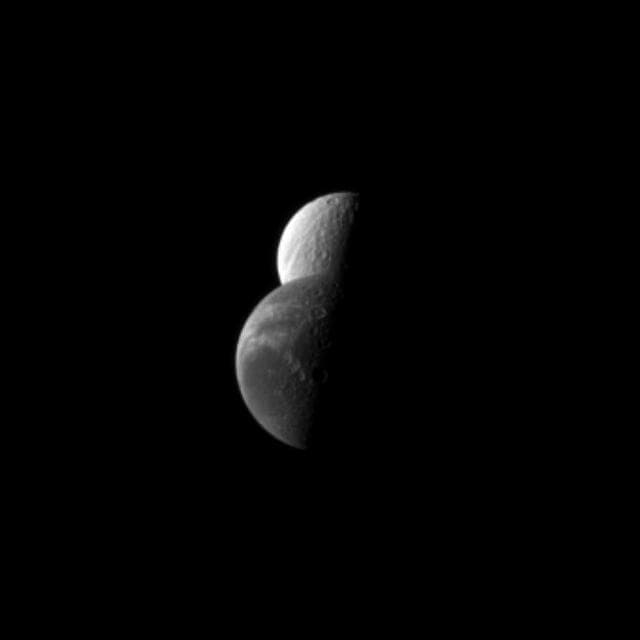
Dione Sliding By Tethys
Saturn moon Dione passes by the moon Tethys in this NASA Cassini spacecraft depiction of a mutual event in which one...
JPL
Image
Mar 5, 2010
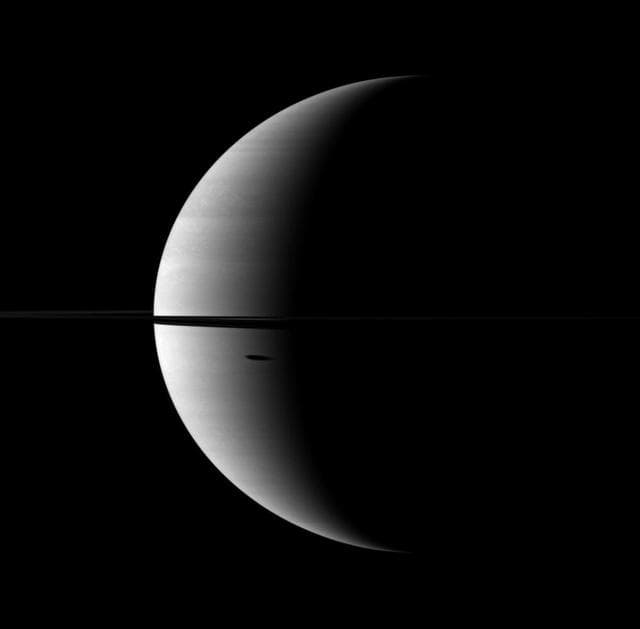
Stretched Shadow
The shadow of Saturn moon Dione, cast onto the planet, is elongated in dramatic fashion in this image captured by...
JPL
Image
Sep 24, 2010
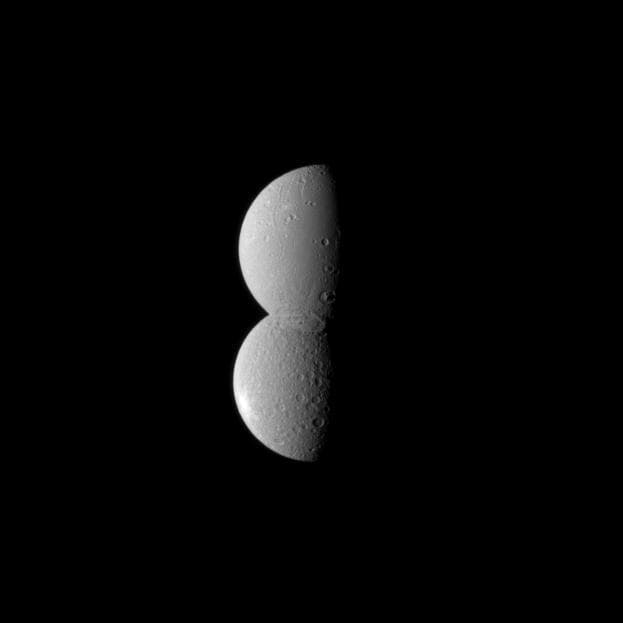
Conjoined Moons
Looking like half of a figure eight, two of Saturn moons appear conjoined in this image from NASA Cassini...
JPL
Image
Feb 12, 2010
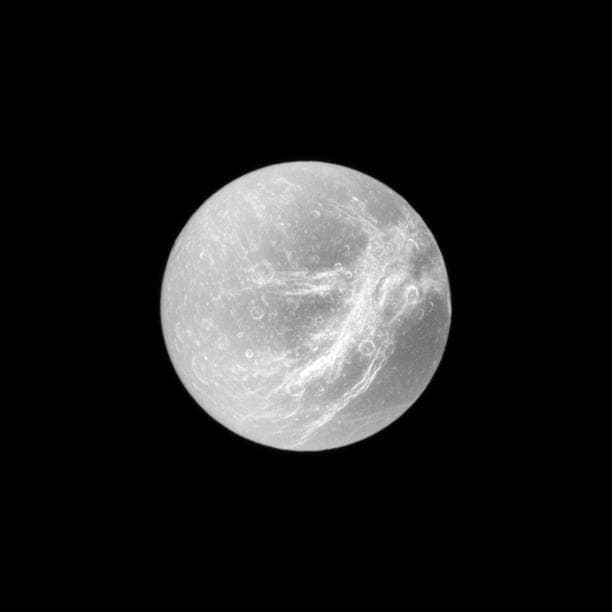
Wispy Marble
Appearing like the swirls of marble, the wispy terrain of Saturn moon Dione is captured by NASA Cassini spacecraft...
JPL
Image
Jan 17, 2007
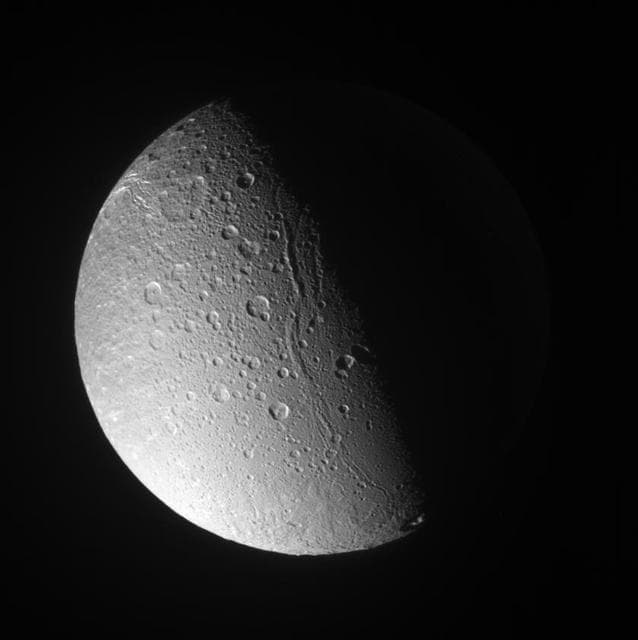
Shadows on Ice
Canyons and mountain peaks snake along the terminator on the crater-covered, icy moon Dione. With the Sun at a low...
JPL
Image
Mar 22, 2010
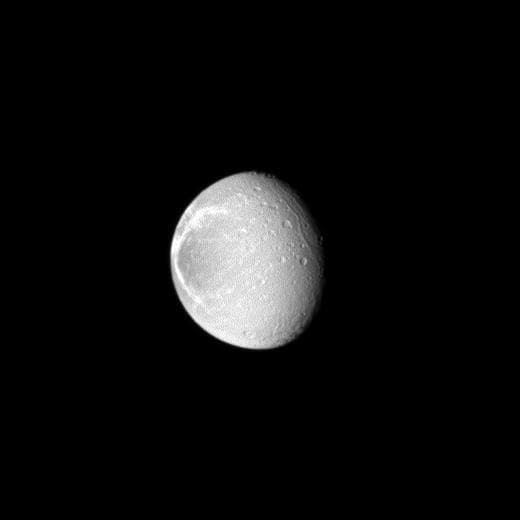
High Contrast Wisps
Sunlight highlights the bright, wispy features on the trailing hemisphere of Saturn moon Dione as seen by NASA...
JPL
Image
May 9, 2006
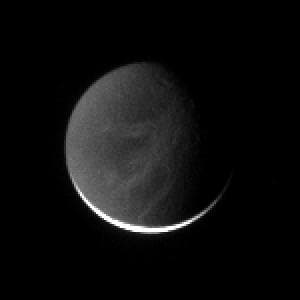
Bright Fractures in the Dark
The wispy fractured terrain on Dione is illuminated here by Saturnshine -- dim reflected light from the planet
JPL
Image
Dec 16, 2009
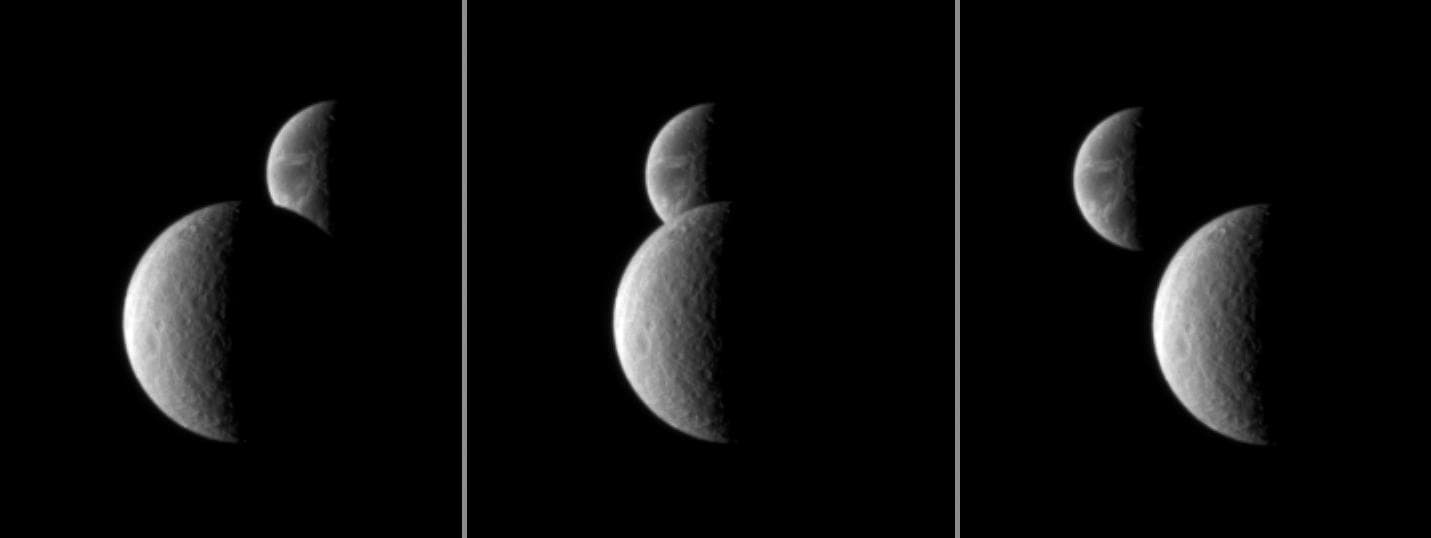
Dione Beyond Rhea
Saturn moon Rhea passes in front of Dione, as seen from NASA Cassini spacecraft. These images are part of a mutual...
JPL

Image
Jan 5, 2006
Light Seconds from Dione
After journeying a bit more than an hour across the Solar System, bright sunlight reflects off the gleaming icy...
JPL
Image
Jan 29, 1996
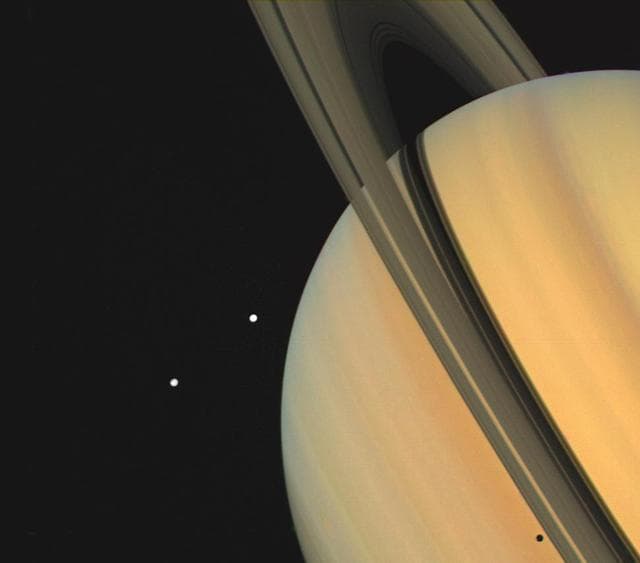
Saturn With Tethys and Dione
Saturn and two of its moons, Tethys above and Dione, were photographed by Voyager 1 on November 3, 1980, from 13...
JPL
Image
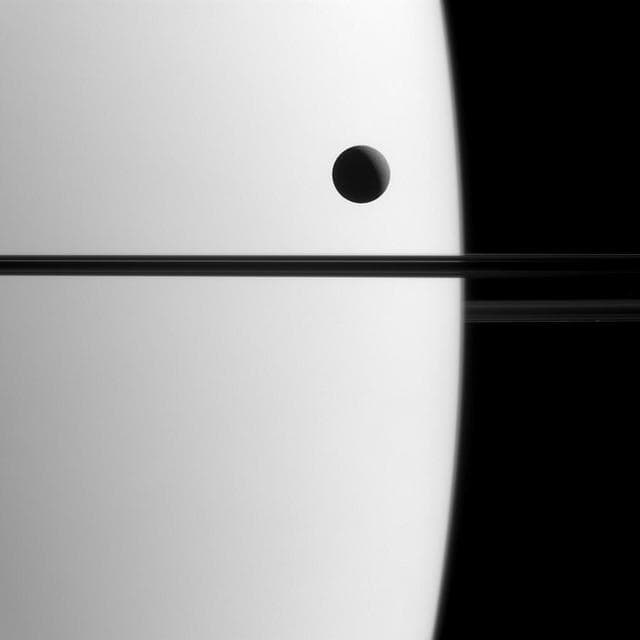
Aug 31, 2015
Entranced by a Transit
Saturn's moon Dione crosses the face of the giant planet in this view, a phenomenon astronomers call a transit....
JPL
Image
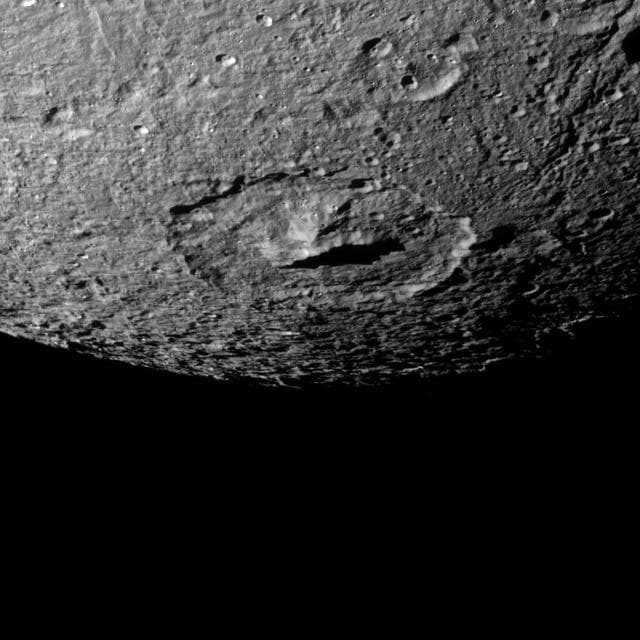
Dec 6, 2010
Eyeing Erulus Crater
NASA Cassini spacecraft snapped this shot of cratered Dione as it flew by the Saturnian moon on Oct. 17, 2010. The...
JPL
Image
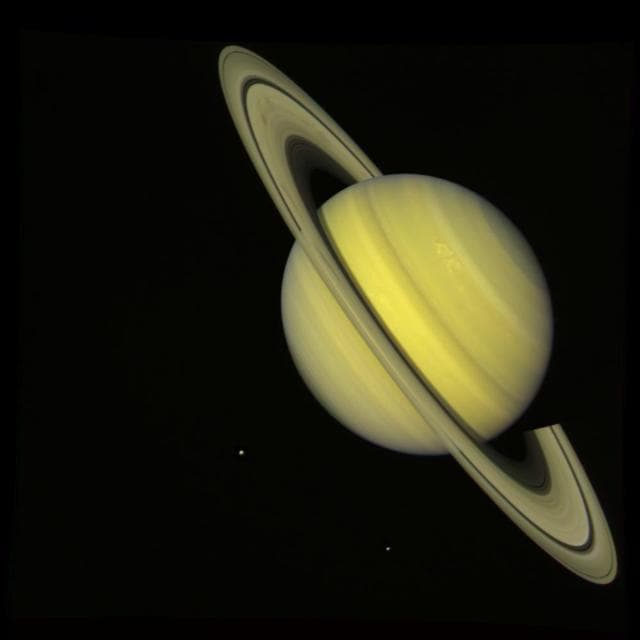
Jan 29, 1996
Saturn With Rhea and Dione True Color
NASA Voyager 2 took this true color photograph of Saturn on July 21, 1981. The moons Rhea and Dione appear as blue...
JPL
Image
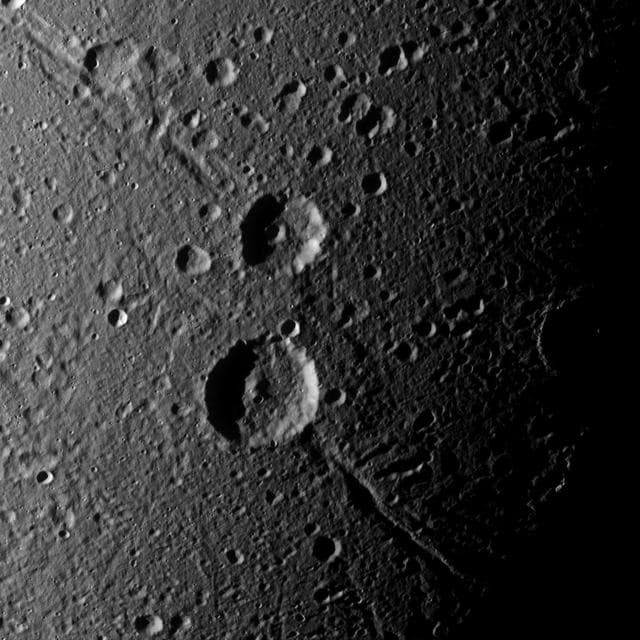
Mar 21, 2016
Helorus in Half-light
Cassini captures a crater duo Italus on ancient trough called Petelia Fossae, and Caieta, atop Helorus Fossa on...
JPL
Image
Sep 7, 2015
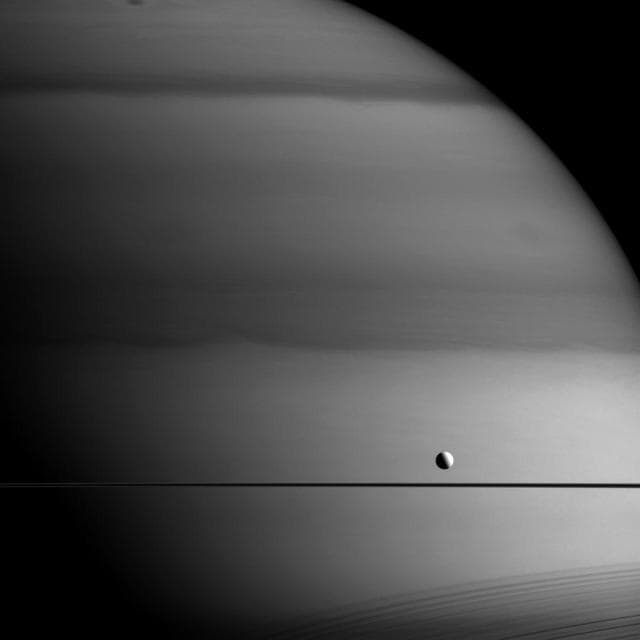
Methane Painting
Why does Saturn look like it's been painted with a dark brush in this infrared image, but Dione looks untouched?...
JPL
Image
Aug 3, 2015
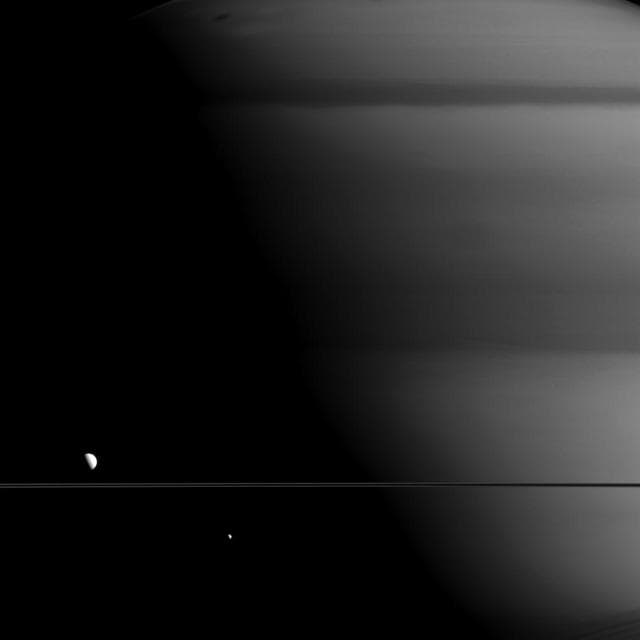
Looking Up to the Giant
Thanks to the illumination angle, Mimas (right) and Dione (left) appear to be staring up at a giant Saturn looming...
JPL
Image
Jun 6, 2011
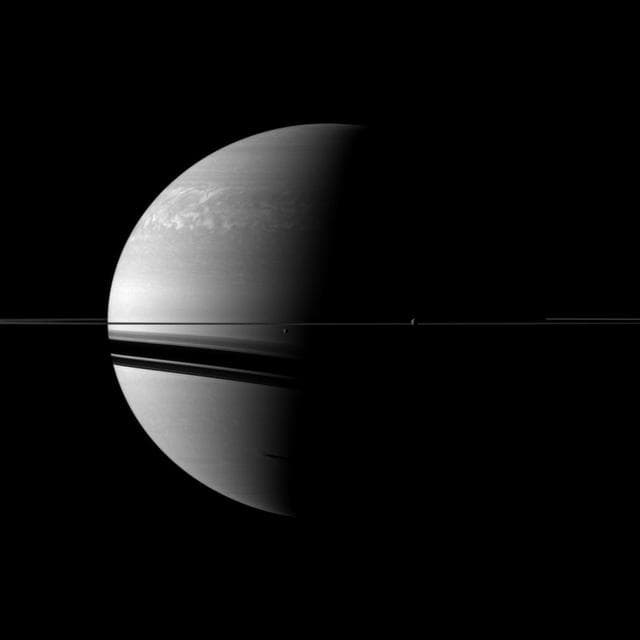
Dwarfed by Gas Giant
Two moons, Rhea and Dione, join the planet and its rings in this view from NASA Cassini spacecraft. Rhea and Dione...
JPL