CosmosObservatory
Explore
Solar System
Live
Learn
Tools
About
Cosmos Observatory
ToolsAbout
Cosmos Observatory

Explore the universe through NASA data, real-time ISS tracking, Mars rover imagery, asteroid monitoring, and comprehensive space encyclopedia. Your gateway to the cosmos.

Explore

  • APOD
  • Mars Rovers
  • Earth Imagery
  • NASA Gallery
  • ISS Tracker

Data

  • Asteroids
  • Solar System
  • Exoplanets
  • Space Weather
  • Launches

Tools

  • Glossary
  • News
  • Calculators

Legal

  • About
  • Privacy Policy
  • Terms of Use
  • Space Tools
  • Contact

Stay updated with the cosmos

Get weekly digests of APOD highlights, upcoming launches, and space events.

© 2026 Cosmos Observatory. All rights reserved. Built with for space enthusiasts.

This website is not affiliated with, maintained, authorized, endorsed by, or in any way officially connected with NASA or any of its subsidiaries or affiliates. All NASA imagery is in the public domain unless otherwise noted. Data sourced from NASA Open APIs, Launch Library 2, and other open data services.

NASA Gallery

Explore NASA's vast collection of space images, videos, and audio from missions past and present.

  1. Home
  2. /
  3. NASA Gallery

NASA's Image and Video Library: A Visual Archive of Space Exploration

NASA's Image and Video Library is one of the most comprehensive public archives of space imagery in the world, containing over 140,000 images, videos, and audio recordings spanning more than six decades of space exploration. From the earliest Mercury and Gemini missions through the Apollo Moon landings, the Space Shuttle era, and today's cutting-edge observations from the James Webb Space Telescope, this collection documents humanity's journey into the cosmos.

The library includes imagery from diverse sources: telescopes like Hubble and Webb that capture deep-space nebulae, galaxies, and exoplanets; planetary missions like the Mars rovers ( browse Mars photos) and Cassini at Saturn; Earth observation satellites ( see EPIC imagery); astronaut photography from the ISS; and documentation of rocket launches, spacecraft assembly, and ground testing. Most NASA images are in the public domain and free to download at full resolution for educational, editorial, and personal use.

Use the search bar above to find specific subjects — try queries like "Apollo 11," "Hubble Deep Field," "Mars surface," or "astronaut EVA." You can also filter by media type (image, video, or audio). For a daily curated experience, visit the Astronomy Picture of the Day.

Showing results for "Leading"

6,872 results found - Page 64 of 287

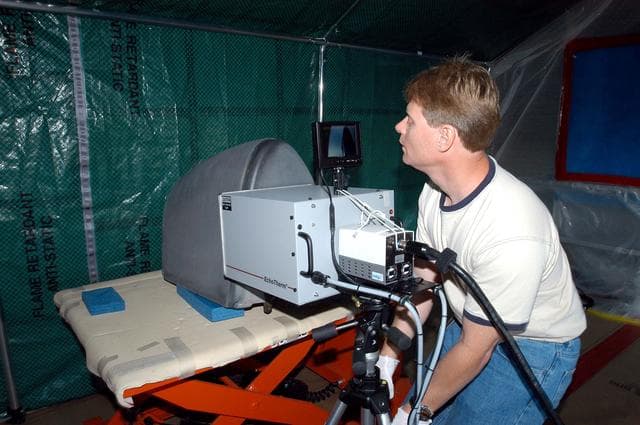
NASA image: KENNEDY SPACE CENTER, FLA. -  Jim Landy, NDE specialist with United Space Alliance (USA), examines a Reinforced Carbon Carbon panel using flash thermography.  A relatively new procedure at KSC, thermography uses high intensity light to heat areas of the panels. The panels are then immediately scanned with an infrared camera. As the panels cool, any internal flaws are revealed. The gray carbon composite RCC panels are attached to the leading edge of the wing of the orbiters.  They have sufficient strength to withstand the aerodynamic forces experienced during launch and reentry, which can reach as high as 800 pounds per square foot.  The operating range of RCC is from minus 250º F to about 3,000º F, the temperature produced by friction with the atmosphere during reentry.  The panels will be installed on the orbiter Discovery, designated for the first Return to Flight mission, STS-114.
Image
Mar 10, 2004

KENNEDY SPACE CENTER, FLA. - Jim Landy, NDE specialist with United Space Alliance (USA), examines a Reinforced Carbon Carbon panel using flash thermography. A relatively new procedure at KSC, thermography uses high intensity light to heat areas of the panels. The panels are then immediately scanned with an infrared camera. As the panels cool, any internal flaws are revealed. The gray carbon composite RCC panels are attached to the leading edge of the wing of the orbiters. They have sufficient strength to withstand the aerodynamic forces experienced during launch and reentry, which can reach as high as 800 pounds per square foot. The operating range of RCC is from minus 250º F to about 3,000º F, the temperature produced by friction with the atmosphere during reentry. The panels will be installed on the orbiter Discovery, designated for the first Return to Flight mission, STS-114.

KENNEDY SPACE CENTER, FLA. - Jim Landy, NDE specialist with United Space Alliance (USA), examines a Reinforced...

KSC
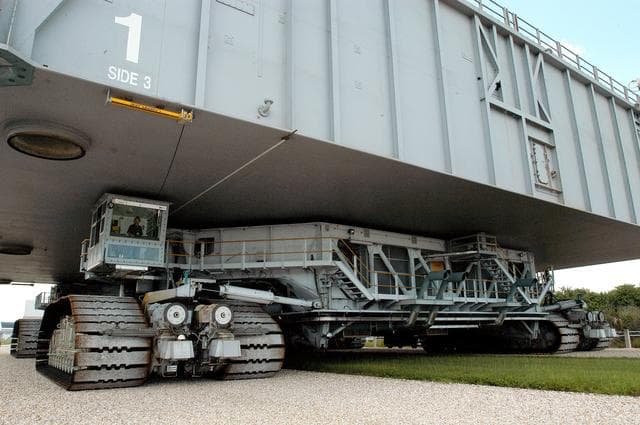
NASA image: KENNEDY SPACE CENTER, FLA.  -  A closeup of crawler-transporter (CT) number 2 shows the cab (left, above the tracks) that recently underwent modifications.  The CT is transporting a Mobile Launch Platform (MLP) on a test run to the pad.  The CT moves Space Shuttle vehicles, situated on the MLP, between the VAB and launch pad.  Moving on four double-tracked crawlers, the CT uses a laser guidance system and a leveling system for the journey that keeps the top of a Space Shuttle vertical within plus- or minus-10 minutes of arc.  The system enables the CT-MLP-Shuttle to negotiate the ramp leading to the launch pads and keep the load level.  Unloaded, the CT weighs 6 million pounds.  Seen on top of the MLP are two tail service masts that support the fluid, gas and electrical requirements of the orbiter’s liquid oxygen and liquid hydrogen aft umbilicals.
Image
Aug 18, 2003

KENNEDY SPACE CENTER, FLA. - A closeup of crawler-transporter (CT) number 2 shows the cab (left, above the tracks) that recently underwent modifications. The CT is transporting a Mobile Launch Platform (MLP) on a test run to the pad. The CT moves Space Shuttle vehicles, situated on the MLP, between the VAB and launch pad. Moving on four double-tracked crawlers, the CT uses a laser guidance system and a leveling system for the journey that keeps the top of a Space Shuttle vertical within plus- or minus-10 minutes of arc. The system enables the CT-MLP-Shuttle to negotiate the ramp leading to the launch pads and keep the load level. Unloaded, the CT weighs 6 million pounds. Seen on top of the MLP are two tail service masts that support the fluid, gas and electrical requirements of the orbiter’s liquid oxygen and liquid hydrogen aft umbilicals.

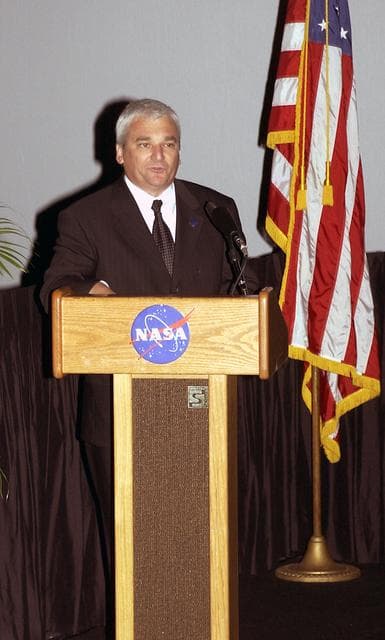
NASA image: KENNEDY SPACE CENTER, FLA.  -  Dryden Flight Research Center Director Kevin Peterson talks about One NASA during the rollout of the Agency initiative at KSC.  The event was held at the IMAX Theater® where NASA leaders discussed One NASA with selected employees.  Explaining how their respective centers contribute to One NASA, along with Peterson, were KSC Director Jim Kennedy, James Jennings,  NASA’s associate deputy administrator for institutions and asset management; Ed Weiler, associate administrator for Space Science; Kevin Peterson, Dryden Flight Research Center director; incoming KSC Deputy Director Woodrow Whitlow; and implementation team lead Johnny Stevenson.   Glenn Research Center Director Dr. Julian Earls gave a motivational speech during the luncheon held at the Visitor Complex Debus Conference Center.
Image
Aug 20, 2003

KENNEDY SPACE CENTER, FLA. - Dryden Flight Research Center Director Kevin Peterson talks about One NASA during the rollout of the Agency initiative at KSC. The event was held at the IMAX Theater® where NASA leaders discussed One NASA with selected employees. Explaining how their respective centers contribute to One NASA, along with Peterson, were KSC Director Jim Kennedy, James Jennings, NASA’s associate deputy administrator for institutions and asset management; Ed Weiler, associate administrator for Space Science; Kevin Peterson, Dryden Flight Research Center director; incoming KSC Deputy Director Woodrow Whitlow; and implementation team lead Johnny Stevenson. Glenn Research Center Director Dr. Julian Earls gave a motivational speech during the luncheon held at the Visitor Complex Debus Conference Center.

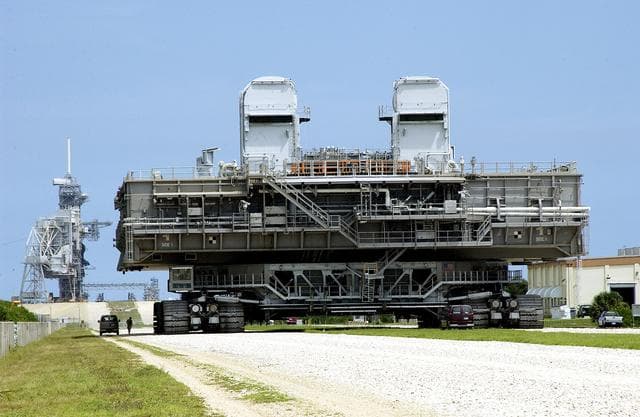
NASA image: KENNEDY SPACE CENTER, FLA.  -   Crawler-transporter (CT) number 2 nears the launch pad with a Mobile Launcher Platform (MLP) on top.  After recent modifications to the cab and muffler system, the CT was taken on a test run.   The CT moves Space Shuttle vehicles, situated on the MLP, between the VAB and launch pad.  Moving on four double-tracked crawlers, the CT uses a laser guidance system and a leveling system for the journey that keeps the top of a Space Shuttle vertical within plus- or minus-10 minutes of arc.  The system enables the CT-MLP-Shuttle to negotiate the ramp leading to the launch pads and keep the load level.  Unloaded, the CT weighs 6 million pounds.  Seen on top of the MLP are two tail service masts that support the fluid, gas and electrical requirements of the orbiter’s liquid oxygen and liquid hydrogen aft umbilicals.
Image
Aug 19, 2003

KENNEDY SPACE CENTER, FLA. - Crawler-transporter (CT) number 2 nears the launch pad with a Mobile Launcher Platform (MLP) on top. After recent modifications to the cab and muffler system, the CT was taken on a test run. The CT moves Space Shuttle vehicles, situated on the MLP, between the VAB and launch pad. Moving on four double-tracked crawlers, the CT uses a laser guidance system and a leveling system for the journey that keeps the top of a Space Shuttle vertical within plus- or minus-10 minutes of arc. The system enables the CT-MLP-Shuttle to negotiate the ramp leading to the launch pads and keep the load level. Unloaded, the CT weighs 6 million pounds. Seen on top of the MLP are two tail service masts that support the fluid, gas and electrical requirements of the orbiter’s liquid oxygen and liquid hydrogen aft umbilicals.

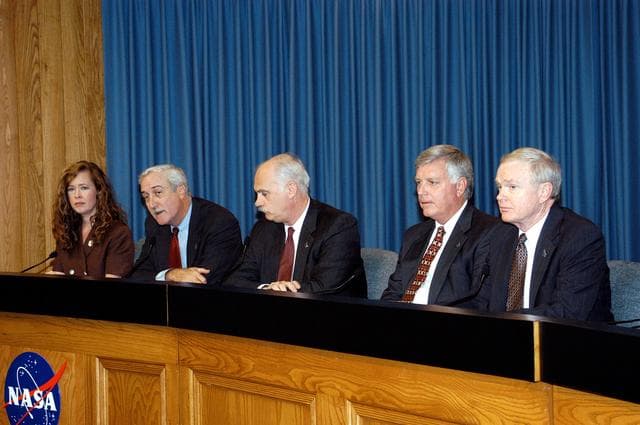
NASA image: KENNEDY SPACE CENTER, FLA. -  NASA officials participate in a press conference in KSC's Press Site Auditorium.  From left are KSC Deputy Director of External Relations and Business Development Lisa Malone, NASA Administrator Sean O'Keefe, NASA Associate Administrator for Space Flight William F. Readdy, KSC Deputy Director James W. Kennedy, and KSC Director Roy D. Bridges. The press conference followed the official announcement of James W. Kennedy as the next director of the NASA Kennedy Space Center (KSC) in Florida. Kennedy has served as KSC's deputy director since November 2002. He will succeed Bridges, who was appointed on June 13 to lead NASA's Langley Research Center, Hampton, Va.
Image
Jun 26, 2003

KENNEDY SPACE CENTER, FLA. - NASA officials participate in a press conference in KSC's Press Site Auditorium. From left are KSC Deputy Director of External Relations and Business Development Lisa Malone, NASA Administrator Sean O'Keefe, NASA Associate Administrator for Space Flight William F. Readdy, KSC Deputy Director James W. Kennedy, and KSC Director Roy D. Bridges. The press conference followed the official announcement of James W. Kennedy as the next director of the NASA Kennedy Space Center (KSC) in Florida. Kennedy has served as KSC's deputy director since November 2002. He will succeed Bridges, who was appointed on June 13 to lead NASA's Langley Research Center, Hampton, Va.

KENNEDY SPACE CENTER, FLA. - NASA officials participate in a press conference in KSC's Press Site Auditorium. From...
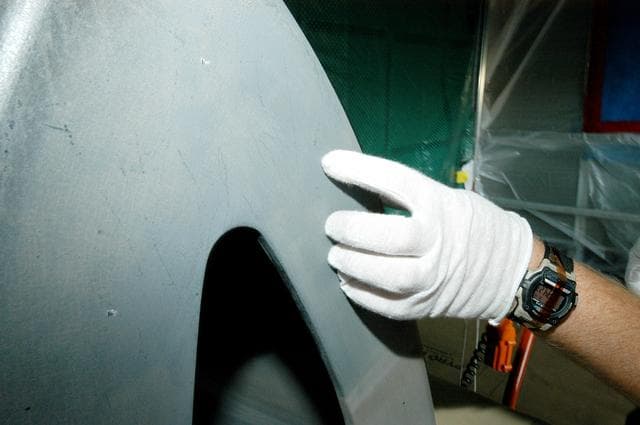
NASA image: KENNEDY SPACE CENTER, FLA. -  Jim Landy, NDE specialist with USA, points to   an area of a Reinforced Carbon Carbon panel just examined using flash thermography. A relatively new procedure at KSC, thermography uses high intensity light to heat areas of the panels. The panels are then immediately scanned with an infrared camera. As the panels cool, any internal flaws are revealed. The gray carbon composite RCC panels are attached to the leading edge of the wing of the orbiters.  They have sufficient strength to withstand the aerodynamic forces experienced during launch and reentry, which can reach as high as 800 pounds per square foot.  The operating range of RCC is from minus 250º F to about 3,000º F, the temperature produced by friction with the atmosphere during reentry.  The panels will be installed on the orbiter Discovery, designated  for the first Return to Flight mission, STS-114.
Image
Mar 10, 2004

KENNEDY SPACE CENTER, FLA. - Jim Landy, NDE specialist with USA, points to an area of a Reinforced Carbon Carbon panel just examined using flash thermography. A relatively new procedure at KSC, thermography uses high intensity light to heat areas of the panels. The panels are then immediately scanned with an infrared camera. As the panels cool, any internal flaws are revealed. The gray carbon composite RCC panels are attached to the leading edge of the wing of the orbiters. They have sufficient strength to withstand the aerodynamic forces experienced during launch and reentry, which can reach as high as 800 pounds per square foot. The operating range of RCC is from minus 250º F to about 3,000º F, the temperature produced by friction with the atmosphere during reentry. The panels will be installed on the orbiter Discovery, designated for the first Return to Flight mission, STS-114.
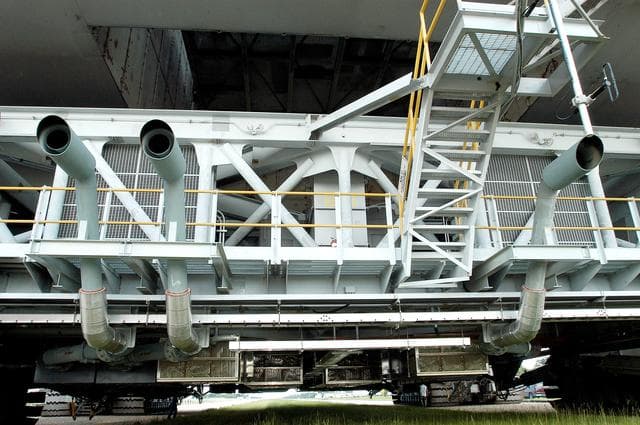
NASA image: KENNEDY SPACE CENTER, FLA.  -  A closeup of crawler-transportation (CT) number 2 shows the new muffler system on the vehicle.  The CT also recently underwent modifications to the cab.   The CT is transporting a Mobile Launch Platform (MLP).  The CT moves Space Shuttle vehicles, situated on the MLP, between the VAB and launch pad.  Moving on four double-tracked crawlers, the CT uses a laser guidance system and a leveling system for the journey that keeps the top of a Space Shuttle vertical within plus- or minus-10 minutes of arc.  The system enables the CT-MLP-Shuttle to negotiate the ramp leading to the launch pads and keep the load level.  Unloaded, the CT weighs 6 million pounds.  Seen on top of the MLP are two tail service masts that support the fluid, gas and electrical requirements of the orbiter’s liquid oxygen and liquid hydrogen aft umbilicals.
Image
Aug 18, 2003

KENNEDY SPACE CENTER, FLA. - A closeup of crawler-transportation (CT) number 2 shows the new muffler system on the vehicle. The CT also recently underwent modifications to the cab. The CT is transporting a Mobile Launch Platform (MLP). The CT moves Space Shuttle vehicles, situated on the MLP, between the VAB and launch pad. Moving on four double-tracked crawlers, the CT uses a laser guidance system and a leveling system for the journey that keeps the top of a Space Shuttle vertical within plus- or minus-10 minutes of arc. The system enables the CT-MLP-Shuttle to negotiate the ramp leading to the launch pads and keep the load level. Unloaded, the CT weighs 6 million pounds. Seen on top of the MLP are two tail service masts that support the fluid, gas and electrical requirements of the orbiter’s liquid oxygen and liquid hydrogen aft umbilicals.

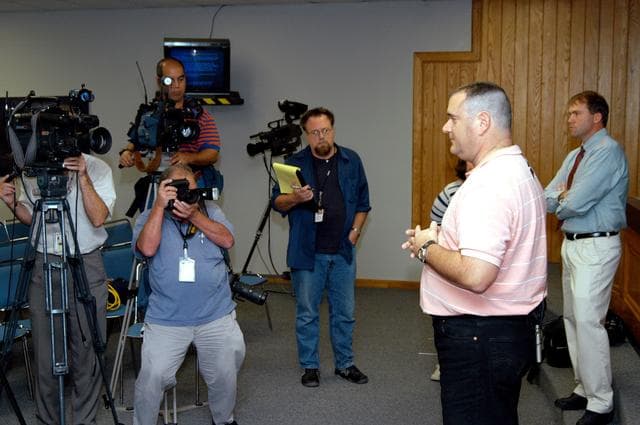
NASA image: KENNEDY SPACE CENTER, FLA. - Armando Oliu, Final Inspection Team lead for the Shuttle program, speaks to reporters about the aid the Image Analysis Lab is giving the FBI in a kidnapping case.  Behind him at right is Mike Rein, External Affairs division chief.  Oliu oversees the image lab that is using an advanced SGI® TP9500 data management system to review the tape of the kidnapping in progress in Sarasota, Fla.  KSC installed the new $3.2 million system in preparation for Return to Flight of the Space Shuttle fleet.  The lab is studying the Sarasota kidnapping video to provide any new information possible to law enforcement officers.  KSC is joining NASA’s Marshall Space Flight Center in Alabama in reviewing the tape.
Image
Feb 4, 2004

KENNEDY SPACE CENTER, FLA. - Armando Oliu, Final Inspection Team lead for the Shuttle program, speaks to reporters about the aid the Image Analysis Lab is giving the FBI in a kidnapping case. Behind him at right is Mike Rein, External Affairs division chief. Oliu oversees the image lab that is using an advanced SGI® TP9500 data management system to review the tape of the kidnapping in progress in Sarasota, Fla. KSC installed the new $3.2 million system in preparation for Return to Flight of the Space Shuttle fleet. The lab is studying the Sarasota kidnapping video to provide any new information possible to law enforcement officers. KSC is joining NASA’s Marshall Space Flight Center in Alabama in reviewing the tape.
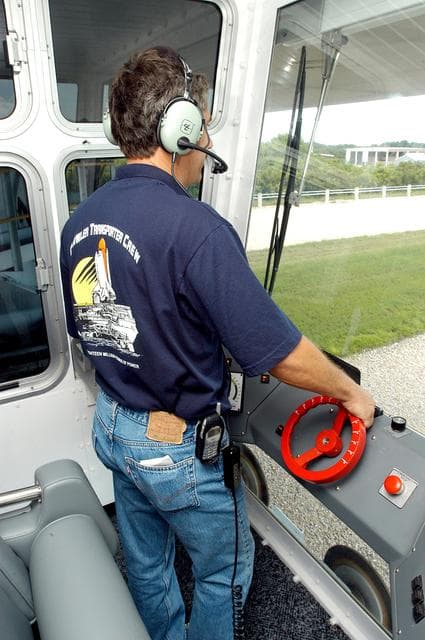
NASA image: KENNEDY SPACE CENTER, FLA.  - Inside the cab of crawler-transporter (CT) number 2, driver Sam Dove, with United Space Alliance, operates the vehicle on a test run to the launch pad.  The CT recently underwent modifications to the cab.   The CT is transporting a Mobile Launch Platform (MLP).  The CT moves Space Shuttle vehicles, situated on the MLP, between the VAB and launch pad.  Moving on four double-tracked crawlers, the CT uses a laser guidance system and a leveling system for the journey that keeps the top of a Space Shuttle vertical within plus- or minus-10 minutes of arc.  The system enables the CT-MLP-Shuttle to negotiate the ramp leading to the launch pads and keep the load level.  Unloaded, the CT weighs 6 million pounds.  Seen on top of the MLP are two tail service masts that support the fluid, gas and electrical requirements of the orbiter’s liquid oxygen and liquid hydrogen aft umbilicals.
Image
Aug 18, 2003

KENNEDY SPACE CENTER, FLA. - Inside the cab of crawler-transporter (CT) number 2, driver Sam Dove, with United Space Alliance, operates the vehicle on a test run to the launch pad. The CT recently underwent modifications to the cab. The CT is transporting a Mobile Launch Platform (MLP). The CT moves Space Shuttle vehicles, situated on the MLP, between the VAB and launch pad. Moving on four double-tracked crawlers, the CT uses a laser guidance system and a leveling system for the journey that keeps the top of a Space Shuttle vertical within plus- or minus-10 minutes of arc. The system enables the CT-MLP-Shuttle to negotiate the ramp leading to the launch pads and keep the load level. Unloaded, the CT weighs 6 million pounds. Seen on top of the MLP are two tail service masts that support the fluid, gas and electrical requirements of the orbiter’s liquid oxygen and liquid hydrogen aft umbilicals.

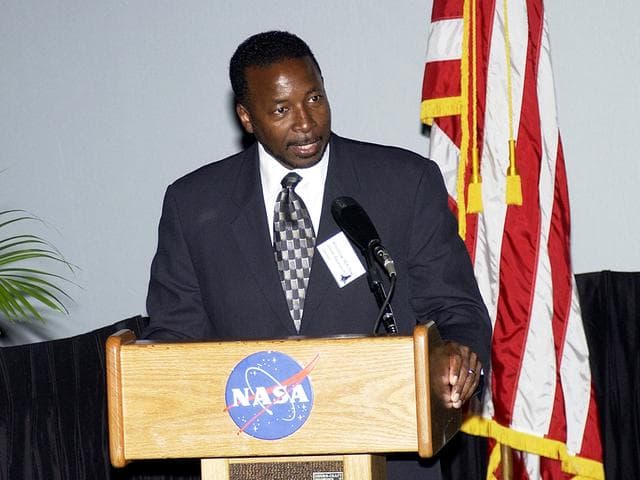
NASA image: KENNEDY SPACE CENTER, FLA.  -  KSC’s incoming  Deputy Director Woodrow Whitlow speaks to employees and guests during the rollout at KSC of the Agency initiative One NASA .   The event was held at the IMAX Theater® where NASA leaders discussed One NASA with selected employees.  Explaining how their respective centers contribute to One NASA, along with Whitlow, were KSC Director Jim Kennedy; James Jennings,  NASA’s associate deputy administrator for institutions and asset management; Ed Weiler, associate administrator for Space Science; Kevin Peterson, Dryden Flight Research Center director; and implementation team lead Johnny Stevenson.   Glenn Research Center Director Dr. Julian Earls gave a motivational speech during the luncheon held at the Visitor Complex Debus Conference Center.
Image
Aug 20, 2003

KENNEDY SPACE CENTER, FLA. - KSC’s incoming Deputy Director Woodrow Whitlow speaks to employees and guests during the rollout at KSC of the Agency initiative One NASA . The event was held at the IMAX Theater® where NASA leaders discussed One NASA with selected employees. Explaining how their respective centers contribute to One NASA, along with Whitlow, were KSC Director Jim Kennedy; James Jennings, NASA’s associate deputy administrator for institutions and asset management; Ed Weiler, associate administrator for Space Science; Kevin Peterson, Dryden Flight Research Center director; and implementation team lead Johnny Stevenson. Glenn Research Center Director Dr. Julian Earls gave a motivational speech during the luncheon held at the Visitor Complex Debus Conference Center.

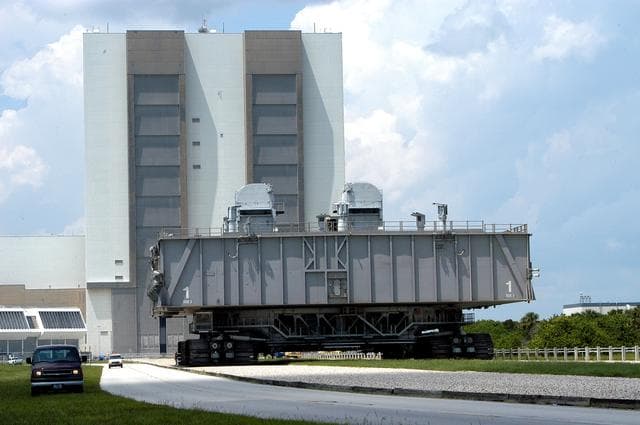
NASA image: KENNEDY SPACE CENTER, FLA.  -  Crawler-transporter (CT) number 2, moves away from the Vehicle Assembly Building with a Mobile Launcher Platform (MLP) on top on a test run to the launch pad.  The CT recently underwent modifications to the cab.  The CT moves Space Shuttle vehicles, situated on the MLP, between the VAB and launch pad.  Moving on four double-tracked crawlers, the CT uses a laser guidance system and a leveling system for the journey that keeps the top of a Space Shuttle vertical within plus- or minus-10 minutes of arc.  The system enables the CT-MLP-Shuttle to negotiate the ramp leading to the launch pads and keep the load level.  Unloaded, the CT weighs 6 million pounds.  Seen on top of the MLP are two tail service masts that support the fluid, gas and electrical requirements of the orbiter’s liquid oxygen and liquid hydrogen aft umbilicals.
Image
Aug 18, 2003

KENNEDY SPACE CENTER, FLA. - Crawler-transporter (CT) number 2, moves away from the Vehicle Assembly Building with a Mobile Launcher Platform (MLP) on top on a test run to the launch pad. The CT recently underwent modifications to the cab. The CT moves Space Shuttle vehicles, situated on the MLP, between the VAB and launch pad. Moving on four double-tracked crawlers, the CT uses a laser guidance system and a leveling system for the journey that keeps the top of a Space Shuttle vertical within plus- or minus-10 minutes of arc. The system enables the CT-MLP-Shuttle to negotiate the ramp leading to the launch pads and keep the load level. Unloaded, the CT weighs 6 million pounds. Seen on top of the MLP are two tail service masts that support the fluid, gas and electrical requirements of the orbiter’s liquid oxygen and liquid hydrogen aft umbilicals.

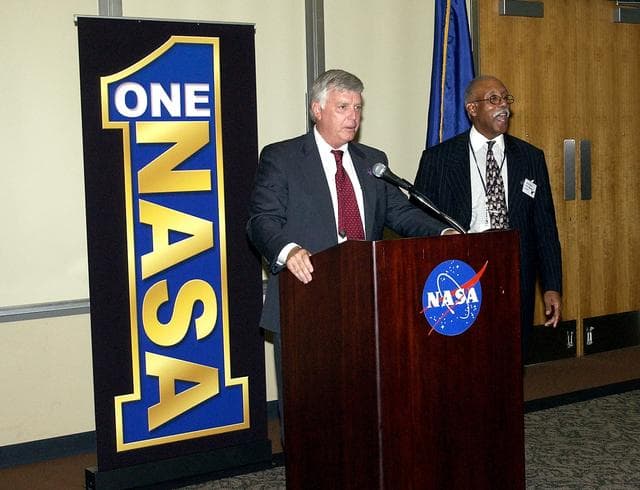
NASA image: KENNEDY SPACE CENTER, FLA.  -   KSC Director Jim Kennedy and Glenn Research Center Director Dr. Julian Earls share the stage during the rollout of the One NASA initiative at KSC.  Earls gave a motivational speech during the luncheon held at the Visitor Complex Debus Conference Center.  The event was held at the IMAX Theater® where NASA leaders discussed One NASA with selected employees.   Explaining how their respective centers contribute to One NASA, along with Kennedy and Earls, were James Jennings,  NASA’s associate deputy administrator for institutions and asset management; Ed Weiler, associate administrator for Space Science; Kevin Peterson, Dryden Flight Research Center director; incoming KSC Deputy Director Woodrow Whitlow; and implementation team lead Johnny Stevenson.
Image
Aug 20, 2003

KENNEDY SPACE CENTER, FLA. - KSC Director Jim Kennedy and Glenn Research Center Director Dr. Julian Earls share the stage during the rollout of the One NASA initiative at KSC. Earls gave a motivational speech during the luncheon held at the Visitor Complex Debus Conference Center. The event was held at the IMAX Theater® where NASA leaders discussed One NASA with selected employees. Explaining how their respective centers contribute to One NASA, along with Kennedy and Earls, were James Jennings, NASA’s associate deputy administrator for institutions and asset management; Ed Weiler, associate administrator for Space Science; Kevin Peterson, Dryden Flight Research Center director; incoming KSC Deputy Director Woodrow Whitlow; and implementation team lead Johnny Stevenson.

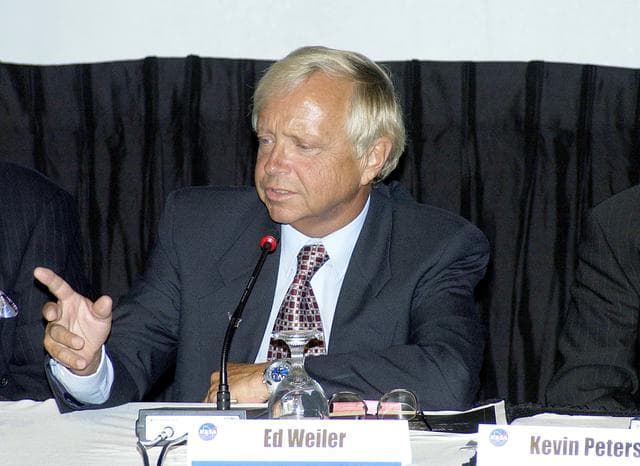
NASA image: KENNEDY SPACE CENTER, FLA.  -  NASA’s Ed Weiler, associate administrator for Space Science, speaks to employees and guests during the rollout at KSC of the Agency initiative One NASA .   The event was held at the IMAX Theater®.  Explaining how their respective centers contribute to One NASA, along with Weiler, were KSC Director Jim Kennedy; James Jennings,  NASA’s associate deputy administrator for institutions and asset management; Kevin Peterson, Dryden Flight Research Center director;  incoming KSC Deputy Director Woodrow Whitlow; and implementation team lead Johnny Stevenson.   Glenn Research Center Director Dr. Julian Earls gave a motivational speech during the luncheon held at the Visitor Complex Debus Conference Center.
Image
Aug 20, 2003

KENNEDY SPACE CENTER, FLA. - NASA’s Ed Weiler, associate administrator for Space Science, speaks to employees and guests during the rollout at KSC of the Agency initiative One NASA . The event was held at the IMAX Theater®. Explaining how their respective centers contribute to One NASA, along with Weiler, were KSC Director Jim Kennedy; James Jennings, NASA’s associate deputy administrator for institutions and asset management; Kevin Peterson, Dryden Flight Research Center director; incoming KSC Deputy Director Woodrow Whitlow; and implementation team lead Johnny Stevenson. Glenn Research Center Director Dr. Julian Earls gave a motivational speech during the luncheon held at the Visitor Complex Debus Conference Center.

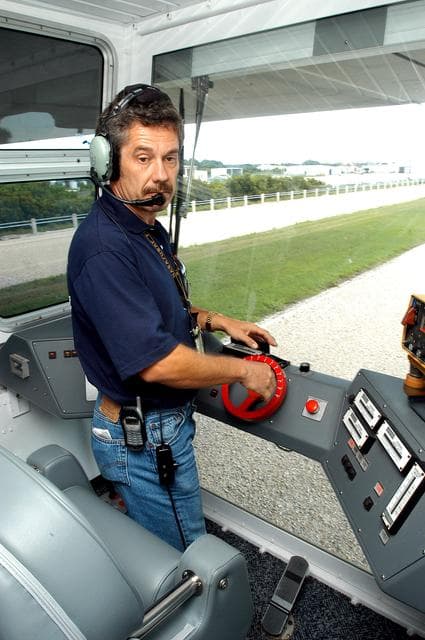
NASA image: KENNEDY SPACE CENTER, FLA.  -  Inside the cab of crawler-transporter (CT) number 2, driver Sam Dove, with United Space Alliance, operates the vehicle on a test run to the launch pad.  The CT recently underwent modifications to the cab.   The CT is transporting a Mobile Launch Platform (MLP).  The CT moves Space Shuttle vehicles, situated on the MLP, between the VAB and launch pad.  Moving on four double-tracked crawlers, the CT uses a laser guidance system and a leveling system for the journey that keeps the top of a Space Shuttle vertical within plus- or minus-10 minutes of arc.  The system enables the CT-MLP-Shuttle to negotiate the ramp leading to the launch pads and keep the load level.  Unloaded, the CT weighs 6 million pounds.  Seen on top of the MLP are two tail service masts that support the fluid, gas and electrical requirements of the orbiter’s liquid oxygen and liquid hydrogen aft umbilicals.
Image
Aug 18, 2003

KENNEDY SPACE CENTER, FLA. - Inside the cab of crawler-transporter (CT) number 2, driver Sam Dove, with United Space Alliance, operates the vehicle on a test run to the launch pad. The CT recently underwent modifications to the cab. The CT is transporting a Mobile Launch Platform (MLP). The CT moves Space Shuttle vehicles, situated on the MLP, between the VAB and launch pad. Moving on four double-tracked crawlers, the CT uses a laser guidance system and a leveling system for the journey that keeps the top of a Space Shuttle vertical within plus- or minus-10 minutes of arc. The system enables the CT-MLP-Shuttle to negotiate the ramp leading to the launch pads and keep the load level. Unloaded, the CT weighs 6 million pounds. Seen on top of the MLP are two tail service masts that support the fluid, gas and electrical requirements of the orbiter’s liquid oxygen and liquid hydrogen aft umbilicals.

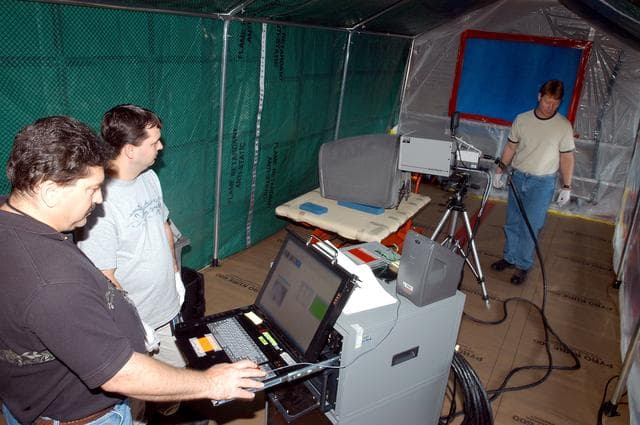
NASA image: KENNEDY SPACE CENTER, FLA. -  Dan Phillips (left) and Donald Nielen, with United Space Alliance, watch a monitor as  Jim Landy, NDE specialist with USA, prepares to examine a Reinforced Carbon Carbon panel (on the table, center) using flash thermography.  A relatively new procedure at KSC, thermography uses high intensity light to heat areas of the panels. The panels are then immediately scanned with an infrared camera. As the panels cool, any internal flaws are revealed. The gray carbon composite RCC panels are attached to the leading edge of the wing of the orbiters.  They have sufficient strength to withstand the aerodynamic forces experienced during launch and reentry, which can reach as high as 800 pounds per square foot.  The operating range of RCC is from minus 250º F to about 3,000º F, the temperature produced by friction with the atmosphere during reentry.  The panels will be installed on the orbiter Discovery, designated  for the first Return to Flight mission, STS-114.
Image
Mar 10, 2004

KENNEDY SPACE CENTER, FLA. - Dan Phillips (left) and Donald Nielen, with United Space Alliance, watch a monitor as Jim Landy, NDE specialist with USA, prepares to examine a Reinforced Carbon Carbon panel (on the table, center) using flash thermography. A relatively new procedure at KSC, thermography uses high intensity light to heat areas of the panels. The panels are then immediately scanned with an infrared camera. As the panels cool, any internal flaws are revealed. The gray carbon composite RCC panels are attached to the leading edge of the wing of the orbiters. They have sufficient strength to withstand the aerodynamic forces experienced during launch and reentry, which can reach as high as 800 pounds per square foot. The operating range of RCC is from minus 250º F to about 3,000º F, the temperature produced by friction with the atmosphere during reentry. The panels will be installed on the orbiter Discovery, designated for the first Return to Flight mission, STS-114.
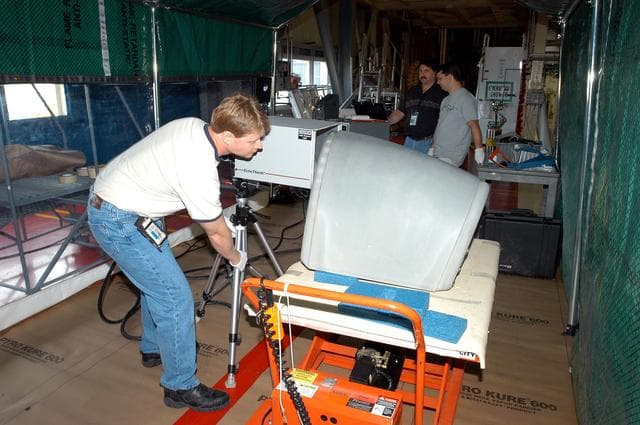
NASA image: KENNEDY SPACE CENTER, FLA. -  Jim Landy, NDE specialist with United Space Alliance, sets up equipment to examine a Reinforced Carbon Carbon panel using flash thermography.  A relatively new procedure at KSC, thermography uses high intensity light to heat areas of the panels. The panels are then immediately scanned with an infrared camera. As the panels cool, any internal flaws are revealed. The gray carbon composite RCC panels are attached to the leading edge of the wing of the orbiters.  They have sufficient strength to withstand the aerodynamic forces experienced during launch and reentry, which can reach as high as 800 pounds per square foot.  The operating range of RCC is from minus 250º F to about 3,000º F, the temperature produced by friction with the atmosphere during reentry.  The panels will be installed on the orbiter Discovery, designated  for the first Return to Flight mission, STS-114.
Image
Mar 10, 2004

KENNEDY SPACE CENTER, FLA. - Jim Landy, NDE specialist with United Space Alliance, sets up equipment to examine a Reinforced Carbon Carbon panel using flash thermography. A relatively new procedure at KSC, thermography uses high intensity light to heat areas of the panels. The panels are then immediately scanned with an infrared camera. As the panels cool, any internal flaws are revealed. The gray carbon composite RCC panels are attached to the leading edge of the wing of the orbiters. They have sufficient strength to withstand the aerodynamic forces experienced during launch and reentry, which can reach as high as 800 pounds per square foot. The operating range of RCC is from minus 250º F to about 3,000º F, the temperature produced by friction with the atmosphere during reentry. The panels will be installed on the orbiter Discovery, designated for the first Return to Flight mission, STS-114.
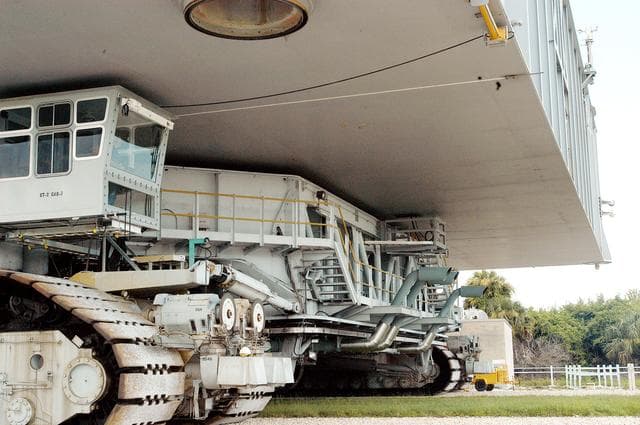
NASA image: KENNEDY SPACE CENTER, FLA.  -  A closeup of crawler-transporter (CT) number 2 shows the cab, at left, that recently underwent modifications.  The CT is transporting a Mobile Launch Platform (MLP) on a test run to the pad.  The CT moves Space Shuttle vehicles, situated on the MLP, between the VAB and launch pad.  Moving on four double-tracked crawlers, the CT uses a laser guidance system and a leveling system for the journey that keeps the top of a Space Shuttle vertical within plus- or minus-10 minutes of arc.  The system enables the CT-MLP-Shuttle to negotiate the ramp leading to the launch pads and keep the load level.  Unloaded, the CT weighs 6 million pounds.  Seen on top of the MLP are two tail service masts that support the fluid, gas and electrical requirements of the orbiter’s liquid oxygen and liquid hydrogen aft umbilicals.
Image
Aug 18, 2003

KENNEDY SPACE CENTER, FLA. - A closeup of crawler-transporter (CT) number 2 shows the cab, at left, that recently underwent modifications. The CT is transporting a Mobile Launch Platform (MLP) on a test run to the pad. The CT moves Space Shuttle vehicles, situated on the MLP, between the VAB and launch pad. Moving on four double-tracked crawlers, the CT uses a laser guidance system and a leveling system for the journey that keeps the top of a Space Shuttle vertical within plus- or minus-10 minutes of arc. The system enables the CT-MLP-Shuttle to negotiate the ramp leading to the launch pads and keep the load level. Unloaded, the CT weighs 6 million pounds. Seen on top of the MLP are two tail service masts that support the fluid, gas and electrical requirements of the orbiter’s liquid oxygen and liquid hydrogen aft umbilicals.

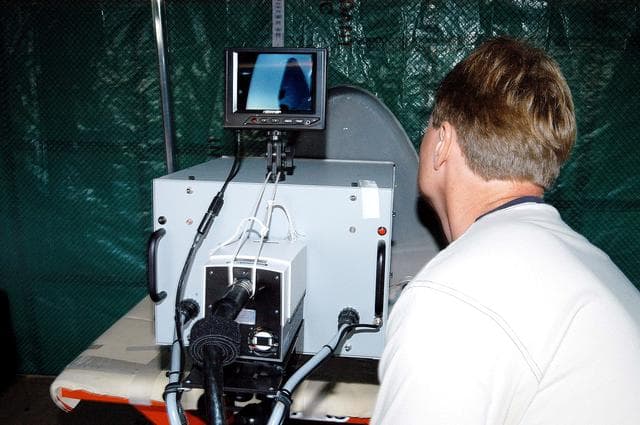
NASA image: KENNEDY SPACE CENTER, FLA. -  Jim Landy, NDE specialist with United Space Alliance (USA), prepares equipment to examine a Reinforced Carbon Carbon panel using flash thermography.  A relatively new procedure at KSC, thermography uses high intensity light to heat areas of the panels. The panels are then immediately scanned with an infrared camera. As the panels cool, any internal flaws are revealed. The gray carbon composite RCC panels are attached to the leading edge of the wing of the orbiters.  They have sufficient strength to withstand the aerodynamic forces experienced during launch and reentry, which can reach as high as 800 pounds per square foot.  The operating range of RCC is from minus 250º F to about 3,000º F, the temperature produced by friction with the atmosphere during reentry. The panels will be installed on the orbiter Discovery, designated for the first Return to Flight mission, STS-114.
Image
Mar 10, 2004

KENNEDY SPACE CENTER, FLA. - Jim Landy, NDE specialist with United Space Alliance (USA), prepares equipment to examine a Reinforced Carbon Carbon panel using flash thermography. A relatively new procedure at KSC, thermography uses high intensity light to heat areas of the panels. The panels are then immediately scanned with an infrared camera. As the panels cool, any internal flaws are revealed. The gray carbon composite RCC panels are attached to the leading edge of the wing of the orbiters. They have sufficient strength to withstand the aerodynamic forces experienced during launch and reentry, which can reach as high as 800 pounds per square foot. The operating range of RCC is from minus 250º F to about 3,000º F, the temperature produced by friction with the atmosphere during reentry. The panels will be installed on the orbiter Discovery, designated for the first Return to Flight mission, STS-114.

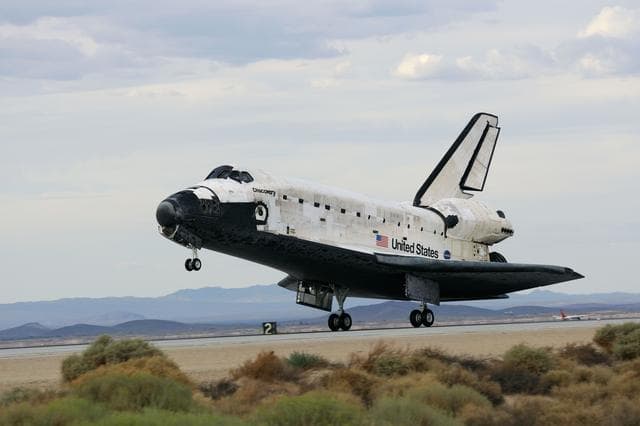
NASA image: sts128-s-046
Image
Sep 11, 2009

sts128-s-046

STS128-S-046 (11 Sept. 2009) --- Space Shuttle Discovery?s main landing gear touches down at NASA's Dryden Flight...

JSC
NASA image: SpaceX Demo-1 Postlaunch News Conference
Image
Mar 2, 2019

SpaceX Demo-1 Postlaunch News Conference

In Kennedy Space Center’s Press Site auditorium, agency and industry leaders speak to members of the media during a...

KSC
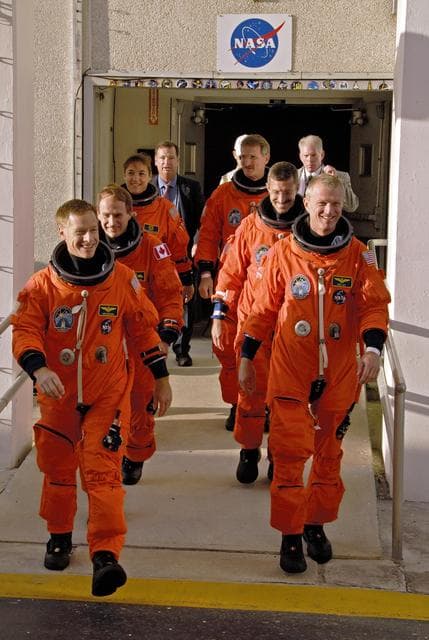
NASA image: KSC-06pd1815
Image
Aug 10, 2006

KSC-06pd1815

KENNEDY SPACE CENTER, FLA. - The STS-115 crew walks out of the Operations and Checkout Building to head for Launch...

KSC
NASA image: jsc2020m001435_ISS_20th_Anniversary_Panel_ISS_and_Beyond
Video
Dec 29, 2020

jsc2020m001435_ISS_20th_Anniversary_Panel_ISS_and_Beyond

International Space Station 20th Anniversary Panel: The International Space Station and Beyond The International...

JSC
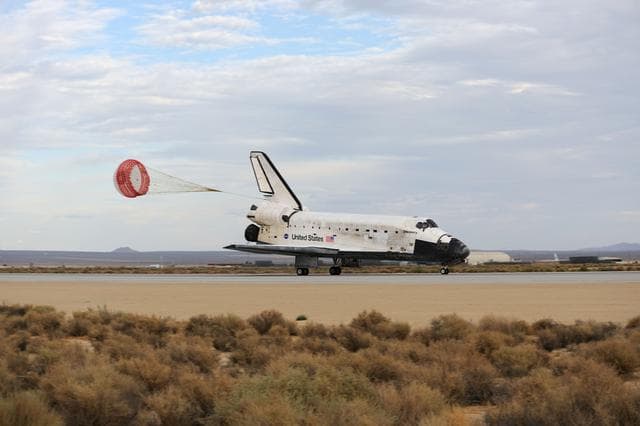
NASA image: sts128-s-048
Image
Sep 11, 2009

sts128-s-048

STS128-S-048 (11 Sept. 2009) --- With its drag chute deployed, Space Shuttle Discovery slows to a stop after landing...

JSC
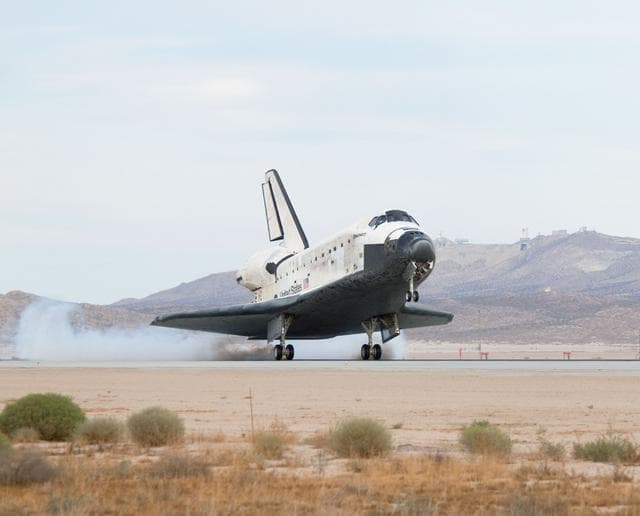
NASA image: sts128-s-045
Image
Sep 11, 2009

sts128-s-045

STS128-S-045 (11 Sept. 2009) --- Space Shuttle Discovery?s main landing gear touches down at NASA's Dryden Flight...

JSC
PreviousPage 64 of 100Next

Frequently Asked Questions About NASA Images

Are NASA images free to use?+
Yes, most NASA images are in the public domain and are free to use for educational, informational, and personal purposes. NASA's media usage guidelines state that NASA material is not copyrighted unless otherwise noted. However, the NASA logo and certain insignia are protected. Some images may include identifiable individuals or third-party content that requires additional permissions. Always check the specific image's usage rights and credit NASA as the source.
How many images does NASA have?+
NASA's Image and Video Library contains over 140,000 publicly accessible images, videos, and audio files spanning the agency's entire history, from the Mercury program of the 1960s to the latest James Webb Space Telescope discoveries. The collection grows daily as new missions capture imagery and archival materials are digitized. Individual mission archives, such as Mars rover photos, contain hundreds of thousands of additional images.
Can I download NASA images?+
Yes, you can download NASA images in multiple resolutions directly from this gallery. Each image detail page provides download links for original (full resolution), large (1920px), medium (960px), small (480px), and thumbnail sizes. NASA encourages the public to use these images for education, media, and personal projects. High-resolution originals are ideal for printing and professional use.

Explore More NASA Content

Astronomy Picture of the Day

Daily curated space image

Mars Rover Photos

Curiosity & Perseverance images

Earth from Space

DSCOVR EPIC daily images

Launch Schedule

Upcoming rocket launches

Space News

Mission updates & discoveries

KENNEDY SPACE CENTER, FLA. - A closeup of crawler-transporter (CT) number 2 shows the cab (left, above the tracks)...

KSC

KENNEDY SPACE CENTER, FLA. - Dryden Flight Research Center Director Kevin Peterson talks about One NASA during the...

KSC

KENNEDY SPACE CENTER, FLA. - Crawler-transporter (CT) number 2 nears the launch pad with a Mobile Launcher Platform...

KSC
KSC

KENNEDY SPACE CENTER, FLA. - Jim Landy, NDE specialist with USA, points to an area of a Reinforced Carbon Carbon...

KSC

KENNEDY SPACE CENTER, FLA. - A closeup of crawler-transportation (CT) number 2 shows the new muffler system on the...

KSC

KENNEDY SPACE CENTER, FLA. - Armando Oliu, Final Inspection Team lead for the Shuttle program, speaks to reporters...

KSC

KENNEDY SPACE CENTER, FLA. - Inside the cab of crawler-transporter (CT) number 2, driver Sam Dove, with United Space...

KSC

KENNEDY SPACE CENTER, FLA. - KSC’s incoming Deputy Director Woodrow Whitlow speaks to employees and guests during...

KSC

KENNEDY SPACE CENTER, FLA. - Crawler-transporter (CT) number 2, moves away from the Vehicle Assembly Building with a...

KSC

KENNEDY SPACE CENTER, FLA. - KSC Director Jim Kennedy and Glenn Research Center Director Dr. Julian Earls share the...

KSC

KENNEDY SPACE CENTER, FLA. - NASA’s Ed Weiler, associate administrator for Space Science, speaks to employees and...

KSC

KENNEDY SPACE CENTER, FLA. - Inside the cab of crawler-transporter (CT) number 2, driver Sam Dove, with United Space...

KSC

KENNEDY SPACE CENTER, FLA. - Dan Phillips (left) and Donald Nielen, with United Space Alliance, watch a monitor as...

KSC

KENNEDY SPACE CENTER, FLA. - Jim Landy, NDE specialist with United Space Alliance, sets up equipment to examine a...

KSC

KENNEDY SPACE CENTER, FLA. - A closeup of crawler-transporter (CT) number 2 shows the cab, at left, that recently...

KSC

KENNEDY SPACE CENTER, FLA. - Jim Landy, NDE specialist with United Space Alliance (USA), prepares equipment to...

KSC