CosmosObservatory
Explore
Solar System
Live
Learn
Tools
About
Cosmos Observatory
ToolsAbout
Cosmos Observatory

Explore the universe through NASA data, real-time ISS tracking, Mars rover imagery, asteroid monitoring, and comprehensive space encyclopedia. Your gateway to the cosmos.

Explore

  • APOD
  • Mars Rovers
  • Earth Imagery
  • NASA Gallery
  • ISS Tracker

Data

  • Asteroids
  • Solar System
  • Exoplanets
  • Space Weather
  • Launches

Tools

  • Glossary
  • News
  • Calculators

Legal

  • About
  • Privacy Policy
  • Terms of Use
  • Space Tools
  • Contact

Stay updated with the cosmos

Get weekly digests of APOD highlights, upcoming launches, and space events.

© 2026 Cosmos Observatory. All rights reserved. Built with for space enthusiasts.

This website is not affiliated with, maintained, authorized, endorsed by, or in any way officially connected with NASA or any of its subsidiaries or affiliates. All NASA imagery is in the public domain unless otherwise noted. Data sourced from NASA Open APIs, Launch Library 2, and other open data services.

NASA Gallery

Explore NASA's vast collection of space images, videos, and audio from missions past and present.

  1. Home
  2. /
  3. NASA Gallery

NASA's Image and Video Library: A Visual Archive of Space Exploration

NASA's Image and Video Library is one of the most comprehensive public archives of space imagery in the world, containing over 140,000 images, videos, and audio recordings spanning more than six decades of space exploration. From the earliest Mercury and Gemini missions through the Apollo Moon landings, the Space Shuttle era, and today's cutting-edge observations from the James Webb Space Telescope, this collection documents humanity's journey into the cosmos.

The library includes imagery from diverse sources: telescopes like Hubble and Webb that capture deep-space nebulae, galaxies, and exoplanets; planetary missions like the Mars rovers ( browse Mars photos) and Cassini at Saturn; Earth observation satellites ( see EPIC imagery); astronaut photography from the ISS; and documentation of rocket launches, spacecraft assembly, and ground testing. Most NASA images are in the public domain and free to download at full resolution for educational, editorial, and personal use.

Use the search bar above to find specific subjects — try queries like "Apollo 11," "Hubble Deep Field," "Mars surface," or "astronaut EVA." You can also filter by media type (image, video, or audio). For a daily curated experience, visit the Astronomy Picture of the Day.

Showing results for "minus"

921 results found - Page 1 of 39

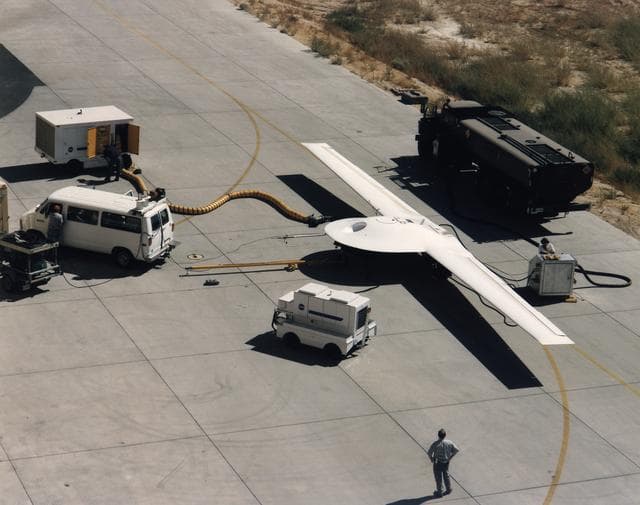
NASA image: Tier 3- DarkStar engine run on ramp
Image
Nov 12, 1995

Tier 3- DarkStar engine run on ramp

The Lockheed Martin/Boeing Tier III- (minus) unpiloted aerial vehicle undergoing an engine run on the ramp at the...

AFRC
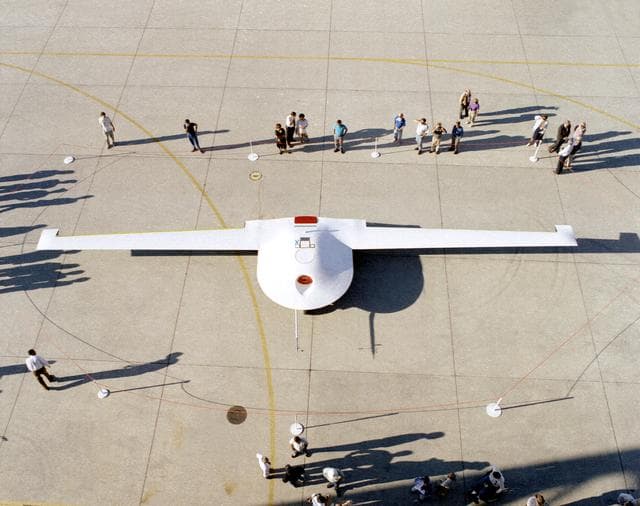
NASA image: Tier 3- DarkStar on ramp from above
Image
Sep 14, 1995

Tier 3- DarkStar on ramp from above

The Lockheed Martin/Boeing Tier III- (minus) unpiloted aerial vehicle is inspected by NASA personnel September 14,...

AFRC
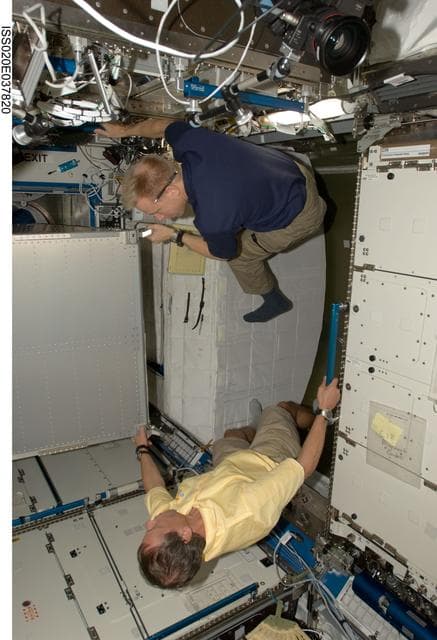
NASA image: Minus Eighty Degree Laboratory Freezer for ISS (MELFI) rack
Image
Sep 1, 2009

Minus Eighty Degree Laboratory Freezer for ISS (MELFI) rack

ISS020-E-037820 (2 Sept. 2009) --- European Space Agency astronaut Christer Fuglesang (bottom) and NASA astronaut...

JSC
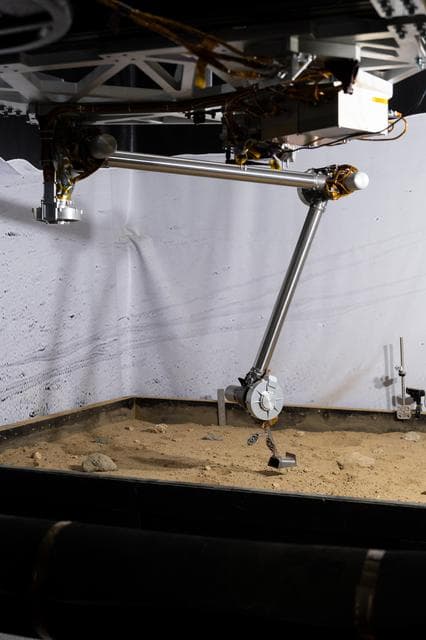
NASA image: NASA's COLDArm at Lunar Regolith Simulant Test Bed
Image
Dec 5, 2022

NASA's COLDArm at Lunar Regolith Simulant Test Bed

The 3D-printed titanium scoop of the Cold Operable Lunar Deployable Arm (COLDArm) robotic arm system is poised above...

JPL
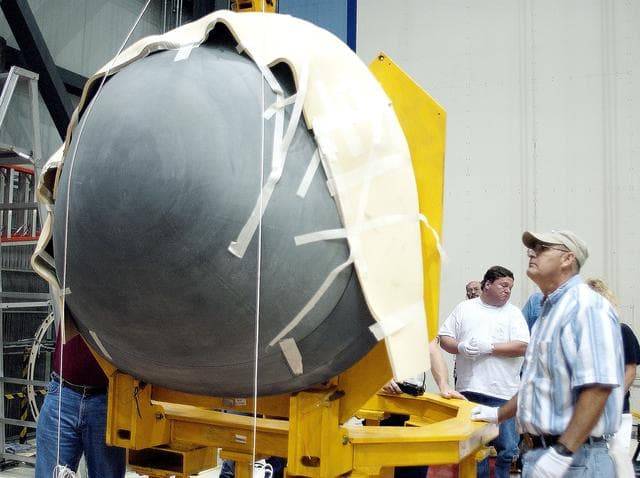
NASA image: KENNEDY SPACE CENTER, FLA. -  In the Orbiter Processing Facility, the nose cap of the orbiter Atlantis rests on a stand after its removal from the orbiter for routine inspection. The nose cap is made of reinforced carbon-carbon (RCC), which has an operating range of minus 250° F to about 3,000° F.
Image
Oct 17, 2003

KENNEDY SPACE CENTER, FLA. - In the Orbiter Processing Facility, the nose cap of the orbiter Atlantis rests on a stand after its removal from the orbiter for routine inspection. The nose cap is made of reinforced carbon-carbon (RCC), which has an operating range of minus 250° F to about 3,000° F.

KENNEDY SPACE CENTER, FLA. - In the Orbiter Processing Facility, the nose cap of the orbiter Atlantis rests on a...

KSC
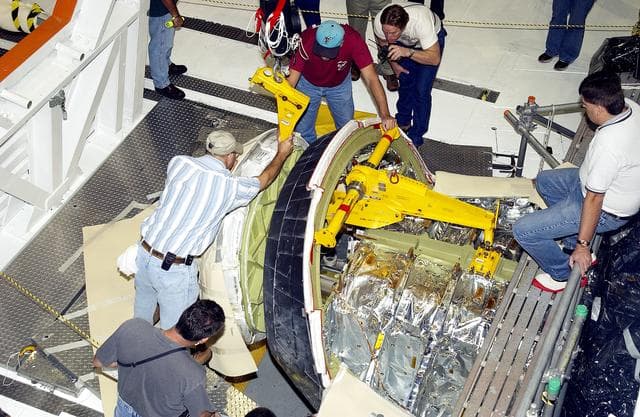
NASA image: KENNEDY SPACE CENTER, FLA. - In the Orbiter Processing Facility, workers remove the nose cone of the orbiter Atlantis for routine inspection. The nose cap is made of reinforced carbon-carbon (RCC), which has an operating range of minus 250° F to about 3,000° F.
Image
Oct 17, 2003

KENNEDY SPACE CENTER, FLA. - In the Orbiter Processing Facility, workers remove the nose cone of the orbiter Atlantis for routine inspection. The nose cap is made of reinforced carbon-carbon (RCC), which has an operating range of minus 250° F to about 3,000° F.

KENNEDY SPACE CENTER, FLA. - In the Orbiter Processing Facility, workers remove the nose cone of the orbiter...

KSC
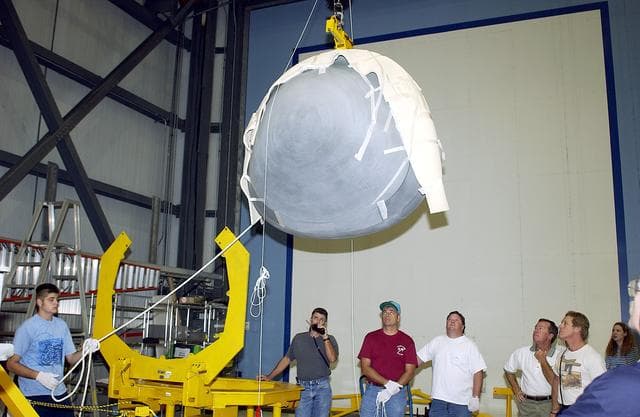
NASA image: KENNEDY SPACE CENTER, FLA. - In the Orbiter Processing Facility, workers watch as the nose cap of the orbiter Atlantis is moved toward the stand at left.  The cap was removed from the orbiter for routine inspection. The nose cap is made of reinforced carbon-carbon (RCC), which has an operating range of minus 250° F to about 3,000° F.
Image
Oct 17, 2003

KENNEDY SPACE CENTER, FLA. - In the Orbiter Processing Facility, workers watch as the nose cap of the orbiter Atlantis is moved toward the stand at left. The cap was removed from the orbiter for routine inspection. The nose cap is made of reinforced carbon-carbon (RCC), which has an operating range of minus 250° F to about 3,000° F.

KENNEDY SPACE CENTER, FLA. - In the Orbiter Processing Facility, workers watch as the nose cap of the orbiter...

KSC
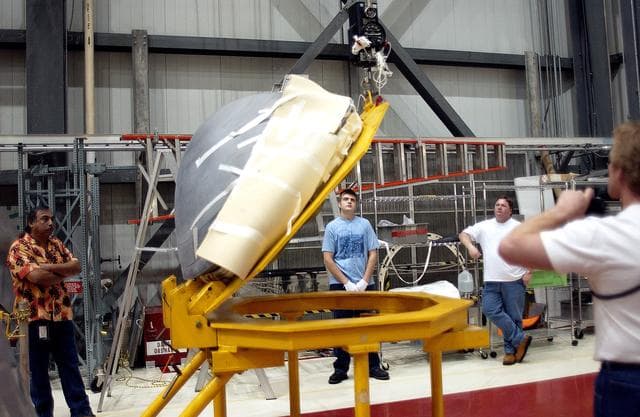
NASA image: KENNEDY SPACE CENTER, FLA. - In the Orbiter Processing Facility, the nose cap of the orbiter Atlantis is shifted to a horizontal position on a stand.  The cap was removed from the orbiter for routine inspection. The nose cap is made of reinforced carbon-carbon (RCC), which has an operating range of minus 250° F to about 3,000° F.
Image
Oct 17, 2003

KENNEDY SPACE CENTER, FLA. - In the Orbiter Processing Facility, the nose cap of the orbiter Atlantis is shifted to a horizontal position on a stand. The cap was removed from the orbiter for routine inspection. The nose cap is made of reinforced carbon-carbon (RCC), which has an operating range of minus 250° F to about 3,000° F.

KENNEDY SPACE CENTER, FLA. - In the Orbiter Processing Facility, the nose cap of the orbiter Atlantis is shifted to...

KSC
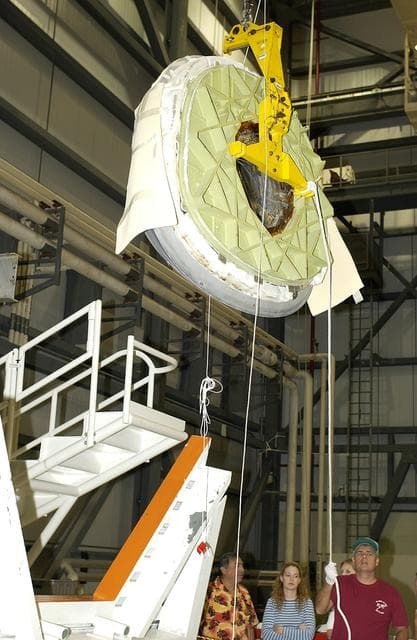
NASA image: KENNEDY SPACE CENTER, FLA. - In the Orbiter Processing Facility, the nose cap of the orbiter Atlantis is lifted for its transfer to a stand.  The cap was removed for routine inspection. The nose cap is made of reinforced carbon-carbon (RCC), which has an operating range of minus 250° F to about 3,000° F.
Image
Oct 17, 2003

KENNEDY SPACE CENTER, FLA. - In the Orbiter Processing Facility, the nose cap of the orbiter Atlantis is lifted for its transfer to a stand. The cap was removed for routine inspection. The nose cap is made of reinforced carbon-carbon (RCC), which has an operating range of minus 250° F to about 3,000° F.

KENNEDY SPACE CENTER, FLA. - In the Orbiter Processing Facility, the nose cap of the orbiter Atlantis is lifted for...

KSC
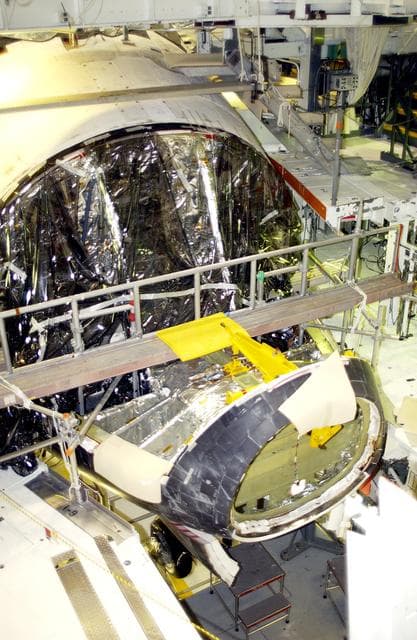
NASA image: KENNEDY SPACE CENTER, FLA. - In the Orbiter Processing Facility, Atlantis is seen after its nose cap was removed for routine inspection. The nose cap is made of reinforced carbon-carbon (RCC), which has an operating range of minus 250° F to about 3,000° F.
Image
Oct 17, 2003

KENNEDY SPACE CENTER, FLA. - In the Orbiter Processing Facility, Atlantis is seen after its nose cap was removed for routine inspection. The nose cap is made of reinforced carbon-carbon (RCC), which has an operating range of minus 250° F to about 3,000° F.

KENNEDY SPACE CENTER, FLA. - In the Orbiter Processing Facility, Atlantis is seen after its nose cap was removed for...

KSC
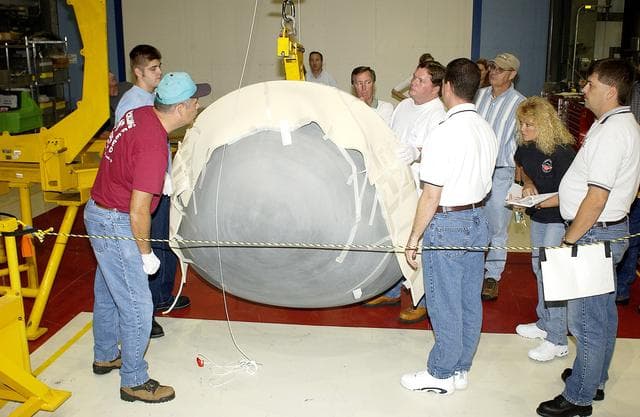
NASA image: KENNEDY SPACE CENTER, FLA. - In the Orbiter Processing Facility, workers watch as the nose cap of the orbiter Atlantis is lowered toward the floor.   The cap was removed from the orbiter for routine inspection. The nose cap is made of reinforced carbon-carbon (RCC), which has an operating range of minus 250° F to about 3,000° F.
Image
Oct 17, 2003

KENNEDY SPACE CENTER, FLA. - In the Orbiter Processing Facility, workers watch as the nose cap of the orbiter Atlantis is lowered toward the floor. The cap was removed from the orbiter for routine inspection. The nose cap is made of reinforced carbon-carbon (RCC), which has an operating range of minus 250° F to about 3,000° F.

KENNEDY SPACE CENTER, FLA. - In the Orbiter Processing Facility, workers watch as the nose cap of the orbiter...

KSC
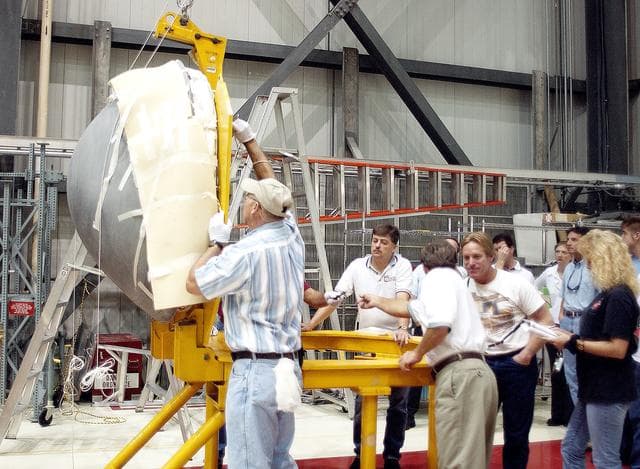
NASA image: KENNEDY SPACE CENTER, FLA. -  In the Orbiter Processing Facility, workers secure the nose cap of the orbiter Atlantis on a stand.   The cap was removed from the orbiter for routine inspection. The nose cap is made of reinforced carbon-carbon (RCC), which has an operating range of minus 250° F to about 3,000° F.
Image
Oct 17, 2003

KENNEDY SPACE CENTER, FLA. - In the Orbiter Processing Facility, workers secure the nose cap of the orbiter Atlantis on a stand. The cap was removed from the orbiter for routine inspection. The nose cap is made of reinforced carbon-carbon (RCC), which has an operating range of minus 250° F to about 3,000° F.

KENNEDY SPACE CENTER, FLA. - In the Orbiter Processing Facility, workers secure the nose cap of the orbiter Atlantis...

KSC
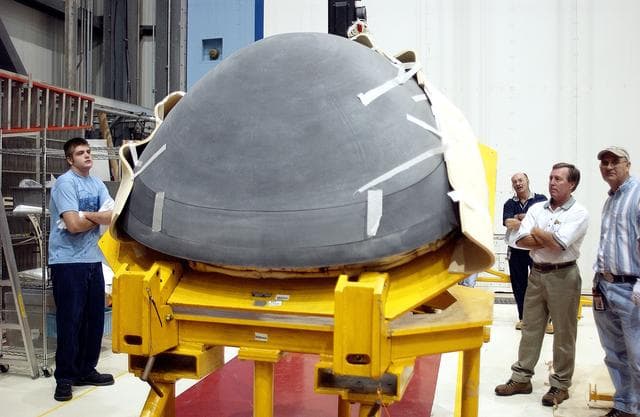
NASA image: KENNEDY SPACE CENTER, FLA. - In the Orbiter Processing Facility, workers watch as the nose cap of the orbiter Atlantis is shifted to a horizontal position on a stand.  The cap was removed from the orbiter for routine inspection. The nose cap is made of reinforced carbon-carbon (RCC), which has an operating range of minus 250° F to about 3,000° F.
Image
Oct 17, 2003

KENNEDY SPACE CENTER, FLA. - In the Orbiter Processing Facility, workers watch as the nose cap of the orbiter Atlantis is shifted to a horizontal position on a stand. The cap was removed from the orbiter for routine inspection. The nose cap is made of reinforced carbon-carbon (RCC), which has an operating range of minus 250° F to about 3,000° F.

KENNEDY SPACE CENTER, FLA. - In the Orbiter Processing Facility, workers watch as the nose cap of the orbiter...

KSC
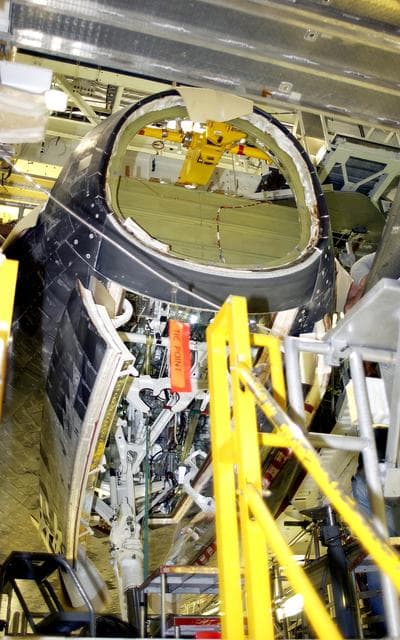
NASA image: KENNEDY SPACE CENTER, FLA. - In the Orbiter Processing Facility, Atlantis is seen after its nose cap was removed for routine inspection. The nose cap is made of reinforced carbon-carbon (RCC), which has an operating range of minus 250° F to about 3,000° F.
Image
Oct 17, 2003

KENNEDY SPACE CENTER, FLA. - In the Orbiter Processing Facility, Atlantis is seen after its nose cap was removed for routine inspection. The nose cap is made of reinforced carbon-carbon (RCC), which has an operating range of minus 250° F to about 3,000° F.

KENNEDY SPACE CENTER, FLA. - In the Orbiter Processing Facility, Atlantis is seen after its nose cap was removed for...

KSC
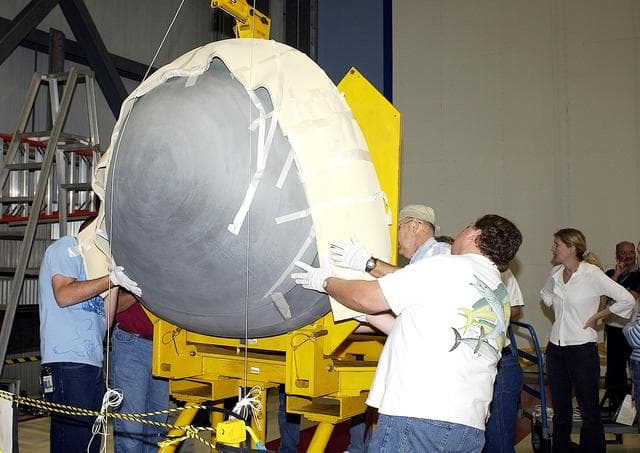
NASA image: KENNEDY SPACE CENTER, FLA. -  In the Orbiter Processing Facility, workers help guide the nose cap of the orbiter Atlantis toward a stand.  The cap was removed from the orbiter for routine inspection. The nose cap is made of reinforced carbon-carbon (RCC), which has an operating range of minus 250° F to about 3,000° F.
Image
Oct 17, 2003

KENNEDY SPACE CENTER, FLA. - In the Orbiter Processing Facility, workers help guide the nose cap of the orbiter Atlantis toward a stand. The cap was removed from the orbiter for routine inspection. The nose cap is made of reinforced carbon-carbon (RCC), which has an operating range of minus 250° F to about 3,000° F.

KENNEDY SPACE CENTER, FLA. - In the Orbiter Processing Facility, workers help guide the nose cap of the orbiter...

KSC
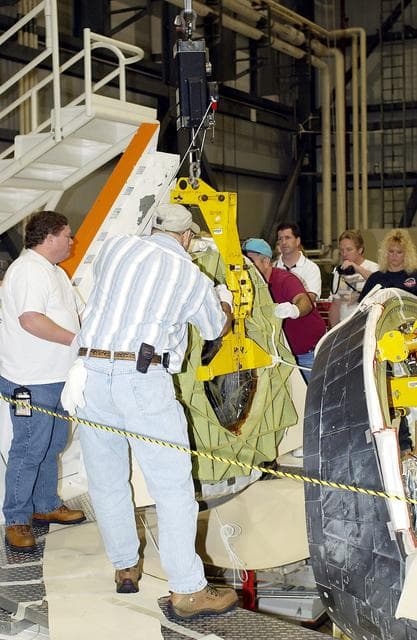
NASA image: KENNEDY SPACE CENTER, FLA. - In the Orbiter Processing Facility, workers secure the nose cap of the orbiter Atlantis for its transfer to a stand.  The cap was removed for routine inspection. The nose cap is made of reinforced carbon-carbon (RCC), which has an operating range of minus 250° F to about 3,000° F.
Image
Oct 17, 2003

KENNEDY SPACE CENTER, FLA. - In the Orbiter Processing Facility, workers secure the nose cap of the orbiter Atlantis for its transfer to a stand. The cap was removed for routine inspection. The nose cap is made of reinforced carbon-carbon (RCC), which has an operating range of minus 250° F to about 3,000° F.

KENNEDY SPACE CENTER, FLA. - In the Orbiter Processing Facility, workers secure the nose cap of the orbiter Atlantis...

KSC
NASA image: ARC-2006-ACD06-0201-019
Image
Dec 12, 2006

ARC-2006-ACD06-0201-019

Ames Exchange - Tee Minus One (T-1) Golf course

ARC
NASA image: ARC-2006-ACD06-0201-022
Image
Dec 12, 2006

ARC-2006-ACD06-0201-022

Ames Exchange - Tee Minus One (T-1) Golf course

ARC
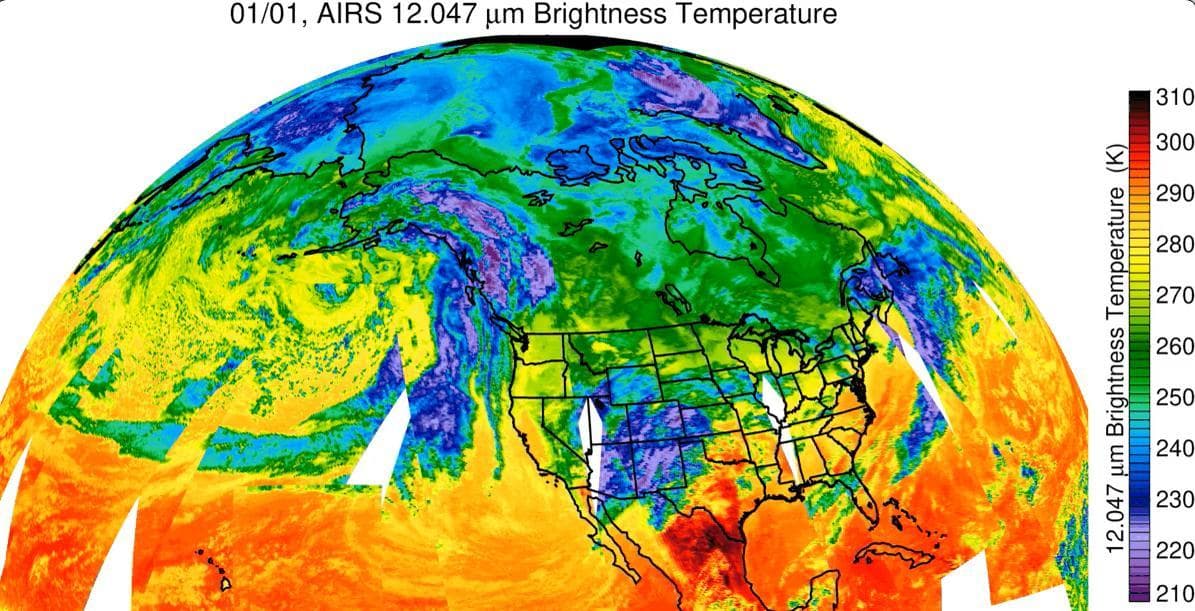
NASA image: California Atmospheric River Storms Captured by NASA's AIRS
Image
Jan 10, 2023

California Atmospheric River Storms Captured by NASA's AIRS

Since the start of 2023 California has been drenched by a series of storms being transported by an atmospheric river...

JPL
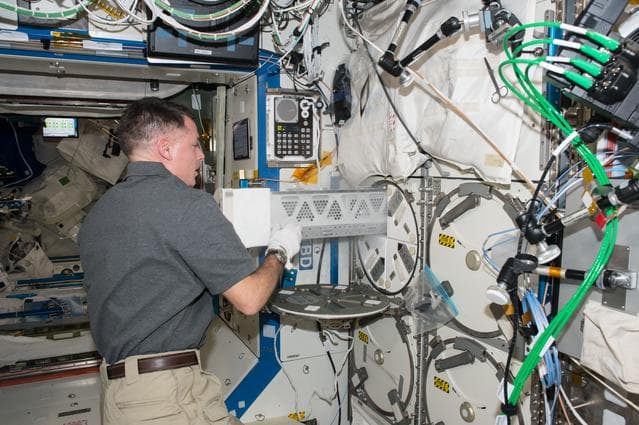
NASA image: Kimbrough works with MELFI
Image
Mar 15, 2017

Kimbrough works with MELFI

iss050e057444 (3/15/2017) --- NASA astronaut Shane Kimbrough removing a storage locker in the Minus Eighty-degree...

JSC
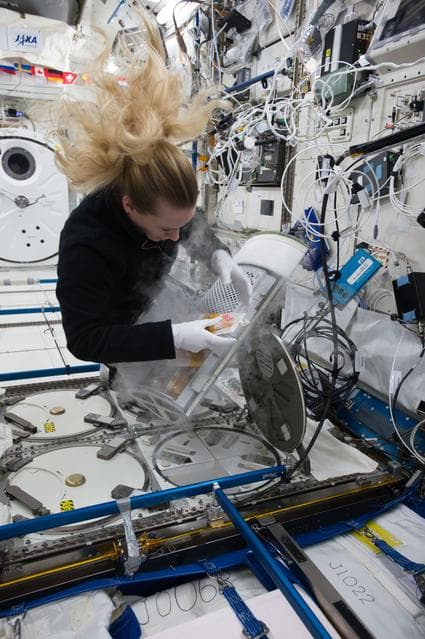
NASA image: Handover of PCMs and experiment samples to Russian crew
Image
Oct 29, 2016

Handover of PCMs and experiment samples to Russian crew

iss049e052550 (10/29/20160 --- NASA astronaut Kate Rubins is photographed removing samples from the Minus...

JSC
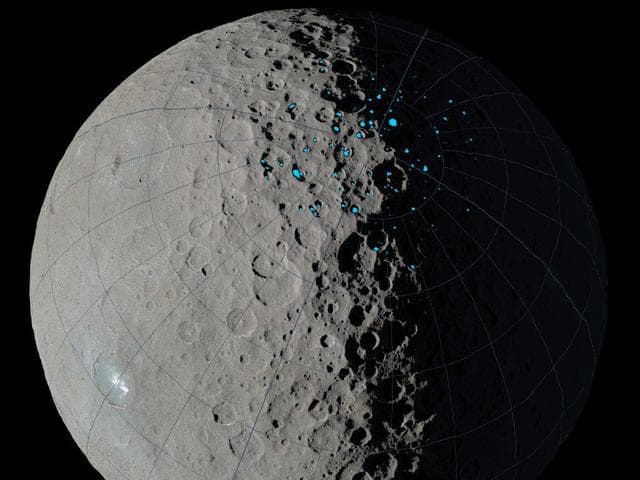
NASA image: Shadowed Craters on Ceres
Image
Jul 8, 2016

Shadowed Craters on Ceres

At the poles of Ceres, scientists have found craters that are permanently in shadow (indicated by blue markings)....

JPL
NASA image: A Mushball and Shallow-Lightning Factory (Illustration)
Image
Aug 5, 2020

A Mushball and Shallow-Lightning Factory (Illustration)

This graphic depicts the evolutionary process of "shallow lightning" and ammonia-water hailstones called...

JPL
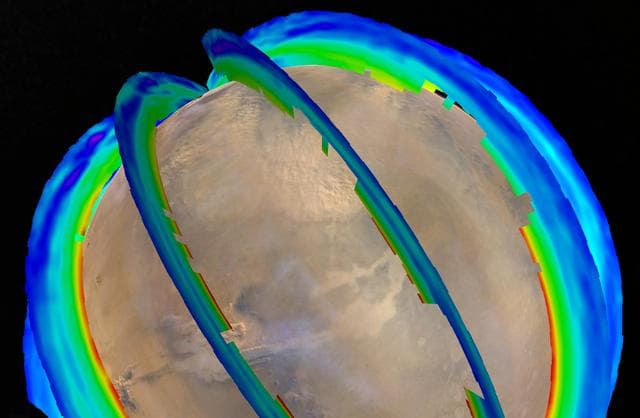
NASA image: Mars Atmospheric Temperature and Dust Storm Tracking
Image
Jun 9, 2016

Mars Atmospheric Temperature and Dust Storm Tracking

This graphic overlays Martian atmospheric temperature data as curtains over an image of Mars taken during a regional...

JPL
PreviousPage 1 of 39Next

Frequently Asked Questions About NASA Images

Are NASA images free to use?+
Yes, most NASA images are in the public domain and are free to use for educational, informational, and personal purposes. NASA's media usage guidelines state that NASA material is not copyrighted unless otherwise noted. However, the NASA logo and certain insignia are protected. Some images may include identifiable individuals or third-party content that requires additional permissions. Always check the specific image's usage rights and credit NASA as the source.
How many images does NASA have?+
NASA's Image and Video Library contains over 140,000 publicly accessible images, videos, and audio files spanning the agency's entire history, from the Mercury program of the 1960s to the latest James Webb Space Telescope discoveries. The collection grows daily as new missions capture imagery and archival materials are digitized. Individual mission archives, such as Mars rover photos, contain hundreds of thousands of additional images.
Can I download NASA images?+
Yes, you can download NASA images in multiple resolutions directly from this gallery. Each image detail page provides download links for original (full resolution), large (1920px), medium (960px), small (480px), and thumbnail sizes. NASA encourages the public to use these images for education, media, and personal projects. High-resolution originals are ideal for printing and professional use.

Explore More NASA Content

Astronomy Picture of the Day

Daily curated space image

Mars Rover Photos

Curiosity & Perseverance images

Earth from Space

DSCOVR EPIC daily images

Launch Schedule

Upcoming rocket launches

Space News

Mission updates & discoveries