Juno Captures North Polar Region of Io
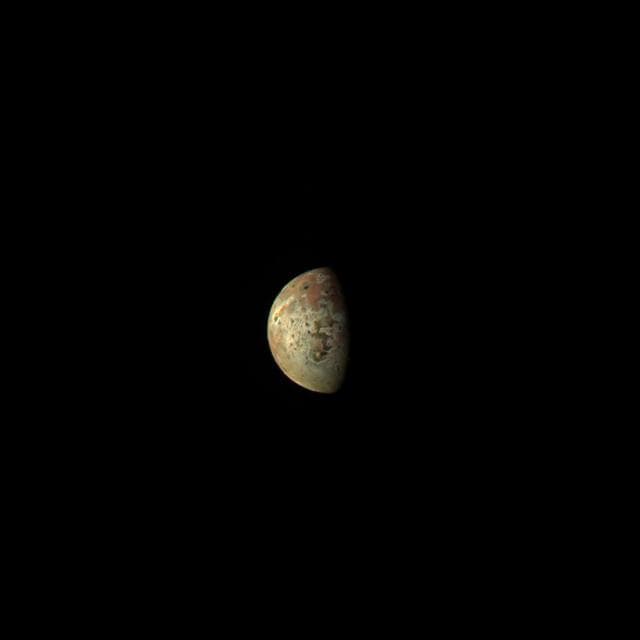
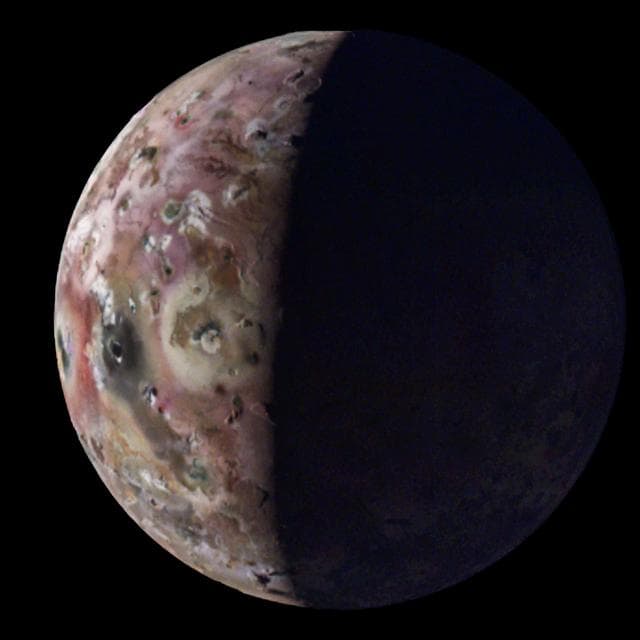
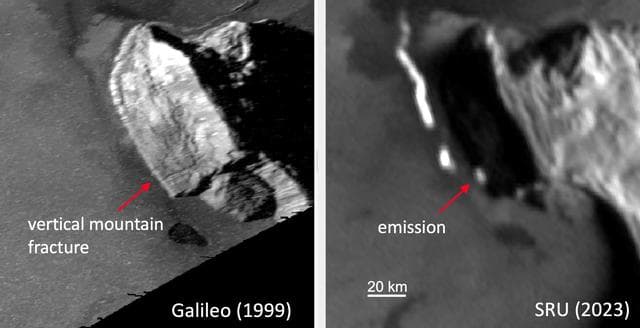
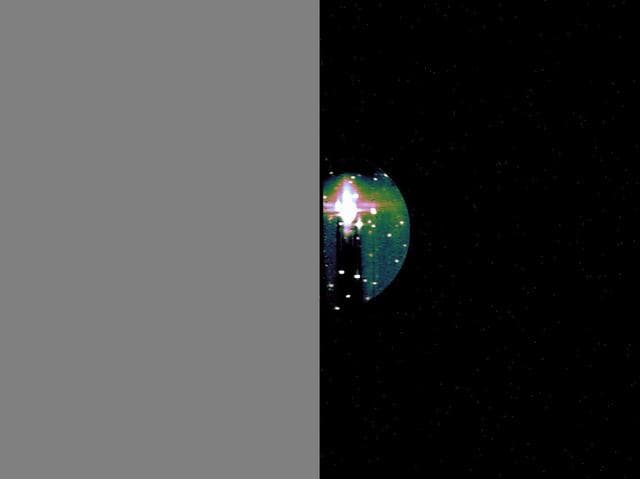
The north polar region of Jupiter's volcanic moon Io was captured by the JunoCam imager aboard NASA's Juno during the spacecraft's 57th close pass of the gas giant on Dec. 30, 2023. The region was imaged at a scale of 1.1 miles (1.8 kilometers) per pixel. The low illumination angle along the terminator (the line dividing day and night) shows several previously unrecognized mountain blocks rising abruptly above the surrounding plains. These are each characterized by a central, sharp peak and adjacent flanks that appear to be collapsing toward the plains. The higher of these peaks range from 2.3 to 6.1 miles (3.7 to 9.8 kilometers) in elevation. The shadows indicate that some of the mountain flanks grade into plateaus under 0.6 miles (1 kilometer). All mountains here are partly or completely covered by bright white diffuse deposits, which may be sulfur dioxide frosts derived from gases escaping the interior and transported up. Extremely large flow fields are evident here. The most active flow regions in Lei-Kung Fluctus (upper left in this image) are evidenced by their darker color and surrounded by white deposits, perhaps liberated from the surface by thermal action. https://photojournal.jpl.nasa.gov/catalog/PIA26484
Usage Rights
Most NASA images are in the public domain and free to use. Credit NASA as the source. Check NASA's media usage guidelines for details. Images featuring identifiable individuals may require additional permissions.
Details
NASA ID
PIA26484
Date Created
December 12, 2024
Center
JPL
Media Type
image
Downloads
Download this image in multiple resolutions. All NASA media are free for public use.