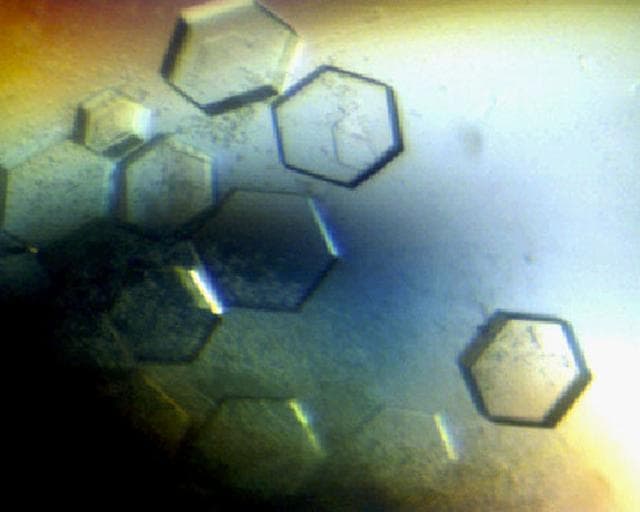
Microgravity
As the most abundant protein in the circulatory system albumin contributes 80% to colloid osmotic blood pressure. Albumin is also chiefly responsible for the maintenance of blood pH. It is located in every tissue and bodily secretion, with extracellular protein comprising 60% of total albumin. Perhaps the most outstanding property of albumin is its ability to bind reversibly to an incredible variety of ligands. It is widely accepted in the pharmaceutical industry that the overall distribution, metabolism, and efficiency of many drugs are rendered ineffective because of their unusually high affinity for this abundant protein. An understanding of the chemistry of the various classes of pharmaceutical interactions with albumin can suggest new approaches to drug therapy and design. Principal Investigator: Dan Carter/New Century Pharmaceuticals
Usage Rights
Most NASA images are in the public domain and free to use. Credit NASA as the source. Check NASA's media usage guidelines for details. Images featuring identifiable individuals may require additional permissions.
Details
NASA ID
9809503
Date Created
December 1, 1998
Center
MSFC
Media Type
image
Downloads
Download this image in multiple resolutions. All NASA media are free for public use.