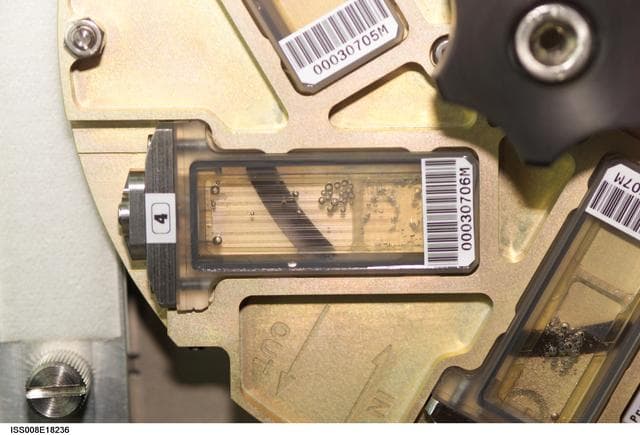
Microgravity
Type II restriction enzymes, such as Eco R1 endonulease, present a unique advantage for the study of sequence-specific recognition because they leave a record of where they have been in the form of the cleaved ends of the DNA sites where they were bound. The differential behavior of a sequence -specific protein at sites of differing base sequence is the essence of the sequence-specificity; the core question is how do these proteins discriminate between different DNA sequences especially when the two sequences are very similar. Principal Investigator: Dan Carter/New Century Pharmaceuticals
Usage Rights
Most NASA images are in the public domain and free to use. Credit NASA as the source. Check NASA's media usage guidelines for details. Images featuring identifiable individuals may require additional permissions.
Details
NASA ID
9809502
Date Created
December 1, 1998
Center
MSFC
Media Type
image
Downloads
Download this image in multiple resolutions. All NASA media are free for public use.