To Be Determined
Electron | Kakushin Rising (JAXA Rideshare)
Rocket Lab
Countdown to launch
--
Days--
Hrs--
Min--
SecThursday, April 23, 2026
00:00:00 UTC
About This Mission
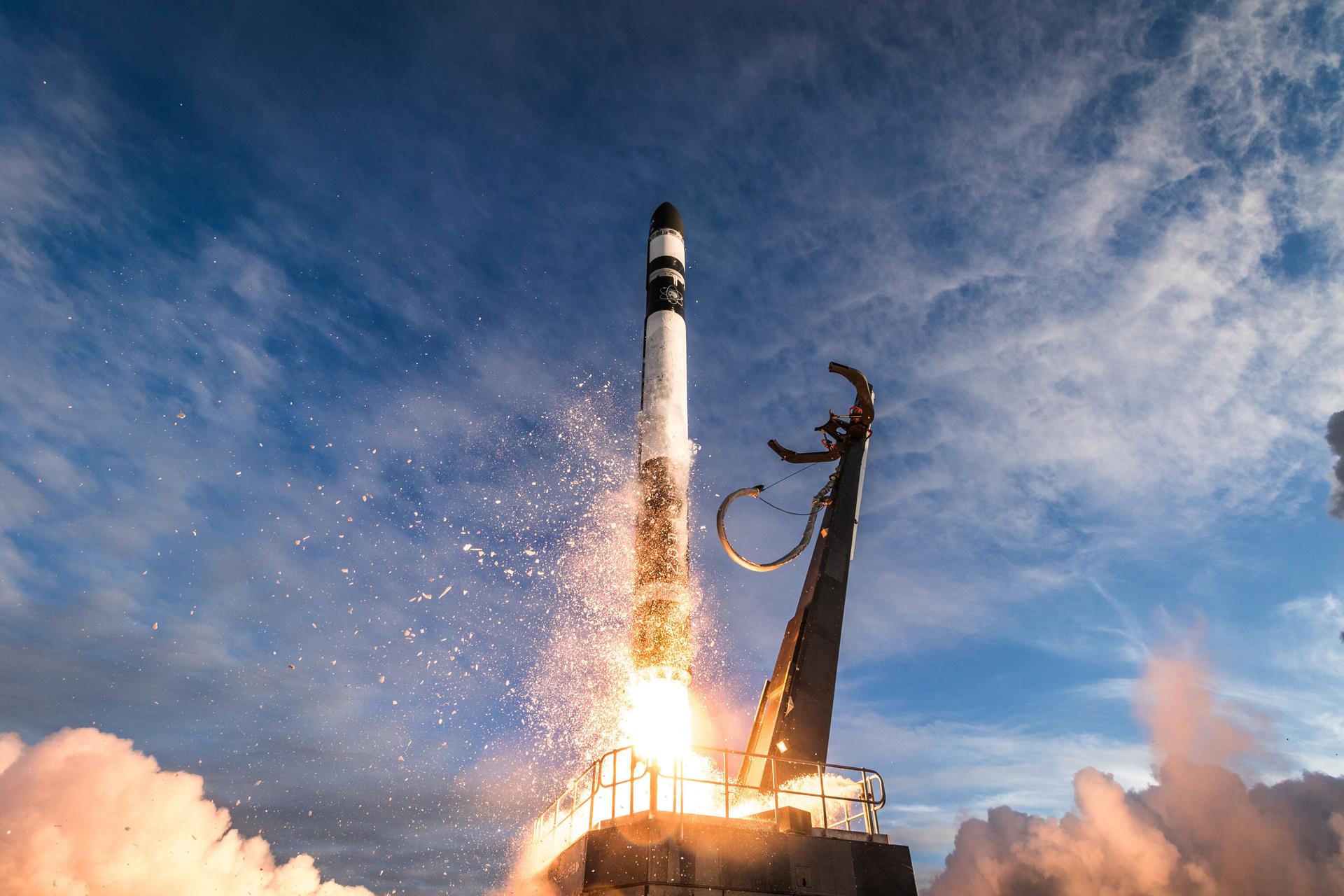
This Electron mission by Rocket Lab is scheduled to launch from Rocket Lab Launch Complex 1, Mahia Peninsula, New Zealand. This technology mission targets Sun-Synchronous Orbit. The rocket family has been instrumental in modern space access, representing decades of engineering refinement in propulsion, guidance systems, and structural design.
Every rocket launch involves precise coordination between the launch vehicle, payload, ground systems, and range safety. The launch window is carefully calculated based on orbital mechanics — for missions targeting the International Space Station, the window may be only seconds long, while interplanetary missions can have windows lasting weeks. Weather conditions, including upper-level winds, lightning risk, and cloud ceiling, are monitored up until the final moments before ignition. Space weather conditions from solar activity can also affect launch decisions, as high radiation levels may pose risks to satellite electronics.
For more launch information, visit the full launch schedule, track the International Space Station where many missions are headed, or browse launch photography in the NASA gallery.
Mission Details
JAXA-manifested rideshare of eight separate spacecraft that includes educational small sats, an ocean monitoring satellite, a demonstration satellite for ultra-small multispectral cameras, and a deployable antenna that can be packed tightly using origami folding techniques and unfurled to 25 times its size. The satellites were originally planned to launch with RAISE-4 on a Japanese Epsilon-S rocket, but the Epsilon-S was heavily delayed due to test firing failures. The 8 satellites are: * MAGNARO-II * KOSEN-2R * WASEDA-SAT-ZERO-II * FSI-SAT2 * OrigamiSat-2 * Mono-Nikko * ARICA-2 * PRELUDE
TechnologySun-Synchronous Orbit
Rocket
Vehicle
Electron
Family