To Be Determined
Atlas V 551 | Amazon Leo (LA-05)
United Launch Alliance
Countdown to launch
--
Days--
Hrs--
Min--
SecTuesday, March 31, 2026
00:00:00 UTC
About This Mission
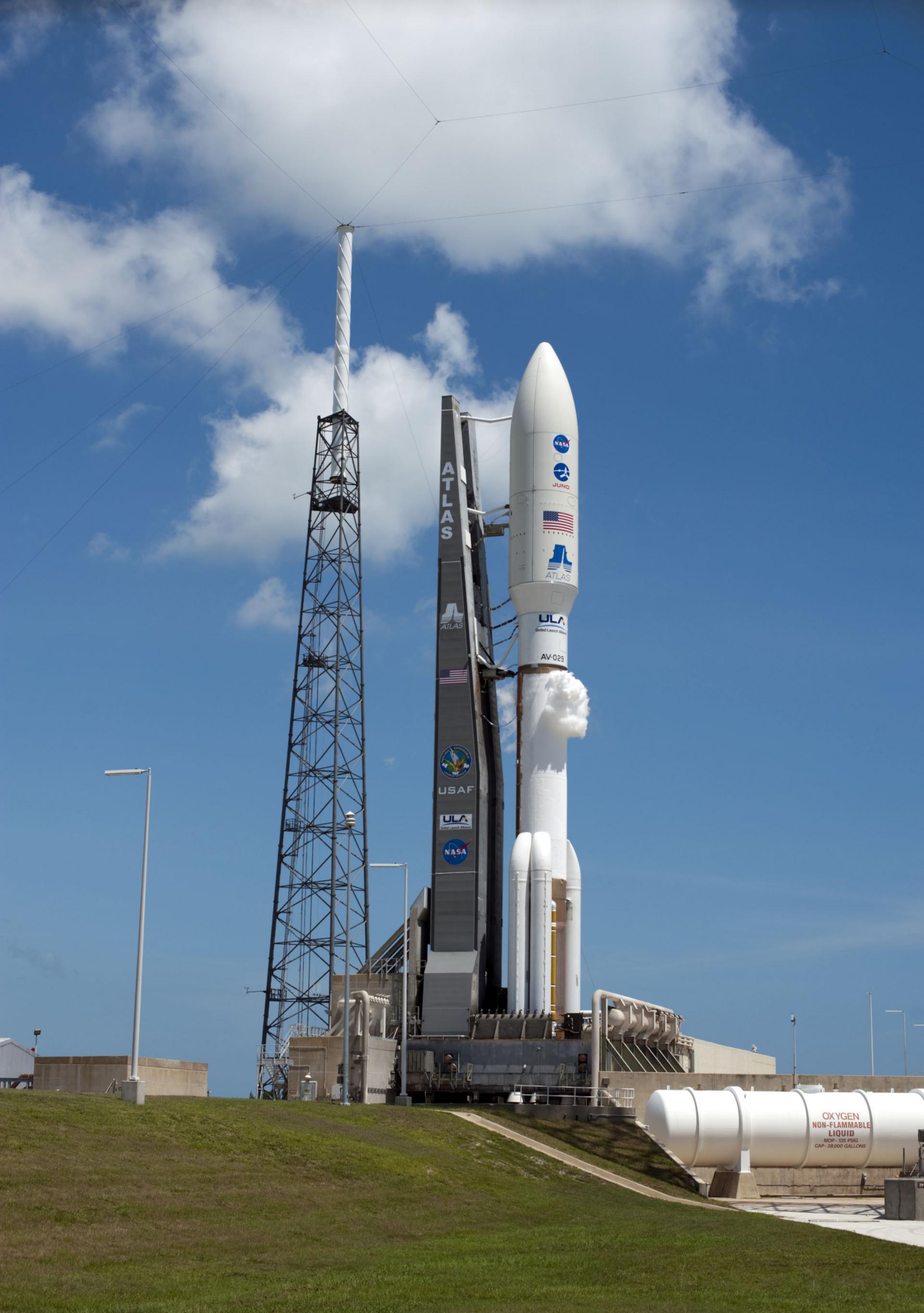
This Atlas V 551 mission by United Launch Alliance is scheduled to launch from Cape Canaveral SFS, FL, USA. This communications mission targets Low Earth Orbit. The Atlas rocket family has been instrumental in modern space access, representing decades of engineering refinement in propulsion, guidance systems, and structural design.
Every rocket launch involves precise coordination between the launch vehicle, payload, ground systems, and range safety. The launch window is carefully calculated based on orbital mechanics — for missions targeting the International Space Station, the window may be only seconds long, while interplanetary missions can have windows lasting weeks. Weather conditions, including upper-level winds, lightning risk, and cloud ceiling, are monitored up until the final moments before ignition. Space weather conditions from solar activity can also affect launch decisions, as high radiation levels may pose risks to satellite electronics.
For more launch information, visit the full launch schedule, track the International Space Station where many missions are headed, or browse launch photography in the NASA gallery.
Mission Details
Amazon Leo, formerly known as Project Kuiper, is a mega constellation of satellites in Low Earth Orbit that will offer broadband internet access, this constellation will be managed by Kuiper Systems LLC, a subsidiary of Amazon. This constellation is planned to be composed of 3,276 satellites. The satellites are projected to be placed in 98 orbital planes in three orbital layers, one at 590 km, 610 km and 630 km altitude. 29 satellites are carried on this launch.
CommunicationsLow Earth Orbit
Rocket
Vehicle
Atlas V 551
Family
Atlas
Variant
551