Image
Jan 26, 2004
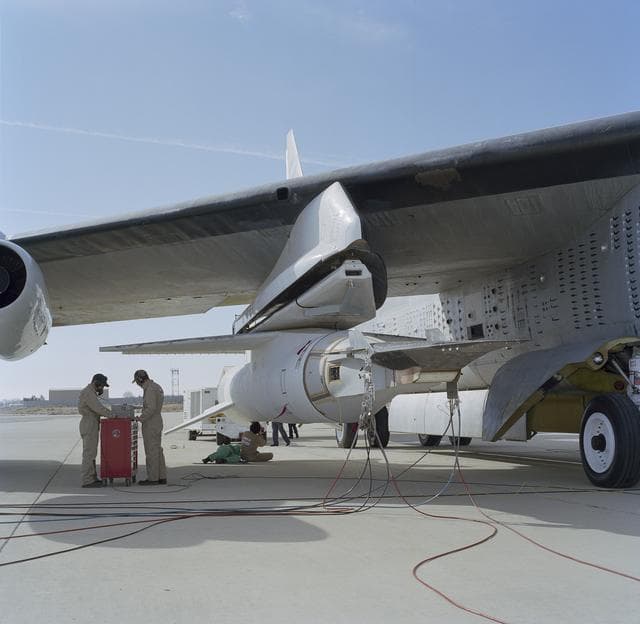
NASA B-52B Carries Pegasus Booster, X-43A Aircraft
Final preparations are underway for NASA’s B-52B to carry the Pegasus booster rocket and the hypersonic X-43A...
AFRC
Image
Oct 7, 2003
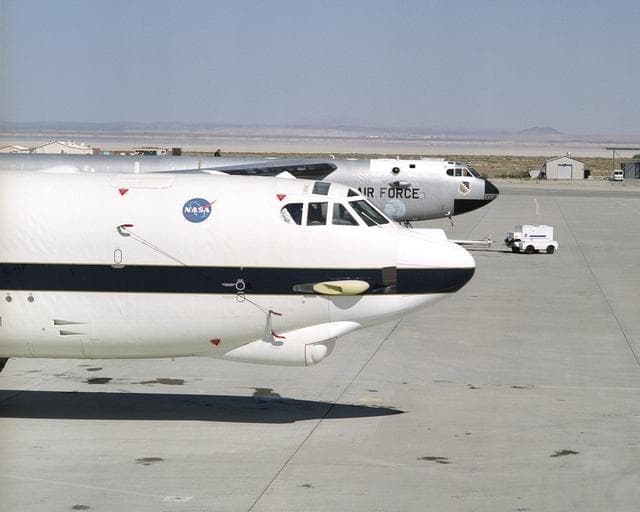
EC03-0258-16
NASA's new B-52H mother ship at the ready, with renowned NASA B-52B 008 poised beside.
AFRC
Image
Mar 27, 2004
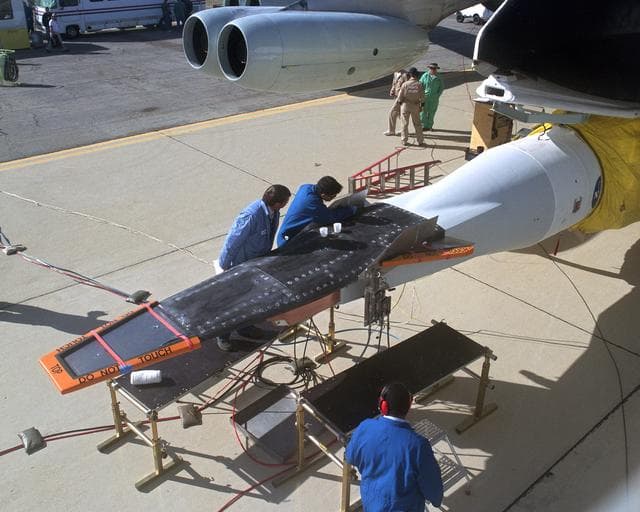
The second X-43A hypersonic research vehicle, mounted under the right wing of the B-52B launch aircraft, viewed from the B-52 cockpit
The second X-43A hypersonic research vehicle, mounted under the right wing of the B-52B launch aircraft, viewed from...
AFRC
Image
Oct 7, 2003
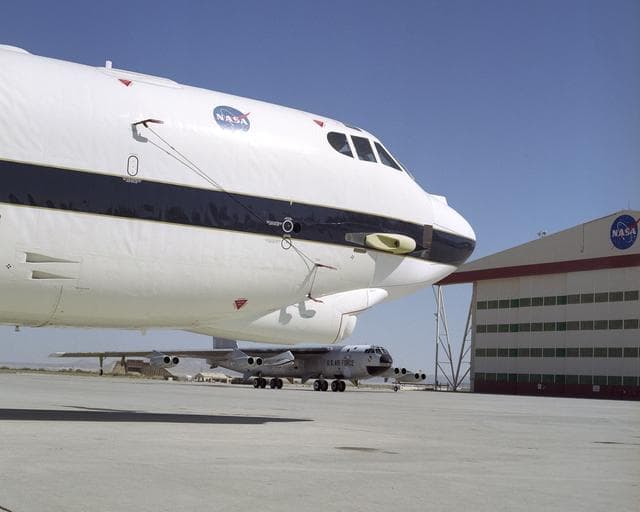
EC03-0258-12
Ready to go, NASA's new B-52H mother ship waits as NASA B-52B 008 taxis back from flight.
AFRC
Image
Jan 22, 2004
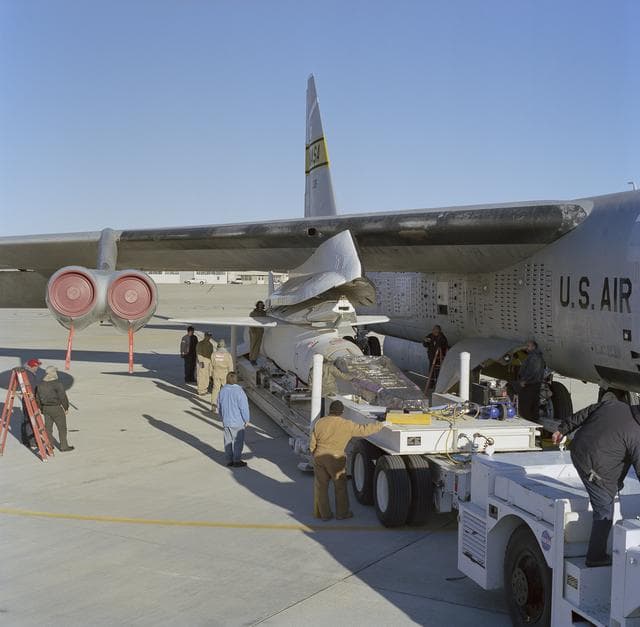
NASA B-52B Carries Pegasus Booster, X-43A Aircraft
The Pegasus booster rocket, carrying the X-43A hypersonic aircraft, is mounted beneath NASA’s B-52B wing. A dry run,...
AFRC
Image
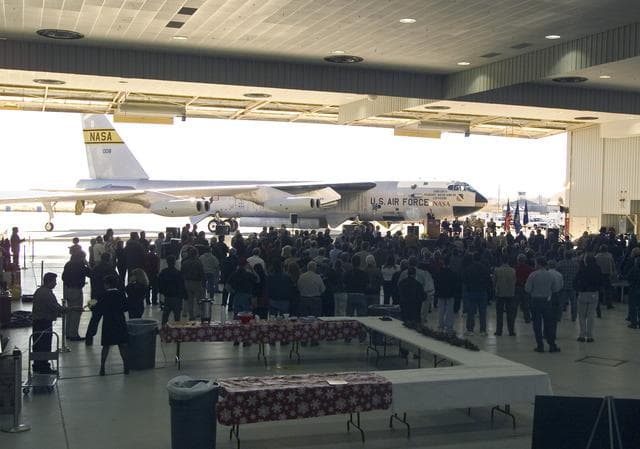
Dec 17, 2004
ED04-0362-02
NASA's venerable B-52B mothership launch aircraft served as the backdrop at its retirement ceremony on Dec. 17, 2004.
AFRC
Image
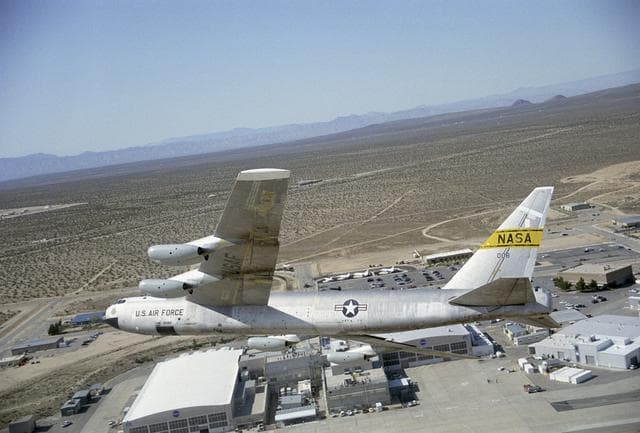
Mar 27, 2004
NASA's B-52B aircraft over the Dryden Flight Research Center after the successful launch of the second X-43A hypersonic research vehicle
NASA's B-52B aircraft over the Dryden Flight Research Center after the successful launch of the second X-43A...
AFRC
Image
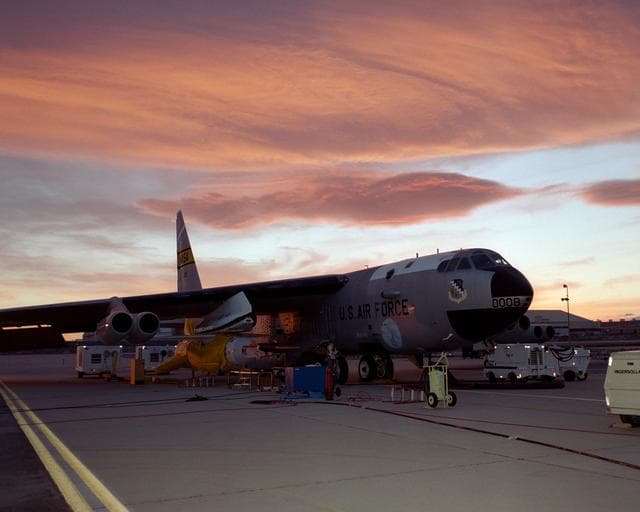
Mar 26, 2004
NASA's B-52B launch aircraft at sunset with the second X-43A hypersonic research vehicle attached to a modified Pegasus rocket under its right wing
NASA's B-52B launch aircraft at sunset with the second X-43A hypersonic research vehicle attached to a modified...
AFRC
Image
Nov 15, 2004
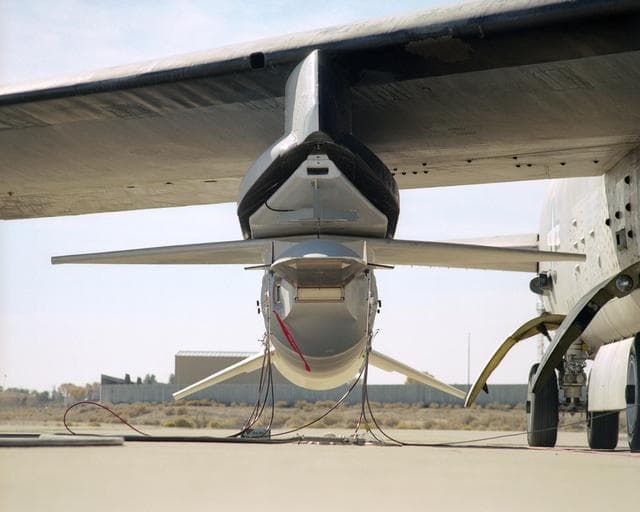
The small size of the X-43A scramjet is evident in this nose-on view while mounted to its modified Pegasus booster under the wing of NASA's B-52B mothership
The small size of the X-43A scramjet is evident in this nose-on view while mounted to its modified Pegasus booster...
AFRC
Image
Dec 17, 2004
ED04-0362-08
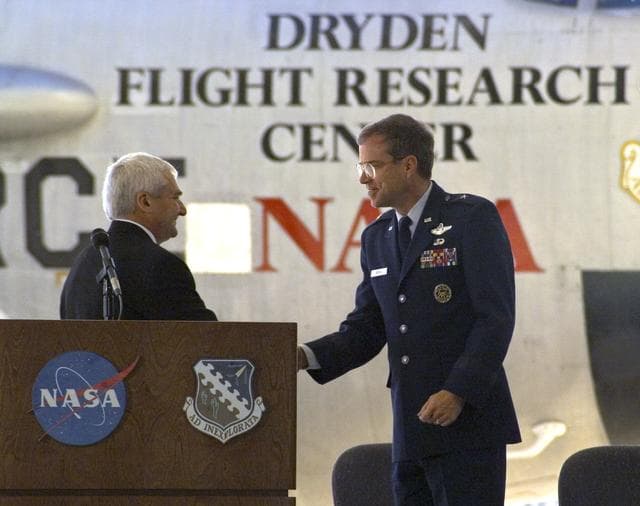
Dryden Center director Kevin Petersen shakes hands with AFFTC commander, Brig. Gen. Curtis Bedke, at the retirement...
AFRC
Image
Dec 17, 2004
ED04-0362-07
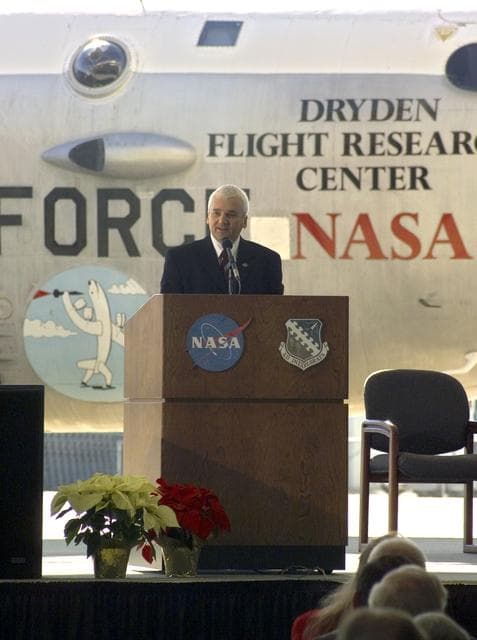
DFRC director Kevin Petersen speaks to an audience of NASA and Air Force visitors, employees and special guests at...
AFRC
Image
Jan 27, 2004
NASA B-52B Carries Pegasus Booster, X-43A Aircraft
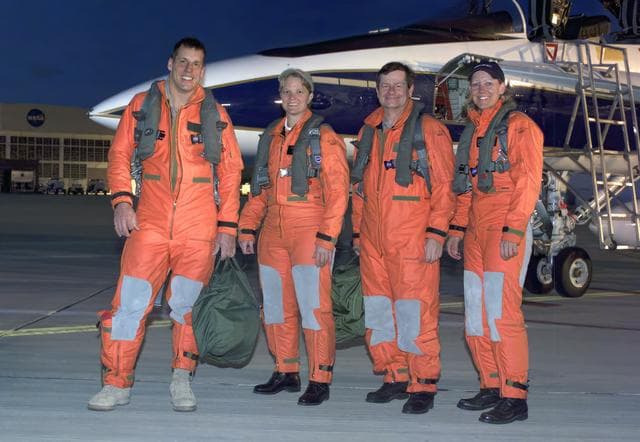
From left, pilot Craig Bomben, photographer Carla Thomas, pilot Frank Batteas, and videographer Lori Losey make up...
AFRC
Image
Jan 22, 2004
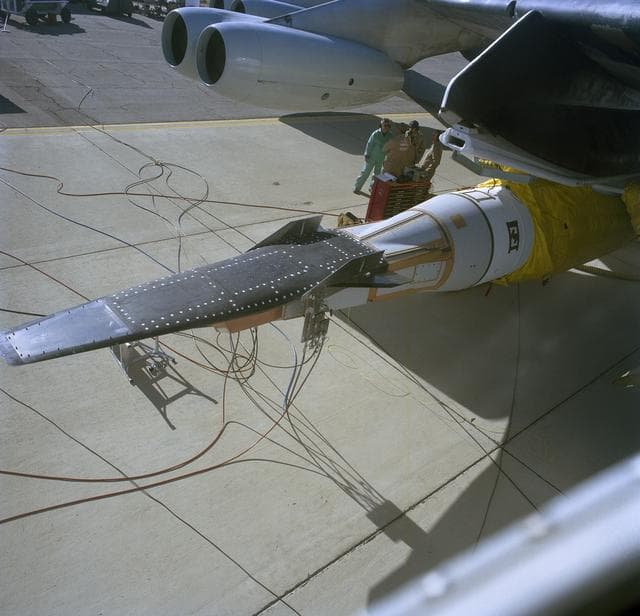
NASA B-52B Carries Pegasus Booster, X-43A Aircraft
The X-43A is attached to the front of a Pegasus booster rocket, which is set to be carried beneath NASA’s B-52B...
AFRC
Image
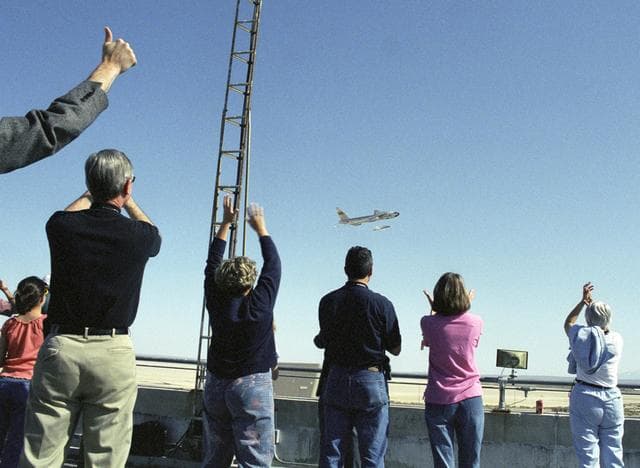
Mar 27, 2004
Employees atop DFRC's main building celebrate the return flyby of the B-52B aircraft after it launched the second X-43A aircraft on its successful flight
Employees atop NASA Dryden's main building celebrate the return flyby of the B-52B aircraft after it launched the...
AFRC
Image
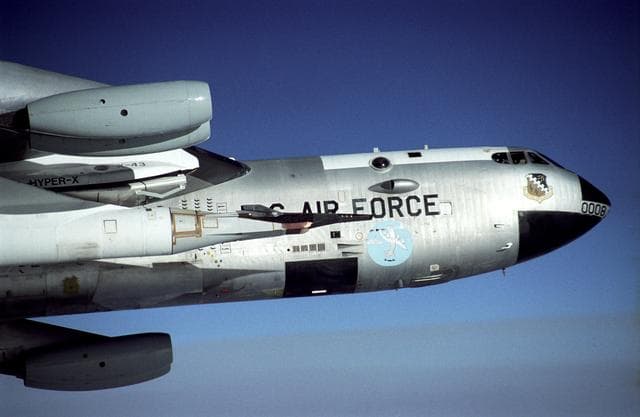
Jan 26, 2004
The black X-43A rides on the front of a modified Pegasus booster rocket hung from the special pylon under the wing of NASA's B-52B mother ship. The photo was taken during a captive carry flight Jan. 26, 2004 to verify systems before an upcoming launch
The black X-43A rides on the front of a modified Pegasus booster rocket hung from the special pylon under the wing...
AFRC
Image
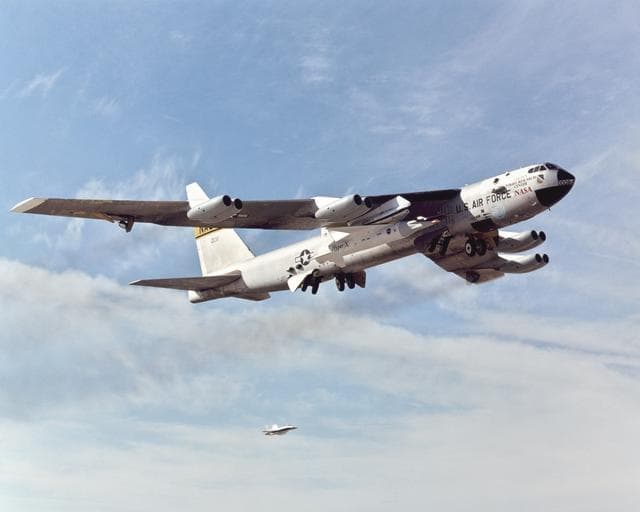
Nov 16, 2004
With the X-43A and its booster rocket tucked under its right wing, NASA's venerable B-52B mothership climbs out after takeoff on its final research mission
With the X-43A and its booster rocket tucked under its right wing, NASA's venerable B-52B mothership climbs out...
AFRC
Image
Oct 10, 2004
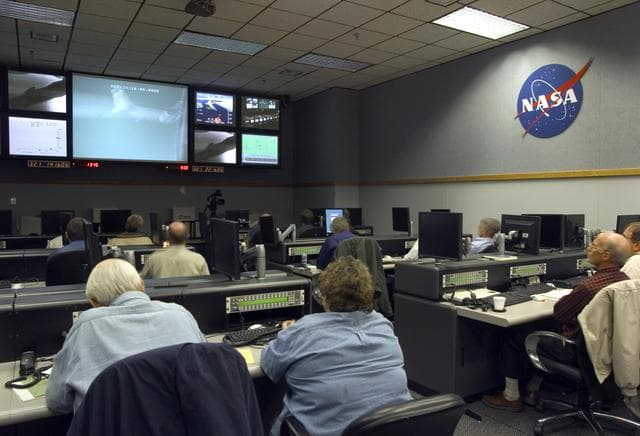
NASA engineers monitor mission progress from a Dryden control room prior to launch of the X-43A scramjet and its booster from NASA's B-52B mothership
NASA engineers monitor mission progress from a Dryden control room prior to launch of the X-43A scramjet and its...
AFRC
Image
Nov 16, 2004
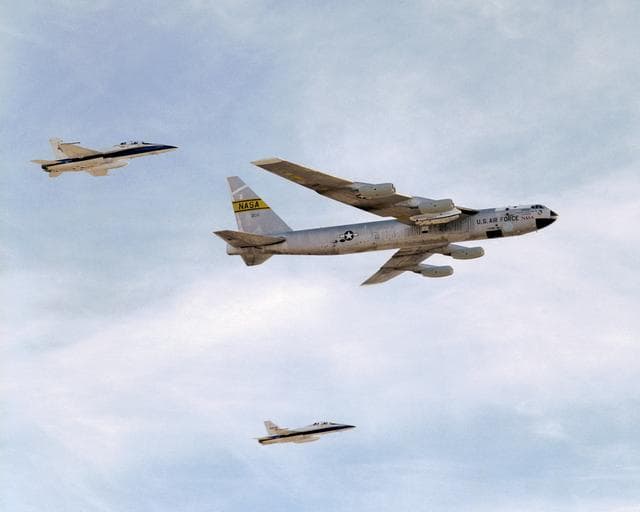
NASA's B-52B mothership, escorted by two F-18s, makes a final flyover after its last research mission that launched the X-43A on its record Mach 9.6 flight
NASA's B-52B mothership, escorted by two F-18s, makes a final flyover after its last research mission that launched...
AFRC
Image
Jun 15, 2004
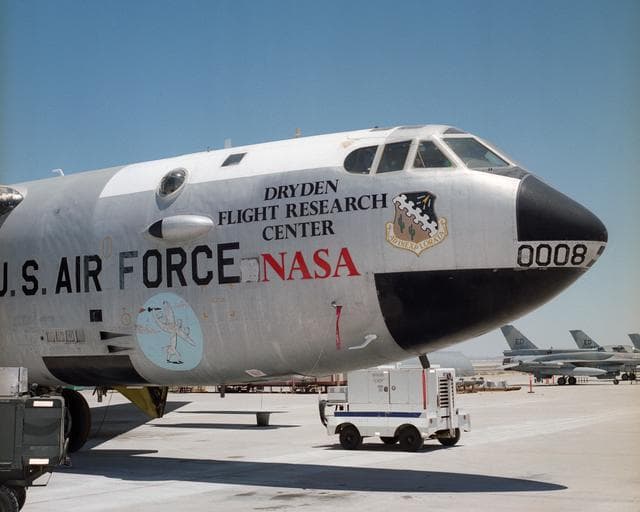
EC04-0197-4
NASA Dryden Flight Research Center's workhorse B-52B launch aircraft, known as NASA 008, displays new markings.
AFRC
Image
Nov 16, 2004
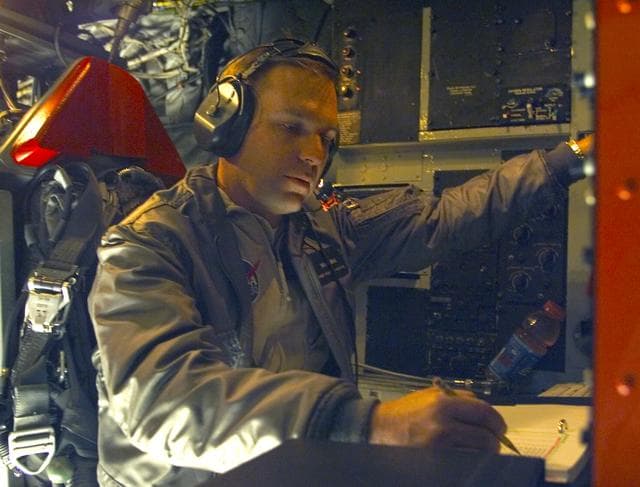
NASA's Brad Neal, X-43A Monitor Station Operator aboard NASA's B-52B mothership, performing pre-flight checks on November 16, 2004
NASA X-43A Monitor Station Operator Brad Neal performs final checks and pre-flight preparations aboard the B-52 for...
AFRC
Image
Nov 16, 2004
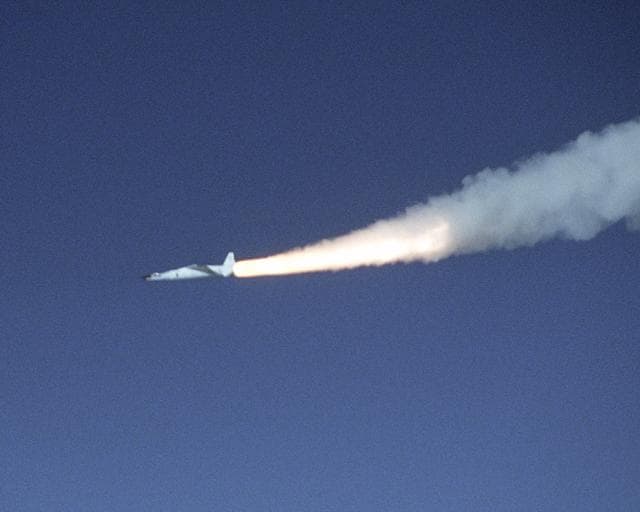
A modified Pegasus rocket ignites moments after release from the B-52B, beginning the acceleration of the X-43A over the Pacific Ocean on Nov. 16, 2004
The third X-43A hypersonic research aircraft and its modified Pegasus booster rocket accelerate after launch from...
AFRC
Image
Mar 27, 2004
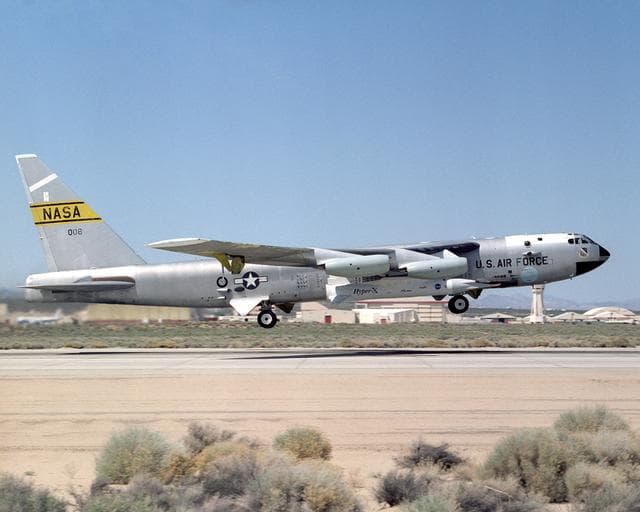
NASA's B-52B launch aircraft takes off carrying the second X-43A hypersonic research vehicle attached to a modified Pegasus rocket, on March 27, 2004
The second X-43A hypersonic research aircraft and its modified Pegasus booster rocket left the runway, carried aloft...
AFRC
Image
Mar 27, 2004
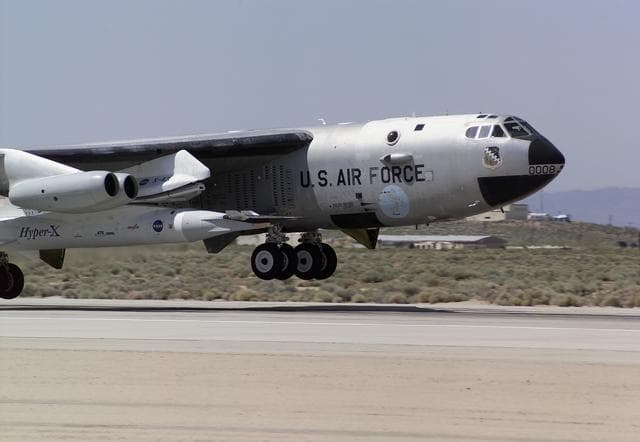
NASA's B-52B launch aircraft takes off carrying the second X-43A hypersonic research vehicle attached to a modified Pegasus rocket, on March 27, 2004
The second X-43A hypersonic research aircraft and its modified Pegasus booster rocket left the runway, carried aloft...
AFRC
Image
Mar 27, 2004
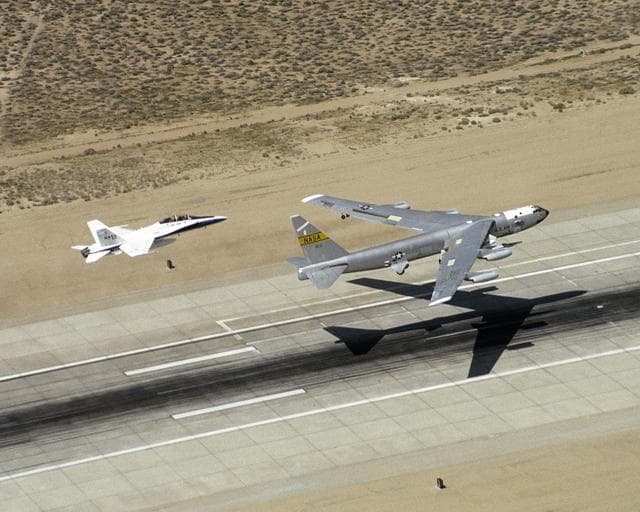
NASA's B-52B launch aircraft takes off carrying the second X-43A hypersonic research vehicle attached to a modified Pegasus rocket, on March 27, 2004
The second X-43A hypersonic research aircraft and its modified Pegasus booster rocket left the runway, carried aloft...
AFRC