CosmosObservatory
Explore
Solar System
Live
Learn
Tools
About
Cosmos Observatory
ToolsAbout
Cosmos Observatory

Explore the universe through NASA data, real-time ISS tracking, Mars rover imagery, asteroid monitoring, and comprehensive space encyclopedia. Your gateway to the cosmos.

Explore

  • APOD
  • Mars Rovers
  • Earth Imagery
  • NASA Gallery
  • ISS Tracker

Data

  • Asteroids
  • Solar System
  • Exoplanets
  • Space Weather
  • Launches

Tools

  • Glossary
  • News
  • Calculators

Legal

  • About
  • Privacy Policy
  • Terms of Use
  • Space Tools
  • Contact

Stay updated with the cosmos

Get weekly digests of APOD highlights, upcoming launches, and space events.

© 2026 Cosmos Observatory. All rights reserved. Built with for space enthusiasts.

This website is not affiliated with, maintained, authorized, endorsed by, or in any way officially connected with NASA or any of its subsidiaries or affiliates. All NASA imagery is in the public domain unless otherwise noted. Data sourced from NASA Open APIs, Launch Library 2, and other open data services.

NASA Gallery

Explore NASA's vast collection of space images, videos, and audio from missions past and present.

  1. Home
  2. /
  3. NASA Gallery

NASA's Image and Video Library: A Visual Archive of Space Exploration

NASA's Image and Video Library is one of the most comprehensive public archives of space imagery in the world, containing over 140,000 images, videos, and audio recordings spanning more than six decades of space exploration. From the earliest Mercury and Gemini missions through the Apollo Moon landings, the Space Shuttle era, and today's cutting-edge observations from the James Webb Space Telescope, this collection documents humanity's journey into the cosmos.

The library includes imagery from diverse sources: telescopes like Hubble and Webb that capture deep-space nebulae, galaxies, and exoplanets; planetary missions like the Mars rovers ( browse Mars photos) and Cassini at Saturn; Earth observation satellites ( see EPIC imagery); astronaut photography from the ISS; and documentation of rocket launches, spacecraft assembly, and ground testing. Most NASA images are in the public domain and free to download at full resolution for educational, editorial, and personal use.

Use the search bar above to find specific subjects — try queries like "Apollo 11," "Hubble Deep Field," "Mars surface," or "astronaut EVA." You can also filter by media type (image, video, or audio). For a daily curated experience, visit the Astronomy Picture of the Day.

Showing results for "Earth Science"

8,332 results found - Page 98 of 348

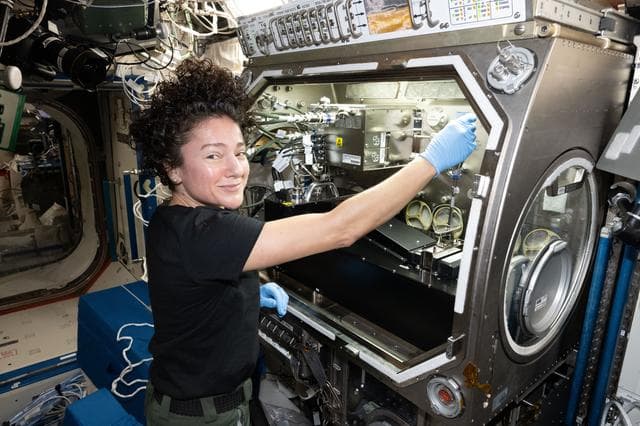
NASA image: NASA astronaut Jessica Meir configures research gear inside the Microgravity Science Glovebox
Image
Apr 29, 2026

NASA astronaut Jessica Meir configures research gear inside the Microgravity Science Glovebox

iss074e0541212 (April 29, 2026) --- NASA astronaut and Expedition 74 flight engineer Jessica Meir configures...

JSC
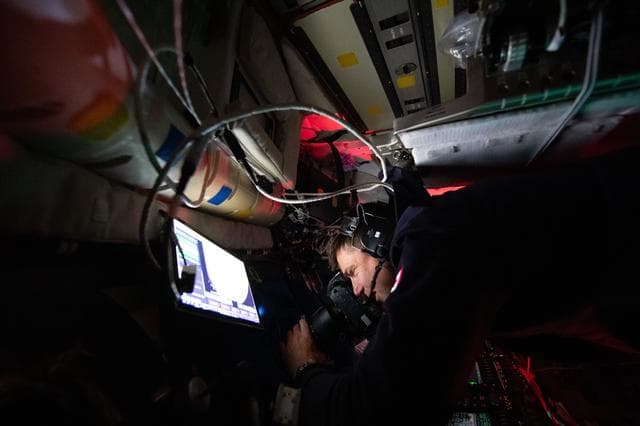
NASA image: Capturing the Lunar Flyby from Orion
Image
Apr 6, 2026

Capturing the Lunar Flyby from Orion

art002e014235 (April 6, 2026) – CSA (Canadian Space Agency) astronaut and Artemis II Mission Specialist Jeremy...

JSC
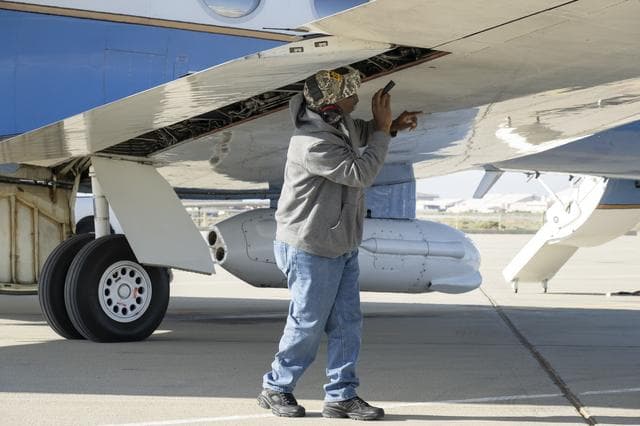
NASA image: NASA C-20A Enables Missions Advancing Earthquake Science
Image
Apr 29, 2026

NASA C-20A Enables Missions Advancing Earthquake Science

Alvin Mitchell, a NASA C-20A aircraft quality assurance inspector, completes preflight checks at NASA’s Armstrong...

AFRC
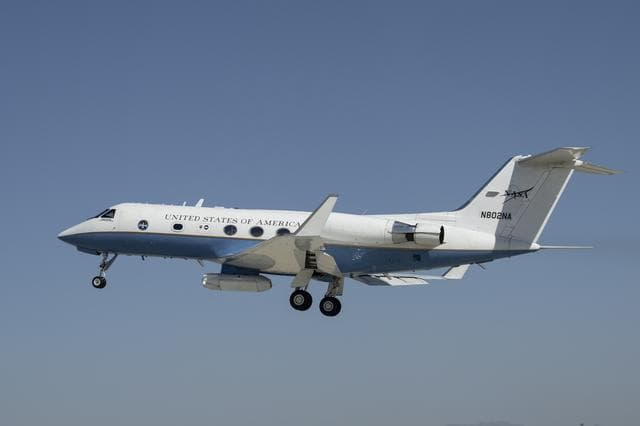
NASA image: NASA C-20A Enables Missions Advancing Earthquake Science
Image
Apr 29, 2026

NASA C-20A Enables Missions Advancing Earthquake Science

NASA’s C-20A takes off from NASA’s Armstrong Flight Research Center in Edwards, California, on Wednesday, April 29,...

AFRC
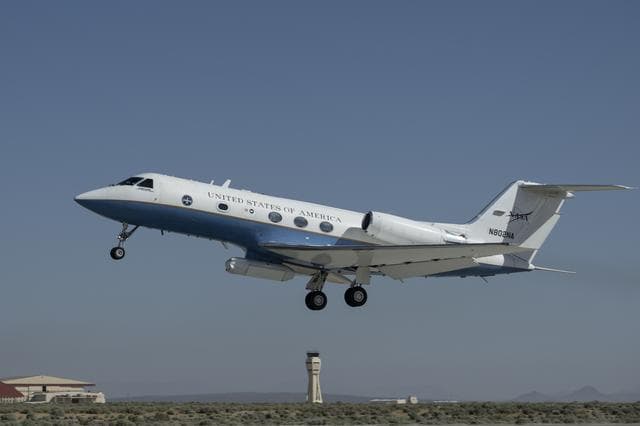
NASA image: NASA C-20A Enables Missions Advancing Earthquake Science
Image
Apr 29, 2026

NASA C-20A Enables Missions Advancing Earthquake Science

NASA’s C-20A takes off from NASA’s Armstrong Flight Research Center in Edwards, California, on Wednesday, April 29,...

AFRC
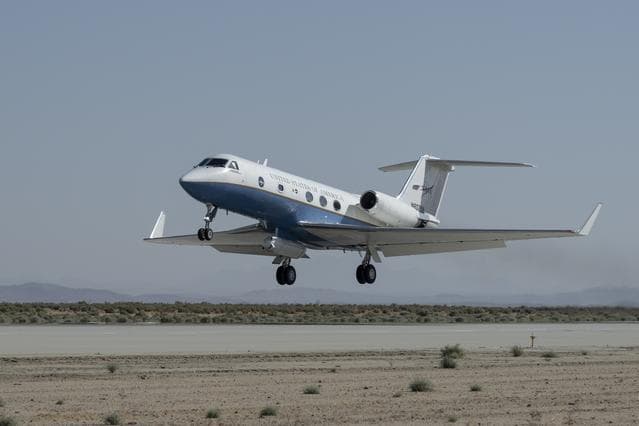
NASA image: NASA C-20A Enables Missions Advancing Earthquake Science
Image
Apr 29, 2026

NASA C-20A Enables Missions Advancing Earthquake Science

NASA’s C-20A takes off from NASA’s Armstrong Flight Research Center in Edwards, California, on Wednesday, April 29,...

AFRC
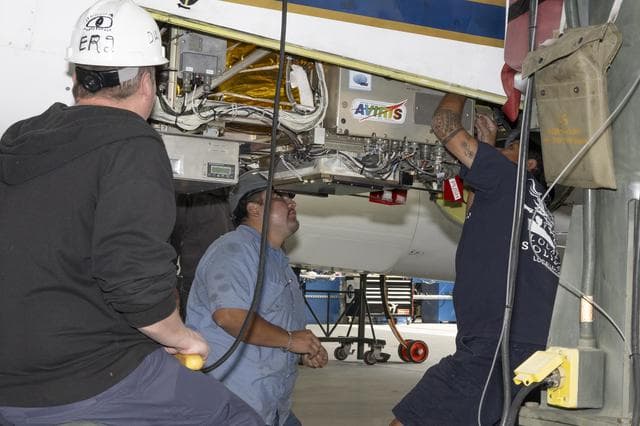
NASA image: NASA ER-2 Prepares for Geological Earth Mapping Experiment Flights
Image
Mar 10, 2026

NASA ER-2 Prepares for Geological Earth Mapping Experiment Flights

Crew chief Darin Whittington and mechanic Edwin Flores watch as mechanic Francisco Rodriguez works on a mounting...

AFRC
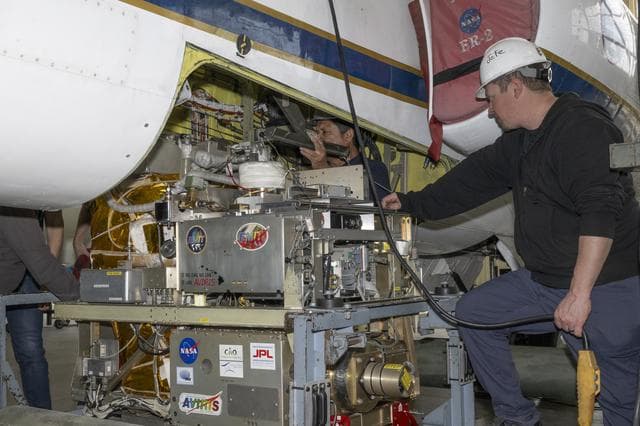
NASA image: NASA ER-2 Prepares for Geological Earth Mapping Experiment Flights
Image
Mar 10, 2026

NASA ER-2 Prepares for Geological Earth Mapping Experiment Flights

Mechanic Francisco Rodriguez and crew chief Darin Whittington installed the Airborne Visible/Infrared Imaging...

AFRC
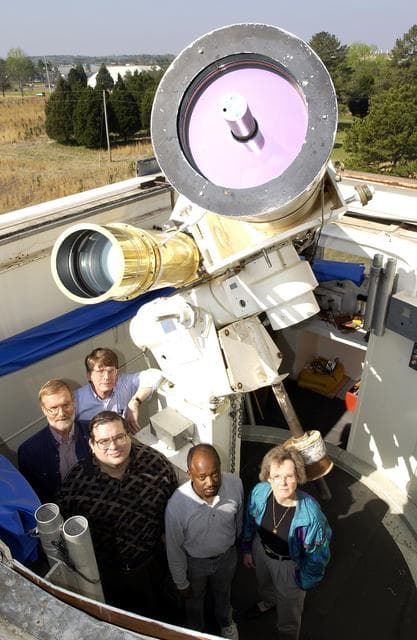
NASA image: Space Science
Image
Apr 1, 2002

Space Science

Using the Solar Vector Magnetograph, a solar observation facility at NASA's Marshall Space Flight Center (MSFC),...

MSFC
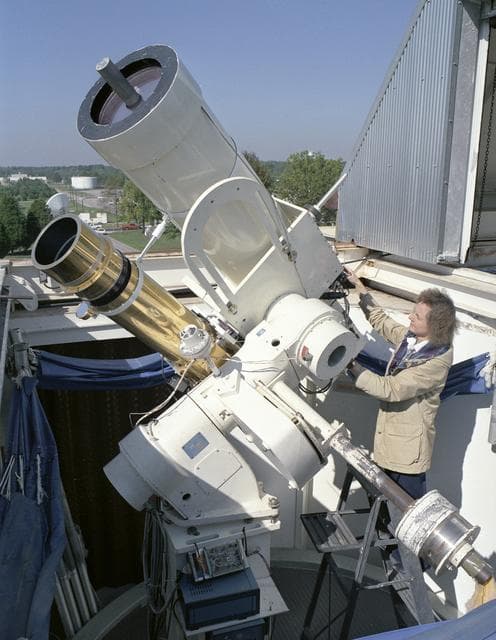
NASA image: Space Science
Image
Oct 1, 1990

Space Science

Using the Solar Vector Magnetograph, a solar observation facility at NASA's Marshall Space Flight Center (MSFC),...

MSFC
NASA image: Salt Lake City, Utah 2002
Image
Dec 8, 2017

Salt Lake City, Utah 2002

Salt Lake City, Utah, Winter 2001 The 2002 Winter Olympics are hosted by Salt Lake City at several venues within the...

GSFC
NASA image: KSC-2013-3838
Image
Nov 5, 2013

KSC-2013-3838

CAPE CANAVERAL, Fla. – The Mars Atmosphere and Volatile Evolution, or MAVEN, mission is being prepared for its...

KSC
NASA image: 'EPIC' View of Africa and Europe from a Million Miles Away
Image
Dec 8, 2017

'EPIC' View of Africa and Europe from a Million Miles Away

Africa is front and center in this image of Earth taken by a NASA camera on the Deep Space Climate Observatory...

GSFC
NASA image: NASA’s Lunar Vacuum Operates on the Moon
Video
Mar 6, 2025

NASA’s Lunar Vacuum Operates on the Moon

A technology demonstration instrument aboard Firefly Aerospace’s Blue Ghost Mission 1 has operated on the Moon as...

MSFC
NASA image: Inspiring Women in Science: Piers Sellers
Video
Mar 3, 2015

Inspiring Women in Science: Piers Sellers

Amy Poehler's Smart Girls and PBS Digital Studios "It's Okay To Be Smart" asked people to submit videos saying who...

GSFC
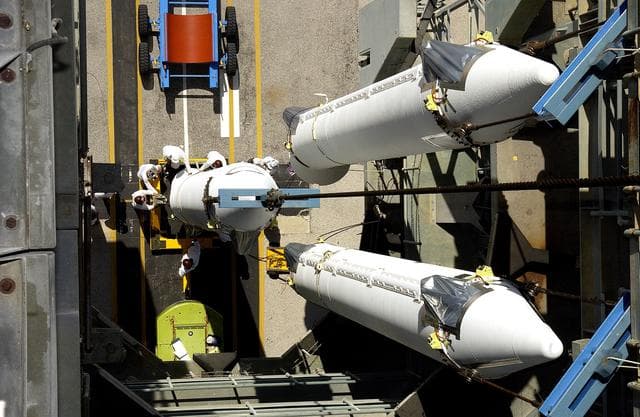
NASA image: KENNEDY SPACE CENTER, FLA. -   This view from the mobile service tower on Launch Complex 17-B, Cape Canaveral Air Force Station, shows two solid rocket boosters (SRBs) already suspended in the tower while another is being lifted.  They are three of nine  46-inch-diameter, stretched SRBs that are being attached to the Delta II Heavy rocket that will launch the Space Infrared Telescope Facility (SIRTF).  Consisting of three cryogenically cooled science instruments and an 0.85-meter telescope, SIRTF is one of NASA's largest infrared telescopes to be launched.  SIRTF will obtain images and spectra by detecting the infrared energy, or heat, radiated by objects in space. Most of this infrared radiation is blocked by the Earth's atmosphere and cannot be observed from the ground.
Image
Jul 22, 2003

KENNEDY SPACE CENTER, FLA. - This view from the mobile service tower on Launch Complex 17-B, Cape Canaveral Air Force Station, shows two solid rocket boosters (SRBs) already suspended in the tower while another is being lifted. They are three of nine 46-inch-diameter, stretched SRBs that are being attached to the Delta II Heavy rocket that will launch the Space Infrared Telescope Facility (SIRTF). Consisting of three cryogenically cooled science instruments and an 0.85-meter telescope, SIRTF is one of NASA's largest infrared telescopes to be launched. SIRTF will obtain images and spectra by detecting the infrared energy, or heat, radiated by objects in space. Most of this infrared radiation is blocked by the Earth's atmosphere and cannot be observed from the ground.

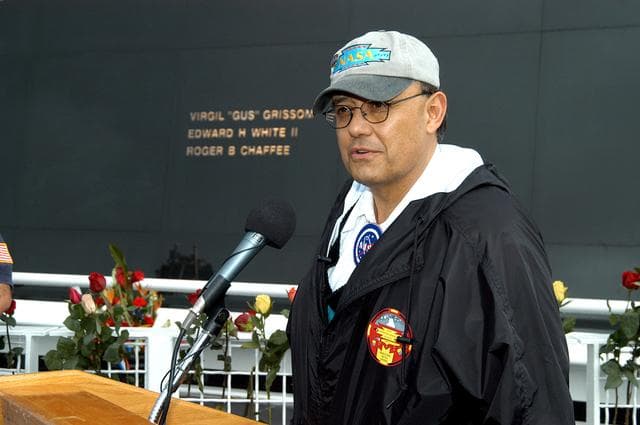
NASA image: KENNEDY SPACE CENTER, FLA. - Dr. Ed Galindo speaks to the visitors at the memorial service held at the Space Memorial Mirror for the crew of Columbia.  Galindo is science educator of Shoshone-Bannock High School and introduced the dancers from the Shoshone-Bannock Native American community in Fort Hall, Idaho.  The dancers performed a healing ceremony during the memorial.  Students and staff of the Shoshone-Bannock Nation had an experiment on board Columbia. Feb. 1 is the one-year anniversary of the loss of the crew and orbiter Columbia in a tragic accident as the ship returned to Earth following mission STS-107. The public was invited to the memorial service, held in the KSC Visitor Complex, which included comments by Center Director Jim Kennedy and Executive Director of Florida Space Authority Winston Scott.  Scott is a former astronaut who flew on Columbia in 1997.
Image
Feb 1, 2004

KENNEDY SPACE CENTER, FLA. - Dr. Ed Galindo speaks to the visitors at the memorial service held at the Space Memorial Mirror for the crew of Columbia. Galindo is science educator of Shoshone-Bannock High School and introduced the dancers from the Shoshone-Bannock Native American community in Fort Hall, Idaho. The dancers performed a healing ceremony during the memorial. Students and staff of the Shoshone-Bannock Nation had an experiment on board Columbia. Feb. 1 is the one-year anniversary of the loss of the crew and orbiter Columbia in a tragic accident as the ship returned to Earth following mission STS-107. The public was invited to the memorial service, held in the KSC Visitor Complex, which included comments by Center Director Jim Kennedy and Executive Director of Florida Space Authority Winston Scott. Scott is a former astronaut who flew on Columbia in 1997.
NASA image: KENNEDY SPACE CENTER, FLA. -   This view from the mobile service tower on Launch Complex 17-B, Cape Canaveral Air Force Station, shows two solid rocket boosters (SRBs) already suspended in the tower while another is being lifted.  They are three of nine  46-inch-diameter, stretched SRBs that are being attached to the Delta II Heavy rocket that will launch the Space Infrared Telescope Facility (SIRTF).  Consisting of three cryogenically cooled science instruments and an 0.85-meter telescope, SIRTF is one of NASA's largest infrared telescopes to be launched.  SIRTF will obtain images and spectra by detecting the infrared energy, or heat, radiated by objects in space. Most of this infrared radiation is blocked by the Earth's atmosphere and cannot be observed from the ground.
Image
Jul 22, 2003

KENNEDY SPACE CENTER, FLA. - This view from the mobile service tower on Launch Complex 17-B, Cape Canaveral Air Force Station, shows two solid rocket boosters (SRBs) already suspended in the tower while another is being lifted. They are three of nine 46-inch-diameter, stretched SRBs that are being attached to the Delta II Heavy rocket that will launch the Space Infrared Telescope Facility (SIRTF). Consisting of three cryogenically cooled science instruments and an 0.85-meter telescope, SIRTF is one of NASA's largest infrared telescopes to be launched. SIRTF will obtain images and spectra by detecting the infrared energy, or heat, radiated by objects in space. Most of this infrared radiation is blocked by the Earth's atmosphere and cannot be observed from the ground.
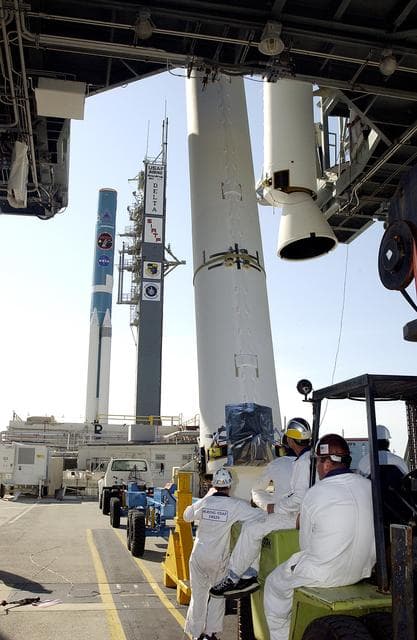
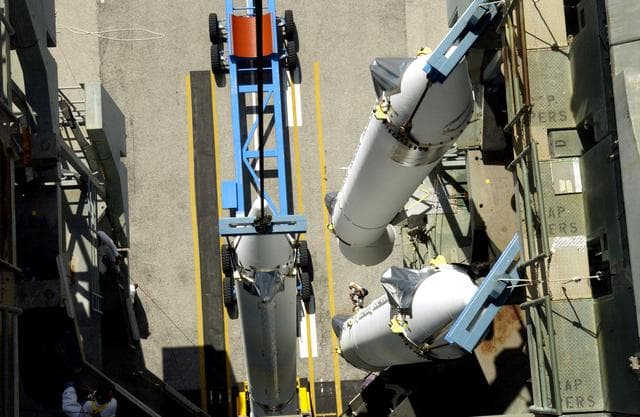
NASA image: KENNEDY SPACE CENTER, FLA. -   Another solid rocket booster (SRB) is lifted to vertical on Launch Complex 17-B, Cape Canaveral Air Force Station, to join the one already in place in the mobile service tower.  The SRBs will be attached to the Delta II Heavy rocket that will launch the Space Infrared Telescope Facility (SIRTF).  The Delta II Heavy features nine 46-inch-diameter, stretched SRBs.  SIRTF, consisting of three cryogenically cooled science instruments and an 0.85-meter telescope, is one of NASA's largest infrared telescopes to be launched.  SIRTF will obtain images and spectra by detecting the infrared energy, or heat, radiated by objects in space. Most of this infrared radiation is blocked by the Earth's atmosphere and cannot be observed from the ground.
Image
Jul 22, 2003

KENNEDY SPACE CENTER, FLA. - Another solid rocket booster (SRB) is lifted to vertical on Launch Complex 17-B, Cape Canaveral Air Force Station, to join the one already in place in the mobile service tower. The SRBs will be attached to the Delta II Heavy rocket that will launch the Space Infrared Telescope Facility (SIRTF). The Delta II Heavy features nine 46-inch-diameter, stretched SRBs. SIRTF, consisting of three cryogenically cooled science instruments and an 0.85-meter telescope, is one of NASA's largest infrared telescopes to be launched. SIRTF will obtain images and spectra by detecting the infrared energy, or heat, radiated by objects in space. Most of this infrared radiation is blocked by the Earth's atmosphere and cannot be observed from the ground.

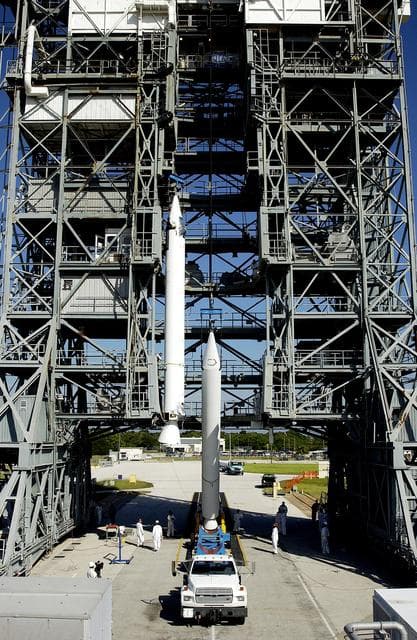
NASA image: KENNEDY SPACE CENTER, FLA. -   Another solid rocket booster (SRB) is lifted to vertical on Launch Complex 17-B, Cape Canaveral Air Force Station, to join the one already in place in the mobile service tower.  The SRBs will be attached to the Delta II Heavy rocket in the background that will launch the Space Infrared Telescope Facility (SIRTF). The Delta II Heavy features nine 46-inch-diameter, stretched SRBs.  SIRTF, consisting of three cryogenically cooled science instruments and an 0.85-meter telescope, is one of NASA's largest infrared telescopes to be launched.  SIRTF will obtain images and spectra by detecting the infrared energy, or heat, radiated by objects in space. Most of this infrared radiation is blocked by the Earth's atmosphere and cannot be observed from the ground.
Image
Jul 22, 2003

KENNEDY SPACE CENTER, FLA. - Another solid rocket booster (SRB) is lifted to vertical on Launch Complex 17-B, Cape Canaveral Air Force Station, to join the one already in place in the mobile service tower. The SRBs will be attached to the Delta II Heavy rocket in the background that will launch the Space Infrared Telescope Facility (SIRTF). The Delta II Heavy features nine 46-inch-diameter, stretched SRBs. SIRTF, consisting of three cryogenically cooled science instruments and an 0.85-meter telescope, is one of NASA's largest infrared telescopes to be launched. SIRTF will obtain images and spectra by detecting the infrared energy, or heat, radiated by objects in space. Most of this infrared radiation is blocked by the Earth's atmosphere and cannot be observed from the ground.

NASA image: STS-45 Atlantis, Orbiter Vehicle (OV) 104, crew insignia
Image
Sep 10, 1999

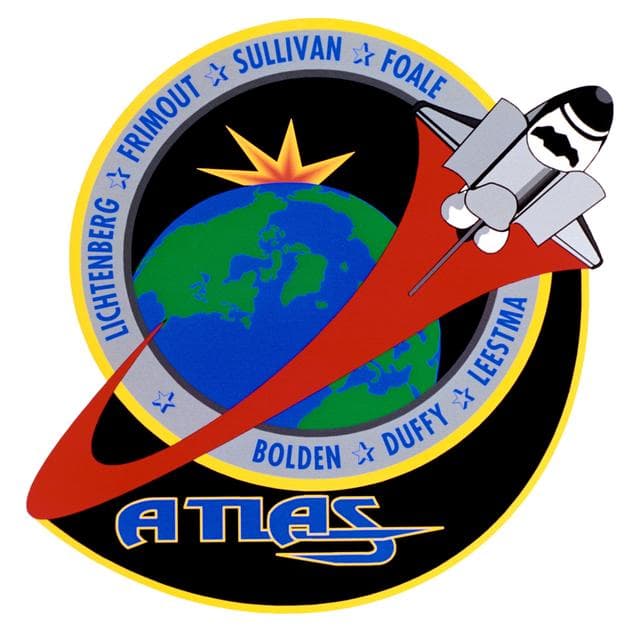
STS-45 Atlantis, Orbiter Vehicle (OV) 104, crew insignia

STS045-S-001 (October 1991) --- Designed by the crew members, the patch depicts the space shuttle launching from the...

JSC
NASA image: Microgravity
Image
Oct 1, 2001

Microgravity

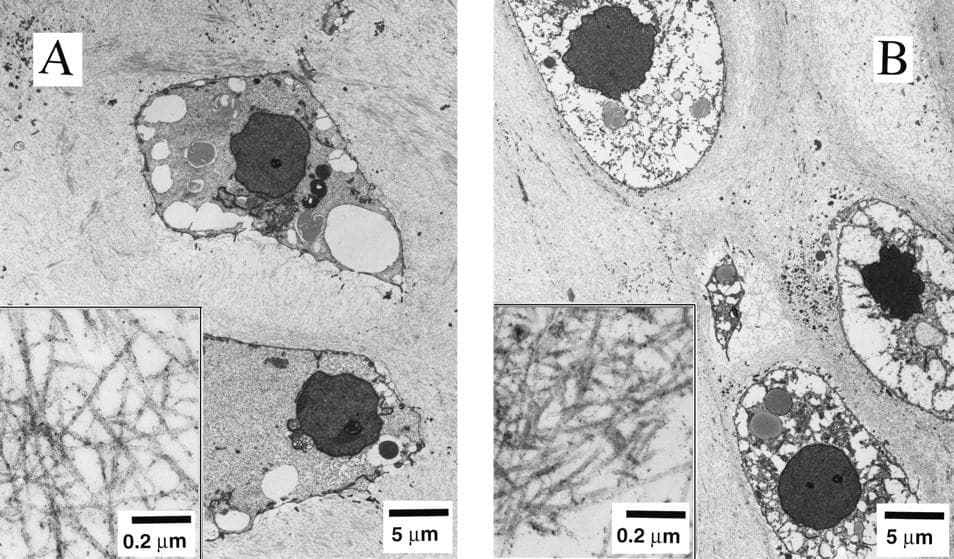
Dr. Lisa E. Freed of the Massachusetts Institute of Technology and her colleagues have reported that initially...

MSFC
NASA image: EMIT Identifying Methane Plumes Around the Globe
Image
Nov 17, 2023

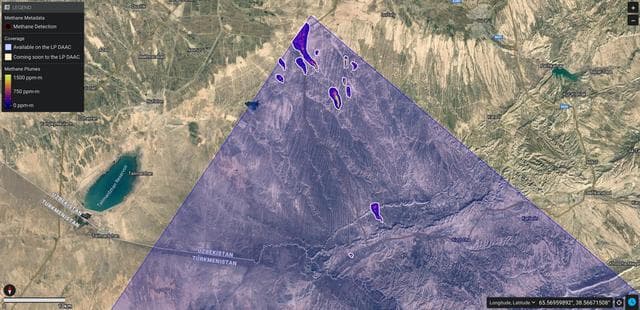
EMIT Identifying Methane Plumes Around the Globe

NASA's Earth Surface Mineral Dust Source Investigation (EMIT) detected a cluster of 12 methane plumes on Sept. 1,...

JPL
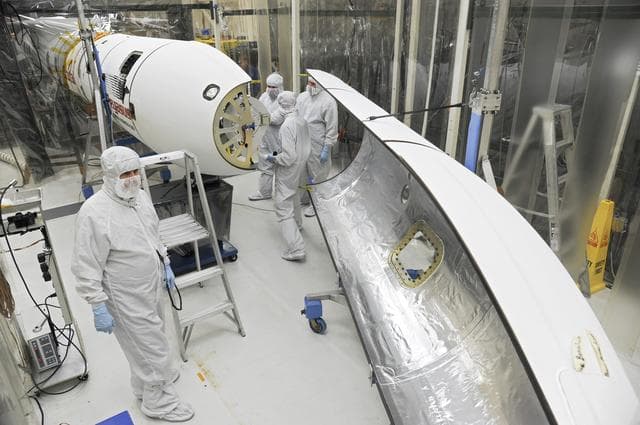
NASA image: KSC-2013-2629
Image
Jun 10, 2013

KSC-2013-2629

VANDENBERG AFB – Orbital Sciences team members move the second half of the payload fairing before it is placed over...

KSC
PreviousPage 98 of 100Next

Frequently Asked Questions About NASA Images

Are NASA images free to use?+
Yes, most NASA images are in the public domain and are free to use for educational, informational, and personal purposes. NASA's media usage guidelines state that NASA material is not copyrighted unless otherwise noted. However, the NASA logo and certain insignia are protected. Some images may include identifiable individuals or third-party content that requires additional permissions. Always check the specific image's usage rights and credit NASA as the source.
How many images does NASA have?+
NASA's Image and Video Library contains over 140,000 publicly accessible images, videos, and audio files spanning the agency's entire history, from the Mercury program of the 1960s to the latest James Webb Space Telescope discoveries. The collection grows daily as new missions capture imagery and archival materials are digitized. Individual mission archives, such as Mars rover photos, contain hundreds of thousands of additional images.
Can I download NASA images?+
Yes, you can download NASA images in multiple resolutions directly from this gallery. Each image detail page provides download links for original (full resolution), large (1920px), medium (960px), small (480px), and thumbnail sizes. NASA encourages the public to use these images for education, media, and personal projects. High-resolution originals are ideal for printing and professional use.

Explore More NASA Content

Astronomy Picture of the Day

Daily curated space image

Mars Rover Photos

Curiosity & Perseverance images

Earth from Space

DSCOVR EPIC daily images

Launch Schedule

Upcoming rocket launches

Space News

Mission updates & discoveries

KENNEDY SPACE CENTER, FLA. - This view from the mobile service tower on Launch Complex 17-B, Cape Canaveral Air...

KSC

KENNEDY SPACE CENTER, FLA. - Dr. Ed Galindo speaks to the visitors at the memorial service held at the Space...

KSC

KENNEDY SPACE CENTER, FLA. - This view from the mobile service tower on Launch Complex 17-B, Cape Canaveral Air...

KSC

KENNEDY SPACE CENTER, FLA. - Another solid rocket booster (SRB) is lifted to vertical on Launch Complex 17-B, Cape...

KSC

KENNEDY SPACE CENTER, FLA. - Another solid rocket booster (SRB) is lifted to vertical on Launch Complex 17-B, Cape...

KSC