CosmosObservatory
Explore
Solar System
Live
Learn
Tools
About
Cosmos Observatory
ToolsAbout
Cosmos Observatory

Explore the universe through NASA data, real-time ISS tracking, Mars rover imagery, asteroid monitoring, and comprehensive space encyclopedia. Your gateway to the cosmos.

Explore

  • APOD
  • Mars Rovers
  • Earth Imagery
  • NASA Gallery
  • ISS Tracker

Data

  • Asteroids
  • Solar System
  • Exoplanets
  • Space Weather
  • Launches

Tools

  • Glossary
  • News
  • Calculators

Legal

  • About
  • Privacy Policy
  • Terms of Use
  • Space Tools
  • Contact

Stay updated with the cosmos

Get weekly digests of APOD highlights, upcoming launches, and space events.

© 2026 Cosmos Observatory. All rights reserved. Built with for space enthusiasts.

This website is not affiliated with, maintained, authorized, endorsed by, or in any way officially connected with NASA or any of its subsidiaries or affiliates. All NASA imagery is in the public domain unless otherwise noted. Data sourced from NASA Open APIs, Launch Library 2, and other open data services.

NASA Gallery

Explore NASA's vast collection of space images, videos, and audio from missions past and present.

  1. Home
  2. /
  3. NASA Gallery

NASA's Image and Video Library: A Visual Archive of Space Exploration

NASA's Image and Video Library is one of the most comprehensive public archives of space imagery in the world, containing over 140,000 images, videos, and audio recordings spanning more than six decades of space exploration. From the earliest Mercury and Gemini missions through the Apollo Moon landings, the Space Shuttle era, and today's cutting-edge observations from the James Webb Space Telescope, this collection documents humanity's journey into the cosmos.

The library includes imagery from diverse sources: telescopes like Hubble and Webb that capture deep-space nebulae, galaxies, and exoplanets; planetary missions like the Mars rovers ( browse Mars photos) and Cassini at Saturn; Earth observation satellites ( see EPIC imagery); astronaut photography from the ISS; and documentation of rocket launches, spacecraft assembly, and ground testing. Most NASA images are in the public domain and free to download at full resolution for educational, editorial, and personal use.

Use the search bar above to find specific subjects — try queries like "Apollo 11," "Hubble Deep Field," "Mars surface," or "astronaut EVA." You can also filter by media type (image, video, or audio). For a daily curated experience, visit the Astronomy Picture of the Day.

Showing results for "right"

18,405 results found - Page 96 of 767

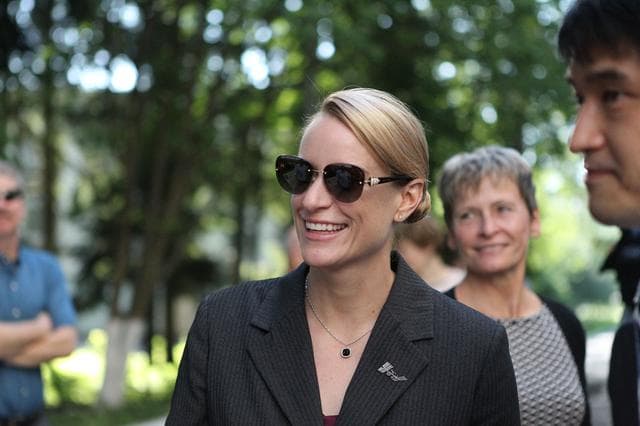
NASA image: ISS Expedition 48-49 crewmember Kate Rubins of NASA (left) flashes a smile June 24 at the Gagarin Cosmonaut Training Center in Star City, Russia before flying to her launch site at the Baikonur Cosmodrome in Kazakhstan for final pre-launch training. Looking on are crewmate Takuya Onishi of the Japan Aerospace Exploration Agency (right) and backup crewmember Peggy Whitson of NASA (background). Rubins, Anatoly Ivanishin of Roscosmos and Onishi will launch July 7 from the Baikonur Cosmodrome in Kazakhstan on the Soyuz MS-01 spacecraft for a planned four-month mission on the International Space Station...NASA/Stephanie Stoll.
Image
Jun 24, 2016

ISS Expedition 48-49 crewmember Kate Rubins of NASA (left) flashes a smile June 24 at the Gagarin Cosmonaut Training Center in Star City, Russia before flying to her launch site at the Baikonur Cosmodrome in Kazakhstan for final pre-launch training. Looking on are crewmate Takuya Onishi of the Japan Aerospace Exploration Agency (right) and backup crewmember Peggy Whitson of NASA (background). Rubins, Anatoly Ivanishin of Roscosmos and Onishi will launch July 7 from the Baikonur Cosmodrome in Kazakhstan on the Soyuz MS-01 spacecraft for a planned four-month mission on the International Space Station...NASA/Stephanie Stoll.

ISS Expedition 48-49 crewmember Kate Rubins of NASA (left) flashes a smile June 24 at the Gagarin Cosmonaut Training...

JSC
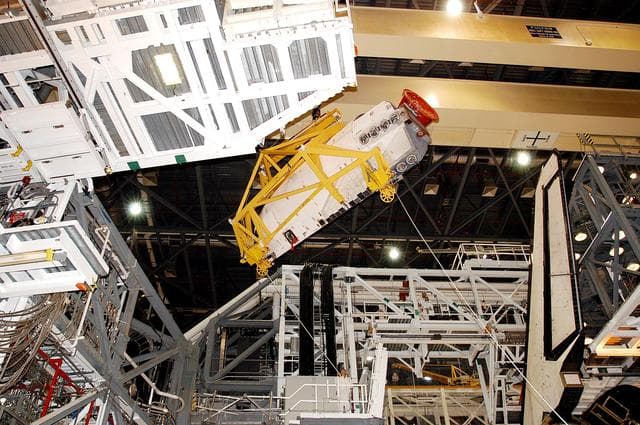
NASA image: KENNEDY SPACE CENTER, FLA. -  In the Orbiter Processing Facility, an orbital maneuvering system (OMS) pod is suspended in air as it is moved toward Atlantis for installation.  Two OMS pods are attached to the upper aft fuselage left and right sides. Fabricated primarily of graphite epoxy composite and aluminum, each pod is 21.8 feet long and 11.37 feet wide at its aft end and 8.41 feet wide at its forward end, with a surface area of approximately 435 square feet. Each pod houses the Reaction Control System propulsion components used for inflight maneuvering and is attached to the aft fuselage with 11 bolts.
Image
Oct 30, 2003

KENNEDY SPACE CENTER, FLA. - In the Orbiter Processing Facility, an orbital maneuvering system (OMS) pod is suspended in air as it is moved toward Atlantis for installation. Two OMS pods are attached to the upper aft fuselage left and right sides. Fabricated primarily of graphite epoxy composite and aluminum, each pod is 21.8 feet long and 11.37 feet wide at its aft end and 8.41 feet wide at its forward end, with a surface area of approximately 435 square feet. Each pod houses the Reaction Control System propulsion components used for inflight maneuvering and is attached to the aft fuselage with 11 bolts.

KENNEDY SPACE CENTER, FLA. - In the Orbiter Processing Facility, an orbital maneuvering system (OMS) pod is...
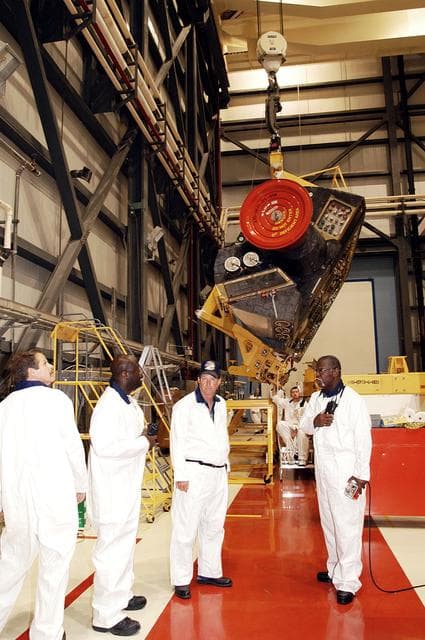
NASA image: KENNEDY SPACE CENTER, FLA. - In the Orbiter Processing Facility, workers discuss the next step in moving the orbital maneuvering system (OMS) pod behind them.  The OMS pod will be installed on Atlantis.  Two OMS pods are attached to the upper aft fuselage left and right sides. Fabricated primarily of graphite epoxy composite and aluminum, each pod is 21.8 feet long and 11.37 feet wide at its aft end and 8.41 feet wide at its forward end, with a surface area of approximately 435 square feet. Each pod houses the Reaction Control System propulsion components used for inflight maneuvering and is attached to the aft fuselage with 11 bolts.
Image
Oct 30, 2003

KENNEDY SPACE CENTER, FLA. - In the Orbiter Processing Facility, workers discuss the next step in moving the orbital maneuvering system (OMS) pod behind them. The OMS pod will be installed on Atlantis. Two OMS pods are attached to the upper aft fuselage left and right sides. Fabricated primarily of graphite epoxy composite and aluminum, each pod is 21.8 feet long and 11.37 feet wide at its aft end and 8.41 feet wide at its forward end, with a surface area of approximately 435 square feet. Each pod houses the Reaction Control System propulsion components used for inflight maneuvering and is attached to the aft fuselage with 11 bolts.

KENNEDY SPACE CENTER, FLA. - In the Orbiter Processing Facility, workers discuss the next step in moving the orbital...
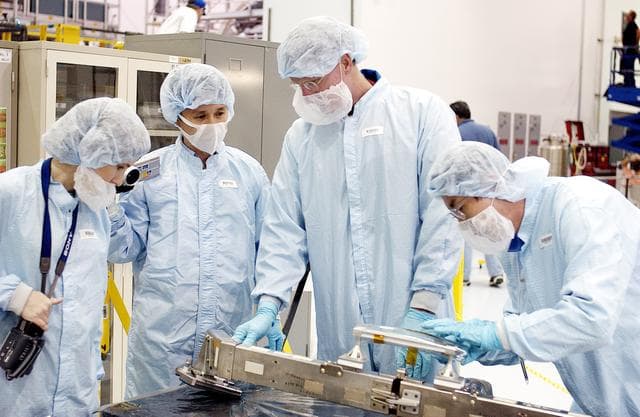
NASA image: KENNEDY SPACE CENTER, FLA. - STS-115 Mission Specialist Joseph Tanner (second from right) checks out a camera and cables for the Japanese Experiment Module (JEM) in the Space Station Processing Facility. Known as Kibo, the JEM consists of six components: two research facilities - the Pressurized Module and the Exposed Facility; a Logistics Module attached to each of them; a Remote Manipulator System; and an Inter-Orbit Communication System unit. Kibo also has a scientific airlock through which experiments are transferred and exposed to the external environment of space. The various components of JEM will be assembled in space over the course of three Space Shuttle missions. Equipment familiarization is a routine part of astronaut training and launch preparations.
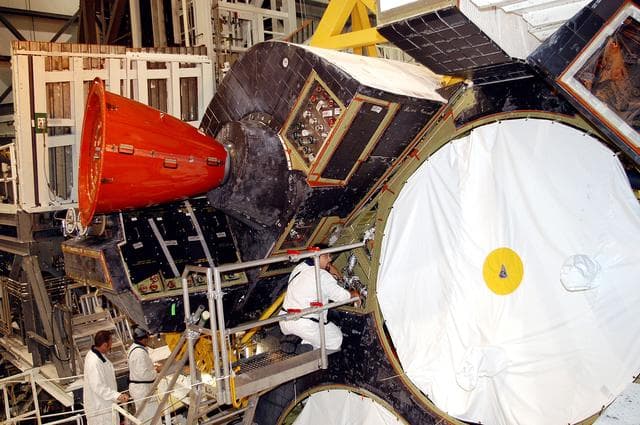
Image
Oct 22, 2003

KENNEDY SPACE CENTER, FLA. - STS-115 Mission Specialist Joseph Tanner (second from right) checks out a camera and cables for the Japanese Experiment Module (JEM) in the Space Station Processing Facility. Known as Kibo, the JEM consists of six components: two research facilities - the Pressurized Module and the Exposed Facility; a Logistics Module attached to each of them; a Remote Manipulator System; and an Inter-Orbit Communication System unit. Kibo also has a scientific airlock through which experiments are transferred and exposed to the external environment of space. The various components of JEM will be assembled in space over the course of three Space Shuttle missions. Equipment familiarization is a routine part of astronaut training and launch preparations.

NASA image: KENNEDY SPACE CENTER, FLA. - In the Orbiter Processing Facility, technicians make adjustments to the orbital maneuvering system (OMS) pod being installed on Atlantis.   The OMS pod is one of two that are attached to the upper aft fuselage left and right sides. Fabricated primarily of graphite epoxy composite and aluminum, each pod is 21.8 feet long and 11.37 feet wide at its aft end and 8.41 feet wide at its forward end, with a surface area of approximately 435 square feet. Each pod houses the Reaction Control System propulsion components used for inflight maneuvering and is attached to the aft fuselage with 11 bolts.
Image
Oct 30, 2003

KENNEDY SPACE CENTER, FLA. - In the Orbiter Processing Facility, technicians make adjustments to the orbital maneuvering system (OMS) pod being installed on Atlantis. The OMS pod is one of two that are attached to the upper aft fuselage left and right sides. Fabricated primarily of graphite epoxy composite and aluminum, each pod is 21.8 feet long and 11.37 feet wide at its aft end and 8.41 feet wide at its forward end, with a surface area of approximately 435 square feet. Each pod houses the Reaction Control System propulsion components used for inflight maneuvering and is attached to the aft fuselage with 11 bolts.

KENNEDY SPACE CENTER, FLA. - In the Orbiter Processing Facility, technicians make adjustments to the orbital...
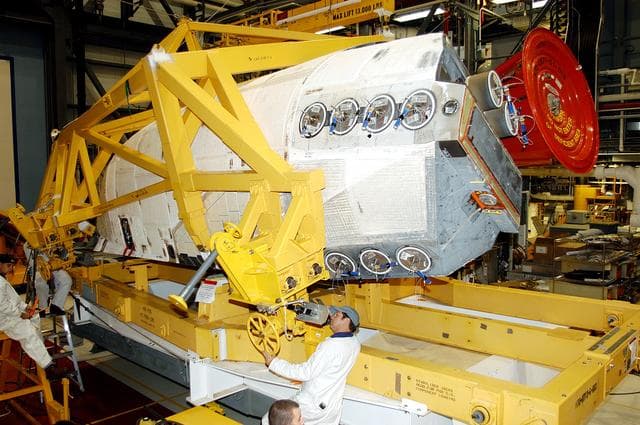
NASA image: KENNEDY SPACE CENTER, FLA. - In the Orbiter Processing Facility, one of two orbital maneuvering system (OMS) pods is being moved for installation on Atlantis.  The OMS pods are attached to the upper aft fuselage left and right sides. Fabricated primarily of graphite epoxy composite and aluminum, each pod is 21.8 feet long and 11.37 feet wide at its aft end and 8.41 feet wide at its forward end, with a surface area of approximately 435 square feet. Each pod houses the Reaction Control System propulsion components used for inflight maneuvering and is attached to the aft fuselage with 11 bolts.
Image
Oct 30, 2003

KENNEDY SPACE CENTER, FLA. - In the Orbiter Processing Facility, one of two orbital maneuvering system (OMS) pods is being moved for installation on Atlantis. The OMS pods are attached to the upper aft fuselage left and right sides. Fabricated primarily of graphite epoxy composite and aluminum, each pod is 21.8 feet long and 11.37 feet wide at its aft end and 8.41 feet wide at its forward end, with a surface area of approximately 435 square feet. Each pod houses the Reaction Control System propulsion components used for inflight maneuvering and is attached to the aft fuselage with 11 bolts.

KENNEDY SPACE CENTER, FLA. - In the Orbiter Processing Facility, one of two orbital maneuvering system (OMS) pods is...
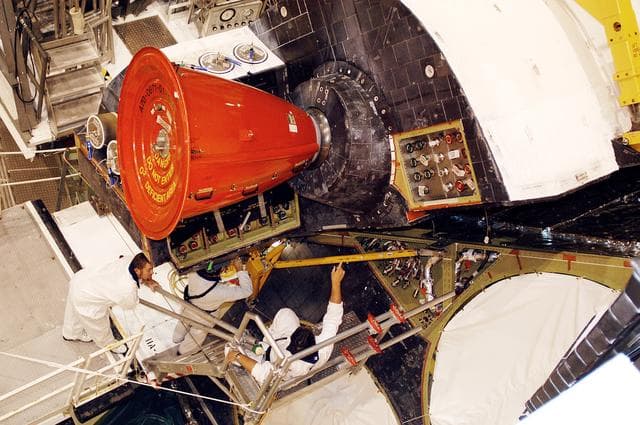
NASA image: KENNEDY SPACE CENTER, FLA. -  In the Orbiter Processing Facility, technicians move an orbital maneuvering system (OMS) pod into the correct position on Atlantis. The OMS pod is one of two that are attached to the upper aft fuselage left and right sides. Fabricated primarily of graphite epoxy composite and aluminum, each pod is 21.8 feet long and 11.37 feet wide at its aft end and 8.41 feet wide at its forward end, with a surface area of approximately 435 square feet. Each pod houses the Reaction Control System propulsion components used for inflight maneuvering and is attached to the aft fuselage with 11 bolts.
Image
Oct 30, 2003

KENNEDY SPACE CENTER, FLA. - In the Orbiter Processing Facility, technicians move an orbital maneuvering system (OMS) pod into the correct position on Atlantis. The OMS pod is one of two that are attached to the upper aft fuselage left and right sides. Fabricated primarily of graphite epoxy composite and aluminum, each pod is 21.8 feet long and 11.37 feet wide at its aft end and 8.41 feet wide at its forward end, with a surface area of approximately 435 square feet. Each pod houses the Reaction Control System propulsion components used for inflight maneuvering and is attached to the aft fuselage with 11 bolts.

KENNEDY SPACE CENTER, FLA. - In the Orbiter Processing Facility, technicians move an orbital maneuvering system...
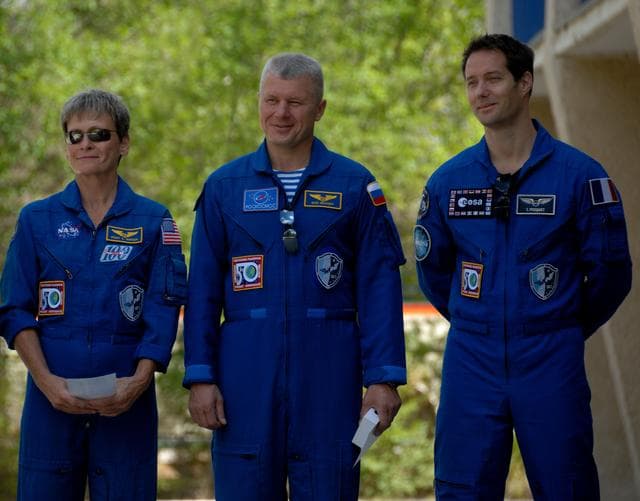
NASA image: Outside their Cosmonaut Hotel crew quarters in Baikonur, Kazakhstan, Expedition 48-49 backup crewmembers Peggy Whitson of NASA (left), Oleg Novitskiy of Roscosmos (center) and Thomas Pesquet of the European Space Agency (right) listen to remarks June 26 during the traditional raising of the American, Russian, Japanese and Kazakh flags. Prime crewmembers Kate Rubins of NASA, Anatoly Ivanishin of Roscosmos and Takuya Onishi of the Japan Aerospace Exploration Agency will launch on July 7, Baikonur time, on the Soyuz MS-01 spacecraft for a planned four-month mission on the International Space Station...NASA/Alexander Vysotsky.
Image
Jun 26, 2016

Outside their Cosmonaut Hotel crew quarters in Baikonur, Kazakhstan, Expedition 48-49 backup crewmembers Peggy Whitson of NASA (left), Oleg Novitskiy of Roscosmos (center) and Thomas Pesquet of the European Space Agency (right) listen to remarks June 26 during the traditional raising of the American, Russian, Japanese and Kazakh flags. Prime crewmembers Kate Rubins of NASA, Anatoly Ivanishin of Roscosmos and Takuya Onishi of the Japan Aerospace Exploration Agency will launch on July 7, Baikonur time, on the Soyuz MS-01 spacecraft for a planned four-month mission on the International Space Station...NASA/Alexander Vysotsky.

Outside their Cosmonaut Hotel crew quarters in Baikonur, Kazakhstan, Expedition 48-49 backup crewmembers Peggy...
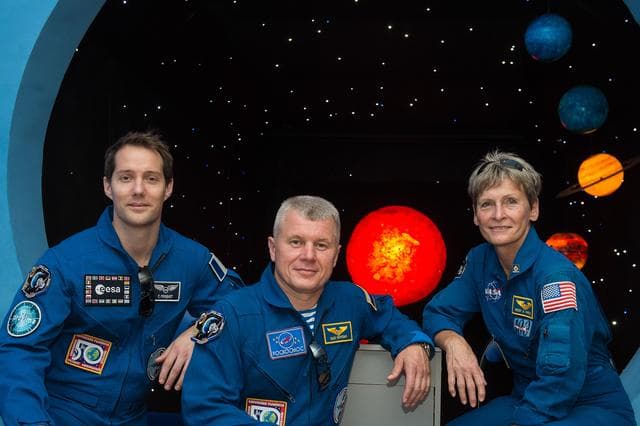
NASA image: During a tour of a museum in Baikonur, Kazakhstan June 26, Expedition 48-49 backup crewmembers Thomas Pesquet of the European Space Agency (left), Oleg Novitskiy of Roscosmos (center) and Peggy Whitson of NASA (right) pose for pictures in front of a mural depicting planets. Whitson, Novitskiy and Pesquet are backups to Kate Rubins of NASA, Anatoly Ivanishin of Roscosmos and Takuya Onishi of the Japan Aerospace Exploration Agency, who are preparing for launch on July 7, Baikonur time, on the Soyuz MS-01 spacecraft for a planned four-month mission on the International Space Station...GCTC/Andrei Shelepin.
Image
Jun 26, 2016

During a tour of a museum in Baikonur, Kazakhstan June 26, Expedition 48-49 backup crewmembers Thomas Pesquet of the European Space Agency (left), Oleg Novitskiy of Roscosmos (center) and Peggy Whitson of NASA (right) pose for pictures in front of a mural depicting planets. Whitson, Novitskiy and Pesquet are backups to Kate Rubins of NASA, Anatoly Ivanishin of Roscosmos and Takuya Onishi of the Japan Aerospace Exploration Agency, who are preparing for launch on July 7, Baikonur time, on the Soyuz MS-01 spacecraft for a planned four-month mission on the International Space Station...GCTC/Andrei Shelepin.

During a tour of a museum in Baikonur, Kazakhstan June 26, Expedition 48-49 backup crewmembers Thomas Pesquet of the...
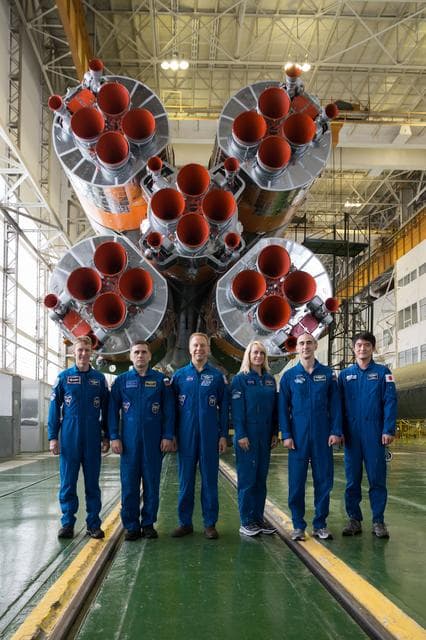
NASA image: In the Integration Facility at the Baikonur Cosmodrome in Kazakhstan, the prime and backup Expedition 46-47 crewmembers posed for pictures Dec. 10 in front of the first stage of the Soyuz booster rocket during final pre-launch training. From left to right are prime crewmembers Tim Peake of the European Space Agency, Yuri Malenchenko of the Russian Federal Space Agency (Roscosmos) and Tim Kopra of NASA and backup crewmembers Kate Rubins of NASA, Anatoly Ivanishin of Roscosmos and Takuya Onishi of the Japan Aerospace Exploration Agency. Kopra, Peake and Malenchenko will launch Dec. 15 on the Soyuz TMA-19M spacecraft for a six-month mission on the International Space Station...NASA/Victor Zelentsov.
Image
Dec 10, 2015

In the Integration Facility at the Baikonur Cosmodrome in Kazakhstan, the prime and backup Expedition 46-47 crewmembers posed for pictures Dec. 10 in front of the first stage of the Soyuz booster rocket during final pre-launch training. From left to right are prime crewmembers Tim Peake of the European Space Agency, Yuri Malenchenko of the Russian Federal Space Agency (Roscosmos) and Tim Kopra of NASA and backup crewmembers Kate Rubins of NASA, Anatoly Ivanishin of Roscosmos and Takuya Onishi of the Japan Aerospace Exploration Agency. Kopra, Peake and Malenchenko will launch Dec. 15 on the Soyuz TMA-19M spacecraft for a six-month mission on the International Space Station...NASA/Victor Zelentsov.

In the Integration Facility at the Baikonur Cosmodrome in Kazakhstan, the prime and backup Expedition 46-47...
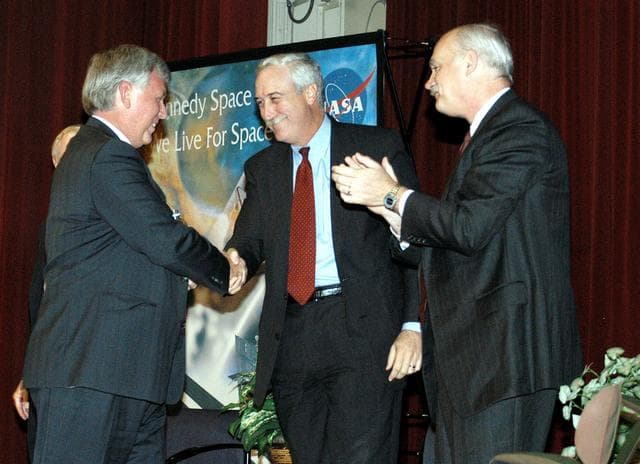
NASA image: KENNEDY SPACE CENTER, FLA. -  KSC Deputy Director James W. Kennedy (left) and NASA Administrator Sean O'Keefe shake hands before a group of KSC employees assembled in the KSC Training Auditorium.  NASA Associate Administrator for Space Flight William F. Readdy applauds, at right. The occasion is the announcement of Kennedy as the next director of the NASA Kennedy Space Center (KSC) in Florida. Kennedy has served as KSC's deputy director since November 2002. He will succeed KSC Director Roy D. Bridges, who was appointed on June 13 to lead NASA's Langley Research Center, Hampton, Va.
Image
Jun 26, 2003

KENNEDY SPACE CENTER, FLA. - KSC Deputy Director James W. Kennedy (left) and NASA Administrator Sean O'Keefe shake hands before a group of KSC employees assembled in the KSC Training Auditorium. NASA Associate Administrator for Space Flight William F. Readdy applauds, at right. The occasion is the announcement of Kennedy as the next director of the NASA Kennedy Space Center (KSC) in Florida. Kennedy has served as KSC's deputy director since November 2002. He will succeed KSC Director Roy D. Bridges, who was appointed on June 13 to lead NASA's Langley Research Center, Hampton, Va.

KENNEDY SPACE CENTER, FLA. - KSC Deputy Director James W. Kennedy (left) and NASA Administrator Sean O'Keefe shake...

KSC
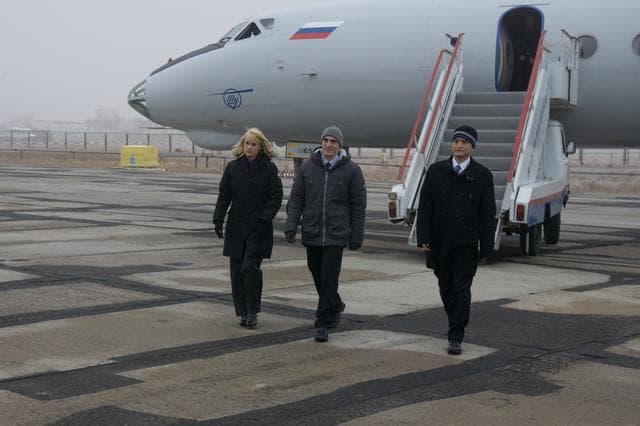
NASA image: The Expedition 46-47 backup crewmembers arrive in Baikonur, Kazakhstan Nov. 30 for final pre-launch preparations. Kate Rubins of NASA (left), Anatoly Ivanishin of the Russian Federal Space Agency (Roscosmos, center) and Takuya Onishi of the Japan Aerospace Exploration Agency (JAXA, right) will serve as backups to the prime crewmembers, Tim Peake of the European Space Agency, Yuri Malenchenko of the Russian Federal Space Agency (Roscosmos) and Tim Kopra of NASA, who will launch Dec. 15 on the Soyuz TMA-19M spacecraft for a six-month mission on the International Space Station...NASA / Victor Zelentsov.
Image
Nov 30, 2015

The Expedition 46-47 backup crewmembers arrive in Baikonur, Kazakhstan Nov. 30 for final pre-launch preparations. Kate Rubins of NASA (left), Anatoly Ivanishin of the Russian Federal Space Agency (Roscosmos, center) and Takuya Onishi of the Japan Aerospace Exploration Agency (JAXA, right) will serve as backups to the prime crewmembers, Tim Peake of the European Space Agency, Yuri Malenchenko of the Russian Federal Space Agency (Roscosmos) and Tim Kopra of NASA, who will launch Dec. 15 on the Soyuz TMA-19M spacecraft for a six-month mission on the International Space Station...NASA / Victor Zelentsov.

The Expedition 46-47 backup crewmembers arrive in Baikonur, Kazakhstan Nov. 30 for final pre-launch preparations....
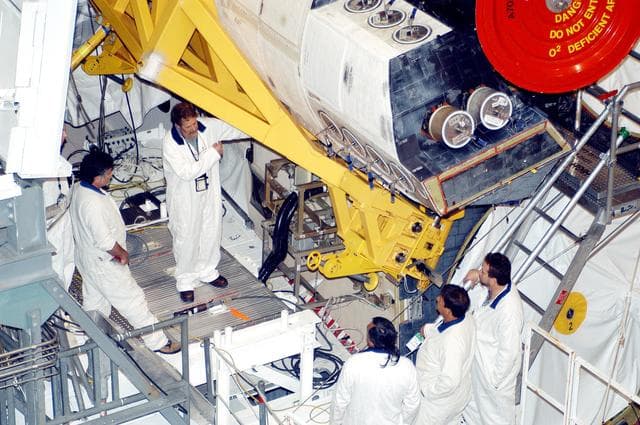
NASA image: KENNEDY SPACE CENTER, FLA. - In the Orbiter Processing Facility, technicians move an orbital maneuvering system (OMS) pod into the correct position on Atlantis. The OMS pod is one of two that are attached to the upper aft fuselage left and right sides. Fabricated primarily of graphite epoxy composite and aluminum, each pod is 21.8 feet long and 11.37 feet wide at its aft end and 8.41 feet wide at its forward end, with a surface area of approximately 435 square feet. Each pod houses the Reaction Control System propulsion components used for inflight maneuvering and is attached to the aft fuselage with 11 bolts.
Image
Oct 30, 2003

KENNEDY SPACE CENTER, FLA. - In the Orbiter Processing Facility, technicians move an orbital maneuvering system (OMS) pod into the correct position on Atlantis. The OMS pod is one of two that are attached to the upper aft fuselage left and right sides. Fabricated primarily of graphite epoxy composite and aluminum, each pod is 21.8 feet long and 11.37 feet wide at its aft end and 8.41 feet wide at its forward end, with a surface area of approximately 435 square feet. Each pod houses the Reaction Control System propulsion components used for inflight maneuvering and is attached to the aft fuselage with 11 bolts.

KENNEDY SPACE CENTER, FLA. - In the Orbiter Processing Facility, technicians move an orbital maneuvering system...
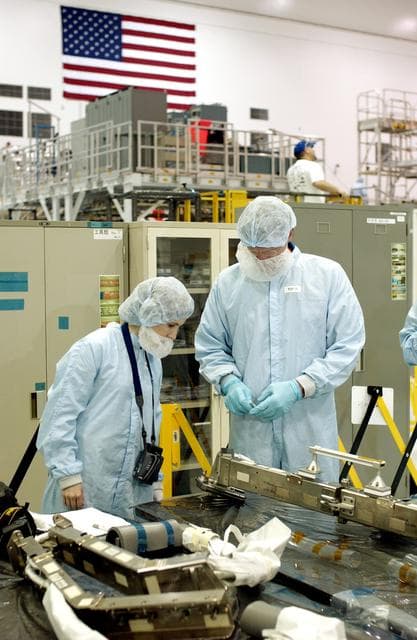
NASA image: KENNEDY SPACE CENTER, FLA. -  In the Space Station Processing Facility, STS-115 Mission Specialist Joseph Tanner (right)  checks out a camera and cables for the Japanese Experiment Module (JEM). Known as Kibo, the JEM consists of six components: two research facilities - the Pressurized Module and the Exposed Facility; a Logistics Module attached to each of them; a Remote Manipulator System; and an Inter-Orbit Communication System unit. Kibo also has a scientific airlock through which experiments are transferred and exposed to the external environment of space. The various components of JEM will be assembled in space over the course of three Space Shuttle missions. Equipment familiarization is a routine part of astronaut training and launch preparations.
Image
Oct 22, 2003

KENNEDY SPACE CENTER, FLA. - In the Space Station Processing Facility, STS-115 Mission Specialist Joseph Tanner (right) checks out a camera and cables for the Japanese Experiment Module (JEM). Known as Kibo, the JEM consists of six components: two research facilities - the Pressurized Module and the Exposed Facility; a Logistics Module attached to each of them; a Remote Manipulator System; and an Inter-Orbit Communication System unit. Kibo also has a scientific airlock through which experiments are transferred and exposed to the external environment of space. The various components of JEM will be assembled in space over the course of three Space Shuttle missions. Equipment familiarization is a routine part of astronaut training and launch preparations.

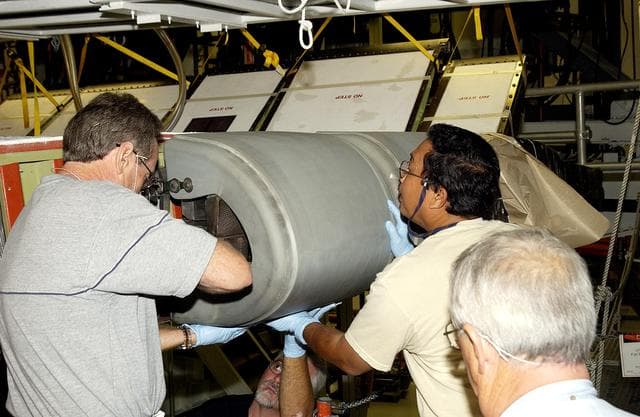
NASA image: KENNEDY SPACE CENTER, FLA. -  In the Orbiter Processing Facility, United Space Alliance workers Mike Hyatt (left), Saul Ngy (center) and Jerry Belt (right) prepare to install a Reinforced Carbon Carbon (RCC) panel to the leading edge of the wing of the orbiter Atlantis.  The gray carbon composite RCC panels have sufficient strength to withstand the aerodynamic forces experienced during launch and reentry, which can reach as high as 800 pounds per square foot.  The operating range of RCC is from minus 250º F to about 3,000º F, the temperature produced by friction with the atmosphere during reentry.
Image
Sep 8, 2003

KENNEDY SPACE CENTER, FLA. - In the Orbiter Processing Facility, United Space Alliance workers Mike Hyatt (left), Saul Ngy (center) and Jerry Belt (right) prepare to install a Reinforced Carbon Carbon (RCC) panel to the leading edge of the wing of the orbiter Atlantis. The gray carbon composite RCC panels have sufficient strength to withstand the aerodynamic forces experienced during launch and reentry, which can reach as high as 800 pounds per square foot. The operating range of RCC is from minus 250º F to about 3,000º F, the temperature produced by friction with the atmosphere during reentry.

KENNEDY SPACE CENTER, FLA. - In the Orbiter Processing Facility, United Space Alliance workers Mike Hyatt (left),...
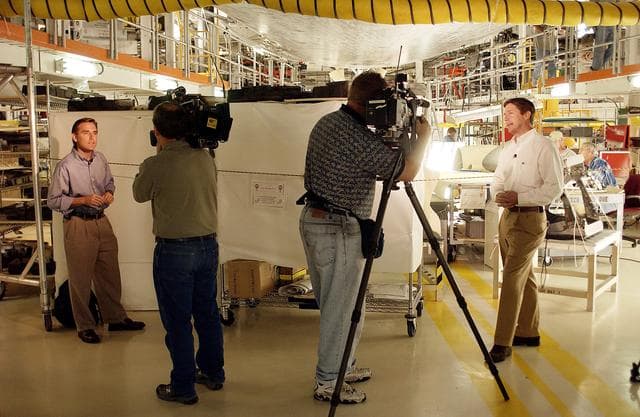
NASA image: KENNEDY SPACE CENTER, FLA. - Local Central Florida television reporters Phil Robertson (left), with WFTV, and Dan Billow (right), with WESH, tape commentaries after a media tour of the Orbiter Processing Facility.  The media was invited to see the orbiter Atlantis as it is being prepared for Return to Flight.  Both local and national reporters representing print and TV networks were able to see work in progress on Atlantis, including the reinstallation of the Reinforced Carbon-Carbon panels on the orbiter’s wing leading edge; wiring inspections; and checks of the engines in the Orbital Maneuvering System.
Image
Sep 26, 2003

KENNEDY SPACE CENTER, FLA. - Local Central Florida television reporters Phil Robertson (left), with WFTV, and Dan Billow (right), with WESH, tape commentaries after a media tour of the Orbiter Processing Facility. The media was invited to see the orbiter Atlantis as it is being prepared for Return to Flight. Both local and national reporters representing print and TV networks were able to see work in progress on Atlantis, including the reinstallation of the Reinforced Carbon-Carbon panels on the orbiter’s wing leading edge; wiring inspections; and checks of the engines in the Orbital Maneuvering System.

KENNEDY SPACE CENTER, FLA. - Local Central Florida television reporters Phil Robertson (left), with WFTV, and Dan...
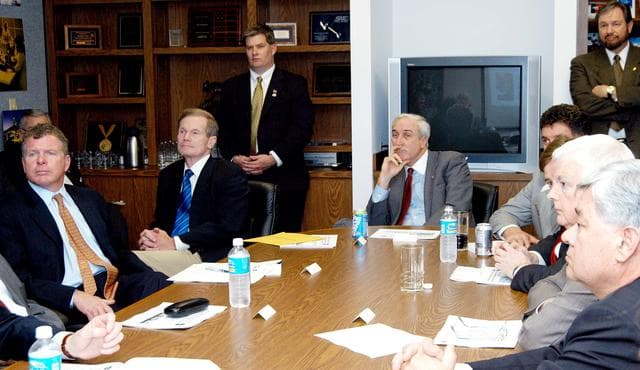
NASA image: KENNEDY SPACE CENTER, FLA. - NASA officials and government representatives are gathered to learn about the assets of the Central Florida Research Park, near Orlando.  At the far end of the table is NASA Administrator Sean O’Keefe.  He is flanked, on the left, by Florida Congressman Tom Feeney and U.S. Senator Bill Nelson; and on the right by U.S. Congressman Dave Weldon. Central Florida leaders are proposing the research park as the site for the NASA Shared Services Center.  The center would centralize NASA’s payroll, accounting, human resources, facilities and procurement offices that are now handled at each field center.  The consolidation is part of the One NASA focus.  Six sites around the U.S. are under consideration by NASA.
Image
Feb 19, 2004

KENNEDY SPACE CENTER, FLA. - NASA officials and government representatives are gathered to learn about the assets of the Central Florida Research Park, near Orlando. At the far end of the table is NASA Administrator Sean O’Keefe. He is flanked, on the left, by Florida Congressman Tom Feeney and U.S. Senator Bill Nelson; and on the right by U.S. Congressman Dave Weldon. Central Florida leaders are proposing the research park as the site for the NASA Shared Services Center. The center would centralize NASA’s payroll, accounting, human resources, facilities and procurement offices that are now handled at each field center. The consolidation is part of the One NASA focus. Six sites around the U.S. are under consideration by NASA.
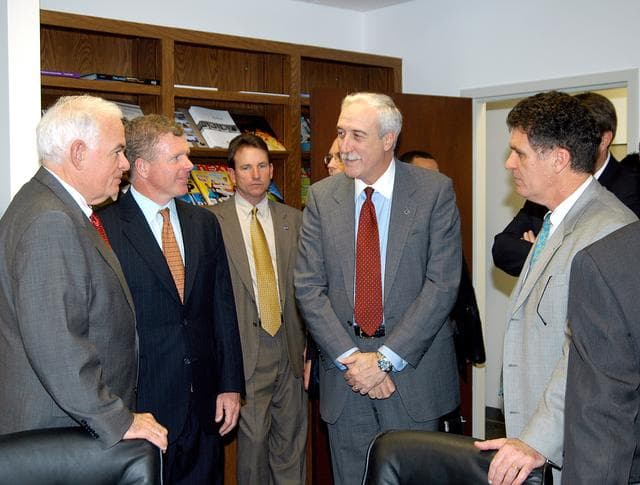
NASA image: KENNEDY SPACE CENTER, FLA. - NASA Administrator Sean O’Keefe (center) listens to Congressman Tom Feeney (second from left) during a tour of the Central Florida Research Park, near Orlando.  At right is U.S. Congressman Dave Weldon.  Central Florida leaders are proposing the research park as the site for the new NASA Shared Services Center.  The center would centralize NASA’s payroll, accounting, human resources, facilities and procurement offices that are now handled at each field center.  The consolidation is part of the One NASA focus.  Six sites around the U.S. are under consideration by NASA.
Image
Feb 19, 2004

KENNEDY SPACE CENTER, FLA. - NASA Administrator Sean O’Keefe (center) listens to Congressman Tom Feeney (second from left) during a tour of the Central Florida Research Park, near Orlando. At right is U.S. Congressman Dave Weldon. Central Florida leaders are proposing the research park as the site for the new NASA Shared Services Center. The center would centralize NASA’s payroll, accounting, human resources, facilities and procurement offices that are now handled at each field center. The consolidation is part of the One NASA focus. Six sites around the U.S. are under consideration by NASA.

KENNEDY SPACE CENTER, FLA. - NASA Administrator Sean O’Keefe (center) listens to Congressman Tom Feeney (second from...
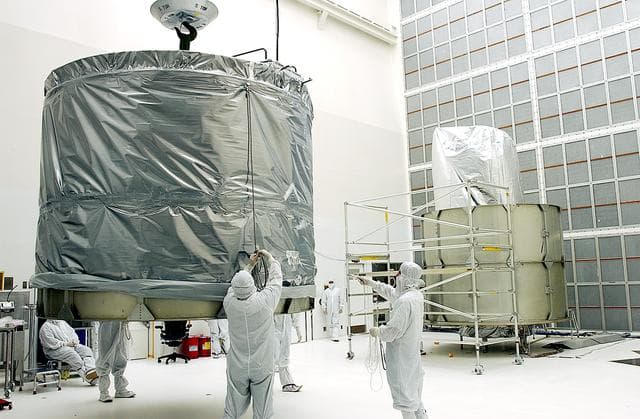
NASA image: KENNEDY SPACE CENTER, FLA.  - Workers at Hangar A&E, Cape Canaveral Air Force Station, lift the upper canister to move it to the Space Infrared Telescope Facility (SIRTF) at right.  After encapsulation, the spacecraft will be transported to Launch Complex 17-B for mating with its launch vehicle, the Delta II rocket.   SIRTF consists of three cryogenically cooled science instruments and an 0.85-meter telescope, and is one of NASA's largest infrared telescopes to be launched.  SIRTF will obtain images and spectra by detecting the infrared energy, or heat, radiated by objects in space. Most of this infrared radiation is blocked by the Earth's atmosphere and cannot be observed from the ground.
Image
Aug 7, 2003

KENNEDY SPACE CENTER, FLA. - Workers at Hangar A&E, Cape Canaveral Air Force Station, lift the upper canister to move it to the Space Infrared Telescope Facility (SIRTF) at right. After encapsulation, the spacecraft will be transported to Launch Complex 17-B for mating with its launch vehicle, the Delta II rocket. SIRTF consists of three cryogenically cooled science instruments and an 0.85-meter telescope, and is one of NASA's largest infrared telescopes to be launched. SIRTF will obtain images and spectra by detecting the infrared energy, or heat, radiated by objects in space. Most of this infrared radiation is blocked by the Earth's atmosphere and cannot be observed from the ground.

KENNEDY SPACE CENTER, FLA. - Workers at Hangar A&E, Cape Canaveral Air Force Station, lift the upper canister to...
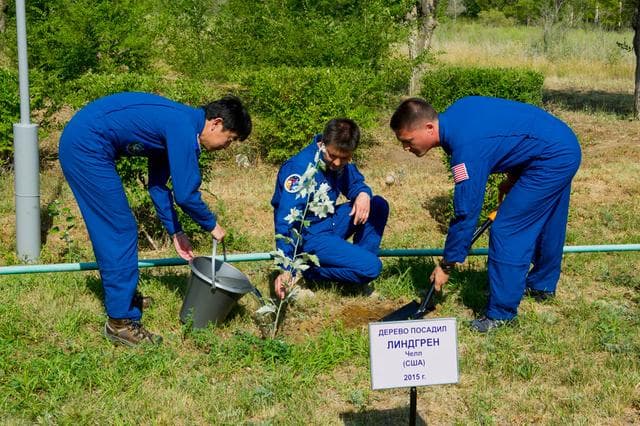
NASA image: 3850:..At the Cosmonaut Hotel crew quarters in Baikonur, Kazakhstan, Expedition 44 prime crewmember Kjell Lindgren of NASA (right) plants a tree in his name in a traditional pre-launch ceremony July 15. Assisting are crewmates Kimiya Yui of the Japan Aerospace Exploration Agency (left) and Oleg Kononenko of the Russian Federal Space Agency (Roscosmos, center), Yui, Kononenko and Lindgren will launch July 23, Kazakh time on the Soyuz TMA-17M spacecraft from the Baikonur Cosmodrome for a five-month mission on the International Space Station...Credit: Gagarin Cosmonaut Training Center.
Image
Jul 15, 2015

3850:..At the Cosmonaut Hotel crew quarters in Baikonur, Kazakhstan, Expedition 44 prime crewmember Kjell Lindgren of NASA (right) plants a tree in his name in a traditional pre-launch ceremony July 15. Assisting are crewmates Kimiya Yui of the Japan Aerospace Exploration Agency (left) and Oleg Kononenko of the Russian Federal Space Agency (Roscosmos, center), Yui, Kononenko and Lindgren will launch July 23, Kazakh time on the Soyuz TMA-17M spacecraft from the Baikonur Cosmodrome for a five-month mission on the International Space Station...Credit: Gagarin Cosmonaut Training Center.

3850: At the Cosmonaut Hotel crew quarters in Baikonur, Kazakhstan, Expedition 44 prime crewmember Kjell Lindgren of...

JSC
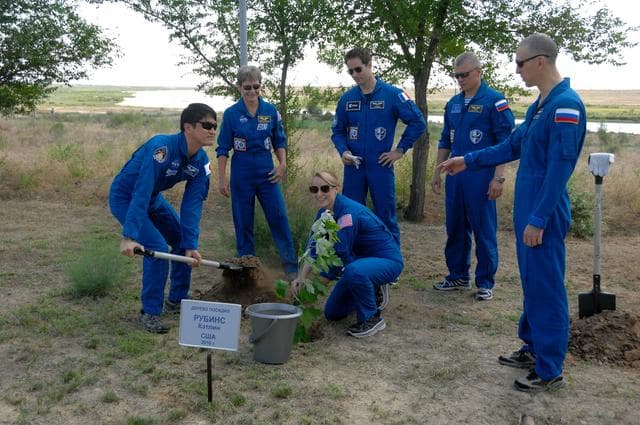
NASA image: At the Cosmonaut Hotel in Baikonur, Kazakhstan, Expedition 48-49 crewmember Takuya Onishi of the Japan Aerospace Exploration Agency (left) lends a hand to NASA���s Kate Rubins (crouching) as she plants a tree in her name June 30 in traditional pre-launch activities. Standing from left to right are backup crewmembers Peggy Whitson of NASA, Thomas Pesquet of the European Space Agency and Oleg Novitskiy of Roscosmos and prime crewmember Anatoly Ivanishin of Roscosmos. Rubins, Ivanishin and Onishi will launch July 7, Baikonur time, on the Soyuz MS-01 spacecraft for a planned four-month mission on the International Space Station...NASA/Alexander Vysotsky.
Image
Jun 30, 2016

At the Cosmonaut Hotel in Baikonur, Kazakhstan, Expedition 48-49 crewmember Takuya Onishi of the Japan Aerospace Exploration Agency (left) lends a hand to NASA���s Kate Rubins (crouching) as she plants a tree in her name June 30 in traditional pre-launch activities. Standing from left to right are backup crewmembers Peggy Whitson of NASA, Thomas Pesquet of the European Space Agency and Oleg Novitskiy of Roscosmos and prime crewmember Anatoly Ivanishin of Roscosmos. Rubins, Ivanishin and Onishi will launch July 7, Baikonur time, on the Soyuz MS-01 spacecraft for a planned four-month mission on the International Space Station...NASA/Alexander Vysotsky.

At the Cosmonaut Hotel in Baikonur, Kazakhstan, Expedition 48-49 crewmember Takuya Onishi of the Japan Aerospace...
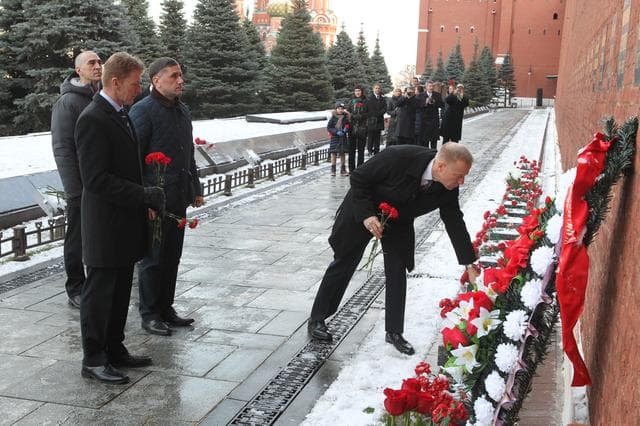
NASA image: At the Kremlin Wall in Red Square in Moscow, Expedition 46-47 crewmember Tim Kopra of NASA lays flowers at the site where Russian space icons are interred in a ceremony Nov. 23. Looking on from left to right are backup crewmember Anatoly Ivanishin of the Russian Federal Space Agency (Roscosmos) and prime crewmembers Tim Peake of the European Space Agency and Yuri Malenchenko of Roscosmos. Peake, Malenchenko and Kopra will launch on Dec. 15 on the Soyuz TMA-19M spacecraft from the Baikonur Cosmodrome in Kazakhstan for a six-month mission on the International Space Station..NASA/Seth Marcantel
Image
Nov 23, 2015

At the Kremlin Wall in Red Square in Moscow, Expedition 46-47 crewmember Tim Kopra of NASA lays flowers at the site where Russian space icons are interred in a ceremony Nov. 23. Looking on from left to right are backup crewmember Anatoly Ivanishin of the Russian Federal Space Agency (Roscosmos) and prime crewmembers Tim Peake of the European Space Agency and Yuri Malenchenko of Roscosmos. Peake, Malenchenko and Kopra will launch on Dec. 15 on the Soyuz TMA-19M spacecraft from the Baikonur Cosmodrome in Kazakhstan for a six-month mission on the International Space Station..NASA/Seth Marcantel

At the Kremlin Wall in Red Square in Moscow, Expedition 46-47 crewmember Tim Kopra of NASA lays flowers at the site...
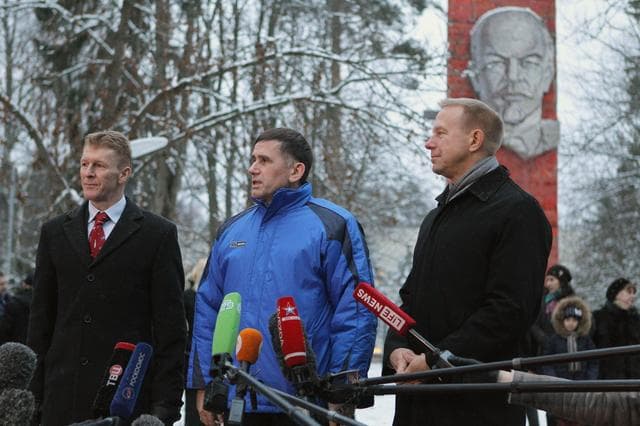
NASA image: At the Gagarin Cosmonaut Training Center in Star City, Russia, Expedition 46-47 crewmembers Tim Peake of the European Space Agency (left), Yuri Malenchenko of the Russian Federal Space Agency (Roscosmos, center) and Tim Kopra of NASA (right) answer reporters��� questions Nov. 30 in front of the statue of Vladimir Lenin before departing for their launch site at the Baikonur Cosmodrome in Kazakhstan. Malenchenko, Kopra and Tim Peake of the European Space Agency will launch Dec. 15 in their Soyuz TMA-19M spacecraft for a six-month mission on the International Space Station..NASA / Seth Marcantel
Image
Nov 30, 2015

At the Gagarin Cosmonaut Training Center in Star City, Russia, Expedition 46-47 crewmembers Tim Peake of the European Space Agency (left), Yuri Malenchenko of the Russian Federal Space Agency (Roscosmos, center) and Tim Kopra of NASA (right) answer reporters��� questions Nov. 30 in front of the statue of Vladimir Lenin before departing for their launch site at the Baikonur Cosmodrome in Kazakhstan. Malenchenko, Kopra and Tim Peake of the European Space Agency will launch Dec. 15 in their Soyuz TMA-19M spacecraft for a six-month mission on the International Space Station..NASA / Seth Marcantel

At the Gagarin Cosmonaut Training Center in Star City, Russia, Expedition 46-47 crewmembers Tim Peake of the...
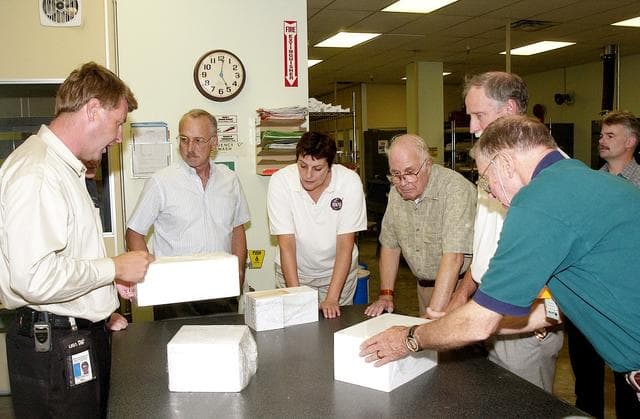
NASA image: KENNEDY SPACE CENTER, FLA.  -  On a tour of the Tile Shop, members of the Stafford-Covey Return to Flight Task Group (SCTG) learn about PU-tiles, part of an orbiter’s Thermal Protection System.   At left is Martin Wilson, with United Space Alliance.  Others (left to right) around the table are James Adamson, Dr. Kathryn Clark, William Wegner, Richard Covey and Joe Engle.  Covey, former Space Shuttle commander, is co-chair of the  SCTG, along with Thomas P. Stafford, Apollo commander.  Chartered by NASA Administrator Sean O’Keefe, the task group will perform an independent assessment of NASA’s implementation of the final recommendations by the Columbia Accident Investigation Board.
Image
Aug 6, 2003

KENNEDY SPACE CENTER, FLA. - On a tour of the Tile Shop, members of the Stafford-Covey Return to Flight Task Group (SCTG) learn about PU-tiles, part of an orbiter’s Thermal Protection System. At left is Martin Wilson, with United Space Alliance. Others (left to right) around the table are James Adamson, Dr. Kathryn Clark, William Wegner, Richard Covey and Joe Engle. Covey, former Space Shuttle commander, is co-chair of the SCTG, along with Thomas P. Stafford, Apollo commander. Chartered by NASA Administrator Sean O’Keefe, the task group will perform an independent assessment of NASA’s implementation of the final recommendations by the Columbia Accident Investigation Board.

KENNEDY SPACE CENTER, FLA. - On a tour of the Tile Shop, members of the Stafford-Covey Return to Flight Task Group...

PreviousPage 96 of 100Next

Frequently Asked Questions About NASA Images

Are NASA images free to use?+
Yes, most NASA images are in the public domain and are free to use for educational, informational, and personal purposes. NASA's media usage guidelines state that NASA material is not copyrighted unless otherwise noted. However, the NASA logo and certain insignia are protected. Some images may include identifiable individuals or third-party content that requires additional permissions. Always check the specific image's usage rights and credit NASA as the source.
How many images does NASA have?+
NASA's Image and Video Library contains over 140,000 publicly accessible images, videos, and audio files spanning the agency's entire history, from the Mercury program of the 1960s to the latest James Webb Space Telescope discoveries. The collection grows daily as new missions capture imagery and archival materials are digitized. Individual mission archives, such as Mars rover photos, contain hundreds of thousands of additional images.
Can I download NASA images?+
Yes, you can download NASA images in multiple resolutions directly from this gallery. Each image detail page provides download links for original (full resolution), large (1920px), medium (960px), small (480px), and thumbnail sizes. NASA encourages the public to use these images for education, media, and personal projects. High-resolution originals are ideal for printing and professional use.

Explore More NASA Content

Astronomy Picture of the Day

Daily curated space image

Mars Rover Photos

Curiosity & Perseverance images

Earth from Space

DSCOVR EPIC daily images

Launch Schedule

Upcoming rocket launches

Space News

Mission updates & discoveries

KSC
KSC

KENNEDY SPACE CENTER, FLA. - STS-115 Mission Specialist Joseph Tanner (second from right) checks out a camera and...

KSC
KSC
KSC
KSC
JSC
JSC
JSC
JSC
KSC

KENNEDY SPACE CENTER, FLA. - In the Space Station Processing Facility, STS-115 Mission Specialist Joseph Tanner...

KSC
KSC
KSC

KENNEDY SPACE CENTER, FLA. - NASA officials and government representatives are gathered to learn about the assets of...

KSC
KSC
KSC
JSC
JSC
JSC
KSC