Image
Aug 6, 2003
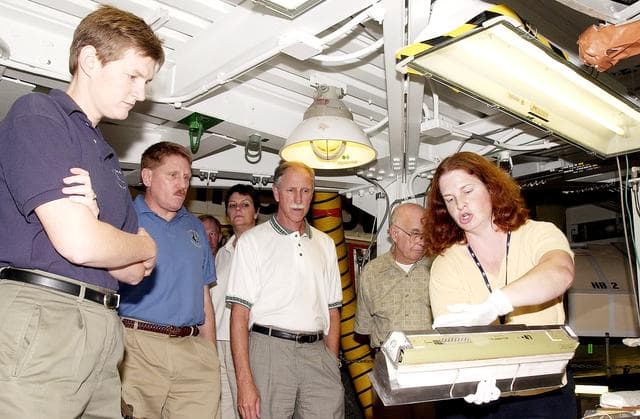
KENNEDY SPACE CENTER, FLA. - NASA worker Joy Huff (right) shows a leading edge subsystems (LESS) with tile bonded to it to members of the Stafford-Covey Return to Flight Task Group (SCTG). From left are Dr. Amy Donahue, David Lengyel, Dr. Kathryn Clark, Richard Covey, former Space Shuttle commander, and William Wegner. Covey is co-chair of the SCTG along with Thomas P. Stafford, Apollo commander. Chartered by NASA Administrator Sean O’Keefe, the task group will perform an independent assessment of NASA’s implementation of the final recommendations by the Columbia Accident Investigation Board.
KENNEDY SPACE CENTER, FLA. - NASA worker Joy Huff (right) shows a leading edge subsystems (LESS) with tile bonded to...
KSC
Image
Dec 5, 2003
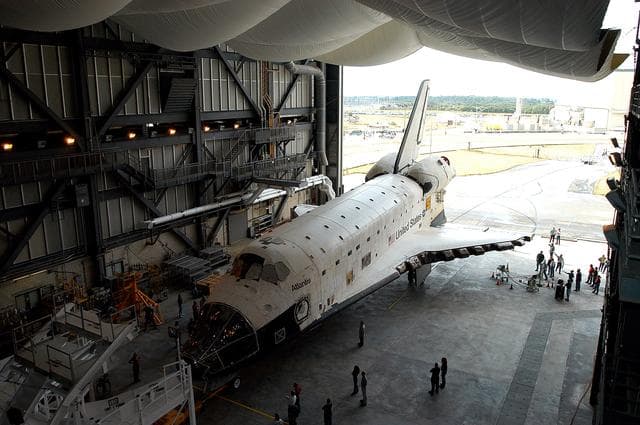
KENNEDY SPACE CENTER, FLA. - The Space Shuttle orbiter Atlantis is almost in position in high bay 4 of the Vehicle Assembly Building (VAB). It was towed from the Orbiter Processing Facility (OPF) to allow work to be performed in the bay that can only be accomplished while it is empty. Work scheduled in the processing facility includes annual validation of the bay's cranes, work platforms, lifting mechanisms, and jack stands. Atlantis will remain in the VAB for about 10 days, then return to the OPF as work resumes to prepare it for launch in September 2004 on the first return-to-flight mission, STS-114.
KENNEDY SPACE CENTER, FLA. - The Space Shuttle orbiter Atlantis is almost in position in high bay 4 of the Vehicle...
![NASA image: KENNEDY SPACE CENTER, FLA. - One of the world’s highest performing visual film analysis systems, developed to review and analyze previous shuttle flight data (shown here) in preparation for the shuttle fleet’s return to flight, is being used today for another purpose. NASA has permitted its use in helping to analyze a film that shows a recent kidnapping in progress in Florida. The system, developed by NASA, United Space Alliance (USA) and Silicon Graphics Inc., allows multiple-person collaboration, highly detailed manipulation and evaluation of specific imagery. The system is housed in the Image Analysis Facility inside the Vehicle Assembly Building. [Photo taken Aug. 15, 2003, courtesy of Terry Wallace, SGI ]](/_next/image?url=https%3A%2F%2Fimages-assets.nasa.gov%2Fimage%2FKSC-04pd0150%2FKSC-04pd0150~thumb.jpg&w=1920&q=75)
Image
Feb 4, 2004
KENNEDY SPACE CENTER, FLA. - One of the world’s highest performing visual film analysis systems, developed to review and analyze previous shuttle flight data (shown here) in preparation for the shuttle fleet’s return to flight, is being used today for another purpose. NASA has permitted its use in helping to analyze a film that shows a recent kidnapping in progress in Florida. The system, developed by NASA, United Space Alliance (USA) and Silicon Graphics Inc., allows multiple-person collaboration, highly detailed manipulation and evaluation of specific imagery. The system is housed in the Image Analysis Facility inside the Vehicle Assembly Building. [Photo taken Aug. 15, 2003, courtesy of Terry Wallace, SGI ]
Image
Dec 5, 2003
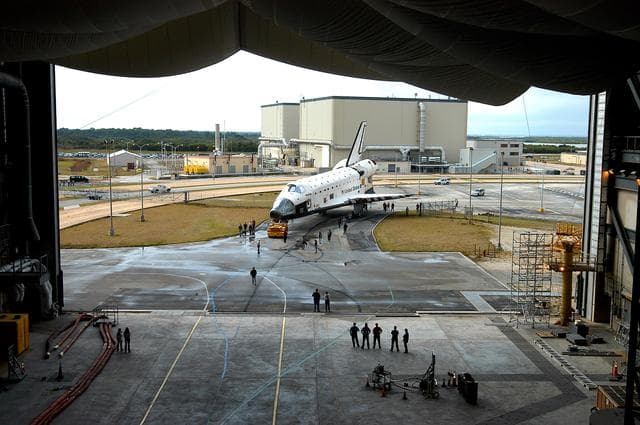
KENNEDY SPACE CENTER, FLA. - The Space Shuttle orbiter Atlantis approaches high bay 4 of the Vehicle Assembly Building (VAB). It was towed from the Orbiter Processing Facility (OPF) to allow work to be performed in the bay that can only be accomplished while it is empty. Work scheduled in the processing facility includes annual validation of the bay's cranes, work platforms, lifting mechanisms, and jack stands. Atlantis will remain in the VAB for about 10 days, then return to the OPF as work resumes to prepare it for launch in September 2004 on the first return-to-flight mission, STS-114.
KENNEDY SPACE CENTER, FLA. - The Space Shuttle orbiter Atlantis approaches high bay 4 of the Vehicle Assembly...
KSC
Image
Mar 10, 2004
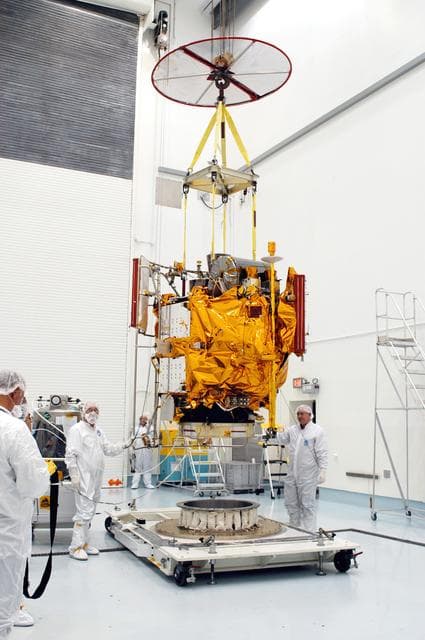
KENNEDY SPACE CENTER, FLA. - At the Astrotech Space Operations processing facilities, NASA’s MESSENGER spacecraft is lifted off the pallet for transfer to a work stand. There employees of the Johns Hopkins University Applied Physics Laboratory, builders of the spacecraft, will perform an initial state-of-health check. Then processing for launch can begin, including checkout of the power systems, communications systems and control systems. The thermal blankets will also be attached for flight. MESSENGER - short for MErcury Surface, Space ENvironment, GEochemistry and Ranging - will be launched May 11 on a six-year mission aboard a Boeing Delta II rocket. Liftoff is targeted for 2:26 a.m. EDT on Tuesday, May 11.
Image
Mar 10, 2004
KENNEDY SPACE CENTER, FLA. - At the Astrotech Space Operations processing facilities, workers check the placement of NASA’s MESSENGER spacecraft on a work stand. There employees of the Johns Hopkins University Applied Physics Laboratory, builders of the spacecraft, will perform an initial state-of-health check. Then processing for launch can begin, including checkout of the power systems, communications systems and control systems. The thermal blankets will also be attached for flight. MESSENGER - short for MErcury Surface, Space ENvironment, GEochemistry and Ranging - will be launched May 11 on a six-year mission aboard a Boeing Delta II rocket. Liftoff is targeted for 2:26 a.m. EDT on Tuesday, May 11.
KENNEDY SPACE CENTER, FLA. - At the Astrotech Space Operations processing facilities, workers check the placement of...
Image
Dec 5, 2003
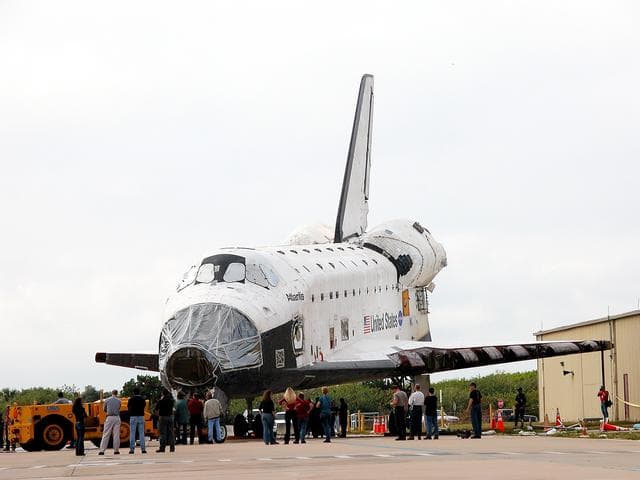
KENNEDY SPACE CENTER, FLA. - Workers walk with Space Shuttle orbiter Atlantis from the Orbiter Processing Facility (OPF) to the Vehicle Assembly Building (VAB) high bay 4. The move will allow work to be performed in the OPF that can only be accomplished while the bay is empty. Work scheduled in the processing facility includes annual validation of the bay's cranes, work platforms, lifting mechanisms, and jack stands. Atlantis will remain in the VAB for about 10 days, then return to the OPF as work resumes to prepare it for launch in September 2004 on the first return-to-flight mission, STS-114.
KENNEDY SPACE CENTER, FLA. - Workers walk with Space Shuttle orbiter Atlantis from the Orbiter Processing Facility...
Image
Dec 5, 2003
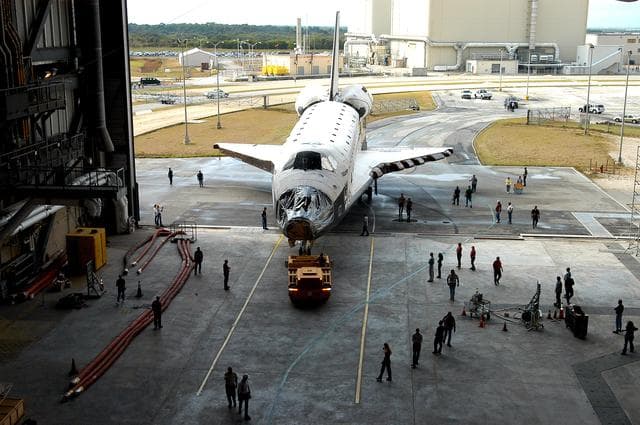
KENNEDY SPACE CENTER, FLA. - The Space Shuttle orbiter Atlantis moves into high bay 4 of the Vehicle Assembly Building (VAB). It was towed from the Orbiter Processing Facility (OPF) to allow work to be performed in the bay that can only be accomplished while it is empty. Work scheduled in the processing facility includes annual validation of the bay's cranes, work platforms, lifting mechanisms, and jack stands. Atlantis will remain in the VAB for about 10 days, then return to the OPF as work resumes to prepare it for launch in September 2004 on the first return-to-flight mission, STS-114.
KENNEDY SPACE CENTER, FLA. - The Space Shuttle orbiter Atlantis moves into high bay 4 of the Vehicle Assembly...
KSC
Image
Mar 10, 2004
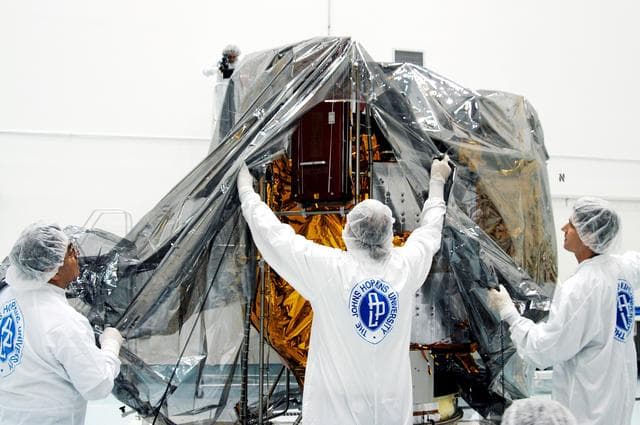
KENNEDY SPACE CENTER, FLA. - In the high bay clean room at the Astrotech Space Operations processing facilities near KSC, workers remove the protective cover from NASA’s MESSENGER spacecraft. Employees of the Johns Hopkins University Applied Physics Laboratory, builders of the spacecraft, will perform an initial state-of-health check. Then processing for launch can begin, including checkout of the power systems, communications systems and control systems. The thermal blankets will also be attached for flight. MESSENGER - short for MErcury Surface, Space ENvironment, GEochemistry and Ranging - will be launched May 11 on a six-year mission aboard a Boeing Delta II rocket. Liftoff is targeted for 2:26 a.m. EDT on Tuesday, May 11.
Image
Aug 6, 2003
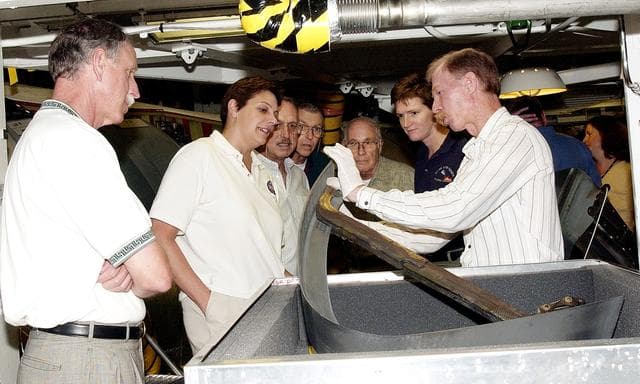
KENNEDY SPACE CENTER, FLA. - On a tour of the Orbiter Processing Facility, members of the Stafford-Covey Return to Flight Task Group (RTFTG) look at a Reinforced Carbon-Carbon panels with a T-seal held by Tom Roberts, with United Space Alliance. From left are Richard O. Covey, former Space Shuttle commander, Dr. Kathryn Clark, James Adamson, Joe Engle, William Wegner and Dr. Amy Donahue. Chairing the task group are Covey and Thomas P. Stafford, Apollo commander. Chartered by NASA Administrator Sean O’Keefe, the task group will perform an independent assessment of NASA’s implementation of the final recommendations by the Columbia Accident Investigation Board.
KENNEDY SPACE CENTER, FLA. - On a tour of the Orbiter Processing Facility, members of the Stafford-Covey Return to...
Image
Mar 10, 2004
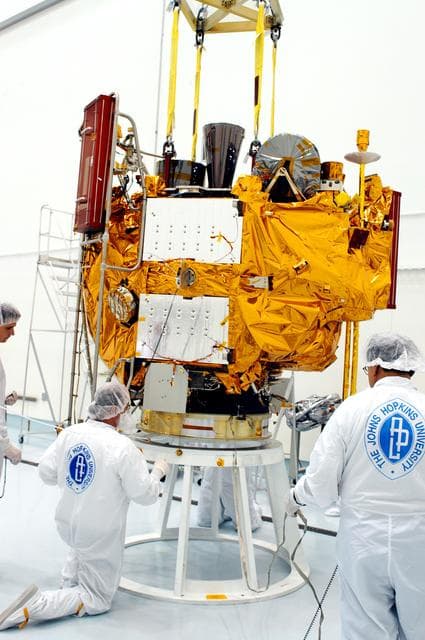
KENNEDY SPACE CENTER, FLA. - At the Astrotech Space Operations processing facilities, workers check the placement of NASA’s MESSENGER spacecraft on a work stand. There employees of the Johns Hopkins University Applied Physics Laboratory, builders of the spacecraft, will perform an initial state-of-health check. Then processing for launch can begin, including checkout of the power systems, communications systems and control systems. The thermal blankets will also be attached for flight. MESSENGER - short for MErcury Surface, Space ENvironment, GEochemistry and Ranging - will be launched May 11 on a six-year mission aboard a Boeing Delta II rocket. Liftoff is targeted for 2:26 a.m. EDT on Tuesday, May 11.
KENNEDY SPACE CENTER, FLA. - At the Astrotech Space Operations processing facilities, workers check the placement of...
![NASA image: KENNEDY SPACE CENTER, FLA. - One of the world’s highest performing visual film analysis systems, developed to review and analyze previous shuttle flight data (shown here) in preparation for the shuttle fleet’s return to flight, is being used today for another purpose. NASA has permitted its use in helping to analyze a film that shows a recent kidnapping in progress in Florida. The system, developed by NASA, United Space Alliance (USA) and Silicon Graphics Inc., allows multiple-person collaboration, highly detailed manipulation and evaluation of specific imagery. The system is housed in the Image Analysis Facility inside the Vehicle Assembly Building. [Photo taken Aug. 15, 2003, courtesy of Terry Wallace, SGI ]](/_next/image?url=https%3A%2F%2Fimages-assets.nasa.gov%2Fimage%2FKSC-04pd0151%2FKSC-04pd0151~thumb.jpg&w=1920&q=75)
Image
Feb 4, 2004
KENNEDY SPACE CENTER, FLA. - One of the world’s highest performing visual film analysis systems, developed to review and analyze previous shuttle flight data (shown here) in preparation for the shuttle fleet’s return to flight, is being used today for another purpose. NASA has permitted its use in helping to analyze a film that shows a recent kidnapping in progress in Florida. The system, developed by NASA, United Space Alliance (USA) and Silicon Graphics Inc., allows multiple-person collaboration, highly detailed manipulation and evaluation of specific imagery. The system is housed in the Image Analysis Facility inside the Vehicle Assembly Building. [Photo taken Aug. 15, 2003, courtesy of Terry Wallace, SGI ]
Image
Mar 10, 2004
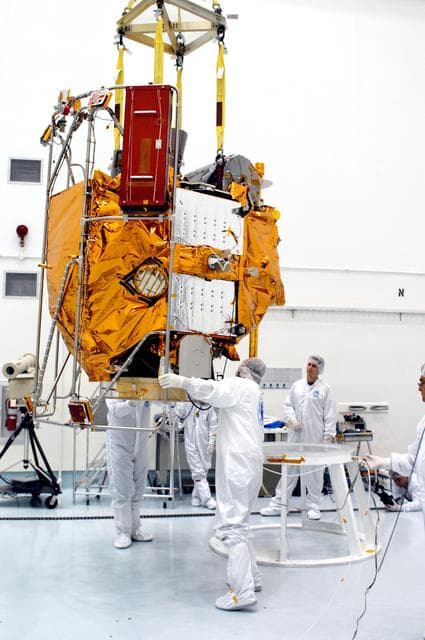
KENNEDY SPACE CENTER, FLA. - At the Astrotech Space Operations processing facilities, an overhead crane lowers NASA’s MESSENGER spacecraft onto a work stand. There employees of the Johns Hopkins University Applied Physics Laboratory, builders of the spacecraft, will perform an initial state-of-health check. Then processing for launch can begin, including checkout of the power systems, communications systems and control systems. The thermal blankets will also be attached for flight. MESSENGER - short for MErcury Surface, Space ENvironment, GEochemistry and Ranging - will be launched May 11 on a six-year mission aboard a Boeing Delta II rocket. Liftoff is targeted for 2:26 a.m. EDT on Tuesday, May 11.
KENNEDY SPACE CENTER, FLA. - At the Astrotech Space Operations processing facilities, an overhead crane lowers...
Image
Feb 1, 2004
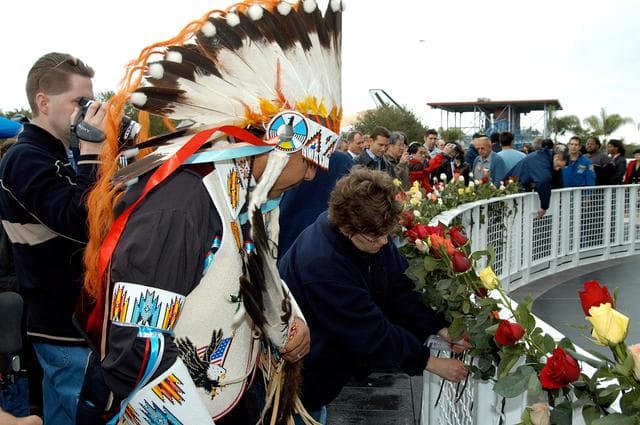
KENNEDY SPACE CENTER, FLA. - Among the visitors placing flowers in the wire mesh fence surrounding the Space Memorial Mirror is one of the Indian dancers who performed a healing ceremony during a memorial service for the crew of Columbia. Feb. 1 is the one-year anniversary of the loss of the crew and orbiter Columbia in a tragic accident as the ship returned to Earth following mission STS-107. The public was invited to the memorial service, which included comments by Center Director Jim Kennedy and Executive Director of Florida Space Authority Winston Scott. Scott is a former astronaut who flew on Columbia in 1997.
KENNEDY SPACE CENTER, FLA. - Among the visitors placing flowers in the wire mesh fence surrounding the Space...
Image
Aug 6, 2003
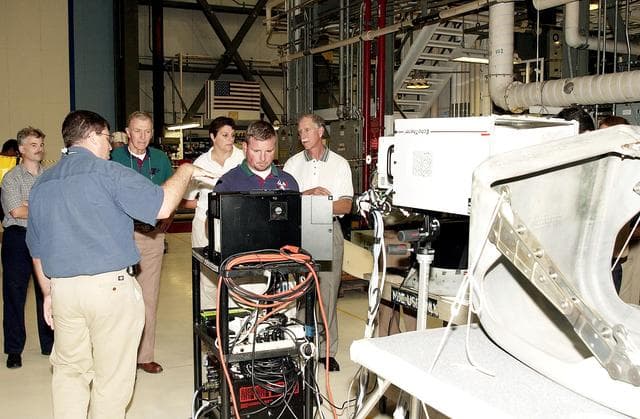
KENNEDY SPACE CENTER, FLA. - Members of the Stafford-Covey Return to Flight Task Group (SCTG) look over equipment in the Orbiter Processing Facility. At left (back to camera), Fernando Santos, with NASA, and Paul Ogletree (at monitor), with United Space Alliance, describe how flash thermography is used to inspect the structure of Reinforced Carbon Carbon panels and establish a baseline on panels before flight. Chairing the task group are Richard O. Covey (far right), former Space Shuttle commander, and Thomas P. Stafford, Apollo commander. Chartered by NASA Administrator Sean O’Keefe, the task group will perform an independent assessment of NASA’s implementation of the final recommendations by the Columbia Accident Investigation Board.
Image
Mar 10, 2004
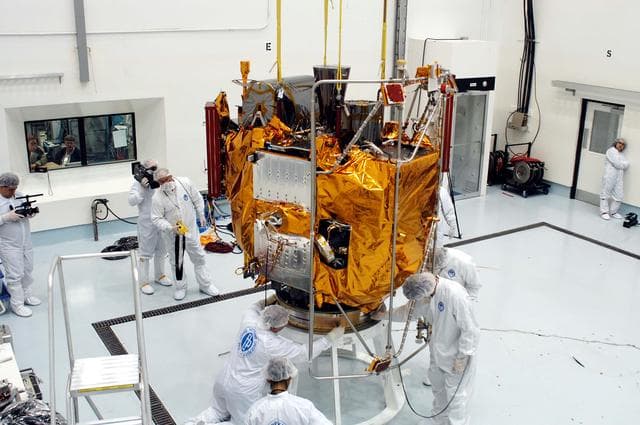
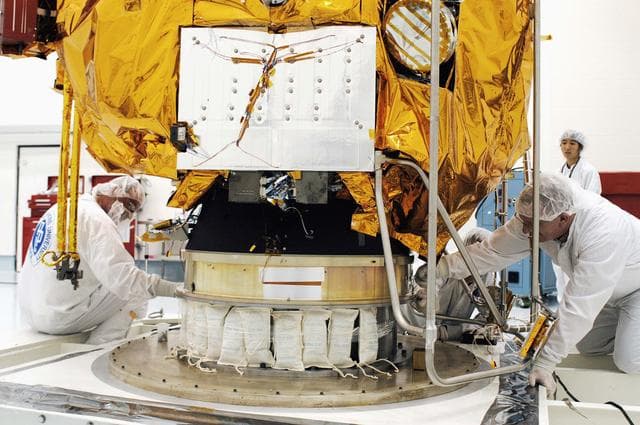
KENNEDY SPACE CENTER, FLA. - In the high bay clean room at the Astrotech Space Operations processing facilities near KSC, workers prepare NASA’s MESSENGER spacecraft for transfer to a work stand. There employees of the Johns Hopkins University Applied Physics Laboratory, builders of the spacecraft, will perform an initial state-of-health check. Then processing for launch can begin, including checkout of the power systems, communications systems and control systems. The thermal blankets will also be attached for flight. MESSENGER - short for MErcury Surface, Space ENvironment, GEochemistry and Ranging - will be launched May 11 on a six-year mission aboard a Boeing Delta II rocket. Liftoff is targeted for 2:26 a.m. EDT on Tuesday, May 11.
Image
Sep 9, 2003
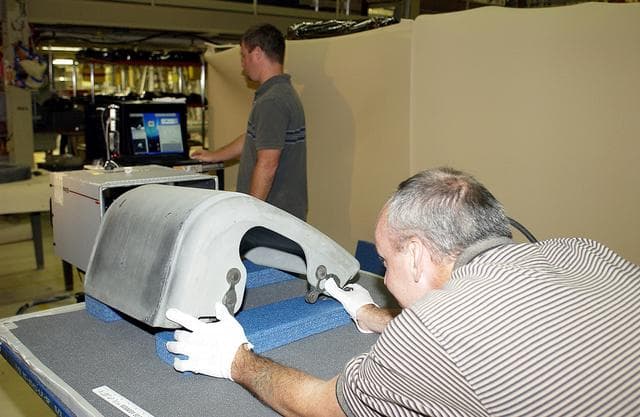
KENNEDY SPACE CENTER, FLA. - In the Orbiter Processing Facility, United Space Alliance worker Dan Kenna (right) positions a Reinforced Carbon Carbon panel on the table to perform flash thermography. In the background, Paul Ogletree observes the monitor. Attached to the leading edge of the wing of the orbiters, the gray carbon composite RCC panels have sufficient strength to withstand the aerodynamic forces experienced during launch and reentry, which can reach as high as 800 pounds per square foot. The operating range of RCC is from minus 250º F to about 3,000º F, the temperature produced by friction with the atmosphere during reentry.
KENNEDY SPACE CENTER, FLA. - In the Orbiter Processing Facility, United Space Alliance worker Dan Kenna (right)...
Image
Dec 5, 2003
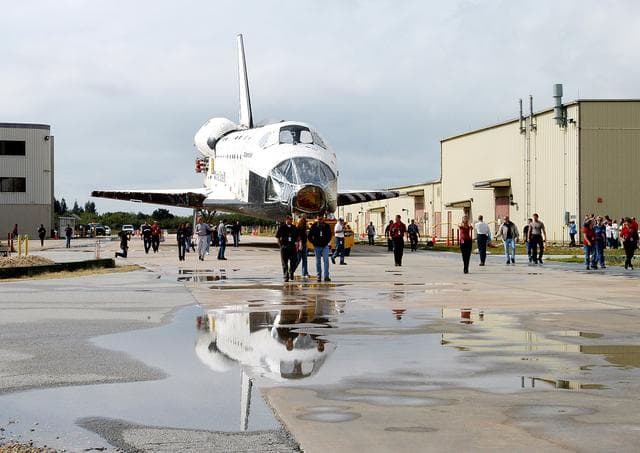
KENNEDY SPACE CENTER, FLA. - The Space Shuttle orbiter Atlantis is reflected in a rain puddle as it is towed from the Orbiter Processing Facility (OPF) to the Vehicle Assembly Building (VAB). The move will allow work to be performed in the OPF that can only be accomplished while the bay is empty. Work scheduled in the processing facility includes annual validation of the bay's cranes, work platforms, lifting mechanisms, and jack stands. Atlantis will remain in the VAB for about 10 days, then return to the OPF as work resumes to prepare it for launch in September 2004 on the first return-to-flight mission, STS-114.
KENNEDY SPACE CENTER, FLA. - The Space Shuttle orbiter Atlantis is reflected in a rain puddle as it is towed from...
Image
Aug 7, 2003
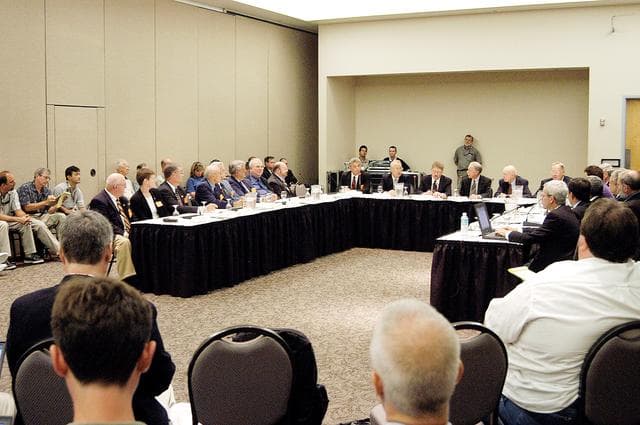
KENNEDY SPACE CENTER, FLA. - The Return To Flight Task Group (RTFTG) holds its first public meeting at the Debus Center, KSC Visitor Complex. The group is co-chaired by former Shuttle commander Richard O. Covey and retired Air Force Lt. Gen. Thomas P. Stafford, who was an Apollo commander. The RTFTG was at KSC to conduct organizational activities, tour Space Shuttle facilities and receive briefings on Shuttle-related topics. The task group was chartered by NASA Administrator Sean O’Keefe to perform an independent assessment of NASA’s implementation of the final recommendations of the Columbia Accident Investigation Board.
KENNEDY SPACE CENTER, FLA. - The Return To Flight Task Group (RTFTG) holds its first public meeting at the Debus...
Image
Dec 5, 2003
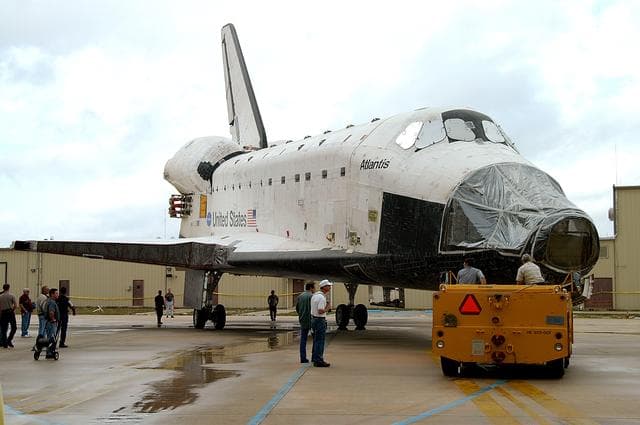
KENNEDY SPACE CENTER, FLA. - The Space Shuttle orbiter Atlantis is turned into position outside the Orbiter Processing Facility (OPF) for its tow to the Vehicle Assembly Building (VAB). The move will allow work to be performed in the OPF that can only be accomplished while the bay is empty. Work scheduled in the processing facility includes annual validation of the bay's cranes, work platforms, lifting mechanisms, and jack stands. Atlantis will remain in the VAB for about 10 days, then return to the OPF as work resumes to prepare it for launch in September 2004 on the first return-to-flight mission, STS-114.
KENNEDY SPACE CENTER, FLA. - The Space Shuttle orbiter Atlantis is turned into position outside the Orbiter...
Image
Mar 10, 2004
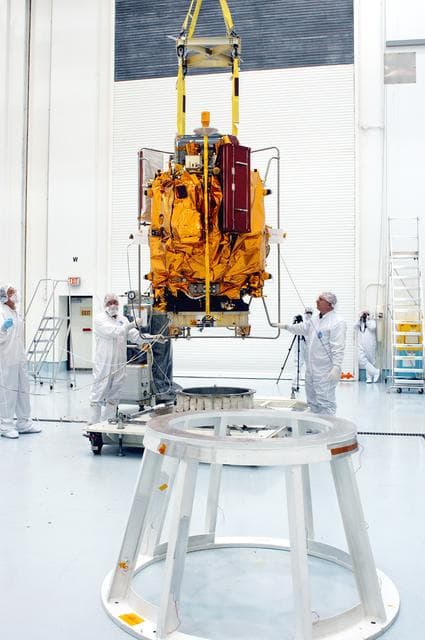
KENNEDY SPACE CENTER, FLA. - At the Astrotech Space Operations processing facilities, an overhead crane lowers NASA’s MESSENGER spacecraft onto a work stand. There employees of the Johns Hopkins University Applied Physics Laboratory, builders of the spacecraft, will perform an initial state-of-health check. Then processing for launch can begin, including checkout of the power systems, communications systems and control systems. The thermal blankets will also be attached for flight. MESSENGER - short for MErcury Surface, Space ENvironment, GEochemistry and Ranging - will be launched May 11 on a six-year mission aboard a Boeing Delta II rocket. Liftoff is targeted for 2:26 a.m. EDT on Tuesday, May 11.
KENNEDY SPACE CENTER, FLA. - At the Astrotech Space Operations processing facilities, an overhead crane lowers...
Image
Mar 10, 2004
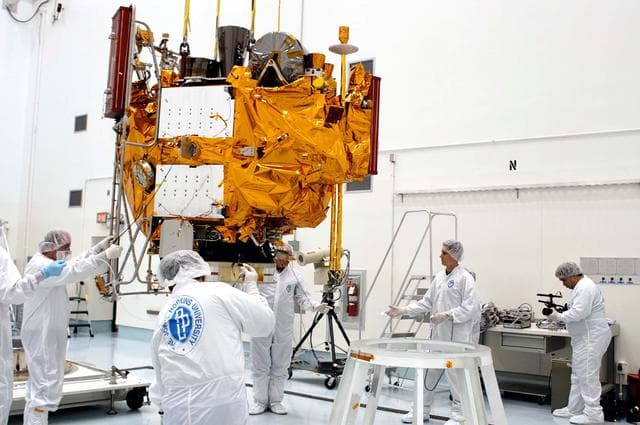
KENNEDY SPACE CENTER, FLA. - At the Astrotech Space Operations processing facilities, an overhead crane moves NASA’s MESSENGER spacecraft toward a work stand. There employees of the Johns Hopkins University Applied Physics Laboratory, builders of the spacecraft, will perform an initial state-of-health check. Then processing for launch can begin, including checkout of the power systems, communications systems and control systems. The thermal blankets will also be attached for flight. MESSENGER - short for MErcury Surface, Space ENvironment, GEochemistry and Ranging - will be launched May 11 on a six-year mission aboard a Boeing Delta II rocket. Liftoff is targeted for 2:26 a.m. EDT on Tuesday, May 11.
KENNEDY SPACE CENTER, FLA. - At the Astrotech Space Operations processing facilities, an overhead crane moves NASA’s...
![NASA image: KENNEDY SPACE CENTER, FLA. - One of the world’s highest performing visual film analysis systems, developed to review and analyze previous shuttle flight data (shown here) in preparation for the shuttle fleet’s return to flight, is being used today for another purpose. NASA has permitted its use in helping to analyze a film that shows a recent kidnapping in progress in Florida. The system, developed by NASA, United Space Alliance (USA) and Silicon Graphics Inc., allows multiple-person collaboration, highly detailed manipulation and evaluation of specific imagery. The system is housed in the Image Analysis Facility inside the Vehicle Assembly Building. [Photo taken Aug. 15, 2003, courtesy of Terry Wallace, SGI ]](/_next/image?url=https%3A%2F%2Fimages-assets.nasa.gov%2Fimage%2FKSC-04pd0154%2FKSC-04pd0154~thumb.jpg&w=1920&q=75)
Image
Feb 4, 2004
KENNEDY SPACE CENTER, FLA. - One of the world’s highest performing visual film analysis systems, developed to review and analyze previous shuttle flight data (shown here) in preparation for the shuttle fleet’s return to flight, is being used today for another purpose. NASA has permitted its use in helping to analyze a film that shows a recent kidnapping in progress in Florida. The system, developed by NASA, United Space Alliance (USA) and Silicon Graphics Inc., allows multiple-person collaboration, highly detailed manipulation and evaluation of specific imagery. The system is housed in the Image Analysis Facility inside the Vehicle Assembly Building. [Photo taken Aug. 15, 2003, courtesy of Terry Wallace, SGI ]
Image
Aug 6, 2003
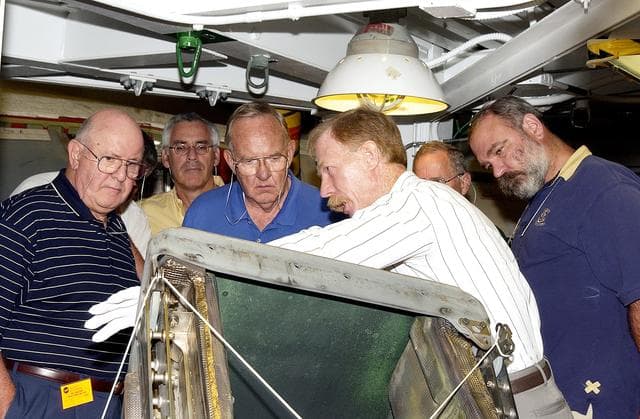
KENNEDY SPACE CENTER, FLA. - On a tour of the Orbiter Processing Facility, members of the Stafford-Covey Return to Flight Task Group (SCTG) look at one of the Reinforced Carbon-Carbon panels, being shown by Tom Roberts with United Space Alliance, from the orbiter Endeavour. Chairing the task group are Richard O. Covey, former Space Shuttle commander, and Thomas P. Stafford, Apollo commander. Chartered by NASA Administrator Sean O’Keefe, the task group will perform an independent assessment of NASA’s implementation of the final recommendations by the Columbia Accident Investigation Board.
KENNEDY SPACE CENTER, FLA. - On a tour of the Orbiter Processing Facility, members of the Stafford-Covey Return to...