
Image
Jan 23, 1974
Sonic Inlet for the Quiet Engine Program
Brent Miller, of the V/STOL and Noise Division at the National Aeronautics and Space Administration (NASA) Lewis...
GRC
Image
Mar 23, 1947
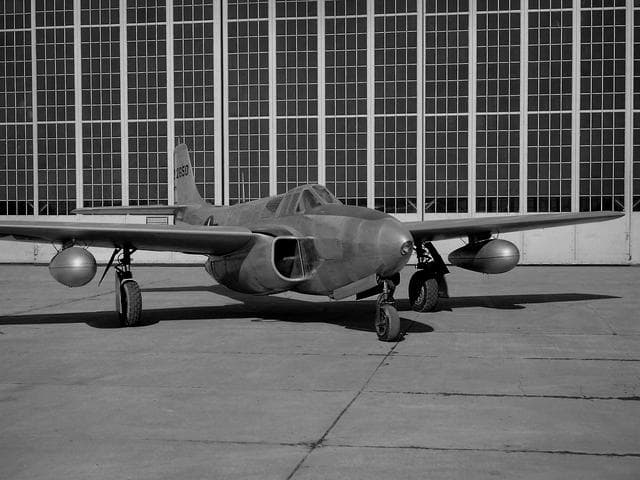
Bell P-59B Airacomet at the Lewis Flight Propulsion Laboratory
A Bell P-59B Airacomet sits beside the hangar at the National Advisory Committee for Aeronautics (NACA) Lewis Flight...
GRC
Image
Aug 23, 1953
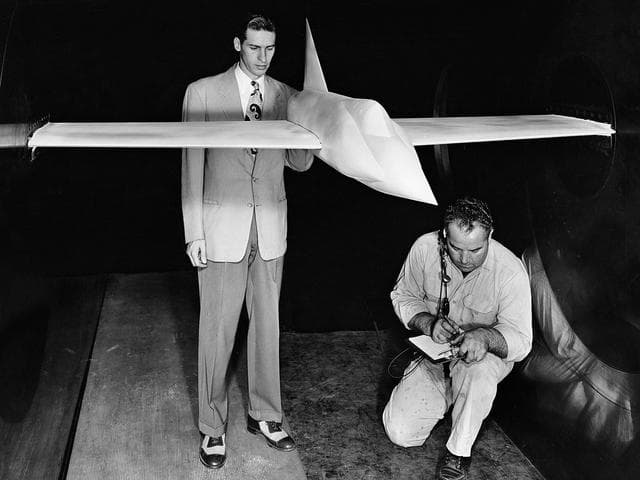
Convair XF-102 Model in the 8- by 6-Foot Supersonic Wind Tunnel
A .10-scale model of Convair’s XF-102 in the 8- by 6-Foot Supersonic Wind Tunnel at the National Advisory Committee...
GRC
Image
Jan 1, 1999
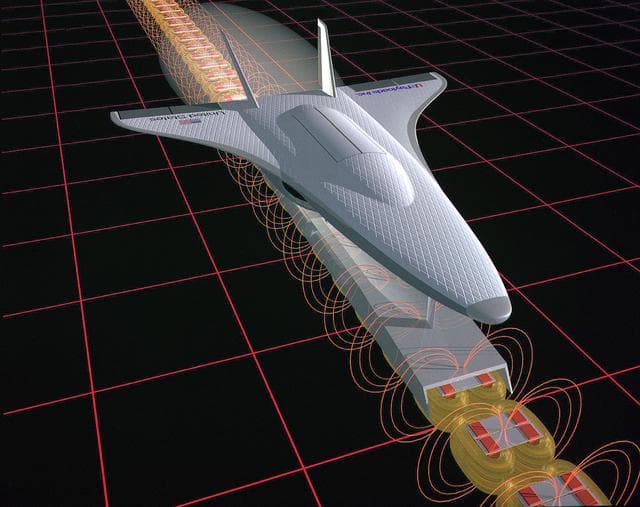
Advanced Concept
This illustration is an artist’s concept of a Magnetic Launch Assist System, formerly referred as the Magnetic...
MSFC
Image
Oct 21, 1999
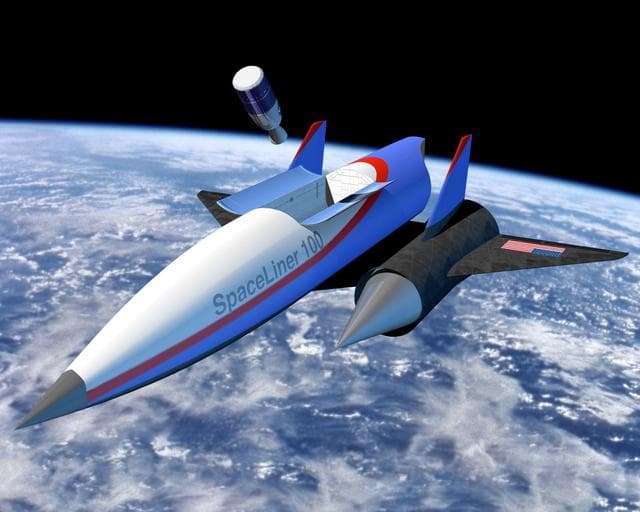
Advanced Concept
This artist’s concept depicts a Magnetic Launch Assist vehicle in orbit. Formerly referred to as the Magnetic...
MSFC

Image
Oct 30, 2019
MAF_20191030_Artemis1-2ndR25-epb-017
The second RS-25 engine has been attached to the core stage for NASA’s Space Launch System (SLS) rocket for the...
MAF

Image
Oct 30, 2019
MAF_20191030_Artemis1-2ndR25-epb-030
The second RS-25 engine has been attached to the core stage for NASA’s Space Launch System (SLS) rocket for the...
MAF

Image
Oct 30, 2019
MAF_20191030_Artemis1-2ndR25-epb-034
The second RS-25 engine has been attached to the core stage for NASA’s Space Launch System (SLS) rocket for the...
MAF

Image
Oct 30, 2019
MAF_20191030_Artemis1-2ndR25-epb-009
The second RS-25 engine has been attached to the core stage for NASA’s Space Launch System (SLS) rocket for the...
MAF

Image
Oct 30, 2019
MAF_20191030_Artemis1-2ndR25-epb-018
The second RS-25 engine has been attached to the core stage for NASA’s Space Launch System (SLS) rocket for the...
MAF

Image
Oct 30, 2019
MAF_20191030_Artemis1-2ndR25-epb-025
The second RS-25 engine has been attached to the core stage for NASA’s Space Launch System (SLS) rocket for the...
MAF

Image
Mar 15, 2023
Quality Inspection of NASA’s X-59 Engine
A quality inspector inspects the GE F-414 engine nozzle after installation at Lockheed Martin’s Skunk Works facility...
LRC

Image
Jan 5, 2023
Quesst Mission | X-59 Engine Inlet
This image shows the X-59’s engine inlet from the aft view, which is the rear of the airplane, looking forward. Once...
LRC

Image
Jan 27, 2023
Lower Empennage Test Fit Install
The X-59 team at Lockheed Martin Skunk Works in Palmdale, California, load the lower empennage - the tail section -...
LRC

Image
Jan 27, 2023
Lower Empennage Test Fit Install
The X-59 team at Lockheed Martin Skunk Works in Palmdale, California, load the lower empennage - the tail section -...
LRC
Image
Mar 15, 2023
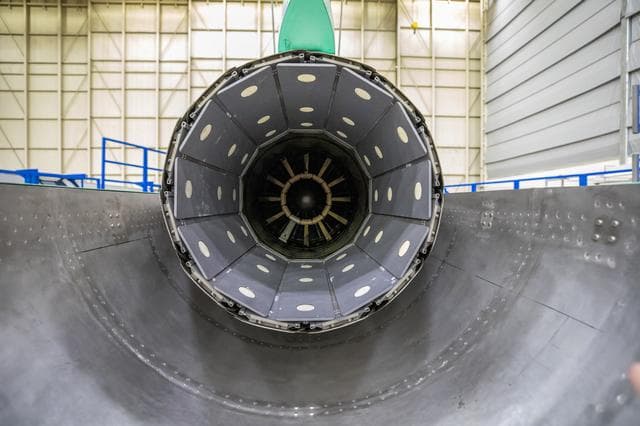
Engine Nozzle of NASA’s X-59
A look at the X-59’s engine nozzle, where the thrust -the force that moves the aircraft- will exit. Once complete,...
LRC
Image
Jan 5, 2023
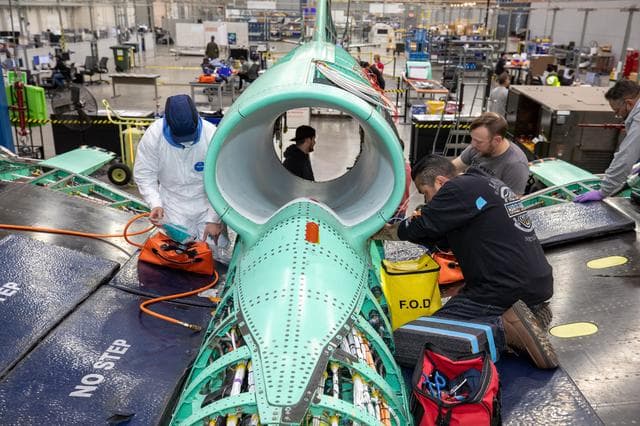
Quesst Mission | X-59 Engine Inlet
The X-59 team working on the aircraft’s wiring around the engine inlet prior to the engine being installed. Once...
LRC
Image
Mar 23, 1944
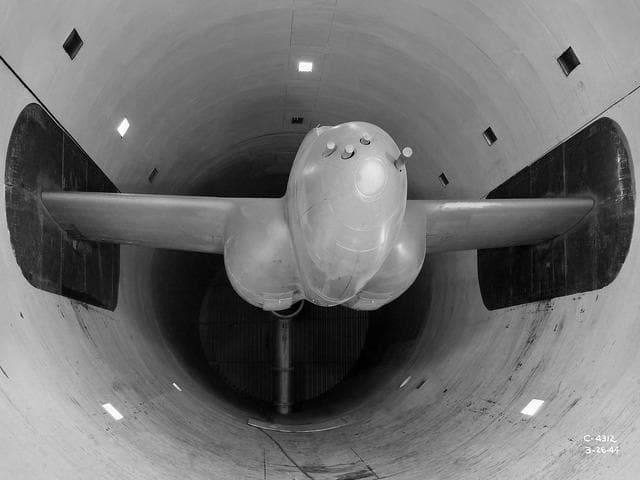
First Test Program in the NACA’s Altitude Wind Tunnel
The Altitude Wind Tunnel (AWT) was the National Advisory Committee for Aeronautics (NACA) Aircraft Engine Research...
GRC

Image
Jan 27, 2023
Lower Empennage Test Fit Install
Here is a close-up of the GE F414 engine, from the aft deck or rear, before the tail section of the X-59 is lifted...
LRC
Image
Jul 23, 1943
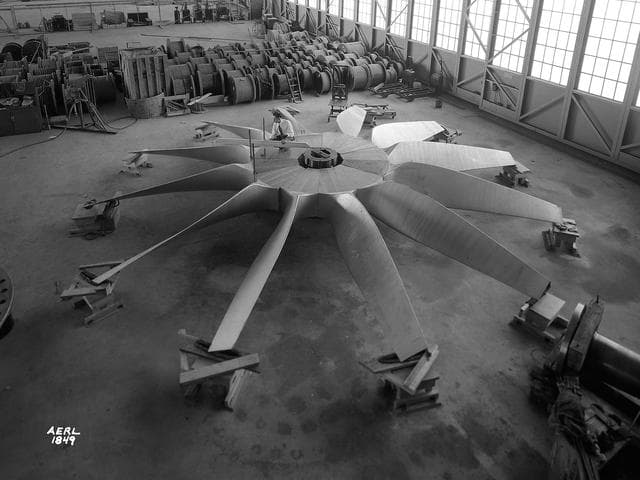
Altitude Wind Tunnel Drive Fan being Assembled
National Advisory Committee for Aeronautics (NACA) engineers assembled the Altitude Wind Tunnel’s (AWT) large wooden...
GRC
Image
Jun 4, 2013
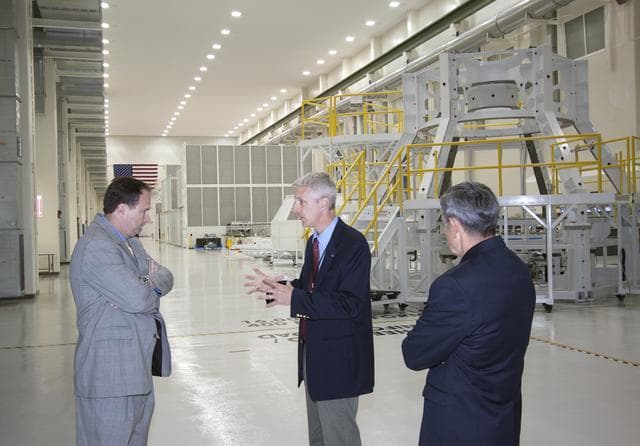
KSC-2013-2563
CAPE CANAVERAL, Fla. – During a visit to NASA's Kennedy Space Center in Florida, NASA Associate Administrator Robert...
KSC
Image
Jan 26, 2000
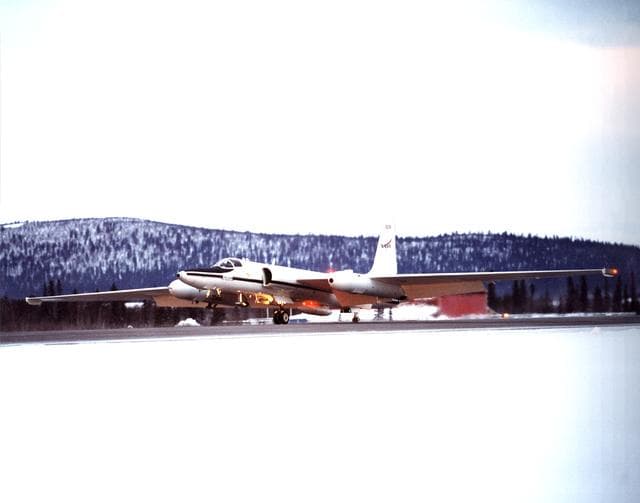
ER-2 #809 landing in Kiruna, Sweden after second flight of the SAGE III Ozone Loss and Validation Experiment (SOLVE)
ER-2s bearing tail numbers 806 and 809 are used as airborne science platforms by NASA's Dryden Flight Research...
AFRC
Image
Jan 24, 2000
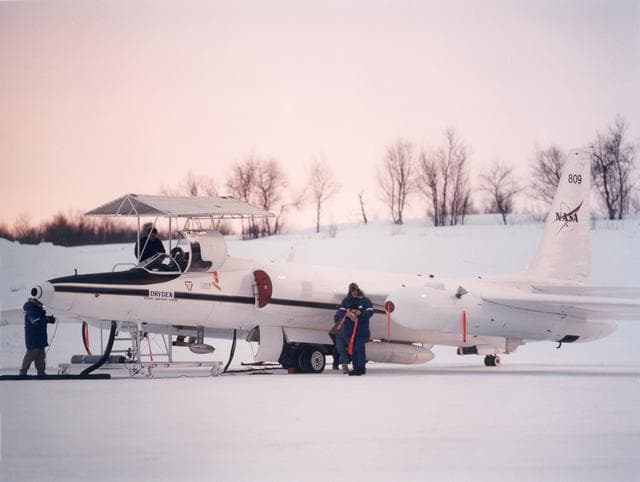
ER-2 #809 in Kiruna, Sweden for the SAGE III Ozone Loss and Validation Experiment (SOLVE) with pilot Dee Porter entry for first flight
ER-2s bearing tail numbers 806 and 809 are used as airborne science platforms by NASA's Dryden Flight Research...
AFRC
Image
Jan 24, 2000
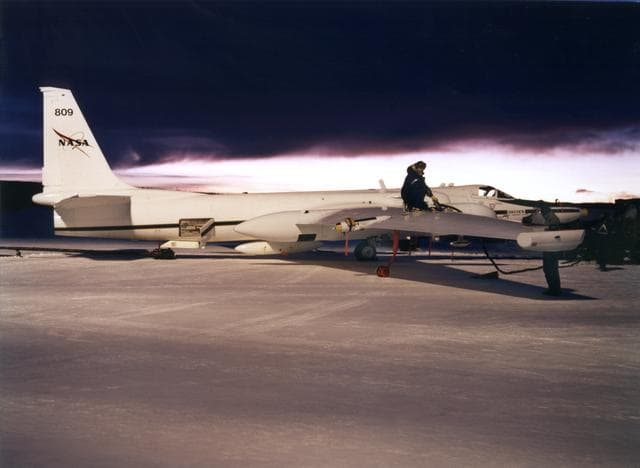
ER-2 #809 during fueling for first flight in Kiruna, Sweden prior to the SAGE III Ozone Loss and Validation Experiment (SOLVE)
ER-2s bearing tail numbers 806 and 809 are used as airborne science platforms by NASA's Dryden Flight Research...
AFRC