CosmosObservatory
Explore
Solar System
Live
Learn
Tools
About
Cosmos Observatory
ToolsAbout
Cosmos Observatory

Explore the universe through NASA data, real-time ISS tracking, Mars rover imagery, asteroid monitoring, and comprehensive space encyclopedia. Your gateway to the cosmos.

Explore

  • APOD
  • Mars Rovers
  • Earth Imagery
  • NASA Gallery
  • ISS Tracker

Data

  • Asteroids
  • Solar System
  • Exoplanets
  • Space Weather
  • Launches

Tools

  • Glossary
  • News
  • Calculators

Legal

  • About
  • Privacy Policy
  • Terms of Use
  • Space Tools
  • Contact

Stay updated with the cosmos

Get weekly digests of APOD highlights, upcoming launches, and space events.

© 2026 Cosmos Observatory. All rights reserved. Built with for space enthusiasts.

This website is not affiliated with, maintained, authorized, endorsed by, or in any way officially connected with NASA or any of its subsidiaries or affiliates. All NASA imagery is in the public domain unless otherwise noted. Data sourced from NASA Open APIs, Launch Library 2, and other open data services.

NASA Gallery

Explore NASA's vast collection of space images, videos, and audio from missions past and present.

  1. Home
  2. /
  3. NASA Gallery

NASA's Image and Video Library: A Visual Archive of Space Exploration

NASA's Image and Video Library is one of the most comprehensive public archives of space imagery in the world, containing over 140,000 images, videos, and audio recordings spanning more than six decades of space exploration. From the earliest Mercury and Gemini missions through the Apollo Moon landings, the Space Shuttle era, and today's cutting-edge observations from the James Webb Space Telescope, this collection documents humanity's journey into the cosmos.

The library includes imagery from diverse sources: telescopes like Hubble and Webb that capture deep-space nebulae, galaxies, and exoplanets; planetary missions like the Mars rovers ( browse Mars photos) and Cassini at Saturn; Earth observation satellites ( see EPIC imagery); astronaut photography from the ISS; and documentation of rocket launches, spacecraft assembly, and ground testing. Most NASA images are in the public domain and free to download at full resolution for educational, editorial, and personal use.

Use the search bar above to find specific subjects — try queries like "Apollo 11," "Hubble Deep Field," "Mars surface," or "astronaut EVA." You can also filter by media type (image, video, or audio). For a daily curated experience, visit the Astronomy Picture of the Day.

Showing results for " Hangar"

3,303 results found - Page 80 of 138

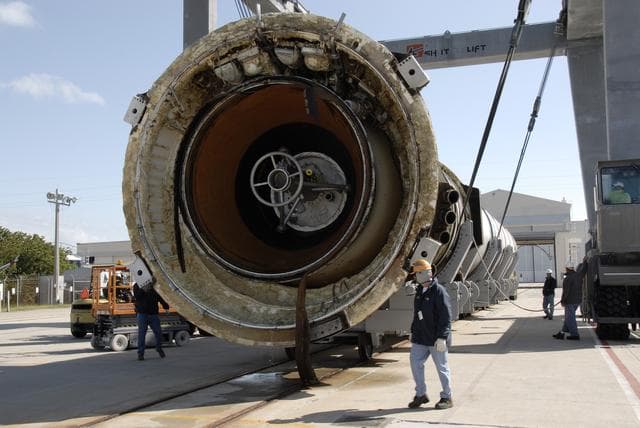
NASA image: KSC-08pd3735
Image
Nov 19, 2008

KSC-08pd3735

CAPE CANAVERAL, Fla. – At the dock at Hangar AF at Cape Canaveral Air Force Station in Florida, the straddle crane...

KSC
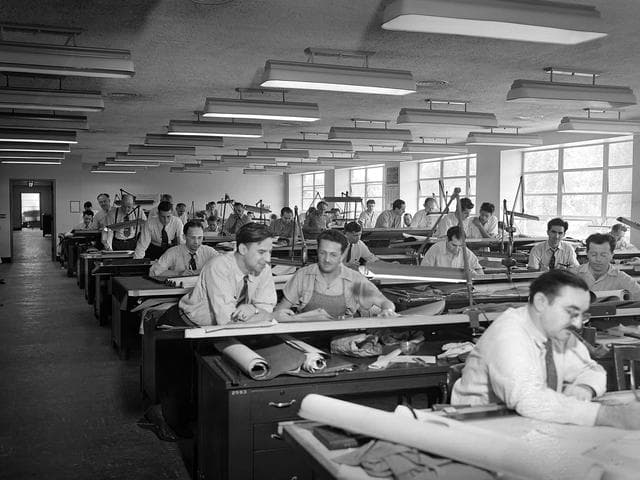
NASA image: Draftsmen at Work during Construction of the Aircraft Engine Research Laboratory
Image
Sep 23, 1942

Draftsmen at Work during Construction of the Aircraft Engine Research Laboratory

The National Advisory Committee for Aeronautics (NACA) Aircraft Engine Research Laboratory was designed by a group...

GRC
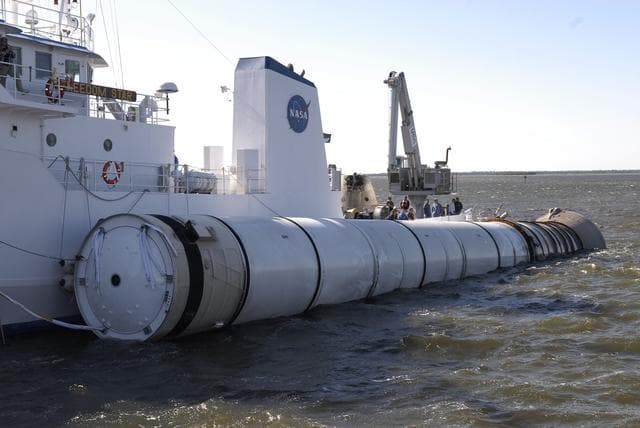
NASA image: KSC-08pd3730
Image
Nov 19, 2008

KSC-08pd3730

CAPE CANAVERAL, Fla. – NASA's Solid Rocket Booster Retrieval Ship Freedom Star tows along its side one of the spent...

KSC
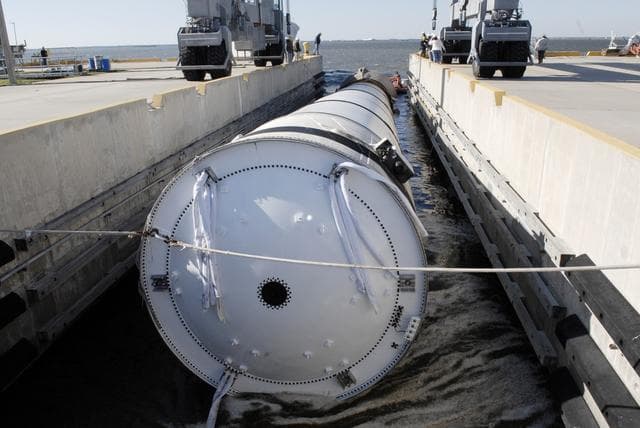
NASA image: KSC-08pd3732
Image
Nov 19, 2008

KSC-08pd3732

CAPE CANAVERAL, Fla. – At the dock at Hangar AF at Cape Canaveral Air Force Station in Florida, the spent solid...

KSC
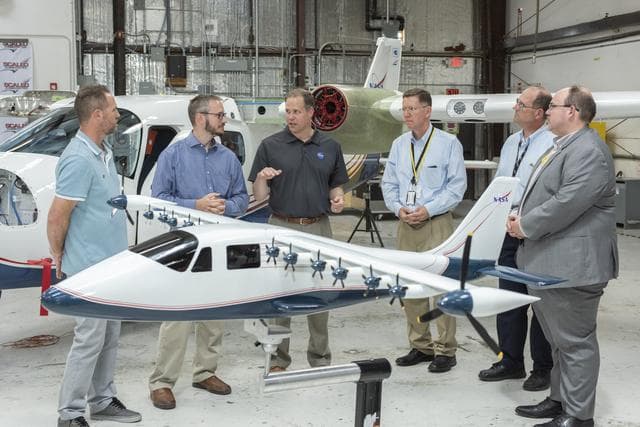
NASA image: Armstrong X-57 team brief NASA Administrator Bridenstine about the progress of making a combustion aircraft into an all-electric airplane. X-57 is in Scaled Composites hangar at Mojave Air & Space Port in California. Model of the final aircraft design sta
Image
Aug 28, 2018

Armstrong X-57 team brief NASA Administrator Bridenstine about the progress of making a combustion aircraft into an all-electric airplane. X-57 is in Scaled Composites hangar at Mojave Air & Space Port in California. Model of the final aircraft design sta

Administrator Bridenstine hears about the progress to modify the Tecnam P2006T from a combustion aircraft to an...

AFRC
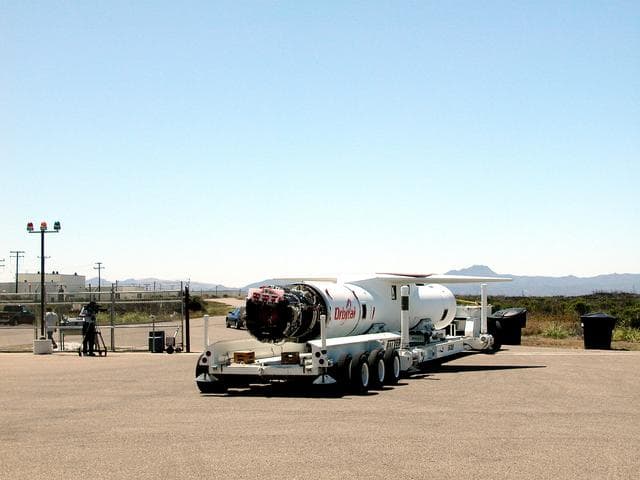
NASA image: KENNEDY SPACE CENTER, FLA. -   At Vandenberg Air Force Base, Calif., the Pegasus launch vehicle is moved toward its hangar.  The Pegasus will carry the SciSat-1 spacecraft in a 400-mile-high polar orbit to investigate processes that control the distribution of ozone in the upper atmosphere.  The scientific mission of SciSat-1 is to measure and understand the chemical processes that control the distribution of ozone in the Earth’s atmosphere, particularly at high altitudes.  The data from the satellite will provide Canadian and international scientists with improved measurements relating to global ozone processes and help policymakers assess existing environmental policy and develop protective measures for improving the health of our atmosphere, preventing further ozone depletion.  The mission is designed to last two years.
Image
Jun 27, 2003

KENNEDY SPACE CENTER, FLA. - At Vandenberg Air Force Base, Calif., the Pegasus launch vehicle is moved toward its hangar. The Pegasus will carry the SciSat-1 spacecraft in a 400-mile-high polar orbit to investigate processes that control the distribution of ozone in the upper atmosphere. The scientific mission of SciSat-1 is to measure and understand the chemical processes that control the distribution of ozone in the Earth’s atmosphere, particularly at high altitudes. The data from the satellite will provide Canadian and international scientists with improved measurements relating to global ozone processes and help policymakers assess existing environmental policy and develop protective measures for improving the health of our atmosphere, preventing further ozone depletion. The mission is designed to last two years.
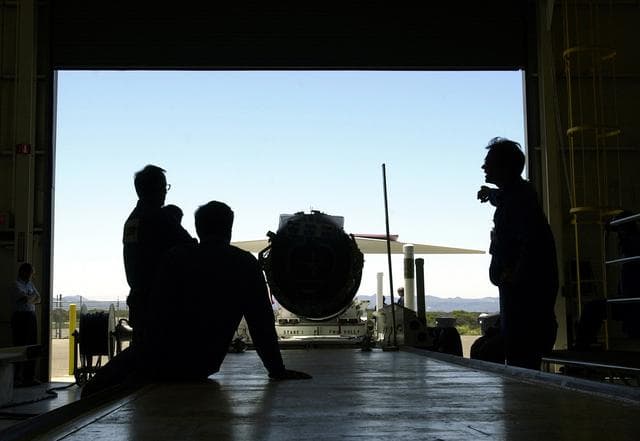
NASA image: KENNEDY SPACE CENTER, FLA. -   Inside the hangar at Vandenberg Air Force Base, Calif., workers wait for the Pegasus launch vehicle to be moved inside.  The Pegasus will carry the SciSat-1 spacecraft in a 400-mile-high polar orbit to investigate processes that control the distribution of ozone in the upper atmosphere.  The scientific mission of SciSat-1 is to measure and understand the chemical processes that control the distribution of ozone in the Earth’s atmosphere, particularly at high altitudes.  The data from the satellite will provide Canadian and international scientists with improved measurements relating to global ozone processes and help policymakers assess existing environmental policy and develop protective measures for improving the health of our atmosphere, preventing further ozone depletion.  The mission is designed to last two years.
Image
Jun 27, 2003

KENNEDY SPACE CENTER, FLA. - Inside the hangar at Vandenberg Air Force Base, Calif., workers wait for the Pegasus launch vehicle to be moved inside. The Pegasus will carry the SciSat-1 spacecraft in a 400-mile-high polar orbit to investigate processes that control the distribution of ozone in the upper atmosphere. The scientific mission of SciSat-1 is to measure and understand the chemical processes that control the distribution of ozone in the Earth’s atmosphere, particularly at high altitudes. The data from the satellite will provide Canadian and international scientists with improved measurements relating to global ozone processes and help policymakers assess existing environmental policy and develop protective measures for improving the health of our atmosphere, preventing further ozone depletion. The mission is designed to last two years.
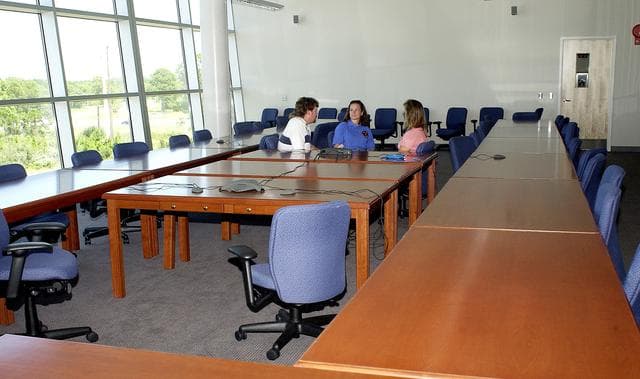
NASA image: KENNEDY SPACE CENTER, FLA. - Dynamac employees (from left) Larry Burns, Debbie Wells and Michelle Crouch talk in a conference room of the Space Life Sciences Lab (SLSL), formerly known as the Space Experiment Research and Processing Laboratory (SERPL). They have been transferring equipment from Hangar L.  The new lab is a state-of-the-art facility being built for ISS biotechnology research. Developed as a partnership between NASA-KSC and the State of Florida, NASA’s life sciences contractor will be the primary tenant of the facility, leasing space to conduct flight experiment processing and NASA-sponsored research. About 20 percent of the facility will be available for use by Florida’s university researchers through the Florida Space Research Institute.
Image
Sep 10, 2003

KENNEDY SPACE CENTER, FLA. - Dynamac employees (from left) Larry Burns, Debbie Wells and Michelle Crouch talk in a conference room of the Space Life Sciences Lab (SLSL), formerly known as the Space Experiment Research and Processing Laboratory (SERPL). They have been transferring equipment from Hangar L. The new lab is a state-of-the-art facility being built for ISS biotechnology research. Developed as a partnership between NASA-KSC and the State of Florida, NASA’s life sciences contractor will be the primary tenant of the facility, leasing space to conduct flight experiment processing and NASA-sponsored research. About 20 percent of the facility will be available for use by Florida’s university researchers through the Florida Space Research Institute.

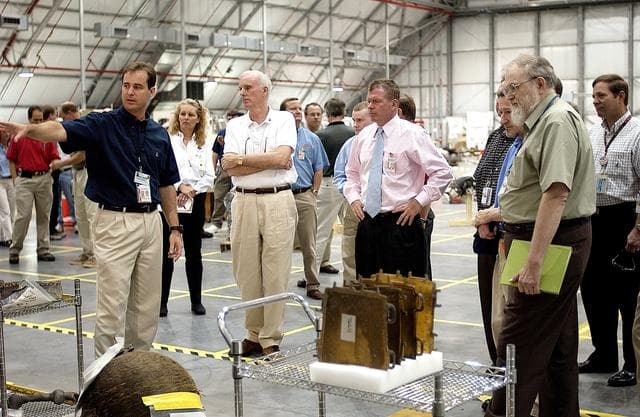
NASA image: KENNEDY SPACE CENTER, FLA. -  Adm. Harold Gehman, center left, chairman of the Columbia Investigation Accident Board, and U.S. Representative Tom Feeney, center right, are shown pieces of Columbia debris collected in the KSC RLV Hangar.  Other members of the board accompanied Gehman as part of the ongoing investigation.  Recovery efforts as of May 5 included 82,500 pieces of debris weighing 84,800 pounds, almost 40 percent of the total dry weight of the shuttle.  About 25,000 personnel took part, utilizing almost 1.5 million total man-hours in the recovery effort and involving more than 130 federal, state and local agencies.  The operation was also supported by more than 270 organizations that included businesses and volunteer groups.
Image
May 15, 2003

KENNEDY SPACE CENTER, FLA. - Adm. Harold Gehman, center left, chairman of the Columbia Investigation Accident Board, and U.S. Representative Tom Feeney, center right, are shown pieces of Columbia debris collected in the KSC RLV Hangar. Other members of the board accompanied Gehman as part of the ongoing investigation. Recovery efforts as of May 5 included 82,500 pieces of debris weighing 84,800 pounds, almost 40 percent of the total dry weight of the shuttle. About 25,000 personnel took part, utilizing almost 1.5 million total man-hours in the recovery effort and involving more than 130 federal, state and local agencies. The operation was also supported by more than 270 organizations that included businesses and volunteer groups.
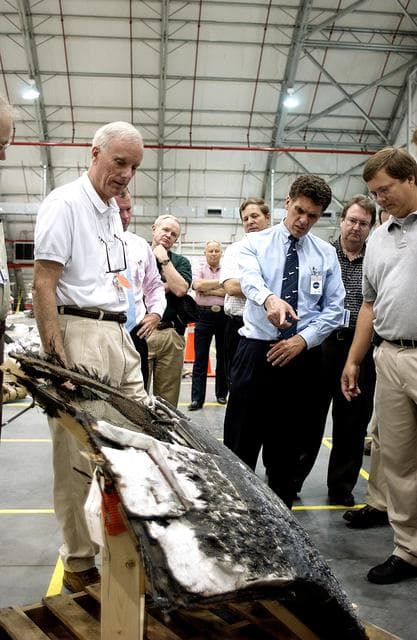
NASA image: KENNEDY SPACE CENTER, FLA. - In the RLV Hangar, Adm. Harold Gehman, center, chairman of the Columbia Investigation Accident Board, looks on while U.S. Representative Dave Weldon (second from right) points at a piece of Columbia debris.  Behind Gehman is U.S. Representative Tom Feeney.  Gehman and other board members are visiting KSC as part of the ongoing investigation.  Recovery efforts as of May 5 included 82,500 pieces of debris weighing 84,800 pounds, almost 40 percent of the total dry weight of the shuttle.  About 25,000 personnel took part, utilizing almost 1.5 million total man-hours in the recovery effort and involving more than 130 federal, state and local agencies.  The operation was also supported by more than 270 organizations that included businesses and volunteer groups.
Image
May 15, 2003

KENNEDY SPACE CENTER, FLA. - In the RLV Hangar, Adm. Harold Gehman, center, chairman of the Columbia Investigation Accident Board, looks on while U.S. Representative Dave Weldon (second from right) points at a piece of Columbia debris. Behind Gehman is U.S. Representative Tom Feeney. Gehman and other board members are visiting KSC as part of the ongoing investigation. Recovery efforts as of May 5 included 82,500 pieces of debris weighing 84,800 pounds, almost 40 percent of the total dry weight of the shuttle. About 25,000 personnel took part, utilizing almost 1.5 million total man-hours in the recovery effort and involving more than 130 federal, state and local agencies. The operation was also supported by more than 270 organizations that included businesses and volunteer groups.

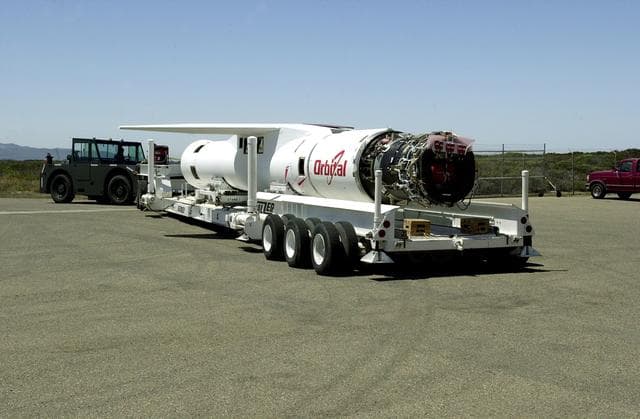
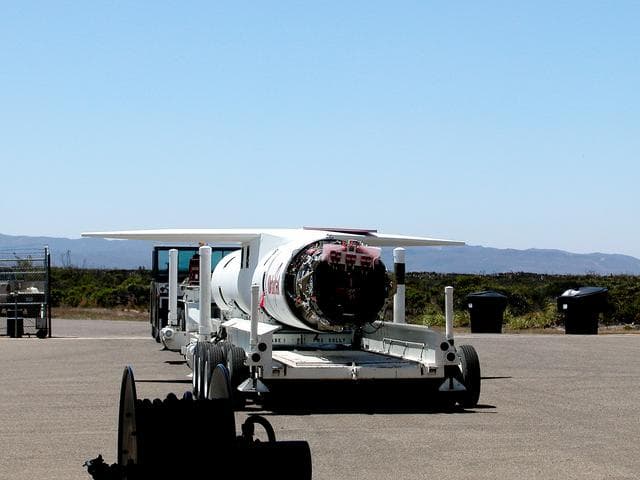
NASA image: KENNEDY SPACE CENTER, FLA. -  The Pegasus launch vehicle is moved back to its hangar at Vandenberg Air Force Base, Calif.  The Pegasus will carry the SciSat-1 spacecraft in a 400-mile-high polar orbit to investigate processes that control the distribution of ozone in the upper atmosphere.  The scientific mission of SciSat-1 is to measure and understand the chemical processes that control the distribution of ozone in the Earth’s atmosphere, particularly at high altitudes.  The data from the satellite will provide Canadian and international scientists with improved measurements relating to global ozone processes and help policymakers assess existing environmental policy and develop protective measures for improving the health of our atmosphere, preventing further ozone depletion.  The mission is designed to last two years.
Image
Jun 27, 2003

KENNEDY SPACE CENTER, FLA. - The Pegasus launch vehicle is moved back to its hangar at Vandenberg Air Force Base, Calif. The Pegasus will carry the SciSat-1 spacecraft in a 400-mile-high polar orbit to investigate processes that control the distribution of ozone in the upper atmosphere. The scientific mission of SciSat-1 is to measure and understand the chemical processes that control the distribution of ozone in the Earth’s atmosphere, particularly at high altitudes. The data from the satellite will provide Canadian and international scientists with improved measurements relating to global ozone processes and help policymakers assess existing environmental policy and develop protective measures for improving the health of our atmosphere, preventing further ozone depletion. The mission is designed to last two years.
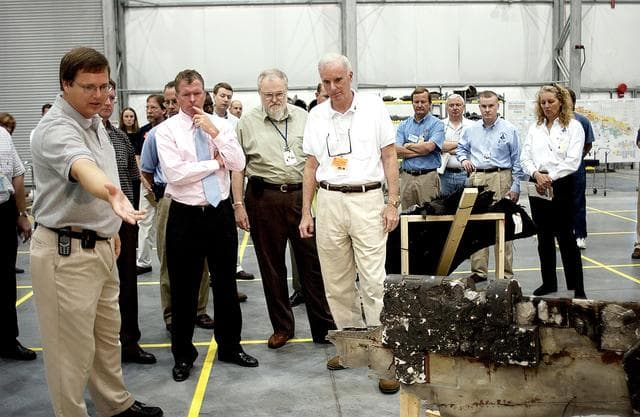
NASA image: KENNEDY SPACE CENTER, FLA. - Adm. Harold Gehman, center left, chairman of the Columbia Investigation Accident Board, and U.S. Representative Tom Feeney, center right, are shown pieces of Columbia debris collected in the KSC RLV Hangar.  Other members of the board accompanied Gehman as part of the ongoing investigation.  Recovery efforts as of May 5 included 82,500 pieces of debris weighing 84,800 pounds, almost 40 percent of the total dry weight of the shuttle.  About 25,000 personnel took part, utilizing almost 1.5 million total man-hours in the recovery effort and involving more than 130 federal, state and local agencies.  The operation was also supported by more than 270 organizations that included businesses and volunteer groups.
Image
May 15, 2003

KENNEDY SPACE CENTER, FLA. - Adm. Harold Gehman, center left, chairman of the Columbia Investigation Accident Board, and U.S. Representative Tom Feeney, center right, are shown pieces of Columbia debris collected in the KSC RLV Hangar. Other members of the board accompanied Gehman as part of the ongoing investigation. Recovery efforts as of May 5 included 82,500 pieces of debris weighing 84,800 pounds, almost 40 percent of the total dry weight of the shuttle. About 25,000 personnel took part, utilizing almost 1.5 million total man-hours in the recovery effort and involving more than 130 federal, state and local agencies. The operation was also supported by more than 270 organizations that included businesses and volunteer groups.

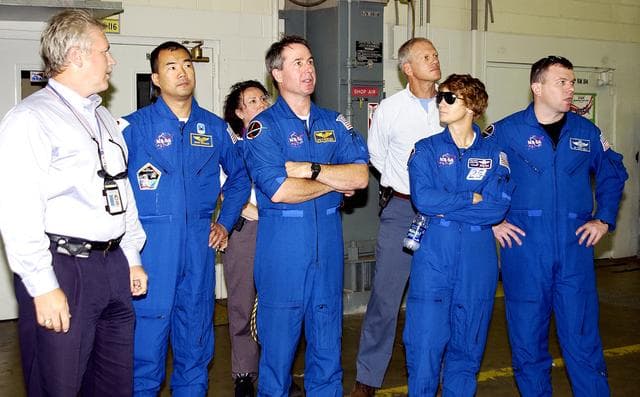
NASA image: KENNEDY SPACE CENTER, FLA. -  In Hangar AF, Cape Canaveral Air Force Station, the STS-114 crew look at equipment used to disassemble and refurbish solid rocket boosters retrieved after a Shuttle launch.  Starting second from left are Mission Specialist Soichi Noguchi, Mission Specialist Stephen Robinson, Commander Eileen Collins, and Pilot James Kelly. Noguchi is with the Japanese space agency NASDA.  At far left is Joseph Chaput, with United Space Alliance. On their mission, the crew will carry the MultiPurpose Logistics Module (MPLM) Raffaello and External Stowage Platform 2 to the International Space Station.  The MPLM will contain supplies and equipment.  Another goal of the mission is to remove and replace a Control Moment Gyro.  Launch date for mission STS-114 is under review.
Image
Aug 13, 2003

KENNEDY SPACE CENTER, FLA. - In Hangar AF, Cape Canaveral Air Force Station, the STS-114 crew look at equipment used to disassemble and refurbish solid rocket boosters retrieved after a Shuttle launch. Starting second from left are Mission Specialist Soichi Noguchi, Mission Specialist Stephen Robinson, Commander Eileen Collins, and Pilot James Kelly. Noguchi is with the Japanese space agency NASDA. At far left is Joseph Chaput, with United Space Alliance. On their mission, the crew will carry the MultiPurpose Logistics Module (MPLM) Raffaello and External Stowage Platform 2 to the International Space Station. The MPLM will contain supplies and equipment. Another goal of the mission is to remove and replace a Control Moment Gyro. Launch date for mission STS-114 is under review.
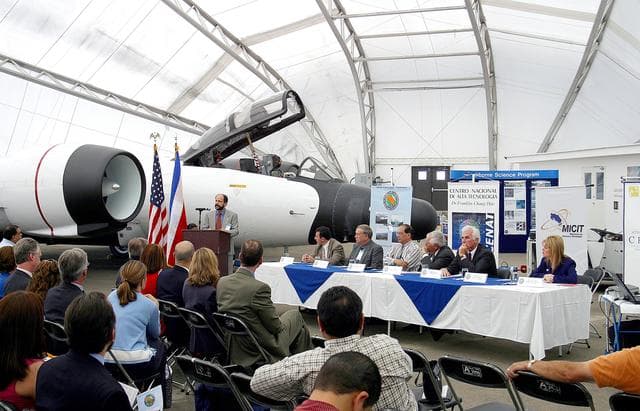
NASA image: KENNEDY SPACE CENTER, FLA. -  At the airport in San Jose, Costa Rica, the NASA hangar is dedicated. The speaker is Hermann Faith, executive director, Costa Rica-USA (CRUSA) Foundation. At the table are (from left) Dr. Jorge Andres Diaz, head scientiest CARTA mission; Gary Shelton, NASA deployment manager; Dr. Pedro Leon, general director, National Center for Advanced Technology (CENAT); Dr. Rogelio Pardo, minister of science and tchnology; John Danilovioch, U.S. ambassador to Costa Rica; and Lic. Vilma Lopez, subdirector, Civil Aviation (DGAC).  NASA KSC has been testing its Aircraft-based Volcanic Emission Mass Spectrometer (AVEMS) in flights over the Turrialba volcano and in the crater, sampling and analyzing fresh volcanic gases in their natural chemical state.  The AVEMS system has been developed for use in the Space Shuttle program, to detect toxic gas leaks and emissions in the Shuttle’s aft compartment and the crew compartment.
Image
Mar 31, 2003

KENNEDY SPACE CENTER, FLA. - At the airport in San Jose, Costa Rica, the NASA hangar is dedicated. The speaker is Hermann Faith, executive director, Costa Rica-USA (CRUSA) Foundation. At the table are (from left) Dr. Jorge Andres Diaz, head scientiest CARTA mission; Gary Shelton, NASA deployment manager; Dr. Pedro Leon, general director, National Center for Advanced Technology (CENAT); Dr. Rogelio Pardo, minister of science and tchnology; John Danilovioch, U.S. ambassador to Costa Rica; and Lic. Vilma Lopez, subdirector, Civil Aviation (DGAC). NASA KSC has been testing its Aircraft-based Volcanic Emission Mass Spectrometer (AVEMS) in flights over the Turrialba volcano and in the crater, sampling and analyzing fresh volcanic gases in their natural chemical state. The AVEMS system has been developed for use in the Space Shuttle program, to detect toxic gas leaks and emissions in the Shuttle’s aft compartment and the crew compartment.

NASA image: KENNEDY SPACE CENTER, FLA. - The Pegasus launch vehicle is moved back to its hangar at Vandenberg Air Force Base, Calif.  The Pegasus will carry the SciSat-1 spacecraft in a 400-mile-high polar orbit to investigate processes that control the distribution of ozone in the upper atmosphere.  The scientific mission of SciSat-1 is to measure and understand the chemical processes that control the distribution of ozone in the Earth’s atmosphere, particularly at high altitudes.  The data from the satellite will provide Canadian and international scientists with improved measurements relating to global ozone processes and help policymakers assess existing environmental policy and develop protective measures for improving the health of our atmosphere, preventing further ozone depletion.  The mission is designed to last two years.
Image
Jun 27, 2003

KENNEDY SPACE CENTER, FLA. - The Pegasus launch vehicle is moved back to its hangar at Vandenberg Air Force Base, Calif. The Pegasus will carry the SciSat-1 spacecraft in a 400-mile-high polar orbit to investigate processes that control the distribution of ozone in the upper atmosphere. The scientific mission of SciSat-1 is to measure and understand the chemical processes that control the distribution of ozone in the Earth’s atmosphere, particularly at high altitudes. The data from the satellite will provide Canadian and international scientists with improved measurements relating to global ozone processes and help policymakers assess existing environmental policy and develop protective measures for improving the health of our atmosphere, preventing further ozone depletion. The mission is designed to last two years.
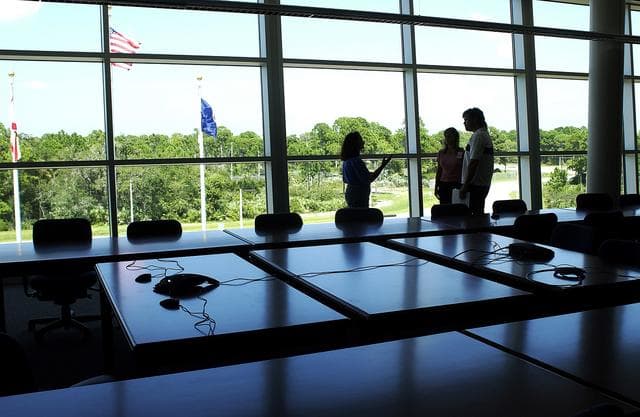
NASA image: KENNEDY SPACE CENTER, FLA. - Dynamac employees Debbie Wells, Michelle Crouch and Larry Burns are silhouetted as they talk inside a conference room of the Space Life Sciences Lab (SLSL), formerly known as the Space Experiment Research and Processing Laboratory (SERPL).  They have been transferring equipment from Hangar L.  The new lab is a state-of-the-art facility being built for ISS biotechnology research. Developed as a partnership between NASA-KSC and the State of Florida, NASA’s life sciences contractor will be the primary tenant of the facility, leasing space to conduct flight experiment processing and NASA-sponsored research. About 20 percent of the facility will be available for use by Florida’s university researchers through the Florida Space Research Institute.
Image
Sep 10, 2003

KENNEDY SPACE CENTER, FLA. - Dynamac employees Debbie Wells, Michelle Crouch and Larry Burns are silhouetted as they talk inside a conference room of the Space Life Sciences Lab (SLSL), formerly known as the Space Experiment Research and Processing Laboratory (SERPL). They have been transferring equipment from Hangar L. The new lab is a state-of-the-art facility being built for ISS biotechnology research. Developed as a partnership between NASA-KSC and the State of Florida, NASA’s life sciences contractor will be the primary tenant of the facility, leasing space to conduct flight experiment processing and NASA-sponsored research. About 20 percent of the facility will be available for use by Florida’s university researchers through the Florida Space Research Institute.

NASA image: NASA Langley Research Center Open House 2023 Media Day
Video
Oct 16, 2023

NASA Langley Research Center Open House 2023 Media Day

NASA's Langley Research Center in Hampton, Va. hosted a special preview of its upcoming Open House for members of...

LRC
NASA image: ORACLES Campaign: B-Roll 4
Video
Sep 13, 2016

ORACLES Campaign: B-Roll 4

Southern Africa produces almost a third of the world’s vegetative burning, which sends smoke particles up into the...

GSFC
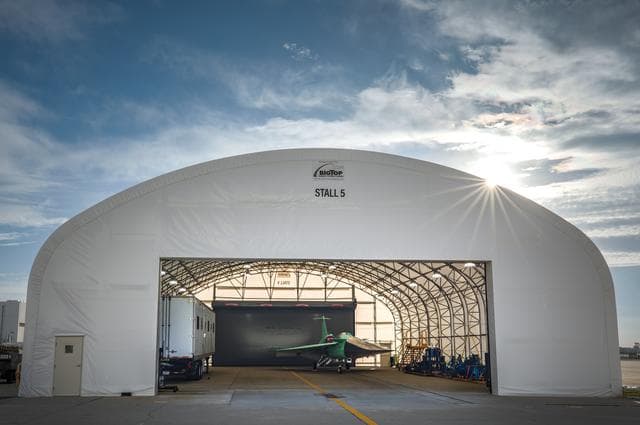
NASA image: Move to Run Stall 5
Image
Feb 7, 2022

Move to Run Stall 5

NASA’s X-59 aircraft is parked in stall five near the runway at Lockheed Martin Skunk Works in Palmdale, California,...

HQ
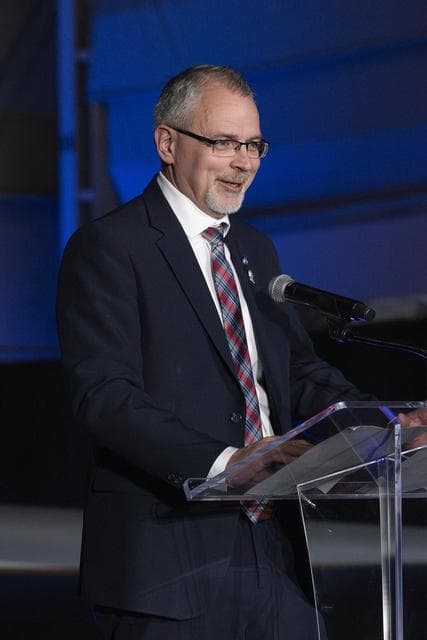
NASA image: NASA’s Associate Administrator Speaks Following X-59 Unveiling
Image
Jan 12, 2024

NASA’s Associate Administrator Speaks Following X-59 Unveiling

NASA Associate Administrator Jim Free speaks on stage following the unveiling of the agency’s X-59 quiet supersonic...

AFRC
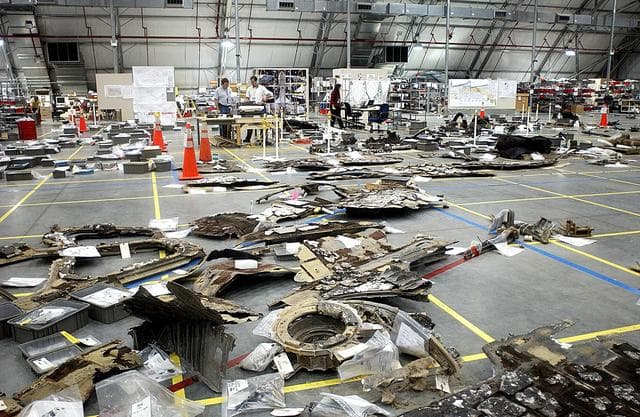
NASA image: KSC-03pd1071
Image
Apr 14, 2003

KSC-03pd1071

KENNEDY SPACE CENTER, FLA. -- The floor of the KSC RLV Hangar is filled with pieces of Columbia debris gathered by...

KSC
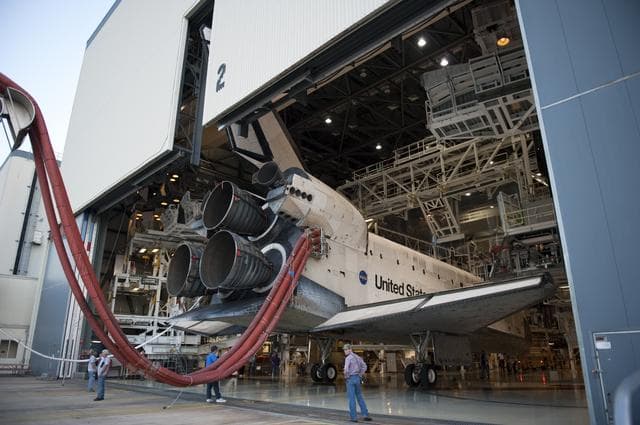
NASA image: KSC-2011-2187
Image
Mar 9, 2011

KSC-2011-2187

CAPE CANAVERAL, Fla. - Space shuttle Discovery's tail fin clears the hangar door of Orbiter Processing Facility-2 at...

KSC
NASA image: SpaceX Demo-1 Dry Rehearsal of Static Fire Test
Image
Jan 3, 2019

SpaceX Demo-1 Dry Rehearsal of Static Fire Test

A SpaceX Falcon 9 rocket with the company’s Crew Dragon attached, rolls out of the company’s hangar at NASA Kennedy...

KSC
NASA image: OA-7 Atlas V Booster Arrival and Offload
Image
Feb 6, 2017

OA-7 Atlas V Booster Arrival and Offload

A transport truck is about to take a United Launch Alliance (ULA) Atlas V booster from the Mariner cargo ship at the...

KSC
PreviousPage 80 of 100Next

Frequently Asked Questions About NASA Images

Are NASA images free to use?+
Yes, most NASA images are in the public domain and are free to use for educational, informational, and personal purposes. NASA's media usage guidelines state that NASA material is not copyrighted unless otherwise noted. However, the NASA logo and certain insignia are protected. Some images may include identifiable individuals or third-party content that requires additional permissions. Always check the specific image's usage rights and credit NASA as the source.
How many images does NASA have?+
NASA's Image and Video Library contains over 140,000 publicly accessible images, videos, and audio files spanning the agency's entire history, from the Mercury program of the 1960s to the latest James Webb Space Telescope discoveries. The collection grows daily as new missions capture imagery and archival materials are digitized. Individual mission archives, such as Mars rover photos, contain hundreds of thousands of additional images.
Can I download NASA images?+
Yes, you can download NASA images in multiple resolutions directly from this gallery. Each image detail page provides download links for original (full resolution), large (1920px), medium (960px), small (480px), and thumbnail sizes. NASA encourages the public to use these images for education, media, and personal projects. High-resolution originals are ideal for printing and professional use.

Explore More NASA Content

Astronomy Picture of the Day

Daily curated space image

Mars Rover Photos

Curiosity & Perseverance images

Earth from Space

DSCOVR EPIC daily images

Launch Schedule

Upcoming rocket launches

Space News

Mission updates & discoveries

KENNEDY SPACE CENTER, FLA. - At Vandenberg Air Force Base, Calif., the Pegasus launch vehicle is moved toward its...

KSC

KENNEDY SPACE CENTER, FLA. - Inside the hangar at Vandenberg Air Force Base, Calif., workers wait for the Pegasus...

KSC

KENNEDY SPACE CENTER, FLA. - Dynamac employees (from left) Larry Burns, Debbie Wells and Michelle Crouch talk in a...

KSC

KENNEDY SPACE CENTER, FLA. - Adm. Harold Gehman, center left, chairman of the Columbia Investigation Accident Board,...

KSC

KENNEDY SPACE CENTER, FLA. - In the RLV Hangar, Adm. Harold Gehman, center, chairman of the Columbia Investigation...

KSC

KENNEDY SPACE CENTER, FLA. - The Pegasus launch vehicle is moved back to its hangar at Vandenberg Air Force Base,...

KSC

KENNEDY SPACE CENTER, FLA. - Adm. Harold Gehman, center left, chairman of the Columbia Investigation Accident Board,...

KSC

KENNEDY SPACE CENTER, FLA. - In Hangar AF, Cape Canaveral Air Force Station, the STS-114 crew look at equipment used...

KSC

KENNEDY SPACE CENTER, FLA. - At the airport in San Jose, Costa Rica, the NASA hangar is dedicated. The speaker is...

KSC

KENNEDY SPACE CENTER, FLA. - The Pegasus launch vehicle is moved back to its hangar at Vandenberg Air Force Base,...

KSC

KENNEDY SPACE CENTER, FLA. - Dynamac employees Debbie Wells, Michelle Crouch and Larry Burns are silhouetted as they...

KSC