CosmosObservatory
Explore
Solar System
Live
Learn
Tools
About
Cosmos Observatory
ToolsAbout
Cosmos Observatory

Explore the universe through NASA data, real-time ISS tracking, Mars rover imagery, asteroid monitoring, and comprehensive space encyclopedia. Your gateway to the cosmos.

Explore

  • APOD
  • Mars Rovers
  • Earth Imagery
  • NASA Gallery
  • ISS Tracker

Data

  • Asteroids
  • Solar System
  • Exoplanets
  • Space Weather
  • Launches

Tools

  • Glossary
  • News
  • Calculators

Legal

  • About
  • Privacy Policy
  • Terms of Use
  • Space Tools
  • Contact

Stay updated with the cosmos

Get weekly digests of APOD highlights, upcoming launches, and space events.

© 2026 Cosmos Observatory. All rights reserved. Built with for space enthusiasts.

This website is not affiliated with, maintained, authorized, endorsed by, or in any way officially connected with NASA or any of its subsidiaries or affiliates. All NASA imagery is in the public domain unless otherwise noted. Data sourced from NASA Open APIs, Launch Library 2, and other open data services.

NASA Gallery

Explore NASA's vast collection of space images, videos, and audio from missions past and present.

  1. Home
  2. /
  3. NASA Gallery

NASA's Image and Video Library: A Visual Archive of Space Exploration

NASA's Image and Video Library is one of the most comprehensive public archives of space imagery in the world, containing over 140,000 images, videos, and audio recordings spanning more than six decades of space exploration. From the earliest Mercury and Gemini missions through the Apollo Moon landings, the Space Shuttle era, and today's cutting-edge observations from the James Webb Space Telescope, this collection documents humanity's journey into the cosmos.

The library includes imagery from diverse sources: telescopes like Hubble and Webb that capture deep-space nebulae, galaxies, and exoplanets; planetary missions like the Mars rovers ( browse Mars photos) and Cassini at Saturn; Earth observation satellites ( see EPIC imagery); astronaut photography from the ISS; and documentation of rocket launches, spacecraft assembly, and ground testing. Most NASA images are in the public domain and free to download at full resolution for educational, editorial, and personal use.

Use the search bar above to find specific subjects — try queries like "Apollo 11," "Hubble Deep Field," "Mars surface," or "astronaut EVA." You can also filter by media type (image, video, or audio). For a daily curated experience, visit the Astronomy Picture of the Day.

Showing results for "Pad 39a"

10,922 results found - Page 73 of 456

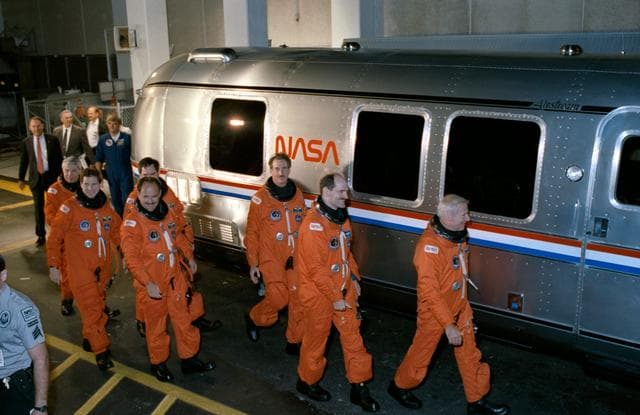
NASA image: STS-35 crew leaves KSC O&C Bldg and boards van for transport to LC Pad 39A
Image
Dec 2, 1990

STS-35 crew leaves KSC O&C Bldg and boards van for transport to LC Pad 39A

STS035-S-016 (2 Dec 1990) --- Astronaut Vance D. Brand, right, leads the STS 35 crew toward a transfer van that will...

JSC
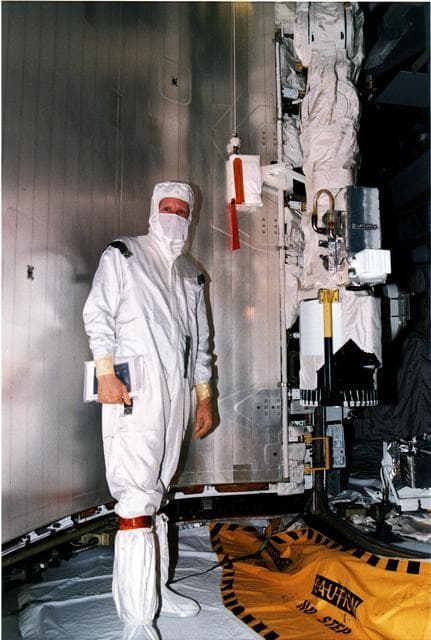
NASA image: KENNEDY SPACE CENTER, FLA. -   STS-82 Mission Specialist Steven A Hawley stands beside part of Discovery's Remote Manipulator System (RMS) arm, at right, which he will operate for the capture, berthing and redeployment of the Hubble Space Telescope (HST).  The robotic arm also will be used as work platform for the four spacewalkers.  Hawley is the prime RMS operator on the flight, which will be the second HST servicing mission.  He and the other six members of the crew are making a final inspection of the payload at Launch Pad 39A before launch. STS-82 is scheduled for liftoff on Feb. 11 during a 65-minute launch window that opens at 3:56 a.m. EST.
Image
Feb 7, 1997

KENNEDY SPACE CENTER, FLA. - STS-82 Mission Specialist Steven A Hawley stands beside part of Discovery's Remote Manipulator System (RMS) arm, at right, which he will operate for the capture, berthing and redeployment of the Hubble Space Telescope (HST). The robotic arm also will be used as work platform for the four spacewalkers. Hawley is the prime RMS operator on the flight, which will be the second HST servicing mission. He and the other six members of the crew are making a final inspection of the payload at Launch Pad 39A before launch. STS-82 is scheduled for liftoff on Feb. 11 during a 65-minute launch window that opens at 3:56 a.m. EST.

KENNEDY SPACE CENTER, FLA. - STS-82 Mission Specialist Steven A Hawley stands beside part of Discovery's Remote...

KSC
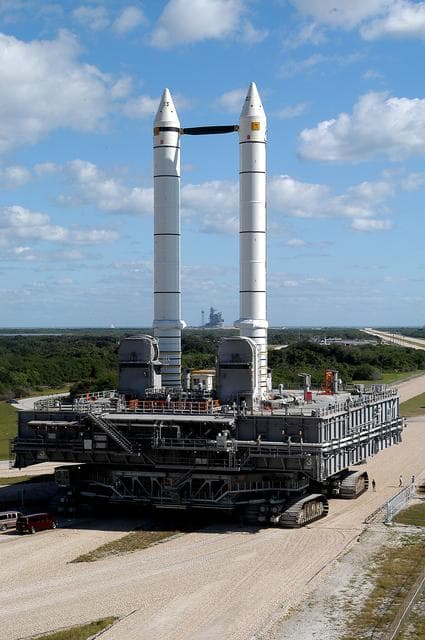
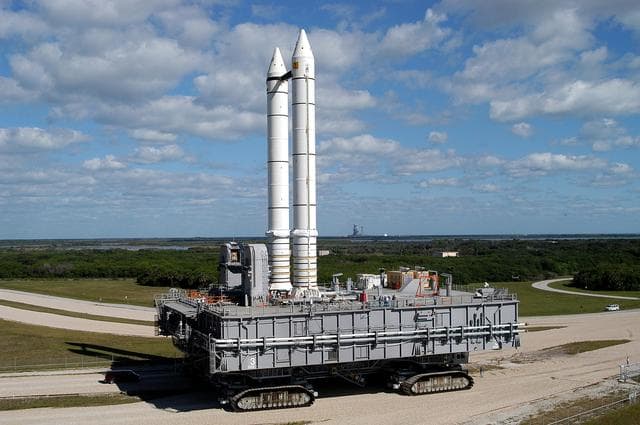
NASA image: KENNEDY SPACE CENTER, FLA. -  Mobile Launcher Platform (MLP) number 3 and a set of twin solid rocket boosters, atop the crawler-transporter, inch along the crawlerway in support of the second engineering analysis vibration test on the crawler and MLP. The crawler is moving at various speeds up to 1 mph in an effort to achieve vibration data gathering goals as it leaves the VAB, travels toward Launch Pad 39A (framed between the boosters), and then returns.  The boosters are braced at the top for stability.  The primary purpose of these rollout tests is to gather data to develop future maintenance requirements on the transport equipment and the flight hardware. Various parts of the MLP and crawler transporter have been instrumented with vibration data collection equipment.
Image
Nov 21, 2003

KENNEDY SPACE CENTER, FLA. - Mobile Launcher Platform (MLP) number 3 and a set of twin solid rocket boosters, atop the crawler-transporter, inch along the crawlerway in support of the second engineering analysis vibration test on the crawler and MLP. The crawler is moving at various speeds up to 1 mph in an effort to achieve vibration data gathering goals as it leaves the VAB, travels toward Launch Pad 39A (framed between the boosters), and then returns. The boosters are braced at the top for stability. The primary purpose of these rollout tests is to gather data to develop future maintenance requirements on the transport equipment and the flight hardware. Various parts of the MLP and crawler transporter have been instrumented with vibration data collection equipment.
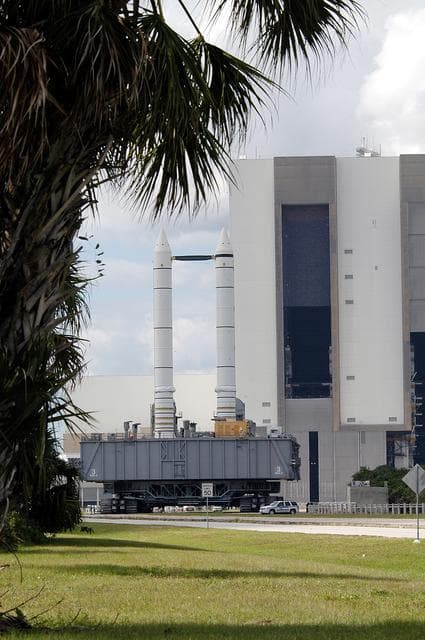
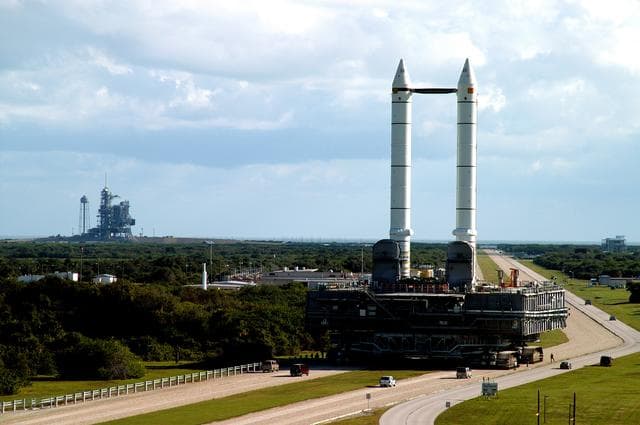
NASA image: KENNEDY SPACE CENTER, FLA. -  The crawler transporter slowly moves the Mobile Launcher Platform (MLP), carrying a set of twin solid rocket boosters, along the crawlerway in support of engineering analysis vibration tests on the crawler and MLP.   In the distance, at left, is Launch Pad 39A. The crawler is moving at various speeds up to 1 mph in an effort to achieve vibration data gathering goals as it leaves the VAB and then returns.  The boosters are braced at the top for stability.  The primary purpose of these rollout tests is to gather data to develop future maintenance requirements on the transport equipment and the flight hardware. Various parts of the MLP and crawler transporter have been instrumented with vibration data collection equipment.
Image
Nov 17, 2003

KENNEDY SPACE CENTER, FLA. - The crawler transporter slowly moves the Mobile Launcher Platform (MLP), carrying a set of twin solid rocket boosters, along the crawlerway in support of engineering analysis vibration tests on the crawler and MLP. In the distance, at left, is Launch Pad 39A. The crawler is moving at various speeds up to 1 mph in an effort to achieve vibration data gathering goals as it leaves the VAB and then returns. The boosters are braced at the top for stability. The primary purpose of these rollout tests is to gather data to develop future maintenance requirements on the transport equipment and the flight hardware. Various parts of the MLP and crawler transporter have been instrumented with vibration data collection equipment.
NASA image: KENNEDY SPACE CENTER, FLA. -  Mobile Launcher Platform (MLP) number 3 and a set of twin solid rocket boosters, atop the crawler-transporter, crawls away from the Vehicle Assembly Building in support of the second engineering analysis vibration test on the crawler and MLP. The crawler is moving at various speeds up to 1 mph in an effort to achieve vibration data gathering goals as it leaves the VAB, travels toward Launch Pad 39A and then returns.  The boosters are braced at the top for stability.  The primary purpose of these rollout tests is to gather data to develop future maintenance requirements on the transport equipment and the flight hardware. Various parts of the MLP and crawler transporter have been instrumented with vibration data collection equipment.
Image
Nov 21, 2003

KENNEDY SPACE CENTER, FLA. - Mobile Launcher Platform (MLP) number 3 and a set of twin solid rocket boosters, atop the crawler-transporter, crawls away from the Vehicle Assembly Building in support of the second engineering analysis vibration test on the crawler and MLP. The crawler is moving at various speeds up to 1 mph in an effort to achieve vibration data gathering goals as it leaves the VAB, travels toward Launch Pad 39A and then returns. The boosters are braced at the top for stability. The primary purpose of these rollout tests is to gather data to develop future maintenance requirements on the transport equipment and the flight hardware. Various parts of the MLP and crawler transporter have been instrumented with vibration data collection equipment.

NASA image: KENNEDY SPACE CENTER, FLA. -  Mobile Launcher Platform (MLP) number 3 and a set of twin solid rocket boosters, atop the crawler-transporter, inch along the crawlerway in support of the second engineering analysis vibration test on the crawler and MLP. The crawler is moving at various speeds up to 1 mph in an effort to achieve vibration data gathering goals as it leaves the VAB, travels toward Launch Pad 39A (on the horizon) and then returns.  The boosters are braced at the top for stability.  The primary purpose of these rollout tests is to gather data to develop future maintenance requirements on the transport equipment and the flight hardware. Various parts of the MLP and crawler transporter have been instrumented with vibration data collection equipment.
Image
Nov 21, 2003

KENNEDY SPACE CENTER, FLA. - Mobile Launcher Platform (MLP) number 3 and a set of twin solid rocket boosters, atop the crawler-transporter, inch along the crawlerway in support of the second engineering analysis vibration test on the crawler and MLP. The crawler is moving at various speeds up to 1 mph in an effort to achieve vibration data gathering goals as it leaves the VAB, travels toward Launch Pad 39A (on the horizon) and then returns. The boosters are braced at the top for stability. The primary purpose of these rollout tests is to gather data to develop future maintenance requirements on the transport equipment and the flight hardware. Various parts of the MLP and crawler transporter have been instrumented with vibration data collection equipment.

NASA image: KSC-00pp1313
Image
Sep 11, 2000

KSC-00pp1313

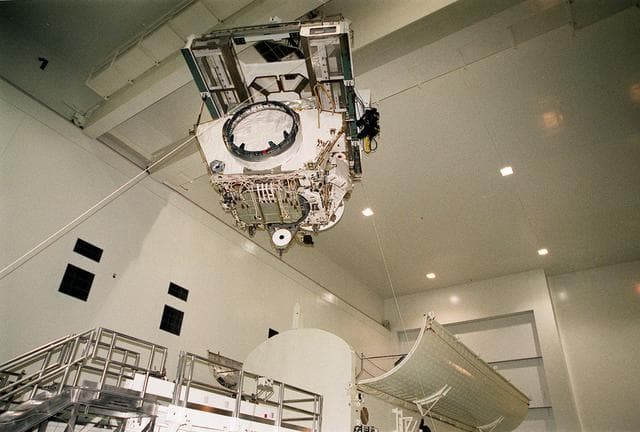
In the Space Station Processing Facility, the Integrated Truss Structure Z1, suspended from an overhead crane,...

KSC
NASA image: jsc2024e011750
Image
Oct 12, 2023

jsc2024e011750

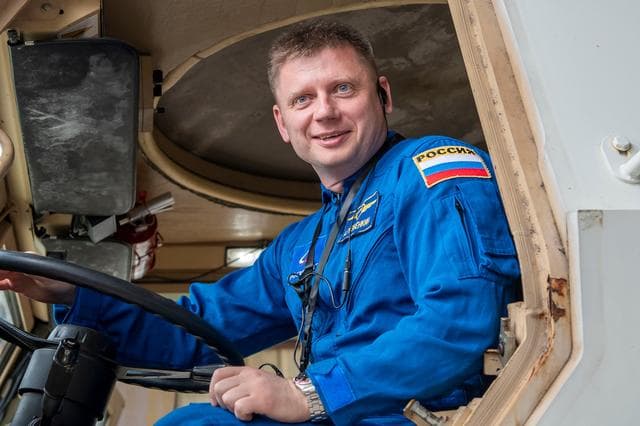
jsc2024e011750 (Oct. 12, 2023) --- SpaceX Crew-8 Mission Specialist Alexander Grebenkin poses for a photo inside an...

JSC

NASA image: jsc2022e065084
Image
Aug 8, 2022

jsc2022e065084

jsc2022e065084 (Aug. 8, 2022) --- Mission Specialist Sultan Alneyadi from the Mohammed bin Rashid Space Centre of...

JSC
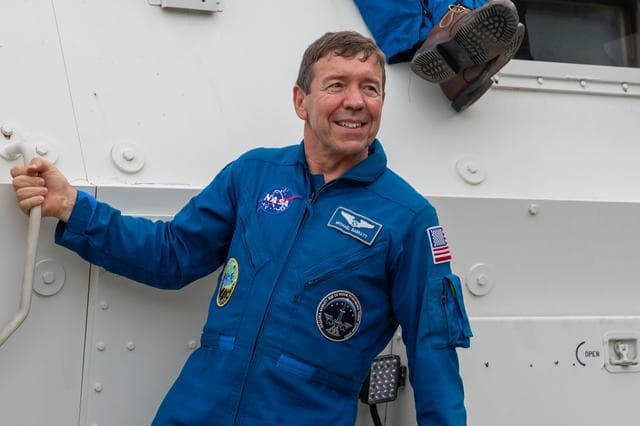
NASA image: jsc2024e011752
Image
Oct 12, 2023

jsc2024e011752

jsc2024e011752 (Oct. 12, 2023) --- NASA's SpaceX Crew-8 Pilot Michael Barratt poses for a photo outside the...

JSC
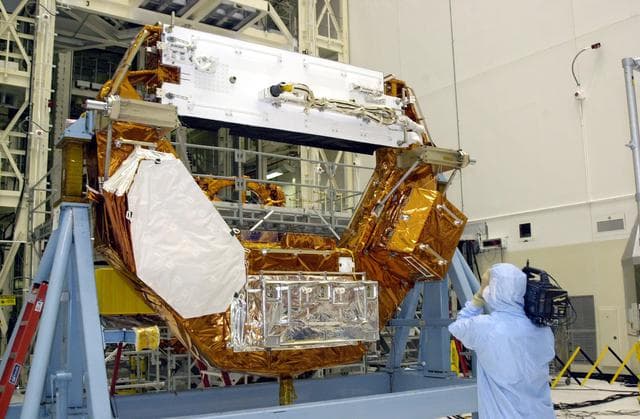
NASA image: KSC-02pd-0104
Image
Jan 29, 2002

KSC-02pd-0104

KENNEDY SPACE CENTER, FLA. - A NASA videographer records the installation of the several enclosures on the Multi-Use...

KSC
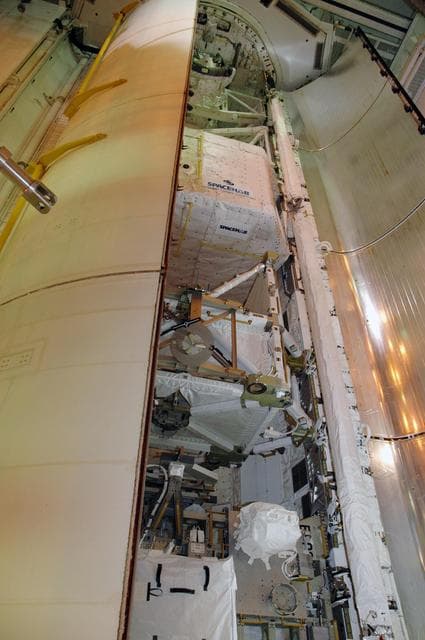
NASA image: KSC-07pd2048
Image
Jul 20, 2007

KSC-07pd2048

KENNEDY SPACE CENTER, FLA. — At Launch Pad 39A, the first payload bay door on Endeavour closes over its cargo. The...

KSC
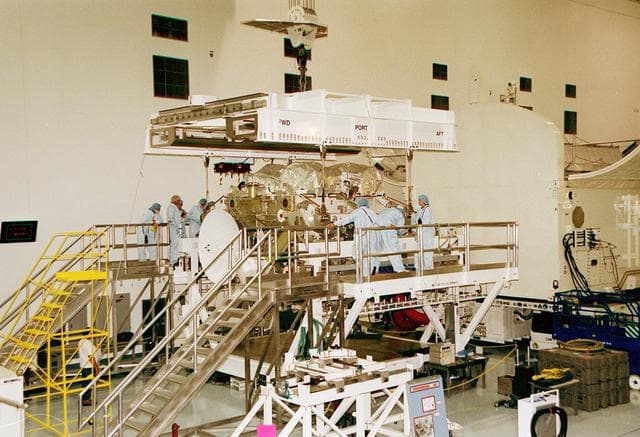
NASA image: KSC-00pp1310
Image
Sep 11, 2000

KSC-00pp1310

In the Space Station Processing Facility, an overhead crane is placed into position to lift the Integrated Truss...

KSC
NASA image: Vice President Pence at Kennedy for Apollo 11 Landing 50th Anniv
Image
Jul 20, 2019

Vice President Pence at Kennedy for Apollo 11 Landing 50th Anniv

Vice President Pence arrives at Kennedy Space Center on July 20, 2019 in celebration of the Apollo 11 50th...

KSC
NASA image: SpaceX Falcon Heavy in Hangar Before Static Fire Test for NASA’s Psyche Mission
Image
Sep 27, 2023

SpaceX Falcon Heavy in Hangar Before Static Fire Test for NASA’s Psyche Mission

Photos of the Falcon Heavy rocket that will launch NASA's Psyche mission in the hangar at Launch Complex 39A at...

KSC
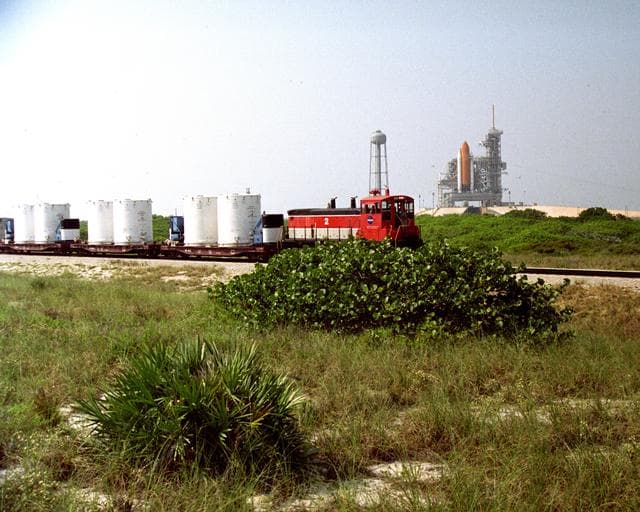
NASA image: KSC-98PC-647
Image
May 22, 1998

KSC-98PC-647

CAPE CANAVERAL, Fla. – A NASA railroad train moves past Launch Pad 39A at NASA's Kennedy Space Center in Florida....

KSC
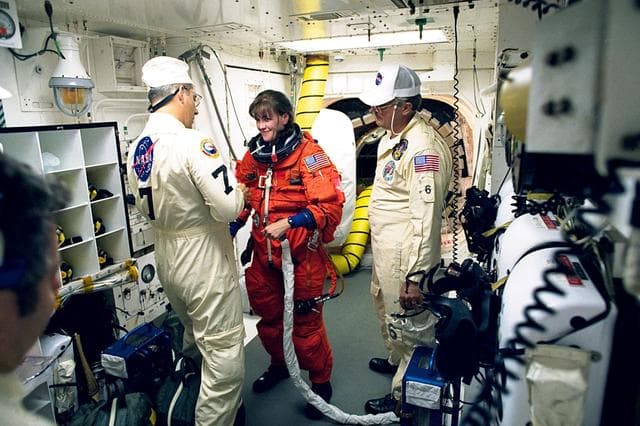
NASA image: KSC-98pc695
Image
Jun 2, 1998

KSC-98pc695

STS-91 Mission Specialist Janet Lynn Kavandi gets some help with her flight suit from David Brandt in the White Room...

KSC
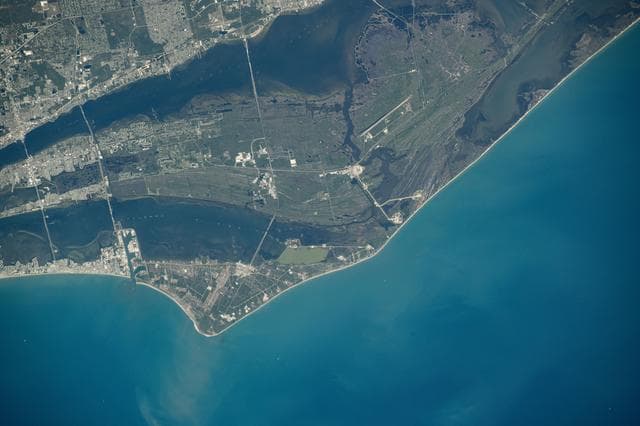
NASA image: iss071e130759
Image
May 27, 2024

iss071e130759

iss071e130759 (May 27, 2024) --- NASA's John F. Kennedy Space Center, the center's Launch Pads 39A and 39B, and the...

JSC
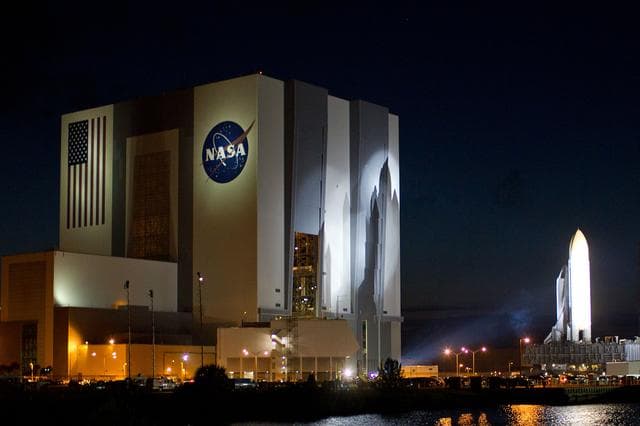
NASA image: STS_135_RollOut
Image
May 31, 2011

STS_135_RollOut

JSC2011-E-059488 (31 May 2011) --- The space shuttle Atlantis moves away from the Vehicle Assembly Building on its...

JSC
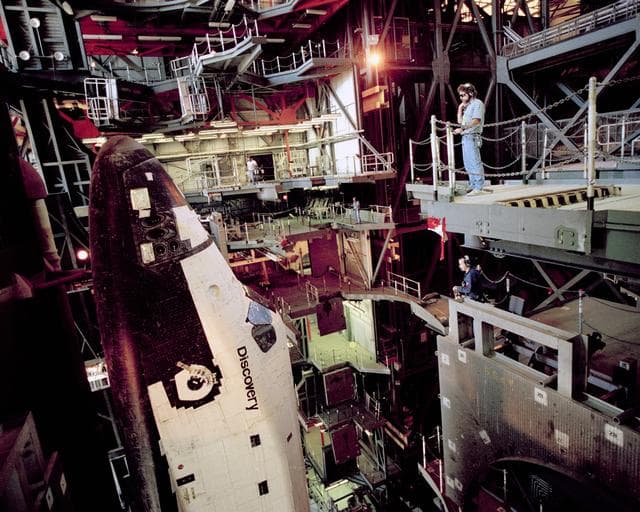
NASA image: KSC-91PC-1664
Image
Mar 7, 1991

KSC-91PC-1664

CAPE CANAVERAL, Fla. – Workers watch as the space shuttle Discovery makes the slow journey back from Pad 39A into...

KSC
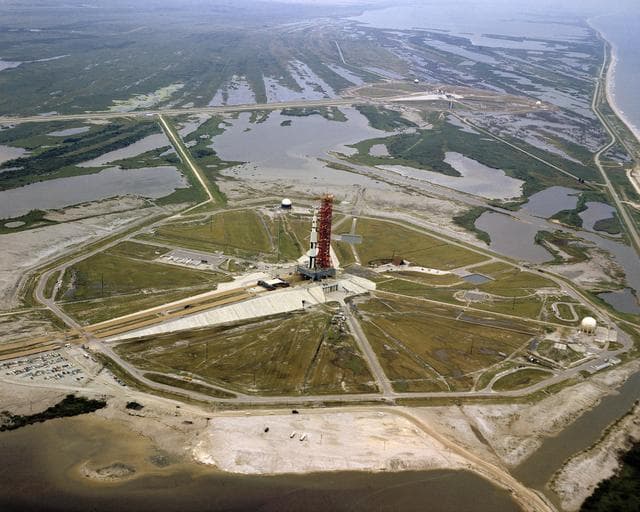
NASA image: KSC-66C-6962
Image
Jul 22, 1966

KSC-66C-6962

CAPE KENNEDY, Fla. -- An aerial view of Launch Complex 39A at the Kennedy Space Center in Florida, with the 500F...

KSC
NASA image: KSC-11-S-00019
Video
Mar 11, 2011

KSC-11-S-00019

Space shuttle Endeavour began its final scheduled 3.4-mile journey to Launch Pad 39A in darkness -- leaving the...

KSC
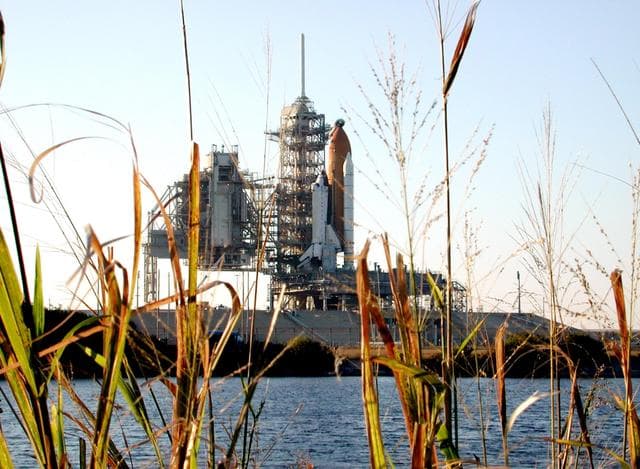
NASA image: KSC-03pd0078
Image
Jan 15, 2003

KSC-03pd0078

KENNEDY SPACE CENTER, FLA. -- A view of Space Shuttle Columbia through reedy grasses in nearby water. Columbia is...

KSC
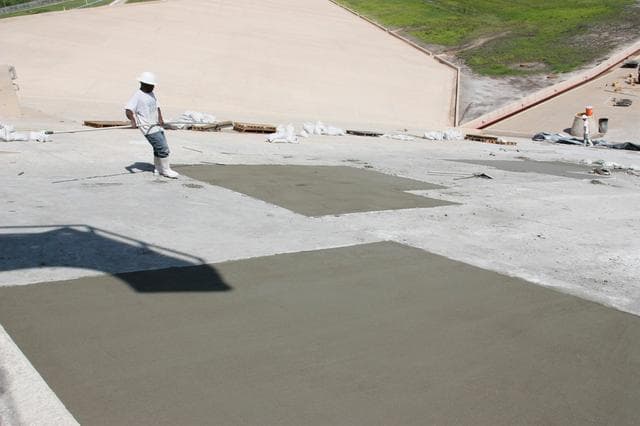
NASA image: KSC-08pd2223
Image
Aug 1, 2008

KSC-08pd2223

CAPE CANAVERAL, Fla. – A worker is ready to smooth the surface on the slope of Launch Pad 39A at NASA's Kennedy...

KSC
PreviousPage 73 of 100Next

Frequently Asked Questions About NASA Images

Are NASA images free to use?+
Yes, most NASA images are in the public domain and are free to use for educational, informational, and personal purposes. NASA's media usage guidelines state that NASA material is not copyrighted unless otherwise noted. However, the NASA logo and certain insignia are protected. Some images may include identifiable individuals or third-party content that requires additional permissions. Always check the specific image's usage rights and credit NASA as the source.
How many images does NASA have?+
NASA's Image and Video Library contains over 140,000 publicly accessible images, videos, and audio files spanning the agency's entire history, from the Mercury program of the 1960s to the latest James Webb Space Telescope discoveries. The collection grows daily as new missions capture imagery and archival materials are digitized. Individual mission archives, such as Mars rover photos, contain hundreds of thousands of additional images.
Can I download NASA images?+
Yes, you can download NASA images in multiple resolutions directly from this gallery. Each image detail page provides download links for original (full resolution), large (1920px), medium (960px), small (480px), and thumbnail sizes. NASA encourages the public to use these images for education, media, and personal projects. High-resolution originals are ideal for printing and professional use.

Explore More NASA Content

Astronomy Picture of the Day

Daily curated space image

Mars Rover Photos

Curiosity & Perseverance images

Earth from Space

DSCOVR EPIC daily images

Launch Schedule

Upcoming rocket launches

Space News

Mission updates & discoveries

KENNEDY SPACE CENTER, FLA. - Mobile Launcher Platform (MLP) number 3 and a set of twin solid rocket boosters, atop...

KSC

KENNEDY SPACE CENTER, FLA. - The crawler transporter slowly moves the Mobile Launcher Platform (MLP), carrying a set...

KSC

KENNEDY SPACE CENTER, FLA. - Mobile Launcher Platform (MLP) number 3 and a set of twin solid rocket boosters, atop...

KSC

KENNEDY SPACE CENTER, FLA. - Mobile Launcher Platform (MLP) number 3 and a set of twin solid rocket boosters, atop...

KSC