CosmosObservatory
Explore
Solar System
Live
Learn
Tools
About
Cosmos Observatory
ToolsAbout
Cosmos Observatory

Explore the universe through NASA data, real-time ISS tracking, Mars rover imagery, asteroid monitoring, and comprehensive space encyclopedia. Your gateway to the cosmos.

Explore

  • APOD
  • Mars Rovers
  • Earth Imagery
  • NASA Gallery
  • ISS Tracker

Data

  • Asteroids
  • Solar System
  • Exoplanets
  • Space Weather
  • Launches

Tools

  • Glossary
  • News
  • Calculators

Legal

  • About
  • Privacy Policy
  • Terms of Use
  • Space Tools
  • Contact

Stay updated with the cosmos

Get weekly digests of APOD highlights, upcoming launches, and space events.

© 2026 Cosmos Observatory. All rights reserved. Built with for space enthusiasts.

This website is not affiliated with, maintained, authorized, endorsed by, or in any way officially connected with NASA or any of its subsidiaries or affiliates. All NASA imagery is in the public domain unless otherwise noted. Data sourced from NASA Open APIs, Launch Library 2, and other open data services.

NASA Gallery

Explore NASA's vast collection of space images, videos, and audio from missions past and present.

  1. Home
  2. /
  3. NASA Gallery

NASA's Image and Video Library: A Visual Archive of Space Exploration

NASA's Image and Video Library is one of the most comprehensive public archives of space imagery in the world, containing over 140,000 images, videos, and audio recordings spanning more than six decades of space exploration. From the earliest Mercury and Gemini missions through the Apollo Moon landings, the Space Shuttle era, and today's cutting-edge observations from the James Webb Space Telescope, this collection documents humanity's journey into the cosmos.

The library includes imagery from diverse sources: telescopes like Hubble and Webb that capture deep-space nebulae, galaxies, and exoplanets; planetary missions like the Mars rovers ( browse Mars photos) and Cassini at Saturn; Earth observation satellites ( see EPIC imagery); astronaut photography from the ISS; and documentation of rocket launches, spacecraft assembly, and ground testing. Most NASA images are in the public domain and free to download at full resolution for educational, editorial, and personal use.

Use the search bar above to find specific subjects — try queries like "Apollo 11," "Hubble Deep Field," "Mars surface," or "astronaut EVA." You can also filter by media type (image, video, or audio). For a daily curated experience, visit the Astronomy Picture of the Day.

Showing results for "View 17"

970 results found - Page 7 of 41

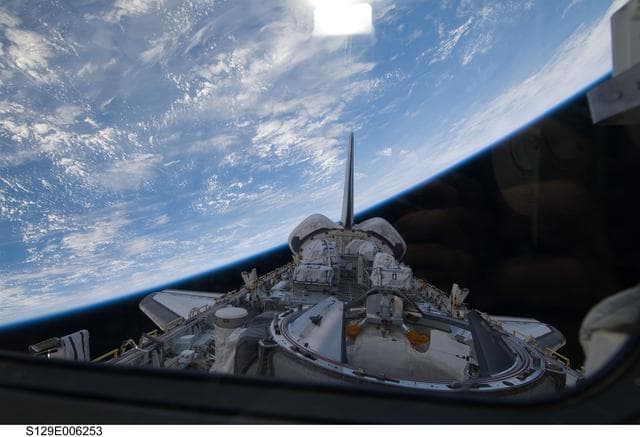
NASA image: View of Atlantis' Payload Bay taken during the STS-129 Mission
Image
Nov 17, 2009

View of Atlantis' Payload Bay taken during the STS-129 Mission

S129-E-006253 (17 Nov. 2009) --- Backdropped by Earth?s horizon and the blackness of space, a partial view of Space...

JSC
NASA image: jsc2021e031163
Image
Feb 17, 2021

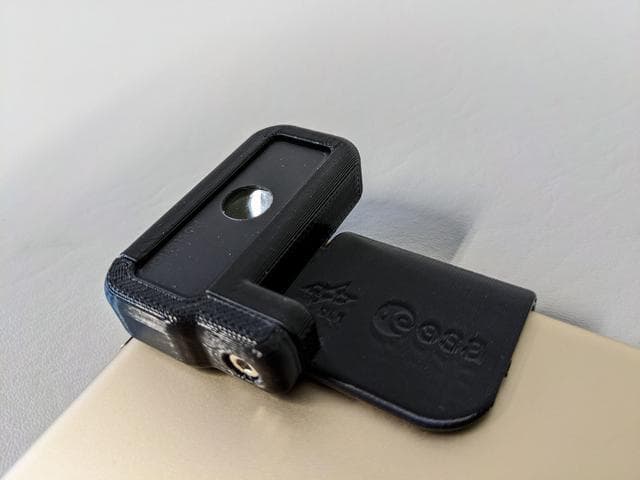
jsc2021e031163

jsc2021e031163 (2/17/2021) --- A preflight view of the experiment hardware for DLR-EAC Retinal Diagnostics Study....

JSC
NASA image: Apollo 17, SIVB as Lunar Module approaches for docking
Image
Dec 7, 1972

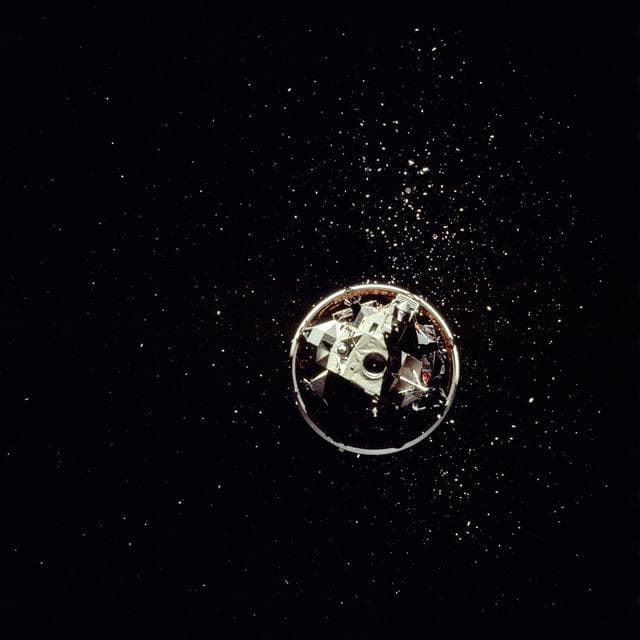
Apollo 17, SIVB as Lunar Module approaches for docking

AS17-148-22687 (7-19 Dec. 1972) --- View of the Lunar Module from the Apollo 17 spacecraft after...

JSC
NASA image: STS-127 approach to ISS
Image
Jul 17, 2009

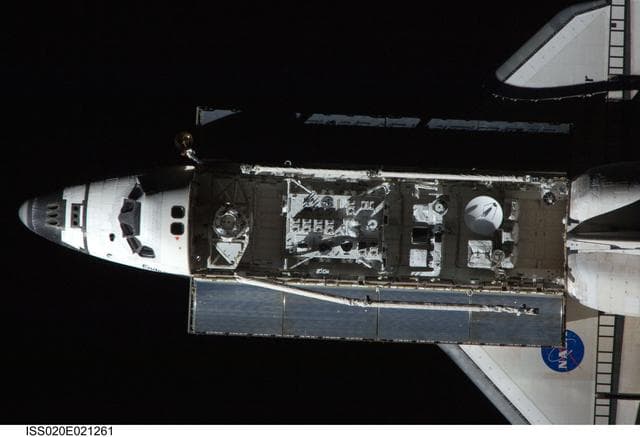
STS-127 approach to ISS

ISS020-E-021261 (17 July 2009) --- This view of the Space Shuttle Endeavour was provided by an Expedition 20...

JSC
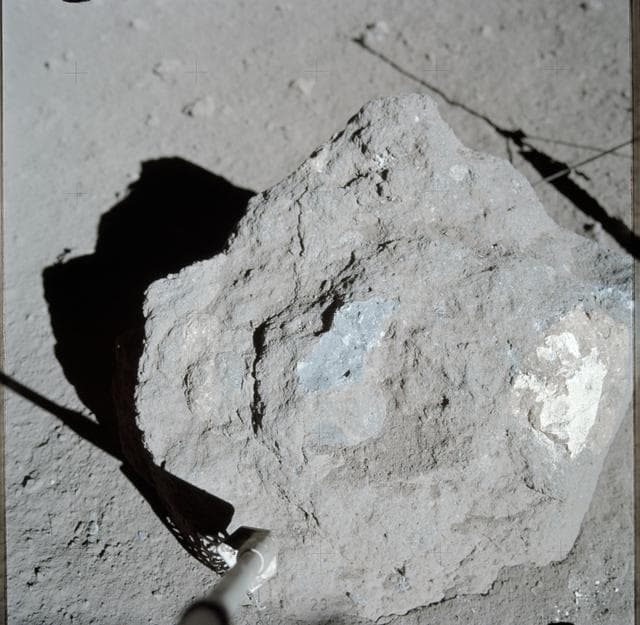
NASA image: Apollo 17 Mission image - STA 2,SPL 2415,2435-36,40,60, Tongs
Image
Dec 7, 1972

Apollo 17 Mission image - STA 2,SPL 2415,2435-36,40,60, Tongs

AS17-137-20972 (7-19 Dec. 1972) --- This is a close-up view of a lunar rock, showing multi-colored clasts embedded...

JSC
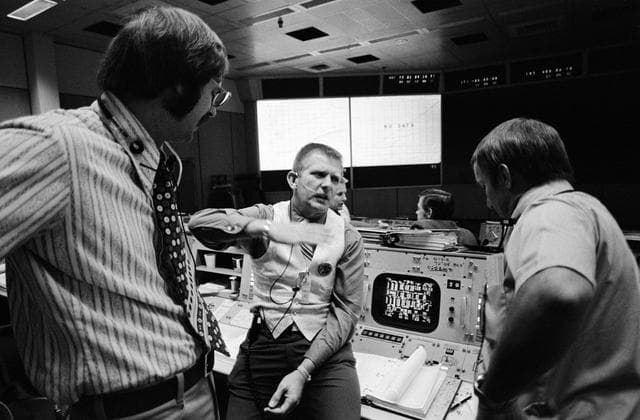
NASA image: Prelaunch - Apollo 17 (MOCR)
Image
Dec 6, 1972

Prelaunch - Apollo 17 (MOCR)

S72-54881 (6 Dec. 1972) --- This view shows the Mission Operations Control Room (MOCR), flight director's console,...

JSC
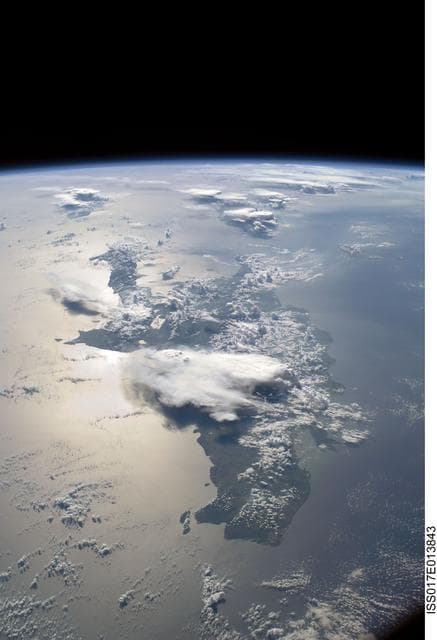
NASA image: Earth Observations taken by the Expedition 17 Crew
Image
Aug 19, 2008

Earth Observations taken by the Expedition 17 Crew

ISS017-E-013843 (19 Aug. 2008) --- A panoramic view of the island of Hispaniola in the foreground and Cuba extending...

JSC
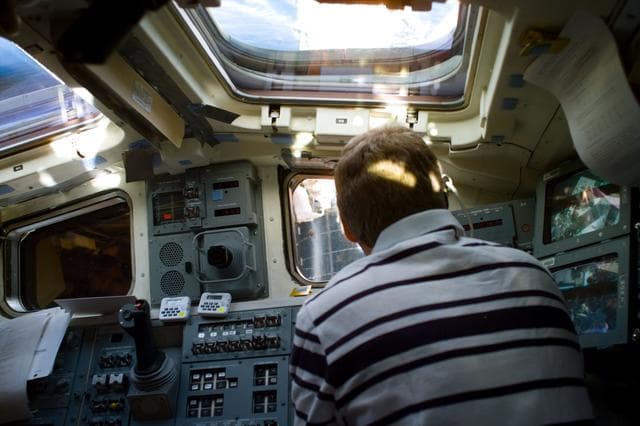
NASA image: Activity on the flight deck during EVA on Flight Day 7
Image
Feb 17, 1997

Activity on the flight deck during EVA on Flight Day 7

S82-E-5616 (17 Feb. 1997) --- Astronaut Steven A. Hawley, STS-82 mission specialist, controls the Remote Manipulator...

JSC
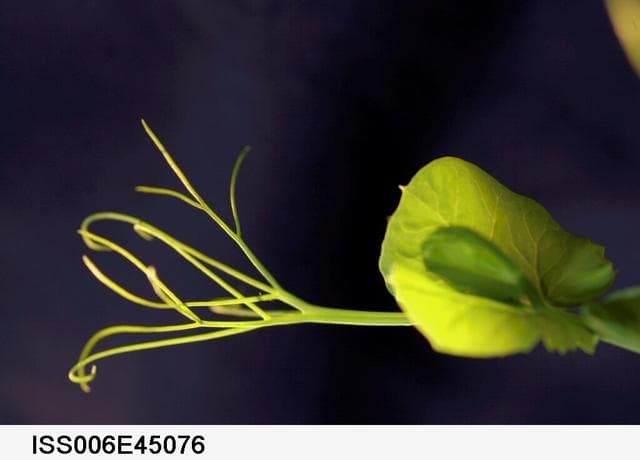
NASA image: Close-up view of sprouts on the Russian BIO-5 Rasteniya-2/Lada-2 (Plants-2) Plant Growth Experiment
Image
Mar 17, 2003

Close-up view of sprouts on the Russian BIO-5 Rasteniya-2/Lada-2 (Plants-2) Plant Growth Experiment

ISS006-E-45076 (17 March 2003) --- A close up view of sprouts on the Russian BIO-5 Rasteniya-2/Lada-2 (Plants-2)...

JSC
NASA image: GSFC_20240417_OSAM1_025902
Image
Apr 17, 2024

GSFC_20240417_OSAM1_025902

The OSAM-1 Servicing Payload Integration team tests the mounted floodlights at Goddard Space Flight Center,...

GSFC
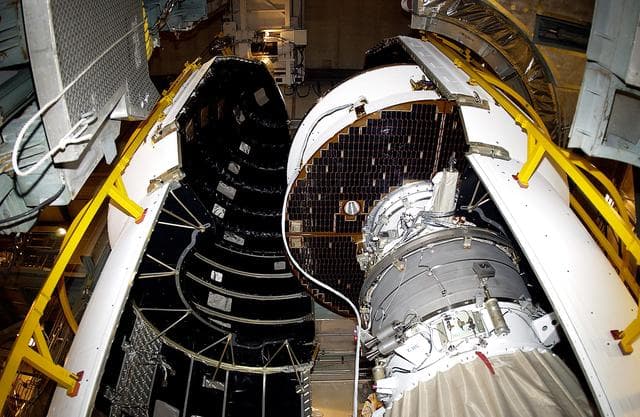
NASA image: KENNEDY SPACE CENTER, FLA. - At Launch Complex 17-B, Cape Canaveral Air Force Station, a final view of the Mars Exploration Rover-1 (MER-B) is captured before it is encapsulated into its spacecraft fairing for launch. The second of twin rovers being sent to Mars, it is equipped with a robotic arm, a drilling tool, three spectrometers, and four pairs of cameras that allow it to have a human-like, 3D view of the terrain. Each rover could travel as far as 100 meters in one day to act as Mars scientists' eyes and hands, exploring an environment where humans are not yet able to go. MER-B is scheduled to launch no earlier than June 28 at one of two available times, 11:56:16 p.m. EDT or 12:37:59 a.m. EDT.
Image
Jun 21, 2003

KENNEDY SPACE CENTER, FLA. - At Launch Complex 17-B, Cape Canaveral Air Force Station, a final view of the Mars Exploration Rover-1 (MER-B) is captured before it is encapsulated into its spacecraft fairing for launch. The second of twin rovers being sent to Mars, it is equipped with a robotic arm, a drilling tool, three spectrometers, and four pairs of cameras that allow it to have a human-like, 3D view of the terrain. Each rover could travel as far as 100 meters in one day to act as Mars scientists' eyes and hands, exploring an environment where humans are not yet able to go. MER-B is scheduled to launch no earlier than June 28 at one of two available times, 11:56:16 p.m. EDT or 12:37:59 a.m. EDT.

KENNEDY SPACE CENTER, FLA. - At Launch Complex 17-B, Cape Canaveral Air Force Station, a final view of the Mars...
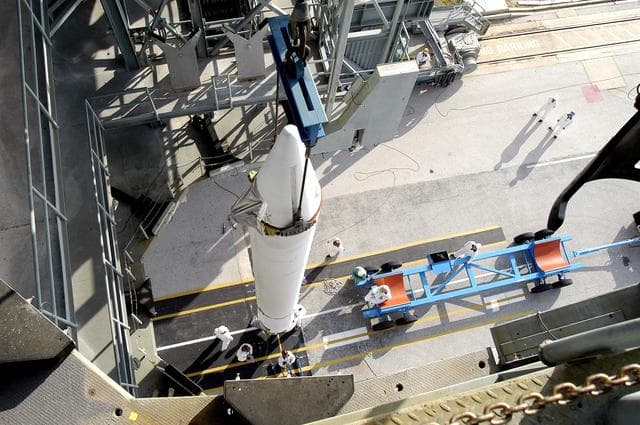
NASA image: KENNEDY SPACE CENTER, FLA. - On Launch Complex 17-B, Cape Canaveral Air Force Station, a solid rocket booster is viewed from above after being lifted to vertical.  It will be mated to the Delta II rocket for the Mars Exploration Rover 1 (MER-1) launch June 25.  NASA’s twin Mars Exploration Rovers are designed to study the history of water on Mars. These robotic geologists are equipped with a robotic arm, a drilling tool, three spectrometers, and four pairs of cameras that allow them to have a human-like, 3D view of the terrain. Each rover could travel as far as 100 meters in one day to act as Mars scientists' eyes and hands, exploring an environment where humans can’t yet go.  MER-2 (MER-A) will launch June 5.
Image
May 20, 2003

KENNEDY SPACE CENTER, FLA. - On Launch Complex 17-B, Cape Canaveral Air Force Station, a solid rocket booster is viewed from above after being lifted to vertical. It will be mated to the Delta II rocket for the Mars Exploration Rover 1 (MER-1) launch June 25. NASA’s twin Mars Exploration Rovers are designed to study the history of water on Mars. These robotic geologists are equipped with a robotic arm, a drilling tool, three spectrometers, and four pairs of cameras that allow them to have a human-like, 3D view of the terrain. Each rover could travel as far as 100 meters in one day to act as Mars scientists' eyes and hands, exploring an environment where humans can’t yet go. MER-2 (MER-A) will launch June 5.

KENNEDY SPACE CENTER, FLA. - On Launch Complex 17-B, Cape Canaveral Air Force Station, a solid rocket booster is...
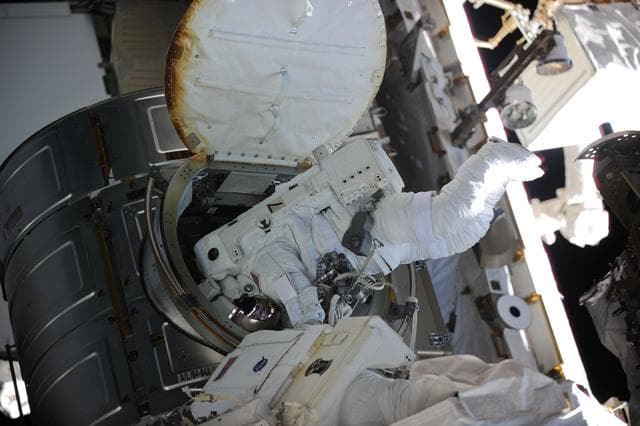
NASA image: View of FE Caldwell-Dyson and Wheelock during EVA-17
Image
Aug 16, 2010

View of FE Caldwell-Dyson and Wheelock during EVA-17

Russian Return EVA16, 17 Part 207 pt2

JSC
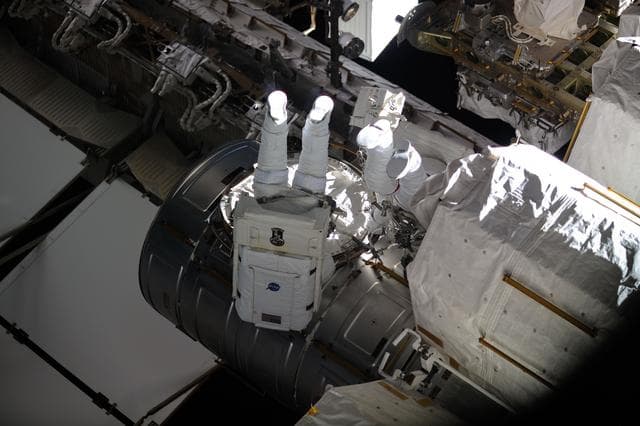
NASA image: View of FE Wheelock and Caldwell-Dyson during EVA-17
Image
Aug 16, 2010

View of FE Wheelock and Caldwell-Dyson during EVA-17

Russian Return EVA16, 17 Part 207 pt2

JSC
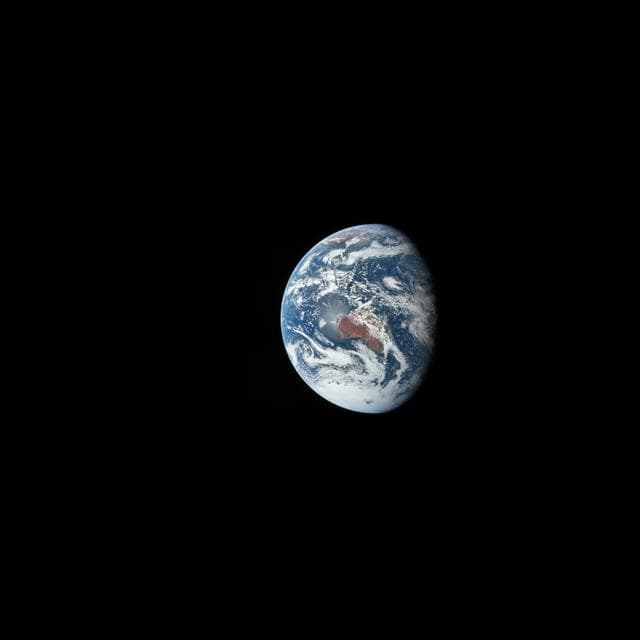
NASA image: View of the Earth seen by the Apollo 17 crew traveling toward the moon
Image
Dec 7, 1972

View of the Earth seen by the Apollo 17 crew traveling toward the moon

AS17-148-22742 (7-19 Dec. 1972) --- Most of Australia (center) and part of Antarctica are visible in this photo of a...

JSC
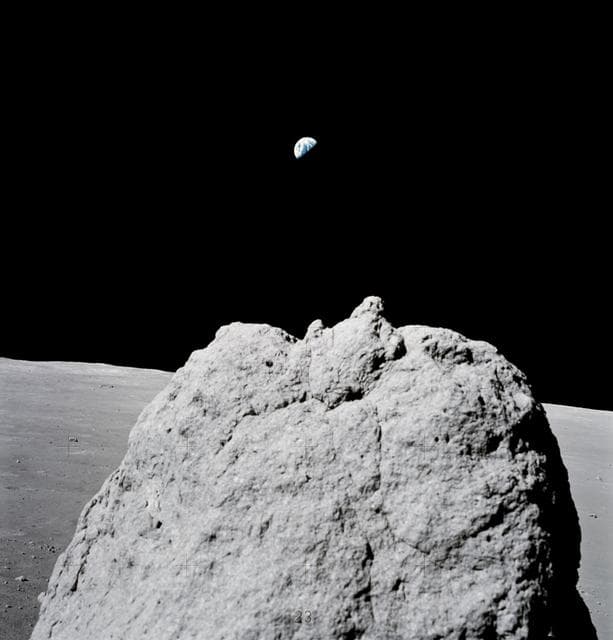
NASA image: View of boulder photographed during second Apollo 17 EVA
Image
Dec 12, 1972

View of boulder photographed during second Apollo 17 EVA

AS17-137-20910 (7-19 Dec. 1972) --- Earth (far distant background) is seen above a large lunar boulder (foreground)...

JSC
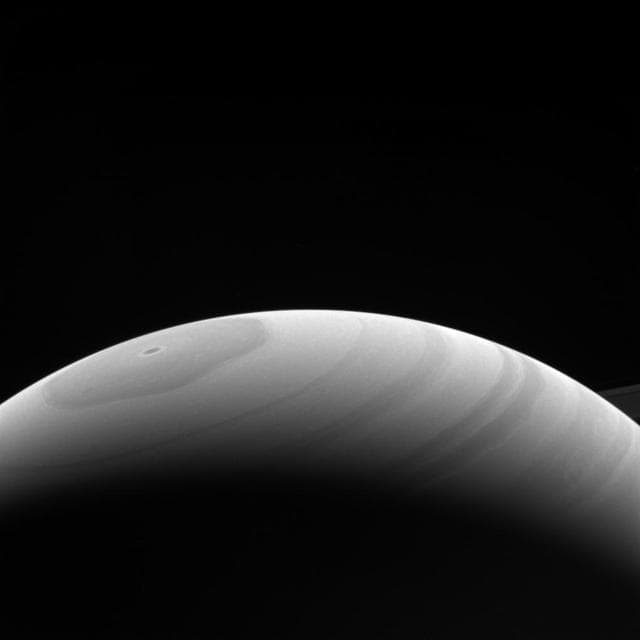
NASA image: Good Old Summer Time
Image
Jul 31, 2017

Good Old Summer Time

Saturn's northern hemisphere reached its summer solstice in mid-2017, bringing continuous sunshine to the planet's...

JPL
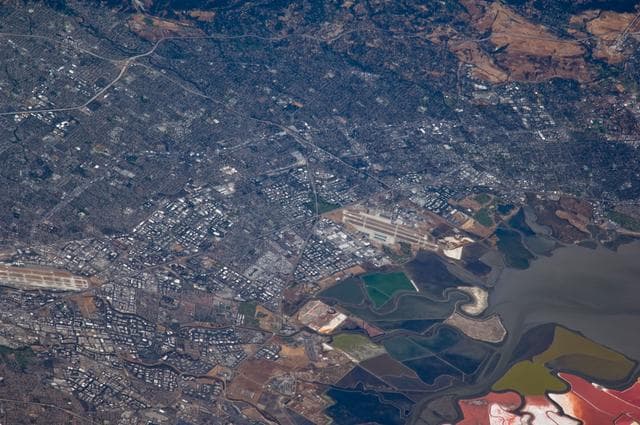
NASA image: Earth Observations taken by the Expedition 17 Crew
Image
Aug 25, 2008

Earth Observations taken by the Expedition 17 Crew

ISS017-E-014158 (25 Aug. 2008) --- This is an 800mm oblique view which covers an area including Moffett Federal Air...

JSC
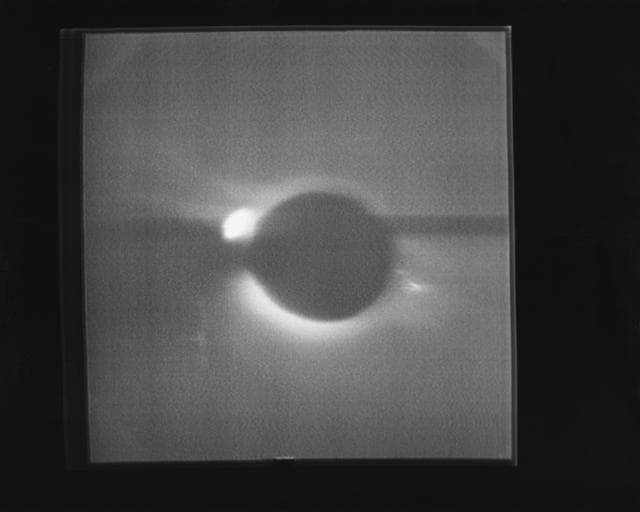
NASA image: Solar corona/prominence seen through the White Light Coronograph
Image
Jan 17, 1974

Solar corona/prominence seen through the White Light Coronograph

S74-15697 (17 Jan. 1974) --- The solar corona and a solar prominence as seen through the White Light Coronograph,...

JSC
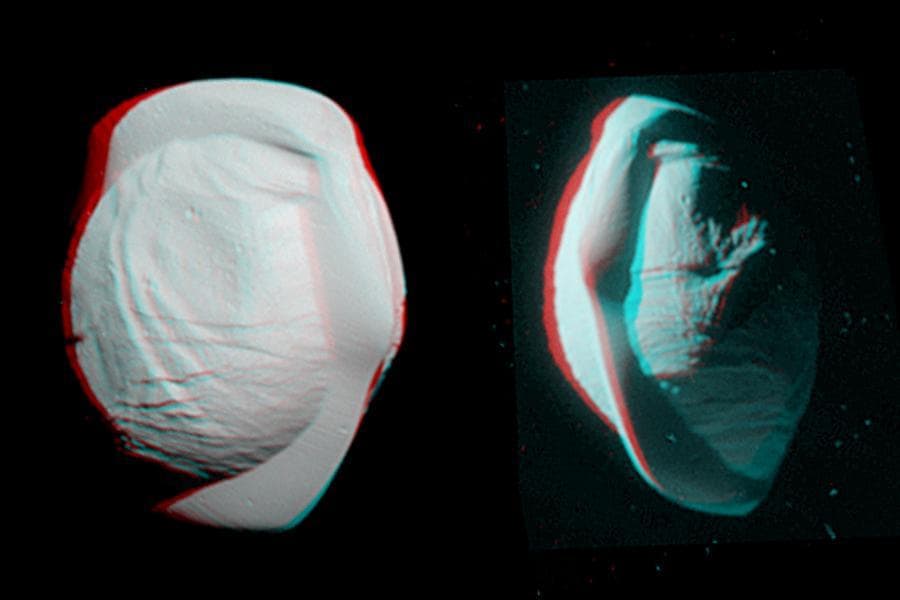
NASA image: Pan Anaglyph 3-D
Image
Mar 16, 2017

Pan Anaglyph 3-D

These stereo views, or anaglyphs, highlight the unusual, quirky shape of Saturn's moon Pan. They appear...

JPL
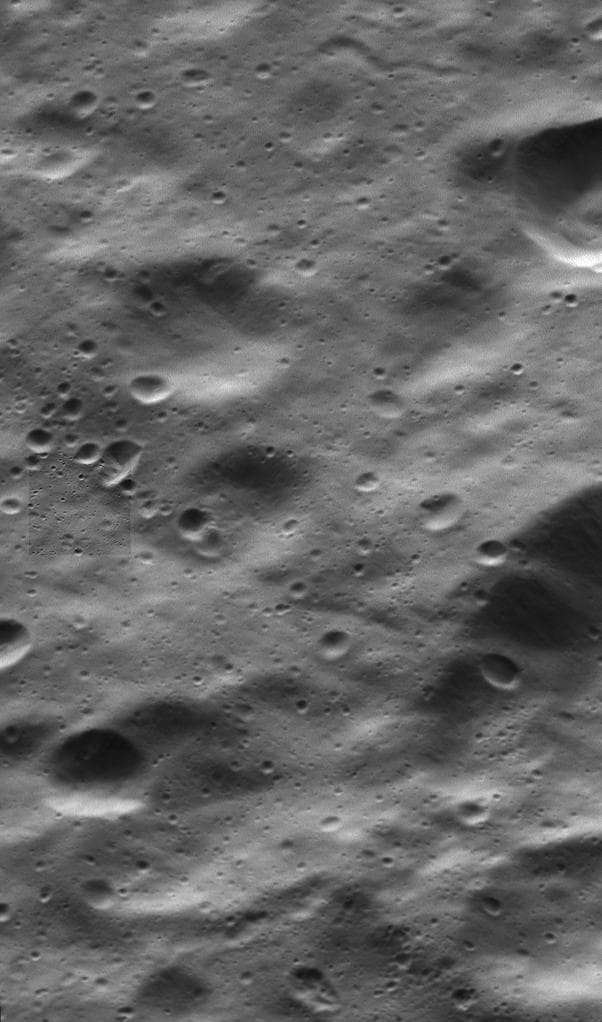
NASA image: Cassini Closest Views of Dione I
Image
Aug 20, 2015

Cassini Closest Views of Dione I

The view, from the spacecraft's wide-angle camera (WAC), includes an inset view, near center left, from the...

JPL
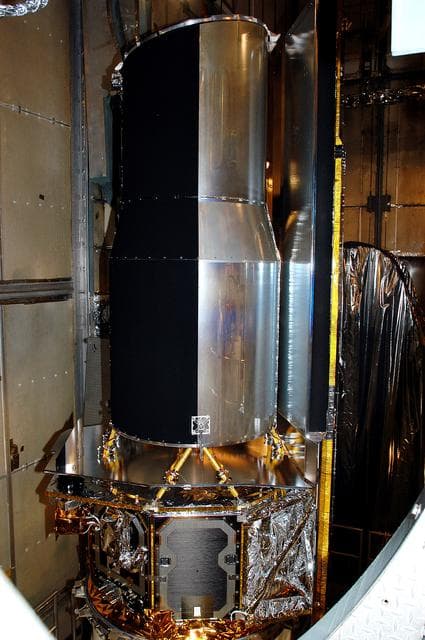
NASA image: KENNEDY SPACE CENTER, FLA.  - In the mobile service tower on Launch Pad 17-B, Cape Canaveral Air Force Station, the Space Infrared Telescope Facility (SIRTF) waits for encapsulation. SIRTF will obtain images and spectra by detecting the infrared energy, or heat, radiated by objects in space. Consisting of a 0.85-meter telescope and three cryogenically cooled science instruments, SIRTF will be the largest infrared telescope ever launched into space. It is the fourth and final element in NASA’s family of orbiting “Great Observatories.” Its highly sensitive instruments will give a unique view of the Universe and peer into regions of space that are hidden from optical telescopes.
Image
Aug 14, 2003

KENNEDY SPACE CENTER, FLA. - In the mobile service tower on Launch Pad 17-B, Cape Canaveral Air Force Station, the Space Infrared Telescope Facility (SIRTF) waits for encapsulation. SIRTF will obtain images and spectra by detecting the infrared energy, or heat, radiated by objects in space. Consisting of a 0.85-meter telescope and three cryogenically cooled science instruments, SIRTF will be the largest infrared telescope ever launched into space. It is the fourth and final element in NASA’s family of orbiting “Great Observatories.” Its highly sensitive instruments will give a unique view of the Universe and peer into regions of space that are hidden from optical telescopes.

KENNEDY SPACE CENTER, FLA. - In the mobile service tower on Launch Pad 17-B, Cape Canaveral Air Force Station, the...
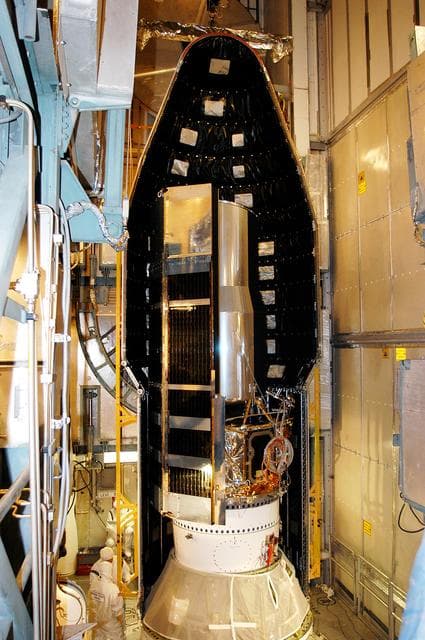
NASA image: KENNEDY SPACE CENTER, FLA.  - In the mobile service tower on Launch Pad 17-B, Cape Canaveral Air Force Station, the first half of the fairing is moved around the Space Infrared Telescope Facility (SIRTF). SIRTF will obtain images and spectra by detecting the infrared energy, or heat, radiated by objects in space. Consisting of a 0.85-meter telescope and three cryogenically cooled science instruments, SIRTF will be the largest infrared telescope ever launched into space. It is the fourth and final element in NASA’s family of orbiting “Great Observatories.” Its highly sensitive instruments will give a unique view of the Universe and peer into regions of space that are hidden from optical telescopes.
Image
Aug 14, 2003

KENNEDY SPACE CENTER, FLA. - In the mobile service tower on Launch Pad 17-B, Cape Canaveral Air Force Station, the first half of the fairing is moved around the Space Infrared Telescope Facility (SIRTF). SIRTF will obtain images and spectra by detecting the infrared energy, or heat, radiated by objects in space. Consisting of a 0.85-meter telescope and three cryogenically cooled science instruments, SIRTF will be the largest infrared telescope ever launched into space. It is the fourth and final element in NASA’s family of orbiting “Great Observatories.” Its highly sensitive instruments will give a unique view of the Universe and peer into regions of space that are hidden from optical telescopes.

KENNEDY SPACE CENTER, FLA. - In the mobile service tower on Launch Pad 17-B, Cape Canaveral Air Force Station, the...

NASA image: KENNEDY SPACE CENTER, FLA. - In the Payload Hazardous Servicing Facility, the Mars Exploration Rover 2 (MER-2) is moved to a spin table.  NASA’s twin Mars Exploration Rovers are designed to study the history of water on Mars. These robotic geologists are equipped with a robotic arm, a drilling tool, three spectrometers, and four pairs of cameras that allow them to have a human-like, 3D view of the terrain. Each rover could travel as far as 100 meters in one day to act as Mars scientists' eyes and hands, exploring an environment where humans can’t yet go.  The MER-2 is scheduled to launch June 5 from Launch Pad 17-A, Cape Canaveral Air Force Station.
Image
May 19, 2003

KENNEDY SPACE CENTER, FLA. - In the Payload Hazardous Servicing Facility, the Mars Exploration Rover 2 (MER-2) is moved to a spin table. NASA’s twin Mars Exploration Rovers are designed to study the history of water on Mars. These robotic geologists are equipped with a robotic arm, a drilling tool, three spectrometers, and four pairs of cameras that allow them to have a human-like, 3D view of the terrain. Each rover could travel as far as 100 meters in one day to act as Mars scientists' eyes and hands, exploring an environment where humans can’t yet go. The MER-2 is scheduled to launch June 5 from Launch Pad 17-A, Cape Canaveral Air Force Station.

KENNEDY SPACE CENTER, FLA. - In the Payload Hazardous Servicing Facility, the Mars Exploration Rover 2 (MER-2) is...

PreviousPage 7 of 41Next

Frequently Asked Questions About NASA Images

Are NASA images free to use?+
Yes, most NASA images are in the public domain and are free to use for educational, informational, and personal purposes. NASA's media usage guidelines state that NASA material is not copyrighted unless otherwise noted. However, the NASA logo and certain insignia are protected. Some images may include identifiable individuals or third-party content that requires additional permissions. Always check the specific image's usage rights and credit NASA as the source.
How many images does NASA have?+
NASA's Image and Video Library contains over 140,000 publicly accessible images, videos, and audio files spanning the agency's entire history, from the Mercury program of the 1960s to the latest James Webb Space Telescope discoveries. The collection grows daily as new missions capture imagery and archival materials are digitized. Individual mission archives, such as Mars rover photos, contain hundreds of thousands of additional images.
Can I download NASA images?+
Yes, you can download NASA images in multiple resolutions directly from this gallery. Each image detail page provides download links for original (full resolution), large (1920px), medium (960px), small (480px), and thumbnail sizes. NASA encourages the public to use these images for education, media, and personal projects. High-resolution originals are ideal for printing and professional use.

Explore More NASA Content

Astronomy Picture of the Day

Daily curated space image

Mars Rover Photos

Curiosity & Perseverance images

Earth from Space

DSCOVR EPIC daily images

Launch Schedule

Upcoming rocket launches

Space News

Mission updates & discoveries

KSC
KSC
KSC
KSC
KSC