CosmosObservatory
Explore
Solar System
Live
Learn
Tools
About
Cosmos Observatory
ToolsAbout
Cosmos Observatory

Explore the universe through NASA data, real-time ISS tracking, Mars rover imagery, asteroid monitoring, and comprehensive space encyclopedia. Your gateway to the cosmos.

Explore

  • APOD
  • Mars Rovers
  • Earth Imagery
  • NASA Gallery
  • ISS Tracker

Data

  • Asteroids
  • Solar System
  • Exoplanets
  • Space Weather
  • Launches

Tools

  • Glossary
  • News
  • Calculators

Legal

  • About
  • Privacy Policy
  • Terms of Use
  • Space Tools
  • Contact

Stay updated with the cosmos

Get weekly digests of APOD highlights, upcoming launches, and space events.

© 2026 Cosmos Observatory. All rights reserved. Built with for space enthusiasts.

This website is not affiliated with, maintained, authorized, endorsed by, or in any way officially connected with NASA or any of its subsidiaries or affiliates. All NASA imagery is in the public domain unless otherwise noted. Data sourced from NASA Open APIs, Launch Library 2, and other open data services.

NASA Gallery

Explore NASA's vast collection of space images, videos, and audio from missions past and present.

  1. Home
  2. /
  3. NASA Gallery

NASA's Image and Video Library: A Visual Archive of Space Exploration

NASA's Image and Video Library is one of the most comprehensive public archives of space imagery in the world, containing over 140,000 images, videos, and audio recordings spanning more than six decades of space exploration. From the earliest Mercury and Gemini missions through the Apollo Moon landings, the Space Shuttle era, and today's cutting-edge observations from the James Webb Space Telescope, this collection documents humanity's journey into the cosmos.

The library includes imagery from diverse sources: telescopes like Hubble and Webb that capture deep-space nebulae, galaxies, and exoplanets; planetary missions like the Mars rovers ( browse Mars photos) and Cassini at Saturn; Earth observation satellites ( see EPIC imagery); astronaut photography from the ISS; and documentation of rocket launches, spacecraft assembly, and ground testing. Most NASA images are in the public domain and free to download at full resolution for educational, editorial, and personal use.

Use the search bar above to find specific subjects — try queries like "Apollo 11," "Hubble Deep Field," "Mars surface," or "astronaut EVA." You can also filter by media type (image, video, or audio). For a daily curated experience, visit the Astronomy Picture of the Day.

Showing results for "personnel"

3,632 results found - Page 59 of 152

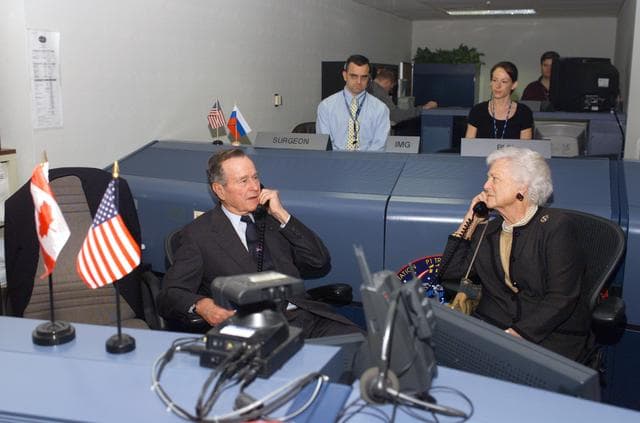
NASA image: Former President George H. W. Bush and Mrs. Bush visit with Mission Control Center personnel.
Image
Feb 3, 2003

Former President George H. W. Bush and Mrs. Bush visit with Mission Control Center personnel.

JSC2003-E-05206 (3 February 2003) --- Former President George H.W. Bush and Mrs. Bush talk with the three-member...

JSC
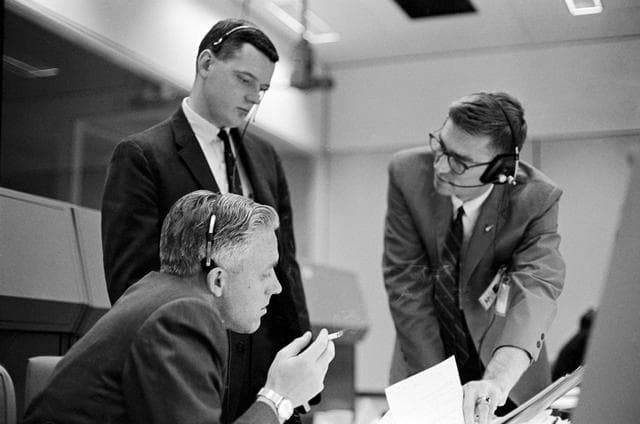
NASA image: Personnel - Gemini-Titan (GT)-3 - Mission Control Center (MCC) Activities - MSC
Image
Mar 23, 1965

Personnel - Gemini-Titan (GT)-3 - Mission Control Center (MCC) Activities - MSC

S65-18055 (23 March 1965) --- Flight director John D. Hedge (left), chief, Flight Control Division; Glynn S. Lunney...

JSC
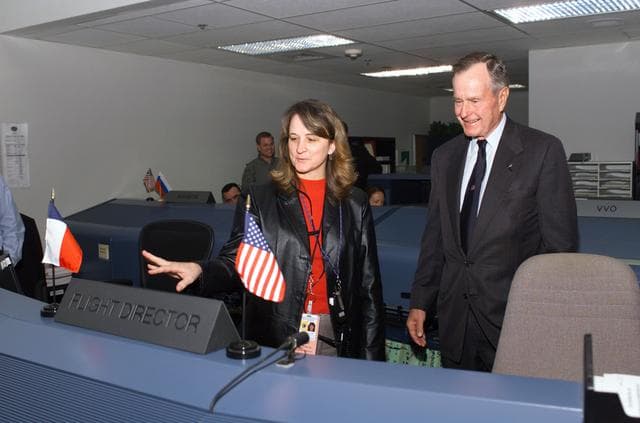
NASA image: Former President George H. W. Bush and Mrs. Bush visit with Mission Control Center personnel.
Image
Feb 3, 2003

Former President George H. W. Bush and Mrs. Bush visit with Mission Control Center personnel.

JSC2003-E-05202 (3 February 2003) --- In the Station Flight Control Room of JSC's Mission Control Center, former...

JSC
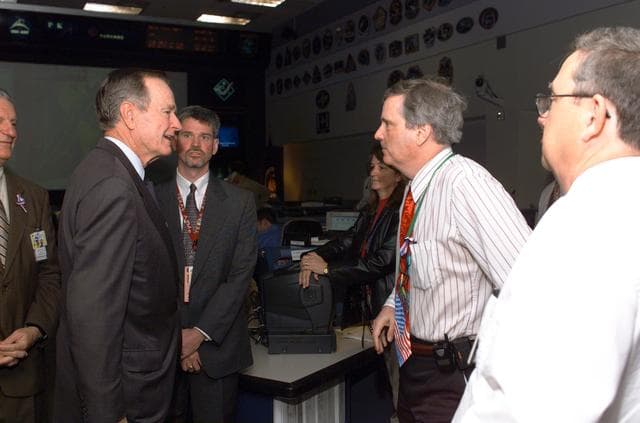
NASA image: Former President George H. W. Bush and Mrs. Bush visit with Mission Control Center personnel.
Image
Feb 3, 2003

Former President George H. W. Bush and Mrs. Bush visit with Mission Control Center personnel.

JSC2003-E-05215 (3 February 2003) --- Former President George H.W. Bush (second left) asks a question of Robert...

JSC
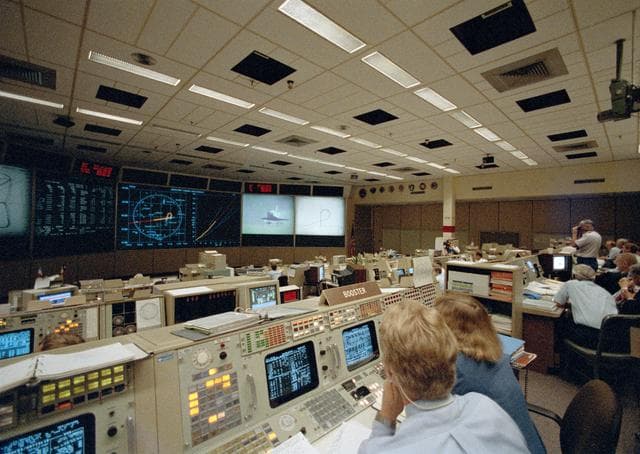
NASA image: JSC Mission Control Center (MCC) personnel watch STS-26 landing in FCR
Image
Oct 3, 1988

JSC Mission Control Center (MCC) personnel watch STS-26 landing in FCR

STS026-S-117 (3 Oct 1988) --- Flight controllers in Houston witness the landing of the Space Shuttle Discovery on a...

JSC
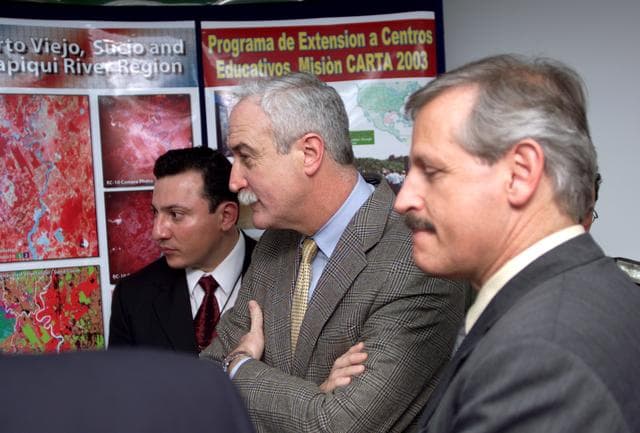
NASA image: Personnel viewing posters showing how NASA activities have made an impact on Costa Rican people
Image
Mar 3, 2004

Personnel viewing posters showing how NASA activities have made an impact on Costa Rican people

L-R; Jorge Andres Diaz, Director of the Costa Rican National Hangar for Airborne Research division of the National...

AFRC
NASA image: Personnel - Astronaut L. Gordon Cooper Jr. - Homecoming (Gemini-Titan [GT]-5) - Make Speeches - MSC
Image
Sep 2, 1965

Personnel - Astronaut L. Gordon Cooper Jr. - Homecoming (Gemini-Titan [GT]-5) - Make Speeches - MSC

S65-50698 (2 Sept. 1965) --- Astronauts Charles Conrad Jr. (right) and L. Gordon Cooper Jr. speak to news media...

JSC
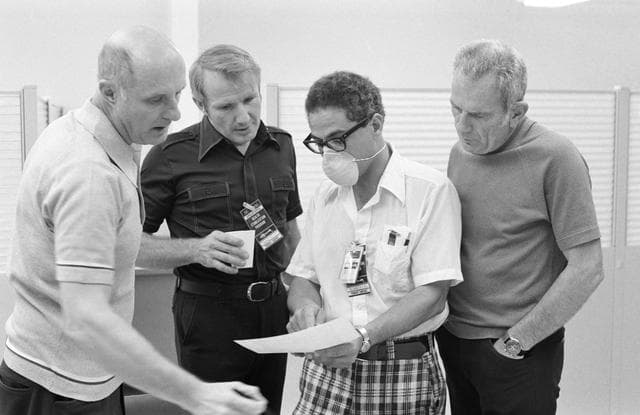
NASA image: PERSONNEL - PREFLIGHT - APOLLO-SOYUZ TEST PROJECT (ASTP) - EL-BAZ, FAROUK - JSC
Image
Jul 8, 1975

PERSONNEL - PREFLIGHT - APOLLO-SOYUZ TEST PROJECT (ASTP) - EL-BAZ, FAROUK - JSC

S75-28229 (8 July 1975) --- The three American ASTP prime crew astronauts participate in a photography mission...

JSC
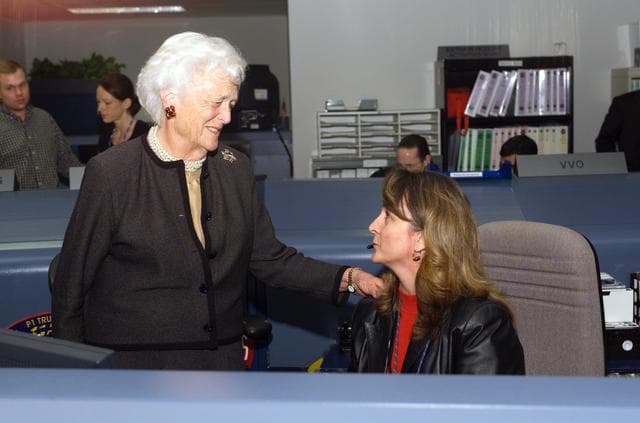
NASA image: Former President George H. W. Bush and Mrs. Bush visit with Mission Control Center personnel.
Image
Feb 3, 2003

Former President George H. W. Bush and Mrs. Bush visit with Mission Control Center personnel.

JSC2003-E-05209 (3 February 2003) --- Former First Lady Barbara Bush talks with Flight Director Sally Davis during a...

JSC
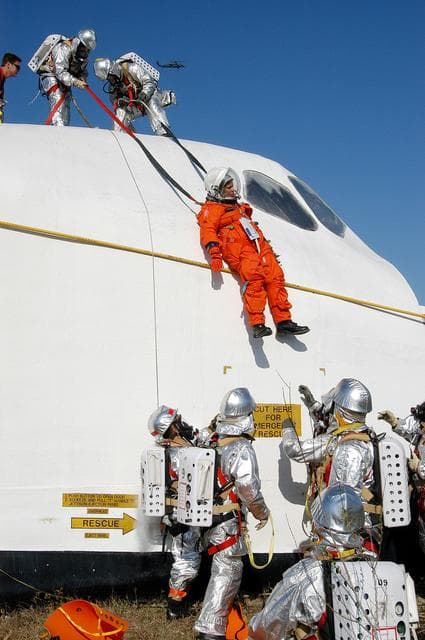
NASA image: KENNEDY SPACE CENTER, FLA. - Emergency crew members lower a volunteer “astronaut” from the top of the orbiter crew compartment mock-up that is the scene of a “Mode VII” emergency landing simulation at Kennedy Space Center.  The purpose of the Mode VII is to exercise emergency preparedness personnel, equipment and facilities in rescuing astronauts from a downed orbiter and providing immediate medical attention.  This simulation presents an orbiter that has crashed short of the Shuttle Landing Facility in a wooded area 2-1/2 miles south of Runway 33.  Emergency crews are responding to the volunteer “astronauts” who are simulating various injuries.  Rescuers must remove the crew, provide triage and transport to hospitals those who need further treatment.  Local hospitals are participating in the exercise.
Image
Feb 18, 2004

KENNEDY SPACE CENTER, FLA. - Emergency crew members lower a volunteer “astronaut” from the top of the orbiter crew compartment mock-up that is the scene of a “Mode VII” emergency landing simulation at Kennedy Space Center. The purpose of the Mode VII is to exercise emergency preparedness personnel, equipment and facilities in rescuing astronauts from a downed orbiter and providing immediate medical attention. This simulation presents an orbiter that has crashed short of the Shuttle Landing Facility in a wooded area 2-1/2 miles south of Runway 33. Emergency crews are responding to the volunteer “astronauts” who are simulating various injuries. Rescuers must remove the crew, provide triage and transport to hospitals those who need further treatment. Local hospitals are participating in the exercise.
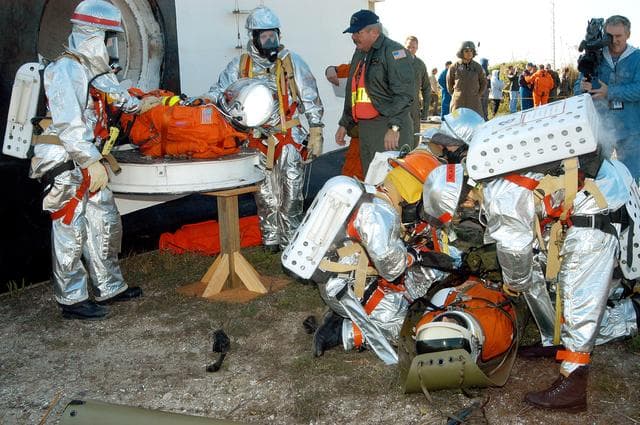
NASA image: KENNEDY SPACE CENTER, FLA. - Emergency crew members help an “injured” astronaut from the orbiter crew compartment mock-up during a “Mode VII” emergency landing simulation at Kennedy Space Center.  Another is on the ground.  The purpose of the Mode VII is to exercise emergency preparedness personnel, equipment and facilities in rescuing astronauts from a downed orbiter and providing immediate medical attention.  This simulation presents an orbiter that has crashed short of the Shuttle Landing Facility in a wooded area 2-1/2 miles south of Runway 33.  Emergency crews are responding to the volunteer astronauts who are simulating various injuries.  Rescuers must remove the crew, provide triage and transport to hospitals those who need further treatment.  Local hospitals are participating in the exercise.
Image
Feb 18, 2004

KENNEDY SPACE CENTER, FLA. - Emergency crew members help an “injured” astronaut from the orbiter crew compartment mock-up during a “Mode VII” emergency landing simulation at Kennedy Space Center. Another is on the ground. The purpose of the Mode VII is to exercise emergency preparedness personnel, equipment and facilities in rescuing astronauts from a downed orbiter and providing immediate medical attention. This simulation presents an orbiter that has crashed short of the Shuttle Landing Facility in a wooded area 2-1/2 miles south of Runway 33. Emergency crews are responding to the volunteer astronauts who are simulating various injuries. Rescuers must remove the crew, provide triage and transport to hospitals those who need further treatment. Local hospitals are participating in the exercise.
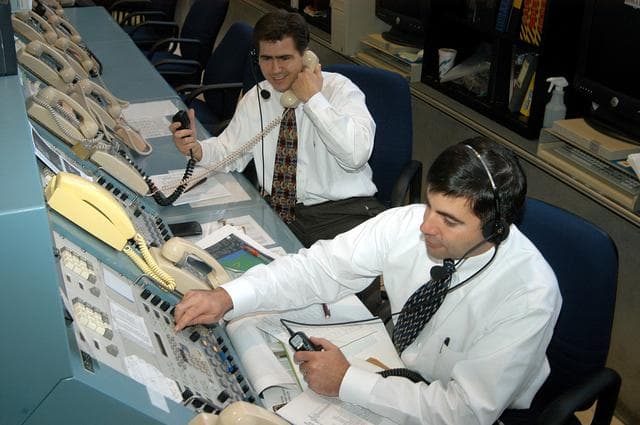
NASA image: KENNEDY SPACE CENTER, FLA. - In the Launch Control Center, Robert Holl (left),  Landing Recovery directo, and Donald Hammel, from the Shuttle Project Office, are in contact with the leaders of the “Mode VII” emergency landing simulation at Kennedy Space Center.  The simulation is being managed and directed from the LCC.  The purpose of the Mode VII is to exercise emergency preparedness personnel, equipment and facilities in rescuing astronauts from a downed orbiter and providing immediate medical attention.  This simulation presents an orbiter that has crashed short of the Shuttle Landing Facility in a wooded area 2-1/2 miles south of Runway 33.  Emergency crews are responding to the volunteer “astronauts” who are simulating various injuries inside the crew compartment mock-up.  Rescuers must remove the crew, provide triage and transport to hospitals those who need further treatment.  Local hospitals are participating in the exercise.
Image
Feb 18, 2004

KENNEDY SPACE CENTER, FLA. - In the Launch Control Center, Robert Holl (left), Landing Recovery directo, and Donald Hammel, from the Shuttle Project Office, are in contact with the leaders of the “Mode VII” emergency landing simulation at Kennedy Space Center. The simulation is being managed and directed from the LCC. The purpose of the Mode VII is to exercise emergency preparedness personnel, equipment and facilities in rescuing astronauts from a downed orbiter and providing immediate medical attention. This simulation presents an orbiter that has crashed short of the Shuttle Landing Facility in a wooded area 2-1/2 miles south of Runway 33. Emergency crews are responding to the volunteer “astronauts” who are simulating various injuries inside the crew compartment mock-up. Rescuers must remove the crew, provide triage and transport to hospitals those who need further treatment. Local hospitals are participating in the exercise.
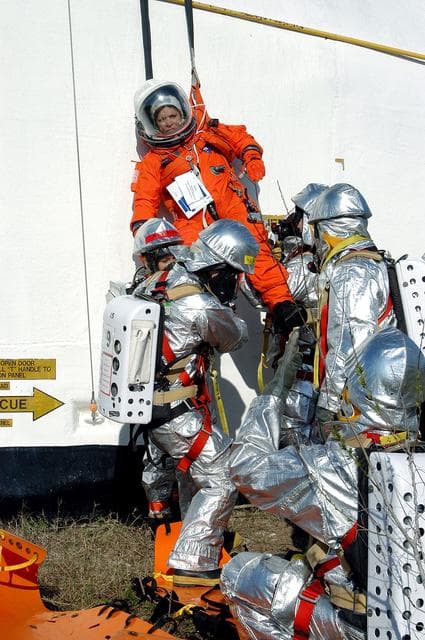
NASA image: KENNEDY SPACE CENTER, FLA. - Emergency crew members on the ground take hold of a volunteer “astronaut” lowered from the top of the orbiter crew compartment mock-up that is the scene of a “Mode VII” emergency landing simulation at Kennedy Space Center.  The purpose of the Mode VII is to exercise emergency preparedness personnel, equipment and facilities in rescuing astronauts from a downed orbiter and providing immediate medical attention.  This simulation presents an orbiter that has crashed short of the Shuttle Landing Facility in a wooded area 2-1/2 miles south of Runway 33.  Emergency crews are responding to the volunteer astronauts who are simulating various injuries.  Rescuers must remove the crew, provide triage and transport to hospitals those who need further treatment.  Local hospitals are participating in the exercise.
Image
Feb 18, 2004

KENNEDY SPACE CENTER, FLA. - Emergency crew members on the ground take hold of a volunteer “astronaut” lowered from the top of the orbiter crew compartment mock-up that is the scene of a “Mode VII” emergency landing simulation at Kennedy Space Center. The purpose of the Mode VII is to exercise emergency preparedness personnel, equipment and facilities in rescuing astronauts from a downed orbiter and providing immediate medical attention. This simulation presents an orbiter that has crashed short of the Shuttle Landing Facility in a wooded area 2-1/2 miles south of Runway 33. Emergency crews are responding to the volunteer astronauts who are simulating various injuries. Rescuers must remove the crew, provide triage and transport to hospitals those who need further treatment. Local hospitals are participating in the exercise.
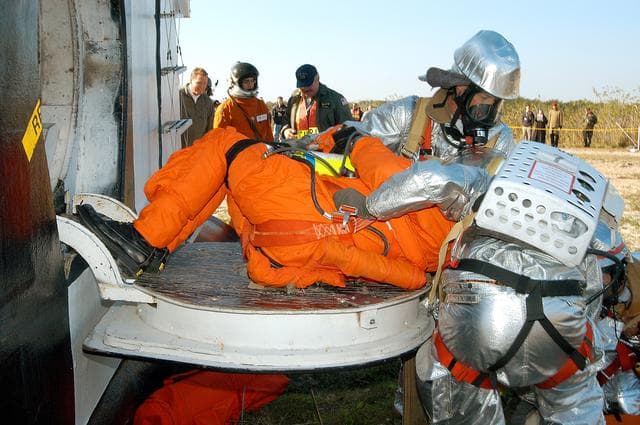
NASA image: KENNEDY SPACE CENTER, FLA. - Emergency crew members “rescue” an injured astronaut from the orbiter crew compartment mock-up during a “Mode VII” emergency landing simulation at Kennedy Space Center.  The purpose of the Mode VII is to exercise emergency preparedness personnel, equipment and facilities in rescuing astronauts from a downed orbiter and providing immediate medical attention.  This simulation presents an orbiter that has crashed short of the Shuttle Landing Facility in a wooded area 2-1/2 miles south of Runway 33.  Emergency crews are responding to the volunteer astronauts who are simulating various injuries.  Rescuers must remove the crew, provide triage and transport to hospitals those who need further treatment.  Local hospitals are participating in the exercise.
Image
Feb 18, 2004

KENNEDY SPACE CENTER, FLA. - Emergency crew members “rescue” an injured astronaut from the orbiter crew compartment mock-up during a “Mode VII” emergency landing simulation at Kennedy Space Center. The purpose of the Mode VII is to exercise emergency preparedness personnel, equipment and facilities in rescuing astronauts from a downed orbiter and providing immediate medical attention. This simulation presents an orbiter that has crashed short of the Shuttle Landing Facility in a wooded area 2-1/2 miles south of Runway 33. Emergency crews are responding to the volunteer astronauts who are simulating various injuries. Rescuers must remove the crew, provide triage and transport to hospitals those who need further treatment. Local hospitals are participating in the exercise.
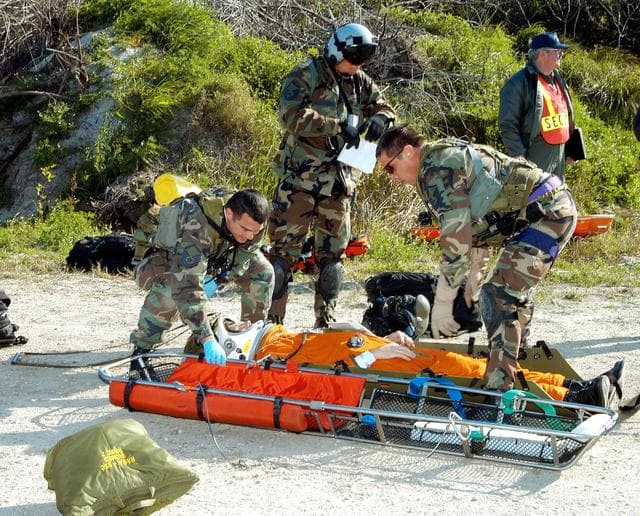
NASA image: KENNEDY SPACE CENTER, FLA. - A helicopter rescue team prepares another “injured” astronaut for transportation to a local hospital.  They are all taking part in a “Mode VII” emergency landing simulation at Kennedy Space Center.  The purpose of the Mode VII is to exercise emergency preparedness personnel, equipment and facilities in rescuing astronauts from a downed orbiter and providing immediate medical attention.  This simulation presents an orbiter that has crashed short of the Shuttle Landing Facility in a wooded area 2-1/2 miles south of Runway 33.  Emergency crews are responding to the volunteer “astronauts” who are simulating various injuries inside the crew compartment mock-up.  Rescuers must remove the crew, provide triage and transport to hospitals those who need further treatment.  Local hospitals are participating in the exercise.
Image
Feb 18, 2004

KENNEDY SPACE CENTER, FLA. - A helicopter rescue team prepares another “injured” astronaut for transportation to a local hospital. They are all taking part in a “Mode VII” emergency landing simulation at Kennedy Space Center. The purpose of the Mode VII is to exercise emergency preparedness personnel, equipment and facilities in rescuing astronauts from a downed orbiter and providing immediate medical attention. This simulation presents an orbiter that has crashed short of the Shuttle Landing Facility in a wooded area 2-1/2 miles south of Runway 33. Emergency crews are responding to the volunteer “astronauts” who are simulating various injuries inside the crew compartment mock-up. Rescuers must remove the crew, provide triage and transport to hospitals those who need further treatment. Local hospitals are participating in the exercise.
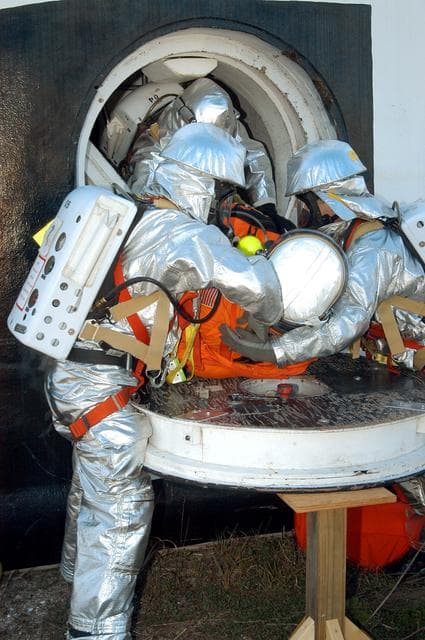
NASA image: KENNEDY SPACE CENTER, FLA. - Emergency crew members “rescue” an injured astronaut from the orbiter crew compartment mock-up during a “Mode VII” emergency landing simulation at Kennedy Space Center.  The purpose of the Mode VII is to exercise emergency preparedness personnel, equipment and facilities in rescuing astronauts from a downed orbiter and providing immediate medical attention.  This simulation presents an orbiter that has crashed short of the Shuttle Landing Facility in a wooded area 2-1/2 miles south of Runway 33.  Emergency crews are responding to the volunteer astronauts who are simulating various injuries.  Rescuers must remove the crew, provide triage and transport to hospitals those who need further treatment.  Local hospitals are participating in the exercise.
Image
Feb 18, 2004

KENNEDY SPACE CENTER, FLA. - Emergency crew members “rescue” an injured astronaut from the orbiter crew compartment mock-up during a “Mode VII” emergency landing simulation at Kennedy Space Center. The purpose of the Mode VII is to exercise emergency preparedness personnel, equipment and facilities in rescuing astronauts from a downed orbiter and providing immediate medical attention. This simulation presents an orbiter that has crashed short of the Shuttle Landing Facility in a wooded area 2-1/2 miles south of Runway 33. Emergency crews are responding to the volunteer astronauts who are simulating various injuries. Rescuers must remove the crew, provide triage and transport to hospitals those who need further treatment. Local hospitals are participating in the exercise.
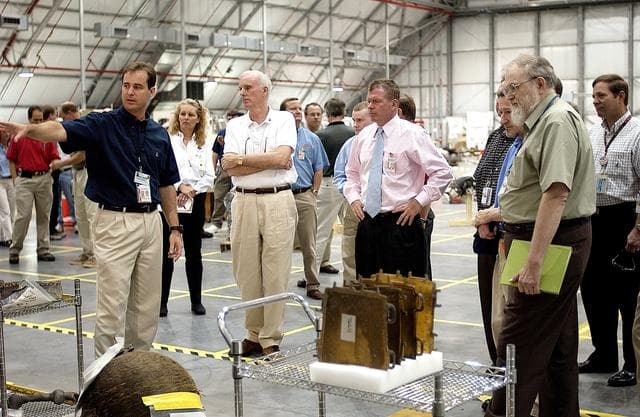
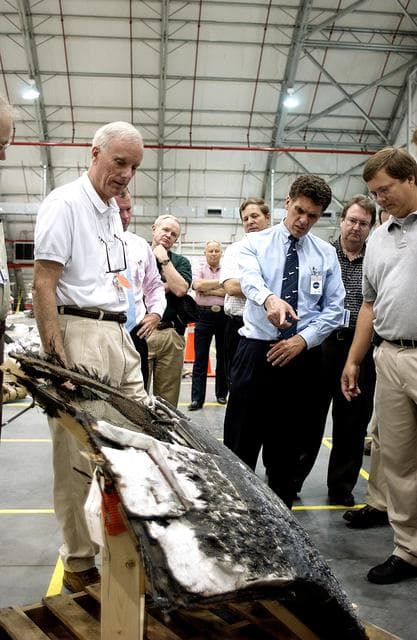
NASA image: KENNEDY SPACE CENTER, FLA. -  Adm. Harold Gehman, center left, chairman of the Columbia Investigation Accident Board, and U.S. Representative Tom Feeney, center right, are shown pieces of Columbia debris collected in the KSC RLV Hangar.  Other members of the board accompanied Gehman as part of the ongoing investigation.  Recovery efforts as of May 5 included 82,500 pieces of debris weighing 84,800 pounds, almost 40 percent of the total dry weight of the shuttle.  About 25,000 personnel took part, utilizing almost 1.5 million total man-hours in the recovery effort and involving more than 130 federal, state and local agencies.  The operation was also supported by more than 270 organizations that included businesses and volunteer groups.
Image
May 15, 2003

KENNEDY SPACE CENTER, FLA. - Adm. Harold Gehman, center left, chairman of the Columbia Investigation Accident Board, and U.S. Representative Tom Feeney, center right, are shown pieces of Columbia debris collected in the KSC RLV Hangar. Other members of the board accompanied Gehman as part of the ongoing investigation. Recovery efforts as of May 5 included 82,500 pieces of debris weighing 84,800 pounds, almost 40 percent of the total dry weight of the shuttle. About 25,000 personnel took part, utilizing almost 1.5 million total man-hours in the recovery effort and involving more than 130 federal, state and local agencies. The operation was also supported by more than 270 organizations that included businesses and volunteer groups.
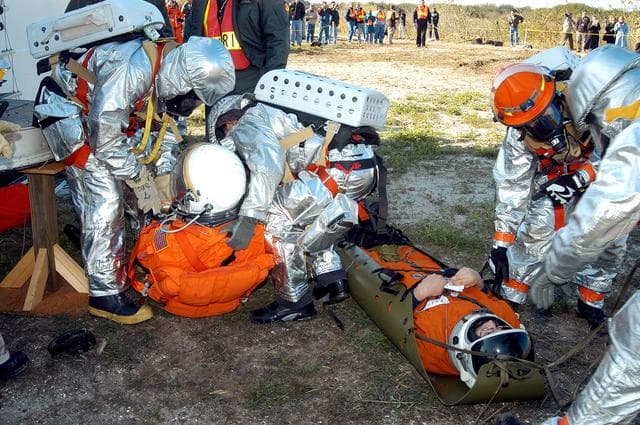
NASA image: KENNEDY SPACE CENTER, FLA. - In the RLV Hangar, Adm. Harold Gehman, center, chairman of the Columbia Investigation Accident Board, looks on while U.S. Representative Dave Weldon (second from right) points at a piece of Columbia debris.  Behind Gehman is U.S. Representative Tom Feeney.  Gehman and other board members are visiting KSC as part of the ongoing investigation.  Recovery efforts as of May 5 included 82,500 pieces of debris weighing 84,800 pounds, almost 40 percent of the total dry weight of the shuttle.  About 25,000 personnel took part, utilizing almost 1.5 million total man-hours in the recovery effort and involving more than 130 federal, state and local agencies.  The operation was also supported by more than 270 organizations that included businesses and volunteer groups.
Image
May 15, 2003

KENNEDY SPACE CENTER, FLA. - In the RLV Hangar, Adm. Harold Gehman, center, chairman of the Columbia Investigation Accident Board, looks on while U.S. Representative Dave Weldon (second from right) points at a piece of Columbia debris. Behind Gehman is U.S. Representative Tom Feeney. Gehman and other board members are visiting KSC as part of the ongoing investigation. Recovery efforts as of May 5 included 82,500 pieces of debris weighing 84,800 pounds, almost 40 percent of the total dry weight of the shuttle. About 25,000 personnel took part, utilizing almost 1.5 million total man-hours in the recovery effort and involving more than 130 federal, state and local agencies. The operation was also supported by more than 270 organizations that included businesses and volunteer groups.

NASA image: KENNEDY SPACE CENTER, FLA. - Emergency crew members assess medical needs on “injured” astronauts removed from the orbiter crew compartment mock-up during a “Mode VII” emergency landing simulation at Kennedy Space Center.  The purpose of the Mode VII is to exercise emergency preparedness personnel, equipment and facilities in rescuing astronauts from a downed orbiter and providing immediate medical attention.  This simulation presents an orbiter that has crashed short of the Shuttle Landing Facility in a wooded area 2-1/2 miles south of Runway 33.  Emergency crews are responding to the volunteer astronauts who are simulating various injuries.  Rescuers must remove the crew, provide triage and transport to hospitals those who need further treatment.  Local hospitals are participating in the exercise.
Image
Feb 18, 2004

KENNEDY SPACE CENTER, FLA. - Emergency crew members assess medical needs on “injured” astronauts removed from the orbiter crew compartment mock-up during a “Mode VII” emergency landing simulation at Kennedy Space Center. The purpose of the Mode VII is to exercise emergency preparedness personnel, equipment and facilities in rescuing astronauts from a downed orbiter and providing immediate medical attention. This simulation presents an orbiter that has crashed short of the Shuttle Landing Facility in a wooded area 2-1/2 miles south of Runway 33. Emergency crews are responding to the volunteer astronauts who are simulating various injuries. Rescuers must remove the crew, provide triage and transport to hospitals those who need further treatment. Local hospitals are participating in the exercise.
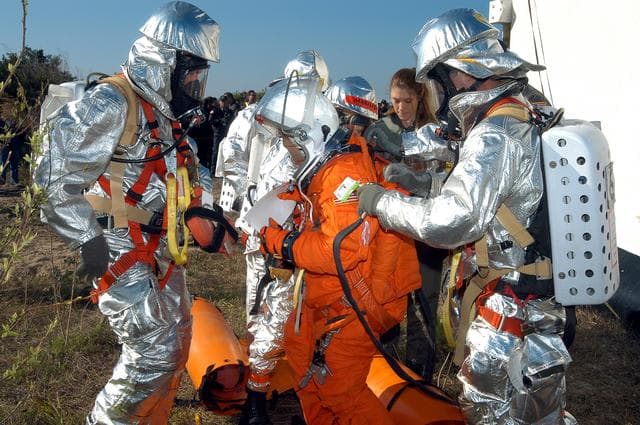
NASA image: KENNEDY SPACE CENTER, FLA. - Emergency crew members help a volunteer “astronaut” onto the ground after being lowered from the top of the orbiter crew compartment mock-up that is the scene of a “Mode VII” emergency landing simulation at Kennedy Space Center.  The purpose of the Mode VII is to exercise emergency preparedness personnel, equipment and facilities in rescuing astronauts from a downed orbiter and providing immediate medical attention.  This simulation presents an orbiter that has crashed short of the Shuttle Landing Facility in a wooded area 2-1/2 miles south of Runway 33.  Emergency crews are responding to the volunteer astronauts who are simulating various injuries.  Rescuers must remove the crew, provide triage and transport to hospitals those who need further treatment.  Local hospitals are participating in the exercise.
Image
Feb 18, 2004

KENNEDY SPACE CENTER, FLA. - Emergency crew members help a volunteer “astronaut” onto the ground after being lowered from the top of the orbiter crew compartment mock-up that is the scene of a “Mode VII” emergency landing simulation at Kennedy Space Center. The purpose of the Mode VII is to exercise emergency preparedness personnel, equipment and facilities in rescuing astronauts from a downed orbiter and providing immediate medical attention. This simulation presents an orbiter that has crashed short of the Shuttle Landing Facility in a wooded area 2-1/2 miles south of Runway 33. Emergency crews are responding to the volunteer astronauts who are simulating various injuries. Rescuers must remove the crew, provide triage and transport to hospitals those who need further treatment. Local hospitals are participating in the exercise.
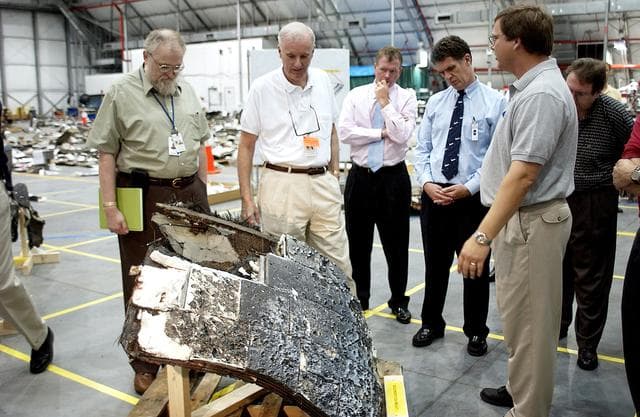
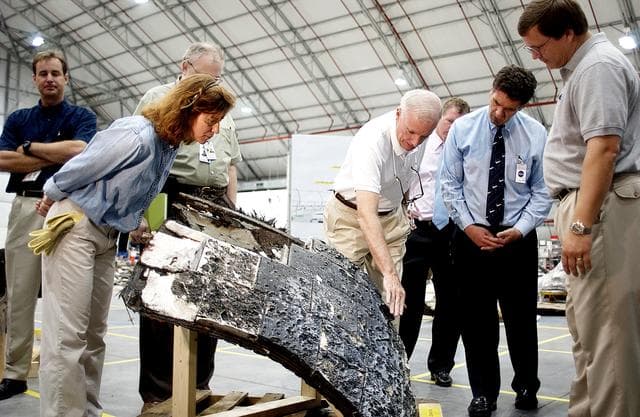
NASA image: KENNEDY SPACE CENTER, FLA. - Adm. Harold Gehman, center, chairman of the Columbia Investigation Accident Board,  looks at a large piece of Columbia debris in the RLV Hangar.  He and other board members are visiting the Hangar as part of the ongoing investigation.  To the right of Gehman are U.S. Representatives Tom Feeney and Dave Weldon.  Recovery efforts as of May 5 included 82,500 pieces of debris weighing 84,800 pounds, almost 40 percent of the total dry weight of the shuttle.  About 25,000 personnel took part, utilizing almost 1.5 million total man-hours in the recovery effort and involving more than 130 federal, state and local agencies.  The operation was also supported by more than 270 organizations that included businesses and volunteer groups.
Image
May 15, 2003

KENNEDY SPACE CENTER, FLA. - Adm. Harold Gehman, center, chairman of the Columbia Investigation Accident Board, looks at a large piece of Columbia debris in the RLV Hangar. He and other board members are visiting the Hangar as part of the ongoing investigation. To the right of Gehman are U.S. Representatives Tom Feeney and Dave Weldon. Recovery efforts as of May 5 included 82,500 pieces of debris weighing 84,800 pounds, almost 40 percent of the total dry weight of the shuttle. About 25,000 personnel took part, utilizing almost 1.5 million total man-hours in the recovery effort and involving more than 130 federal, state and local agencies. The operation was also supported by more than 270 organizations that included businesses and volunteer groups.

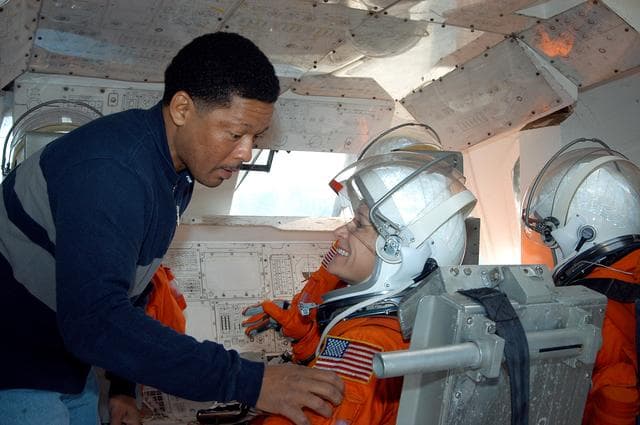
NASA image: KENNEDY SPACE CENTER, FLA. - Volunteers from the KSC Fire-Rescue team dressed in launch and entry suits settle into seats in an orbiter crew compartment mock-up under the guidance of George Brittingham, USA suit technician on the Closeout Crew. Brittingham is helping Catherine Di Biase, a nurse with Bionetics Life Sciences. They are all taking part in a “Mode VII” emergency landing simulation at Kennedy Space Center.  The purpose is to exercise emergency preparedness personnel, equipment and facilities in rescuing astronauts from a downed orbiter and providing immediate medical attention.  This simulation presents an orbiter that has crashed short of the Shuttle Landing Facility in a wooded area 2-1/2 miles south of Runway 33.  Emergency crews will respond to the volunteer “astronauts” simulating various injuries.  Rescuers must remove the crew, provide triage and transport to hospitals those who need further treatment.  Local hospitals are participating in the exercise.
Image
Feb 18, 2004

KENNEDY SPACE CENTER, FLA. - Volunteers from the KSC Fire-Rescue team dressed in launch and entry suits settle into seats in an orbiter crew compartment mock-up under the guidance of George Brittingham, USA suit technician on the Closeout Crew. Brittingham is helping Catherine Di Biase, a nurse with Bionetics Life Sciences. They are all taking part in a “Mode VII” emergency landing simulation at Kennedy Space Center. The purpose is to exercise emergency preparedness personnel, equipment and facilities in rescuing astronauts from a downed orbiter and providing immediate medical attention. This simulation presents an orbiter that has crashed short of the Shuttle Landing Facility in a wooded area 2-1/2 miles south of Runway 33. Emergency crews will respond to the volunteer “astronauts” simulating various injuries. Rescuers must remove the crew, provide triage and transport to hospitals those who need further treatment. Local hospitals are participating in the exercise.
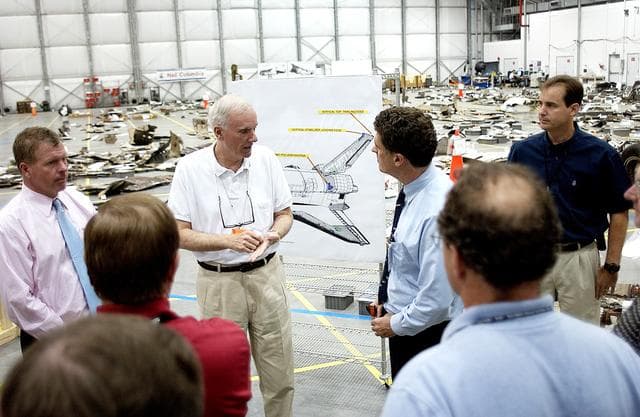
NASA image: KENNEDY SPACE CENTER, FLA. - Adm. Harold Gehman, center, chairman of the Columbia Investigation Accident Board,  talks to U.S. Representative Dave Weldon (right) during the CAIB’s visit to the KSC RLV Hangar.  Left of Gehman is U.S. Representative Tom Feeney.  Gehman and the board visited the Hangar as part of the ongoing investigation.  Recovery efforts as of May 5 included 82,500 pieces of debris weighing 84,800 pounds, almost 40 percent of the total dry weight of the shuttle.  About 25,000 personnel took part, utilizing almost 1.5 million total man-hours in the recovery effort and involving more than 130 federal, state and local agencies.  The operation was also supported by more than 270 organizations that included businesses and volunteer groups.
Image
May 15, 2003

KENNEDY SPACE CENTER, FLA. - Adm. Harold Gehman, center, chairman of the Columbia Investigation Accident Board, talks to U.S. Representative Dave Weldon (right) during the CAIB’s visit to the KSC RLV Hangar. Left of Gehman is U.S. Representative Tom Feeney. Gehman and the board visited the Hangar as part of the ongoing investigation. Recovery efforts as of May 5 included 82,500 pieces of debris weighing 84,800 pounds, almost 40 percent of the total dry weight of the shuttle. About 25,000 personnel took part, utilizing almost 1.5 million total man-hours in the recovery effort and involving more than 130 federal, state and local agencies. The operation was also supported by more than 270 organizations that included businesses and volunteer groups.

NASA image: KENNEDY SPACE CENTER, FLA. - In the RLV Hangar, Adm. Harold Gehman, center, chairman of the Columbia Investigation Accident Board, gestures toward a large piece of Columbia debris.  He and other board members are visiting the Hangar as part of the ongoing investigation.  At right is U.S. Representative Dave Weldon; behind him is U.S. Representative Tom Feeney.  Recovery efforts as of May 5 included 82,500 pieces of debris weighing 84,800 pounds, almost 40 percent of the total dry weight of the shuttle.  About 25,000 personnel took part, utilizing almost 1.5 million total man-hours in the recovery effort and involving more than 130 federal, state and local agencies.  The operation was also supported by more than 270 organizations that included businesses and volunteer groups.
Image
May 15, 2003

KENNEDY SPACE CENTER, FLA. - In the RLV Hangar, Adm. Harold Gehman, center, chairman of the Columbia Investigation Accident Board, gestures toward a large piece of Columbia debris. He and other board members are visiting the Hangar as part of the ongoing investigation. At right is U.S. Representative Dave Weldon; behind him is U.S. Representative Tom Feeney. Recovery efforts as of May 5 included 82,500 pieces of debris weighing 84,800 pounds, almost 40 percent of the total dry weight of the shuttle. About 25,000 personnel took part, utilizing almost 1.5 million total man-hours in the recovery effort and involving more than 130 federal, state and local agencies. The operation was also supported by more than 270 organizations that included businesses and volunteer groups.

PreviousPage 59 of 100Next

Frequently Asked Questions About NASA Images

Are NASA images free to use?+
Yes, most NASA images are in the public domain and are free to use for educational, informational, and personal purposes. NASA's media usage guidelines state that NASA material is not copyrighted unless otherwise noted. However, the NASA logo and certain insignia are protected. Some images may include identifiable individuals or third-party content that requires additional permissions. Always check the specific image's usage rights and credit NASA as the source.
How many images does NASA have?+
NASA's Image and Video Library contains over 140,000 publicly accessible images, videos, and audio files spanning the agency's entire history, from the Mercury program of the 1960s to the latest James Webb Space Telescope discoveries. The collection grows daily as new missions capture imagery and archival materials are digitized. Individual mission archives, such as Mars rover photos, contain hundreds of thousands of additional images.
Can I download NASA images?+
Yes, you can download NASA images in multiple resolutions directly from this gallery. Each image detail page provides download links for original (full resolution), large (1920px), medium (960px), small (480px), and thumbnail sizes. NASA encourages the public to use these images for education, media, and personal projects. High-resolution originals are ideal for printing and professional use.

Explore More NASA Content

Astronomy Picture of the Day

Daily curated space image

Mars Rover Photos

Curiosity & Perseverance images

Earth from Space

DSCOVR EPIC daily images

Launch Schedule

Upcoming rocket launches

Space News

Mission updates & discoveries

KENNEDY SPACE CENTER, FLA. - Emergency crew members lower a volunteer “astronaut” from the top of the orbiter crew...

KSC

KENNEDY SPACE CENTER, FLA. - Emergency crew members help an “injured” astronaut from the orbiter crew compartment...

KSC

KENNEDY SPACE CENTER, FLA. - In the Launch Control Center, Robert Holl (left), Landing Recovery directo, and Donald...

KSC

KENNEDY SPACE CENTER, FLA. - Emergency crew members on the ground take hold of a volunteer “astronaut” lowered from...

KSC

KENNEDY SPACE CENTER, FLA. - Emergency crew members “rescue” an injured astronaut from the orbiter crew compartment...

KSC

KENNEDY SPACE CENTER, FLA. - A helicopter rescue team prepares another “injured” astronaut for transportation to a...

KSC

KENNEDY SPACE CENTER, FLA. - Emergency crew members “rescue” an injured astronaut from the orbiter crew compartment...

KSC

KENNEDY SPACE CENTER, FLA. - Adm. Harold Gehman, center left, chairman of the Columbia Investigation Accident Board,...

KSC

KENNEDY SPACE CENTER, FLA. - In the RLV Hangar, Adm. Harold Gehman, center, chairman of the Columbia Investigation...

KSC

KENNEDY SPACE CENTER, FLA. - Emergency crew members assess medical needs on “injured” astronauts removed from the...

KSC

KENNEDY SPACE CENTER, FLA. - Emergency crew members help a volunteer “astronaut” onto the ground after being lowered...

KSC

KENNEDY SPACE CENTER, FLA. - Adm. Harold Gehman, center, chairman of the Columbia Investigation Accident Board,...

KSC

KENNEDY SPACE CENTER, FLA. - Volunteers from the KSC Fire-Rescue team dressed in launch and entry suits settle into...

KSC

KENNEDY SPACE CENTER, FLA. - Adm. Harold Gehman, center, chairman of the Columbia Investigation Accident Board,...

KSC

KENNEDY SPACE CENTER, FLA. - In the RLV Hangar, Adm. Harold Gehman, center, chairman of the Columbia Investigation...

KSC