CosmosObservatory
Explore
Solar System
Live
Learn
Tools
About
Cosmos Observatory
ToolsAbout
Cosmos Observatory

Explore the universe through NASA data, real-time ISS tracking, Mars rover imagery, asteroid monitoring, and comprehensive space encyclopedia. Your gateway to the cosmos.

Explore

  • APOD
  • Mars Rovers
  • Earth Imagery
  • NASA Gallery
  • ISS Tracker

Data

  • Asteroids
  • Solar System
  • Exoplanets
  • Space Weather
  • Launches

Tools

  • Glossary
  • News
  • Calculators

Legal

  • About
  • Privacy Policy
  • Terms of Use
  • Space Tools
  • Contact

Stay updated with the cosmos

Get weekly digests of APOD highlights, upcoming launches, and space events.

© 2026 Cosmos Observatory. All rights reserved. Built with for space enthusiasts.

This website is not affiliated with, maintained, authorized, endorsed by, or in any way officially connected with NASA or any of its subsidiaries or affiliates. All NASA imagery is in the public domain unless otherwise noted. Data sourced from NASA Open APIs, Launch Library 2, and other open data services.

NASA Gallery

Explore NASA's vast collection of space images, videos, and audio from missions past and present.

  1. Home
  2. /
  3. NASA Gallery

NASA's Image and Video Library: A Visual Archive of Space Exploration

NASA's Image and Video Library is one of the most comprehensive public archives of space imagery in the world, containing over 140,000 images, videos, and audio recordings spanning more than six decades of space exploration. From the earliest Mercury and Gemini missions through the Apollo Moon landings, the Space Shuttle era, and today's cutting-edge observations from the James Webb Space Telescope, this collection documents humanity's journey into the cosmos.

The library includes imagery from diverse sources: telescopes like Hubble and Webb that capture deep-space nebulae, galaxies, and exoplanets; planetary missions like the Mars rovers ( browse Mars photos) and Cassini at Saturn; Earth observation satellites ( see EPIC imagery); astronaut photography from the ISS; and documentation of rocket launches, spacecraft assembly, and ground testing. Most NASA images are in the public domain and free to download at full resolution for educational, editorial, and personal use.

Use the search bar above to find specific subjects — try queries like "Apollo 11," "Hubble Deep Field," "Mars surface," or "astronaut EVA." You can also filter by media type (image, video, or audio). For a daily curated experience, visit the Astronomy Picture of the Day.

Showing results for "Places"

9,758 results found - Page 56 of 407

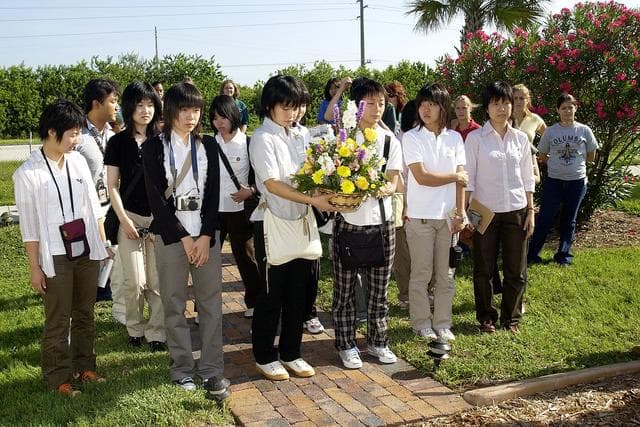
NASA image: KENNEDY SPACE CENTER, FLA.  -   Japanese girls from Urawa Daiichi Girls High School, Urawa, Japan, carry a floral tribute to the crew of Columbia to place at the STS-107 memorial stone at the Spacehab facility, Cape Canaveral, Fla.   The group was  awarded the trip to Florida when their experiments were chosen to fly on mission STS-107.  The group was also meeting with American students from Melbourne and Jacksonville, Fla.   The National Space Development  Agency of Japan (NASDA) and the KSC International Space Station and Payloads Processing Directorate worked with the NASA KSC Education Programs and University Research Division to coordinate the students’ visit.
Image
Aug 20, 2003

KENNEDY SPACE CENTER, FLA. - Japanese girls from Urawa Daiichi Girls High School, Urawa, Japan, carry a floral tribute to the crew of Columbia to place at the STS-107 memorial stone at the Spacehab facility, Cape Canaveral, Fla. The group was awarded the trip to Florida when their experiments were chosen to fly on mission STS-107. The group was also meeting with American students from Melbourne and Jacksonville, Fla. The National Space Development Agency of Japan (NASDA) and the KSC International Space Station and Payloads Processing Directorate worked with the NASA KSC Education Programs and University Research Division to coordinate the students’ visit.

KENNEDY SPACE CENTER, FLA. - Japanese girls from Urawa Daiichi Girls High School, Urawa, Japan, carry a floral...

KSC
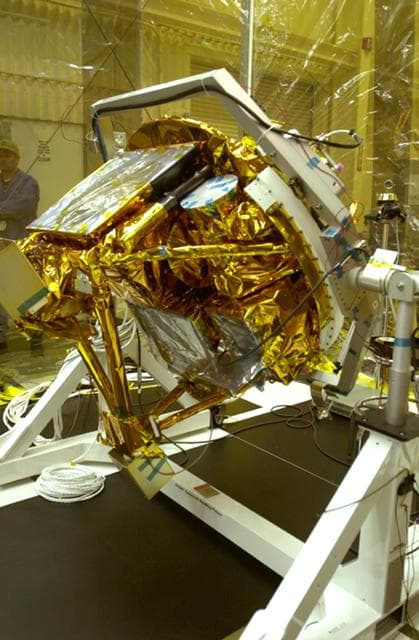
NASA image: VANDENBERG AIR FORCE BASE, CALIF.- At Vandenberg Air Force Base, Calif., spacecraft functional testing is underway on the SciSat-1. The solar arrays are being attached and the communications systems are also being checked out.   The SciSat-1 weighs approximately 330 pounds and after launch will be placed in a 400-mile-high polar orbit to investigate processes that control the distribution of ozone in the upper atmosphere. The data from the satellite will provide Canadian and international scientists with improved measurements relating to global ozone processes and help policymakers assess existing environmental policy and develop protective measures for improving the health of our atmosphere, preventing further ozone depletion. The mission is designed to last two years.
Image
Jul 12, 2003

VANDENBERG AIR FORCE BASE, CALIF.- At Vandenberg Air Force Base, Calif., spacecraft functional testing is underway on the SciSat-1. The solar arrays are being attached and the communications systems are also being checked out. The SciSat-1 weighs approximately 330 pounds and after launch will be placed in a 400-mile-high polar orbit to investigate processes that control the distribution of ozone in the upper atmosphere. The data from the satellite will provide Canadian and international scientists with improved measurements relating to global ozone processes and help policymakers assess existing environmental policy and develop protective measures for improving the health of our atmosphere, preventing further ozone depletion. The mission is designed to last two years.

NASA image: KENNEDY SPACE CENTER, FLA. - Following the memorial service held at the Space Memorial Mirror for the crew of Columbia, visitors place roses in the wire mesh fence surrounding the mirror.  Feb. 1 is the one-year anniversary of the loss of the crew and orbiter Columbia in a tragic accident as the ship returned to Earth following mission STS-107. The public was invited to the memorial service, held in the KSC Visitor Complex, which included comments by Center Director Jim Kennedy and Executive Director of Florida Space Authority Winston Scott.  Scott is a former astronaut who flew on Columbia in 1997.
Image
Feb 1, 2004

KENNEDY SPACE CENTER, FLA. - Following the memorial service held at the Space Memorial Mirror for the crew of Columbia, visitors place roses in the wire mesh fence surrounding the mirror. Feb. 1 is the one-year anniversary of the loss of the crew and orbiter Columbia in a tragic accident as the ship returned to Earth following mission STS-107. The public was invited to the memorial service, held in the KSC Visitor Complex, which included comments by Center Director Jim Kennedy and Executive Director of Florida Space Authority Winston Scott. Scott is a former astronaut who flew on Columbia in 1997.

KENNEDY SPACE CENTER, FLA. - Following the memorial service held at the Space Memorial Mirror for the crew of...
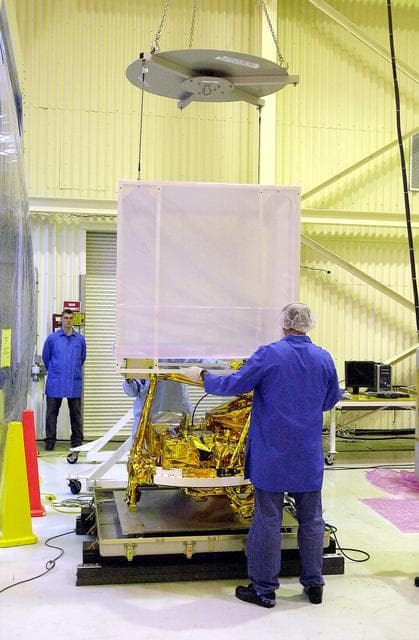
NASA image: VANDENBERG AIR FORCE BASE, CALIF.- The cover is being lifted off SciSat-1 spacecraft at Vandenberg Air Force Base, Calif.   Sci-Sat, which will undergo instrument checkout and spacecraft functional testing, weighs approximately 330 pounds and after launch will be placed in a 400-mile-high polar orbit to investigate processes that control the distribution of ozone in the upper atmosphere. The data from the satellite will provide Canadian and international scientists with improved measurements relating to global ozone processes and help policymakers assess existing environmental policy and develop protective measures for improving the health of our atmosphere, preventing further ozone depletion. The mission is designed to last two years.
Image
Jun 26, 2003

VANDENBERG AIR FORCE BASE, CALIF.- The cover is being lifted off SciSat-1 spacecraft at Vandenberg Air Force Base, Calif. Sci-Sat, which will undergo instrument checkout and spacecraft functional testing, weighs approximately 330 pounds and after launch will be placed in a 400-mile-high polar orbit to investigate processes that control the distribution of ozone in the upper atmosphere. The data from the satellite will provide Canadian and international scientists with improved measurements relating to global ozone processes and help policymakers assess existing environmental policy and develop protective measures for improving the health of our atmosphere, preventing further ozone depletion. The mission is designed to last two years.

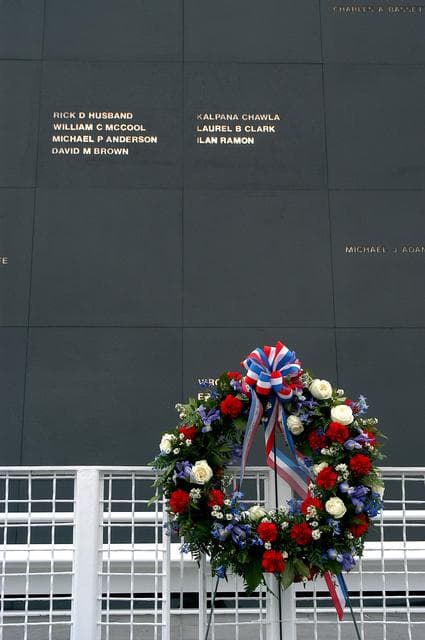
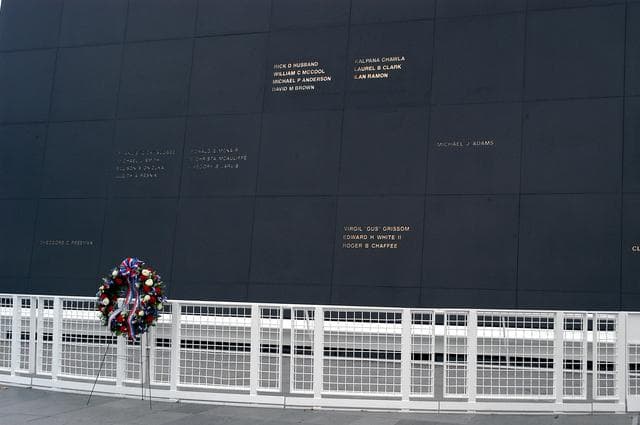
NASA image: KENNEDY SPACE CENTER, FLA. -  A ceremonial wreath is placed at the Space Mirror Memorial at the Kennedy Space Center Visitor Complex.  During this dedication ceremony, the names of the STS-107 astronauts who lost their lives during the Columbia accident -- Rick Husband, Willie McCool, Laurel Clark, Michael Anderson, David Brown, Kalpana Chawla, and Ilan Ramon -- join the names of 17 other space heroes who gave their lives for the U.S. space program. The "Space Mirror," 42 1/2 feet high by 50 feet wide, illuminates the names of the fallen astronauts cut through the monument's black granite surface.
Image
Oct 28, 2003

KENNEDY SPACE CENTER, FLA. - A ceremonial wreath is placed at the Space Mirror Memorial at the Kennedy Space Center Visitor Complex. During this dedication ceremony, the names of the STS-107 astronauts who lost their lives during the Columbia accident -- Rick Husband, Willie McCool, Laurel Clark, Michael Anderson, David Brown, Kalpana Chawla, and Ilan Ramon -- join the names of 17 other space heroes who gave their lives for the U.S. space program. The "Space Mirror," 42 1/2 feet high by 50 feet wide, illuminates the names of the fallen astronauts cut through the monument's black granite surface.

KENNEDY SPACE CENTER, FLA. - A ceremonial wreath is placed at the Space Mirror Memorial at the Kennedy Space Center...
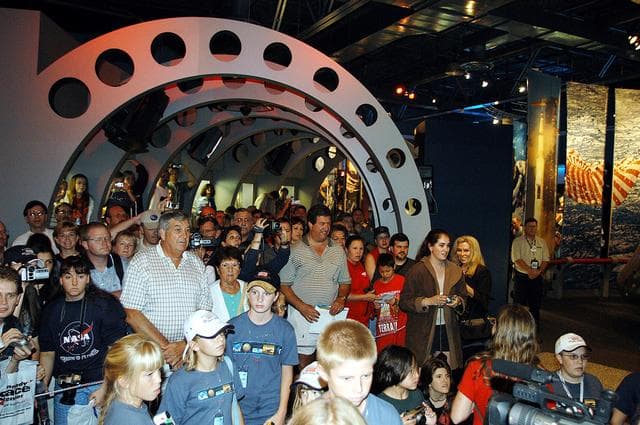
NASA image: KENNEDY SPACE CENTER, FLA. -  Hundreds of guests attend a ribbon cutting ceremony officially opening the U.S. Astronaut Hall of Fame as part of the Kennedy Space Center Visitor Complex. The ceremony was held in conjunction with the induction of four Space Shuttle astronauts into the Hall of Fame including Daniel Brandenstein, Robert "Hoot" Gibson, Story Musgrave, and Sally Ride. Conceived by six of the Mercury Program astronauts, the U.S. Astronaut Hall of Fame opened in 1990 to provide a place where space travelers could be remembered for their participation and accomplishments in the U.S. space program. The four new inductees join 48 previously honored astronauts from the ranks of the Gemini, Apollo, Skylab, Apollo-Soyuz, and Space Shuttle programs.
Image
Jun 20, 2003

KENNEDY SPACE CENTER, FLA. - Hundreds of guests attend a ribbon cutting ceremony officially opening the U.S. Astronaut Hall of Fame as part of the Kennedy Space Center Visitor Complex. The ceremony was held in conjunction with the induction of four Space Shuttle astronauts into the Hall of Fame including Daniel Brandenstein, Robert "Hoot" Gibson, Story Musgrave, and Sally Ride. Conceived by six of the Mercury Program astronauts, the U.S. Astronaut Hall of Fame opened in 1990 to provide a place where space travelers could be remembered for their participation and accomplishments in the U.S. space program. The four new inductees join 48 previously honored astronauts from the ranks of the Gemini, Apollo, Skylab, Apollo-Soyuz, and Space Shuttle programs.

NASA image: KENNEDY SPACE CENTER, FLA. -  An overhead crane is in place to lift the Mars Exploration Rover 2 (MER-2) entry vehicle to move it to a spin table for a dry-spin test.  The MER Mission consists of two identical rovers designed to cover roughly 110 yards each Martian day over various terrain. Each rover will carry five scientific instruments that will allow it to search for evidence of liquid water that may have been present in the planet's past.  Identical to each other, the rovers will land at different regions of Mars.  Launch for MER-2 (MER-A) is scheduled for June 5.
Image
Apr 30, 2003

KENNEDY SPACE CENTER, FLA. - An overhead crane is in place to lift the Mars Exploration Rover 2 (MER-2) entry vehicle to move it to a spin table for a dry-spin test. The MER Mission consists of two identical rovers designed to cover roughly 110 yards each Martian day over various terrain. Each rover will carry five scientific instruments that will allow it to search for evidence of liquid water that may have been present in the planet's past. Identical to each other, the rovers will land at different regions of Mars. Launch for MER-2 (MER-A) is scheduled for June 5.

KENNEDY SPACE CENTER, FLA. - An overhead crane is in place to lift the Mars Exploration Rover 2 (MER-2) entry...

KSC
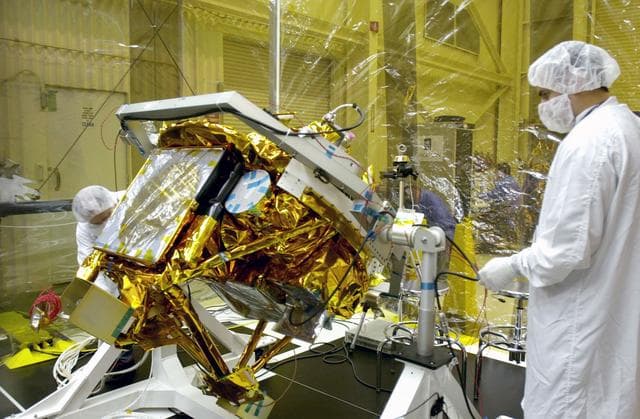
NASA image: VANDENBERG AIR FORCE BASE, CALIF.- At Vandenberg Air Force Base, Calif., spacecraft functional testing is underway on the SciSat-1. The solar arrays are being attached and the communications systems are also being checked out.   The SciSat-1 weighs approximately 330 pounds and after launch will be placed in a 400-mile-high polar orbit to investigate processes that control the distribution of ozone in the upper atmosphere. The data from the satellite will provide Canadian and international scientists with improved measurements relating to global ozone processes and help policymakers assess existing environmental policy and develop protective measures for improving the health of our atmosphere, preventing further ozone depletion. The mission is designed to last two years.
Image
Jul 12, 2003

VANDENBERG AIR FORCE BASE, CALIF.- At Vandenberg Air Force Base, Calif., spacecraft functional testing is underway on the SciSat-1. The solar arrays are being attached and the communications systems are also being checked out. The SciSat-1 weighs approximately 330 pounds and after launch will be placed in a 400-mile-high polar orbit to investigate processes that control the distribution of ozone in the upper atmosphere. The data from the satellite will provide Canadian and international scientists with improved measurements relating to global ozone processes and help policymakers assess existing environmental policy and develop protective measures for improving the health of our atmosphere, preventing further ozone depletion. The mission is designed to last two years.
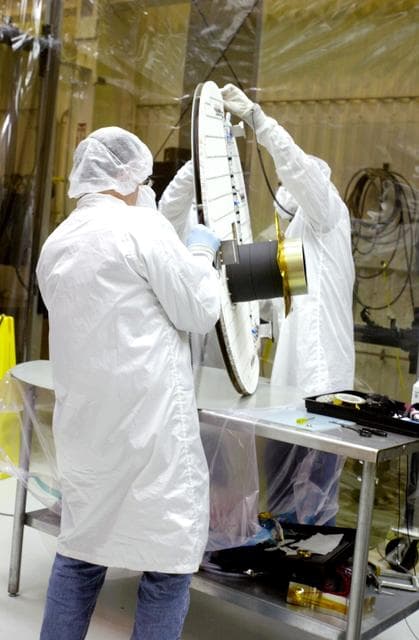
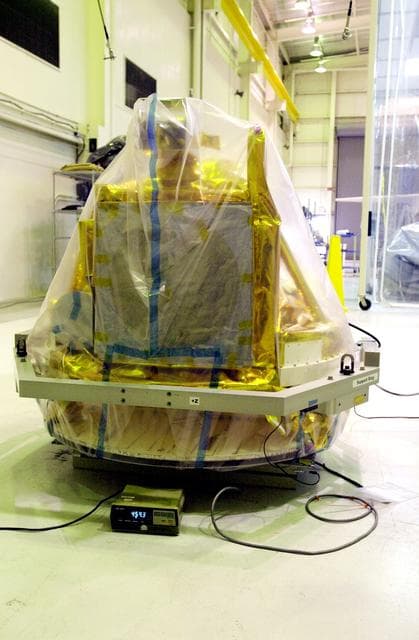
NASA image: VANDENBERG AIR FORCE BASE, CALIF.-  A covered SciSat-1 spacecraft sits on a test stand at Vandenberg Air Force Base, Calif.  The solar arrays will be attached and the communications systems checked out.   The SciSat-1 weighs approximately 330 pounds and after launch will be placed in a 400-mile-high polar orbit to investigate processes that control the distribution of ozone in the upper atmosphere. The data from the satellite will provide Canadian and international scientists with improved measurements relating to global ozone processes and help policymakers assess existing environmental policy and develop protective measures for improving the health of our atmosphere, preventing further ozone depletion. The mission is designed to last two years.
Image
Jul 29, 2003

VANDENBERG AIR FORCE BASE, CALIF.- A covered SciSat-1 spacecraft sits on a test stand at Vandenberg Air Force Base, Calif. The solar arrays will be attached and the communications systems checked out. The SciSat-1 weighs approximately 330 pounds and after launch will be placed in a 400-mile-high polar orbit to investigate processes that control the distribution of ozone in the upper atmosphere. The data from the satellite will provide Canadian and international scientists with improved measurements relating to global ozone processes and help policymakers assess existing environmental policy and develop protective measures for improving the health of our atmosphere, preventing further ozone depletion. The mission is designed to last two years.

NASA image: VANDENBERG AIR FORCE BASE, CALIF.- At Vandenberg Air Force Base, Calif., spacecraft functional testing is underway on the SciSat-1. The solar arrays are being attached and the communications systems are also being checked out.   The SciSat-1 weighs approximately 330 pounds and after launch will be placed in a 400-mile-high polar orbit to investigate processes that control the distribution of ozone in the upper atmosphere. The data from the satellite will provide Canadian and international scientists with improved measurements relating to global ozone processes and help policymakers assess existing environmental policy and develop protective measures for improving the health of our atmosphere, preventing further ozone depletion. The mission is designed to last two years.
Image
Jul 12, 2003

VANDENBERG AIR FORCE BASE, CALIF.- At Vandenberg Air Force Base, Calif., spacecraft functional testing is underway on the SciSat-1. The solar arrays are being attached and the communications systems are also being checked out. The SciSat-1 weighs approximately 330 pounds and after launch will be placed in a 400-mile-high polar orbit to investigate processes that control the distribution of ozone in the upper atmosphere. The data from the satellite will provide Canadian and international scientists with improved measurements relating to global ozone processes and help policymakers assess existing environmental policy and develop protective measures for improving the health of our atmosphere, preventing further ozone depletion. The mission is designed to last two years.

NASA image: KENNEDY SPACE CENTER, FLA. -  A ceremonial wreath is placed at the Space Mirror Memorial at the Kennedy Space Center Visitor Complex.  During this dedication ceremony, the names of the STS-107 astronauts who lost their lives during the Columbia accident -- Rick Husband, Willie McCool, Laurel Clark, Michael Anderson, David Brown, Kalpana Chawla, and Ilan Ramon -- join the names of 17 other space heroes who gave their lives for the U.S. space program. The "Space Mirror," 42 1/2 feet high by 50 feet wide, illuminates the names of the fallen astronauts cut through the monument's black granite surface.
Image
Oct 28, 2003

KENNEDY SPACE CENTER, FLA. - A ceremonial wreath is placed at the Space Mirror Memorial at the Kennedy Space Center Visitor Complex. During this dedication ceremony, the names of the STS-107 astronauts who lost their lives during the Columbia accident -- Rick Husband, Willie McCool, Laurel Clark, Michael Anderson, David Brown, Kalpana Chawla, and Ilan Ramon -- join the names of 17 other space heroes who gave their lives for the U.S. space program. The "Space Mirror," 42 1/2 feet high by 50 feet wide, illuminates the names of the fallen astronauts cut through the monument's black granite surface.

KENNEDY SPACE CENTER, FLA. - A ceremonial wreath is placed at the Space Mirror Memorial at the Kennedy Space Center...
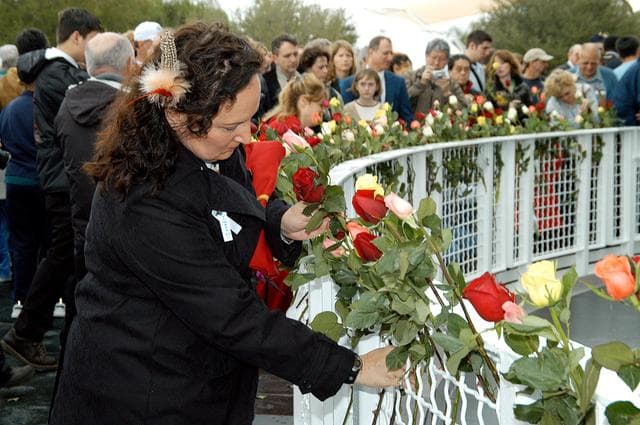
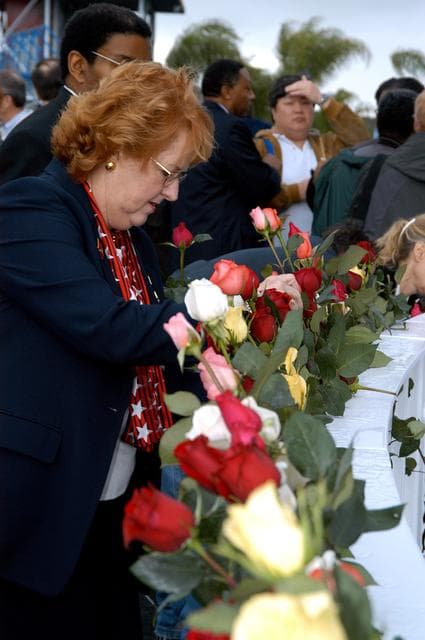
NASA image: KENNEDY SPACE CENTER, FLA. - Following the memorial service for the crew of Columbia at the Space Memorial Mirror, Louise Kleba, who is with United Space Alliance, joins other visitors placing roses in the wire mesh fence surrounding the mirror.  Feb. 1 is the one-year anniversary of the loss of the crew and orbiter Columbia in a tragic accident as the ship returned to Earth following mission STS-107. The public was invited to the memorial service, held in the KSC Visitor Complex, which included comments by Center Director Jim Kennedy and Executive Director of Florida Space Authority Winston Scott.  Scott is a former astronaut who flew on Columbia in 1997.
Image
Feb 1, 2004

KENNEDY SPACE CENTER, FLA. - Following the memorial service for the crew of Columbia at the Space Memorial Mirror, Louise Kleba, who is with United Space Alliance, joins other visitors placing roses in the wire mesh fence surrounding the mirror. Feb. 1 is the one-year anniversary of the loss of the crew and orbiter Columbia in a tragic accident as the ship returned to Earth following mission STS-107. The public was invited to the memorial service, held in the KSC Visitor Complex, which included comments by Center Director Jim Kennedy and Executive Director of Florida Space Authority Winston Scott. Scott is a former astronaut who flew on Columbia in 1997.

KENNEDY SPACE CENTER, FLA. - Following the memorial service for the crew of Columbia at the Space Memorial Mirror,...
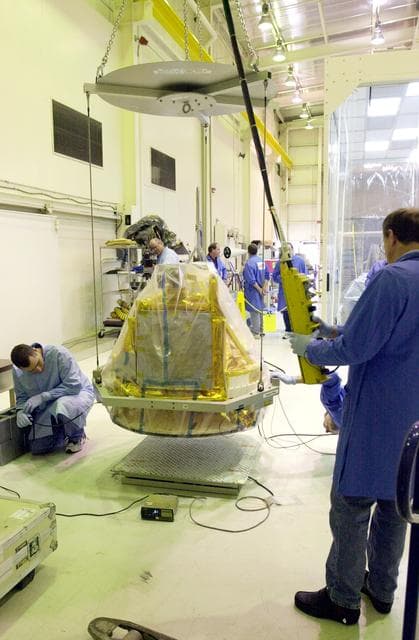
NASA image: VANDENBERG AIR FORCE BASE, CALIF.-  The covered SciSat-1 spacecraft is lowered onto a test stand at Vandenberg Air Force Base, Calif., for functional testing.  The solar arrays will be attached and the communications systems checked out.   The SciSat-1 weighs approximately 330 pounds and after launch will be placed in a 400-mile-high polar orbit to investigate processes that control the distribution of ozone in the upper atmosphere. The data from the satellite will provide Canadian and international scientists with improved measurements relating to global ozone processes and help policymakers assess existing environmental policy and develop protective measures for improving the health of our atmosphere, preventing further ozone depletion. The mission is designed to last two years.
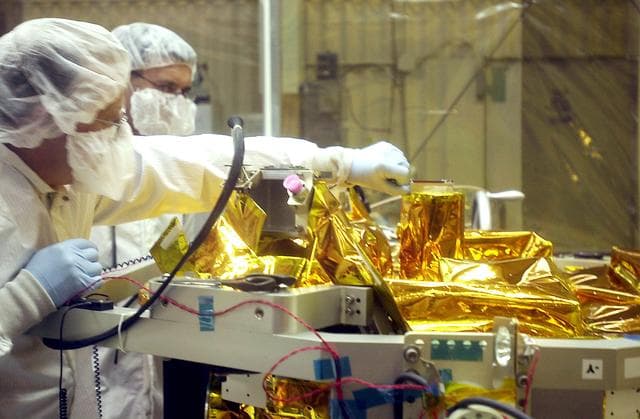
Image
Jul 29, 2003

VANDENBERG AIR FORCE BASE, CALIF.- The covered SciSat-1 spacecraft is lowered onto a test stand at Vandenberg Air Force Base, Calif., for functional testing. The solar arrays will be attached and the communications systems checked out. The SciSat-1 weighs approximately 330 pounds and after launch will be placed in a 400-mile-high polar orbit to investigate processes that control the distribution of ozone in the upper atmosphere. The data from the satellite will provide Canadian and international scientists with improved measurements relating to global ozone processes and help policymakers assess existing environmental policy and develop protective measures for improving the health of our atmosphere, preventing further ozone depletion. The mission is designed to last two years.
NASA image: VANDENBERG AIR FORCE BASE, CALIF.- At Vandenberg Air Force Base, Calif., spacecraft functional testing is underway on the SciSat-1. The solar arrays are being attached and the communications systems are also being checked out.   The SciSat-1 weighs approximately 330 pounds and after launch will be placed in a 400-mile-high polar orbit to investigate processes that control the distribution of ozone in the upper atmosphere. The data from the satellite will provide Canadian and international scientists with improved measurements relating to global ozone processes and help policymakers assess existing environmental policy and develop protective measures for improving the health of our atmosphere, preventing further ozone depletion. The mission is designed to last two years.
Image
Jul 12, 2003

VANDENBERG AIR FORCE BASE, CALIF.- At Vandenberg Air Force Base, Calif., spacecraft functional testing is underway on the SciSat-1. The solar arrays are being attached and the communications systems are also being checked out. The SciSat-1 weighs approximately 330 pounds and after launch will be placed in a 400-mile-high polar orbit to investigate processes that control the distribution of ozone in the upper atmosphere. The data from the satellite will provide Canadian and international scientists with improved measurements relating to global ozone processes and help policymakers assess existing environmental policy and develop protective measures for improving the health of our atmosphere, preventing further ozone depletion. The mission is designed to last two years.

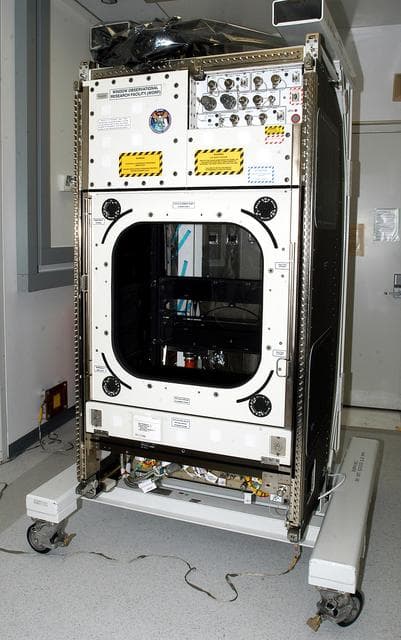
NASA image: KENNEDY SPACE CENTER, FLA. -  The Window Observational Research Facility (WORF), seen in the Space Station Processing Facility, was designed and built by the Boeing Co. at NASA’s Marshall Space Flight Center in Huntsville, Ala.   WORF will be delivered to the International Space Station and placed in the rack position in front of the Destiny lab window,  providing locations for attaching cameras, multi-spectral scanners and other instruments. WORF will support a variety of scientific and commercial experiments in areas of Earth systems and processes, global ecological changes in Earth’s biosphere, lithosphere, hydrosphere and climate system, Earth resources, natural hazards, and education.  After installation, it will become a permanent focal point for Earth Science research aboard the space station.
Image
Sep 8, 2003

KENNEDY SPACE CENTER, FLA. - The Window Observational Research Facility (WORF), seen in the Space Station Processing Facility, was designed and built by the Boeing Co. at NASA’s Marshall Space Flight Center in Huntsville, Ala. WORF will be delivered to the International Space Station and placed in the rack position in front of the Destiny lab window, providing locations for attaching cameras, multi-spectral scanners and other instruments. WORF will support a variety of scientific and commercial experiments in areas of Earth systems and processes, global ecological changes in Earth’s biosphere, lithosphere, hydrosphere and climate system, Earth resources, natural hazards, and education. After installation, it will become a permanent focal point for Earth Science research aboard the space station.

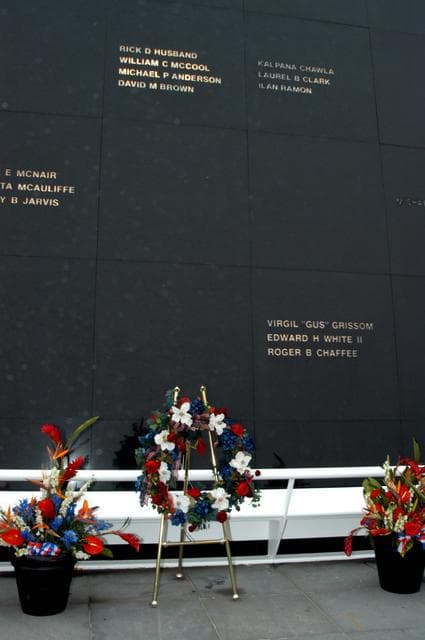
NASA image: KENNEDY SPACE CENTER, FLA. - A wreath and other floral arrangements rest beneath the Astronaut Memorial Mirror at the KSC Visitor Complex following a memorial service held for the crew of Columbia on the anniversary of the tragic accident that took their lives Feb. 1, 2003. The black granite mirror honors astronauts, whose names are carved in the surface, who have given their lives for space exploration.  The service included comments by Center Director Jim Kennedy, Deputy Director Woodrow Whitlow Jr., Executive Director of Florida Space Authority Winston Scott, and Dr. Stephen Feldman, president of the Astronaut Memorial Foundation, who placed the wreath at the mirror.
Image
Feb 1, 2004

KENNEDY SPACE CENTER, FLA. - A wreath and other floral arrangements rest beneath the Astronaut Memorial Mirror at the KSC Visitor Complex following a memorial service held for the crew of Columbia on the anniversary of the tragic accident that took their lives Feb. 1, 2003. The black granite mirror honors astronauts, whose names are carved in the surface, who have given their lives for space exploration.  The service included comments by Center Director Jim Kennedy, Deputy Director Woodrow Whitlow Jr., Executive Director of Florida Space Authority Winston Scott, and Dr. Stephen Feldman, president of the Astronaut Memorial Foundation, who placed the wreath at the mirror.

KENNEDY SPACE CENTER, FLA. - A wreath and other floral arrangements rest beneath the Astronaut Memorial Mirror at...
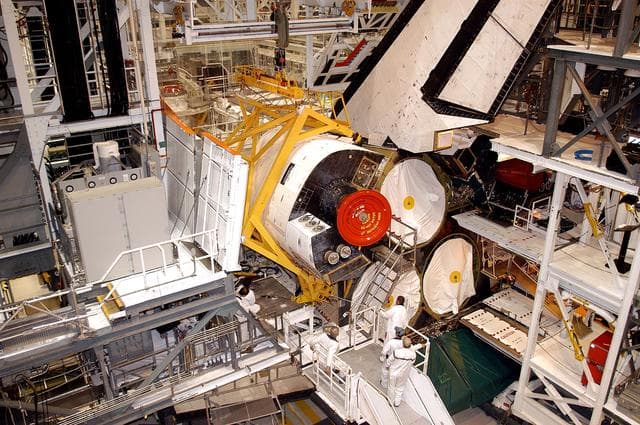
NASA image: KENNEDY SPACE CENTER, FLA. - In the Orbiter Processing Facility, an orbital maneuvering system (OMS) pod is moved into place on Atlantis.  It is one of two OMS pods attached to the upper aft fuselage left and right sides. Fabricated primarily of graphite epoxy composite and aluminum, each pod is 21.8 feet long and 11.37 feet wide at its aft end and 8.41 feet wide at its forward end, with a surface area of approximately 435 square feet. Each pod houses the Reaction Control System propulsion components used for inflight maneuvering and is attached to the aft fuselage with 11 bolts.
Image
Oct 30, 2003

KENNEDY SPACE CENTER, FLA. - In the Orbiter Processing Facility, an orbital maneuvering system (OMS) pod is moved into place on Atlantis. It is one of two OMS pods attached to the upper aft fuselage left and right sides. Fabricated primarily of graphite epoxy composite and aluminum, each pod is 21.8 feet long and 11.37 feet wide at its aft end and 8.41 feet wide at its forward end, with a surface area of approximately 435 square feet. Each pod houses the Reaction Control System propulsion components used for inflight maneuvering and is attached to the aft fuselage with 11 bolts.

KENNEDY SPACE CENTER, FLA. - In the Orbiter Processing Facility, an orbital maneuvering system (OMS) pod is moved...

KSC
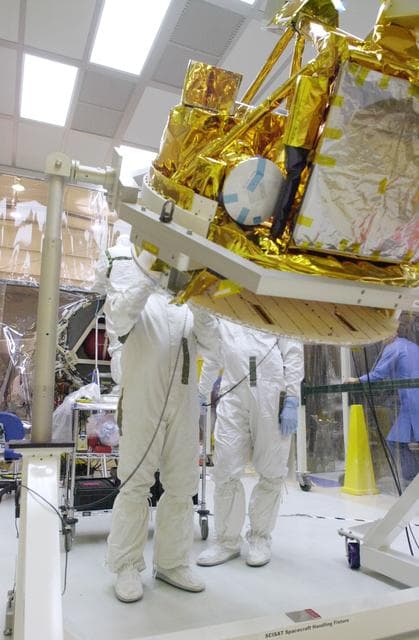
NASA image: VANDENBERG AIR FORCE BASE, CALIF. -  With its cover removed, the SciSat-1 spacecraft is rotated.  The solar arrays will be attached and the communications systems checked out.   The SciSat-1 weighs approximately 330 pounds and after launch will be placed in a 400-mile-high polar orbit to investigate processes that control the distribution of ozone in the upper atmosphere. The data from the satellite will provide Canadian and international scientists with improved measurements relating to global ozone processes and help policymakers assess existing environmental policy and develop protective measures for improving the health of our atmosphere, preventing further ozone depletion. The mission is designed to last two years.
Image
Jul 29, 2003

VANDENBERG AIR FORCE BASE, CALIF. - With its cover removed, the SciSat-1 spacecraft is rotated. The solar arrays will be attached and the communications systems checked out. The SciSat-1 weighs approximately 330 pounds and after launch will be placed in a 400-mile-high polar orbit to investigate processes that control the distribution of ozone in the upper atmosphere. The data from the satellite will provide Canadian and international scientists with improved measurements relating to global ozone processes and help policymakers assess existing environmental policy and develop protective measures for improving the health of our atmosphere, preventing further ozone depletion. The mission is designed to last two years.
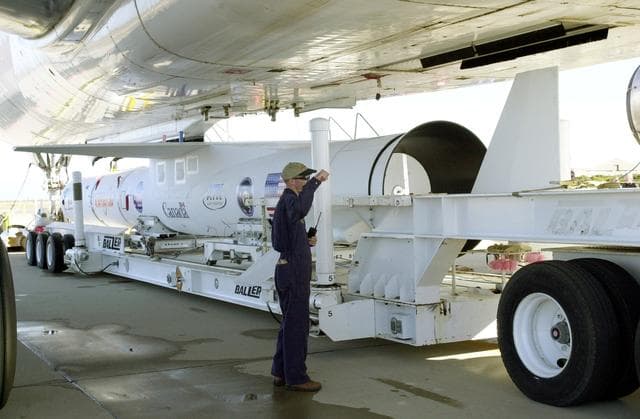
NASA image: VANDENBERG AIR FORCE BASE, CALIF. -  The Pegasus transporter, with its cargo of  the SciSat-1 payload and Pegasus launch vehicle, moves under the L-1011 carrier aircraft for matting.  The SciSat-1 weighs approximately 330 pounds and after launch will be placed in a 400-mile-high polar orbit to investigate processes that control the distribution of ozone in the upper atmosphere. The data from the satellite will provide Canadian and international scientists with improved measurements relating to global ozone processes and help policymakers assess existing environmental policy and develop protective measures for improving the health of our atmosphere, preventing further ozone depletion. The mission is designed to last two years.
Image
Aug 9, 2003

VANDENBERG AIR FORCE BASE, CALIF. - The Pegasus transporter, with its cargo of the SciSat-1 payload and Pegasus launch vehicle, moves under the L-1011 carrier aircraft for matting. The SciSat-1 weighs approximately 330 pounds and after launch will be placed in a 400-mile-high polar orbit to investigate processes that control the distribution of ozone in the upper atmosphere. The data from the satellite will provide Canadian and international scientists with improved measurements relating to global ozone processes and help policymakers assess existing environmental policy and develop protective measures for improving the health of our atmosphere, preventing further ozone depletion. The mission is designed to last two years.

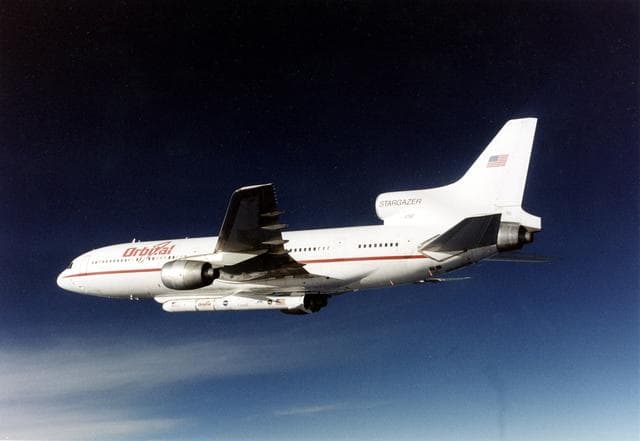
NASA image: VANDENBERG AIR FORCE BASE, CALIF. -  The L-1011 carrier aircraft is in flight with its cargo of the Pegasus launch vehicle and SciSat-1 spacecraft underneath.  The SciSat-1 weighs approximately 330 pounds and after launch will be placed in a 400-mile-high polar orbit to investigate processes that control the distribution of ozone in the upper atmosphere. The data from the satellite will provide Canadian and international scientists with improved measurements relating to global ozone processes and help policymakers assess existing environmental policy and develop protective measures for improving the health of our atmosphere, preventing further ozone depletion. The mission is designed to last two years.
Image
Aug 12, 2003

VANDENBERG AIR FORCE BASE, CALIF. - The L-1011 carrier aircraft is in flight with its cargo of the Pegasus launch vehicle and SciSat-1 spacecraft underneath. The SciSat-1 weighs approximately 330 pounds and after launch will be placed in a 400-mile-high polar orbit to investigate processes that control the distribution of ozone in the upper atmosphere. The data from the satellite will provide Canadian and international scientists with improved measurements relating to global ozone processes and help policymakers assess existing environmental policy and develop protective measures for improving the health of our atmosphere, preventing further ozone depletion. The mission is designed to last two years.

VANDENBERG AIR FORCE BASE, CALIF. - The L-1011 carrier aircraft is in flight with its cargo of the Pegasus launch...
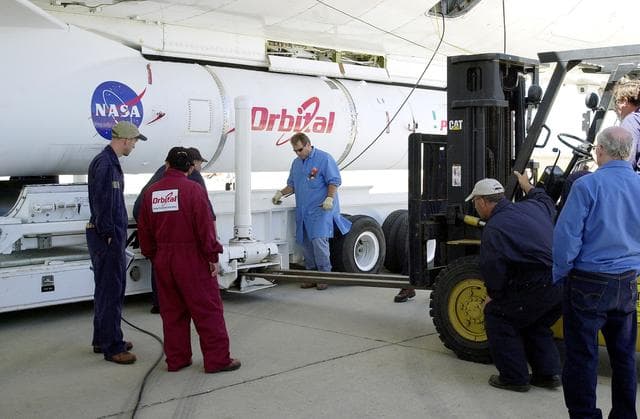
NASA image: VANDENBERG AIR FORCE BASE, CALIF. -  The SciSat-1 payload and Pegasus launch vehicle are lifted and mated to the L-1011 carrier aircraft.  The SciSat-1 weighs approximately 330 pounds and after launch will be placed in a 400-mile-high polar orbit to investigate processes that control the distribution of ozone in the upper atmosphere. The data from the satellite will provide Canadian and international scientists with improved measurements relating to global ozone processes and help policymakers assess existing environmental policy and develop protective measures for improving the health of our atmosphere, preventing further ozone depletion. The mission is designed to last two years.
Image
Aug 9, 2003

VANDENBERG AIR FORCE BASE, CALIF. - The SciSat-1 payload and Pegasus launch vehicle are lifted and mated to the L-1011 carrier aircraft. The SciSat-1 weighs approximately 330 pounds and after launch will be placed in a 400-mile-high polar orbit to investigate processes that control the distribution of ozone in the upper atmosphere. The data from the satellite will provide Canadian and international scientists with improved measurements relating to global ozone processes and help policymakers assess existing environmental policy and develop protective measures for improving the health of our atmosphere, preventing further ozone depletion. The mission is designed to last two years.

VANDENBERG AIR FORCE BASE, CALIF. - The SciSat-1 payload and Pegasus launch vehicle are lifted and mated to the...
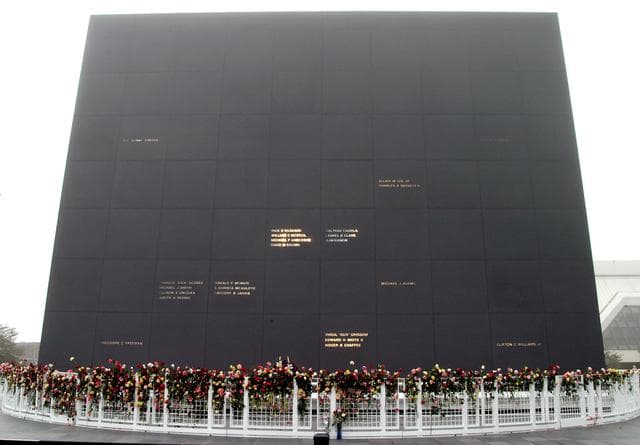
NASA image: KENNEDY SPACE CENTER, FLA. - Roses and other flowers ring the base of the Astronaut Memorial Mirror at the KSC Visitor Complex following a memorial service held for the crew of Columbia on the anniversary of the tragic accident that took their lives Feb. 1, 2003.  The public was invited to the service and encouraged to place the flowers on the fence.  The service included comments by Center Director Jim Kennedy, Deputy Director Woodrow Whitlow Jr., Executive Director of Florida Space Authority Winston Scott, and Dr. Stephen Feldman, president of the Astronaut Memorial Foundation.  The black granite mirror honors astronauts, whose names are carved in the surface, who have given their lives for space exploration.
Image
Feb 1, 2004

KENNEDY SPACE CENTER, FLA. - Roses and other flowers ring the base of the Astronaut Memorial Mirror at the KSC Visitor Complex following a memorial service held for the crew of Columbia on the anniversary of the tragic accident that took their lives Feb. 1, 2003.  The public was invited to the service and encouraged to place the flowers on the fence.  The service included comments by Center Director Jim Kennedy, Deputy Director Woodrow Whitlow Jr., Executive Director of Florida Space Authority Winston Scott, and Dr. Stephen Feldman, president of the Astronaut Memorial Foundation.  The black granite mirror honors astronauts, whose names are carved in the surface, who have given their lives for space exploration.

KENNEDY SPACE CENTER, FLA. - Roses and other flowers ring the base of the Astronaut Memorial Mirror at the KSC...
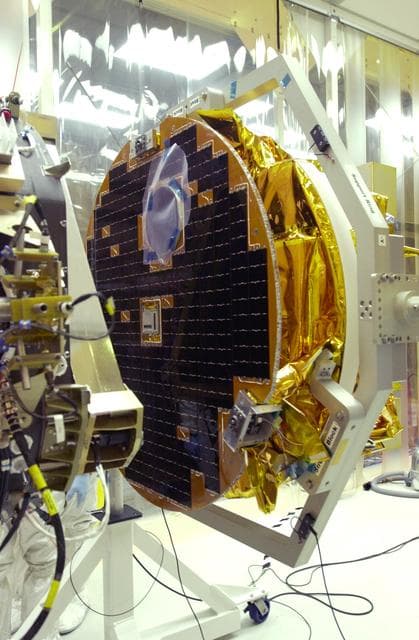
NASA image: VANDENBERG AIR FORCE BASE, CALIF. -  At Vandenberg AFB, Calif., a solar array is tested before installing on the SciSat-1 spacecraft.  The SciSat-1 weighs approximately 330 pounds and after launch will be placed in a 400-mile-high polar orbit to investigate processes that control the distribution of ozone in the upper atmosphere. The data from the satellite will provide Canadian and international scientists with improved measurements relating to global ozone processes and help policymakers assess existing environmental policy and develop protective measures for improving the health of our atmosphere, preventing further ozone depletion. The mission is designed to last two years.
Image
Jul 29, 2003

VANDENBERG AIR FORCE BASE, CALIF. - At Vandenberg AFB, Calif., a solar array is tested before installing on the SciSat-1 spacecraft. The SciSat-1 weighs approximately 330 pounds and after launch will be placed in a 400-mile-high polar orbit to investigate processes that control the distribution of ozone in the upper atmosphere. The data from the satellite will provide Canadian and international scientists with improved measurements relating to global ozone processes and help policymakers assess existing environmental policy and develop protective measures for improving the health of our atmosphere, preventing further ozone depletion. The mission is designed to last two years.

VANDENBERG AIR FORCE BASE, CALIF. - At Vandenberg AFB, Calif., a solar array is tested before installing on the...
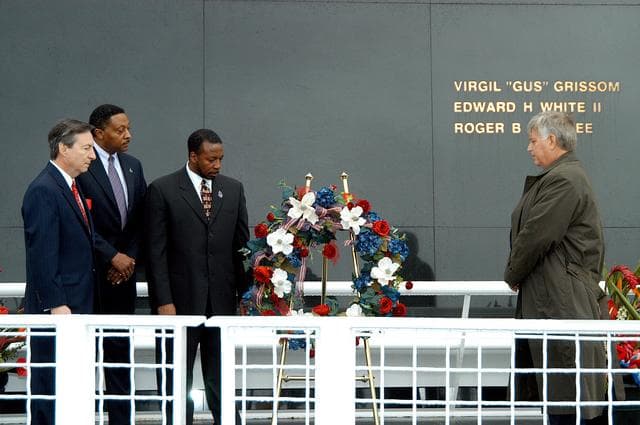
NASA image: KENNEDY SPACE CENTER, FLA. -  During a memorial service remembering and honoring the crew of Columbia, President of the Astronaut Memorial Foundation Dr. Stephen Feldman, Executive Director of Florida Space Authority Winston Scott, KSC Deputy Director Woodrow Whitlow Jr. and Center Director Jim Kennedy pause after placing a wreath in front of the Space Memorial Mirror.  Feb. 1 is the one-year anniversary of the loss of the crew and orbiter Columbia in a tragic accident as the ship returned to Earth following mission STS-107.  Scott is a former astronaut who flew on Columbia in 1997. The public was also invited to the memorial service.
Image
Feb 1, 2004

KENNEDY SPACE CENTER, FLA. - During a memorial service remembering and honoring the crew of Columbia, President of the Astronaut Memorial Foundation Dr. Stephen Feldman, Executive Director of Florida Space Authority Winston Scott, KSC Deputy Director Woodrow Whitlow Jr. and Center Director Jim Kennedy pause after placing a wreath in front of the Space Memorial Mirror. Feb. 1 is the one-year anniversary of the loss of the crew and orbiter Columbia in a tragic accident as the ship returned to Earth following mission STS-107. Scott is a former astronaut who flew on Columbia in 1997. The public was also invited to the memorial service.

KENNEDY SPACE CENTER, FLA. - During a memorial service remembering and honoring the crew of Columbia, President of...

PreviousPage 56 of 100Next

Frequently Asked Questions About NASA Images

Are NASA images free to use?+
Yes, most NASA images are in the public domain and are free to use for educational, informational, and personal purposes. NASA's media usage guidelines state that NASA material is not copyrighted unless otherwise noted. However, the NASA logo and certain insignia are protected. Some images may include identifiable individuals or third-party content that requires additional permissions. Always check the specific image's usage rights and credit NASA as the source.
How many images does NASA have?+
NASA's Image and Video Library contains over 140,000 publicly accessible images, videos, and audio files spanning the agency's entire history, from the Mercury program of the 1960s to the latest James Webb Space Telescope discoveries. The collection grows daily as new missions capture imagery and archival materials are digitized. Individual mission archives, such as Mars rover photos, contain hundreds of thousands of additional images.
Can I download NASA images?+
Yes, you can download NASA images in multiple resolutions directly from this gallery. Each image detail page provides download links for original (full resolution), large (1920px), medium (960px), small (480px), and thumbnail sizes. NASA encourages the public to use these images for education, media, and personal projects. High-resolution originals are ideal for printing and professional use.

Explore More NASA Content

Astronomy Picture of the Day

Daily curated space image

Mars Rover Photos

Curiosity & Perseverance images

Earth from Space

DSCOVR EPIC daily images

Launch Schedule

Upcoming rocket launches

Space News

Mission updates & discoveries

VANDENBERG AIR FORCE BASE, CALIF.- At Vandenberg Air Force Base, Calif., spacecraft functional testing is underway...

KSC
KSC

VANDENBERG AIR FORCE BASE, CALIF.- The cover is being lifted off SciSat-1 spacecraft at Vandenberg Air Force Base,...

KSC
KSC

KENNEDY SPACE CENTER, FLA. - Hundreds of guests attend a ribbon cutting ceremony officially opening the U.S....

KSC

VANDENBERG AIR FORCE BASE, CALIF.- At Vandenberg Air Force Base, Calif., spacecraft functional testing is underway...

KSC

VANDENBERG AIR FORCE BASE, CALIF.- A covered SciSat-1 spacecraft sits on a test stand at Vandenberg Air Force Base,...

KSC

VANDENBERG AIR FORCE BASE, CALIF.- At Vandenberg Air Force Base, Calif., spacecraft functional testing is underway...

KSC
KSC
KSC

VANDENBERG AIR FORCE BASE, CALIF.- The covered SciSat-1 spacecraft is lowered onto a test stand at Vandenberg Air...

KSC

VANDENBERG AIR FORCE BASE, CALIF.- At Vandenberg Air Force Base, Calif., spacecraft functional testing is underway...

KSC

KENNEDY SPACE CENTER, FLA. - The Window Observational Research Facility (WORF), seen in the Space Station Processing...

KSC
KSC

VANDENBERG AIR FORCE BASE, CALIF. - With its cover removed, the SciSat-1 spacecraft is rotated. The solar arrays...

KSC

VANDENBERG AIR FORCE BASE, CALIF. - The Pegasus transporter, with its cargo of the SciSat-1 payload and Pegasus...

KSC
KSC
KSC
KSC
KSC
KSC