CosmosObservatory
Explore
Solar System
Live
Learn
Tools
About
Cosmos Observatory
ToolsAbout
Cosmos Observatory

Explore the universe through NASA data, real-time ISS tracking, Mars rover imagery, asteroid monitoring, and comprehensive space encyclopedia. Your gateway to the cosmos.

Explore

  • APOD
  • Mars Rovers
  • Earth Imagery
  • NASA Gallery
  • ISS Tracker

Data

  • Asteroids
  • Solar System
  • Exoplanets
  • Space Weather
  • Launches

Tools

  • Glossary
  • News
  • Calculators

Legal

  • About
  • Privacy Policy
  • Terms of Use
  • Space Tools
  • Contact

Stay updated with the cosmos

Get weekly digests of APOD highlights, upcoming launches, and space events.

© 2026 Cosmos Observatory. All rights reserved. Built with for space enthusiasts.

This website is not affiliated with, maintained, authorized, endorsed by, or in any way officially connected with NASA or any of its subsidiaries or affiliates. All NASA imagery is in the public domain unless otherwise noted. Data sourced from NASA Open APIs, Launch Library 2, and other open data services.

NASA Gallery

Explore NASA's vast collection of space images, videos, and audio from missions past and present.

  1. Home
  2. /
  3. NASA Gallery

NASA's Image and Video Library: A Visual Archive of Space Exploration

NASA's Image and Video Library is one of the most comprehensive public archives of space imagery in the world, containing over 140,000 images, videos, and audio recordings spanning more than six decades of space exploration. From the earliest Mercury and Gemini missions through the Apollo Moon landings, the Space Shuttle era, and today's cutting-edge observations from the James Webb Space Telescope, this collection documents humanity's journey into the cosmos.

The library includes imagery from diverse sources: telescopes like Hubble and Webb that capture deep-space nebulae, galaxies, and exoplanets; planetary missions like the Mars rovers ( browse Mars photos) and Cassini at Saturn; Earth observation satellites ( see EPIC imagery); astronaut photography from the ISS; and documentation of rocket launches, spacecraft assembly, and ground testing. Most NASA images are in the public domain and free to download at full resolution for educational, editorial, and personal use.

Use the search bar above to find specific subjects — try queries like "Apollo 11," "Hubble Deep Field," "Mars surface," or "astronaut EVA." You can also filter by media type (image, video, or audio). For a daily curated experience, visit the Astronomy Picture of the Day.

Showing results for "research projects"

2,679 results found - Page 53 of 112

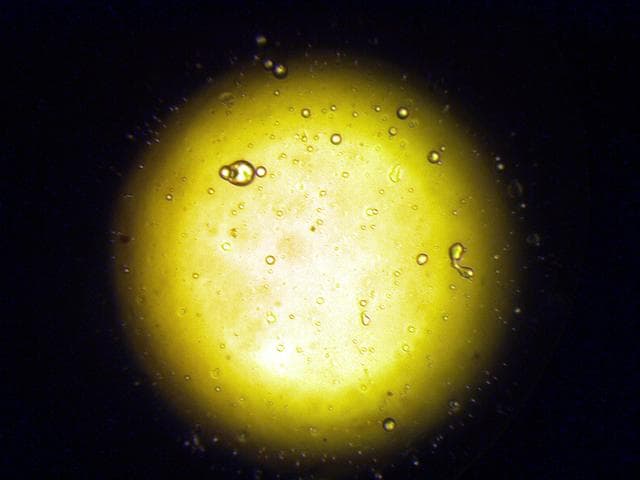
NASA image: KSC-03pd1449
Image
May 6, 2003

KSC-03pd1449

KENNEDY SPACE CENTER, FLA. - Pictured is one of the microcapsules removed from the Commercial ITA Biomedical...

KSC
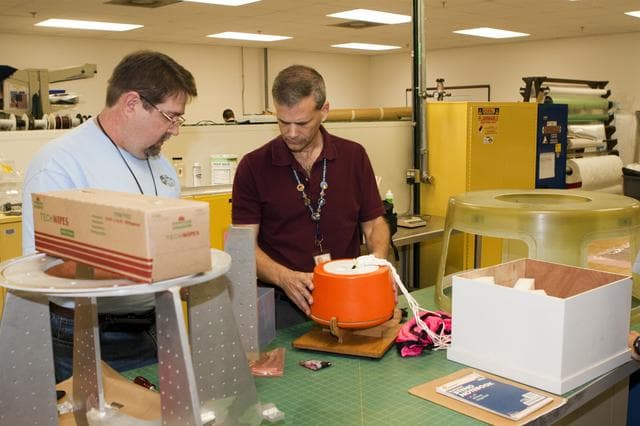
NASA image: KSC-2012-4033
Image
Jul 24, 2012

KSC-2012-4033

CAPE CANAVERAL, Fla. – Mike Lane, left, and Paul Paulick, both participants in the Rocket University program,...

KSC
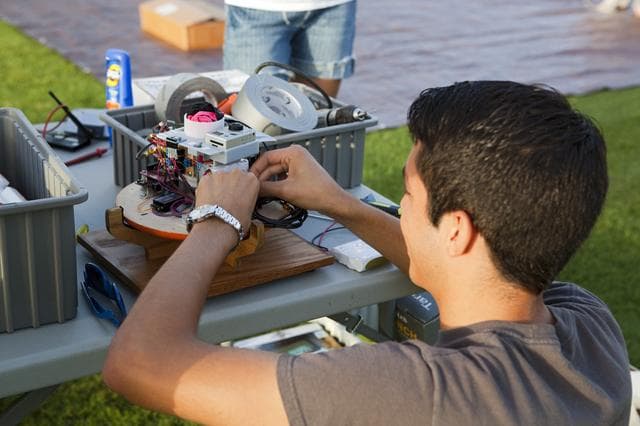
NASA image: KSC-2012-4045
Image
Jul 24, 2012

KSC-2012-4045

CAPE CANAVERAL, Fla. – Alejandro Azocar, a Rocket University participant, prepares an instrument package to launch...

KSC
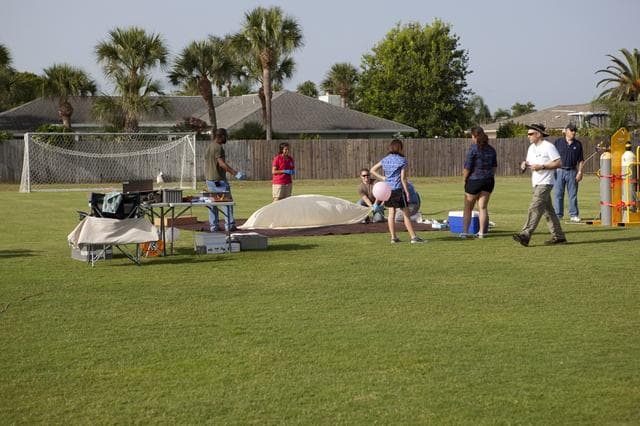
NASA image: KSC-2012-4049
Image
Jul 24, 2012

KSC-2012-4049

CAPE CANAVERAL, Fla. – Rocket University participants prepare to launch a high-altitude balloon flight and...

KSC
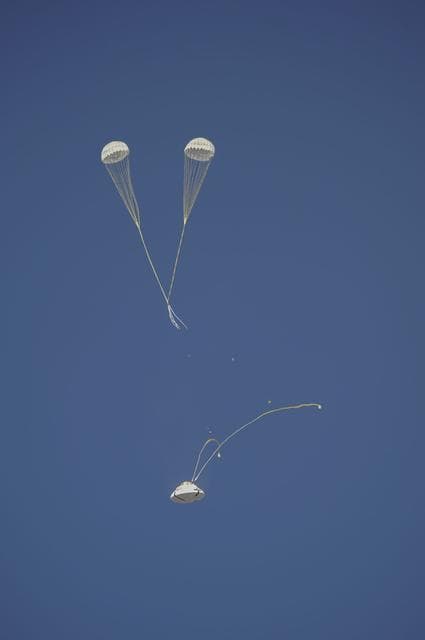
NASA image: NASA Aerial Photographer Completes 1,000th Flight
Image
Jul 18, 2012

NASA Aerial Photographer Completes 1,000th Flight

The Orion parachute system enters another phase of its descent after an air launch from a C-17 aircraft on...

AFRC
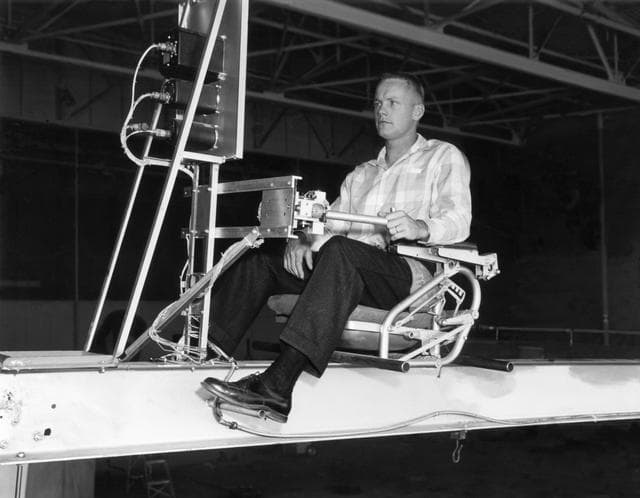
NASA image: E56-2607
Image
Oct 8, 1956

E56-2607

Famed astronaut Neil A. Armstrong, the first man to set foot on the moon during the historic Apollo 11 space mission...

AFRC
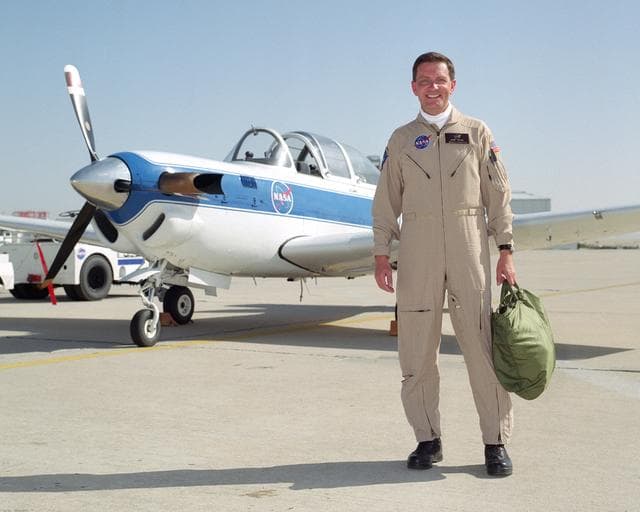
NASA image: Research pilot Mark Pestana
Image
Apr 16, 2001

Research pilot Mark Pestana

Mark Pestana is a research pilot and project manager at the NASA Dryden Flight Research Center, Edwards, Calif. He...

AFRC
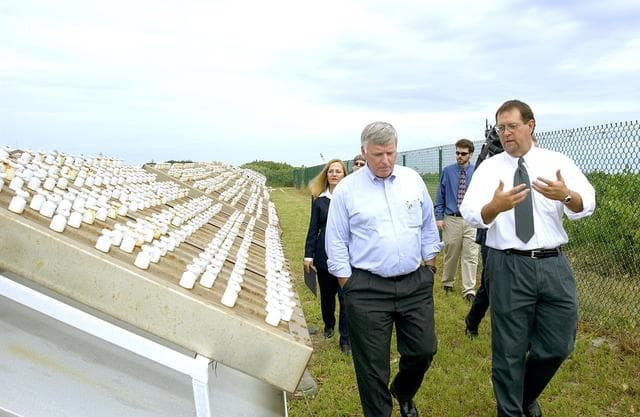
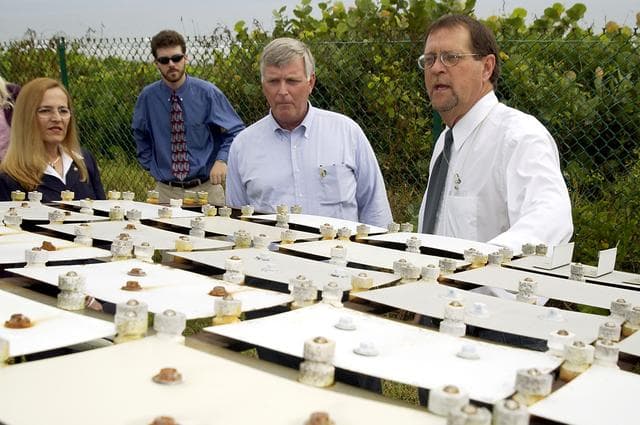
NASA image: KENNEDY SPACE CENTER, FLA. -   On a tour of the KSC Beach Corrosion Test Site, Louis MacDowell (right), Testbed manager, explains to Center Director Jim Kennedy a project being undertaken for the U.S. Navy.  At left are nonchrome primers for aircraft being studied.  Behind Kennedy is Lead Scientist Dr. Luz Marina Calle.  Behind MacDowell is Dr. Paul Hintze, who is working on a graduate project for the National Research Council.  The KSC Beach Corrosion Test Site was established in the 1960s and has provided more than 30 years of historical information on the long-term performance of many materials in use at KSC and other locations around the world. Located 100 feet from the Atlantic Ocean approximately 1 mile south of the Space Shuttle launch sites, the test facility includes an atmospheric exposure site, a flowing seawater exposure site, and an on-site electrochemistry laboratory and monitoring station. The beach laboratory is used to conduct real-time corrosion experiments and provides for the remote monitoring of surrounding weather conditions. The newly added flowing seawater immersion facility provides for the immersion testing of materials and devices under controlled conditions.
Image
Aug 21, 2003

KENNEDY SPACE CENTER, FLA. - On a tour of the KSC Beach Corrosion Test Site, Louis MacDowell (right), Testbed manager, explains to Center Director Jim Kennedy a project being undertaken for the U.S. Navy. At left are nonchrome primers for aircraft being studied. Behind Kennedy is Lead Scientist Dr. Luz Marina Calle. Behind MacDowell is Dr. Paul Hintze, who is working on a graduate project for the National Research Council. The KSC Beach Corrosion Test Site was established in the 1960s and has provided more than 30 years of historical information on the long-term performance of many materials in use at KSC and other locations around the world. Located 100 feet from the Atlantic Ocean approximately 1 mile south of the Space Shuttle launch sites, the test facility includes an atmospheric exposure site, a flowing seawater exposure site, and an on-site electrochemistry laboratory and monitoring station. The beach laboratory is used to conduct real-time corrosion experiments and provides for the remote monitoring of surrounding weather conditions. The newly added flowing seawater immersion facility provides for the immersion testing of materials and devices under controlled conditions.
NASA image: KENNEDY SPACE CENTER, FLA. -   On a tour of the KSC Beach Corrosion Test Site, Center Director Jim Kennedy (second from right) learns from Testbed Manager Louis MacDowell (right) about a project being undertaken for the U.S. Navy.  Being studied are nonchrome primers for aircraft.  At left are Lead Scientist Dr. Luz Marina Calle and  Dr. Paul Hintze, who is working on a graduate project for the National Research Council.  The KSC Beach Corrosion Test Site was established in the 1960s and has provided more than 30 years of historical information on the long-term performance of many materials in use at KSC and other locations around the world. Located 100 feet from the Atlantic Ocean approximately 1 mile south of the Space Shuttle launch sites, the test facility includes an atmospheric exposure site, a flowing seawater exposure site, and an on-site electrochemistry laboratory and monitoring station. The beach laboratory is used to conduct real-time corrosion experiments and provides for the remote monitoring of surrounding weather conditions. The newly added flowing seawater immersion facility provides for the immersion testing of materials and devices under controlled conditions.
Image
Aug 21, 2003

KENNEDY SPACE CENTER, FLA. - On a tour of the KSC Beach Corrosion Test Site, Center Director Jim Kennedy (second from right) learns from Testbed Manager Louis MacDowell (right) about a project being undertaken for the U.S. Navy. Being studied are nonchrome primers for aircraft. At left are Lead Scientist Dr. Luz Marina Calle and Dr. Paul Hintze, who is working on a graduate project for the National Research Council. The KSC Beach Corrosion Test Site was established in the 1960s and has provided more than 30 years of historical information on the long-term performance of many materials in use at KSC and other locations around the world. Located 100 feet from the Atlantic Ocean approximately 1 mile south of the Space Shuttle launch sites, the test facility includes an atmospheric exposure site, a flowing seawater exposure site, and an on-site electrochemistry laboratory and monitoring station. The beach laboratory is used to conduct real-time corrosion experiments and provides for the remote monitoring of surrounding weather conditions. The newly added flowing seawater immersion facility provides for the immersion testing of materials and devices under controlled conditions.

NASA image: X-57 Mod II Vehicle Delivered to NASA Armstrong
Image
Oct 2, 2019

X-57 Mod II Vehicle Delivered to NASA Armstrong

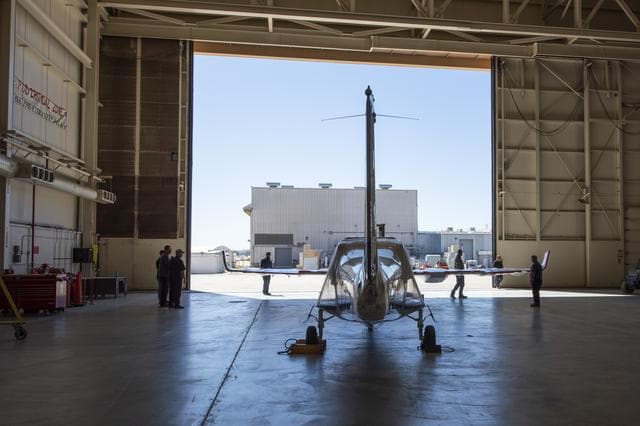
NASA’s X-57 Maxwell, the agency’s first all-electric X-plane and first crewed X-planed in two decades, is delivered...

AFRC
NASA image: X-57 Mod II Vehicle Delivered to NASA Armstrong
Image
Oct 2, 2019

X-57 Mod II Vehicle Delivered to NASA Armstrong

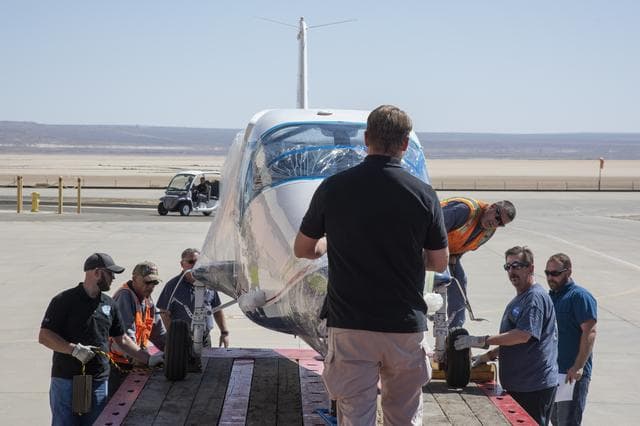
NASA's X-57 Maxwell, the agency's first all-electric X-plane and first crewed X-planed in two decades, is delivered...

AFRC
NASA image: KSC-2009-6454
Image
Nov 19, 2009

KSC-2009-6454

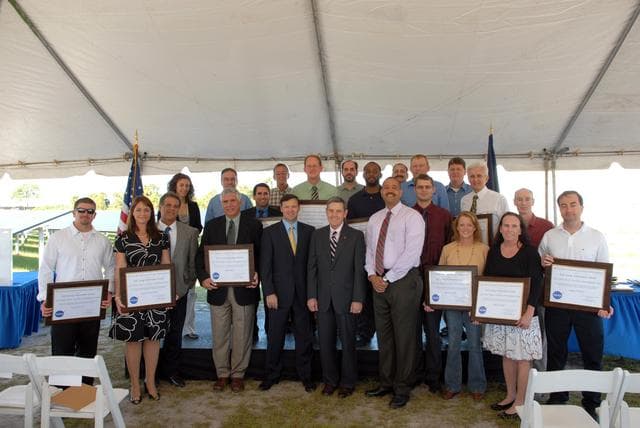
CAPE CANAVERAL, Fla. – At NASA's Kennedy Space Center in Florida, recipients of a NASA Team Award for their parts in...

KSC
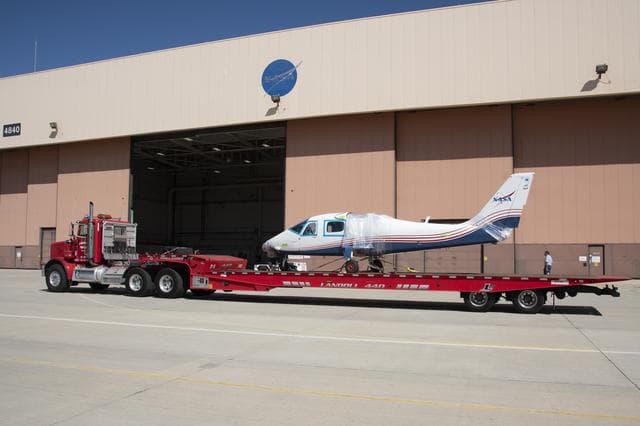
NASA image: X-57 Mod II Vehicle Delivered to NASA Armstrong
Image
Oct 2, 2019

X-57 Mod II Vehicle Delivered to NASA Armstrong

NASA's X-57 Maxwell, the agency's first all-electric X-plane and first crewed X-planed in two decades, is delivered...

AFRC
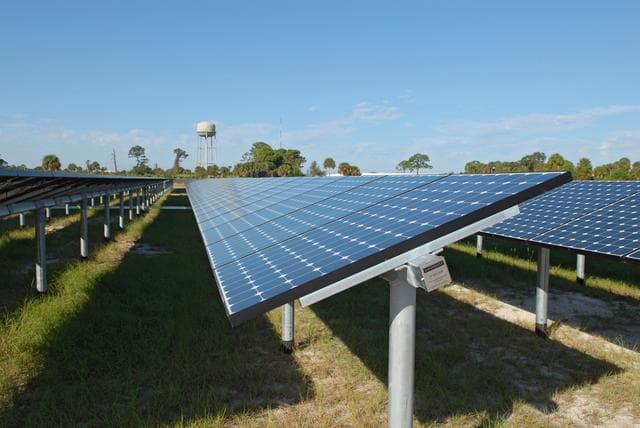
NASA image: KSC-2009-6449
Image
Nov 19, 2009

KSC-2009-6449

CAPE CANAVERAL, Fla. – NASA's first large-scale solar power generation facility is unveiled at NASA's Kennedy Space...

KSC
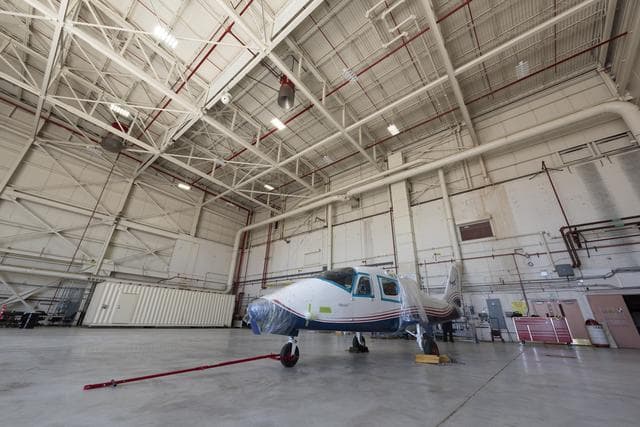
NASA image: X-57 Mod II Vehicle Delivered to NASA Armstrong
Image
Oct 2, 2019

X-57 Mod II Vehicle Delivered to NASA Armstrong

NASA's X-57 Maxwell, the agency's first all-electric X-plane and first crewed X-planed in two decades, is delivered...

AFRC
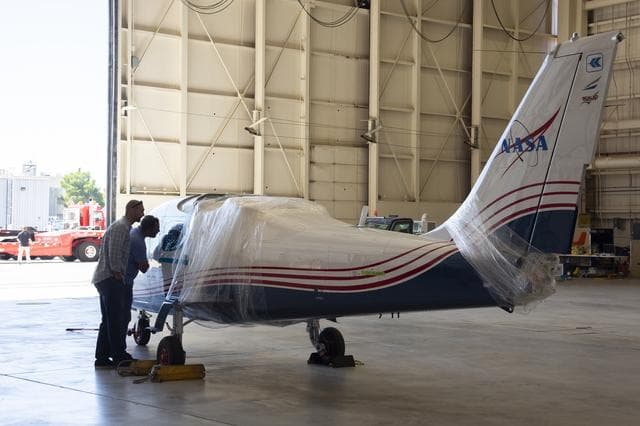
NASA image: X-57 Mod II Vehicle Delivered to NASA Armstrong
Image
Oct 2, 2019

X-57 Mod II Vehicle Delivered to NASA Armstrong

NASA's X-57 Maxwell, the agency's first all-electric X-plane and first crewed X-planed in two decades, is delivered...

AFRC
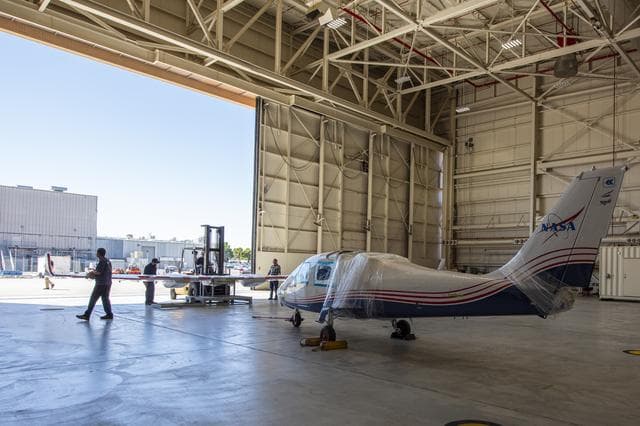
NASA image: X-57 Mod II Vehicle Delivered to NASA Armstrong
Image
Oct 2, 2019

X-57 Mod II Vehicle Delivered to NASA Armstrong

NASA’s X-57 Maxwell, the agency’s first all-electric X-plane and first crewed X-planed in two decades, is delivered...

AFRC
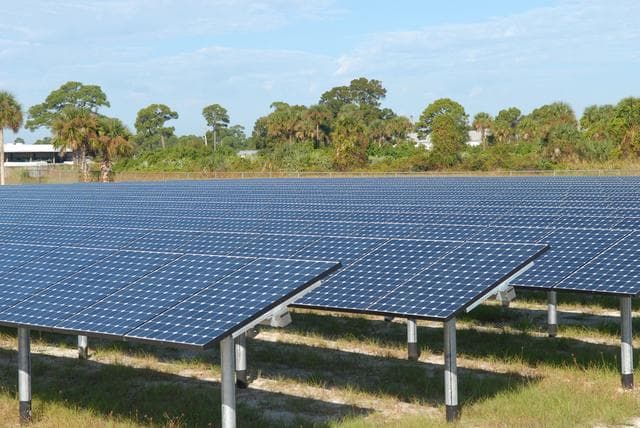
NASA image: KSC-2009-6450
Image
Nov 19, 2009

KSC-2009-6450

CAPE CANAVERAL, Fla. – NASA's first large-scale solar power generation facility opens at NASA's Kennedy Space Center...

KSC
NASA image: Science Verification Test Harvest
Image
Sep 30, 2019

Science Verification Test Harvest

Kennedy Space Center Veggie Project Manager Trent Smith harvests test crops inside the Veggie growth chamber in the...

KSC
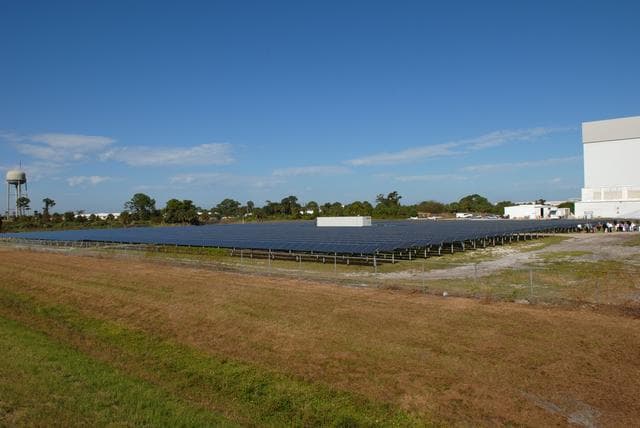
NASA image: KSC-2009-6457
Image
Nov 19, 2009

KSC-2009-6457

CAPE CANAVERAL, Fla. – NASA's first large-scale solar power generation facility is ready for operation at NASA's...

KSC
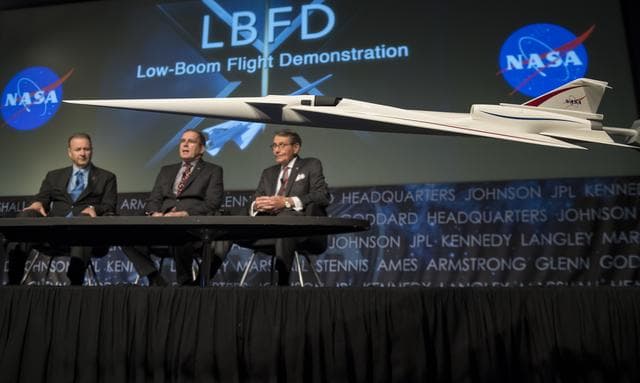
NASA image: Low Boom Flight Demonstrator Briefing
Image
Apr 3, 2018

Low Boom Flight Demonstrator Briefing

Panelists Peter Iosifidis, program manager, Low-Boom Flight Demonstrator, Lockheed Martin Skunk Works, left, Peter...

HQ
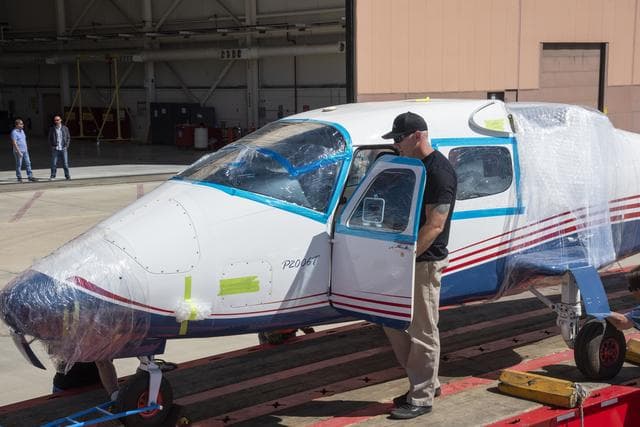
NASA image: X-57 Mod II Vehicle Delivered to NASA Armstrong
Image
Oct 2, 2019

X-57 Mod II Vehicle Delivered to NASA Armstrong

NASA's X-57 Maxwell, the agency's first all-electric X-plane and first crewed X-planed in two decades, is delivered...

AFRC
NASA image: STEM Mentor Breakfast at Debus Center
Image
May 25, 2017

STEM Mentor Breakfast at Debus Center

Barbara Brown, center at the table, strategic implementation manager with the Exploration Research and Technology...

KSC
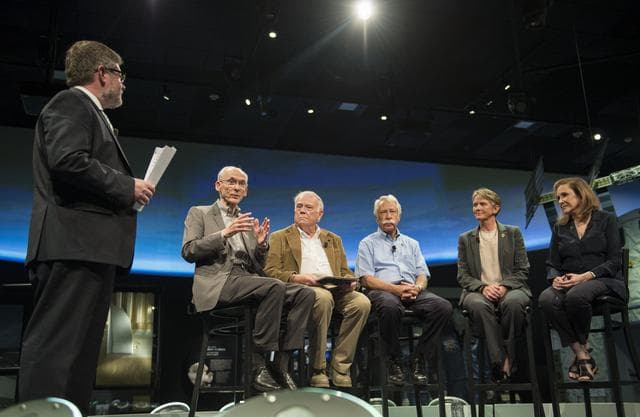
NASA image: Voyager 40th Anniversary at Air and Space Museum
Image
Sep 5, 2017

Voyager 40th Anniversary at Air and Space Museum

Matthew Shindell, curator, Smithsonian National Air and Space Museum (NASM), far left, moderates a panel including,...

HQ
PreviousPage 53 of 100Next

Frequently Asked Questions About NASA Images

Are NASA images free to use?+
Yes, most NASA images are in the public domain and are free to use for educational, informational, and personal purposes. NASA's media usage guidelines state that NASA material is not copyrighted unless otherwise noted. However, the NASA logo and certain insignia are protected. Some images may include identifiable individuals or third-party content that requires additional permissions. Always check the specific image's usage rights and credit NASA as the source.
How many images does NASA have?+
NASA's Image and Video Library contains over 140,000 publicly accessible images, videos, and audio files spanning the agency's entire history, from the Mercury program of the 1960s to the latest James Webb Space Telescope discoveries. The collection grows daily as new missions capture imagery and archival materials are digitized. Individual mission archives, such as Mars rover photos, contain hundreds of thousands of additional images.
Can I download NASA images?+
Yes, you can download NASA images in multiple resolutions directly from this gallery. Each image detail page provides download links for original (full resolution), large (1920px), medium (960px), small (480px), and thumbnail sizes. NASA encourages the public to use these images for education, media, and personal projects. High-resolution originals are ideal for printing and professional use.

Explore More NASA Content

Astronomy Picture of the Day

Daily curated space image

Mars Rover Photos

Curiosity & Perseverance images

Earth from Space

DSCOVR EPIC daily images

Launch Schedule

Upcoming rocket launches

Space News

Mission updates & discoveries

KENNEDY SPACE CENTER, FLA. - On a tour of the KSC Beach Corrosion Test Site, Louis MacDowell (right), Testbed...

KSC

KENNEDY SPACE CENTER, FLA. - On a tour of the KSC Beach Corrosion Test Site, Center Director Jim Kennedy (second...

KSC