CosmosObservatory
Explore
Solar System
Live
Learn
Tools
About
Cosmos Observatory
ToolsAbout
Cosmos Observatory

Explore the universe through NASA data, real-time ISS tracking, Mars rover imagery, asteroid monitoring, and comprehensive space encyclopedia. Your gateway to the cosmos.

Explore

  • APOD
  • Mars Rovers
  • Earth Imagery
  • NASA Gallery
  • ISS Tracker

Data

  • Asteroids
  • Solar System
  • Exoplanets
  • Space Weather
  • Launches

Tools

  • Glossary
  • News
  • Calculators

Legal

  • About
  • Privacy Policy
  • Terms of Use
  • Space Tools
  • Contact

Stay updated with the cosmos

Get weekly digests of APOD highlights, upcoming launches, and space events.

© 2026 Cosmos Observatory. All rights reserved. Built with for space enthusiasts.

This website is not affiliated with, maintained, authorized, endorsed by, or in any way officially connected with NASA or any of its subsidiaries or affiliates. All NASA imagery is in the public domain unless otherwise noted. Data sourced from NASA Open APIs, Launch Library 2, and other open data services.

NASA Gallery

Explore NASA's vast collection of space images, videos, and audio from missions past and present.

  1. Home
  2. /
  3. NASA Gallery

NASA's Image and Video Library: A Visual Archive of Space Exploration

NASA's Image and Video Library is one of the most comprehensive public archives of space imagery in the world, containing over 140,000 images, videos, and audio recordings spanning more than six decades of space exploration. From the earliest Mercury and Gemini missions through the Apollo Moon landings, the Space Shuttle era, and today's cutting-edge observations from the James Webb Space Telescope, this collection documents humanity's journey into the cosmos.

The library includes imagery from diverse sources: telescopes like Hubble and Webb that capture deep-space nebulae, galaxies, and exoplanets; planetary missions like the Mars rovers ( browse Mars photos) and Cassini at Saturn; Earth observation satellites ( see EPIC imagery); astronaut photography from the ISS; and documentation of rocket launches, spacecraft assembly, and ground testing. Most NASA images are in the public domain and free to download at full resolution for educational, editorial, and personal use.

Use the search bar above to find specific subjects — try queries like "Apollo 11," "Hubble Deep Field," "Mars surface," or "astronaut EVA." You can also filter by media type (image, video, or audio). For a daily curated experience, visit the Astronomy Picture of the Day.

Showing results for "FRAMES"

4,765 results found - Page 47 of 199

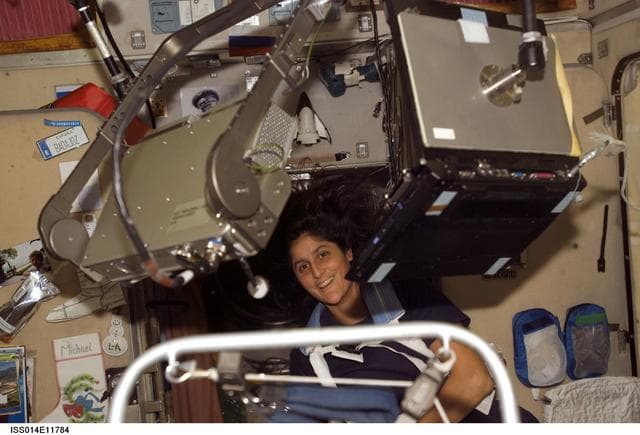
NASA image: Williams Exercises in Zvezda
Image
Jan 13, 2007

Williams Exercises in Zvezda

ISS014-E-11784 (13 Jan. 2007) --- Surrounded by hardware, astronaut Sunita L. Williams, Expedition 14 flight...

JSC

NASA image: Earth Observation
Image
Jul 29, 2013

Earth Observation

ISS036-E-025984 (29 July 2013) --- One of the Expedition 36 crew members aboard the Earth-orbiting International...

JSC
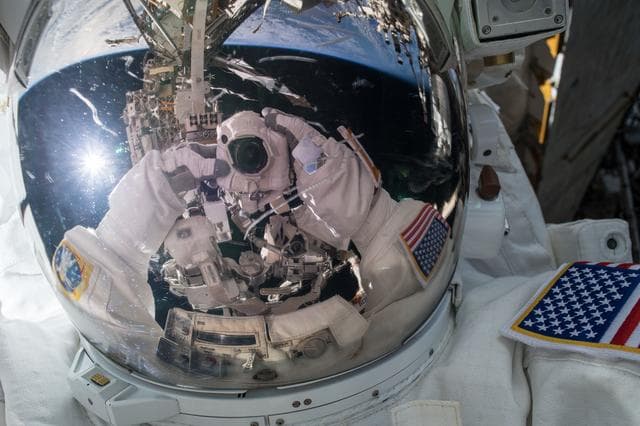
NASA image: iss055e006349
Image
Mar 29, 2018

iss055e006349

iss055e006349 (March 29, 2018) --- NASA astronaut Ricky Arnold takes an out of this world "space-selfie" during a...

JSC
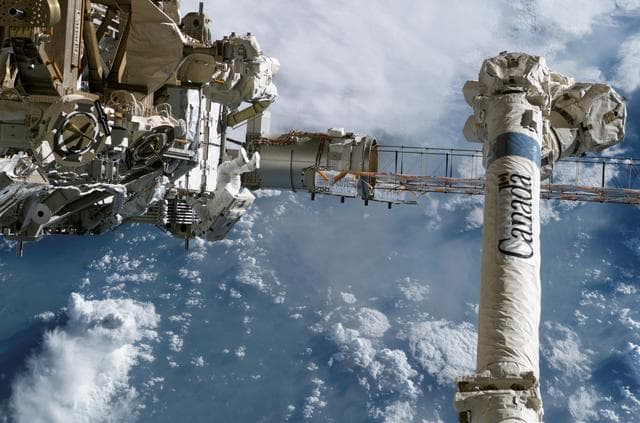
NASA image: STS-115 MS Stefanyshyn-Piper releases PVR cinches and winch PIP pins on the P3/P4 Truss during EVA
Image
Sep 15, 2006

STS-115 MS Stefanyshyn-Piper releases PVR cinches and winch PIP pins on the P3/P4 Truss during EVA

S115-E-06123 (15 Sept. 2006) --- Astronauts Heidemarie M. Stefanyshyn-Piper (center left) and Joseph R. Tanner (out...

JSC
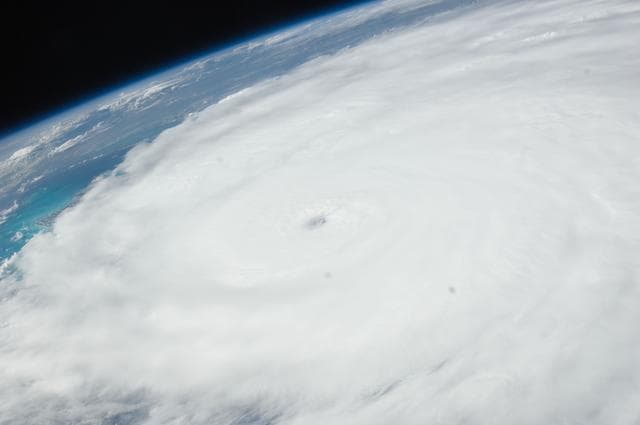
NASA image: Earth observation taken by the Expedition 28 crew
Image
Aug 24, 2011

Earth observation taken by the Expedition 28 crew

ISS028-E-031903 (24 Aug. 2011) --- This photo of Hurricane Irene was photographed from onboard the International...

JSC
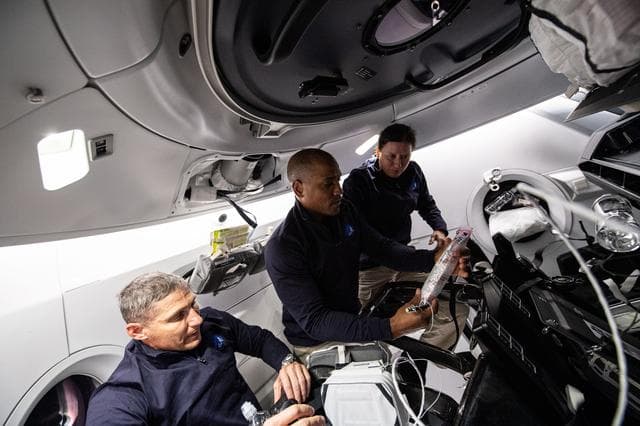
NASA image: iss064e004754
Image
Nov 16, 2020

iss064e004754

iss064e004754 (Nov. 16, 2020) --- NASA astronauts (from left) Michael Hopkins, Victor Glover and Shannon Walker work...

JSC
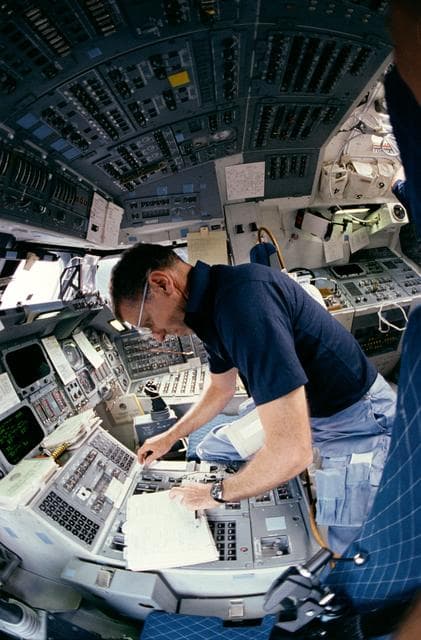
NASA image: STS-51I crew activities
Image
Jul 5, 2000

STS-51I crew activities

51I-13-024 (2 Sept. 1985) --- Astronaut Joe H. Engle, STS51-I commander, is seen in a 35mm frame exposed with a...

JSC
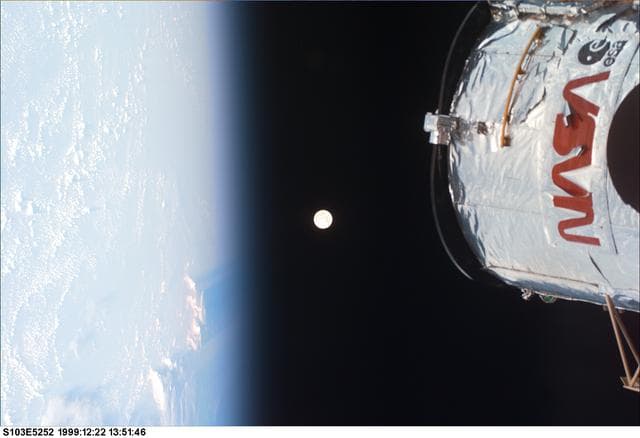
NASA image: View of the Moon, Earth and the HST
Image
Dec 22, 1999

View of the Moon, Earth and the HST

S103-E-5252 (22 December 1999) --- One of the STS-103 astronauts inside Discovery's cabin took this electronic still...

JSC
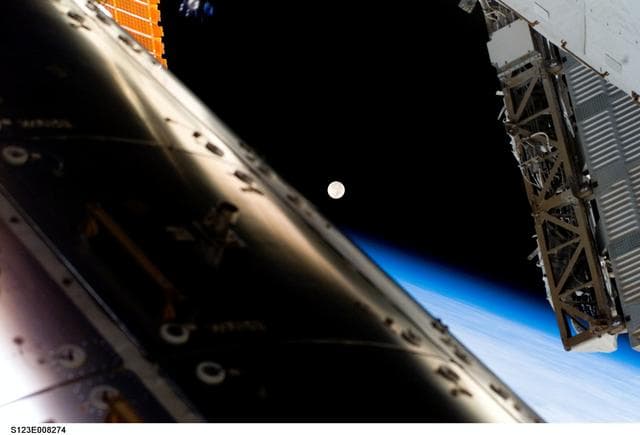
NASA image: Earth Observation taken by STS-123 Crewmember during Joint Operations
Image
Mar 21, 2008

Earth Observation taken by STS-123 Crewmember during Joint Operations

S123-E-008274 (21 March 2008) --- Framed by components of the International Space Station, a full moon is visible in...

JSC
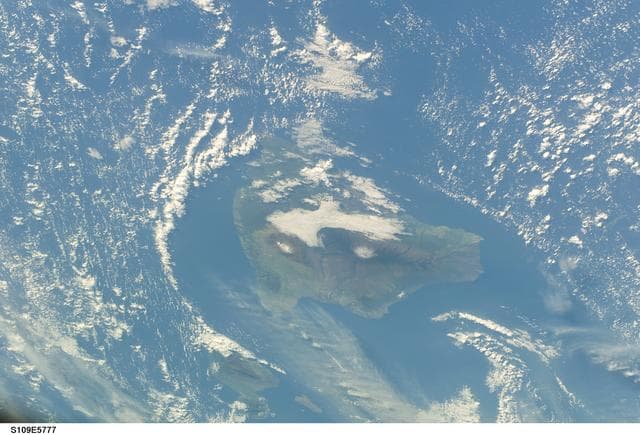
NASA image: Hawaiian Islands taken by the STS-109 crew
Image
Mar 7, 2002

Hawaiian Islands taken by the STS-109 crew

STS109-E-5777 (7 March 2002) --- The main island of Hawaii is at frame center of this digital still camera's view...

JSC
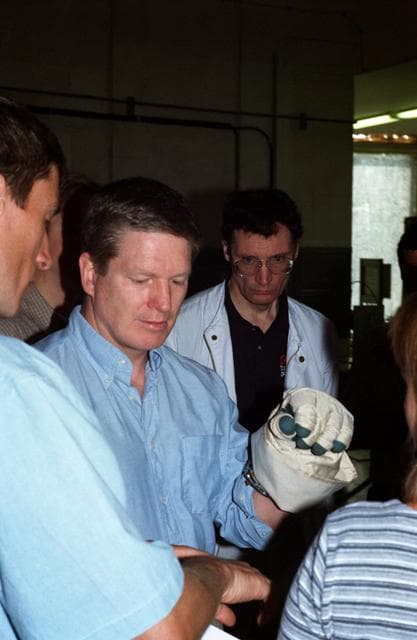
NASA image: Expedition 1 training
Image
Jul 26, 2000

Expedition 1 training

JSC2000-05378 (June 2000) --- Astronaut William Shepherd, mission commander for ISS Expedition One, checks out a...

JSC
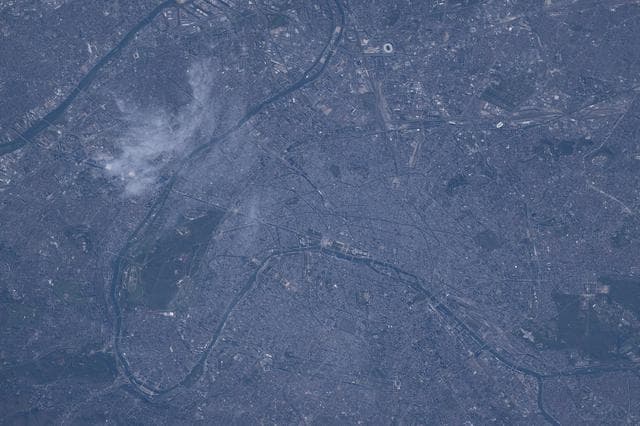
NASA image: Paris, France, split by the river Seine
Image
Apr 4, 2026

Paris, France, split by the river Seine

iss074e0437596 (April 4, 2026) --- Paris, France, split by the river Seine and with a metropolitan population of...

JSC
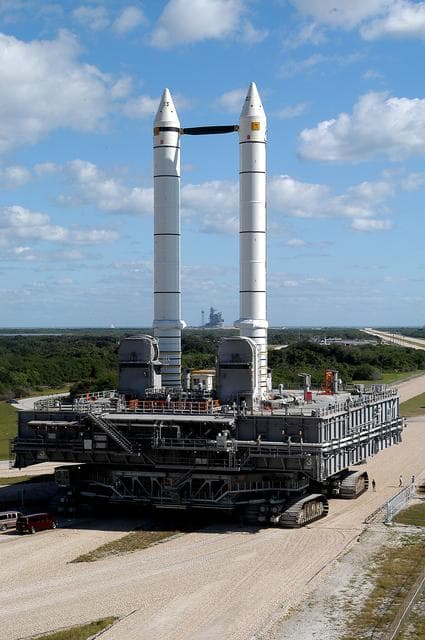
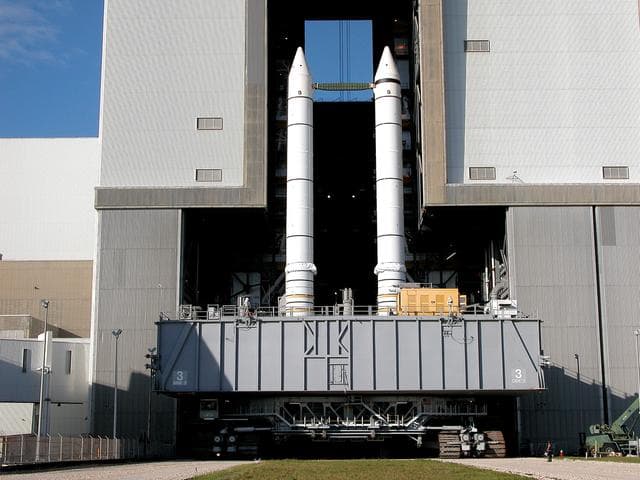
NASA image: KENNEDY SPACE CENTER, FLA. -  Mobile Launcher Platform (MLP) number 3 and a set of twin solid rocket boosters, atop the crawler-transporter, inch along the crawlerway in support of the second engineering analysis vibration test on the crawler and MLP. The crawler is moving at various speeds up to 1 mph in an effort to achieve vibration data gathering goals as it leaves the VAB, travels toward Launch Pad 39A (framed between the boosters), and then returns.  The boosters are braced at the top for stability.  The primary purpose of these rollout tests is to gather data to develop future maintenance requirements on the transport equipment and the flight hardware. Various parts of the MLP and crawler transporter have been instrumented with vibration data collection equipment.
Image
Nov 21, 2003

KENNEDY SPACE CENTER, FLA. - Mobile Launcher Platform (MLP) number 3 and a set of twin solid rocket boosters, atop the crawler-transporter, inch along the crawlerway in support of the second engineering analysis vibration test on the crawler and MLP. The crawler is moving at various speeds up to 1 mph in an effort to achieve vibration data gathering goals as it leaves the VAB, travels toward Launch Pad 39A (framed between the boosters), and then returns. The boosters are braced at the top for stability. The primary purpose of these rollout tests is to gather data to develop future maintenance requirements on the transport equipment and the flight hardware. Various parts of the MLP and crawler transporter have been instrumented with vibration data collection equipment.
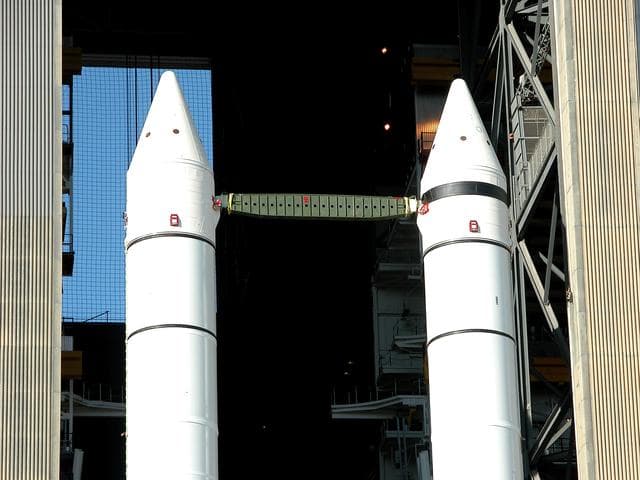
NASA image: KENNEDY SPACE CENTER, FLA. -  As the crawler transporter slowly moves the Mobile Launcher Platform (MLP) out of the Vehicle Assembly Building, the two solid rocket boosters on top are framed in the doorway.  The move is in support of engineering analysis vibration tests on the crawler and MLP. The crawler is moving at various speeds up to 1 mph in an effort to achieve vibration data gathering goals as it leaves the VAB and then returns.  The boosters are braced at the top for stability.  The primary purpose of these rollout tests is to gather data to develop future maintenance requirements on the transport equipment and the flight hardware. Various parts of the MLP and crawler transporter have been instrumented with vibration data collection equipment.
Image
Nov 17, 2003

KENNEDY SPACE CENTER, FLA. - As the crawler transporter slowly moves the Mobile Launcher Platform (MLP) out of the Vehicle Assembly Building, the two solid rocket boosters on top are framed in the doorway. The move is in support of engineering analysis vibration tests on the crawler and MLP. The crawler is moving at various speeds up to 1 mph in an effort to achieve vibration data gathering goals as it leaves the VAB and then returns. The boosters are braced at the top for stability. The primary purpose of these rollout tests is to gather data to develop future maintenance requirements on the transport equipment and the flight hardware. Various parts of the MLP and crawler transporter have been instrumented with vibration data collection equipment.
NASA image: KENNEDY SPACE CENTER, FLA. -  As the crawler transporter slowly moves the Mobile Launcher Platform (MLP) out of the Vehicle Assembly Building, the two solid rocket boosters on top are framed in the doorway.  The move is in support of engineering analysis vibration tests on the crawler and MLP.  The crawler is moving at various speeds up to 1 mph in an effort to achieve vibration data gathering goals as it leaves the VAB and then returns.  The boosters are braced at the top for stability.  The primary purpose of these rollout tests is to gather data to develop future maintenance requirements on the transport equipment and the flight hardware. Various parts of the MLP and crawler transporter have been instrumented with vibration data collection equipment.
Image
Nov 17, 2003

KENNEDY SPACE CENTER, FLA. - As the crawler transporter slowly moves the Mobile Launcher Platform (MLP) out of the Vehicle Assembly Building, the two solid rocket boosters on top are framed in the doorway. The move is in support of engineering analysis vibration tests on the crawler and MLP. The crawler is moving at various speeds up to 1 mph in an effort to achieve vibration data gathering goals as it leaves the VAB and then returns. The boosters are braced at the top for stability. The primary purpose of these rollout tests is to gather data to develop future maintenance requirements on the transport equipment and the flight hardware. Various parts of the MLP and crawler transporter have been instrumented with vibration data collection equipment.

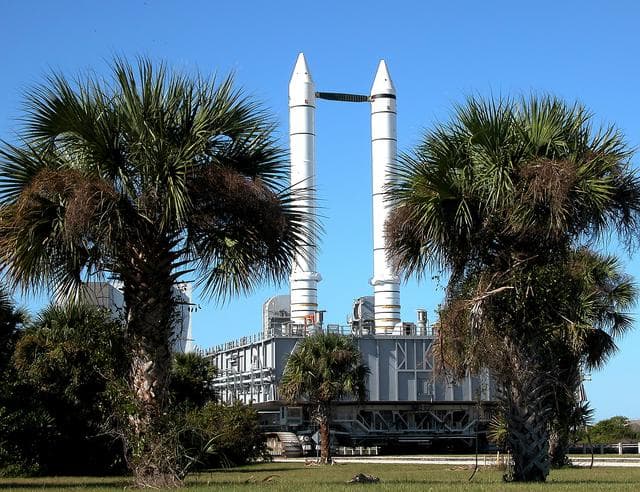
NASA image: KENNEDY SPACE CENTER, FLA. -  Framed between palm trees, solid rocket boosters loom above the Mobile Launcher Platform (MLP) as the crawler transporter slowly moves it along the crawlerway.  The journey is in support of engineering analysis vibration tests on the crawler and MLP.  The crawler is moving at various speeds up to 1 mph in an effort to achieve vibration data gathering goals as it leaves the VAB and then returns.  The boosters are braced at the top for stability. The primary purpose of these rollout tests is to gather data to develop future maintenance requirements on the transport equipment and the flight hardware. Various parts of the MLP and crawler transporter have been instrumented with vibration data collection equipment.
Image
Nov 17, 2003

KENNEDY SPACE CENTER, FLA. - Framed between palm trees, solid rocket boosters loom above the Mobile Launcher Platform (MLP) as the crawler transporter slowly moves it along the crawlerway. The journey is in support of engineering analysis vibration tests on the crawler and MLP. The crawler is moving at various speeds up to 1 mph in an effort to achieve vibration data gathering goals as it leaves the VAB and then returns. The boosters are braced at the top for stability. The primary purpose of these rollout tests is to gather data to develop future maintenance requirements on the transport equipment and the flight hardware. Various parts of the MLP and crawler transporter have been instrumented with vibration data collection equipment.

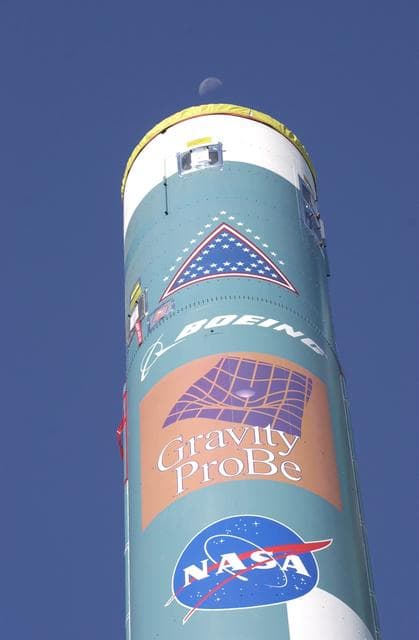
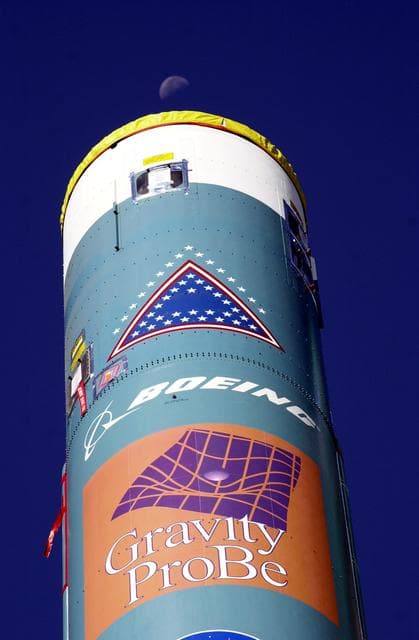
NASA image: VANDENBERG AFB, CALIF. -  Logos identify the mission of this Delta II rocket that will launch the Gravity Probe B experiment, developed by Stanford University, Lockheed Martin and NASA’s Marshall Space Flight Center.   The Gravity Probe B will launch a payload of four gyroscopes into low-Earth polar orbit to test two extraordinary predictions of Albert Einstein’s general theory of relativity: the geodetic effect (how space and time are warped by the presence of the Earth) and frame dragging (how Earth’s rotation drags space and time around with it). Once in orbit, for 18 months each gyroscope’s spin axis will be monitored as it travels through local spacetime, observing and measuring these effects. The targeted launch date is Dec. 6, 2003.
Image
Sep 12, 2003

VANDENBERG AFB, CALIF. - Logos identify the mission of this Delta II rocket that will launch the Gravity Probe B experiment, developed by Stanford University, Lockheed Martin and NASA’s Marshall Space Flight Center. The Gravity Probe B will launch a payload of four gyroscopes into low-Earth polar orbit to test two extraordinary predictions of Albert Einstein’s general theory of relativity: the geodetic effect (how space and time are warped by the presence of the Earth) and frame dragging (how Earth’s rotation drags space and time around with it). Once in orbit, for 18 months each gyroscope’s spin axis will be monitored as it travels through local spacetime, observing and measuring these effects. The targeted launch date is Dec. 6, 2003.

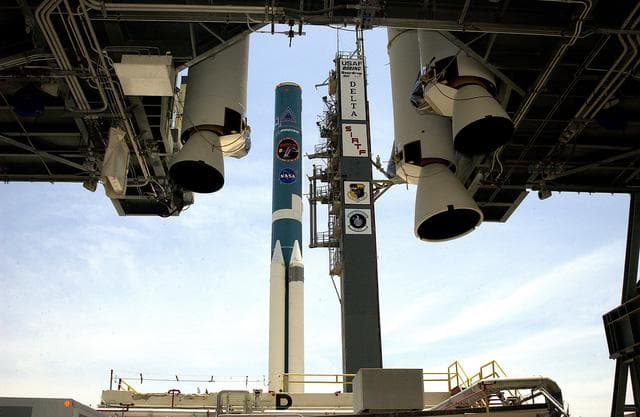
NASA image: KENNEDY SPACE CENTER, FLA. -   On Launch Complex 17-B, Cape Canaveral Air Force Station, the Delta II Heavy rocket  (background) is framed by the solid rocket boosters (foreground) suspended in the mobile service tower.  The SRBs will be added to those already attached to the rocket.  The Delta II Heavy will launch the Space Infrared Telescope Facility (SIRTF).  Consisting of three cryogenically cooled science instruments and an 0.85-meter telescope, SIRTF is one of NASA's largest infrared telescopes to be launched.  SIRTF will obtain images and spectra by detecting the infrared energy, or heat, radiated by objects in space. Most of this infrared radiation is blocked by the Earth's atmosphere and cannot be observed from the ground.
Image
Jul 22, 2003

KENNEDY SPACE CENTER, FLA. - On Launch Complex 17-B, Cape Canaveral Air Force Station, the Delta II Heavy rocket (background) is framed by the solid rocket boosters (foreground) suspended in the mobile service tower. The SRBs will be added to those already attached to the rocket. The Delta II Heavy will launch the Space Infrared Telescope Facility (SIRTF). Consisting of three cryogenically cooled science instruments and an 0.85-meter telescope, SIRTF is one of NASA's largest infrared telescopes to be launched. SIRTF will obtain images and spectra by detecting the infrared energy, or heat, radiated by objects in space. Most of this infrared radiation is blocked by the Earth's atmosphere and cannot be observed from the ground.

NASA image: VANDENBERG AFB, CALIF. -  Logos identify the mission of this Delta II rocket that will launch the Gravity Probe B experiment, developed by Stanford University, Lockheed Martin and NASA’s Marshall Space Flight Center.   The Gravity Probe B will launch a payload of four gyroscopes into low-Earth polar orbit to test two extraordinary predictions of Albert Einstein’s general theory of relativity: the geodetic effect (how space and time are warped by the presence of the Earth) and frame dragging (how Earth’s rotation drags space and time around with it). Once in orbit, for 18 months each gyroscope’s spin axis will be monitored as it travels through local spacetime, observing and measuring these effects. The targeted launch date is Dec. 6, 2003.
Image
Sep 12, 2003

VANDENBERG AFB, CALIF. - Logos identify the mission of this Delta II rocket that will launch the Gravity Probe B experiment, developed by Stanford University, Lockheed Martin and NASA’s Marshall Space Flight Center. The Gravity Probe B will launch a payload of four gyroscopes into low-Earth polar orbit to test two extraordinary predictions of Albert Einstein’s general theory of relativity: the geodetic effect (how space and time are warped by the presence of the Earth) and frame dragging (how Earth’s rotation drags space and time around with it). Once in orbit, for 18 months each gyroscope’s spin axis will be monitored as it travels through local spacetime, observing and measuring these effects. The targeted launch date is Dec. 6, 2003.

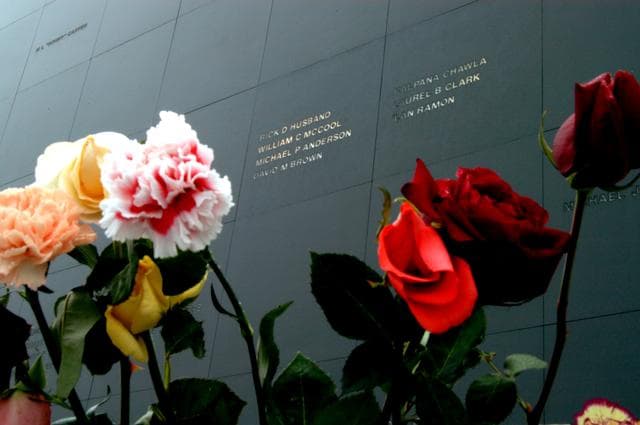
NASA image: KENNEDY SPACE CENTER, FLA. - Brilliant roses and carnations frame the names of the Columbia crew carved onto the black granite surface of the Astronaut Memorial Mirror at the KSC Visitor Complex.  The flowers were left by visitors who attended a memorial service for the crew on the anniversary of the tragic accident that claimed their lives Feb. 1, 2003.  The service included comments by Center Director Jim Kennedy, Deputy Director Woodrow Whitlow Jr., Executive Director of Florida Space Authority Winston Scott, and Dr. Stephen Feldman, president of the Astronaut Memorial Foundation, who placed the wreath at the mirror.  The mirror honors astronauts who have given their lives for space exploration.
Image
Feb 1, 2004

KENNEDY SPACE CENTER, FLA. - Brilliant roses and carnations frame the names of the Columbia crew carved onto the black granite surface of the Astronaut Memorial Mirror at the KSC Visitor Complex.  The flowers were left by visitors who attended a memorial service for the crew on the anniversary of the tragic accident that claimed their lives Feb. 1, 2003.  The service included comments by Center Director Jim Kennedy, Deputy Director Woodrow Whitlow Jr., Executive Director of Florida Space Authority Winston Scott, and Dr. Stephen Feldman, president of the Astronaut Memorial Foundation, who placed the wreath at the mirror.  The mirror honors astronauts who have given their lives for space exploration.

KENNEDY SPACE CENTER, FLA. - Brilliant roses and carnations frame the names of the Columbia crew carved onto the...
NASA image: P6 Truss aft radiator seen during EVA
Image
Feb 4, 2007

P6 Truss aft radiator seen during EVA

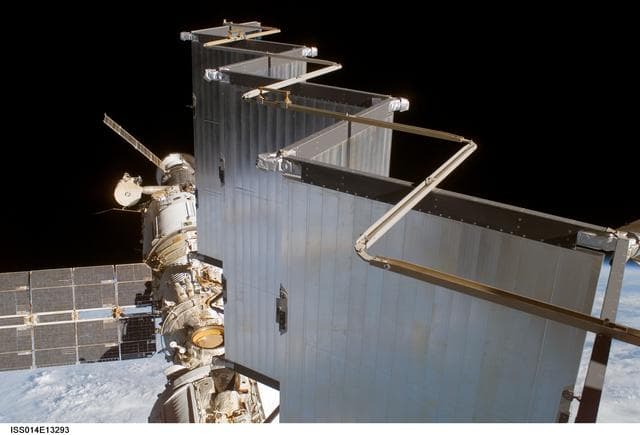
ISS014-E-13293 (4 Feb. 2007) --- The partially retracted aft radiator of the P6 truss of the International Space...

JSC
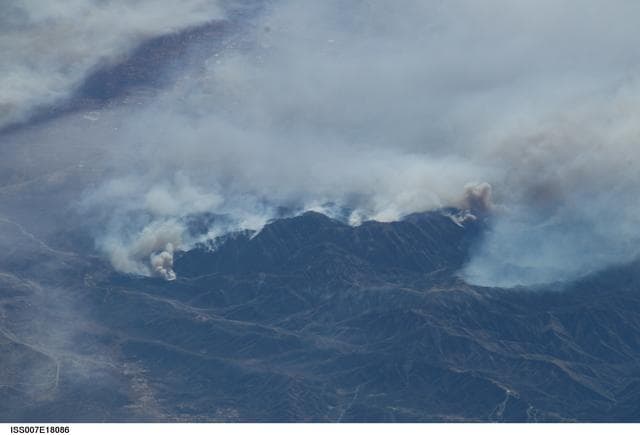
NASA image: Earth Observations taken by the Expedition Seven crew
Image
Oct 26, 2003

Earth Observations taken by the Expedition Seven crew

ISS007-E-18086 (26 October 2003) --- The fires in the San Bernardino Mountains, fueled by Santa Ana winds, burned...

JSC
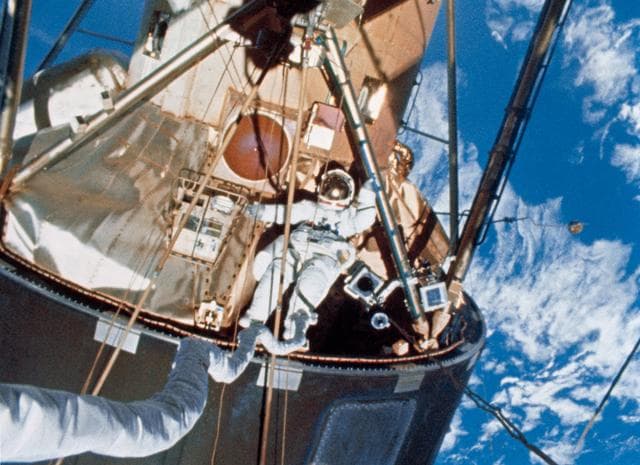
NASA image: SKYLAB IV - INFLIGHT
Image
Feb 1, 1974

SKYLAB IV - INFLIGHT

S74-17456 (3 Feb. 1974) --- Scientist-astronaut Edward G. Gibson has just egressed the Skylab EVA hatchway in this...

JSC
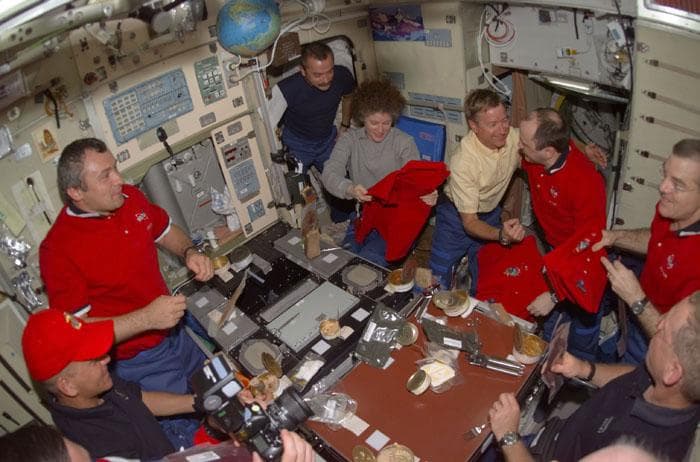
NASA image: Meal for Expedition Two, Three and STS-105 crews in the ISS Service Module/Zvezda
Image
Aug 15, 2001

Meal for Expedition Two, Three and STS-105 crews in the ISS Service Module/Zvezda

STS105-E-5201 (15 August 2001) --- Part of the "dessert" course for one of the first meals shared by the...

JSC
PreviousPage 47 of 100Next

Frequently Asked Questions About NASA Images

Are NASA images free to use?+
Yes, most NASA images are in the public domain and are free to use for educational, informational, and personal purposes. NASA's media usage guidelines state that NASA material is not copyrighted unless otherwise noted. However, the NASA logo and certain insignia are protected. Some images may include identifiable individuals or third-party content that requires additional permissions. Always check the specific image's usage rights and credit NASA as the source.
How many images does NASA have?+
NASA's Image and Video Library contains over 140,000 publicly accessible images, videos, and audio files spanning the agency's entire history, from the Mercury program of the 1960s to the latest James Webb Space Telescope discoveries. The collection grows daily as new missions capture imagery and archival materials are digitized. Individual mission archives, such as Mars rover photos, contain hundreds of thousands of additional images.
Can I download NASA images?+
Yes, you can download NASA images in multiple resolutions directly from this gallery. Each image detail page provides download links for original (full resolution), large (1920px), medium (960px), small (480px), and thumbnail sizes. NASA encourages the public to use these images for education, media, and personal projects. High-resolution originals are ideal for printing and professional use.

Explore More NASA Content

Astronomy Picture of the Day

Daily curated space image

Mars Rover Photos

Curiosity & Perseverance images

Earth from Space

DSCOVR EPIC daily images

Launch Schedule

Upcoming rocket launches

Space News

Mission updates & discoveries

KENNEDY SPACE CENTER, FLA. - Mobile Launcher Platform (MLP) number 3 and a set of twin solid rocket boosters, atop...

KSC

KENNEDY SPACE CENTER, FLA. - As the crawler transporter slowly moves the Mobile Launcher Platform (MLP) out of the...

KSC

KENNEDY SPACE CENTER, FLA. - As the crawler transporter slowly moves the Mobile Launcher Platform (MLP) out of the...

KSC

KENNEDY SPACE CENTER, FLA. - Framed between palm trees, solid rocket boosters loom above the Mobile Launcher...

KSC

VANDENBERG AFB, CALIF. - Logos identify the mission of this Delta II rocket that will launch the Gravity Probe B...

KSC

KENNEDY SPACE CENTER, FLA. - On Launch Complex 17-B, Cape Canaveral Air Force Station, the Delta II Heavy rocket...

KSC

VANDENBERG AFB, CALIF. - Logos identify the mission of this Delta II rocket that will launch the Gravity Probe B...

KSC
KSC