Image
Oct 24, 1990
Earth Science
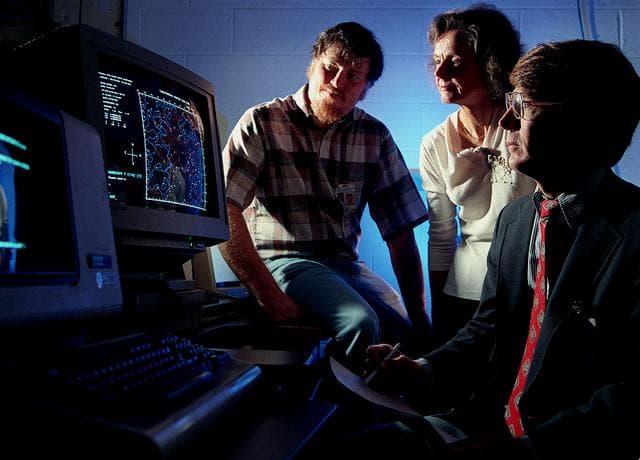
Solar Vector Magnetograph is used to predict solar flares, and other activities associated with sun spots. This...
MSFC

Video
May 7, 2014
The Best Observed X-class Flare
On March 29, 2014 the sun released an X-class flare. It was observed by NASA's Interface Region Imaging...
GSFC

Image
Dec 8, 2017
Sun Emits Mid-Level Flare on October 2, 2014
The sun emitted a mid-level solar flare, peaking at 3:01 p.m. EDT on Oct. 2, 2014. NASA's Solar Dynamics...
GSFC

Image
Dec 8, 2017
Giant Sunspot Erupts on October 24, 2014
SDO AIA image of the X3.1 flare in 131 angstrom light from 21:43 UT on October 24, 2014. Credit:NASA/SDO More info:...
GSFC

Image
May 7, 2011
GRC-2015-C-01893
Documentation and PR photographs of Gamma-Ray Imager/Polarimeter for Solar Flares (GRIPS) test hardware at Plum...
GRC

Image
May 7, 2011
GRC-2015-C-01964
Documentation and PR photographs of Gamma-Ray Imager/Polarimeter for Solar Flares (GRIPS) test hardware at Plum...
GRC

Image
Dec 8, 2017
Sun Unleashes Mid-level Flare
The sun emitted a mid-level solar flare, peaking at 2:23 EDT on June 22, 2015. NASA’s Solar Dynamics Observatory,...
GSFC

Image
Dec 8, 2017
Two X Flares in Quick Succession
A powerful active region just rotating into view produced two X-class flares (the strongest category) about an hour...
GSFC
Image
Jan 1, 1974
Skylab
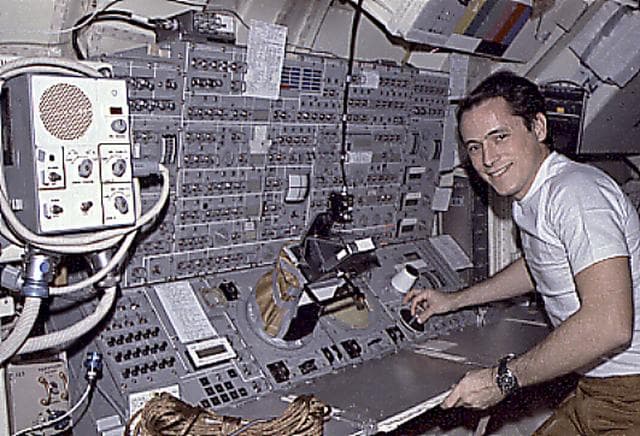
This Skylab-4 mission onboard photograph shows Astronaut Ed Gibson at the complex control and display console for...
MSFC

Image
Dec 8, 2017
Sun Emits an X2.2 Flare on March 11, 2015
The sun emitted a significant solar flare, peaking at 12:22 p.m. EDT on March 11, 2015. NASA’s Solar Dynamics...
GSFC

Image
Dec 8, 2017
A Significant Flare Surges Off the Sun
The sun emitted a significant solar flare, peaking at 1:48 p.m. EDT on Sept. 10, 2014. NASA's Solar Dynamics...
GSFC

Image
Dec 8, 2017
Sun Emits an X2.2 Flare
The sun emitted a significant solar flare, peaking at 12:22 p.m. EDT on March 11, 2015. NASA’s Solar Dynamics...
GSFC

Video
Aug 7, 2019
How NASA Will Protect Astronauts From Space Radiation
August 1972, as NASA scientist Ian Richardson remembers it, was hot. In Surrey, England, where he grew up, the...
GSFC

Image
Dec 8, 2017
Great Ball of Fire - Activity from August 1 CME Subsides
NASA image release August 6, 2010 On August 1, 2010, almost the entire Earth-facing side of the sun erupted in a...
GSFC

Image
Dec 8, 2017
NASA's SDO Observes Largest Sunspot of the Solar Cycle
On Oct. 18, 2014, a sunspot rotated over the left side of the sun, and soon grew to be the largest active region...
GSFC
Image
Aug 19, 1997
KSC-97DC1286
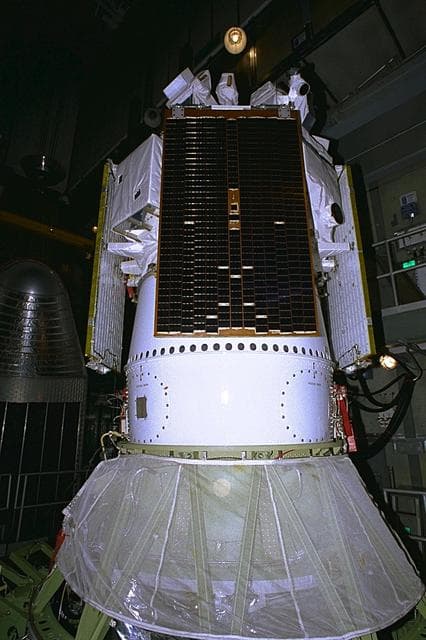
Final prelaunch preparations are made at Launch Complex 17A, Cape Canaveral Air Station, for liftoff of the Boeing...
KSC

Image
Dec 8, 2017
NASA's Best-Observed X-Class Flare of All Time
The March 29, 2014, X-class flare appears as a bright light on the upper right in this image from SDO, showing light...
GSFC
Image
Aug 19, 1997
KSC-97DC1283
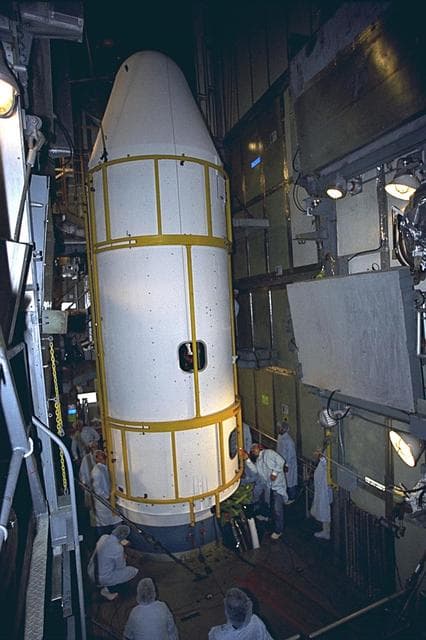
Workers make final checks as the second part of the bi-sector payload fairing for the Advanced Composition Explorer...
KSC
Image
Jun 16, 1997
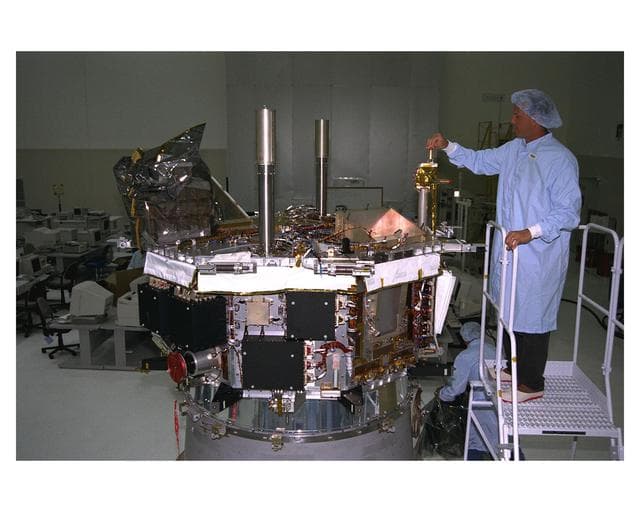
KSC-97PC904
Workers in the Spacecraft Assembly and Encapsulation Facility-2 (SAEF-2) begin prelaunch processing of the Advanced...
KSC
Image
Jun 16, 1997
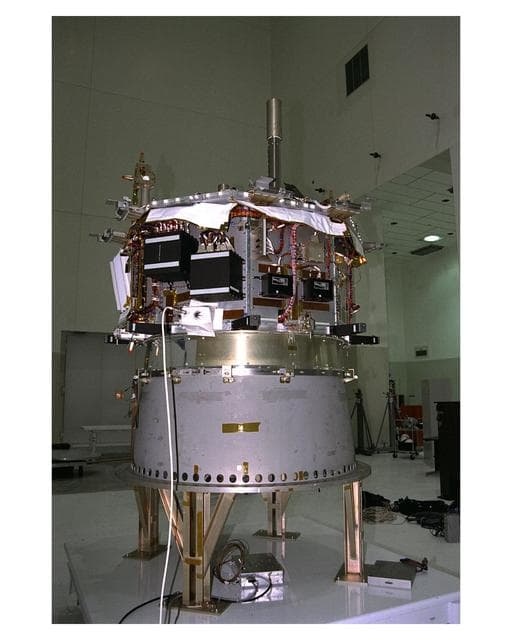
KSC-97PC905
Prelaunch processing begins on the Advanced Composition Explorer (ACE) spacecraft in the Spacecraft Assembly and...
KSC

Image
Dec 8, 2017
NASA's Best-Observed X-Class Flare of All Time
This combined image shows the March 29, 2014, X-class flare as seen through the eyes of different observatories. SDO...
GSFC
![NASA image: SKYLAB (SL)-3 - EXPERIMENTS (APOLLO TELESCOPE MOUNT [ATM])](/_next/image?url=https%3A%2F%2Fimages-assets.nasa.gov%2Fimage%2FS74-23458%2FS74-23458~thumb.jpg&w=1920&q=75)
Image
Jun 1, 1974
SKYLAB (SL)-3 - EXPERIMENTS (APOLLO TELESCOPE MOUNT [ATM])
S74-23458 (19 Dec. 1973) --- This photograph of the sun, taken on Dec. 19, 1973, during the third and final manned...
JSC

Image
Dec 8, 2017
Magnificent CME Erupts on the Sun - August 31
Solar Flare Extremely energetic objects permeate the universe. But close to home, the sun produces its own dazzling...
GSFC

Video
May 1, 2015
Phoenix Prominence Eruption
Over a six-hour period on April 21, 2015, NASA's Solar Dyanmics Observatory (SDO) observed a wing-like prominence...
GSFC