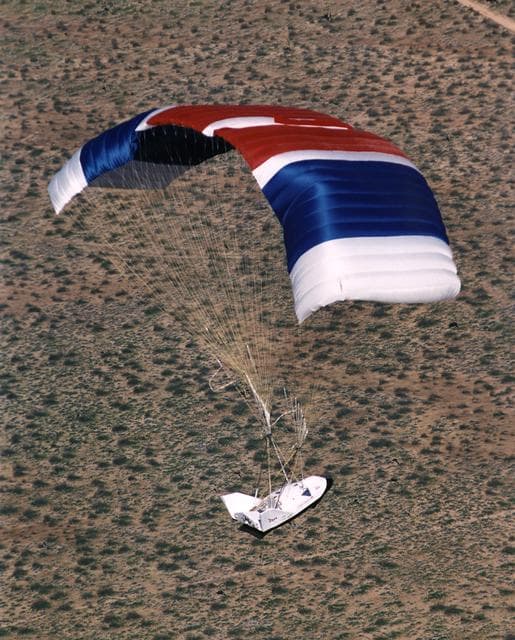
Image
Mar 12, 1998
X-38 - First Free Flight, March 12, 1998
The X-38 Crew Return Vehicle descends under its steerable parafoil over the California desert in its first free...
AFRC
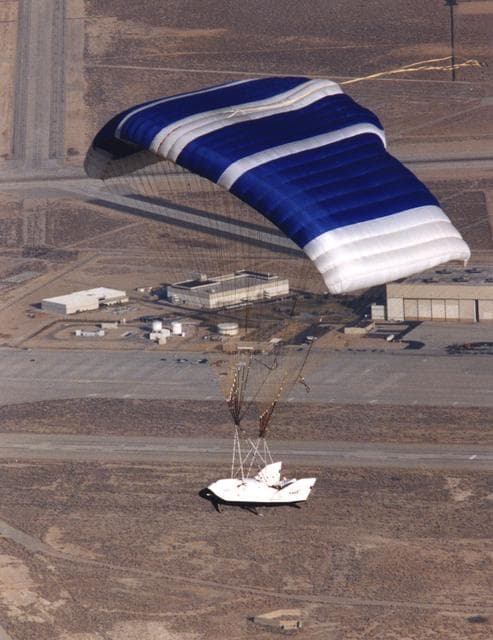
Image
Feb 6, 1999
X-38 in Flight during Second Free Flight
NASA's X-38, a research vehicle developed as part of an effort to build an emergency Crew Return Vehicle (CRV) for...
AFRC
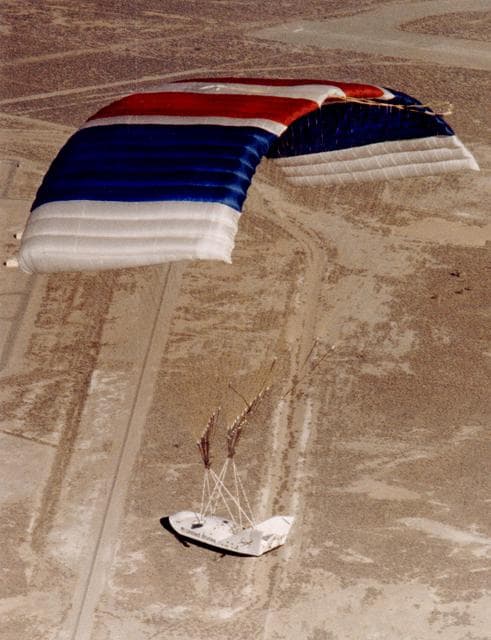
Image
Mar 5, 1999
X-38 Vehicle #132 in Flight with Deployed Parafoil during First Free Flight
The X-38, a research vehicle built to help develop technology for an emergency Crew Return Vehicle (CRV), descends...
AFRC
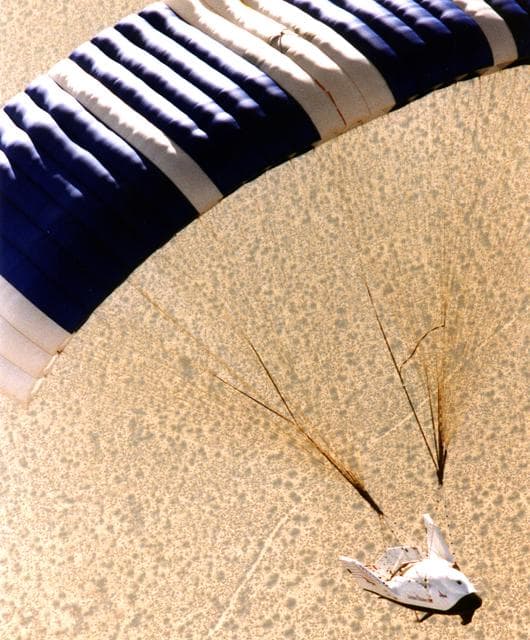
Image
Feb 6, 1999
X-38 in Flight during Second Free Flight
NASA's X-38, a research vehicle developed as part of an effort to build an emergency Crew Return Vehicle (CRV) for...
AFRC
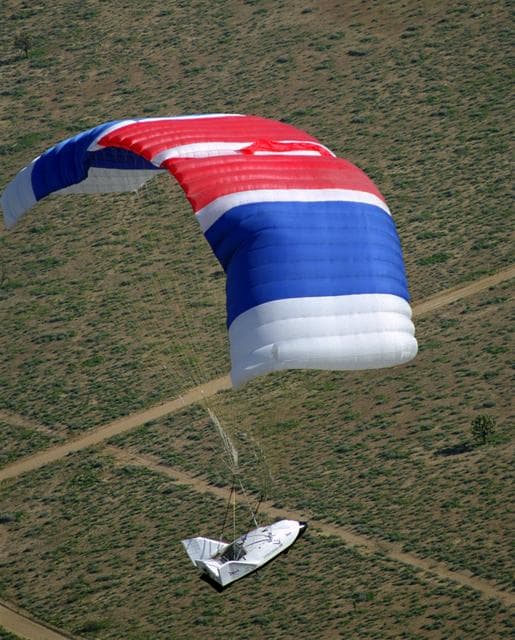
Image
Mar 12, 1998
X-38 - First Free Flight, March 12, 1998
The X-38 Crew Return Vehicle descends under its steerable parafoil over the California desert in its first free...
AFRC
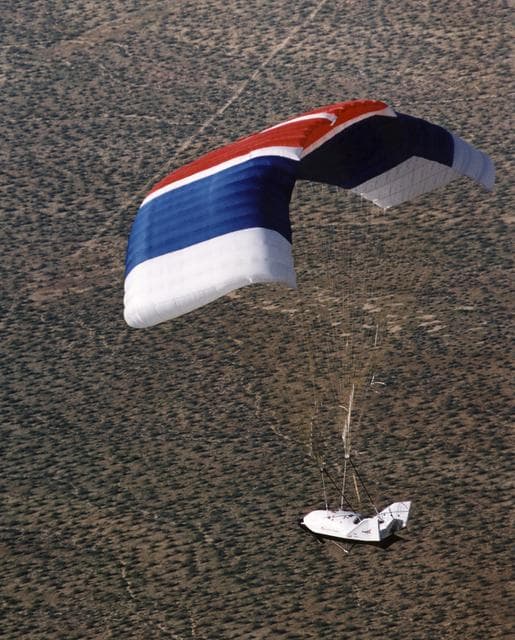
Image
Mar 12, 1998
X-38 - First Free Flight, March 12, 1998
The X-38 Crew Return Vehicle descends under its steerable parafoil over the California desert in its first free...
AFRC
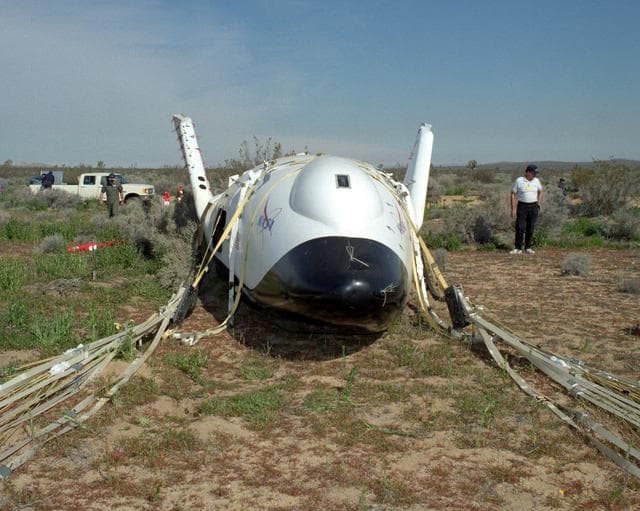
Image
Mar 12, 1998
X-38 - On Ground after First Free Flight, March 12, 1998
Crew members surround the X-38 lifting body research vehicle after a successful test flight and landing in March...
AFRC
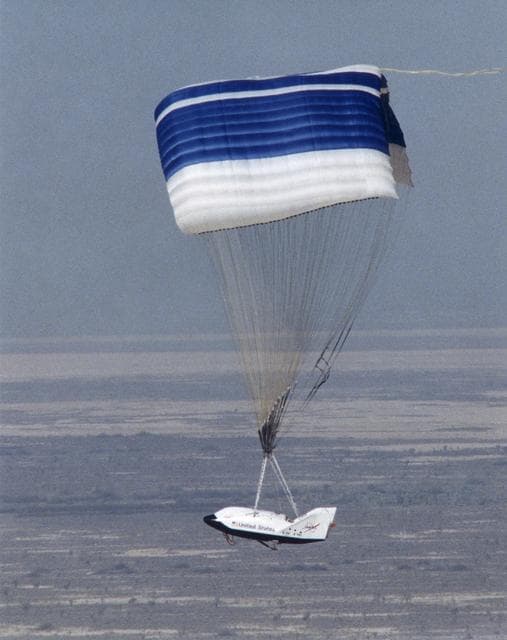
Image
Mar 30, 2000
The X-38 Second Prototype Glides to a Landing over the Lakebed at the End of Its Fifth Flight at Edwards Air Force Base
The X-38 technology demonstrator descends under its steerable parafoil toward a lakebed landing in a March 2000 test...
AFRC
Image
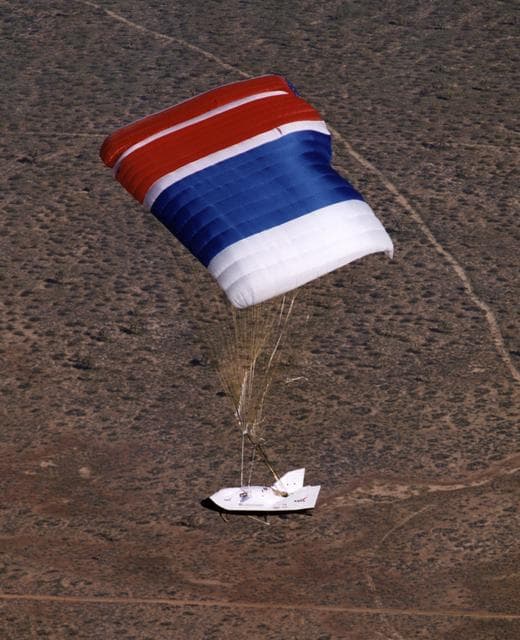
Mar 12, 1998
X-38 - First Free Flight, March 12, 1998
The X-38 Crew Return Vehicle descends under its steerable parafoil over the California desert during its first free...
AFRC
Image
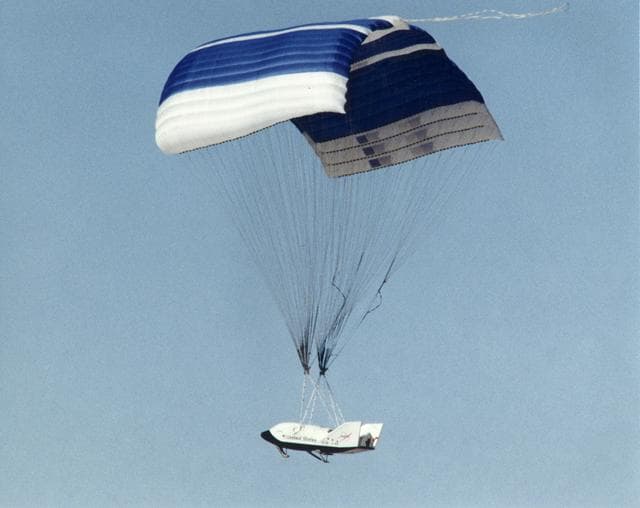
Mar 30, 2000
The X-38 Second Prototype Glides to a Landing over the Lakebed at the End of Its Fifth Flight at Edwards Air Force Base
The X-38 technology demonstrator descends under its steerable parafoil toward a lakebed landing in a March 2000 test...
AFRC
Image
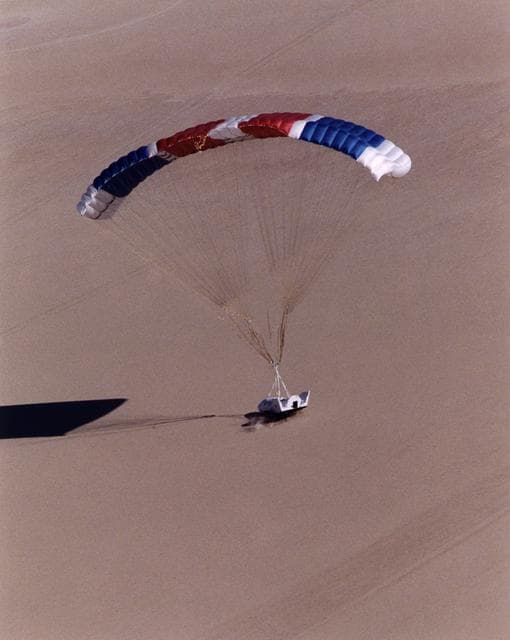
Nov 2, 2000
X-38 vehicle #131R during landing on first free flight
The latest version of the X-38, V-131R, touches down on Rogers Dry Lake adjacent to NASAÕs Dryden Flight Research...
AFRC
Image
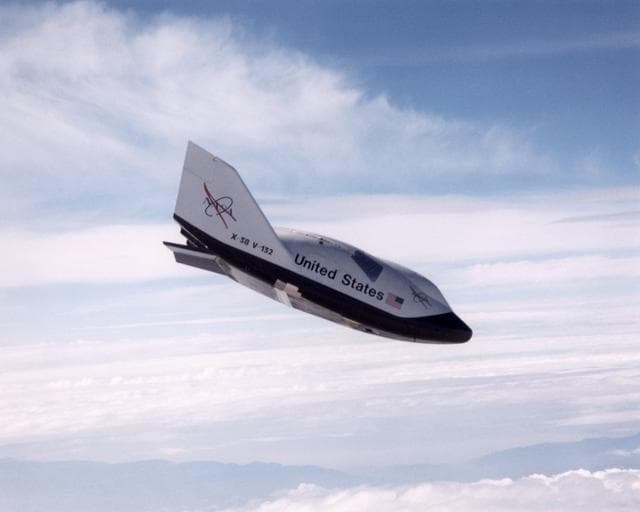
Jul 9, 1999
X-38 Ship #2 in Free Flight
The X-38, a research vehicle built to help develop technology for an emergency Crew Return Vehicle (CRV), descends...
AFRC
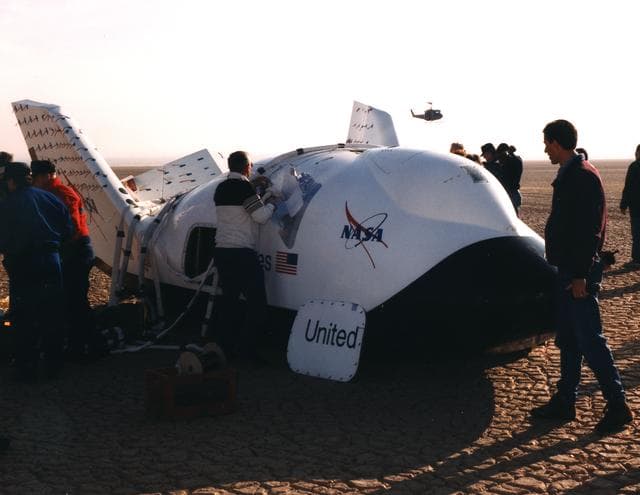
Image
Feb 6, 1999
X-38 on Lakebed after Landing on Second Free Flight
NASA's X-38, a prototype of a Crew Return Vehicle (CRV) resting on the lakebed near the Dryden Flight Research...
AFRC
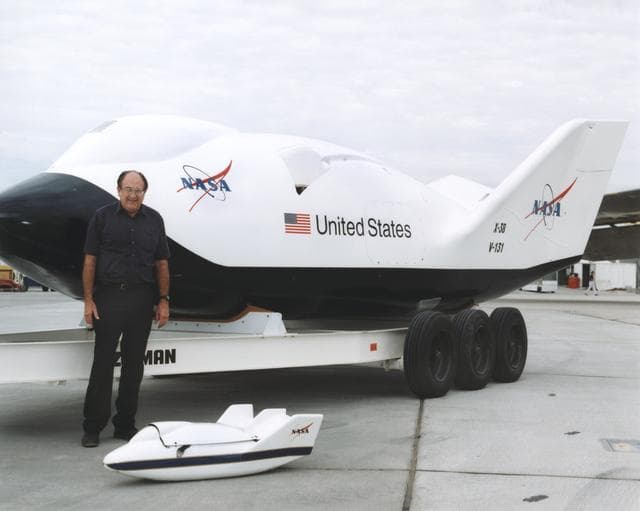
Image
Jul 16, 1997
Dale Reed with X-38 and a Subscale Model Used in Test Program
Dale Reed, a NASA engineer who worked on the original lifting-body research programs in the 1960s and 1970s, stands...
AFRC
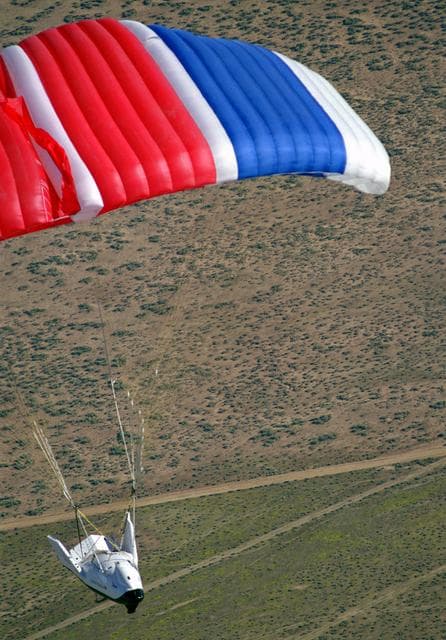
Image
Mar 5, 1999
X-38 Vehicle #132 in Flight Approaching Landing during First Free Flight
The X-38, a research vehicle built to help develop technology for an emergency Crew Return Vehicle (CRV), maneuvers...
AFRC
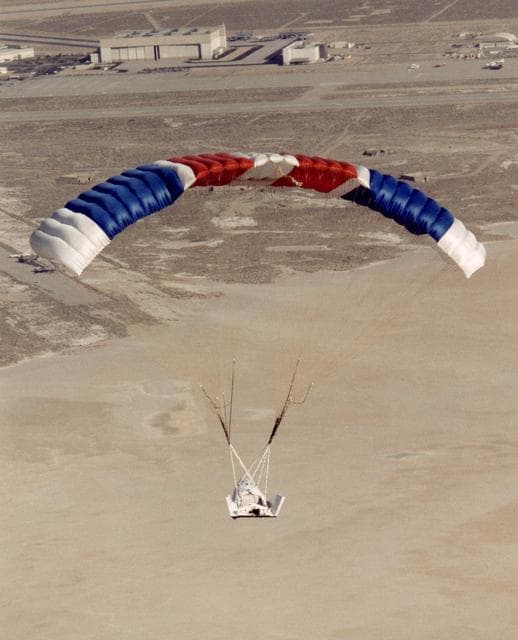
Image
Mar 12, 1998
X-38 - First Free Flight, March 12, 1998
The X-38 Crew Return Vehicle descends under its steerable parafoil over the California desert in its first free...
AFRC
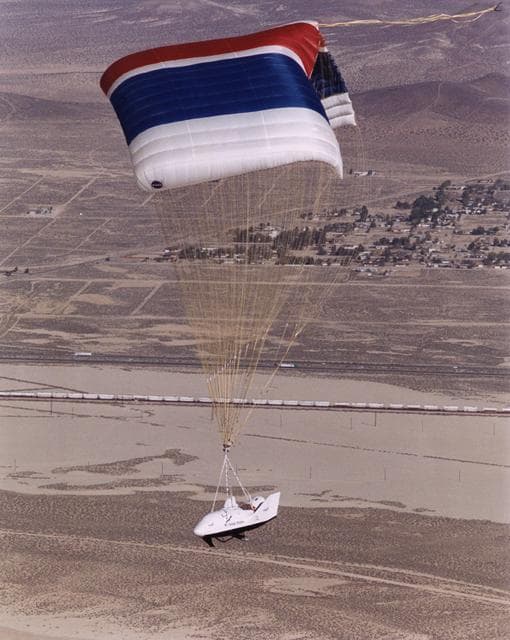
Image
Nov 2, 2000
X-38 vehicle #131R in first free flight
The third iteration of the X-38, V-131R, glides down under a giant parafoil towards a landing on Rogers Dry Lake...
AFRC
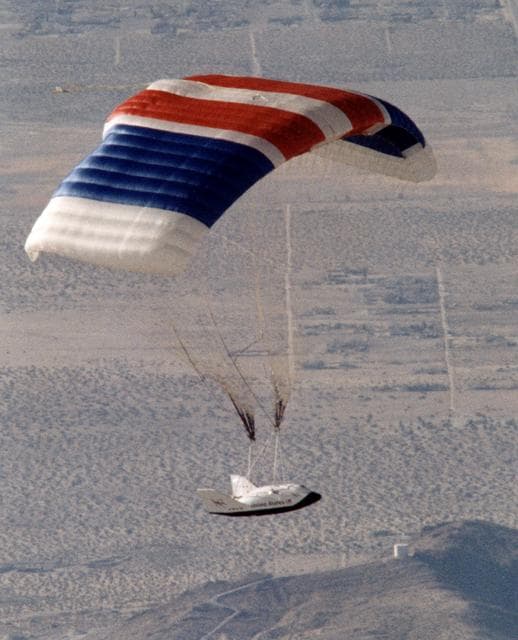
Image
Mar 5, 1999
X-38 Vehicle #132 in Flight with Deployed Parafoil during First Free Flight
The X-38, a research vehicle built to help develop technology for an emergency Crew Return Vehicle (CRV), descends...
AFRC
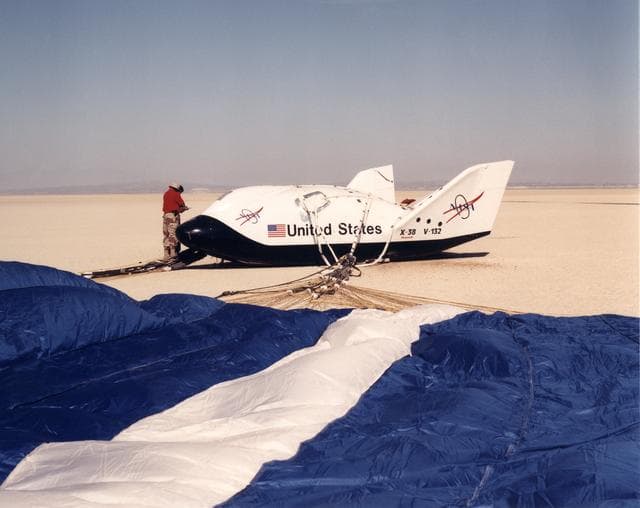
Image
Mar 30, 2000
A Ground Crewman Checks Over the X-38 Second Prototype Following the Lakebed Landing of Its Fifth Flight at Edwards Air Force Base
The X-38's blue and white parafoil spreads out in front of the research vehicle as it sits on a lakebed near the...
AFRC
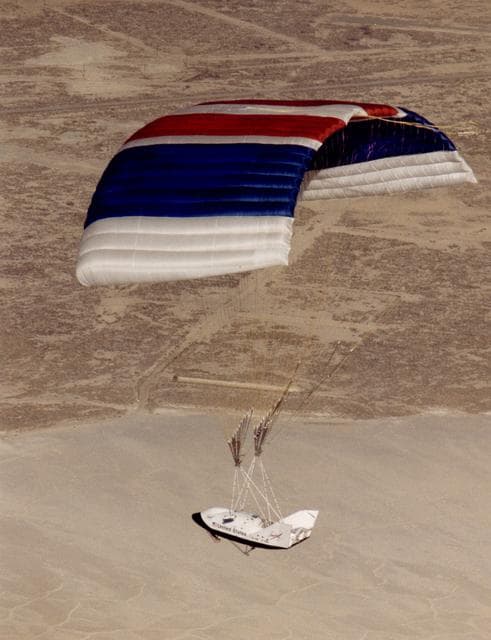
Image
Mar 5, 1999
X-38 Vehicle #132 in Flight with Deployed Parafoil during First Free Flight
The X-38, a research vehicle built to help develop technology for an emergency Crew Return Vehicle (CRV), descends...
AFRC
Image
Feb 6, 1999
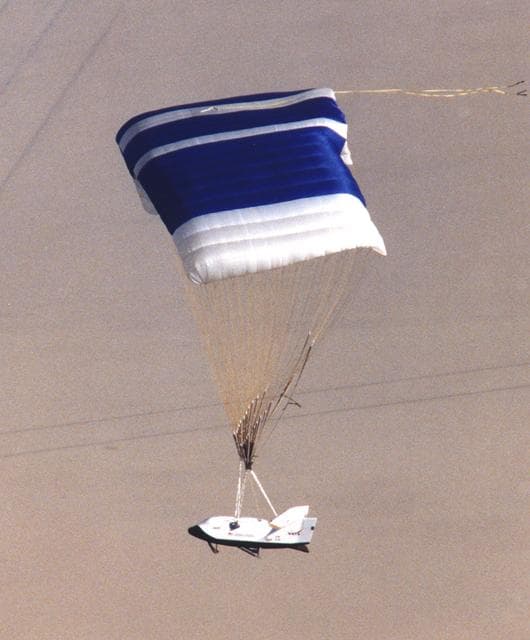
X-38 in Flight during Second Free Flight
NASA's X-38, a research vehicle developed as part of an effort to build an emergency Crew Return Vehicle (CRV) for...
AFRC
Image
Mar 5, 1999
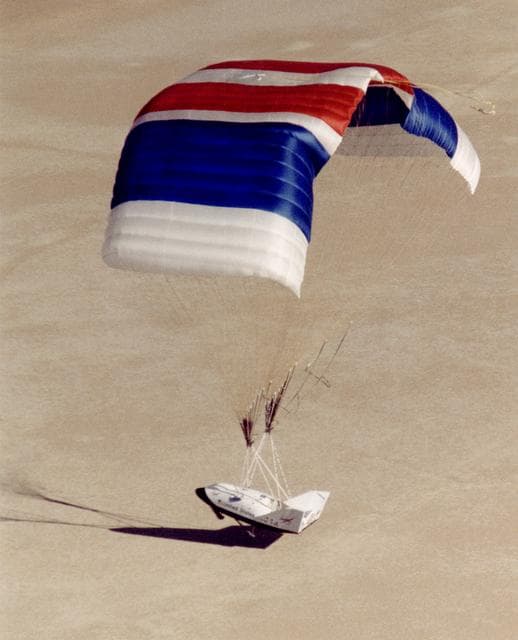
X-38 Vehicle #132 Landing on First Free Flight
The X-38, a research vehicle built to help develop technology for an emergency Crew Return Vehicle (CRV), flares for...
AFRC
Image
Sep 2, 2015
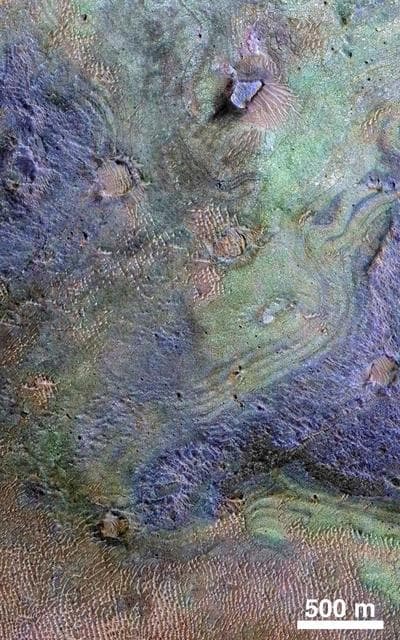
Rocks Here Sequester Some of Mars Early Atmosphere
This view combines information from two instruments on NASA's Mars Reconnaissance Orbiter to map color-coded...
JPL
Image
Apr 29, 2004
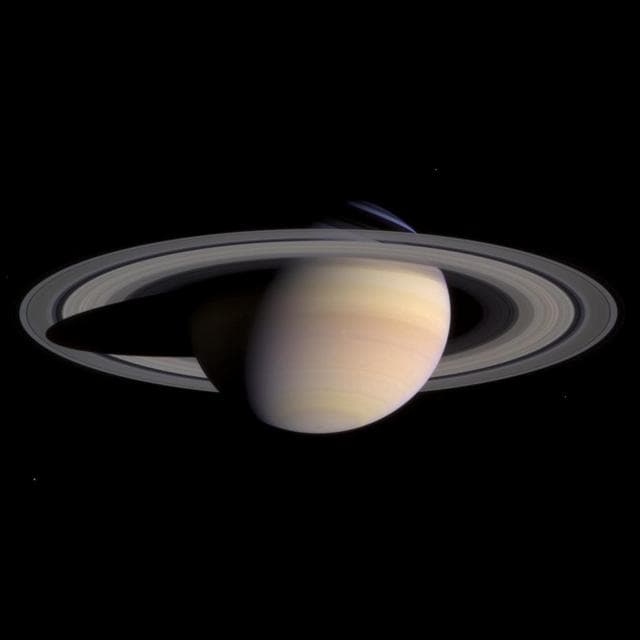
Saturn in Color
Saturn and its rings completely fill the field of view of Cassini's narrow angle camera in this natural color image...
JPL