CosmosObservatory
Explore
Solar System
Live
Learn
Tools
About
Cosmos Observatory
ToolsAbout
Cosmos Observatory

Explore the universe through NASA data, real-time ISS tracking, Mars rover imagery, asteroid monitoring, and comprehensive space encyclopedia. Your gateway to the cosmos.

Explore

  • APOD
  • Mars Rovers
  • Earth Imagery
  • NASA Gallery
  • ISS Tracker

Data

  • Asteroids
  • Solar System
  • Exoplanets
  • Space Weather
  • Launches

Tools

  • Glossary
  • News
  • Calculators

Legal

  • About
  • Privacy Policy
  • Terms of Use
  • Space Tools
  • Contact

Stay updated with the cosmos

Get weekly digests of APOD highlights, upcoming launches, and space events.

© 2026 Cosmos Observatory. All rights reserved. Built with for space enthusiasts.

This website is not affiliated with, maintained, authorized, endorsed by, or in any way officially connected with NASA or any of its subsidiaries or affiliates. All NASA imagery is in the public domain unless otherwise noted. Data sourced from NASA Open APIs, Launch Library 2, and other open data services.

NASA Gallery

Explore NASA's vast collection of space images, videos, and audio from missions past and present.

  1. Home
  2. /
  3. NASA Gallery

NASA's Image and Video Library: A Visual Archive of Space Exploration

NASA's Image and Video Library is one of the most comprehensive public archives of space imagery in the world, containing over 140,000 images, videos, and audio recordings spanning more than six decades of space exploration. From the earliest Mercury and Gemini missions through the Apollo Moon landings, the Space Shuttle era, and today's cutting-edge observations from the James Webb Space Telescope, this collection documents humanity's journey into the cosmos.

The library includes imagery from diverse sources: telescopes like Hubble and Webb that capture deep-space nebulae, galaxies, and exoplanets; planetary missions like the Mars rovers ( browse Mars photos) and Cassini at Saturn; Earth observation satellites ( see EPIC imagery); astronaut photography from the ISS; and documentation of rocket launches, spacecraft assembly, and ground testing. Most NASA images are in the public domain and free to download at full resolution for educational, editorial, and personal use.

Use the search bar above to find specific subjects — try queries like "Apollo 11," "Hubble Deep Field," "Mars surface," or "astronaut EVA." You can also filter by media type (image, video, or audio). For a daily curated experience, visit the Astronomy Picture of the Day.

Showing results for "Flash"

435 results found - Page 4 of 19

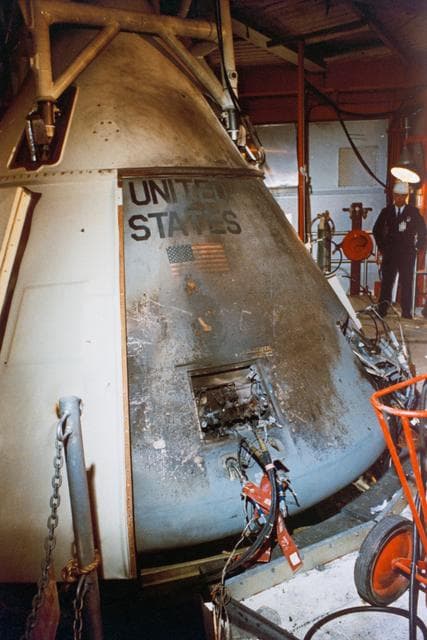
NASA image: COMMAND MODULE (C/M) - APOLLO/SATURN (A/S) MISSION 204 - SPACECRAFT (S/C) 012 - CAPE
Image
Jan 28, 1967

COMMAND MODULE (C/M) - APOLLO/SATURN (A/S) MISSION 204 - SPACECRAFT (S/C) 012 - CAPE

Closeup view of the interior of Apollo S/C 012 C/M, Pad 34, showing the effects of the intense heat of the flash...

JSC
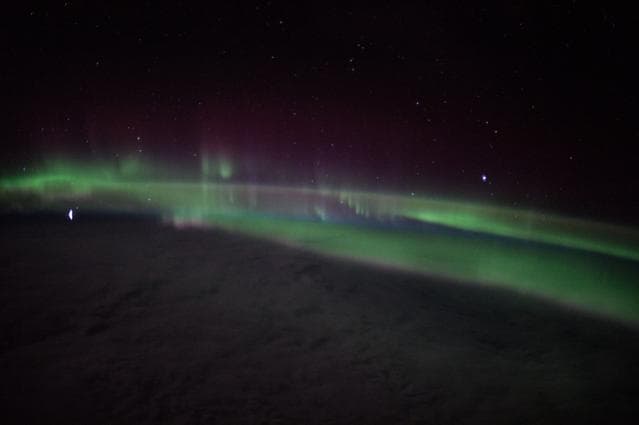
NASA image: Earth Observations taken by Expedition 47 Crewmember
Image
Mar 2, 2016

Earth Observations taken by Expedition 47 Crewmember

ISS047e000320 (02/17/2016) --- Aurora flashing over the Earth as the International Space Station orbits around the...

JSC
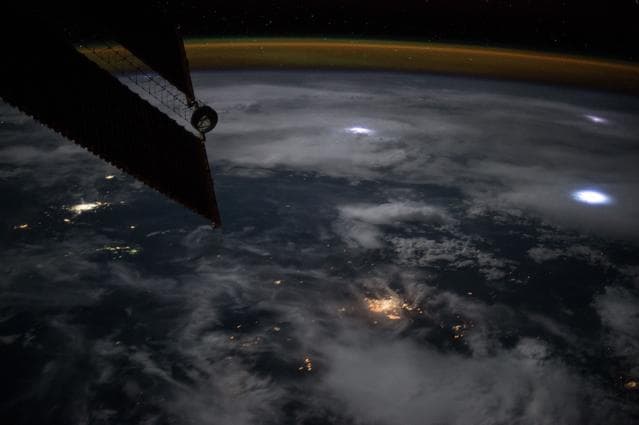
NASA image: Earth Observation Imagery
Image
Mar 16, 2016

Earth Observation Imagery

ISS047e009593 (03/16/2016) --- Expedition 47 crew members aboard the International Space Station capture a view of...

JSC
NASA image: North American Monsoon
Video
Aug 3, 2017

North American Monsoon

North America experiences a yearly monsoon weather system in late summer as moisture comes up from the west coast of...

GSFC
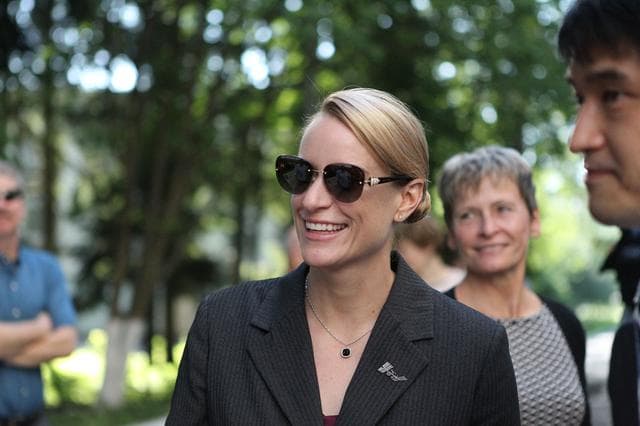
NASA image: ISS Expedition 48-49 crewmember Kate Rubins of NASA (left) flashes a smile June 24 at the Gagarin Cosmonaut Training Center in Star City, Russia before flying to her launch site at the Baikonur Cosmodrome in Kazakhstan for final pre-launch training. Looking on are crewmate Takuya Onishi of the Japan Aerospace Exploration Agency (right) and backup crewmember Peggy Whitson of NASA (background). Rubins, Anatoly Ivanishin of Roscosmos and Onishi will launch July 7 from the Baikonur Cosmodrome in Kazakhstan on the Soyuz MS-01 spacecraft for a planned four-month mission on the International Space Station...NASA/Stephanie Stoll.
Image
Jun 24, 2016

ISS Expedition 48-49 crewmember Kate Rubins of NASA (left) flashes a smile June 24 at the Gagarin Cosmonaut Training Center in Star City, Russia before flying to her launch site at the Baikonur Cosmodrome in Kazakhstan for final pre-launch training. Looking on are crewmate Takuya Onishi of the Japan Aerospace Exploration Agency (right) and backup crewmember Peggy Whitson of NASA (background). Rubins, Anatoly Ivanishin of Roscosmos and Onishi will launch July 7 from the Baikonur Cosmodrome in Kazakhstan on the Soyuz MS-01 spacecraft for a planned four-month mission on the International Space Station...NASA/Stephanie Stoll.

ISS Expedition 48-49 crewmember Kate Rubins of NASA (left) flashes a smile June 24 at the Gagarin Cosmonaut Training...
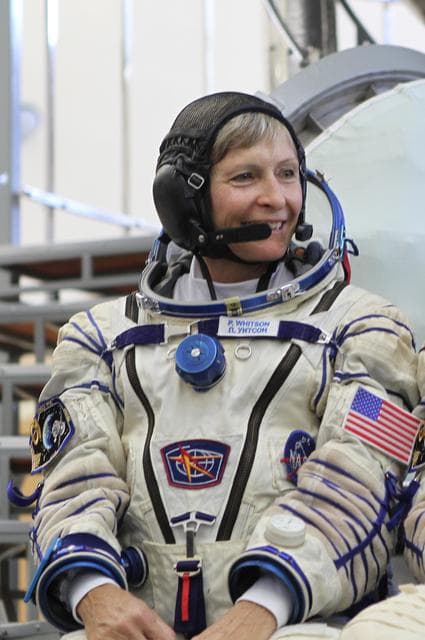
NASA image: At the Gagarin Cosmonaut Training Center in Star City, Russia, Expedition 48-49 backup crewmember Peggy Whitson of NASA flashes a smile in front of a Soyuz simulator May 26 during final qualification exams. Whitson, Thomas Pesquet of the European Space Agency and Oleg Novitskiy of Roscosmos are serving as the backups to prime crewmembers Kate Rubins of NASA, Takuya Onishi of the Japan Aerospace Exploration Agency and Anatoly Ivanishin of Roscosmos, who will launch June 24 on the Soyuz MS-01 spacecraft from the Baikonur Cosmodrome in Kazakhstan for a four-month mission on the International Space Station...NASA/Stephanie Stoll.
Image
May 26, 2016

At the Gagarin Cosmonaut Training Center in Star City, Russia, Expedition 48-49 backup crewmember Peggy Whitson of NASA flashes a smile in front of a Soyuz simulator May 26 during final qualification exams. Whitson, Thomas Pesquet of the European Space Agency and Oleg Novitskiy of Roscosmos are serving as the backups to prime crewmembers Kate Rubins of NASA, Takuya Onishi of the Japan Aerospace Exploration Agency and Anatoly Ivanishin of Roscosmos, who will launch June 24 on the Soyuz MS-01 spacecraft from the Baikonur Cosmodrome in Kazakhstan for a four-month mission on the International Space Station...NASA/Stephanie Stoll.

At the Gagarin Cosmonaut Training Center in Star City, Russia, Expedition 48-49 backup crewmember Peggy Whitson of...

NASA image: KENNEDY SPACE CENTER, FLA. -  STS-82 Pilot Scott J. "Doc" Horowitz flashes a wide grin for photographers after landing his T-38 jet at KSC's Shuttle Landing Facility.  Horowitz and the other six members of the STS-82 crew came from their home base at Johnson Space Center in Houston, Texas, to spend the last few days before launch at KSC.   STS-82 is scheduled for liftoff on Feb. 11 during a 65-minute launch window that opens at 3:56 a.m. EST.  The 10-day flight aboard the Space Shuttle Discovery will be the second Hubble Space Telescope (HST) servicing mission.
Image
Feb 7, 1997

KENNEDY SPACE CENTER, FLA. - STS-82 Pilot Scott J. "Doc" Horowitz flashes a wide grin for photographers after landing his T-38 jet at KSC's Shuttle Landing Facility. Horowitz and the other six members of the STS-82 crew came from their home base at Johnson Space Center in Houston, Texas, to spend the last few days before launch at KSC. STS-82 is scheduled for liftoff on Feb. 11 during a 65-minute launch window that opens at 3:56 a.m. EST. The 10-day flight aboard the Space Shuttle Discovery will be the second Hubble Space Telescope (HST) servicing mission.

KENNEDY SPACE CENTER, FLA. - STS-82 Pilot Scott J. "Doc" Horowitz flashes a wide grin for photographers after...

KSC
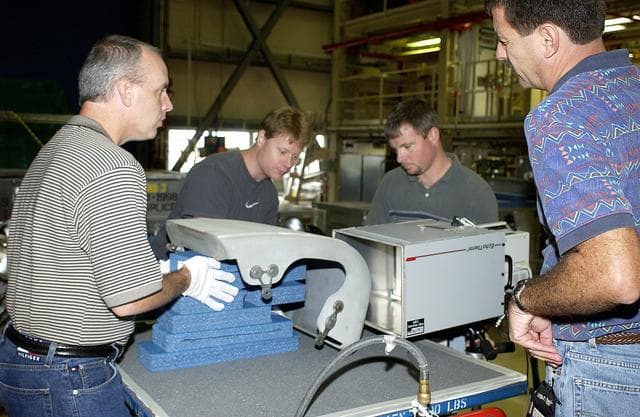
NASA image: KENNEDY SPACE CENTER, FLA. - In the Orbiter Processing Facility, United Space Alliance workers share the task of examining  a Reinforced Carbon Carbon panel using flash thermography.  From left are Dan Kenna, Jim Landy, Paul Ogletree and Dan Phillips.  Attached to the leading edge of the wing of the orbiters,  the gray carbon composite RCC panels have sufficient strength to withstand the aerodynamic forces experienced during launch and reentry, which can reach as high as 800 pounds per square foot.  The operating range of RCC is from minus 250º F to about 3,000º F, the temperature produced by friction with the atmosphere during reentry.
Image
Sep 9, 2003

KENNEDY SPACE CENTER, FLA. - In the Orbiter Processing Facility, United Space Alliance workers share the task of examining a Reinforced Carbon Carbon panel using flash thermography. From left are Dan Kenna, Jim Landy, Paul Ogletree and Dan Phillips. Attached to the leading edge of the wing of the orbiters, the gray carbon composite RCC panels have sufficient strength to withstand the aerodynamic forces experienced during launch and reentry, which can reach as high as 800 pounds per square foot. The operating range of RCC is from minus 250º F to about 3,000º F, the temperature produced by friction with the atmosphere during reentry.

KENNEDY SPACE CENTER, FLA. - In the Orbiter Processing Facility, United Space Alliance workers share the task of...
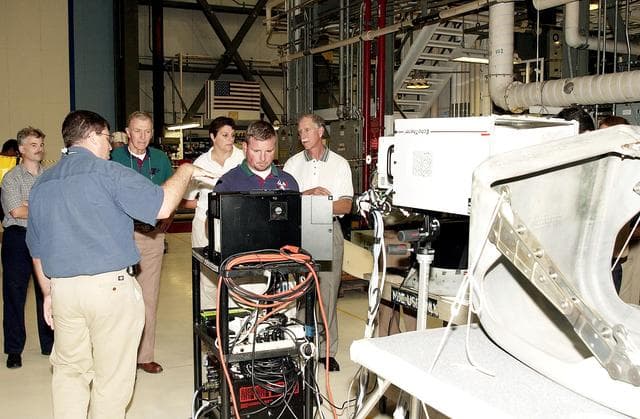
NASA image: KENNEDY SPACE CENTER, FLA.  -  Members of the  Stafford-Covey Return to Flight Task Group (SCTG) look over equipment in the Orbiter Processing Facility.  At left (back to camera), Fernando Santos, with NASA, and Paul Ogletree (at monitor), with United Space Alliance, describe how flash thermography is used to inspect the structure of Reinforced Carbon Carbon panels and establish a baseline on panels before flight.  Chairing the task group are Richard O. Covey (far right), former Space Shuttle commander, and Thomas P. Stafford, Apollo commander.  Chartered by NASA Administrator Sean O’Keefe, the task group will perform an independent assessment of NASA’s implementation of the final recommendations by the Columbia Accident Investigation Board.
Image
Aug 6, 2003

KENNEDY SPACE CENTER, FLA. - Members of the Stafford-Covey Return to Flight Task Group (SCTG) look over equipment in the Orbiter Processing Facility. At left (back to camera), Fernando Santos, with NASA, and Paul Ogletree (at monitor), with United Space Alliance, describe how flash thermography is used to inspect the structure of Reinforced Carbon Carbon panels and establish a baseline on panels before flight. Chairing the task group are Richard O. Covey (far right), former Space Shuttle commander, and Thomas P. Stafford, Apollo commander. Chartered by NASA Administrator Sean O’Keefe, the task group will perform an independent assessment of NASA’s implementation of the final recommendations by the Columbia Accident Investigation Board.

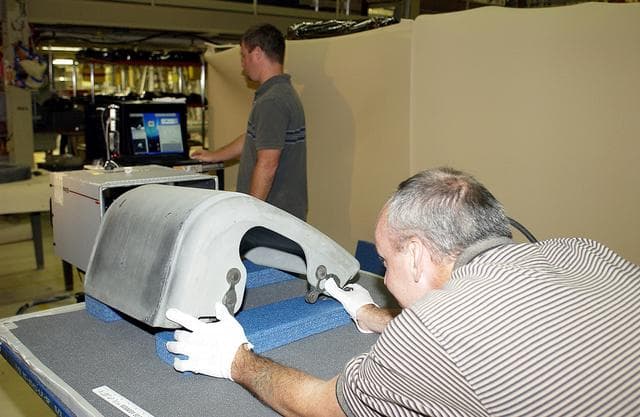
NASA image: KENNEDY SPACE CENTER, FLA. -  In the Orbiter Processing Facility, United Space Alliance worker Dan Kenna (right) positions a Reinforced Carbon Carbon panel on the table to perform flash thermography.  In the background, Paul Ogletree observes the monitor.  Attached to the leading edge of the wing of the orbiters,  the gray carbon composite RCC panels have sufficient strength to withstand the aerodynamic forces experienced during launch and reentry, which can reach as high as 800 pounds per square foot.  The operating range of RCC is from minus 250º F to about 3,000º F, the temperature produced by friction with the atmosphere during reentry.
Image
Sep 9, 2003

KENNEDY SPACE CENTER, FLA. - In the Orbiter Processing Facility, United Space Alliance worker Dan Kenna (right) positions a Reinforced Carbon Carbon panel on the table to perform flash thermography. In the background, Paul Ogletree observes the monitor. Attached to the leading edge of the wing of the orbiters, the gray carbon composite RCC panels have sufficient strength to withstand the aerodynamic forces experienced during launch and reentry, which can reach as high as 800 pounds per square foot. The operating range of RCC is from minus 250º F to about 3,000º F, the temperature produced by friction with the atmosphere during reentry.

KENNEDY SPACE CENTER, FLA. - In the Orbiter Processing Facility, United Space Alliance worker Dan Kenna (right)...
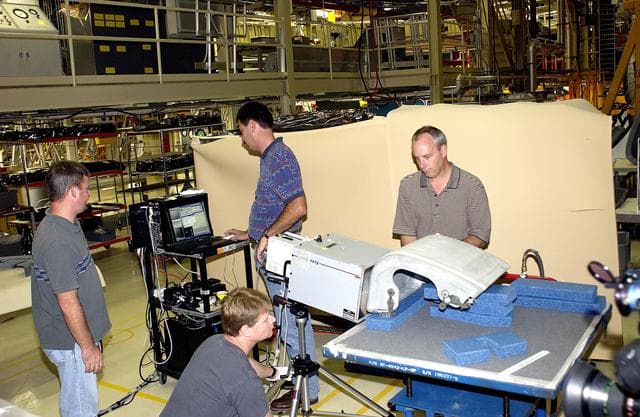
NASA image: KENNEDY SPACE CENTER, FLA. - In the Orbiter Processing Facility, United Space Alliance workers share the task of examining  a Reinforced Carbon Carbon panel using flash thermography.  From left are Paul Ogletree, Jim Landy (kneeling), Dan Phillips and Dan Kenna.  Attached to the leading edge of the wing of the orbiters,  the gray carbon composite RCC panels have sufficient strength to withstand the aerodynamic forces experienced during launch and reentry, which can reach as high as 800 pounds per square foot.  The operating range of RCC is from minus 250º F to about 3,000º F, the temperature produced by friction with the atmosphere during reentry.
Image
Sep 9, 2003

KENNEDY SPACE CENTER, FLA. - In the Orbiter Processing Facility, United Space Alliance workers share the task of examining a Reinforced Carbon Carbon panel using flash thermography. From left are Paul Ogletree, Jim Landy (kneeling), Dan Phillips and Dan Kenna. Attached to the leading edge of the wing of the orbiters, the gray carbon composite RCC panels have sufficient strength to withstand the aerodynamic forces experienced during launch and reentry, which can reach as high as 800 pounds per square foot. The operating range of RCC is from minus 250º F to about 3,000º F, the temperature produced by friction with the atmosphere during reentry.

KENNEDY SPACE CENTER, FLA. - In the Orbiter Processing Facility, United Space Alliance workers share the task of...
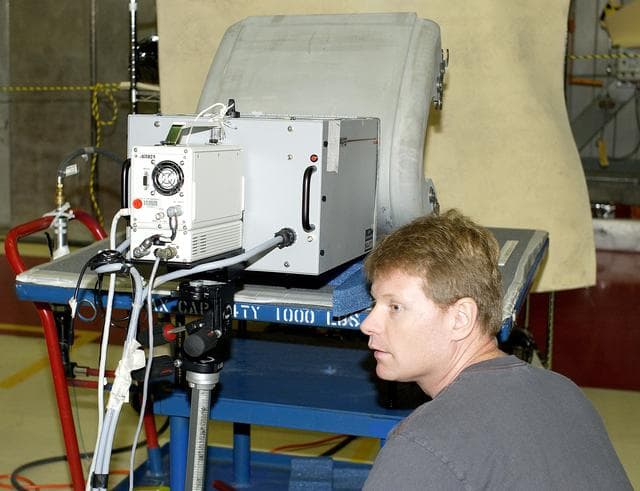
NASA image: KENNEDY SPACE CENTER, FLA. - In the Orbiter Processing Facility,  Jim Landy, NDE specialist with United Space Alliance (USA), watches a monitor off-screen to examine a Reinforced Carbon Carbon panel using flash thermography.  Attached to the leading edge of the wing of the orbiters,  the gray carbon composite RCC panels have sufficient strength to withstand the aerodynamic forces experienced during launch and reentry, which can reach as high as 800 pounds per square foot.  The operating range of RCC is from minus 250º F to about 3,000º F, the temperature produced by friction with the atmosphere during reentry.
Image
Sep 9, 2003

KENNEDY SPACE CENTER, FLA. - In the Orbiter Processing Facility, Jim Landy, NDE specialist with United Space Alliance (USA), watches a monitor off-screen to examine a Reinforced Carbon Carbon panel using flash thermography. Attached to the leading edge of the wing of the orbiters, the gray carbon composite RCC panels have sufficient strength to withstand the aerodynamic forces experienced during launch and reentry, which can reach as high as 800 pounds per square foot. The operating range of RCC is from minus 250º F to about 3,000º F, the temperature produced by friction with the atmosphere during reentry.

KENNEDY SPACE CENTER, FLA. - In the Orbiter Processing Facility, Jim Landy, NDE specialist with United Space...
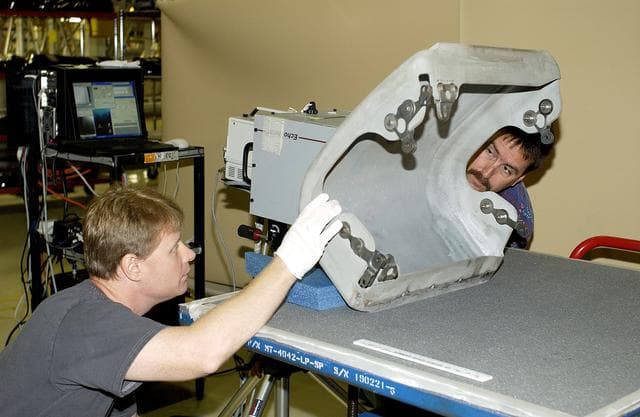
NASA image: KENNEDY SPACE CENTER, FLA. -  In the Orbiter Processing Facility,  Jim Landy (left), NDE specialist with United Space Alliance (USA), prepares to examine a Reinforced Carbon Carbon panel using flash thermography.  Helping out, at right, is Dan Phillips, also with USA.  Attached to the leading edge of the wing of the orbiters,  the gray carbon composite RCC panels have sufficient strength to withstand the aerodynamic forces experienced during launch and reentry, which can reach as high as 800 pounds per square foot.  The operating range of RCC is from minus 250º F to about 3,000º F, the temperature produced by friction with the atmosphere during reentry.
Image
Sep 9, 2003

KENNEDY SPACE CENTER, FLA. - In the Orbiter Processing Facility, Jim Landy (left), NDE specialist with United Space Alliance (USA), prepares to examine a Reinforced Carbon Carbon panel using flash thermography. Helping out, at right, is Dan Phillips, also with USA. Attached to the leading edge of the wing of the orbiters, the gray carbon composite RCC panels have sufficient strength to withstand the aerodynamic forces experienced during launch and reentry, which can reach as high as 800 pounds per square foot. The operating range of RCC is from minus 250º F to about 3,000º F, the temperature produced by friction with the atmosphere during reentry.

KENNEDY SPACE CENTER, FLA. - In the Orbiter Processing Facility, Jim Landy (left), NDE specialist with United Space...
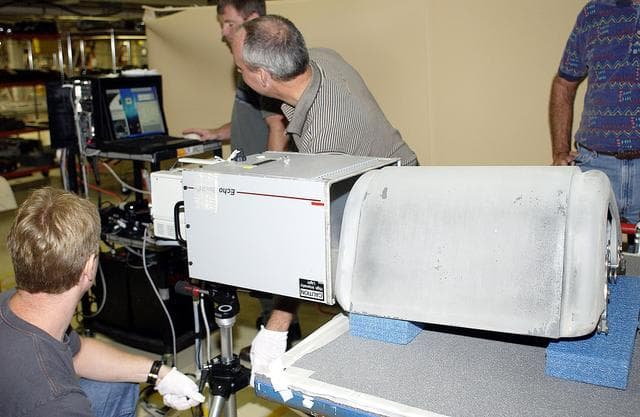
NASA image: KENNEDY SPACE CENTER, FLA. - In the Orbiter Processing Facility, United Space Alliance workers (left to right) Jim Landy, Paul Ogletree, Dan Kenna and Dan Phillips check results of flash thermography on the Reinforced Carbon Carbon panel on the table (foreground).  Attached to the leading edge of the wing of the orbiters,  the gray carbon composite RCC panels have sufficient strength to withstand the aerodynamic forces experienced during launch and reentry, which can reach as high as 800 pounds per square foot.  The operating range of RCC is from minus 250º F to about 3,000º F, the temperature produced by friction with the atmosphere during reentry.
Image
Sep 9, 2003

KENNEDY SPACE CENTER, FLA. - In the Orbiter Processing Facility, United Space Alliance workers (left to right) Jim Landy, Paul Ogletree, Dan Kenna and Dan Phillips check results of flash thermography on the Reinforced Carbon Carbon panel on the table (foreground). Attached to the leading edge of the wing of the orbiters, the gray carbon composite RCC panels have sufficient strength to withstand the aerodynamic forces experienced during launch and reentry, which can reach as high as 800 pounds per square foot. The operating range of RCC is from minus 250º F to about 3,000º F, the temperature produced by friction with the atmosphere during reentry.

KENNEDY SPACE CENTER, FLA. - In the Orbiter Processing Facility, United Space Alliance workers (left to right) Jim...
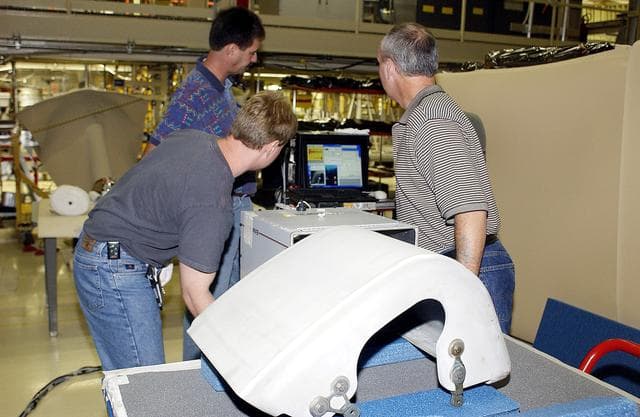
NASA image: KENNEDY SPACE CENTER, FLA. - In the Orbiter Processing Facility, United Space Alliance workers Jim Landy (front), Dan Phillips and Dan Kenna watch a monitor showing results of flash thermography on the Reinforced Carbon Carbon panel on the table (foreground).  Attached to the leading edge of the wing of the orbiters,  the gray carbon composite RCC panels have sufficient strength to withstand the aerodynamic forces experienced during launch and reentry, which can reach as high as 800 pounds per square foot.  The operating range of RCC is from minus 250º F to about 3,000º F, the temperature produced by friction with the atmosphere during reentry.
Image
Sep 9, 2003

KENNEDY SPACE CENTER, FLA. - In the Orbiter Processing Facility, United Space Alliance workers Jim Landy (front), Dan Phillips and Dan Kenna watch a monitor showing results of flash thermography on the Reinforced Carbon Carbon panel on the table (foreground). Attached to the leading edge of the wing of the orbiters, the gray carbon composite RCC panels have sufficient strength to withstand the aerodynamic forces experienced during launch and reentry, which can reach as high as 800 pounds per square foot. The operating range of RCC is from minus 250º F to about 3,000º F, the temperature produced by friction with the atmosphere during reentry.

KENNEDY SPACE CENTER, FLA. - In the Orbiter Processing Facility, United Space Alliance workers Jim Landy (front),...
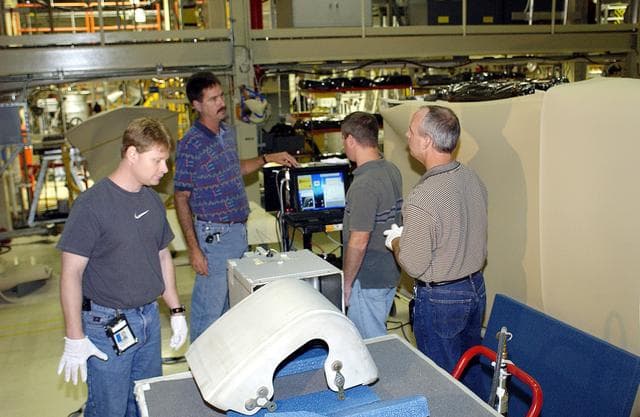
NASA image: KENNEDY SPACE CENTER, FLA. - In the Orbiter Processing Facility, United Space Alliance workers (left to right) Jim Landy, Dan Phillips, Paul Ogletree and Dan Kenna check results of flash thermography on the Reinforced Carbon Carbon panel on the table (foreground).  Attached to the leading edge of the wing of the orbiters,  the gray carbon composite RCC panels have sufficient strength to withstand the aerodynamic forces experienced during launch and reentry, which can reach as high as 800 pounds per square foot.  The operating range of RCC is from minus 250º F to about 3,000º F, the temperature produced by friction with the atmosphere during reentry.
Image
Sep 9, 2003

KENNEDY SPACE CENTER, FLA. - In the Orbiter Processing Facility, United Space Alliance workers (left to right) Jim Landy, Dan Phillips, Paul Ogletree and Dan Kenna check results of flash thermography on the Reinforced Carbon Carbon panel on the table (foreground). Attached to the leading edge of the wing of the orbiters, the gray carbon composite RCC panels have sufficient strength to withstand the aerodynamic forces experienced during launch and reentry, which can reach as high as 800 pounds per square foot. The operating range of RCC is from minus 250º F to about 3,000º F, the temperature produced by friction with the atmosphere during reentry.

KENNEDY SPACE CENTER, FLA. - In the Orbiter Processing Facility, United Space Alliance workers (left to right) Jim...
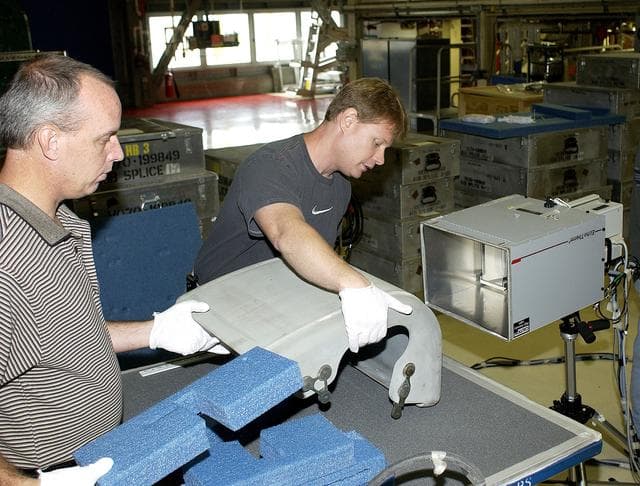
NASA image: KENNEDY SPACE CENTER, FLA. - In the Orbiter Processing Facility, United Space Alliance workers Dan Kenna and Jim Landy prepare to examine a Reinforced Carbon Carbon panel using flash thermography.  Attached to the leading edge of the wing of the orbiters,  the gray carbon composite RCC panels have sufficient strength to withstand the aerodynamic forces experienced during launch and reentry, which can reach as high as 800 pounds per square foot.  The operating range of RCC is from minus 250º F to about 3,000º F, the temperature produced by friction with the atmosphere during reentry.
Image
Sep 9, 2003

KENNEDY SPACE CENTER, FLA. - In the Orbiter Processing Facility, United Space Alliance workers Dan Kenna and Jim Landy prepare to examine a Reinforced Carbon Carbon panel using flash thermography. Attached to the leading edge of the wing of the orbiters, the gray carbon composite RCC panels have sufficient strength to withstand the aerodynamic forces experienced during launch and reentry, which can reach as high as 800 pounds per square foot. The operating range of RCC is from minus 250º F to about 3,000º F, the temperature produced by friction with the atmosphere during reentry.

KENNEDY SPACE CENTER, FLA. - In the Orbiter Processing Facility, United Space Alliance workers Dan Kenna and Jim...

KSC
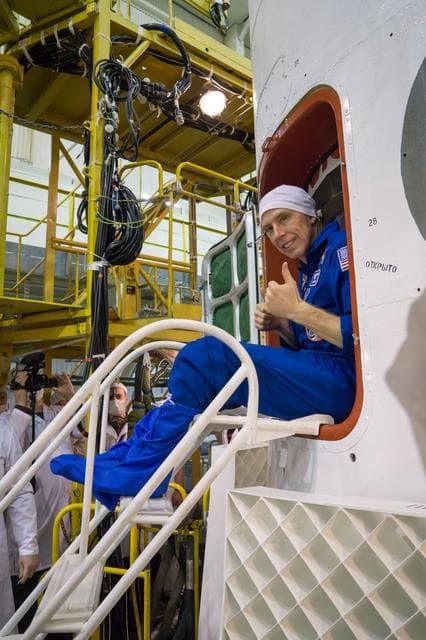
NASA image: jsc2018e025587
Image
Mar 16, 2018

jsc2018e025587

jsc2018e025587 - At the Baikonur Cosmodrome in Kazakhstan, Expedition 555 crewmember Drew Feustel of NASA flashes a...

JSC

NASA image: Microgravity
Image
Jul 27, 1999

Microgravity

A Memphis student working at the University of Alabama in Huntsville prepares samples for the first protein crystal...

MSFC
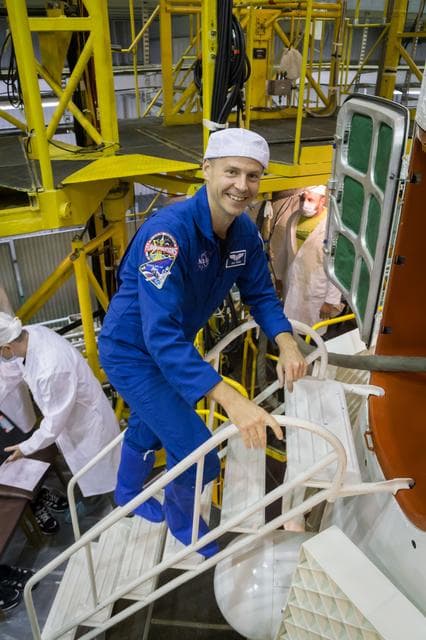
NASA image: jsc2018e086411
Image
Oct 6, 2018

jsc2018e086411

At the Baikonur Cosmodrome in Kazakhstan, Expedition 57 crewmember Nick Hague of NASA flashes a smile Oct. 6 as he...

JSC
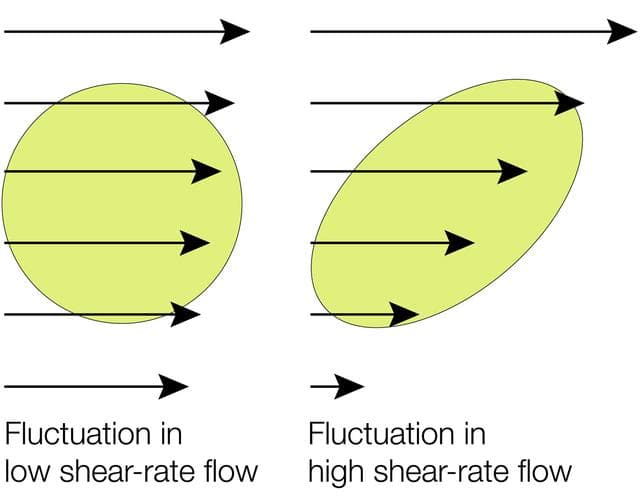
NASA image: Microgravity
Image
Jan 24, 2001

Microgravity

The Critical Viscosity of Xenon Experiment (CVX-2) on the STS-107 Research 1 mission in 2002 will measure the...

MSFC
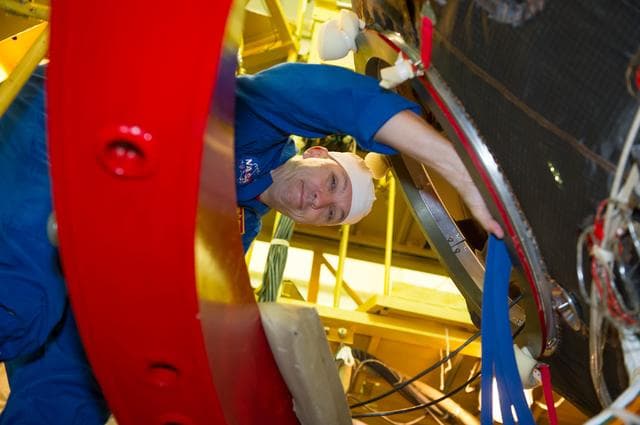
NASA image: jsc2017e096663
Image
Jul 17, 2017

jsc2017e096663

jsc2017e096663 (July 17, 2017) --- In the Integration Facility at the Baikonur Cosmodrome in Kazakhstan, Expedition...

JSC
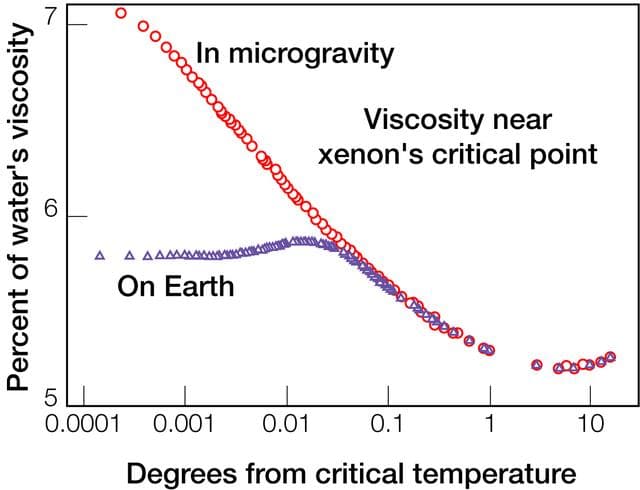
NASA image: Microgravity
Image
Jan 24, 2001

Microgravity

The Critical Viscosity of Xenon Experiment (CVX-2) on the STS-107 Research 1 mission in 2002 will measure the...

MSFC
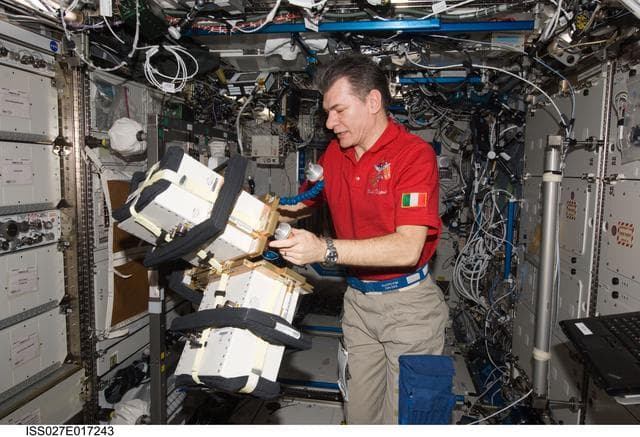
NASA image: Nespoli works with ALTEA-SHIELD Hardware in the US Laboratory
Image
Apr 23, 2011

Nespoli works with ALTEA-SHIELD Hardware in the US Laboratory

ISS027-E-017243 (23 April 2011) --- European Space Agency astronaut Paolo Nespoli, Expedition 27 flight engineer,...

JSC
PreviousPage 4 of 19Next

Frequently Asked Questions About NASA Images

Are NASA images free to use?+
Yes, most NASA images are in the public domain and are free to use for educational, informational, and personal purposes. NASA's media usage guidelines state that NASA material is not copyrighted unless otherwise noted. However, the NASA logo and certain insignia are protected. Some images may include identifiable individuals or third-party content that requires additional permissions. Always check the specific image's usage rights and credit NASA as the source.
How many images does NASA have?+
NASA's Image and Video Library contains over 140,000 publicly accessible images, videos, and audio files spanning the agency's entire history, from the Mercury program of the 1960s to the latest James Webb Space Telescope discoveries. The collection grows daily as new missions capture imagery and archival materials are digitized. Individual mission archives, such as Mars rover photos, contain hundreds of thousands of additional images.
Can I download NASA images?+
Yes, you can download NASA images in multiple resolutions directly from this gallery. Each image detail page provides download links for original (full resolution), large (1920px), medium (960px), small (480px), and thumbnail sizes. NASA encourages the public to use these images for education, media, and personal projects. High-resolution originals are ideal for printing and professional use.

Explore More NASA Content

Astronomy Picture of the Day

Daily curated space image

Mars Rover Photos

Curiosity & Perseverance images

Earth from Space

DSCOVR EPIC daily images

Launch Schedule

Upcoming rocket launches

Space News

Mission updates & discoveries

JSC
JSC
KSC

KENNEDY SPACE CENTER, FLA. - Members of the Stafford-Covey Return to Flight Task Group (SCTG) look over equipment in...

KSC
KSC
KSC
KSC
KSC
KSC
KSC
KSC