CosmosObservatory
Explore
Solar System
Live
Learn
Tools
About
Cosmos Observatory
ToolsAbout
Cosmos Observatory

Explore the universe through NASA data, real-time ISS tracking, Mars rover imagery, asteroid monitoring, and comprehensive space encyclopedia. Your gateway to the cosmos.

Explore

  • APOD
  • Mars Rovers
  • Earth Imagery
  • NASA Gallery
  • ISS Tracker

Data

  • Asteroids
  • Solar System
  • Exoplanets
  • Space Weather
  • Launches

Tools

  • Glossary
  • News
  • Calculators

Legal

  • About
  • Privacy Policy
  • Terms of Use
  • Space Tools
  • Contact

Stay updated with the cosmos

Get weekly digests of APOD highlights, upcoming launches, and space events.

© 2026 Cosmos Observatory. All rights reserved. Built with for space enthusiasts.

This website is not affiliated with, maintained, authorized, endorsed by, or in any way officially connected with NASA or any of its subsidiaries or affiliates. All NASA imagery is in the public domain unless otherwise noted. Data sourced from NASA Open APIs, Launch Library 2, and other open data services.

NASA Gallery

Explore NASA's vast collection of space images, videos, and audio from missions past and present.

  1. Home
  2. /
  3. NASA Gallery

NASA's Image and Video Library: A Visual Archive of Space Exploration

NASA's Image and Video Library is one of the most comprehensive public archives of space imagery in the world, containing over 140,000 images, videos, and audio recordings spanning more than six decades of space exploration. From the earliest Mercury and Gemini missions through the Apollo Moon landings, the Space Shuttle era, and today's cutting-edge observations from the James Webb Space Telescope, this collection documents humanity's journey into the cosmos.

The library includes imagery from diverse sources: telescopes like Hubble and Webb that capture deep-space nebulae, galaxies, and exoplanets; planetary missions like the Mars rovers ( browse Mars photos) and Cassini at Saturn; Earth observation satellites ( see EPIC imagery); astronaut photography from the ISS; and documentation of rocket launches, spacecraft assembly, and ground testing. Most NASA images are in the public domain and free to download at full resolution for educational, editorial, and personal use.

Use the search bar above to find specific subjects — try queries like "Apollo 11," "Hubble Deep Field," "Mars surface," or "astronaut EVA." You can also filter by media type (image, video, or audio). For a daily curated experience, visit the Astronomy Picture of the Day.

Showing results for "Robotic Technology"

1,570 results found - Page 34 of 66

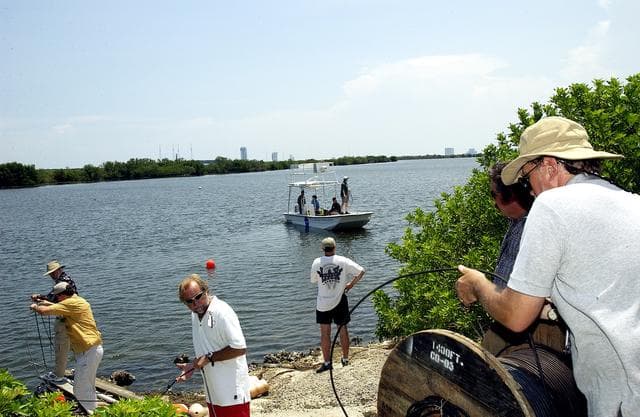
NASA image: KENNEDY SPACE CENTER, FLA.  -  Research team members roll out acoustic cable to the water's edge as others stand by in a watercraft during underwater acoustic research being conducted in the Launch Complex 39 turn basin.  Several government agencies, including NASA, NOAA, the Navy, the Coast Guard, and the Florida Fish and Wildlife Commission are involved in the testing. The research involves demonstrations of passive and active sensor technologies, with applications in fields ranging from marine biological research to homeland security. The work is also serving as a pilot project to assess the cooperation between the agencies involved. Equipment under development includes a passive acoustic monitor developed by NASA’s Jet Propulsion Laboratory, and mobile robotic sensors from the Navy’s Mobile Diving and Salvage Unit.
Image
Aug 18, 2003

KENNEDY SPACE CENTER, FLA. - Research team members roll out acoustic cable to the water's edge as others stand by in a watercraft during underwater acoustic research being conducted in the Launch Complex 39 turn basin. Several government agencies, including NASA, NOAA, the Navy, the Coast Guard, and the Florida Fish and Wildlife Commission are involved in the testing. The research involves demonstrations of passive and active sensor technologies, with applications in fields ranging from marine biological research to homeland security. The work is also serving as a pilot project to assess the cooperation between the agencies involved. Equipment under development includes a passive acoustic monitor developed by NASA’s Jet Propulsion Laboratory, and mobile robotic sensors from the Navy’s Mobile Diving and Salvage Unit.

KENNEDY SPACE CENTER, FLA. - Research team members roll out acoustic cable to the water's edge as others stand by in...

KSC
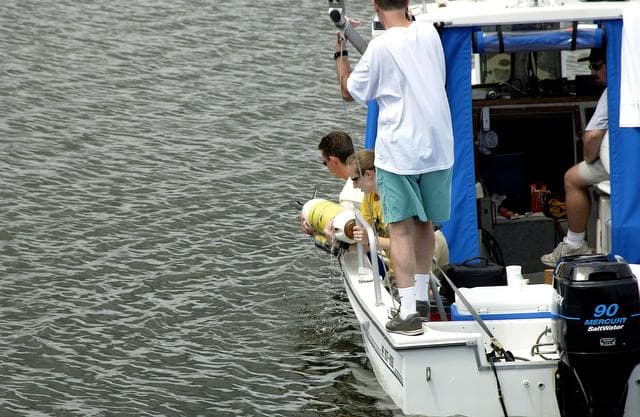
NASA image: KENNEDY SPACE CENTER, FLA.  -  A research team member aboard one of the watercraft being utilized to conduct underwater acoustic research in the Launch Complex 39 turn basin lifts some of the project's equipment from the water.  Several government agencies, including NASA, NOAA, the Navy, the Coast Guard, and the Florida Fish and Wildlife Commission are involved in the testing. The research involves demonstrations of passive and active sensor technologies, with applications in fields ranging from marine biological research to homeland security. The work is also serving as a pilot project to assess the cooperation between the agencies involved. Equipment under development includes a passive acoustic monitor developed by NASA’s Jet Propulsion Laboratory, and mobile robotic sensors from the Navy’s Mobile Diving and Salvage Unit.
Image
Aug 19, 2003

KENNEDY SPACE CENTER, FLA. - A research team member aboard one of the watercraft being utilized to conduct underwater acoustic research in the Launch Complex 39 turn basin lifts some of the project's equipment from the water. Several government agencies, including NASA, NOAA, the Navy, the Coast Guard, and the Florida Fish and Wildlife Commission are involved in the testing. The research involves demonstrations of passive and active sensor technologies, with applications in fields ranging from marine biological research to homeland security. The work is also serving as a pilot project to assess the cooperation between the agencies involved. Equipment under development includes a passive acoustic monitor developed by NASA’s Jet Propulsion Laboratory, and mobile robotic sensors from the Navy’s Mobile Diving and Salvage Unit.
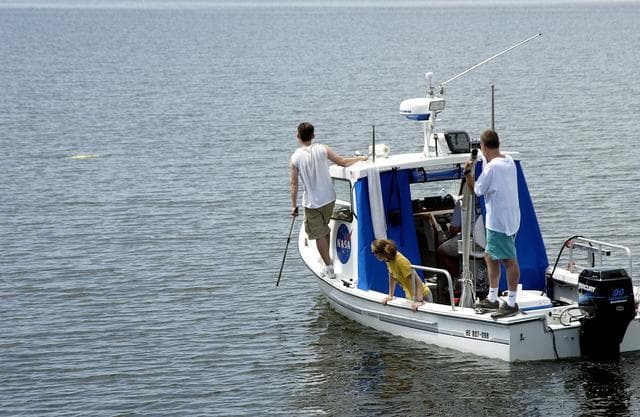
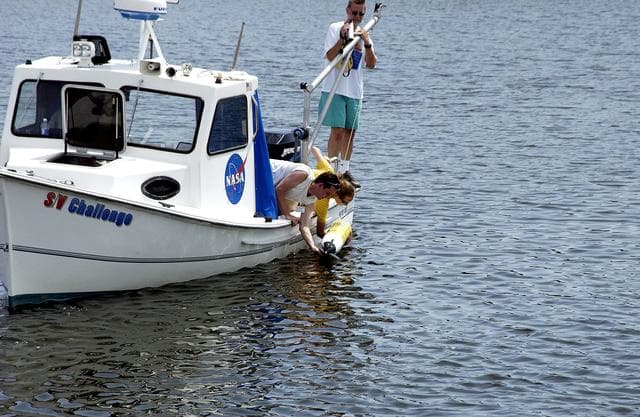
NASA image: KENNEDY SPACE CENTER, FLA.  -  A research team member aboard one of the watercraft being utilized to conduct underwater acoustic research in the Launch Complex 39 turn basin releases some of the project's equipment into the water.  Several government agencies, including NASA, NOAA, the Navy, the Coast Guard, and the Florida Fish and Wildlife Commission are involved in the testing. The research involves demonstrations of passive and active sensor technologies, with applications in fields ranging from marine biological research to homeland security. The work is also serving as a pilot project to assess the cooperation between the agencies involved. Equipment under development includes a passive acoustic monitor developed by NASA’s Jet Propulsion Laboratory, and mobile robotic sensors from the Navy’s Mobile Diving and Salvage Unit.
Image
Aug 19, 2003

KENNEDY SPACE CENTER, FLA. - A research team member aboard one of the watercraft being utilized to conduct underwater acoustic research in the Launch Complex 39 turn basin releases some of the project's equipment into the water. Several government agencies, including NASA, NOAA, the Navy, the Coast Guard, and the Florida Fish and Wildlife Commission are involved in the testing. The research involves demonstrations of passive and active sensor technologies, with applications in fields ranging from marine biological research to homeland security. The work is also serving as a pilot project to assess the cooperation between the agencies involved. Equipment under development includes a passive acoustic monitor developed by NASA’s Jet Propulsion Laboratory, and mobile robotic sensors from the Navy’s Mobile Diving and Salvage Unit.
NASA image: KENNEDY SPACE CENTER, FLA.  -  Research team members aboard one of the watercraft being utilized to conduct underwater acoustic research in the Launch Complex 39 turn basin monitor some of the project's equipment just released into the water.  Several government agencies, including NASA, NOAA, the Navy, the Coast Guard, and the Florida Fish and Wildlife Commission are involved in the testing. The research involves demonstrations of passive and active sensor technologies, with applications in fields ranging from marine biological research to homeland security. The work is also serving as a pilot project to assess the cooperation between the agencies involved. Equipment under development includes a passive acoustic monitor developed by NASA’s Jet Propulsion Laboratory, and mobile robotic sensors from the Navy’s Mobile Diving and Salvage Unit.
Image
Aug 19, 2003

KENNEDY SPACE CENTER, FLA. - Research team members aboard one of the watercraft being utilized to conduct underwater acoustic research in the Launch Complex 39 turn basin monitor some of the project's equipment just released into the water. Several government agencies, including NASA, NOAA, the Navy, the Coast Guard, and the Florida Fish and Wildlife Commission are involved in the testing. The research involves demonstrations of passive and active sensor technologies, with applications in fields ranging from marine biological research to homeland security. The work is also serving as a pilot project to assess the cooperation between the agencies involved. Equipment under development includes a passive acoustic monitor developed by NASA’s Jet Propulsion Laboratory, and mobile robotic sensors from the Navy’s Mobile Diving and Salvage Unit.
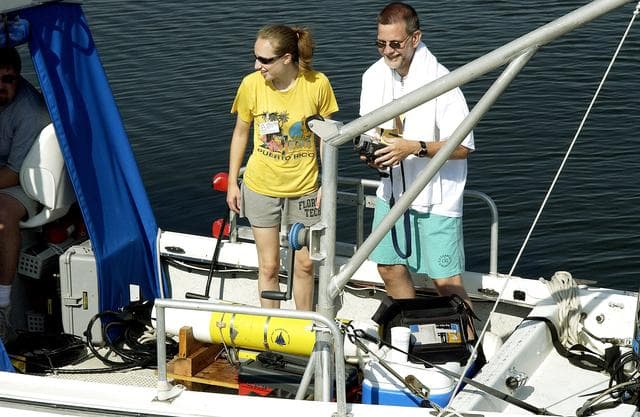
NASA image: KENNEDY SPACE CENTER, FLA.  -  Research team members take their places on one of the watercraft being utilized to conduct underwater acoustic research in the Launch Complex 39 turn basin.  Several government agencies, including NASA, NOAA, the Navy, the Coast Guard, and the Florida Fish and Wildlife Commission are involved in the testing. The research involves demonstrations of passive and active sensor technologies, with applications in fields ranging from marine biological research to homeland security. The work is also serving as a pilot project to assess the cooperation between the agencies involved. Equipment under development includes a passive acoustic monitor developed by NASA’s Jet Propulsion Laboratory, and mobile robotic sensors from the Navy’s Mobile Diving and Salvage Unit.
Image
Aug 19, 2003

KENNEDY SPACE CENTER, FLA. - Research team members take their places on one of the watercraft being utilized to conduct underwater acoustic research in the Launch Complex 39 turn basin. Several government agencies, including NASA, NOAA, the Navy, the Coast Guard, and the Florida Fish and Wildlife Commission are involved in the testing. The research involves demonstrations of passive and active sensor technologies, with applications in fields ranging from marine biological research to homeland security. The work is also serving as a pilot project to assess the cooperation between the agencies involved. Equipment under development includes a passive acoustic monitor developed by NASA’s Jet Propulsion Laboratory, and mobile robotic sensors from the Navy’s Mobile Diving and Salvage Unit.

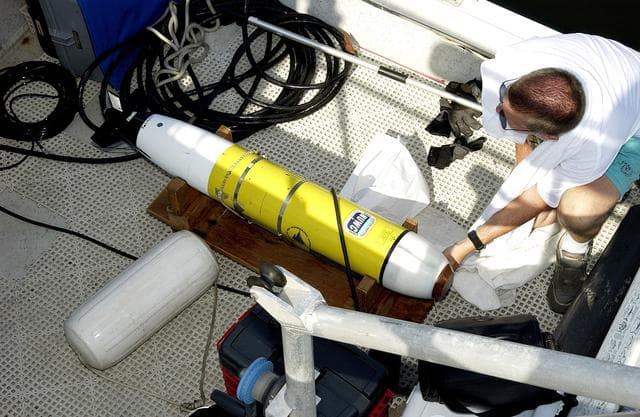
NASA image: KENNEDY SPACE CENTER, FLA.  -  A research team member aboard one of the watercraft being utilized to conduct underwater acoustic research in the Launch Complex 39 turn basin prepares some of the project's equipment for placement in the water.  Several government agencies, including NASA, NOAA, the Navy, the Coast Guard, and the Florida Fish and Wildlife Commission are involved in the testing. The research involves demonstrations of passive and active sensor technologies, with applications in fields ranging from marine biological research to homeland security. The work is also serving as a pilot project to assess the cooperation between the agencies involved. Equipment under development includes a passive acoustic monitor developed by NASA’s Jet Propulsion Laboratory, and mobile robotic sensors from the Navy’s Mobile Diving and Salvage Unit.
Image
Aug 19, 2003

KENNEDY SPACE CENTER, FLA. - A research team member aboard one of the watercraft being utilized to conduct underwater acoustic research in the Launch Complex 39 turn basin prepares some of the project's equipment for placement in the water. Several government agencies, including NASA, NOAA, the Navy, the Coast Guard, and the Florida Fish and Wildlife Commission are involved in the testing. The research involves demonstrations of passive and active sensor technologies, with applications in fields ranging from marine biological research to homeland security. The work is also serving as a pilot project to assess the cooperation between the agencies involved. Equipment under development includes a passive acoustic monitor developed by NASA’s Jet Propulsion Laboratory, and mobile robotic sensors from the Navy’s Mobile Diving and Salvage Unit.

NASA image: KENNEDY SPACE CENTER, FLA.  -  Research team members aboard one of the watercraft being utilized to conduct underwater acoustic research in the Launch Complex 39 turn basin release some of the project's equipment into the water.  Several government agencies, including NASA, NOAA, the Navy, the Coast Guard, and the Florida Fish and Wildlife Commission are involved in the testing. The research involves demonstrations of passive and active sensor technologies, with applications in fields ranging from marine biological research to homeland security. The work is also serving as a pilot project to assess the cooperation between the agencies involved. Equipment under development includes a passive acoustic monitor developed by NASA’s Jet Propulsion Laboratory, and mobile robotic sensors from the Navy’s Mobile Diving and Salvage Unit.
Image
Aug 19, 2003

KENNEDY SPACE CENTER, FLA. - Research team members aboard one of the watercraft being utilized to conduct underwater acoustic research in the Launch Complex 39 turn basin release some of the project's equipment into the water. Several government agencies, including NASA, NOAA, the Navy, the Coast Guard, and the Florida Fish and Wildlife Commission are involved in the testing. The research involves demonstrations of passive and active sensor technologies, with applications in fields ranging from marine biological research to homeland security. The work is also serving as a pilot project to assess the cooperation between the agencies involved. Equipment under development includes a passive acoustic monitor developed by NASA’s Jet Propulsion Laboratory, and mobile robotic sensors from the Navy’s Mobile Diving and Salvage Unit.

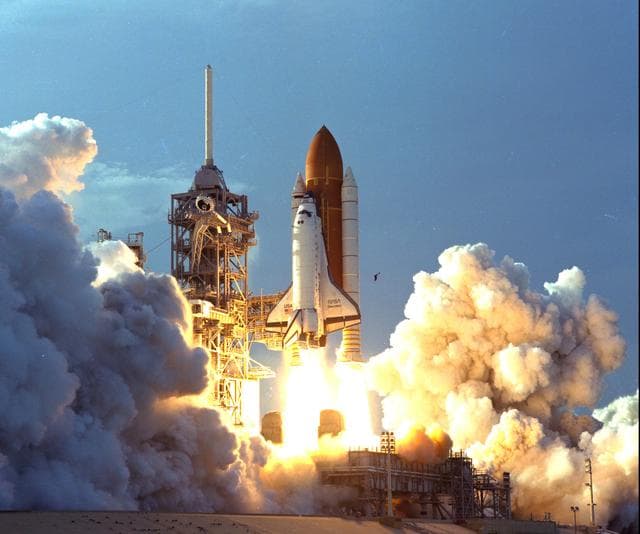
NASA image: KENNEDY SPACE CENTER, FLA. - The turbulent weather common to a Florida afternoon in the summer subsides into a serene canopy of cornflower blue, and a manmade "bird" takes flight.  The Space Shuttle Discovery soars skyward from Launch Pad 39B on Mission STS-64 at 6:22:35 p.m. EDT, Sept. 9.  On board are a crew of six: Commander Richard N. Richards; Pilot L. Blaine Hammond Jr.; and Mission Specialists Mark C. Lee, Carl J. Meade, Susan J. Helms and Dr. J.M. Linenger.  Payloads for the flight include the Lidar In-Space Technology Experiment (LITE), the Shuttle Pointed Autonomous Research Tool for Astronomy-201 (SPARTAN-201) and the Robot Operated Material Processing System (ROMPS).  Mission Specialists Lee and Meade also are scheduled to perform an extravehicular activity during the 64th Shuttle mission.
Image
Sep 9, 1994

KENNEDY SPACE CENTER, FLA. - The turbulent weather common to a Florida afternoon in the summer subsides into a serene canopy of cornflower blue, and a manmade "bird" takes flight. The Space Shuttle Discovery soars skyward from Launch Pad 39B on Mission STS-64 at 6:22:35 p.m. EDT, Sept. 9. On board are a crew of six: Commander Richard N. Richards; Pilot L. Blaine Hammond Jr.; and Mission Specialists Mark C. Lee, Carl J. Meade, Susan J. Helms and Dr. J.M. Linenger. Payloads for the flight include the Lidar In-Space Technology Experiment (LITE), the Shuttle Pointed Autonomous Research Tool for Astronomy-201 (SPARTAN-201) and the Robot Operated Material Processing System (ROMPS). Mission Specialists Lee and Meade also are scheduled to perform an extravehicular activity during the 64th Shuttle mission.

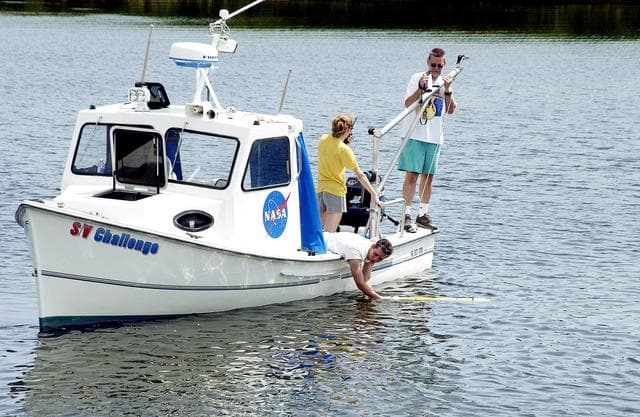
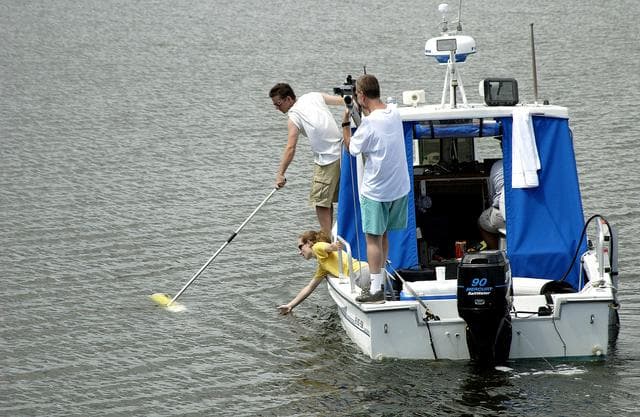
NASA image: KENNEDY SPACE CENTER, FLA.  -  Research team members aboard one of the watercraft being utilized to conduct underwater acoustic research in the Launch Complex 39 turn basin retrieve some of the project's equipment from the water.  Several government agencies, including NASA, NOAA, the Navy, the Coast Guard, and the Florida Fish and Wildlife Commission are involved in the testing. The research involves demonstrations of passive and active sensor technologies, with applications in fields ranging from marine biological research to homeland security. The work is also serving as a pilot project to assess the cooperation between the agencies involved. Equipment under development includes a passive acoustic monitor developed by NASA’s Jet Propulsion Laboratory, and mobile robotic sensors from the Navy’s Mobile Diving and Salvage Unit.
Image
Aug 19, 2003

KENNEDY SPACE CENTER, FLA. - Research team members aboard one of the watercraft being utilized to conduct underwater acoustic research in the Launch Complex 39 turn basin retrieve some of the project's equipment from the water. Several government agencies, including NASA, NOAA, the Navy, the Coast Guard, and the Florida Fish and Wildlife Commission are involved in the testing. The research involves demonstrations of passive and active sensor technologies, with applications in fields ranging from marine biological research to homeland security. The work is also serving as a pilot project to assess the cooperation between the agencies involved. Equipment under development includes a passive acoustic monitor developed by NASA’s Jet Propulsion Laboratory, and mobile robotic sensors from the Navy’s Mobile Diving and Salvage Unit.
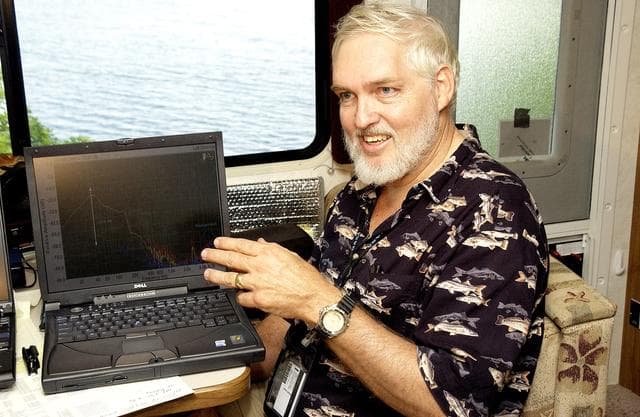
NASA image: KENNEDY SPACE CENTER, FLA.  -  Dr. Grant Gilmore, Dynamac Corp., utilizes a laptop computer to explain aspects of the underwater acoustic research under way in the Launch Complex 39 turn basin.  Several government agencies, including NASA, NOAA, the Navy, the Coast Guard, and the Florida Fish and Wildlife Commission are involved in the testing. The research involves demonstrations of passive and active sensor technologies, with applications in fields ranging from marine biological research to homeland security. The work is also serving as a pilot project to assess the cooperation between the agencies involved. Equipment under development includes a passive acoustic monitor developed by NASA’s Jet Propulsion Laboratory, and mobile robotic sensors from the Navy’s Mobile Diving and Salvage Unit.
Image
Aug 18, 2003

KENNEDY SPACE CENTER, FLA. - Dr. Grant Gilmore, Dynamac Corp., utilizes a laptop computer to explain aspects of the underwater acoustic research under way in the Launch Complex 39 turn basin. Several government agencies, including NASA, NOAA, the Navy, the Coast Guard, and the Florida Fish and Wildlife Commission are involved in the testing. The research involves demonstrations of passive and active sensor technologies, with applications in fields ranging from marine biological research to homeland security. The work is also serving as a pilot project to assess the cooperation between the agencies involved. Equipment under development includes a passive acoustic monitor developed by NASA’s Jet Propulsion Laboratory, and mobile robotic sensors from the Navy’s Mobile Diving and Salvage Unit.
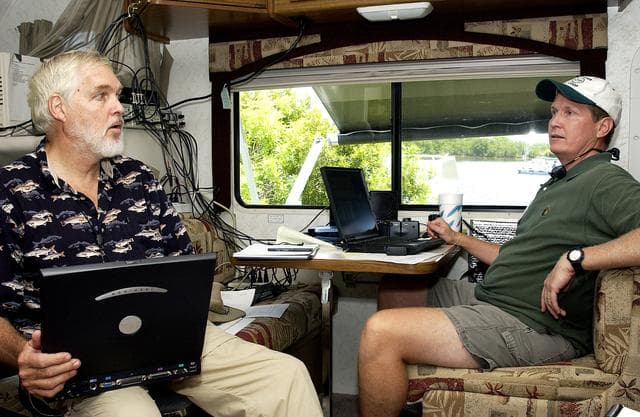
NASA image: KENNEDY SPACE CENTER, FLA.  -  Dr. Grant Gilmore (left), Dynamac Corp., talks to another member of the research team conducting underwater acoustic research in the Launch Complex 39 turn basin.  Several government agencies, including NASA, NOAA, the Navy, the Coast Guard, and the Florida Fish and Wildlife Commission are involved in the testing. The research involves demonstrations of passive and active sensor technologies, with applications in fields ranging from marine biological research to homeland security. The work is also serving as a pilot project to assess the cooperation between the agencies involved. Equipment under development includes a passive acoustic monitor developed by NASA’s Jet Propulsion Laboratory, and mobile robotic sensors from the Navy’s Mobile Diving and Salvage Unit.
Image
Aug 18, 2003

KENNEDY SPACE CENTER, FLA. - Dr. Grant Gilmore (left), Dynamac Corp., talks to another member of the research team conducting underwater acoustic research in the Launch Complex 39 turn basin. Several government agencies, including NASA, NOAA, the Navy, the Coast Guard, and the Florida Fish and Wildlife Commission are involved in the testing. The research involves demonstrations of passive and active sensor technologies, with applications in fields ranging from marine biological research to homeland security. The work is also serving as a pilot project to assess the cooperation between the agencies involved. Equipment under development includes a passive acoustic monitor developed by NASA’s Jet Propulsion Laboratory, and mobile robotic sensors from the Navy’s Mobile Diving and Salvage Unit.

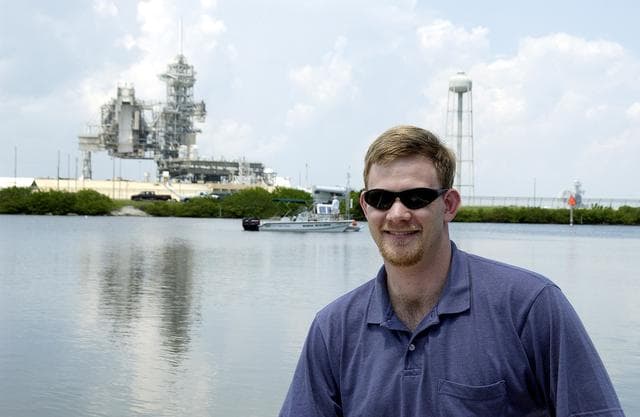
NASA image: KENNEDY SPACE CENTER, FLA.  -  Justin Manley, of the National Oceanic and Atmospheric Administration, is a member of the research team conducting underwater acoustic research in the Launch Complex 39 turn basin near Launch Pad 39A.  Several government agencies, including NASA, NOAA, the Navy, the Coast Guard, and the Florida Fish and Wildlife Commission are involved in the testing. The research involves demonstrations of passive and active sensor technologies, with applications in fields ranging from marine biological research to homeland security. The work is also serving as a pilot project to assess the cooperation between the agencies involved. Equipment under development includes a passive acoustic monitor developed by NASA’s Jet Propulsion Laboratory, and mobile robotic sensors from the Navy’s Mobile Diving and Salvage Unit.
Image
Aug 18, 2003

KENNEDY SPACE CENTER, FLA. - Justin Manley, of the National Oceanic and Atmospheric Administration, is a member of the research team conducting underwater acoustic research in the Launch Complex 39 turn basin near Launch Pad 39A. Several government agencies, including NASA, NOAA, the Navy, the Coast Guard, and the Florida Fish and Wildlife Commission are involved in the testing. The research involves demonstrations of passive and active sensor technologies, with applications in fields ranging from marine biological research to homeland security. The work is also serving as a pilot project to assess the cooperation between the agencies involved. Equipment under development includes a passive acoustic monitor developed by NASA’s Jet Propulsion Laboratory, and mobile robotic sensors from the Navy’s Mobile Diving and Salvage Unit.

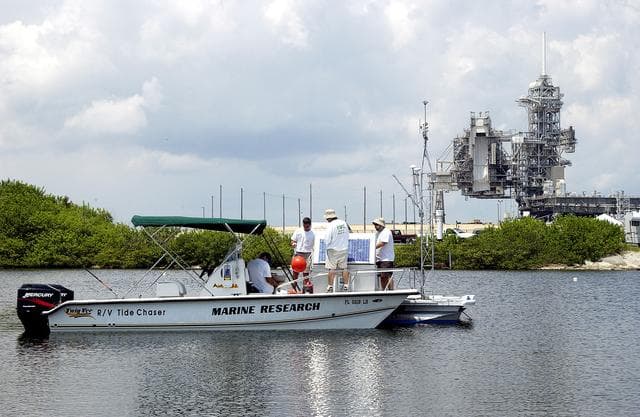
NASA image: KENNEDY SPACE CENTER, FLA.  -  Researchers utilize several types of watercraft to conduct underwater acoustic research in the Launch Complex 39 turn basin near Launch Pad 39A.  Several government agencies, including NASA, NOAA, the Navy, the Coast Guard, and the Florida Fish and Wildlife Commission are involved in the testing. The research involves demonstrations of passive and active sensor technologies, with applications in fields ranging from marine biological research to homeland security. The work is also serving as a pilot project to assess the cooperation between the agencies involved. Equipment under development includes a passive acoustic monitor developed by NASA’s Jet Propulsion Laboratory, and mobile robotic sensors from the Navy’s Mobile Diving and Salvage Unit.
Image
Aug 18, 2003

KENNEDY SPACE CENTER, FLA. - Researchers utilize several types of watercraft to conduct underwater acoustic research in the Launch Complex 39 turn basin near Launch Pad 39A. Several government agencies, including NASA, NOAA, the Navy, the Coast Guard, and the Florida Fish and Wildlife Commission are involved in the testing. The research involves demonstrations of passive and active sensor technologies, with applications in fields ranging from marine biological research to homeland security. The work is also serving as a pilot project to assess the cooperation between the agencies involved. Equipment under development includes a passive acoustic monitor developed by NASA’s Jet Propulsion Laboratory, and mobile robotic sensors from the Navy’s Mobile Diving and Salvage Unit.

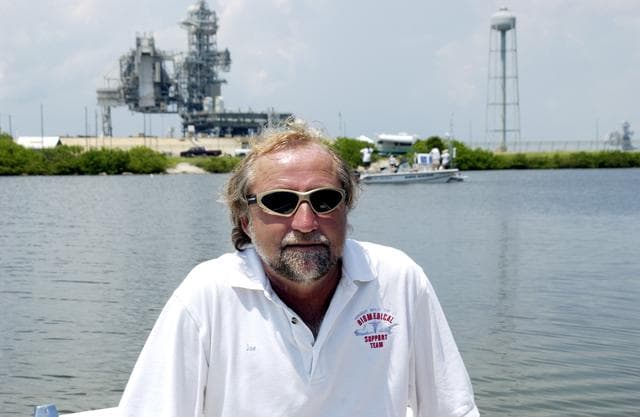
NASA image: KENNEDY SPACE CENTER, FLA.  -  Joe Bartoszek, NASA, is a member of the research team conducting underwater acoustic research in the Launch Complex 39 turn basin near Launch Pad 39A.  Several government agencies, including NASA, NOAA, the Navy, the Coast Guard, and the Florida Fish and Wildlife Commission are involved in the testing. The research involves demonstrations of passive and active sensor technologies, with applications in fields ranging from marine biological research to homeland security. The work is also serving as a pilot project to assess the cooperation between the agencies involved. Equipment under development includes a passive acoustic monitor developed by NASA’s Jet Propulsion Laboratory, and mobile robotic sensors from the Navy’s Mobile Diving and Salvage Unit.
Image
Aug 18, 2003

KENNEDY SPACE CENTER, FLA. - Joe Bartoszek, NASA, is a member of the research team conducting underwater acoustic research in the Launch Complex 39 turn basin near Launch Pad 39A. Several government agencies, including NASA, NOAA, the Navy, the Coast Guard, and the Florida Fish and Wildlife Commission are involved in the testing. The research involves demonstrations of passive and active sensor technologies, with applications in fields ranging from marine biological research to homeland security. The work is also serving as a pilot project to assess the cooperation between the agencies involved. Equipment under development includes a passive acoustic monitor developed by NASA’s Jet Propulsion Laboratory, and mobile robotic sensors from the Navy’s Mobile Diving and Salvage Unit.

NASA image: Expedition 67 Space Station Crew Answers Texas High School Student Questions - Sept. 22, 2022
Video
Sep 22, 2022

Expedition 67 Space Station Crew Answers Texas High School Student Questions - Sept. 22, 2022

Aboard the International Space Station, NASA Expedition 67 Flight Engineers Kjell Lindgren and Bob Hines answered...

JSC
NASA image: KSC-2013-2865
Image
Jun 21, 2013

KSC-2013-2865

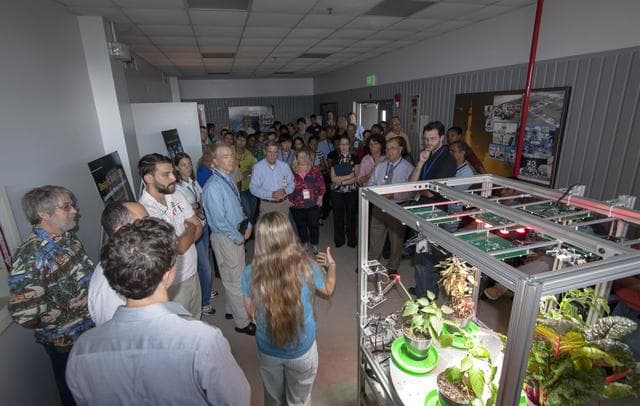
CAPE CANAVERAL, Fla. -- At the Kennedy Space Center in Florida, students from University of Colorado describe a...

KSC
NASA image: KSC-2013-2866
Image
Jun 21, 2013

KSC-2013-2866

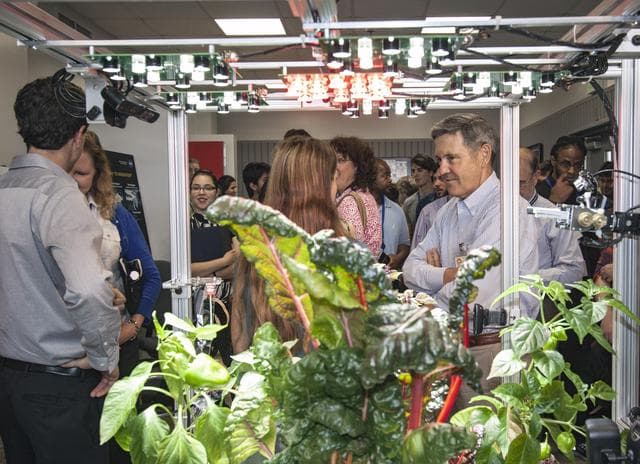
CAPE CANAVERAL, Fla. -- Kennedy Space Center Director Bob Cabana listens as a student from University of Colorado...

KSC
NASA image: Moon Express Media Event
Image
Nov 3, 2014

Moon Express Media Event

Rob Mueller, NASA senior technologist in the Surface Systems Office in Kennedy Space Center's Engineering and...

KSC
NASA image: Lunar Challenge Winner Tests Technology in NASA Thermal Vacuum Chamber
Image
Jul 30, 2025

Lunar Challenge Winner Tests Technology in NASA Thermal Vacuum Chamber

Employees from Environmental Test Facility at NASA’s Marshall Space Flight Center in Huntsville, Alabama, work with...

MSFC
NASA image: Lunar Challenge Winner Tests Technology in NASA Thermal Vacuum Chamber
Image
Jul 30, 2025

Lunar Challenge Winner Tests Technology in NASA Thermal Vacuum Chamber

Starpath’s rover sits on a concrete slab that will be used to mimic the rugged lunar surface within a vacuum chamber...

MSFC
NASA image: Lunar Challenge Winner Tests Technology in NASA Thermal Vacuum Chamber
Image
Jul 30, 2025

Lunar Challenge Winner Tests Technology in NASA Thermal Vacuum Chamber

On July 30, 2025, members of the Starpath team discuss what final preparations need to be made before the chamber is...

MSFC
NASA image: Lunar Challenge Winner Tests Technology in NASA Thermal Vacuum Chamber
Image
Jul 30, 2025

Lunar Challenge Winner Tests Technology in NASA Thermal Vacuum Chamber

NASA test engineers with the Environmental Test Facility at NASA’s Marshall Space Flight Center situate the rover...

MSFC
NASA image: Lunar Challenge Winner Tests Technology in NASA Thermal Vacuum Chamber
Image
Jul 30, 2025

Lunar Challenge Winner Tests Technology in NASA Thermal Vacuum Chamber

Starpath mechanical engineer Josh Kavilaveettil monitors a component of the rover, attached to wires, in preparation...

MSFC
NASA image: Lunar Challenge Winner Tests Technology in NASA Thermal Vacuum Chamber
Image
Jul 30, 2025

Lunar Challenge Winner Tests Technology in NASA Thermal Vacuum Chamber

Starpath’s rover sits atop a concrete slab at the mouth of the thermal vacuum chamber, ready to be closed in and...

MSFC
PreviousPage 34 of 66Next

Frequently Asked Questions About NASA Images

Are NASA images free to use?+
Yes, most NASA images are in the public domain and are free to use for educational, informational, and personal purposes. NASA's media usage guidelines state that NASA material is not copyrighted unless otherwise noted. However, the NASA logo and certain insignia are protected. Some images may include identifiable individuals or third-party content that requires additional permissions. Always check the specific image's usage rights and credit NASA as the source.
How many images does NASA have?+
NASA's Image and Video Library contains over 140,000 publicly accessible images, videos, and audio files spanning the agency's entire history, from the Mercury program of the 1960s to the latest James Webb Space Telescope discoveries. The collection grows daily as new missions capture imagery and archival materials are digitized. Individual mission archives, such as Mars rover photos, contain hundreds of thousands of additional images.
Can I download NASA images?+
Yes, you can download NASA images in multiple resolutions directly from this gallery. Each image detail page provides download links for original (full resolution), large (1920px), medium (960px), small (480px), and thumbnail sizes. NASA encourages the public to use these images for education, media, and personal projects. High-resolution originals are ideal for printing and professional use.

Explore More NASA Content

Astronomy Picture of the Day

Daily curated space image

Mars Rover Photos

Curiosity & Perseverance images

Earth from Space

DSCOVR EPIC daily images

Launch Schedule

Upcoming rocket launches

Space News

Mission updates & discoveries

KENNEDY SPACE CENTER, FLA. - A research team member aboard one of the watercraft being utilized to conduct...

KSC

KENNEDY SPACE CENTER, FLA. - A research team member aboard one of the watercraft being utilized to conduct...

KSC

KENNEDY SPACE CENTER, FLA. - Research team members aboard one of the watercraft being utilized to conduct underwater...

KSC

KENNEDY SPACE CENTER, FLA. - Research team members take their places on one of the watercraft being utilized to...

KSC

KENNEDY SPACE CENTER, FLA. - A research team member aboard one of the watercraft being utilized to conduct...

KSC

KENNEDY SPACE CENTER, FLA. - Research team members aboard one of the watercraft being utilized to conduct underwater...

KSC

KENNEDY SPACE CENTER, FLA. - The turbulent weather common to a Florida afternoon in the summer subsides into a...

KSC

KENNEDY SPACE CENTER, FLA. - Research team members aboard one of the watercraft being utilized to conduct underwater...

KSC

KENNEDY SPACE CENTER, FLA. - Dr. Grant Gilmore, Dynamac Corp., utilizes a laptop computer to explain aspects of the...

KSC

KENNEDY SPACE CENTER, FLA. - Dr. Grant Gilmore (left), Dynamac Corp., talks to another member of the research team...

KSC

KENNEDY SPACE CENTER, FLA. - Justin Manley, of the National Oceanic and Atmospheric Administration, is a member of...

KSC

KENNEDY SPACE CENTER, FLA. - Researchers utilize several types of watercraft to conduct underwater acoustic research...

KSC

KENNEDY SPACE CENTER, FLA. - Joe Bartoszek, NASA, is a member of the research team conducting underwater acoustic...

KSC