CosmosObservatory
Explore
Solar System
Live
Learn
Tools
About
Cosmos Observatory
ToolsAbout
Cosmos Observatory

Explore the universe through NASA data, real-time ISS tracking, Mars rover imagery, asteroid monitoring, and comprehensive space encyclopedia. Your gateway to the cosmos.

Explore

  • APOD
  • Mars Rovers
  • Earth Imagery
  • NASA Gallery
  • ISS Tracker

Data

  • Asteroids
  • Solar System
  • Exoplanets
  • Space Weather
  • Launches

Tools

  • Glossary
  • News
  • Calculators

Legal

  • About
  • Privacy Policy
  • Terms of Use
  • Space Tools
  • Contact

Stay updated with the cosmos

Get weekly digests of APOD highlights, upcoming launches, and space events.

© 2026 Cosmos Observatory. All rights reserved. Built with for space enthusiasts.

This website is not affiliated with, maintained, authorized, endorsed by, or in any way officially connected with NASA or any of its subsidiaries or affiliates. All NASA imagery is in the public domain unless otherwise noted. Data sourced from NASA Open APIs, Launch Library 2, and other open data services.

NASA Gallery

Explore NASA's vast collection of space images, videos, and audio from missions past and present.

  1. Home
  2. /
  3. NASA Gallery

NASA's Image and Video Library: A Visual Archive of Space Exploration

NASA's Image and Video Library is one of the most comprehensive public archives of space imagery in the world, containing over 140,000 images, videos, and audio recordings spanning more than six decades of space exploration. From the earliest Mercury and Gemini missions through the Apollo Moon landings, the Space Shuttle era, and today's cutting-edge observations from the James Webb Space Telescope, this collection documents humanity's journey into the cosmos.

The library includes imagery from diverse sources: telescopes like Hubble and Webb that capture deep-space nebulae, galaxies, and exoplanets; planetary missions like the Mars rovers ( browse Mars photos) and Cassini at Saturn; Earth observation satellites ( see EPIC imagery); astronaut photography from the ISS; and documentation of rocket launches, spacecraft assembly, and ground testing. Most NASA images are in the public domain and free to download at full resolution for educational, editorial, and personal use.

Use the search bar above to find specific subjects — try queries like "Apollo 11," "Hubble Deep Field," "Mars surface," or "astronaut EVA." You can also filter by media type (image, video, or audio). For a daily curated experience, visit the Astronomy Picture of the Day.

Showing results for "minus"

921 results found - Page 3 of 39

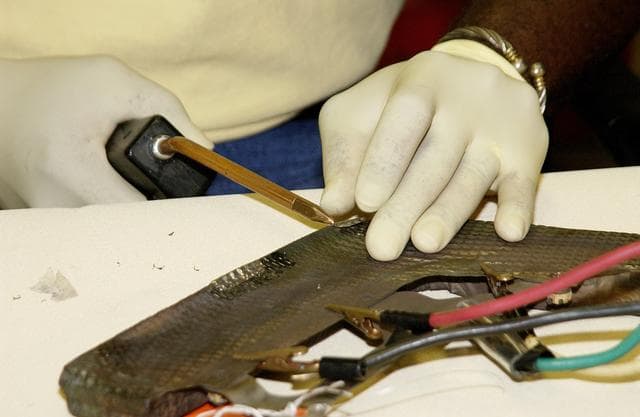
NASA image: KENNEDY SPACE CENTER, FLA. -   United Space Alliance employee Anthony Simmons continues electrowelding on an insulator inside a Reinforced Carbon Carbon panel.   The gray carbon composite RCC panels are attached to the leading edge of the wing of the orbiters to withstand the aerodynamic forces experienced during launch and reentry, which can reach as high as 800 pounds per square foot.  The operating range of RCC is from minus 250º F to about 3,000º F, the temperature produced by friction with the atmosphere during reentry.
Image
Sep 16, 2003

KENNEDY SPACE CENTER, FLA. - United Space Alliance employee Anthony Simmons continues electrowelding on an insulator inside a Reinforced Carbon Carbon panel. The gray carbon composite RCC panels are attached to the leading edge of the wing of the orbiters to withstand the aerodynamic forces experienced during launch and reentry, which can reach as high as 800 pounds per square foot. The operating range of RCC is from minus 250º F to about 3,000º F, the temperature produced by friction with the atmosphere during reentry.

KENNEDY SPACE CENTER, FLA. - United Space Alliance employee Anthony Simmons continues electrowelding on an insulator...

KSC
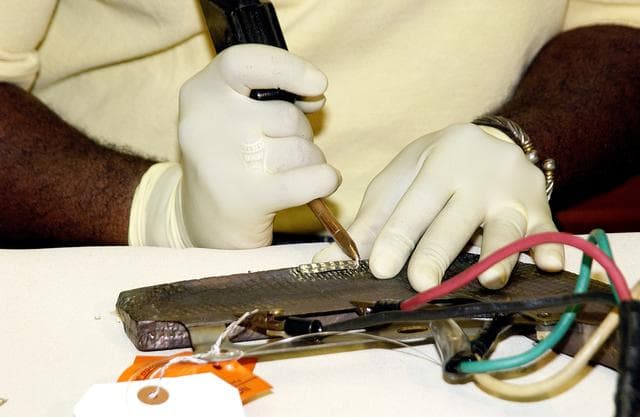
NASA image: KENNEDY SPACE CENTER, FLA. -  United Space Alliance employee Anthony Simmons electrowelds a crack formed in the insulator inside a Reinforced Carbon Carbon panel.   The gray carbon composite RCC panels are attached to the leading edge of the wing of the orbiters to withstand the aerodynamic forces experienced during launch and reentry, which can reach as high as 800 pounds per square foot.  The operating range of RCC is from minus 250º F to about 3,000º F, the temperature produced by friction with the atmosphere during reentry.
Image
Sep 16, 2003

KENNEDY SPACE CENTER, FLA. - United Space Alliance employee Anthony Simmons electrowelds a crack formed in the insulator inside a Reinforced Carbon Carbon panel. The gray carbon composite RCC panels are attached to the leading edge of the wing of the orbiters to withstand the aerodynamic forces experienced during launch and reentry, which can reach as high as 800 pounds per square foot. The operating range of RCC is from minus 250º F to about 3,000º F, the temperature produced by friction with the atmosphere during reentry.

KENNEDY SPACE CENTER, FLA. - United Space Alliance employee Anthony Simmons electrowelds a crack formed in the...

KSC
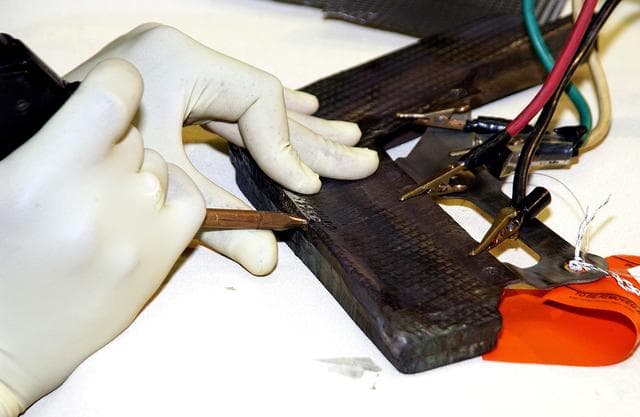
NASA image: KENNEDY SPACE CENTER, FLA. -  United Space Alliance employee Anthony Simmons electrowelds a crack formed in the insulator inside a Reinforced Carbon Carbon panel.   The gray carbon composite RCC panels are attached to the leading edge of the wing of the orbiters to withstand the aerodynamic forces experienced during launch and reentry, which can reach as high as 800 pounds per square foot.  The operating range of RCC is from minus 250º F to about 3,000º F, the temperature produced by friction with the atmosphere during reentry.
Image
Sep 16, 2003

KENNEDY SPACE CENTER, FLA. - United Space Alliance employee Anthony Simmons electrowelds a crack formed in the insulator inside a Reinforced Carbon Carbon panel. The gray carbon composite RCC panels are attached to the leading edge of the wing of the orbiters to withstand the aerodynamic forces experienced during launch and reentry, which can reach as high as 800 pounds per square foot. The operating range of RCC is from minus 250º F to about 3,000º F, the temperature produced by friction with the atmosphere during reentry.

KENNEDY SPACE CENTER, FLA. - United Space Alliance employee Anthony Simmons electrowelds a crack formed in the...

KSC
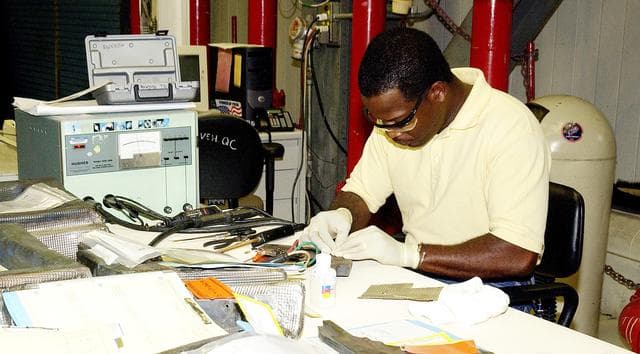
NASA image: KENNEDY SPACE CENTER, FLA. -   United Space Alliance employee Anthony Simmons prepares to electroweld a crack found on an insulator inside a Reinforced Carbon Carbon panel.   The gray carbon composite RCC panels are attached to the leading edge of the wing of the orbiters to withstand the aerodynamic forces experienced during launch and reentry, which can reach as high as 800 pounds per square foot.  The operating range of RCC is from minus 250º F to about 3,000º F, the temperature produced by friction with the atmosphere during reentry.
Image
Sep 16, 2003

KENNEDY SPACE CENTER, FLA. - United Space Alliance employee Anthony Simmons prepares to electroweld a crack found on an insulator inside a Reinforced Carbon Carbon panel. The gray carbon composite RCC panels are attached to the leading edge of the wing of the orbiters to withstand the aerodynamic forces experienced during launch and reentry, which can reach as high as 800 pounds per square foot. The operating range of RCC is from minus 250º F to about 3,000º F, the temperature produced by friction with the atmosphere during reentry.

KENNEDY SPACE CENTER, FLA. - United Space Alliance employee Anthony Simmons prepares to electroweld a crack found on...

KSC
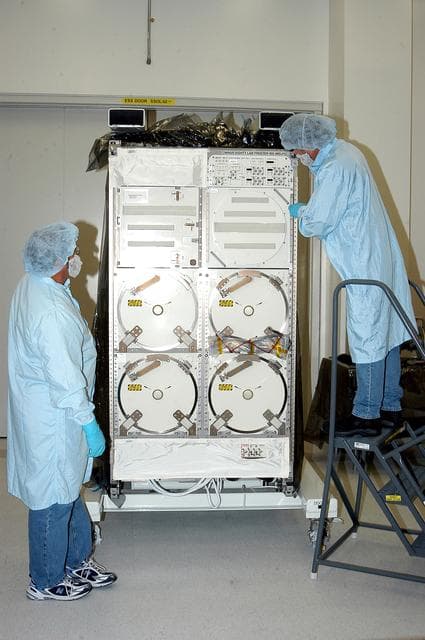
NASA image: KENNEDY SPACE CENTER, FLA. -  After removing its cover, technicians look over the Minus Eighty Lab Freezer for ISS (MELFI),  provided as Laboratory Support Equipment by the European Space Agency for the International Space Station.  The lab will provide cooling and storage for reagents, samples and perishable materials in four insulated containers called dewars with independently selectable temperatures of -80°C, -26°C, and +4°C. It also will be used to transport samples to and from the station.   The MELFI is planned for launch on the ULF-1 mission.
Image
Sep 8, 2003

KENNEDY SPACE CENTER, FLA. - After removing its cover, technicians look over the Minus Eighty Lab Freezer for ISS (MELFI), provided as Laboratory Support Equipment by the European Space Agency for the International Space Station. The lab will provide cooling and storage for reagents, samples and perishable materials in four insulated containers called dewars with independently selectable temperatures of -80°C, -26°C, and +4°C. It also will be used to transport samples to and from the station. The MELFI is planned for launch on the ULF-1 mission.

KENNEDY SPACE CENTER, FLA. - After removing its cover, technicians look over the Minus Eighty Lab Freezer for ISS...

KSC
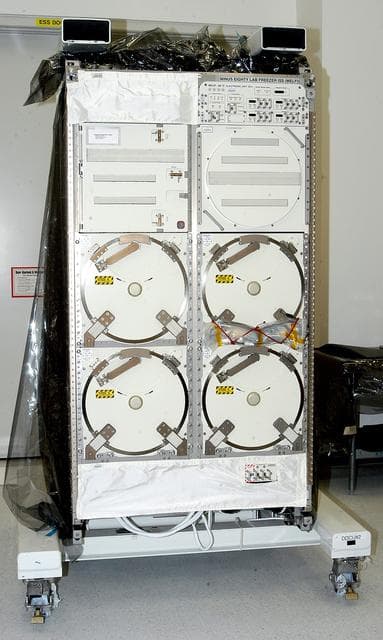
NASA image: KENNEDY SPACE CENTER, FLA. -  The Minus Eighty Lab Freezer for ISS (MELFI), provided as Laboratory Support Equipment by the European Space Agency for the International Space Station, is seen in the Space Station Processing Facility.  The lab will provide cooling and storage for reagents, samples and perishable materials in four insulated containers called dewars with independently selectable temperatures of -80°C, -26°C, and +4°C. It also will be used to transport samples to and from the station.   The MELFI is planned for launch on the ULF-1 mission.
Image
Sep 8, 2003

KENNEDY SPACE CENTER, FLA. - The Minus Eighty Lab Freezer for ISS (MELFI), provided as Laboratory Support Equipment by the European Space Agency for the International Space Station, is seen in the Space Station Processing Facility. The lab will provide cooling and storage for reagents, samples and perishable materials in four insulated containers called dewars with independently selectable temperatures of -80°C, -26°C, and +4°C. It also will be used to transport samples to and from the station. The MELFI is planned for launch on the ULF-1 mission.

KENNEDY SPACE CENTER, FLA. - The Minus Eighty Lab Freezer for ISS (MELFI), provided as Laboratory Support Equipment...

KSC
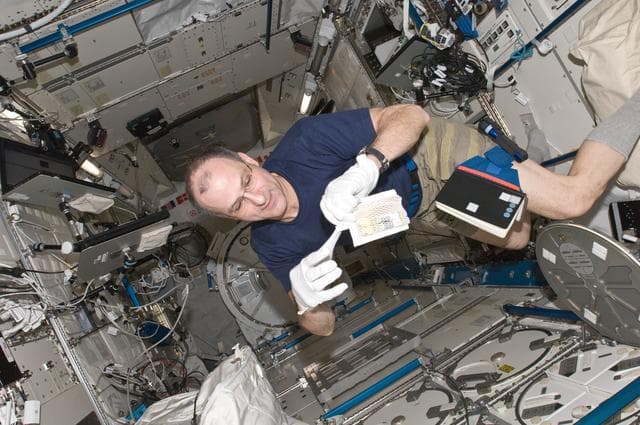
NASA image: Pettit prepares to insert biological samples in the MELFI in the JPM
Image
Jan 26, 2012

Pettit prepares to insert biological samples in the MELFI in the JPM

ISS030-E-050864 (26 Jan. 2012) --- NASA astronaut Don Pettit, Expedition 30 flight engineer, prepares to insert...

JSC
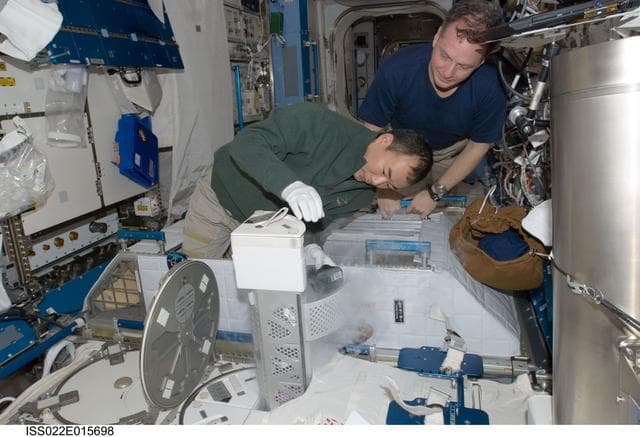
NASA image: Noguchi and Creamer service the MELFI-1 in the JEM during Expedition 22
Image
Dec 28, 2009

Noguchi and Creamer service the MELFI-1 in the JEM during Expedition 22

ISS022-E-015698 (28 Dec. 2009) --- Japan Aerospace Exploration Agency astronaut Soichi Noguchi (left) and NASA...

JSC
NASA image: Helping CryoFILL Turn Oxygen into Fuel
Image
Jul 18, 2023

Helping CryoFILL Turn Oxygen into Fuel

A tank is used in CryoFILL experiments to liquefy oxygen at minus 290 degrees Fahrenheit as it could be done on the...

GRC
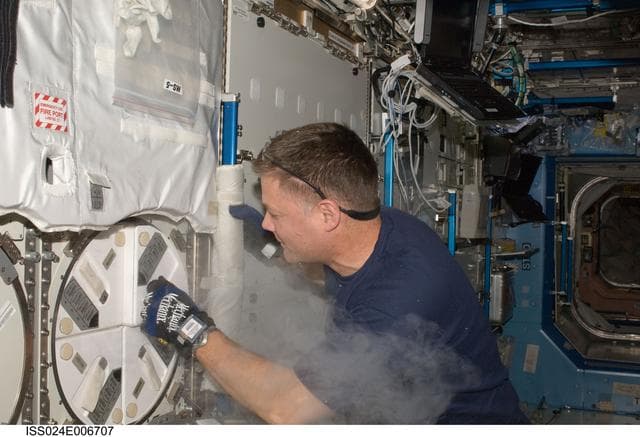
NASA image: MELFI Sample Insertion
Image
Jun 28, 2010

MELFI Sample Insertion

ISS024-E-006707 (28 June 2010) --- After inserting biological samples, NASA astronaut Doug Wheelock, Expedition 24...

JSC
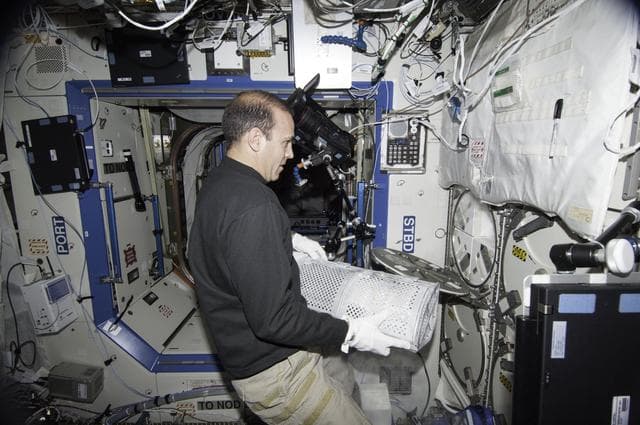
NASA image: Mastracchio removing dewar tray from MELFI
Image
Nov 21, 2013

Mastracchio removing dewar tray from MELFI

ISS038-E-006765 (21 Nov. 2013) --- In the International Space Station's Destiny laboratory, NASA astronaut Rick...

JSC
NASA image: ARC-1991-AC91-0257
Image
May 7, 1991

ARC-1991-AC91-0257

Prehistoric Yucatan Impact Crater: 'The infamous K-T impact event 65 million years ago (64.98 plus or minus 50,000...

ARC
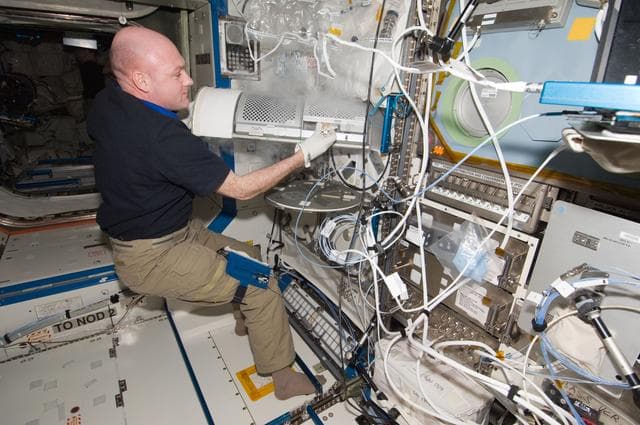
NASA image: iss031e143839
Image
Jun 25, 2012

iss031e143839

ISS031-E-143839 (25 June 2012) --- European Space Agency astronaut Andre Kuipers, Expedition 31 flight engineer,...

JSC
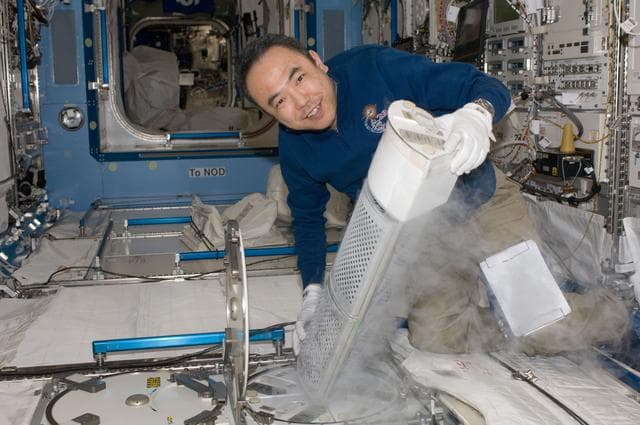
NASA image: Vascular Blood Collection protocol samples into MELFI
Image
Oct 18, 2011

Vascular Blood Collection protocol samples into MELFI

iss029e028495 (10/18/2011) --- Japan Aerospace Exploration Agency astronaut Satoshi Furukawa,Expedition 29 flight...

JSC
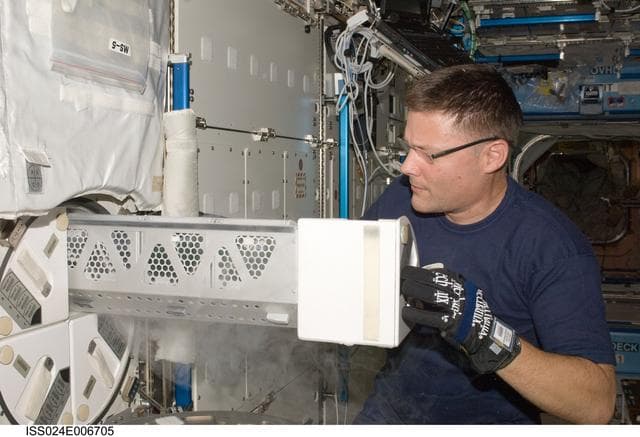
NASA image: MELFI Sample Insertion
Image
Jun 28, 2010

MELFI Sample Insertion

ISS024-E-006705 (28 June 2010) --- After inserting biological samples, NASA astronaut Doug Wheelock, Expedition 24...

JSC
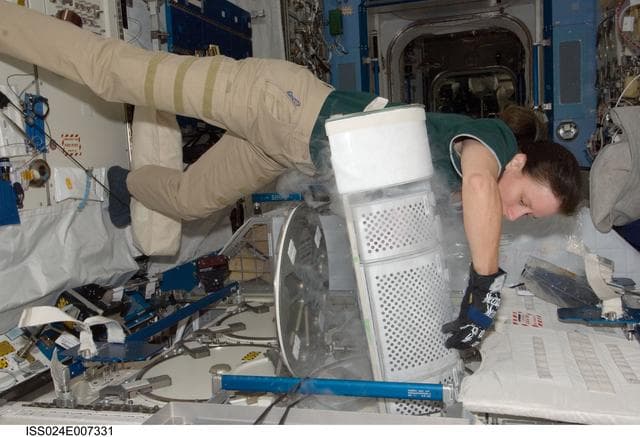
NASA image: MELFI Sample Insertion
Image
Jul 2, 2010

MELFI Sample Insertion

ISS024-E-007331 (2 July 2010) --- After inserting biological samples, NASA astronaut Shannon Walker, Expedition 24...

JSC
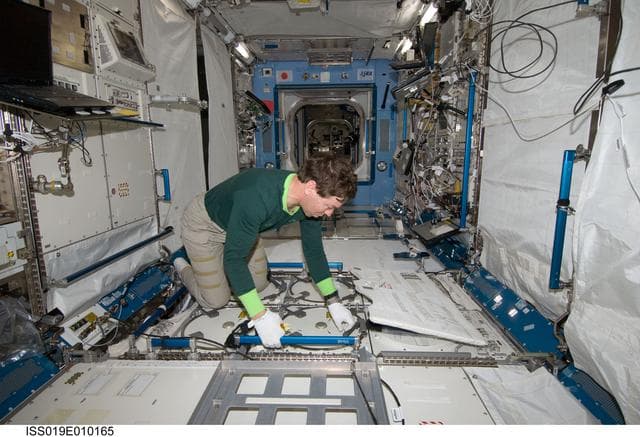
NASA image: Nutrition and Repository: Insertion of Urine Sample into MELFI
Image
Apr 18, 2009

Nutrition and Repository: Insertion of Urine Sample into MELFI

ISS019-E-010165 (18 April 2009) --- Astronaut Michael Barratt, Expedition 19/20 flight engineer, performs an...

JSC
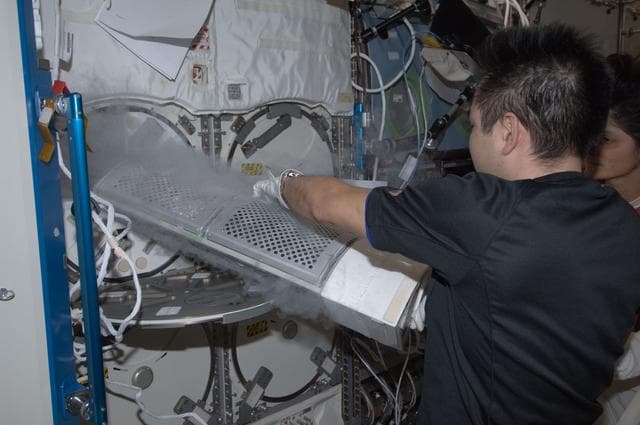
NASA image: MELFI ops
Image
Oct 26, 2012

MELFI ops

ISS033-E-016183 (26 Oct. 2012) --- Japan Aerospace Exploration Agency astronaut Aki Hoshide, Expedition 33 flight...

JSC
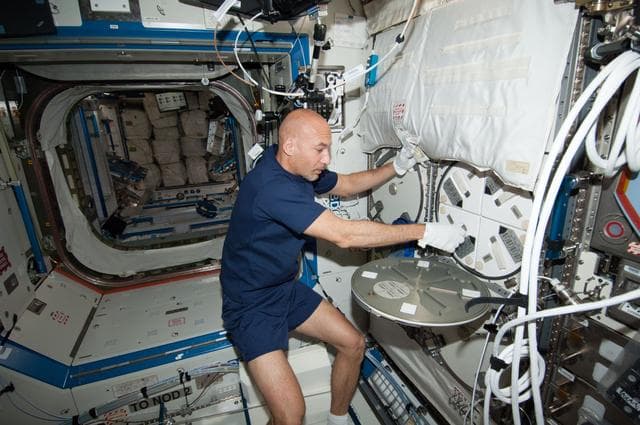
NASA image: MELFI ops
Image
Jun 6, 2013

MELFI ops

ISS036-E-006564 (6 June 2013) --- European Space Agency astronaut Luca Parmitano, Expedition 36 flight engineer,...

JSC
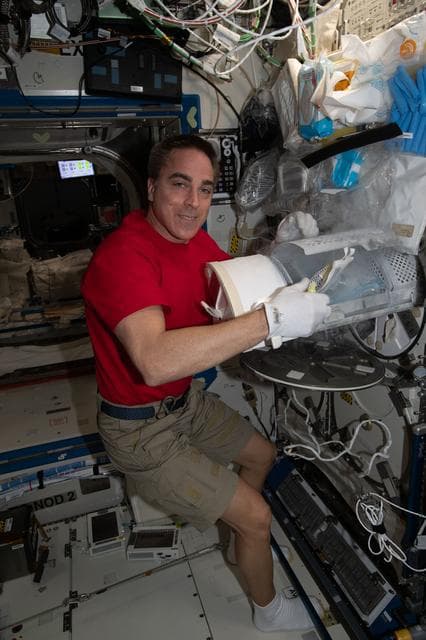
NASA image: iss063e027945
Image
Jun 16, 2020

iss063e027945

iss063e027945 (June 16, 2020) --- NASA astronaut and Expedition 63 Commander Chris Cassidy prepares to stow...

JSC
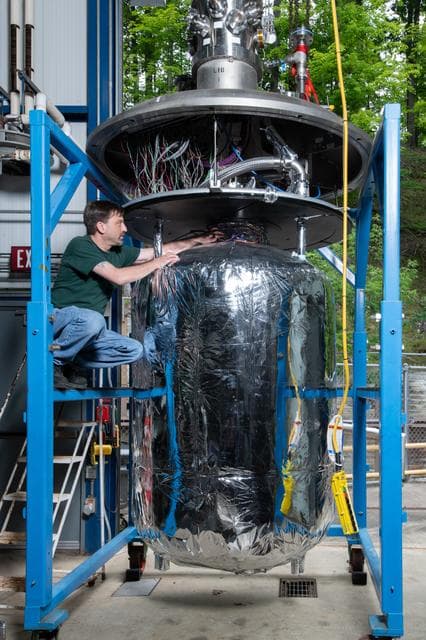
NASA image: Helping CryoFILL Turn Oxygen into Fuel
Image
Jul 18, 2023

Helping CryoFILL Turn Oxygen into Fuel

A tank is used in CryoFILL experiments to liquefy oxygen at minus 290 degrees Fahrenheit as it could be done on the...

GRC
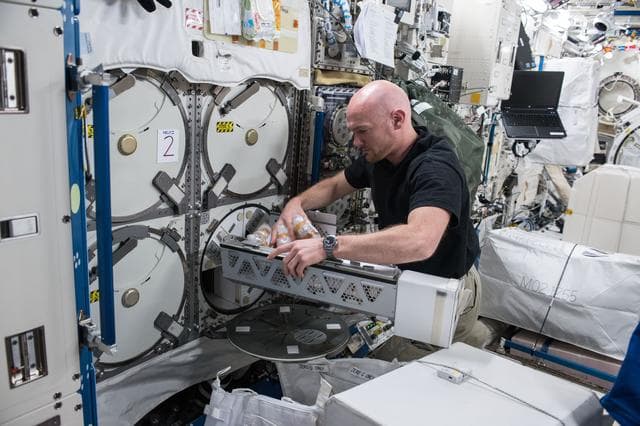
NASA image: CASIS Protein Crystal Growth (PCG) 8
Image
Jul 3, 2018

CASIS Protein Crystal Growth (PCG) 8

iss056e075950 (July 3, 2018) --- Astronaut Alexander Gerst of ESA (European Space Agency) works inside the Japanese...

JSC
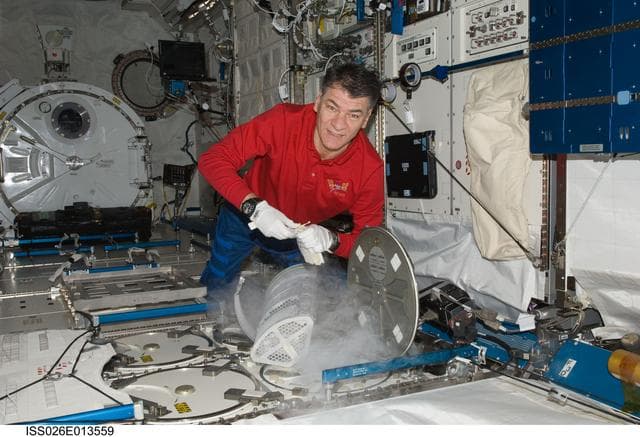
NASA image: Nespoli works on the MELFI in the Kibo JPM during Expedition 26
Image
Dec 29, 2010

Nespoli works on the MELFI in the Kibo JPM during Expedition 26

ISS026-E-013559 (26 Dec. 2010) --- European Space Agency astronaut Paolo Nespoli, Expedition 26 flight engineer,...

JSC
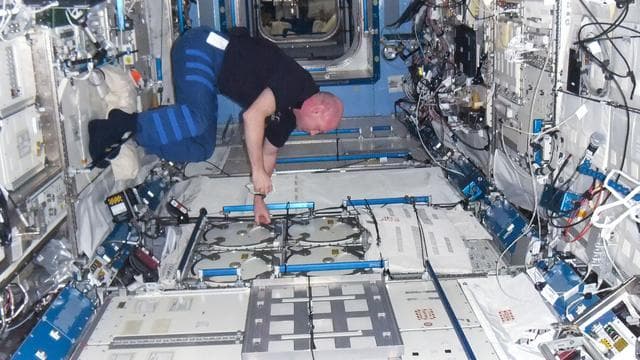
NASA image: Kuipers prepares to open the MELFI in the JPM
Image
Feb 27, 2012

Kuipers prepares to open the MELFI in the JPM

ISS030-E-116988 (27 Feb. 2012) --- European Space Agency astronaut Andre Kuipers, Expedition 30 flight engineer, is...

JSC
PreviousPage 3 of 39Next

Frequently Asked Questions About NASA Images

Are NASA images free to use?+
Yes, most NASA images are in the public domain and are free to use for educational, informational, and personal purposes. NASA's media usage guidelines state that NASA material is not copyrighted unless otherwise noted. However, the NASA logo and certain insignia are protected. Some images may include identifiable individuals or third-party content that requires additional permissions. Always check the specific image's usage rights and credit NASA as the source.
How many images does NASA have?+
NASA's Image and Video Library contains over 140,000 publicly accessible images, videos, and audio files spanning the agency's entire history, from the Mercury program of the 1960s to the latest James Webb Space Telescope discoveries. The collection grows daily as new missions capture imagery and archival materials are digitized. Individual mission archives, such as Mars rover photos, contain hundreds of thousands of additional images.
Can I download NASA images?+
Yes, you can download NASA images in multiple resolutions directly from this gallery. Each image detail page provides download links for original (full resolution), large (1920px), medium (960px), small (480px), and thumbnail sizes. NASA encourages the public to use these images for education, media, and personal projects. High-resolution originals are ideal for printing and professional use.

Explore More NASA Content

Astronomy Picture of the Day

Daily curated space image

Mars Rover Photos

Curiosity & Perseverance images

Earth from Space

DSCOVR EPIC daily images

Launch Schedule

Upcoming rocket launches

Space News

Mission updates & discoveries