CosmosObservatory
Explore
Solar System
Live
Learn
Tools
About
Cosmos Observatory
ToolsAbout
Cosmos Observatory

Explore the universe through NASA data, real-time ISS tracking, Mars rover imagery, asteroid monitoring, and comprehensive space encyclopedia. Your gateway to the cosmos.

Explore

  • APOD
  • Mars Rovers
  • Earth Imagery
  • NASA Gallery
  • ISS Tracker

Data

  • Asteroids
  • Solar System
  • Exoplanets
  • Space Weather
  • Launches

Tools

  • Glossary
  • News
  • Calculators

Legal

  • About
  • Privacy Policy
  • Terms of Use
  • Space Tools
  • Contact

Stay updated with the cosmos

Get weekly digests of APOD highlights, upcoming launches, and space events.

© 2026 Cosmos Observatory. All rights reserved. Built with for space enthusiasts.

This website is not affiliated with, maintained, authorized, endorsed by, or in any way officially connected with NASA or any of its subsidiaries or affiliates. All NASA imagery is in the public domain unless otherwise noted. Data sourced from NASA Open APIs, Launch Library 2, and other open data services.

NASA Gallery

Explore NASA's vast collection of space images, videos, and audio from missions past and present.

  1. Home
  2. /
  3. NASA Gallery

NASA's Image and Video Library: A Visual Archive of Space Exploration

NASA's Image and Video Library is one of the most comprehensive public archives of space imagery in the world, containing over 140,000 images, videos, and audio recordings spanning more than six decades of space exploration. From the earliest Mercury and Gemini missions through the Apollo Moon landings, the Space Shuttle era, and today's cutting-edge observations from the James Webb Space Telescope, this collection documents humanity's journey into the cosmos.

The library includes imagery from diverse sources: telescopes like Hubble and Webb that capture deep-space nebulae, galaxies, and exoplanets; planetary missions like the Mars rovers ( browse Mars photos) and Cassini at Saturn; Earth observation satellites ( see EPIC imagery); astronaut photography from the ISS; and documentation of rocket launches, spacecraft assembly, and ground testing. Most NASA images are in the public domain and free to download at full resolution for educational, editorial, and personal use.

Use the search bar above to find specific subjects — try queries like "Apollo 11," "Hubble Deep Field," "Mars surface," or "astronaut EVA." You can also filter by media type (image, video, or audio). For a daily curated experience, visit the Astronomy Picture of the Day.

Showing results for "Infrared"

4,024 results found - Page 27 of 168

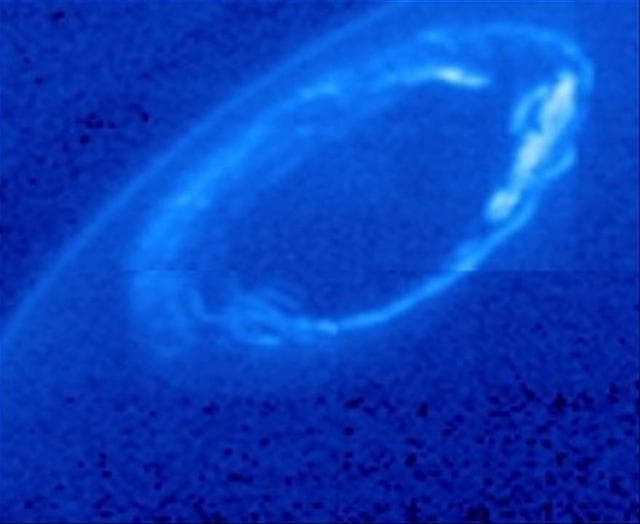
NASA image: Dance of Saturn Auroras
Image
Feb 11, 2014

Dance of Saturn Auroras

Ultraviolet and infrared images from NASA Cassini spacecraft and Hubble Space Telescope show active and quiet...

JPL
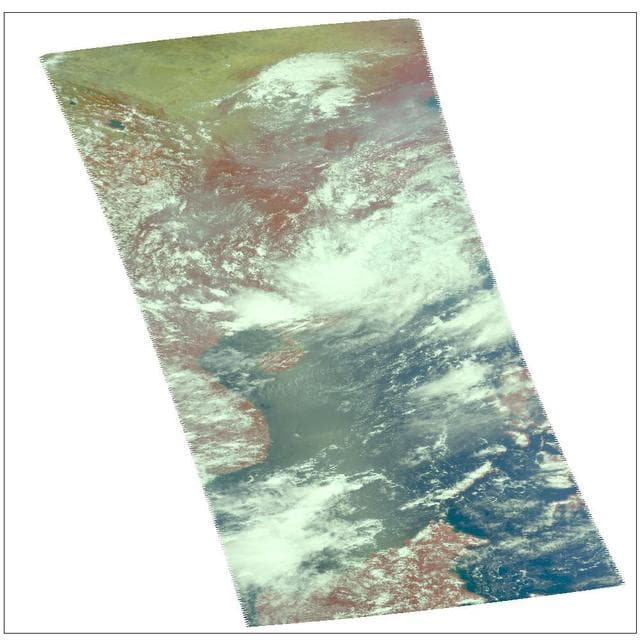
NASA image: Typhoon Sepat
Image
Aug 18, 2007

Typhoon Sepat

Visible image of Typhoon Sepat, western Pacific Ocean, southeast coast of China, August, 2007, from the Atmospheric...

JPL
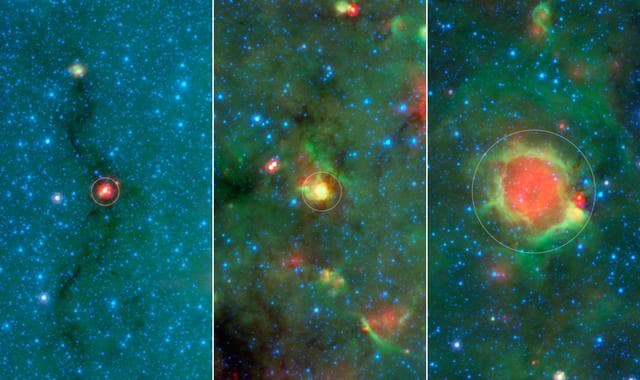
NASA image: Evolution of a Massive Star
Image
Jan 27, 2015

Evolution of a Massive Star

This series of images show three evolutionary phases of massive star formation, as pictured in infrared images from...

JPL
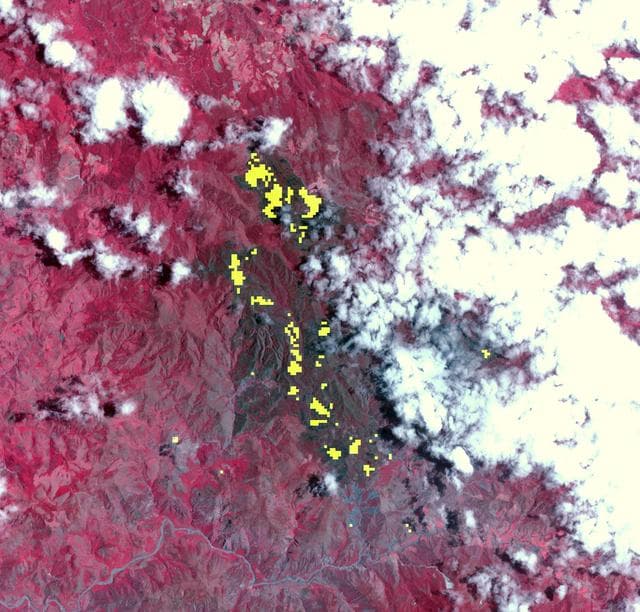
NASA image: Dominican Republic Wildfire Imaged by NASA Spacecraft
Image
Aug 6, 2014

Dominican Republic Wildfire Imaged by NASA Spacecraft

NASA Terra spacecraft captured this thermal infrared view of the spread of the forest fire in Valle Nuevo National...

JPL

NASA image: Proctor Crater Dunes
Image
Jun 15, 2009

Proctor Crater Dunes

This infrared image of Proctor Crater shows the dune field on the floor of the crater. The dunes are bright in this...

JPL
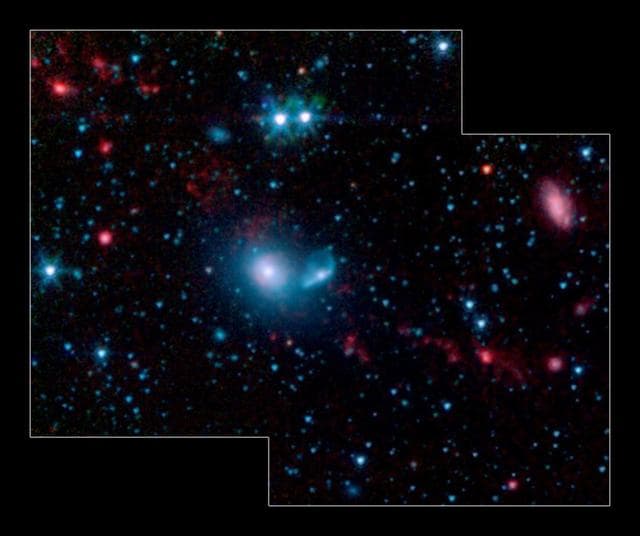
NASA image: Dwarf Galaxies Swimming in Tidal Tails
Image
Dec 1, 2005

Dwarf Galaxies Swimming in Tidal Tails

This false-color infrared image from NASA Spitzer Space Telescope shows little dwarf galaxies forming in the tails...

JPL

NASA image: Dunes in IR
Image
Aug 12, 2009

Dunes in IR

Several areas of dunes are located on the plains of Terra Cimmeria. The dunes appear bright in the daytime infrared...

JPL
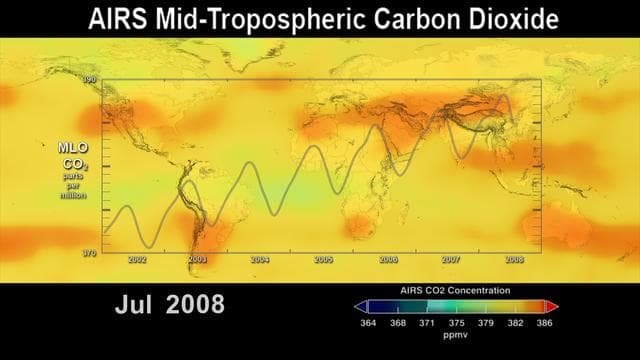
NASA image: AIRS Carbon Dioxide with Mauna Loa Carbon Dioxide Overlaid
Image
Nov 3, 2008

AIRS Carbon Dioxide with Mauna Loa Carbon Dioxide Overlaid

This image shows the distribution and amount of carbon dioxide in Earth mid-troposphere in July 2008 as measured by...

JPL
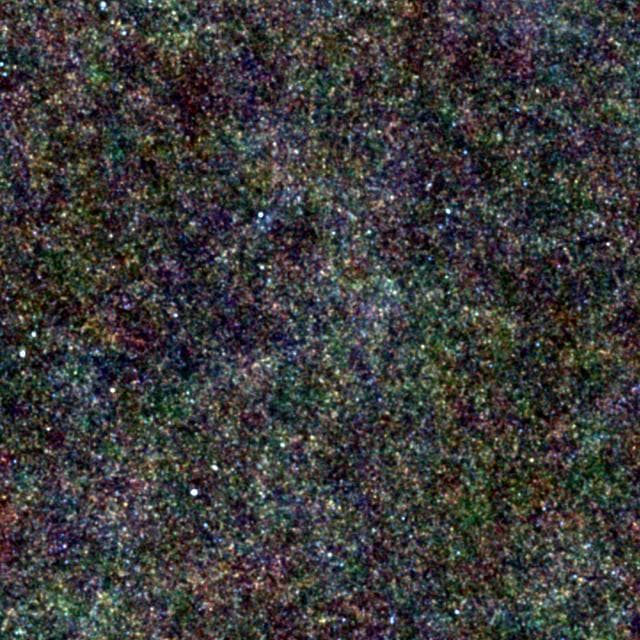
NASA image: Herschel View of Lockman Hole
Image
Feb 17, 2011

Herschel View of Lockman Hole

A region of the sky called the Lockman Hole, located in the constellation of Ursa Major, is one of the areas...

JPL
NASA image: Pollack Crater
Image
Sep 25, 2013

Pollack Crater

This infrared image, taken by NASA 2001 Mars Odyssey spacecraft, shows the feature called White Rock. The feature is...

JPL
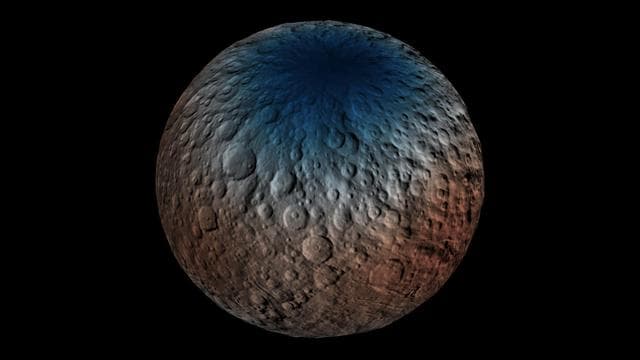
NASA image: Ceres Neutron Counts Reflect Hydrogen Abundance
Image
Mar 22, 2016

Ceres Neutron Counts Reflect Hydrogen Abundance

Ceres Haulani Crater is shown in these views from NASA Dawn spacecraft. These views reveal variations in the region...

JPL
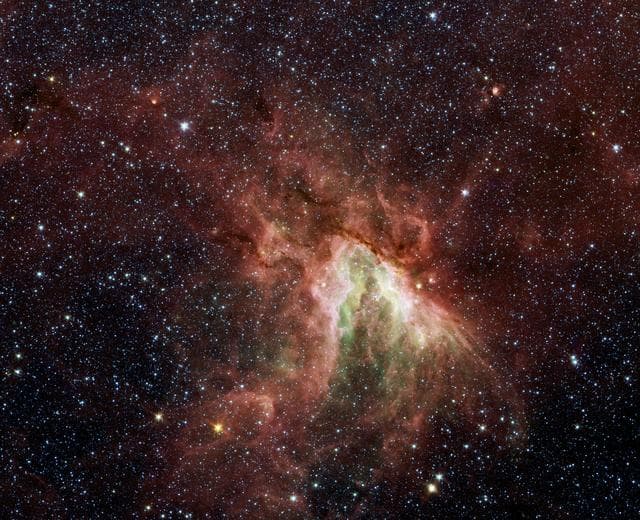
NASA image: Celestial Sea of Stars
Image
Dec 8, 2008

Celestial Sea of Stars

NASA Spitzer Space Telescope has captured a new, infrared view of the choppy star-making cloud called M17, or the...

JPL

NASA image: Pityusa Patera
Image
Jul 13, 2009

Pityusa Patera

An extensive sand sheet and dunes are located within Pityusa Patera. This daytime infrared image shows that the sand...

JPL
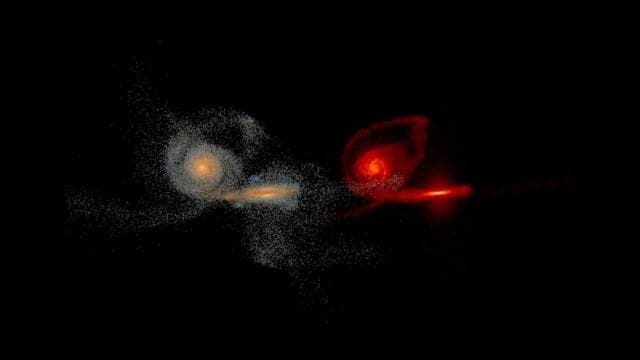
NASA image: Mega Galaxy Merger
Image
May 22, 2013

Mega Galaxy Merger

This frame from a simulation shows the merging of two massive galaxies. The merging galaxies are split into two...

JPL
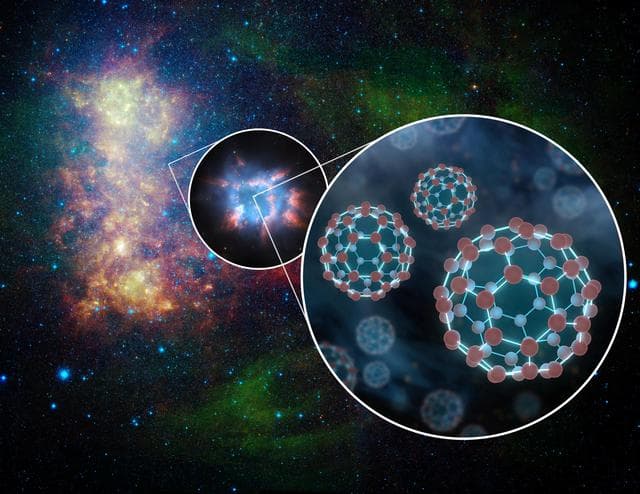
NASA image: Extragalactic Space Balls Artist Concept
Image
Oct 27, 2010

Extragalactic Space Balls Artist Concept

An infrared photo of the Small Magellanic Cloud taken by NASA Spitzer Space Telescope is shown in this artist...

JPL
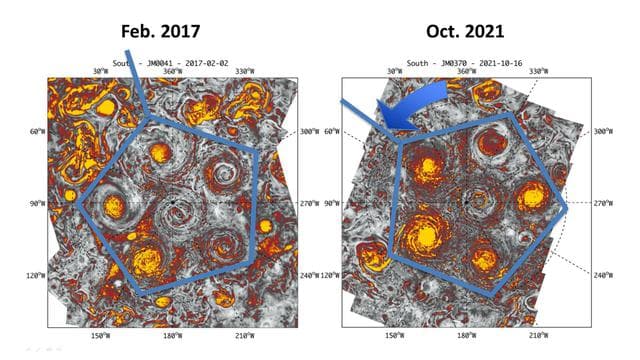
NASA image: Jupiter's Polar Vortices Over Five Years
Image
Oct 28, 2021

Jupiter's Polar Vortices Over Five Years

This annotated composite image depicts the movement of the polar and circumpolar cyclones of Jupiter's south pole...

JPL
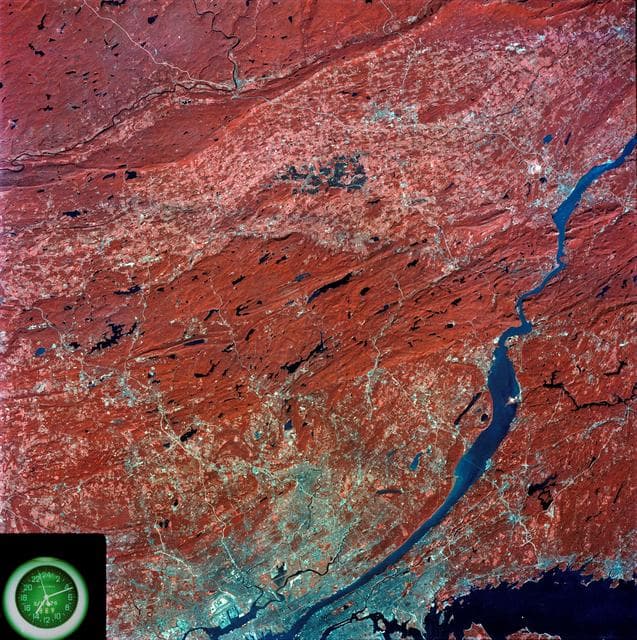
NASA image: View of southeastern New York State
Image
Aug 15, 1973

View of southeastern New York State

SL3-87-299 (July-September 1973) --- A vertical view of southeastern New York State is seen in this Skylab 3 Earth...

JSC
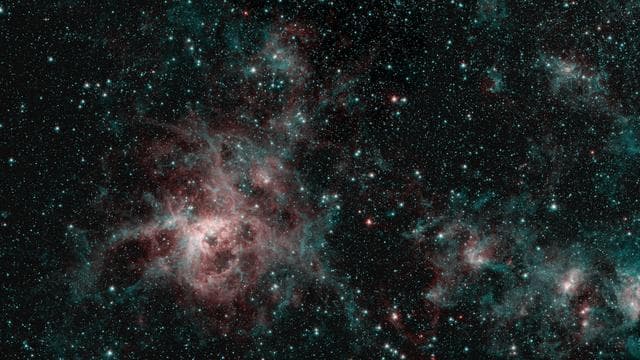
NASA image: Tarantula Nebula Spitzer 2-Color Image
Image
Jan 27, 2020

Tarantula Nebula Spitzer 2-Color Image

This image from NASA's Spitzer Space Telescope shows the Tarantula Nebula in two wavelengths of infrared light, each...

JPL
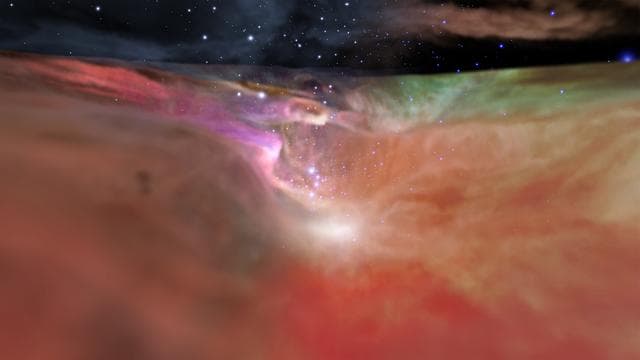
NASA image: Hubble Space Telescope,Spitzer Space Telescope
Image
Jan 11, 2018

Hubble Space Telescope,Spitzer Space Telescope

This image showcases both the visible and infrared visualizations of the Orion Nebula. This view from a movie...

JPL
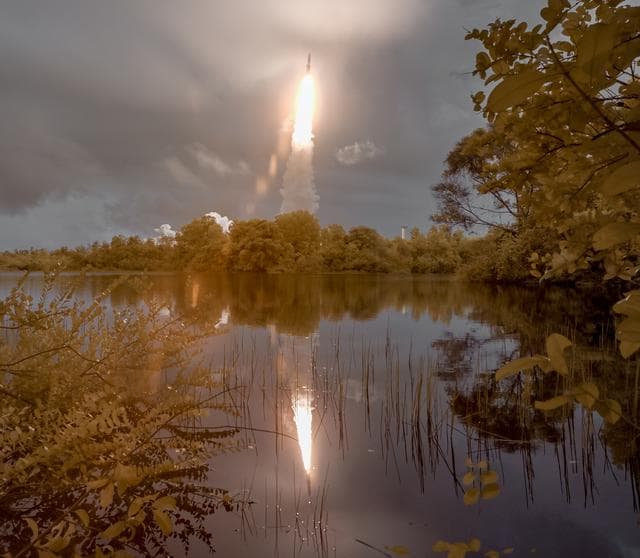
NASA image: James Webb Space Telescope Launch
Image
Dec 25, 2021

James Webb Space Telescope Launch

Arianespace's Ariane 5 rocket is seen in this false color infrared exposure as it launches with NASA’s James Webb...

HQ
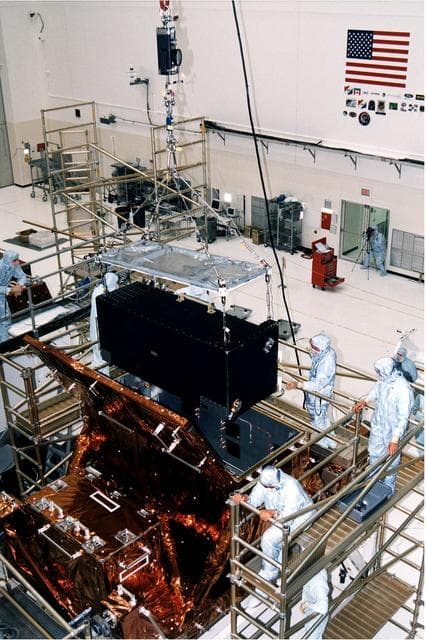
NASA image: KENNEDY SPACE CENTER, FLA. -  Workers in KSC's Vertical Processing Facility lower the Near Infrared Camera and Multi-Object Spectrometer (NICMOS) into the Second Axial Carrier.  NICMOS is one of two new scientific instruments that will replace two outdated instruments on the Hubble Space Telescope (HST).  NICMOS will provide HST with the capability for infrared imaging and spectroscopic observations of astronomical targets.  The refrigerator-sized NICMOS is HST's first cryogenic instrument -- its sensitive infrared detectors must operate at very cold temperatures of minus 355 degrees Fahrenheit or 58 derees Kelvin.  NICMOS will be installed in Hubble during STS-82, the second Hubble Space Telescope servicing mission.  Liftoff is targeted Feb. 11 aboard Discovery with a crew of seven.
Image
Jan 16, 1997

KENNEDY SPACE CENTER, FLA. - Workers in KSC's Vertical Processing Facility lower the Near Infrared Camera and Multi-Object Spectrometer (NICMOS) into the Second Axial Carrier. NICMOS is one of two new scientific instruments that will replace two outdated instruments on the Hubble Space Telescope (HST). NICMOS will provide HST with the capability for infrared imaging and spectroscopic observations of astronomical targets. The refrigerator-sized NICMOS is HST's first cryogenic instrument -- its sensitive infrared detectors must operate at very cold temperatures of minus 355 degrees Fahrenheit or 58 derees Kelvin. NICMOS will be installed in Hubble during STS-82, the second Hubble Space Telescope servicing mission. Liftoff is targeted Feb. 11 aboard Discovery with a crew of seven.
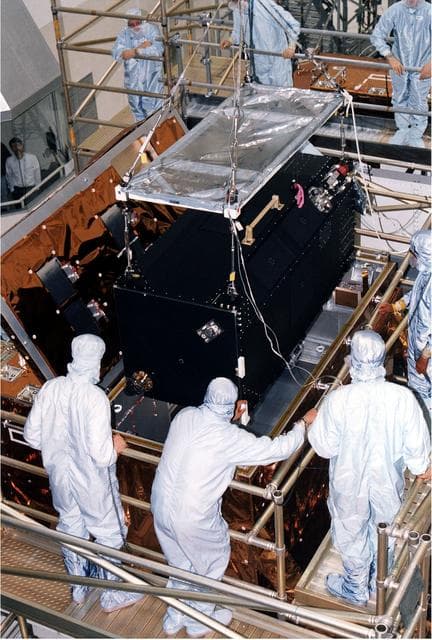
NASA image: KENNEDY SPACE CENTER, FLA. - Workers in KSC's Vertical Processing Facility lower the Near Infrared Camera and Multi-Object Spectrometer (NICMOS) into the Second Axial Carrier.  NICMOS is one of two new scientific instruments that will replace two outdated instruments on the Hubble Space Telescope (HST).  NICMOS will provide HST with the capability for infrared imaging and spectroscopic observations of astronomical targets.  The refrigerator-sized NICMOS also is HST's first cryogenic instrument — its sensitive infrared detectors must operate at very cold temperatures of minus 355 degrees Fahrenheit or 58 degrees Kelvin.  NICMOS will be installed in Hubble during STS-82, the second Hubble Space Telescope servicing mission.  Liftoff is targeted Feb. 11 aboard Discovery with a crew of seven.
Image
Jan 18, 1997

KENNEDY SPACE CENTER, FLA. - Workers in KSC's Vertical Processing Facility lower the Near Infrared Camera and Multi-Object Spectrometer (NICMOS) into the Second Axial Carrier. NICMOS is one of two new scientific instruments that will replace two outdated instruments on the Hubble Space Telescope (HST). NICMOS will provide HST with the capability for infrared imaging and spectroscopic observations of astronomical targets. The refrigerator-sized NICMOS also is HST's first cryogenic instrument — its sensitive infrared detectors must operate at very cold temperatures of minus 355 degrees Fahrenheit or 58 degrees Kelvin. NICMOS will be installed in Hubble during STS-82, the second Hubble Space Telescope servicing mission. Liftoff is targeted Feb. 11 aboard Discovery with a crew of seven.
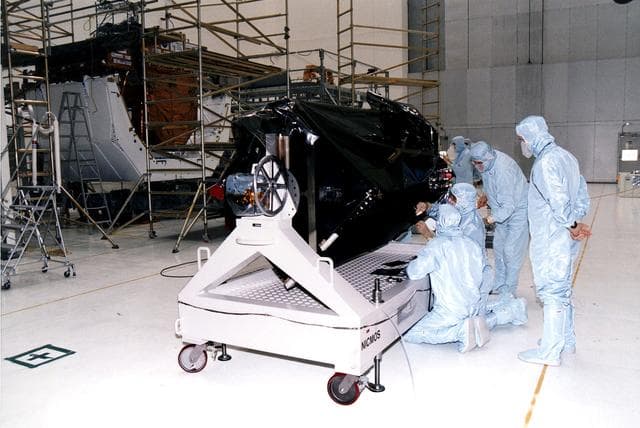
NASA image: KENNEDY SPACE CENTER, FLA. - Workers in KSC's Vertical Processing Facility inspect the Near Infrared Camera and Multi-Object Spectrometer (NICMOS) on its handling fixture.  NICMOS is one of two new scientific instruments that will replace two outdated instruments on the Hubble Space Telescope (HST).  NICMOS will provide HST with the capability for infrared imaging and spectroscopic observations of astronomical targets.  The refrigerator-sized NICMOS also is HST's first cryogenic instrument — its sensitive infrared detectors must operate at very cold temperatures of minus 355 degrees Fahrenheit or 58 degrees Kelvin.  NICMOS will be installed in Hubble during STS-82, the second Hubble Space Telescope servicing mission.  Liftoff is targeted Feb. 11 aboard Discovery with a crew of seven.
Image
Jan 18, 1997

KENNEDY SPACE CENTER, FLA. - Workers in KSC's Vertical Processing Facility inspect the Near Infrared Camera and Multi-Object Spectrometer (NICMOS) on its handling fixture. NICMOS is one of two new scientific instruments that will replace two outdated instruments on the Hubble Space Telescope (HST). NICMOS will provide HST with the capability for infrared imaging and spectroscopic observations of astronomical targets. The refrigerator-sized NICMOS also is HST's first cryogenic instrument — its sensitive infrared detectors must operate at very cold temperatures of minus 355 degrees Fahrenheit or 58 degrees Kelvin. NICMOS will be installed in Hubble during STS-82, the second Hubble Space Telescope servicing mission. Liftoff is targeted Feb. 11 aboard Discovery with a crew of seven.
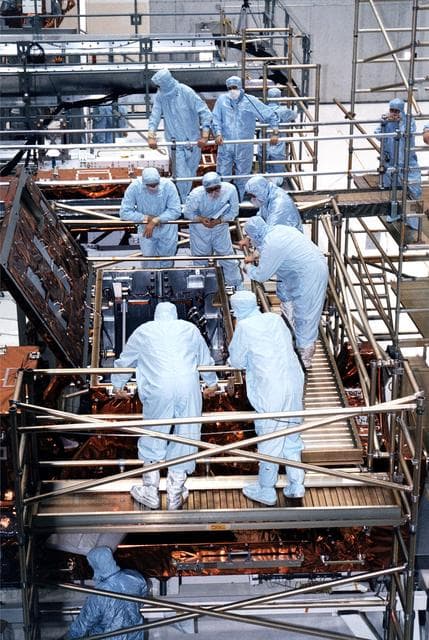
NASA image: KENNEDY SPACE CENTER, FLA. -  STS-82 crew members and workers at KSC's Vertical Processing Facility get a final look at the Near Infrared Camera and Multi-Object Spectrometer (NICMOS) in its flight configuration for the STS-82 mission.  The crew is participating in the Crew Equipment Integration Test (CEIT).  NICMOS is one of two new scientific instruments that will replace two outdated instruments on the Hubble Space Telescope (HST).  NICMOS will provide HST with the capability for infrared imaging and spectroscopic observations of astronomical targets.  The refrigerator-sized NICMOS also is HST's first cryogenic instrument - its sensitive infrared detectors must operate at very cold temperatures of minus 355 degrees Fahrenheit or 58 degrees Kelvin.  NICMOS will be installed in Hubble during STS-82, the second Hubble Space Telescope servicing mission.  Liftoff is scheduled Feb. 11 aboard Discovery with a crew of seven.
Image
Jan 22, 1997

KENNEDY SPACE CENTER, FLA. - STS-82 crew members and workers at KSC's Vertical Processing Facility get a final look at the Near Infrared Camera and Multi-Object Spectrometer (NICMOS) in its flight configuration for the STS-82 mission. The crew is participating in the Crew Equipment Integration Test (CEIT). NICMOS is one of two new scientific instruments that will replace two outdated instruments on the Hubble Space Telescope (HST). NICMOS will provide HST with the capability for infrared imaging and spectroscopic observations of astronomical targets. The refrigerator-sized NICMOS also is HST's first cryogenic instrument - its sensitive infrared detectors must operate at very cold temperatures of minus 355 degrees Fahrenheit or 58 degrees Kelvin. NICMOS will be installed in Hubble during STS-82, the second Hubble Space Telescope servicing mission. Liftoff is scheduled Feb. 11 aboard Discovery with a crew of seven.

PreviousPage 27 of 100Next

Frequently Asked Questions About NASA Images

Are NASA images free to use?+
Yes, most NASA images are in the public domain and are free to use for educational, informational, and personal purposes. NASA's media usage guidelines state that NASA material is not copyrighted unless otherwise noted. However, the NASA logo and certain insignia are protected. Some images may include identifiable individuals or third-party content that requires additional permissions. Always check the specific image's usage rights and credit NASA as the source.
How many images does NASA have?+
NASA's Image and Video Library contains over 140,000 publicly accessible images, videos, and audio files spanning the agency's entire history, from the Mercury program of the 1960s to the latest James Webb Space Telescope discoveries. The collection grows daily as new missions capture imagery and archival materials are digitized. Individual mission archives, such as Mars rover photos, contain hundreds of thousands of additional images.
Can I download NASA images?+
Yes, you can download NASA images in multiple resolutions directly from this gallery. Each image detail page provides download links for original (full resolution), large (1920px), medium (960px), small (480px), and thumbnail sizes. NASA encourages the public to use these images for education, media, and personal projects. High-resolution originals are ideal for printing and professional use.

Explore More NASA Content

Astronomy Picture of the Day

Daily curated space image

Mars Rover Photos

Curiosity & Perseverance images

Earth from Space

DSCOVR EPIC daily images

Launch Schedule

Upcoming rocket launches

Space News

Mission updates & discoveries

KENNEDY SPACE CENTER, FLA. - Workers in KSC's Vertical Processing Facility lower the Near Infrared Camera and...

KSC

KENNEDY SPACE CENTER, FLA. - Workers in KSC's Vertical Processing Facility lower the Near Infrared Camera and...

KSC

KENNEDY SPACE CENTER, FLA. - Workers in KSC's Vertical Processing Facility inspect the Near Infrared Camera and...

KSC

KENNEDY SPACE CENTER, FLA. - STS-82 crew members and workers at KSC's Vertical Processing Facility get a final look...

KSC