Image
May 17, 2008
KSC-08pd1423
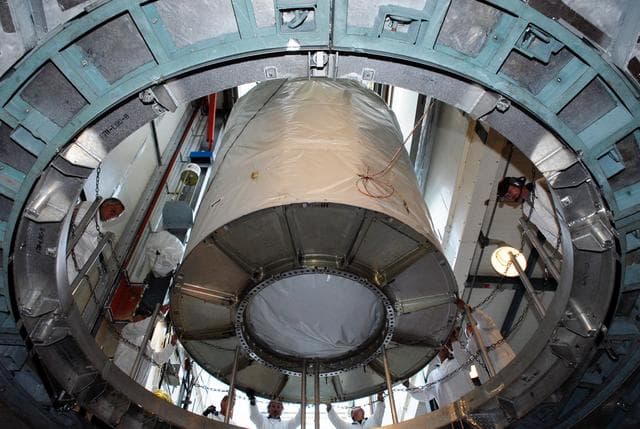
CAPE CANAVERAL, Fla. -- At pad 17-B at Cape Canaveral Air Force Station, workers begin lowering the GLAST spacecraft...
KSC
Image
Jan 9, 2001
KSC-01PP-0159
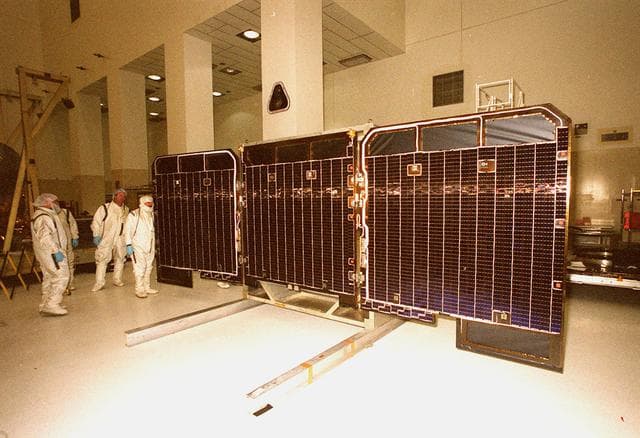
Workers in the Spacecraft Assembly and Encapsulation Facility -2 make a visual check of the front side of the opened...
KSC
Image
Mar 2, 2001
KSC01pp0474
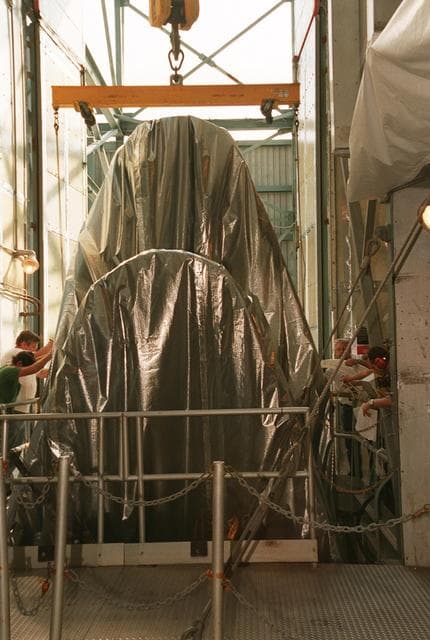
The second piece of fairing that will cover the Mars Odyssey Orbiter during launch joins the first half at the top...
KSC
Image
Mar 2, 2001
KSC01pp0467
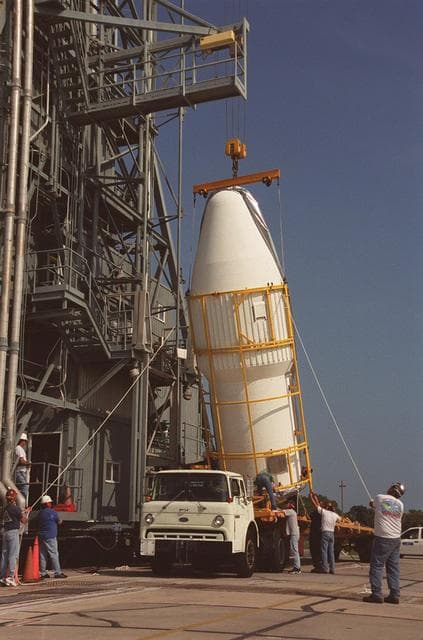
An overhead crane at Launch Pad 17-A, Cape Canaveral Air Force Station, raises part of a fairing before lifting. The...
KSC
Image
Feb 9, 2001
KSC-01PP-0370
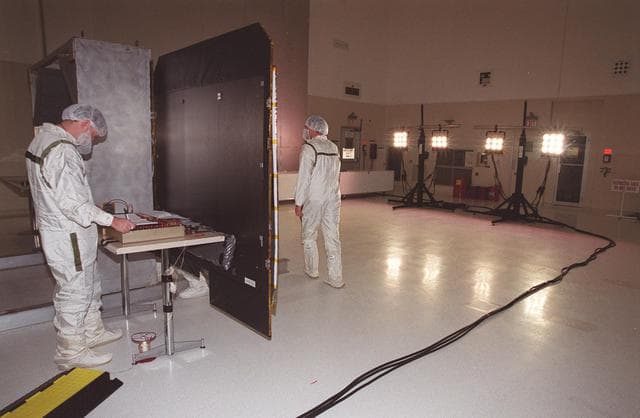
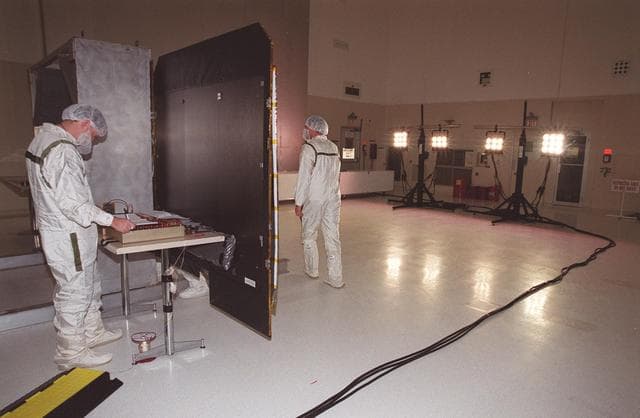
A worker (left) records data during illumination testing on the Mars Odyssey solar arrays he stands behind. The 2001...
KSC
Image
May 17, 2008
KSC-08pd1419
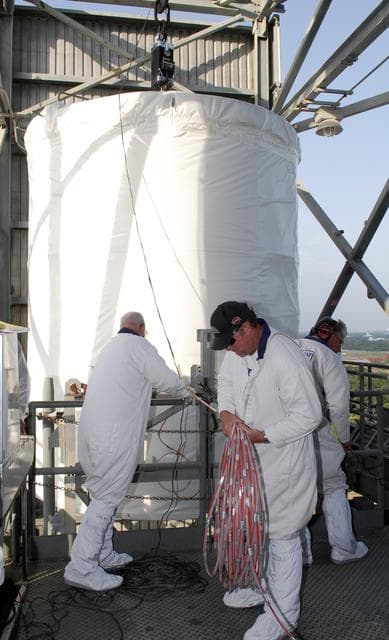
CAPE CANAVERAL, Fla. -- At pad 17-B at Cape Canaveral Air Force Station, workers prepare to move the GLAST...
KSC
Image
Jan 5, 2001
KSC01pp0103
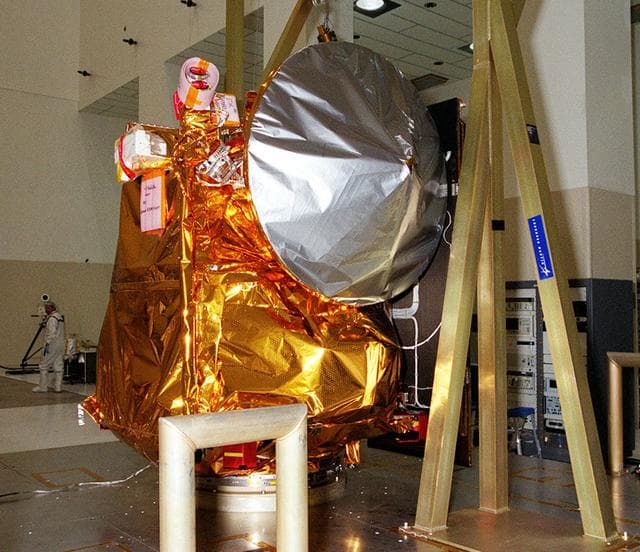
The 2001 Mars Odyssey Orbiter is safely placed on a workstand in the Spacecraft Assembly & Encapsulation Facility...
KSC
Image
Mar 2, 2001
KSC-01PP-0473
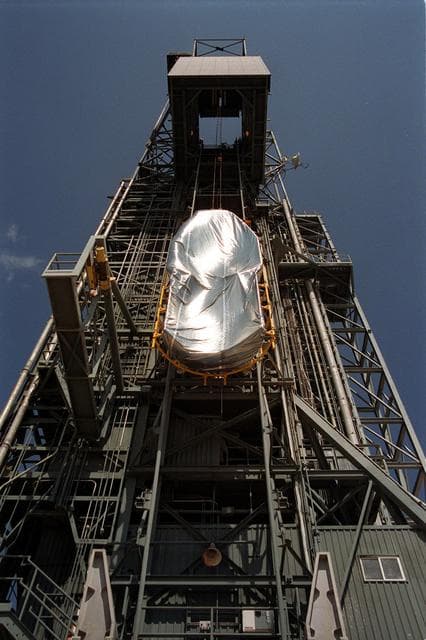
The first piece of the fairing that will cover the Mars Odyssey Orbiter during launch rises up the gantry at Launch...
KSC
Image
Mar 2, 2001
KSC01pp0471
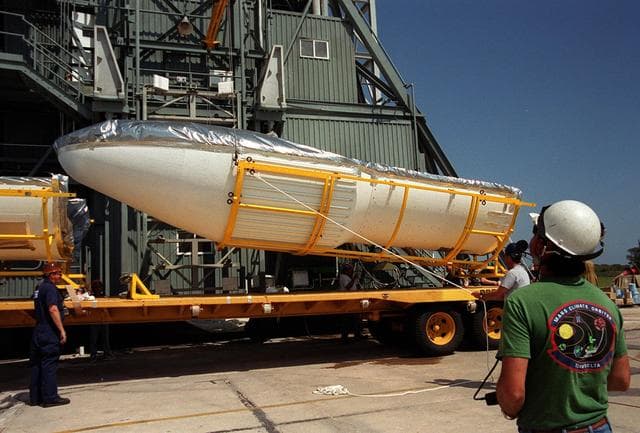
The first piece of the fairing that will cover the Mars Odyssey Orbiter during launch is prepared for lifting at...
KSC
Image
Mar 19, 2001
KSC-01PP-0575
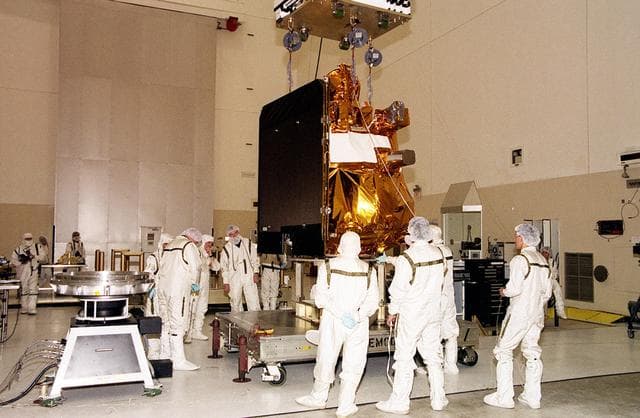
The 2001 Mars Odyssey Orbiter, suspended by an overhead crane in the Space Assembly and Encapsulation Building 2,...
KSC
Image
Mar 19, 2001
KSC01pp0575
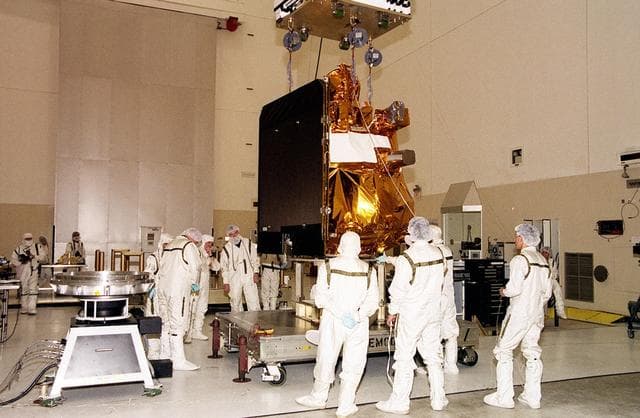
The 2001 Mars Odyssey Orbiter, suspended by an overhead crane in the Space Assembly and Encapsulation Building 2,...
KSC
Image
Mar 2, 2001
KSC-01PP-0472
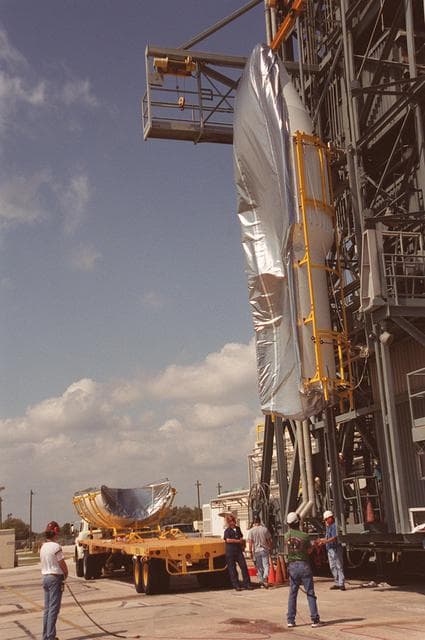
The first piece of the fairing that will cover the Mars Odyssey Orbiter during launch is lifted up the gantry at...
KSC
Image
Feb 9, 2001
KSC-01PP-0365
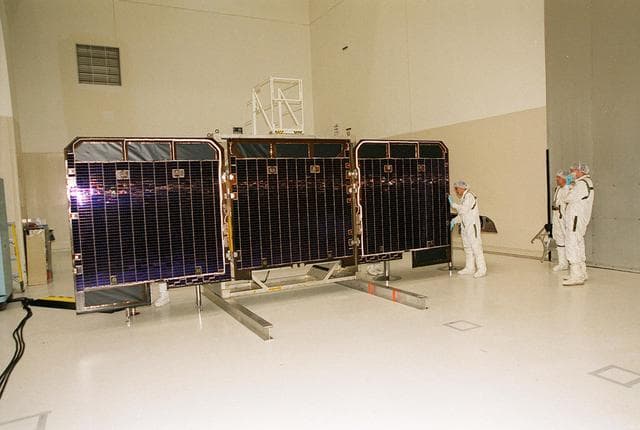
Workers in the in the Spacecraft Assembly and Encapsulation Facility 2 (SAEF-2) set up the Mars Odyssey solar panels...
KSC
Image
May 17, 2008
KSC-08pd1424
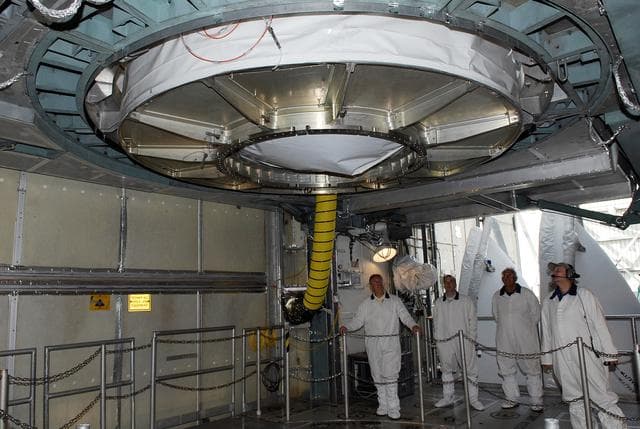
CAPE CANAVERAL, Fla. -- At pad 17-B at Cape Canaveral Air Force Station, workers keep watch as the GLAST spacecraft...
KSC
Image
Feb 9, 2001
KSC-01PP-0369
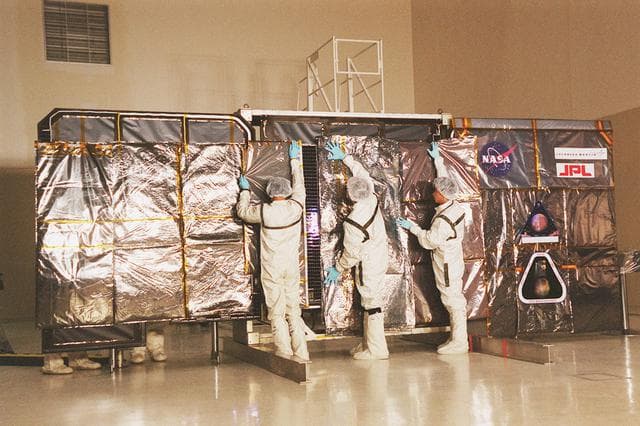
Workers attach reflective panels to the Mars Odyssey solar arrays for illumination testing. The Mars Orbiter is at...
KSC
Image
Apr 2, 2001
KSC-01PP-0701
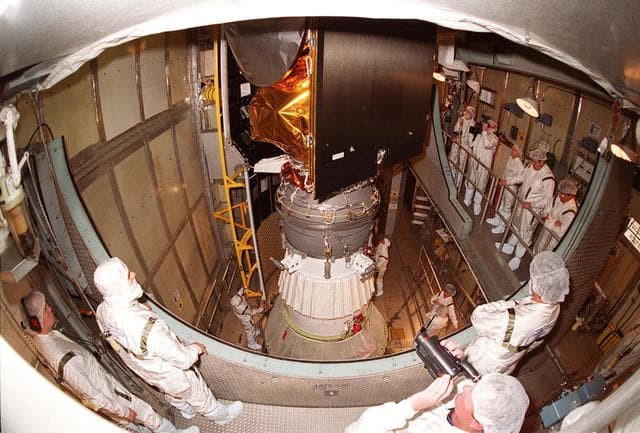
Workers at Launch Complex 17-A, Cape Canaveral Air Force Station, watch as a piece of the Delta rocket fairing is...
KSC
Image
Jan 9, 2001
KSC-01PP-0160
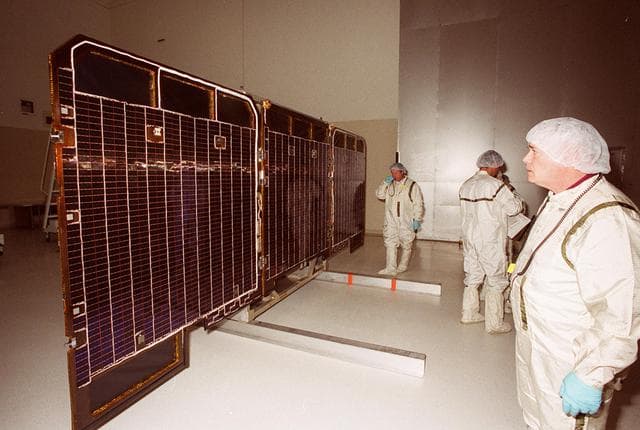
Workers in the Spacecraft Assembly and Encapsulation Facility -2 take a close look at the back side of the opened...
KSC
Image
Feb 9, 2001
KSC01pp0370
A worker (left) records data during illumination testing on the Mars Odyssey solar arrays he stands behind. The 2001...
KSC
Image
Apr 2, 2001
KSC01pp0708
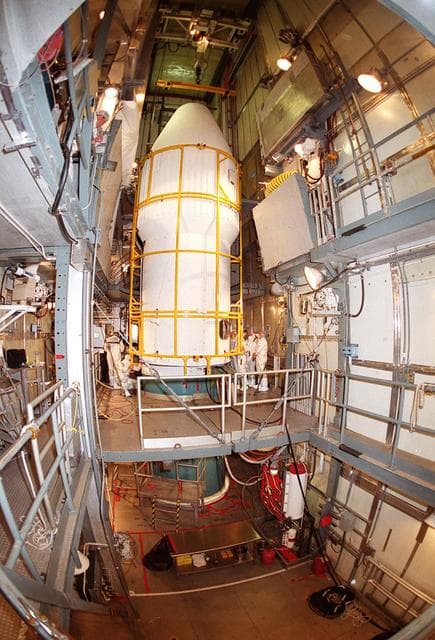
At Launch Complex 17-A, Cape Canaveral Air Force Station, the pristine white fairing comes together, enclosing the...
KSC
Image
Mar 19, 2001
KSC01pp0574
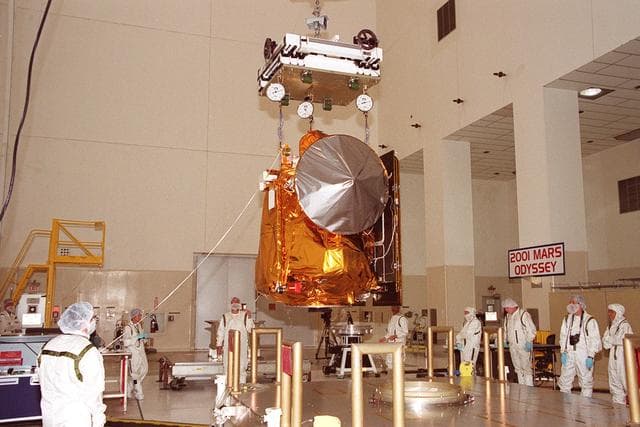
In the Space Assembly and Encapsulation Building 2, an overhead crane moves the 2001 Mars Odyssey Orbiter from its...
KSC
Image
Jan 29, 2001
KSC01pp0259
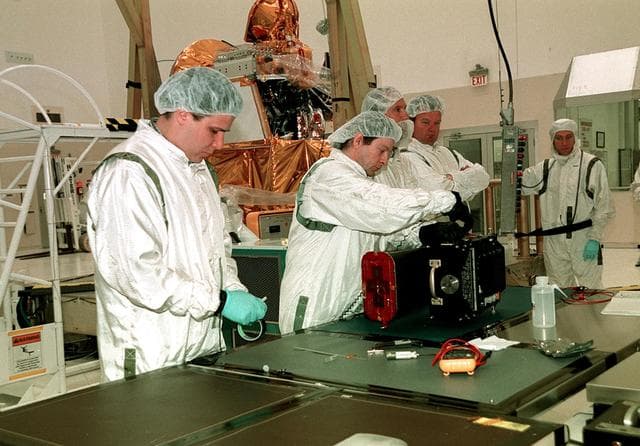
At a work bench in the Spacecraft Assembly and Encapsulation Facility 2, workers test the Thermal Emission Imaging...
KSC
Image
Apr 2, 2001
KSC-01PP-0709
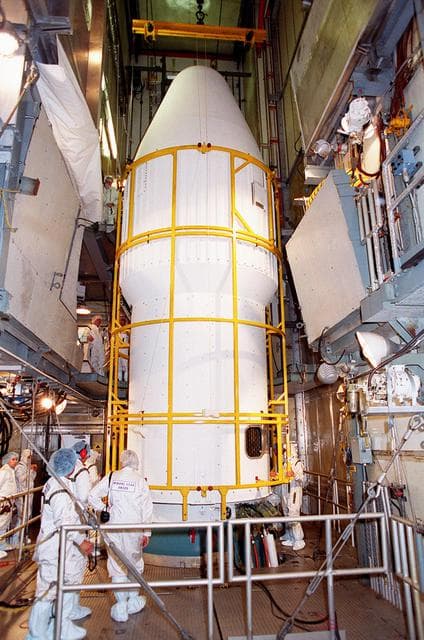
At Launch Complex 17-A, Cape Canaveral Air Force Station, workers check the fairing now enclosing the Mars Odyssey...
KSC
Image
Apr 2, 2001
KSC-01PP-0708
At Launch Complex 17-A, Cape Canaveral Air Force Station, the pristine white fairing comes together, enclosing the...
KSC
Image
Feb 19, 2001
KSC-01PP-0414
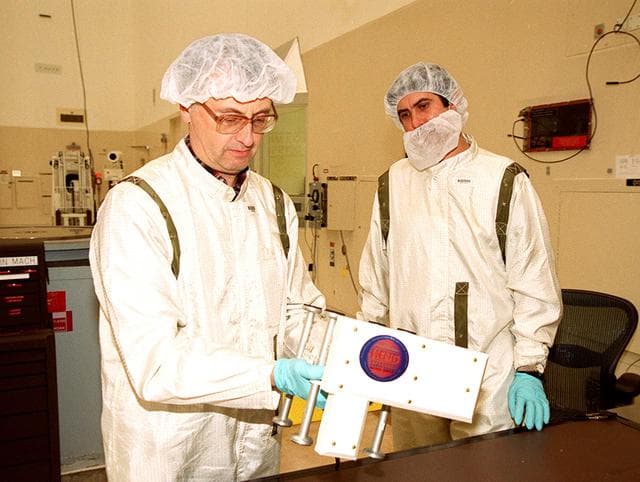
Two Russian scientists look over the High Energy Neutron Detector (HEND), part of the Gamma Ray Spectrometer (GRS),...
KSC