CosmosObservatory
Explore
Solar System
Live
Learn
Tools
About
Cosmos Observatory
ToolsAbout
Cosmos Observatory

Explore the universe through NASA data, real-time ISS tracking, Mars rover imagery, asteroid monitoring, and comprehensive space encyclopedia. Your gateway to the cosmos.

Explore

  • APOD
  • Mars Rovers
  • Earth Imagery
  • NASA Gallery
  • ISS Tracker

Data

  • Asteroids
  • Solar System
  • Exoplanets
  • Space Weather
  • Launches

Tools

  • Glossary
  • News
  • Calculators

Legal

  • About
  • Privacy Policy
  • Terms of Use
  • Space Tools
  • Contact

Stay updated with the cosmos

Get weekly digests of APOD highlights, upcoming launches, and space events.

© 2026 Cosmos Observatory. All rights reserved. Built with for space enthusiasts.

This website is not affiliated with, maintained, authorized, endorsed by, or in any way officially connected with NASA or any of its subsidiaries or affiliates. All NASA imagery is in the public domain unless otherwise noted. Data sourced from NASA Open APIs, Launch Library 2, and other open data services.

NASA Gallery

Explore NASA's vast collection of space images, videos, and audio from missions past and present.

  1. Home
  2. /
  3. NASA Gallery

NASA's Image and Video Library: A Visual Archive of Space Exploration

NASA's Image and Video Library is one of the most comprehensive public archives of space imagery in the world, containing over 140,000 images, videos, and audio recordings spanning more than six decades of space exploration. From the earliest Mercury and Gemini missions through the Apollo Moon landings, the Space Shuttle era, and today's cutting-edge observations from the James Webb Space Telescope, this collection documents humanity's journey into the cosmos.

The library includes imagery from diverse sources: telescopes like Hubble and Webb that capture deep-space nebulae, galaxies, and exoplanets; planetary missions like the Mars rovers ( browse Mars photos) and Cassini at Saturn; Earth observation satellites ( see EPIC imagery); astronaut photography from the ISS; and documentation of rocket launches, spacecraft assembly, and ground testing. Most NASA images are in the public domain and free to download at full resolution for educational, editorial, and personal use.

Use the search bar above to find specific subjects — try queries like "Apollo 11," "Hubble Deep Field," "Mars surface," or "astronaut EVA." You can also filter by media type (image, video, or audio). For a daily curated experience, visit the Astronomy Picture of the Day.

Showing results for "250"

449 results found - Page 2 of 19

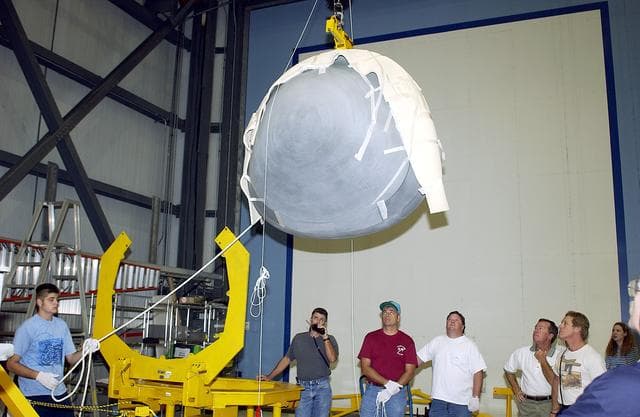
NASA image: KENNEDY SPACE CENTER, FLA. - In the Orbiter Processing Facility, workers watch as the nose cap of the orbiter Atlantis is moved toward the stand at left.  The cap was removed from the orbiter for routine inspection. The nose cap is made of reinforced carbon-carbon (RCC), which has an operating range of minus 250° F to about 3,000° F.
Image
Oct 17, 2003

KENNEDY SPACE CENTER, FLA. - In the Orbiter Processing Facility, workers watch as the nose cap of the orbiter Atlantis is moved toward the stand at left. The cap was removed from the orbiter for routine inspection. The nose cap is made of reinforced carbon-carbon (RCC), which has an operating range of minus 250° F to about 3,000° F.

KENNEDY SPACE CENTER, FLA. - In the Orbiter Processing Facility, workers watch as the nose cap of the orbiter...

KSC
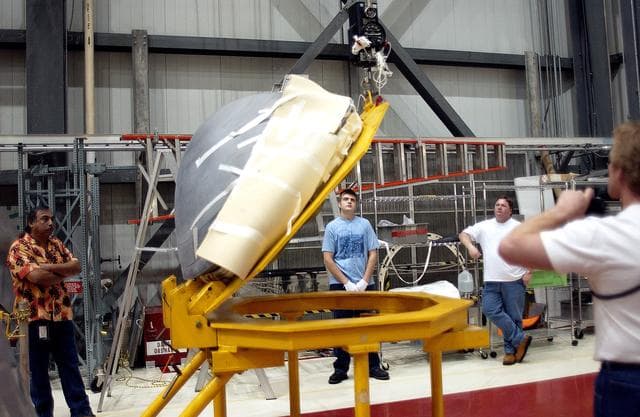
NASA image: KENNEDY SPACE CENTER, FLA. - In the Orbiter Processing Facility, the nose cap of the orbiter Atlantis is shifted to a horizontal position on a stand.  The cap was removed from the orbiter for routine inspection. The nose cap is made of reinforced carbon-carbon (RCC), which has an operating range of minus 250° F to about 3,000° F.
Image
Oct 17, 2003

KENNEDY SPACE CENTER, FLA. - In the Orbiter Processing Facility, the nose cap of the orbiter Atlantis is shifted to a horizontal position on a stand. The cap was removed from the orbiter for routine inspection. The nose cap is made of reinforced carbon-carbon (RCC), which has an operating range of minus 250° F to about 3,000° F.

KENNEDY SPACE CENTER, FLA. - In the Orbiter Processing Facility, the nose cap of the orbiter Atlantis is shifted to...

KSC
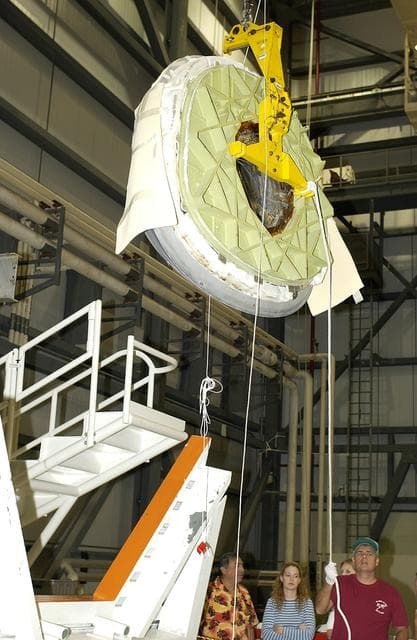
NASA image: KENNEDY SPACE CENTER, FLA. - In the Orbiter Processing Facility, the nose cap of the orbiter Atlantis is lifted for its transfer to a stand.  The cap was removed for routine inspection. The nose cap is made of reinforced carbon-carbon (RCC), which has an operating range of minus 250° F to about 3,000° F.
Image
Oct 17, 2003

KENNEDY SPACE CENTER, FLA. - In the Orbiter Processing Facility, the nose cap of the orbiter Atlantis is lifted for its transfer to a stand. The cap was removed for routine inspection. The nose cap is made of reinforced carbon-carbon (RCC), which has an operating range of minus 250° F to about 3,000° F.

KENNEDY SPACE CENTER, FLA. - In the Orbiter Processing Facility, the nose cap of the orbiter Atlantis is lifted for...

KSC
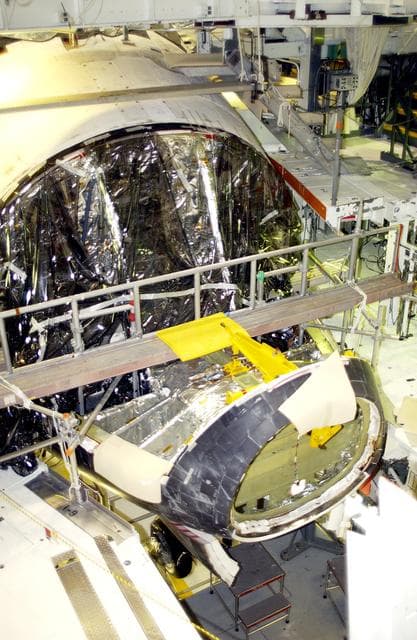
NASA image: KENNEDY SPACE CENTER, FLA. - In the Orbiter Processing Facility, Atlantis is seen after its nose cap was removed for routine inspection. The nose cap is made of reinforced carbon-carbon (RCC), which has an operating range of minus 250° F to about 3,000° F.
Image
Oct 17, 2003

KENNEDY SPACE CENTER, FLA. - In the Orbiter Processing Facility, Atlantis is seen after its nose cap was removed for routine inspection. The nose cap is made of reinforced carbon-carbon (RCC), which has an operating range of minus 250° F to about 3,000° F.

KENNEDY SPACE CENTER, FLA. - In the Orbiter Processing Facility, Atlantis is seen after its nose cap was removed for...

KSC
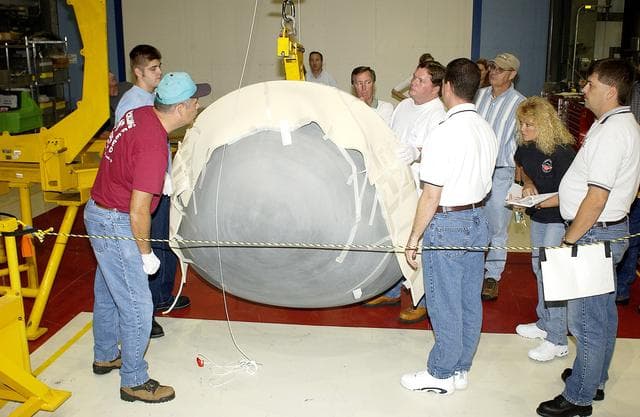
NASA image: KENNEDY SPACE CENTER, FLA. - In the Orbiter Processing Facility, workers watch as the nose cap of the orbiter Atlantis is lowered toward the floor.   The cap was removed from the orbiter for routine inspection. The nose cap is made of reinforced carbon-carbon (RCC), which has an operating range of minus 250° F to about 3,000° F.
Image
Oct 17, 2003

KENNEDY SPACE CENTER, FLA. - In the Orbiter Processing Facility, workers watch as the nose cap of the orbiter Atlantis is lowered toward the floor. The cap was removed from the orbiter for routine inspection. The nose cap is made of reinforced carbon-carbon (RCC), which has an operating range of minus 250° F to about 3,000° F.

KENNEDY SPACE CENTER, FLA. - In the Orbiter Processing Facility, workers watch as the nose cap of the orbiter...

KSC
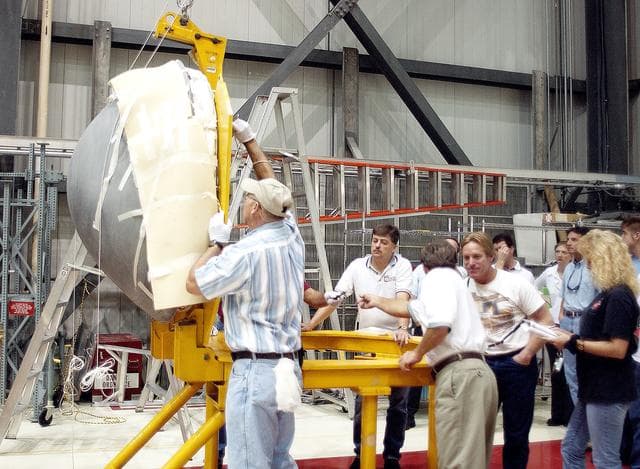
NASA image: KENNEDY SPACE CENTER, FLA. -  In the Orbiter Processing Facility, workers secure the nose cap of the orbiter Atlantis on a stand.   The cap was removed from the orbiter for routine inspection. The nose cap is made of reinforced carbon-carbon (RCC), which has an operating range of minus 250° F to about 3,000° F.
Image
Oct 17, 2003

KENNEDY SPACE CENTER, FLA. - In the Orbiter Processing Facility, workers secure the nose cap of the orbiter Atlantis on a stand. The cap was removed from the orbiter for routine inspection. The nose cap is made of reinforced carbon-carbon (RCC), which has an operating range of minus 250° F to about 3,000° F.

KENNEDY SPACE CENTER, FLA. - In the Orbiter Processing Facility, workers secure the nose cap of the orbiter Atlantis...

KSC
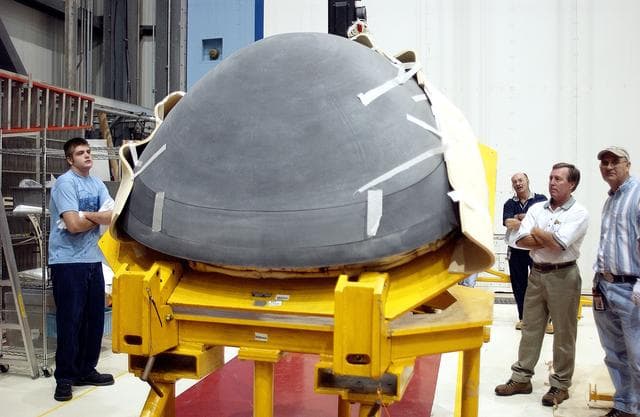
NASA image: KENNEDY SPACE CENTER, FLA. - In the Orbiter Processing Facility, workers watch as the nose cap of the orbiter Atlantis is shifted to a horizontal position on a stand.  The cap was removed from the orbiter for routine inspection. The nose cap is made of reinforced carbon-carbon (RCC), which has an operating range of minus 250° F to about 3,000° F.
Image
Oct 17, 2003

KENNEDY SPACE CENTER, FLA. - In the Orbiter Processing Facility, workers watch as the nose cap of the orbiter Atlantis is shifted to a horizontal position on a stand. The cap was removed from the orbiter for routine inspection. The nose cap is made of reinforced carbon-carbon (RCC), which has an operating range of minus 250° F to about 3,000° F.

KENNEDY SPACE CENTER, FLA. - In the Orbiter Processing Facility, workers watch as the nose cap of the orbiter...

KSC
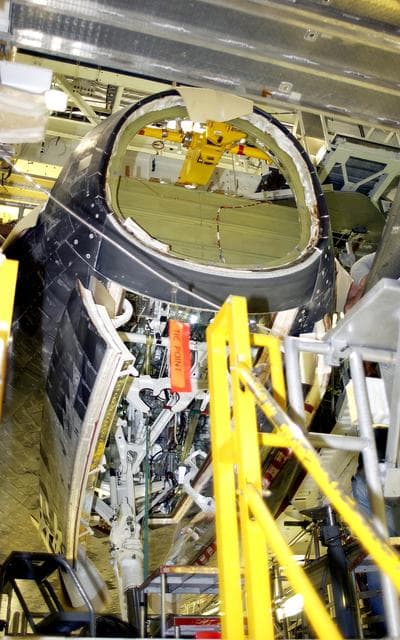
NASA image: KENNEDY SPACE CENTER, FLA. - In the Orbiter Processing Facility, Atlantis is seen after its nose cap was removed for routine inspection. The nose cap is made of reinforced carbon-carbon (RCC), which has an operating range of minus 250° F to about 3,000° F.
Image
Oct 17, 2003

KENNEDY SPACE CENTER, FLA. - In the Orbiter Processing Facility, Atlantis is seen after its nose cap was removed for routine inspection. The nose cap is made of reinforced carbon-carbon (RCC), which has an operating range of minus 250° F to about 3,000° F.

KENNEDY SPACE CENTER, FLA. - In the Orbiter Processing Facility, Atlantis is seen after its nose cap was removed for...

KSC
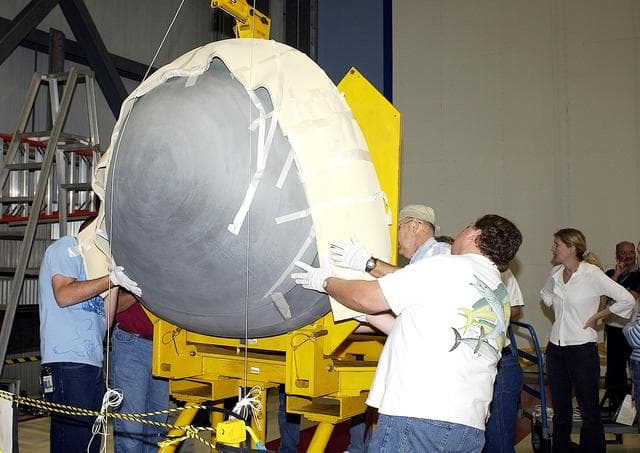
NASA image: KENNEDY SPACE CENTER, FLA. -  In the Orbiter Processing Facility, workers help guide the nose cap of the orbiter Atlantis toward a stand.  The cap was removed from the orbiter for routine inspection. The nose cap is made of reinforced carbon-carbon (RCC), which has an operating range of minus 250° F to about 3,000° F.
Image
Oct 17, 2003

KENNEDY SPACE CENTER, FLA. - In the Orbiter Processing Facility, workers help guide the nose cap of the orbiter Atlantis toward a stand. The cap was removed from the orbiter for routine inspection. The nose cap is made of reinforced carbon-carbon (RCC), which has an operating range of minus 250° F to about 3,000° F.

KENNEDY SPACE CENTER, FLA. - In the Orbiter Processing Facility, workers help guide the nose cap of the orbiter...

KSC
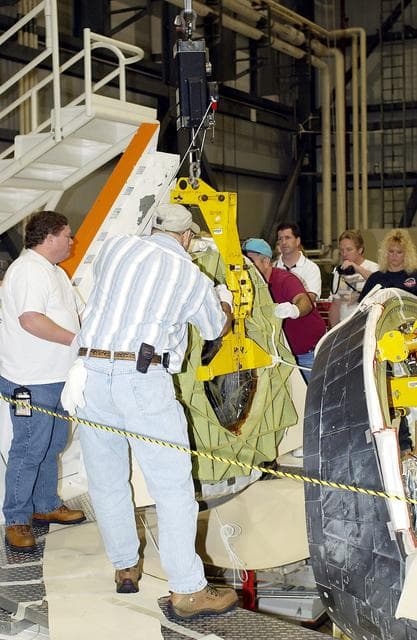
NASA image: KENNEDY SPACE CENTER, FLA. - In the Orbiter Processing Facility, workers secure the nose cap of the orbiter Atlantis for its transfer to a stand.  The cap was removed for routine inspection. The nose cap is made of reinforced carbon-carbon (RCC), which has an operating range of minus 250° F to about 3,000° F.
Image
Oct 17, 2003

KENNEDY SPACE CENTER, FLA. - In the Orbiter Processing Facility, workers secure the nose cap of the orbiter Atlantis for its transfer to a stand. The cap was removed for routine inspection. The nose cap is made of reinforced carbon-carbon (RCC), which has an operating range of minus 250° F to about 3,000° F.

KENNEDY SPACE CENTER, FLA. - In the Orbiter Processing Facility, workers secure the nose cap of the orbiter Atlantis...

KSC
NASA image: ARC-1989-AC89-0234-34
Image
May 18, 1989

ARC-1989-AC89-0234-34

Ames Facility Aerials - High Pressure Tanks, N-250A and N-250

ARC
NASA image: 250 Anni Countdown Clock Image
Image
Apr 18, 2025

250 Anni Countdown Clock Image

The historic countdown clock by the NASA News Center at the agency’s Kennedy Space Center in Florida on Friday,...

KSC
NASA image: ARC-1989-AC89-0234-20
Image
Apr 21, 1989

ARC-1989-AC89-0234-20

Ames Aerial: N-250, N-250A, N-260, N-257, N-262, N-258 N-255

ARC
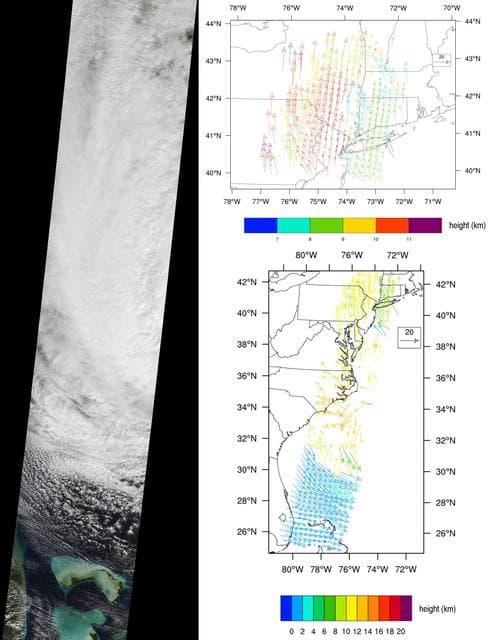
NASA image: NASA Spacecraft Imagery Shows Hurricane Sandy Wind Flow
Image
Oct 29, 2012

NASA Spacecraft Imagery Shows Hurricane Sandy Wind Flow

NASA Terra spacecraft captured this imagery and data over Hurricane Sandy as the storm approached the U.S. east...

JPL
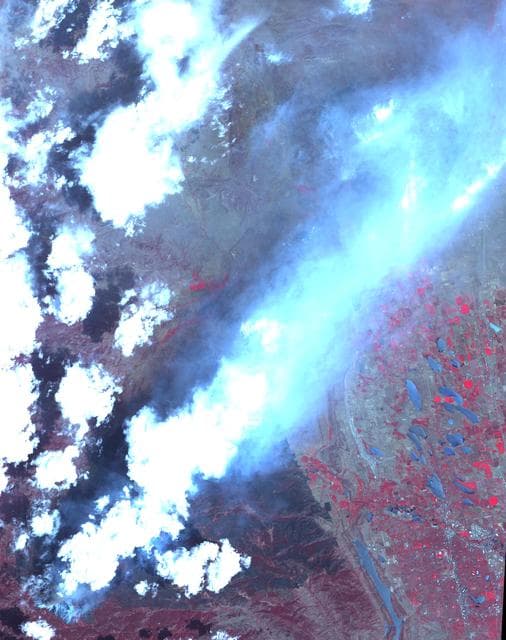
NASA image: NASA Spacecraft Images Colorado Most Destructive Wildfire to Date
Image
Jun 25, 2012

NASA Spacecraft Images Colorado Most Destructive Wildfire to Date

Acquired by NASA Terra spacecraft on June 25, 2012, this image shows the High Park fire west of Fort Collins, Colo....

JPL
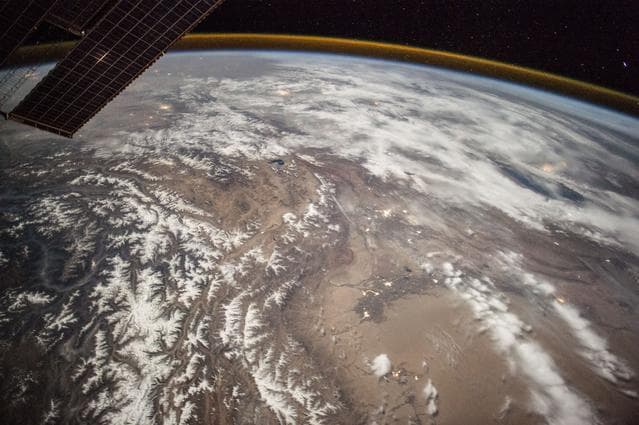
NASA image: iss053e150799
Image
Nov 5, 2017

iss053e150799

iss053e150799 (Nov. 5, 2017) ---A portion of the Himalayan mountain range was pictured from the International Space...

JSC
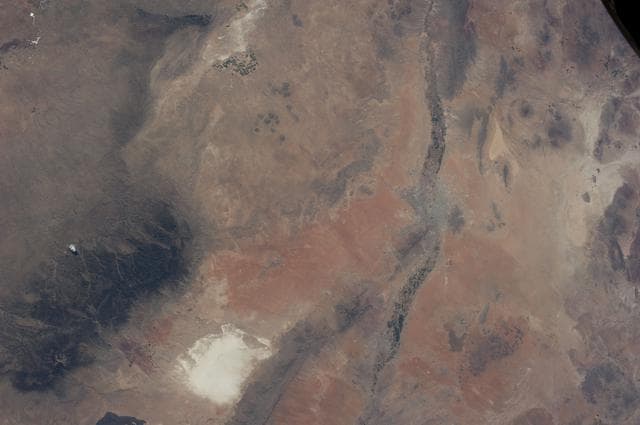
NASA image: Earth Observation
Image
May 21, 2013

Earth Observation

iss036e003571 (May 21, 2013) --- Big Bend National Park in Texas is pictured from the International Space Station as...

JSC
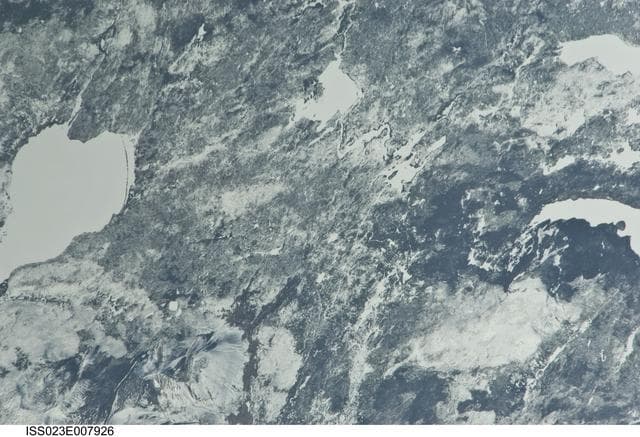
NASA image: Earth Observations taken by the Expedition 23 Crew
Image
Mar 21, 2010

Earth Observations taken by the Expedition 23 Crew

iss023e007926 (March 21, 2010) --- Yellowstone National Park in Wyoming is pictured from the International Space...

JSC
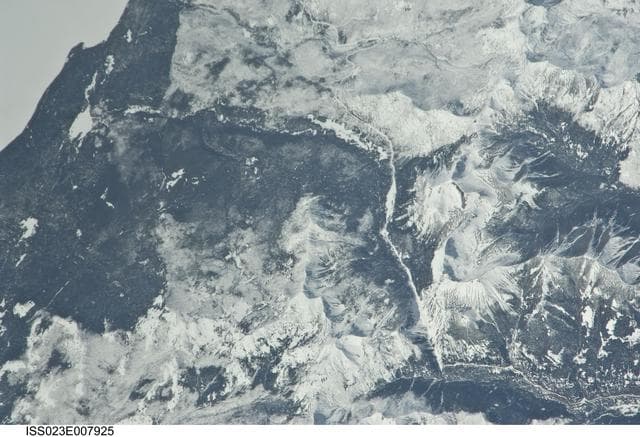
NASA image: Earth Observations taken by the Expedition 23 Crew
Image
Mar 21, 2010

Earth Observations taken by the Expedition 23 Crew

iss023e007925 (March 21, 2010) --- Yellowstone National Park in Wyoming is pictured from the International Space...

JSC
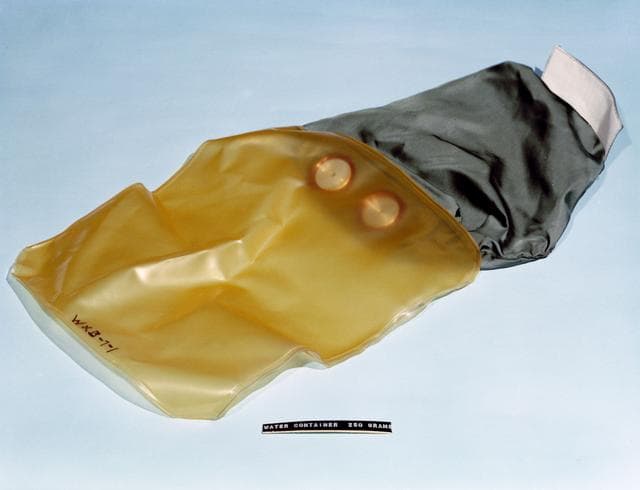
NASA image: SURVIVAL EQUIPMENT
Image
Jan 1, 1962

SURVIVAL EQUIPMENT

S62-06783 (1962) --- Component of Mercury astronauts survival equipment backpack - water container holding 250 grams...

JSC
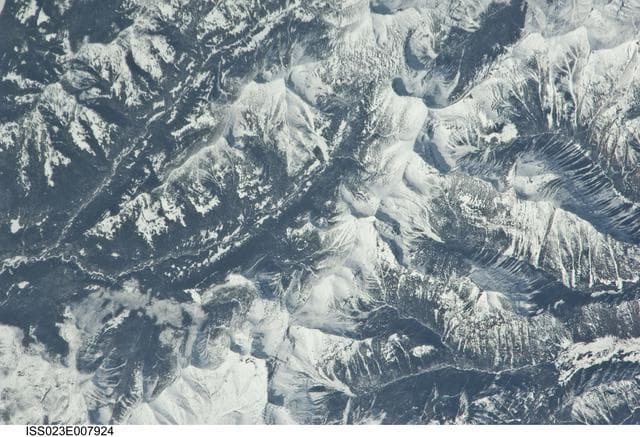
NASA image: Earth Observations taken by the Expedition 23 Crew
Image
Mar 21, 2010

Earth Observations taken by the Expedition 23 Crew

iss023e007924 (March 21, 2010) --- Yellowstone National Park in Wyoming is pictured from the International Space...

JSC
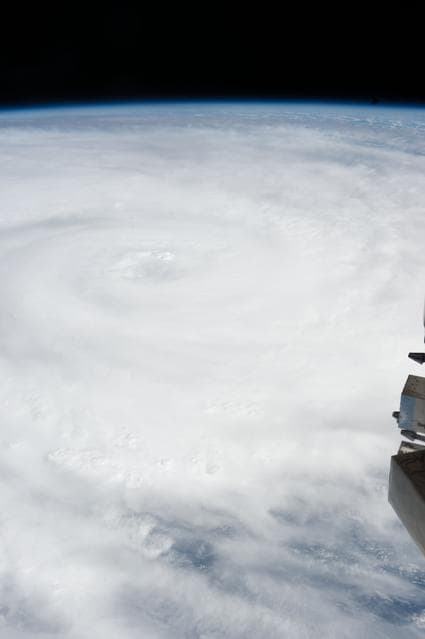
NASA image: iss051e039765
Image
May 7, 2017

iss051e039765

iss051e039765 (May 9, 2017) --- Cyclone Donna was photographed just East of Australia as the International Space...

JSC
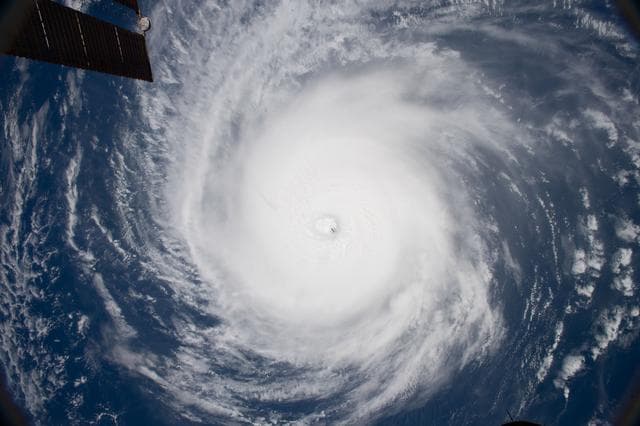
NASA image: iss056e129954
Image
Aug 7, 2018

iss056e129954

iss056e129954 (Aug. 7, 2018) --- Hurricane Hector was pictured by an Expedition 56 crew member as the International...

JSC
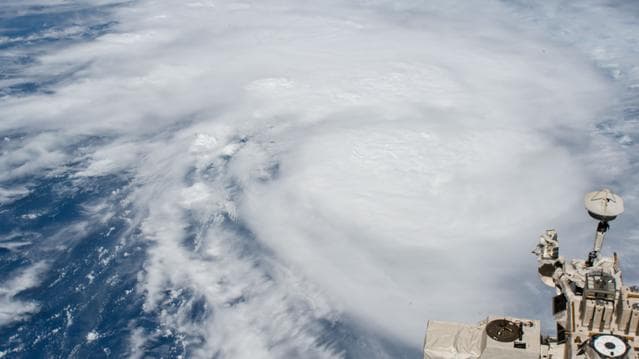
NASA image: iss051e040010
Image
May 9, 2017

iss051e040010

iss051e039765 (May 9, 2017) --- Cyclone Donna was photographed just East of Australia as the International Space...

JSC
PreviousPage 2 of 19Next

Frequently Asked Questions About NASA Images

Are NASA images free to use?+
Yes, most NASA images are in the public domain and are free to use for educational, informational, and personal purposes. NASA's media usage guidelines state that NASA material is not copyrighted unless otherwise noted. However, the NASA logo and certain insignia are protected. Some images may include identifiable individuals or third-party content that requires additional permissions. Always check the specific image's usage rights and credit NASA as the source.
How many images does NASA have?+
NASA's Image and Video Library contains over 140,000 publicly accessible images, videos, and audio files spanning the agency's entire history, from the Mercury program of the 1960s to the latest James Webb Space Telescope discoveries. The collection grows daily as new missions capture imagery and archival materials are digitized. Individual mission archives, such as Mars rover photos, contain hundreds of thousands of additional images.
Can I download NASA images?+
Yes, you can download NASA images in multiple resolutions directly from this gallery. Each image detail page provides download links for original (full resolution), large (1920px), medium (960px), small (480px), and thumbnail sizes. NASA encourages the public to use these images for education, media, and personal projects. High-resolution originals are ideal for printing and professional use.

Explore More NASA Content

Astronomy Picture of the Day

Daily curated space image

Mars Rover Photos

Curiosity & Perseverance images

Earth from Space

DSCOVR EPIC daily images

Launch Schedule

Upcoming rocket launches

Space News

Mission updates & discoveries