CosmosObservatory
Explore
Solar System
Live
Learn
Tools
About
Cosmos Observatory
ToolsAbout
Cosmos Observatory

Explore the universe through NASA data, real-time ISS tracking, Mars rover imagery, asteroid monitoring, and comprehensive space encyclopedia. Your gateway to the cosmos.

Explore

  • APOD
  • Mars Rovers
  • Earth Imagery
  • NASA Gallery
  • ISS Tracker

Data

  • Asteroids
  • Solar System
  • Exoplanets
  • Space Weather
  • Launches

Tools

  • Glossary
  • News
  • Calculators

Legal

  • About
  • Privacy Policy
  • Terms of Use
  • Space Tools
  • Contact

Stay updated with the cosmos

Get weekly digests of APOD highlights, upcoming launches, and space events.

© 2026 Cosmos Observatory. All rights reserved. Built with for space enthusiasts.

This website is not affiliated with, maintained, authorized, endorsed by, or in any way officially connected with NASA or any of its subsidiaries or affiliates. All NASA imagery is in the public domain unless otherwise noted. Data sourced from NASA Open APIs, Launch Library 2, and other open data services.

NASA Gallery

Explore NASA's vast collection of space images, videos, and audio from missions past and present.

  1. Home
  2. /
  3. NASA Gallery

NASA's Image and Video Library: A Visual Archive of Space Exploration

NASA's Image and Video Library is one of the most comprehensive public archives of space imagery in the world, containing over 140,000 images, videos, and audio recordings spanning more than six decades of space exploration. From the earliest Mercury and Gemini missions through the Apollo Moon landings, the Space Shuttle era, and today's cutting-edge observations from the James Webb Space Telescope, this collection documents humanity's journey into the cosmos.

The library includes imagery from diverse sources: telescopes like Hubble and Webb that capture deep-space nebulae, galaxies, and exoplanets; planetary missions like the Mars rovers ( browse Mars photos) and Cassini at Saturn; Earth observation satellites ( see EPIC imagery); astronaut photography from the ISS; and documentation of rocket launches, spacecraft assembly, and ground testing. Most NASA images are in the public domain and free to download at full resolution for educational, editorial, and personal use.

Use the search bar above to find specific subjects — try queries like "Apollo 11," "Hubble Deep Field," "Mars surface," or "astronaut EVA." You can also filter by media type (image, video, or audio). For a daily curated experience, visit the Astronomy Picture of the Day.

Showing results for "DEBRIS"

1,793 results found - Page 16 of 75

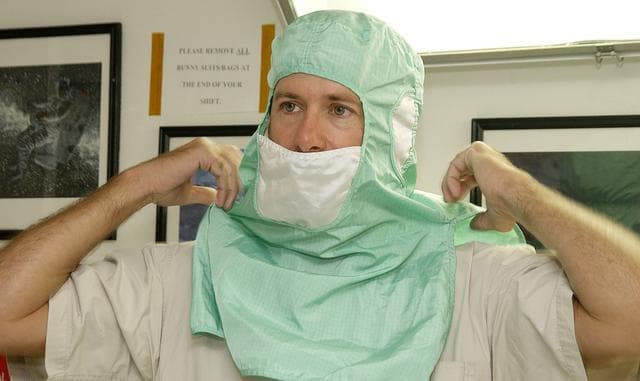
NASA image: KENNEDY SPACE CENTER, FLA. - A KSC employee dons the head and face cover of a "bunny suit," part of standard clean room apparel, before entering a clean room.  This apparel is designed to cover the hair, clothing and shoes of employees to prevent particulate matter from contaminating the space flight hardware being stored or processed in the clean room and is one aspect of KSC's Foreign Object Debris (FOD) control program, an important safety initiative.
Image
Aug 29, 2003

KENNEDY SPACE CENTER, FLA. - A KSC employee dons the head and face cover of a "bunny suit," part of standard clean room apparel, before entering a clean room. This apparel is designed to cover the hair, clothing and shoes of employees to prevent particulate matter from contaminating the space flight hardware being stored or processed in the clean room and is one aspect of KSC's Foreign Object Debris (FOD) control program, an important safety initiative.

KENNEDY SPACE CENTER, FLA. - A KSC employee dons the head and face cover of a "bunny suit," part of standard clean...

KSC
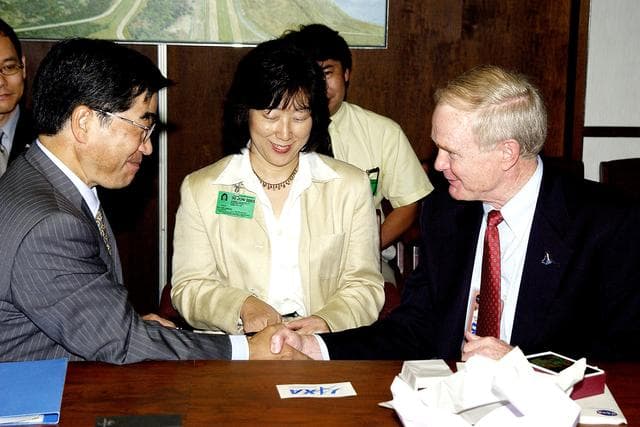
NASA image: KENNEDY SPACE CENTER, FLA. -  Executive Director of NASDA Koji Yamamoto (left) is welcomed to KSC by Center Director Roy Bridges Jr. (right).  On the table between them is the logo of the new Japan Aerospace Exploration Agency, a merger of three Japanese aeronautical and space agencies effective Oct.1, 2003.  Mr. Yamamoto is at KSC for a welcome ceremony involving the arrival of the newest Space Station module, the Japanese Experiment Module/pressurized module.  His visit includes a tour of the Columbia Debris Hangar.
Image
Jun 12, 2003

KENNEDY SPACE CENTER, FLA. - Executive Director of NASDA Koji Yamamoto (left) is welcomed to KSC by Center Director Roy Bridges Jr. (right). On the table between them is the logo of the new Japan Aerospace Exploration Agency, a merger of three Japanese aeronautical and space agencies effective Oct.1, 2003. Mr. Yamamoto is at KSC for a welcome ceremony involving the arrival of the newest Space Station module, the Japanese Experiment Module/pressurized module. His visit includes a tour of the Columbia Debris Hangar.

KENNEDY SPACE CENTER, FLA. - Executive Director of NASDA Koji Yamamoto (left) is welcomed to KSC by Center Director...

KSC
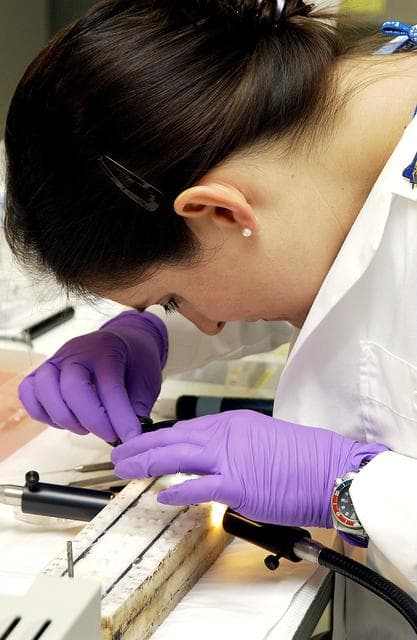
NASA image: KENNEDY SPACE CENTER, FLA. -  Valerie Cassanto, Instrumentation Technology Associates, Inc., studies one of the experiments carried on mission STS-107. Several experiments were found during the search for Columbia debris. Included in the Commercial ITA Biomedical Experiments payload on mission STS-107 are urokinase cancer research, microencapsulation of drugs, the Growth of Bacterial Biofilm on Surfaces during Spaceflight (GOBBSS), and tin crystal formation.  The latter was sponsored by the Pembroke Pines Charter Middle School.
Image
May 7, 2003

KENNEDY SPACE CENTER, FLA. - Valerie Cassanto, Instrumentation Technology Associates, Inc., studies one of the experiments carried on mission STS-107. Several experiments were found during the search for Columbia debris. Included in the Commercial ITA Biomedical Experiments payload on mission STS-107 are urokinase cancer research, microencapsulation of drugs, the Growth of Bacterial Biofilm on Surfaces during Spaceflight (GOBBSS), and tin crystal formation. The latter was sponsored by the Pembroke Pines Charter Middle School.

KENNEDY SPACE CENTER, FLA. - Valerie Cassanto, Instrumentation Technology Associates, Inc., studies one of the...

KSC
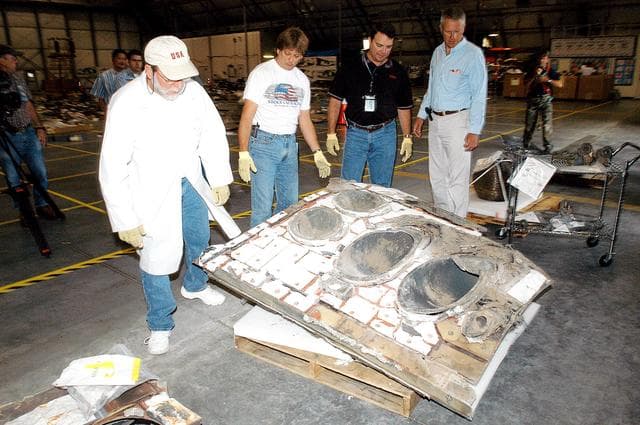
NASA image: KENNEDY SPACE CENTER, FLA. -  Members of the Columbia Reconstruction Project Team work with pieces of debris in the RLV Hangar. The items shipped to KSC number more than 82,000 and weigh 84,800 pounds or 38 percent of the total dry weight of Columbia. Of those items, 78,760 have been identified, with 753 placed on the left wing grid in the Hangar.
Image
May 15, 2003

KENNEDY SPACE CENTER, FLA. - Members of the Columbia Reconstruction Project Team work with pieces of debris in the RLV Hangar. The items shipped to KSC number more than 82,000 and weigh 84,800 pounds or 38 percent of the total dry weight of Columbia. Of those items, 78,760 have been identified, with 753 placed on the left wing grid in the Hangar.

KENNEDY SPACE CENTER, FLA. - Members of the Columbia Reconstruction Project Team work with pieces of debris in the...

KSC
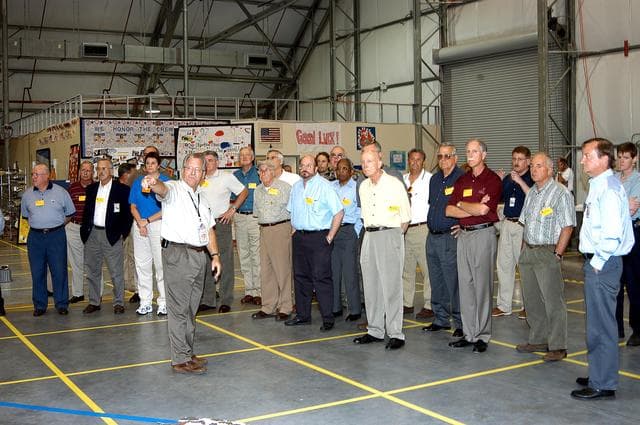
NASA image: KENNEDY SPACE CENTER, FLA.  -   The Stafford-Covey Return to Flight Task Group (SCTG) visits the Columbia Debris Hangar .  Chairing the task group are Richard O. Covey (third from right), former Space Shuttle commander, and Thomas P. Stafford (fourth from right), Apollo commander.  Chartered by NASA Administrator Sean O’Keefe, the task group will perform an independent assessment of NASA’s implementation of the final recommendations by the Columbia Accident Investigation Board.
Image
Aug 5, 2003

KENNEDY SPACE CENTER, FLA. - The Stafford-Covey Return to Flight Task Group (SCTG) visits the Columbia Debris Hangar . Chairing the task group are Richard O. Covey (third from right), former Space Shuttle commander, and Thomas P. Stafford (fourth from right), Apollo commander. Chartered by NASA Administrator Sean O’Keefe, the task group will perform an independent assessment of NASA’s implementation of the final recommendations by the Columbia Accident Investigation Board.

KENNEDY SPACE CENTER, FLA. - The Stafford-Covey Return to Flight Task Group (SCTG) visits the Columbia Debris Hangar...

KSC
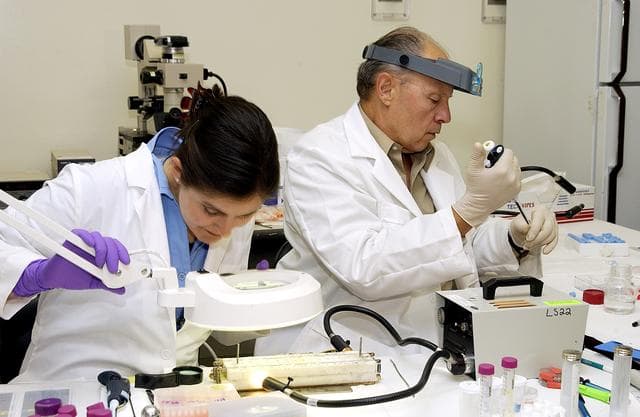
NASA image: KENNEDY SPACE CENTER, FLA. -  From left, Valerie Cassanto, Instrumentation Technology Associates, Inc., and Dr. Dennis Morrison, NASA Johnson Space Center, analyze one of the experiments carried on mission STS-107. Several experiments were found during the search for Columbia debris. Included in the Commercial ITA Biomedical Experiments payload on mission STS-107 are urokinase cancer research, microencapsulation of drugs, the Growth of Bacterial Biofilm on Surfaces during Spaceflight (GOBBSS), and tin crystal formation.
Image
May 7, 2003

KENNEDY SPACE CENTER, FLA. - From left, Valerie Cassanto, Instrumentation Technology Associates, Inc., and Dr. Dennis Morrison, NASA Johnson Space Center, analyze one of the experiments carried on mission STS-107. Several experiments were found during the search for Columbia debris. Included in the Commercial ITA Biomedical Experiments payload on mission STS-107 are urokinase cancer research, microencapsulation of drugs, the Growth of Bacterial Biofilm on Surfaces during Spaceflight (GOBBSS), and tin crystal formation.

KENNEDY SPACE CENTER, FLA. - From left, Valerie Cassanto, Instrumentation Technology Associates, Inc., and Dr....

KSC
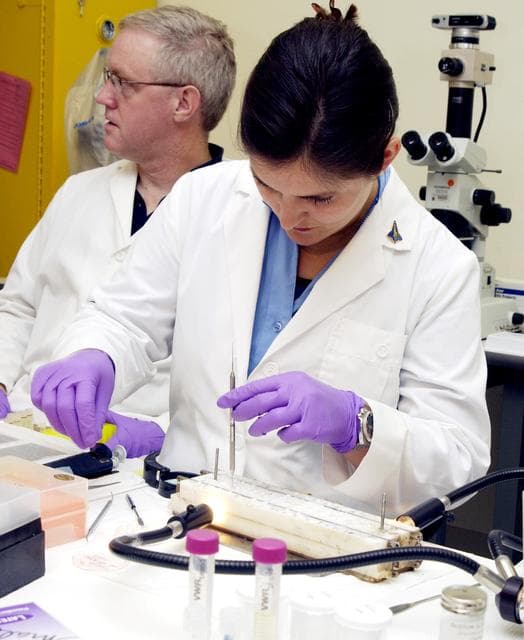
NASA image: KENNEDY SPACE CENTER, FLA. -  Valerie Cassanto (foreground), Instrumentation Technology Associates, Inc., examines one of the experiments carried on mission STS-107. Several experiments were found during the search for Columbia debris. Included in the Commercial ITA Biomedical Experiments payload on mission STS-107 are urokinase cancer research, microencapsulation of drugs, the Growth of Bacterial Biofilm on Surfaces during Spaceflight (GOBBSS), and tin crystal formation.
Image
May 7, 2003

KENNEDY SPACE CENTER, FLA. - Valerie Cassanto (foreground), Instrumentation Technology Associates, Inc., examines one of the experiments carried on mission STS-107. Several experiments were found during the search for Columbia debris. Included in the Commercial ITA Biomedical Experiments payload on mission STS-107 are urokinase cancer research, microencapsulation of drugs, the Growth of Bacterial Biofilm on Surfaces during Spaceflight (GOBBSS), and tin crystal formation.

KENNEDY SPACE CENTER, FLA. - Valerie Cassanto (foreground), Instrumentation Technology Associates, Inc., examines...

KSC
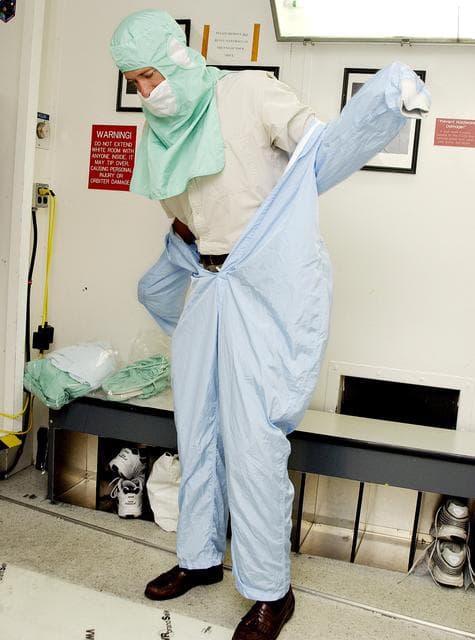
NASA image: KENNEDY SPACE CENTER, FLA. -  A KSC employee dons the coverall of a "bunny suit," part of standard clean room apparel, before entering a clean room. The apparel is designed to cover the hair, clothing and shoes of employees to prevent particulate matter from contaminating the space flight hardware being stored or processed in the clean room and is one aspect of KSC's Foreign Object Debris (FOD) control program, an important safety initiative.
Image
Aug 29, 2003

KENNEDY SPACE CENTER, FLA. - A KSC employee dons the coverall of a "bunny suit," part of standard clean room apparel, before entering a clean room. The apparel is designed to cover the hair, clothing and shoes of employees to prevent particulate matter from contaminating the space flight hardware being stored or processed in the clean room and is one aspect of KSC's Foreign Object Debris (FOD) control program, an important safety initiative.

KENNEDY SPACE CENTER, FLA. - A KSC employee dons the coverall of a "bunny suit," part of standard clean room...

KSC
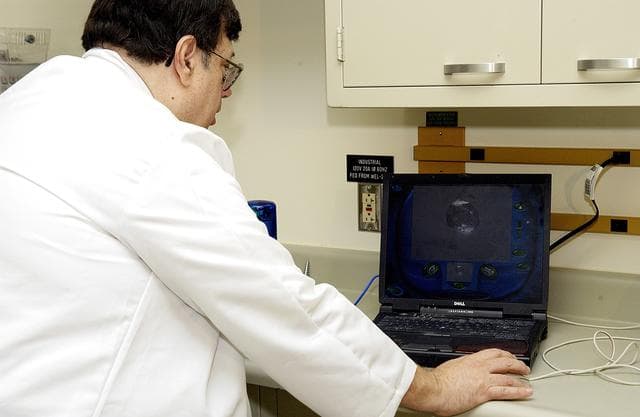
NASA image: KENNEDY SPACE CENTER, FLA. -  Barry Perlman, Pembroke Pines Charter Middle School in Florida, prepares a computer to receive data from an experiment carried on mission STS-107. Several experiments were found during the search for Columbia debris. Included in the Commercial ITA Biomedical Experiments payload on mission STS-107 are urokinase cancer research, microencapsulation of drugs, the Growth of Bacterial Biofilm on Surfaces during Spaceflight (GOBBSS), and tin crystal formation. The latter was sponsored by the Pembroke Pines Charter Middle School.
Image
May 7, 2003

KENNEDY SPACE CENTER, FLA. - Barry Perlman, Pembroke Pines Charter Middle School in Florida, prepares a computer to receive data from an experiment carried on mission STS-107. Several experiments were found during the search for Columbia debris. Included in the Commercial ITA Biomedical Experiments payload on mission STS-107 are urokinase cancer research, microencapsulation of drugs, the Growth of Bacterial Biofilm on Surfaces during Spaceflight (GOBBSS), and tin crystal formation. The latter was sponsored by the Pembroke Pines Charter Middle School.

KENNEDY SPACE CENTER, FLA. - Barry Perlman, Pembroke Pines Charter Middle School in Florida, prepares a computer to...

KSC
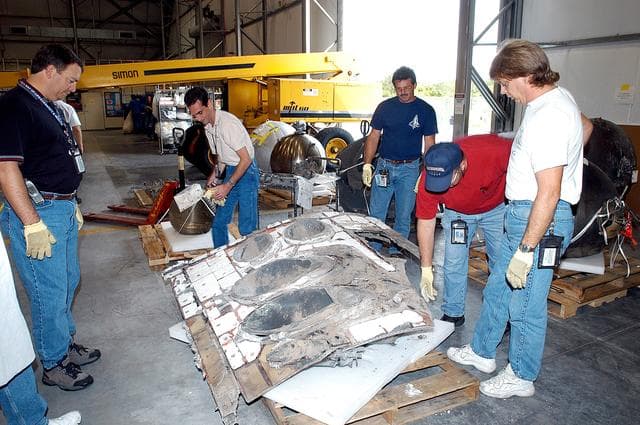
NASA image: KENNEDY SPACE CENTER, FLA. -  Members of the Columbia Reconstruction Project Team work with pieces of debris in the RLV Hangar. The items shipped to KSC number more than 82,000 and weigh 84,800 pounds or 38 percent of the total dry weight of Columbia. Of those items, 78,760 have been identified, with 753 placed on the left wing grid in the Hangar.
Image
May 15, 2003

KENNEDY SPACE CENTER, FLA. - Members of the Columbia Reconstruction Project Team work with pieces of debris in the RLV Hangar. The items shipped to KSC number more than 82,000 and weigh 84,800 pounds or 38 percent of the total dry weight of Columbia. Of those items, 78,760 have been identified, with 753 placed on the left wing grid in the Hangar.

KENNEDY SPACE CENTER, FLA. - Members of the Columbia Reconstruction Project Team work with pieces of debris in the...

KSC
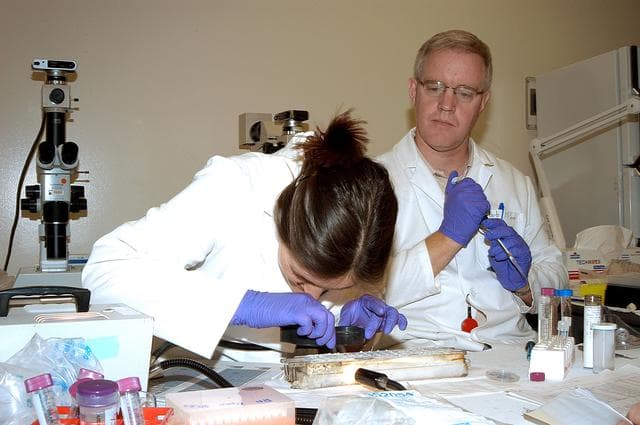
NASA image: KENNEDY SPACE CENTER, FLA. - Valerie Cassanto, with Instrumentation Technology Associates, Inc., works on an experiment found during the search for Columbia debris.  Mike Casasanto, also with ITA, looks on.  Included in the Commercial ITA Biomedical Experiments payload on mission STS-107 are urokinase cancer research, microencapsulation of drugs, the Growth of Bacterial Biofilm on Surfaces during Spaceflight (GOBBSS), and tin crystal formation.
Image
May 6, 2003

KENNEDY SPACE CENTER, FLA. - Valerie Cassanto, with Instrumentation Technology Associates, Inc., works on an experiment found during the search for Columbia debris. Mike Casasanto, also with ITA, looks on. Included in the Commercial ITA Biomedical Experiments payload on mission STS-107 are urokinase cancer research, microencapsulation of drugs, the Growth of Bacterial Biofilm on Surfaces during Spaceflight (GOBBSS), and tin crystal formation.

KENNEDY SPACE CENTER, FLA. - Valerie Cassanto, with Instrumentation Technology Associates, Inc., works on an...

KSC
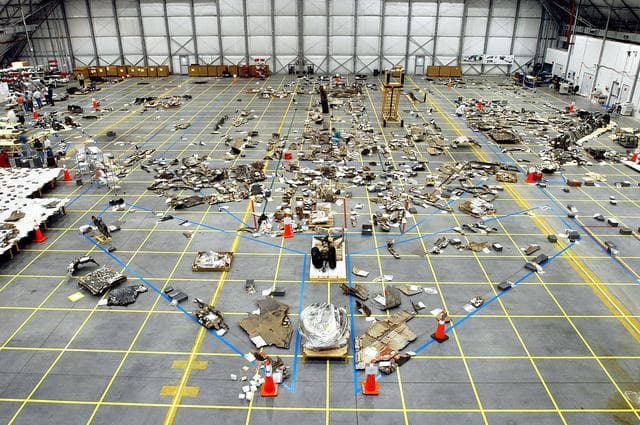
NASA image: KENNEDY SPACE CENTER, FLA. -  The floor of the RLV Hangar is full of pieces of Columbia debris delivered from the search and recovery efforts in East Texas.  The items shipped to KSC number more than 82,000 and weigh 84,800 pounds or 38 percent of the total dry weight of Columbia. Of those items, 78,760 have been identified, with 753 placed on the left wing grid in the Hangar.
Image
May 15, 2003

KENNEDY SPACE CENTER, FLA. - The floor of the RLV Hangar is full of pieces of Columbia debris delivered from the search and recovery efforts in East Texas. The items shipped to KSC number more than 82,000 and weigh 84,800 pounds or 38 percent of the total dry weight of Columbia. Of those items, 78,760 have been identified, with 753 placed on the left wing grid in the Hangar.

KENNEDY SPACE CENTER, FLA. - The floor of the RLV Hangar is full of pieces of Columbia debris delivered from the...

KSC
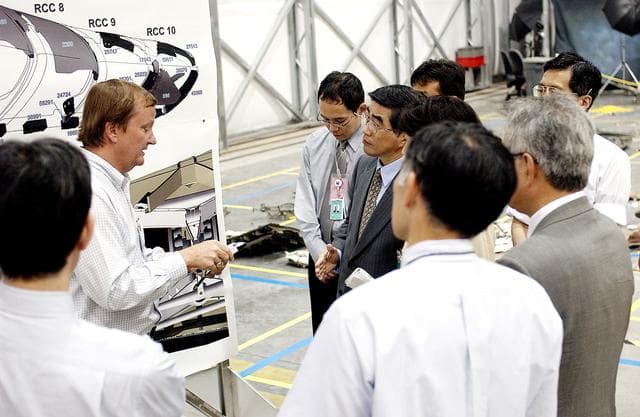
NASA image: KENNEDY SPACE CENTER, FLA. -  Shuttle Launch Director Mike Leinbach (second from left) explains recovery and reconstruction efforts of Columbia to the Executive Director of NASDA Koji Yamamoto (fourth from left) and others visiting the Columbia Debris Hangar.   Mr. Yamamoto is at KSC for a welcome ceremony involving the arrival of the newest Space Station module, the Japanese Experiment Module/pressurized module.
Image
Jun 12, 2003

KENNEDY SPACE CENTER, FLA. - Shuttle Launch Director Mike Leinbach (second from left) explains recovery and reconstruction efforts of Columbia to the Executive Director of NASDA Koji Yamamoto (fourth from left) and others visiting the Columbia Debris Hangar. Mr. Yamamoto is at KSC for a welcome ceremony involving the arrival of the newest Space Station module, the Japanese Experiment Module/pressurized module.

KENNEDY SPACE CENTER, FLA. - Shuttle Launch Director Mike Leinbach (second from left) explains recovery and...

KSC
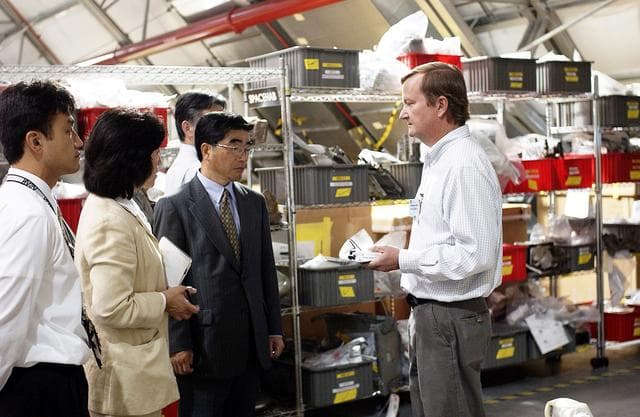
NASA image: KENNEDY SPACE CENTER, FLA. -  Shuttle Launch Director Mike Leinbach (right) explains recovery and reconstruction efforts of Columbia to the Executive Director of NASDA Koji Yamamoto (third from left) and others visiting the Columbia Debris Hangar.   Mr. Yamamoto is at KSC for a welcome ceremony involving the arrival of the newest Space Station module, the Japanese Experiment Module/pressurized module.
Image
Jun 12, 2003

KENNEDY SPACE CENTER, FLA. - Shuttle Launch Director Mike Leinbach (right) explains recovery and reconstruction efforts of Columbia to the Executive Director of NASDA Koji Yamamoto (third from left) and others visiting the Columbia Debris Hangar. Mr. Yamamoto is at KSC for a welcome ceremony involving the arrival of the newest Space Station module, the Japanese Experiment Module/pressurized module.

KENNEDY SPACE CENTER, FLA. - Shuttle Launch Director Mike Leinbach (right) explains recovery and reconstruction...

KSC
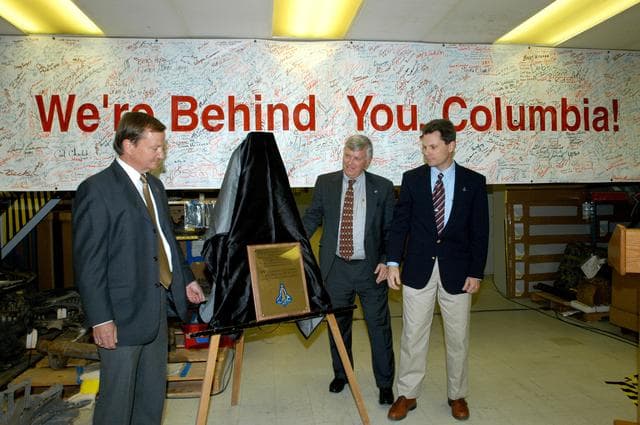
NASA image: KENNEDY SPACE CENTER, FLA. -  In the Vehicle Assembly Building, Shuttle Launch Director Mike Leinbach, Center Director Jim Kennedy and NASA Vehicle Manager Scott Thurston unveil a plaque honoring “Columbia, the crew of STS-107, and their loved ones.”  The site is the “Columbia room,” a permanent repository of the debris collected in the aftermath of the tragic accident Feb. 1, 2003, that claimed the orbiter and lives of the seven-member crew.  The dedication of the plaque was made in front of the 40-member preservation team.
Image
Jan 29, 2004

KENNEDY SPACE CENTER, FLA. - In the Vehicle Assembly Building, Shuttle Launch Director Mike Leinbach, Center Director Jim Kennedy and NASA Vehicle Manager Scott Thurston unveil a plaque honoring “Columbia, the crew of STS-107, and their loved ones.” The site is the “Columbia room,” a permanent repository of the debris collected in the aftermath of the tragic accident Feb. 1, 2003, that claimed the orbiter and lives of the seven-member crew. The dedication of the plaque was made in front of the 40-member preservation team.

KENNEDY SPACE CENTER, FLA. - In the Vehicle Assembly Building, Shuttle Launch Director Mike Leinbach, Center...

KSC
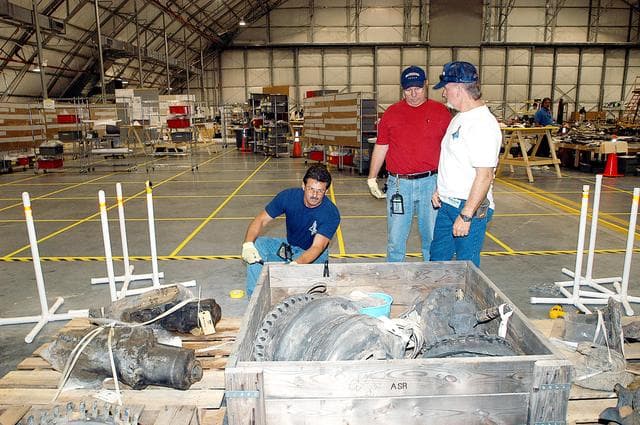
NASA image: KENNEDY SPACE CENTER, FLA. -  Members of the Columbia Reconstruction Project Team work with pieces of debris in the RLV Hangar. The items shipped to KSC number more than 82,000 and weigh 84,800 pounds or 38 percent of the total dry weight of Columbia. Of those items, 78,760 have been identified, with 753 placed on the left wing grid in the Hangar.
Image
May 15, 2003

KENNEDY SPACE CENTER, FLA. - Members of the Columbia Reconstruction Project Team work with pieces of debris in the RLV Hangar. The items shipped to KSC number more than 82,000 and weigh 84,800 pounds or 38 percent of the total dry weight of Columbia. Of those items, 78,760 have been identified, with 753 placed on the left wing grid in the Hangar.

KENNEDY SPACE CENTER, FLA. - Members of the Columbia Reconstruction Project Team work with pieces of debris in the...

KSC
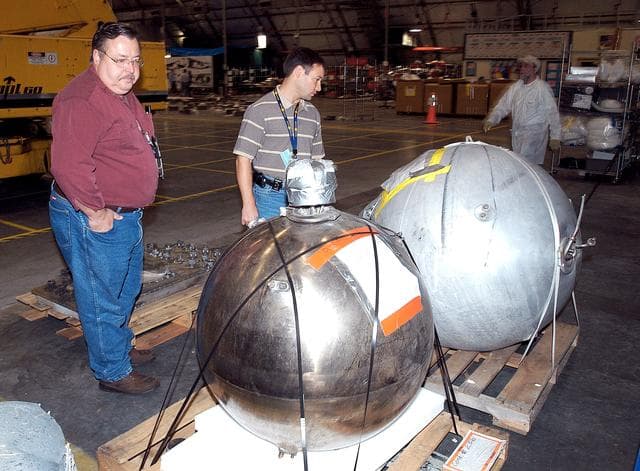
NASA image: KENNEDY SPACE CENTER, FLA. -  Members of the Columbia Reconstruction Project Team examine pieces of debris in the RLV Hangar. The items shipped to KSC number more than 82,000 and weigh 84,800 pounds or 38 percent of the total dry weight of Columbia. Of those items, 78,760 have been identified, with 753 placed on the left wing grid in the Hangar.
Image
May 15, 2003

KENNEDY SPACE CENTER, FLA. - Members of the Columbia Reconstruction Project Team examine pieces of debris in the RLV Hangar. The items shipped to KSC number more than 82,000 and weigh 84,800 pounds or 38 percent of the total dry weight of Columbia. Of those items, 78,760 have been identified, with 753 placed on the left wing grid in the Hangar.

KENNEDY SPACE CENTER, FLA. - Members of the Columbia Reconstruction Project Team examine pieces of debris in the RLV...

KSC
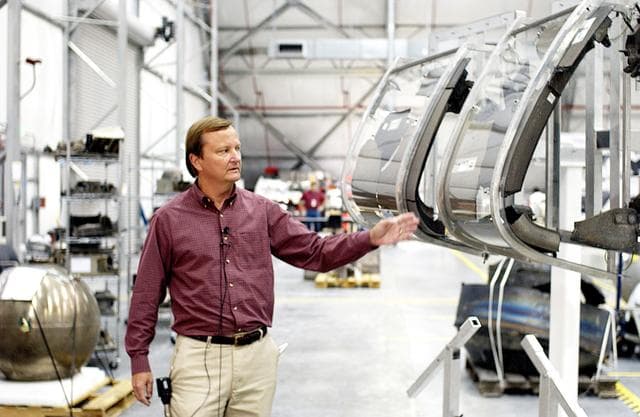
NASA image: KENNEDY SPACE CENTER, FLA. - While talking to the media in the RLV Hangar, Shuttle Launch Director Mike Leinbach points to the model of the leading edge of an orbiter’s left wing that is being used to reconstruct Columbia’s wing with the recovered debris.  The items shipped to KSC number more than 82,000 and weigh 84,800 pounds or 38 percent of the total dry weight of Columbia.  Of those items, 78,760 have been identified, with 753 placed on the left wing grid in the Hangar.
Image
May 14, 2003

KENNEDY SPACE CENTER, FLA. - While talking to the media in the RLV Hangar, Shuttle Launch Director Mike Leinbach points to the model of the leading edge of an orbiter’s left wing that is being used to reconstruct Columbia’s wing with the recovered debris. The items shipped to KSC number more than 82,000 and weigh 84,800 pounds or 38 percent of the total dry weight of Columbia. Of those items, 78,760 have been identified, with 753 placed on the left wing grid in the Hangar.

KENNEDY SPACE CENTER, FLA. - While talking to the media in the RLV Hangar, Shuttle Launch Director Mike Leinbach...

KSC
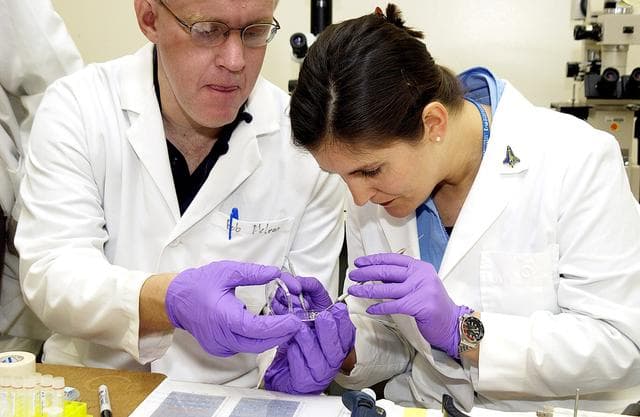
NASA image: KENNEDY SPACE CENTER, FLA. -  From left, Bob McLean, Southwest Texas State University, and Valerie Cassanto, Instrumentation Technology Associates, Inc., study one of the experiments carried on mission STS-107. Several experiments were found during the search for Columbia debris. Included in the Commercial ITA Biomedical Experiments payload on mission STS-107 are urokinase cancer research, microencapsulation of drugs, the Growth of Bacterial Biofilm on Surfaces during Spaceflight (GOBBSS), and tin crystal formation.
Image
May 7, 2003

KENNEDY SPACE CENTER, FLA. - From left, Bob McLean, Southwest Texas State University, and Valerie Cassanto, Instrumentation Technology Associates, Inc., study one of the experiments carried on mission STS-107. Several experiments were found during the search for Columbia debris. Included in the Commercial ITA Biomedical Experiments payload on mission STS-107 are urokinase cancer research, microencapsulation of drugs, the Growth of Bacterial Biofilm on Surfaces during Spaceflight (GOBBSS), and tin crystal formation.

KENNEDY SPACE CENTER, FLA. - From left, Bob McLean, Southwest Texas State University, and Valerie Cassanto,...

KSC
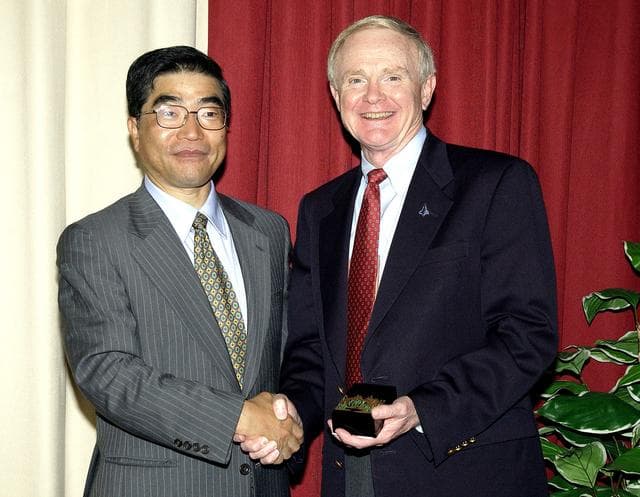
NASA image: KENNEDY SPACE CENTER, FLA. -  Executive Director of NASDA Koji Yamamoto (left) is welcomed to KSC by Center Director Roy Bridges Jr. (right).  Mr. Yamamoto is at KSC for a welcome ceremony involving the arrival of the newest Space Station module, the Japanese Experiment Module/pressurized module.  His visit includes a tour of the Columbia Debris Hangar.
Image
Jun 12, 2003

KENNEDY SPACE CENTER, FLA. - Executive Director of NASDA Koji Yamamoto (left) is welcomed to KSC by Center Director Roy Bridges Jr. (right). Mr. Yamamoto is at KSC for a welcome ceremony involving the arrival of the newest Space Station module, the Japanese Experiment Module/pressurized module. His visit includes a tour of the Columbia Debris Hangar.

KENNEDY SPACE CENTER, FLA. - Executive Director of NASDA Koji Yamamoto (left) is welcomed to KSC by Center Director...

KSC
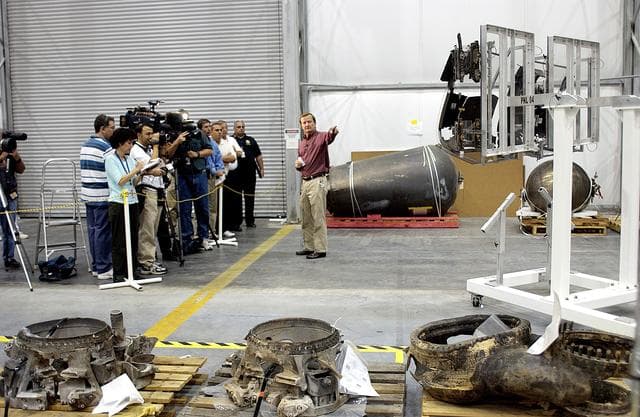
NASA image: KENNEDY SPACE CENTER, FLA. - While talking to the media, Shuttle Launch Director Mike Leinbach points to some of the investigative tools in the RLV Hangar, where Columbia debris is being examined.  The items shipped to KSC number more than 82,000 and weigh 84,800 pounds or 38 percent of the total dry weight of Columbia.  Of those items, 78,760 have been identified, with 753 placed on the left wing grid in the Hangar.
Image
May 14, 2003

KENNEDY SPACE CENTER, FLA. - While talking to the media, Shuttle Launch Director Mike Leinbach points to some of the investigative tools in the RLV Hangar, where Columbia debris is being examined. The items shipped to KSC number more than 82,000 and weigh 84,800 pounds or 38 percent of the total dry weight of Columbia. Of those items, 78,760 have been identified, with 753 placed on the left wing grid in the Hangar.

KENNEDY SPACE CENTER, FLA. - While talking to the media, Shuttle Launch Director Mike Leinbach points to some of the...

KSC
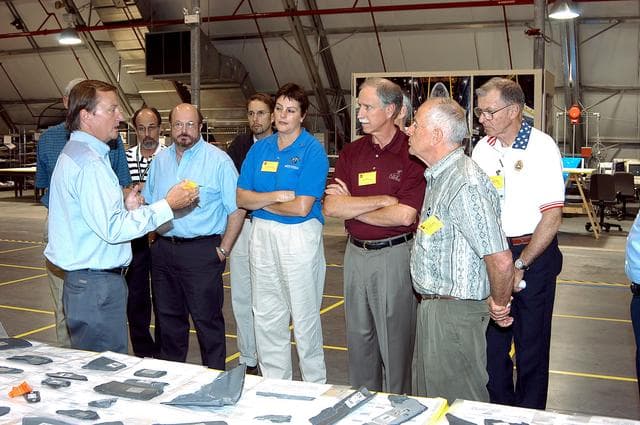
NASA image: KENNEDY SPACE CENTER, FLA.  -  In the Columbia Debris Hangar, Shuttle Launch Director Mike Leinbach (left) talks to members of the  Stafford-Covey Return to Flight Task Group (SCTG) about reconstruction efforts.   Chairing the task group are Richard O. Covey (second from right), former Space Shuttle commander, and Thomas P. Stafford, Apollo commander.  Chartered by NASA Administrator Sean O’Keefe, the task group will perform an independent assessment of NASA’s implementation of the final recommendations by the Columbia Accident Investigation Board.
Image
Aug 5, 2003

KENNEDY SPACE CENTER, FLA. - In the Columbia Debris Hangar, Shuttle Launch Director Mike Leinbach (left) talks to members of the Stafford-Covey Return to Flight Task Group (SCTG) about reconstruction efforts. Chairing the task group are Richard O. Covey (second from right), former Space Shuttle commander, and Thomas P. Stafford, Apollo commander. Chartered by NASA Administrator Sean O’Keefe, the task group will perform an independent assessment of NASA’s implementation of the final recommendations by the Columbia Accident Investigation Board.

KENNEDY SPACE CENTER, FLA. - In the Columbia Debris Hangar, Shuttle Launch Director Mike Leinbach (left) talks to...

KSC
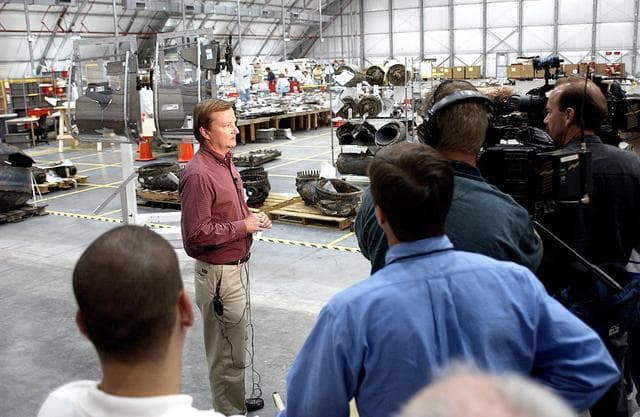
NASA image: KENNEDY SPACE CENTER, FLA. - Shuttle Launch Director Mike Leinbach talks to the media in the RLV Hangar, site of the collection of Columbia debris undergoing examination.  The items shipped to KSC number more than 82,000 and weigh 84,800 pounds or 38 percent of the total dry weight of Columbia.  Of those items, 78,760 have been identified, with 753 placed on the left wing grid in the Hangar.
Image
May 14, 2003

KENNEDY SPACE CENTER, FLA. - Shuttle Launch Director Mike Leinbach talks to the media in the RLV Hangar, site of the collection of Columbia debris undergoing examination. The items shipped to KSC number more than 82,000 and weigh 84,800 pounds or 38 percent of the total dry weight of Columbia. Of those items, 78,760 have been identified, with 753 placed on the left wing grid in the Hangar.

KENNEDY SPACE CENTER, FLA. - Shuttle Launch Director Mike Leinbach talks to the media in the RLV Hangar, site of the...

KSC
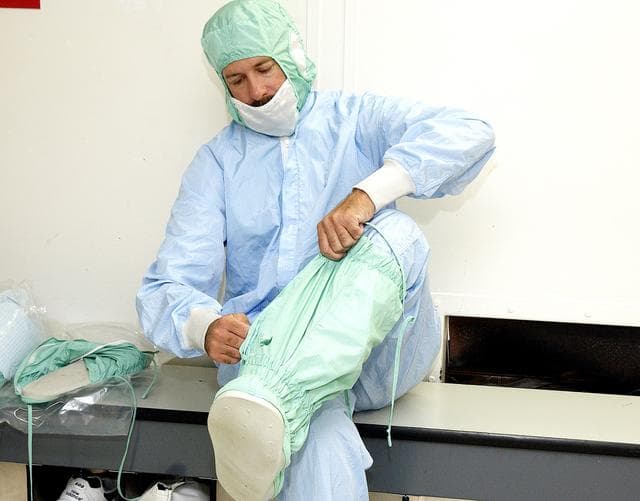
NASA image: KENNEDY SPACE CENTER, FLA. -  A KSC employee dons the foot and leg covers of a "bunny suit," part of standard clean room apparel, before entering a clean room. The apparel is designed to cover the hair, clothing and shoes of employees to prevent particulate matter from contaminating the space flight hardware being stored or processed in the clean room and is one aspect of KSC's Foreign Object Debris (FOD) control program, an important safety initiative.
Image
Aug 29, 2003

KENNEDY SPACE CENTER, FLA. - A KSC employee dons the foot and leg covers of a "bunny suit," part of standard clean room apparel, before entering a clean room. The apparel is designed to cover the hair, clothing and shoes of employees to prevent particulate matter from contaminating the space flight hardware being stored or processed in the clean room and is one aspect of KSC's Foreign Object Debris (FOD) control program, an important safety initiative.

KENNEDY SPACE CENTER, FLA. - A KSC employee dons the foot and leg covers of a "bunny suit," part of standard clean...

KSC
PreviousPage 16 of 75Next

Frequently Asked Questions About NASA Images

Are NASA images free to use?+
Yes, most NASA images are in the public domain and are free to use for educational, informational, and personal purposes. NASA's media usage guidelines state that NASA material is not copyrighted unless otherwise noted. However, the NASA logo and certain insignia are protected. Some images may include identifiable individuals or third-party content that requires additional permissions. Always check the specific image's usage rights and credit NASA as the source.
How many images does NASA have?+
NASA's Image and Video Library contains over 140,000 publicly accessible images, videos, and audio files spanning the agency's entire history, from the Mercury program of the 1960s to the latest James Webb Space Telescope discoveries. The collection grows daily as new missions capture imagery and archival materials are digitized. Individual mission archives, such as Mars rover photos, contain hundreds of thousands of additional images.
Can I download NASA images?+
Yes, you can download NASA images in multiple resolutions directly from this gallery. Each image detail page provides download links for original (full resolution), large (1920px), medium (960px), small (480px), and thumbnail sizes. NASA encourages the public to use these images for education, media, and personal projects. High-resolution originals are ideal for printing and professional use.

Explore More NASA Content

Astronomy Picture of the Day

Daily curated space image

Mars Rover Photos

Curiosity & Perseverance images

Earth from Space

DSCOVR EPIC daily images

Launch Schedule

Upcoming rocket launches

Space News

Mission updates & discoveries