Image
Dec 6, 2016
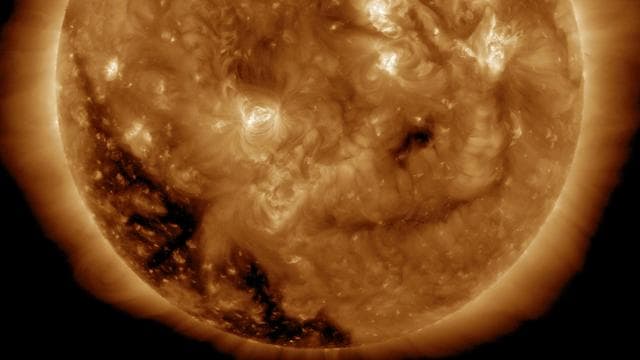
Coronal Hole Coming Around
A substantial coronal hole began to rotate into view over the past few days (Dec. 1-2, 2016). Coronal holes are...
JPL
Image
Aug 14, 2017
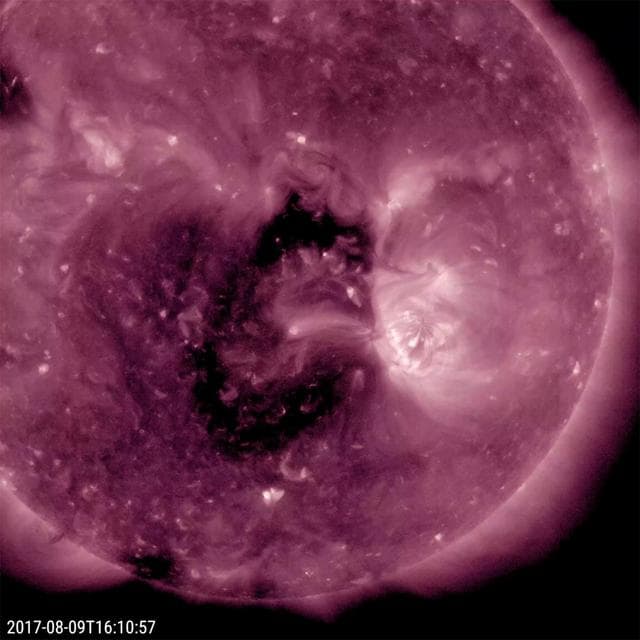
Coronal Hole Faces Earth
A substantial coronal hole rotated into a position where it is facing Earth (Aug. 9-11, 2017). Coronal holes are...
JPL
Image
Feb 6, 2017
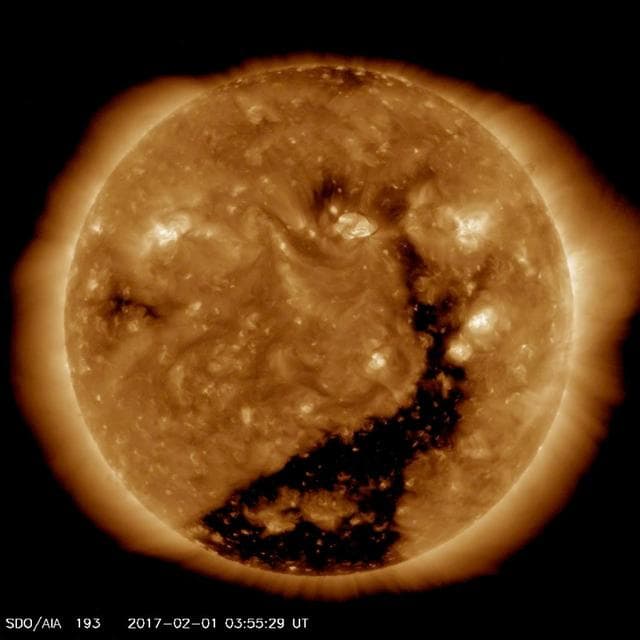
Returning Coronal Hole
A substantial coronal hole rotated across the face of the sun this past week and is again streaming solar wind...
JPL
Image
May 8, 2018
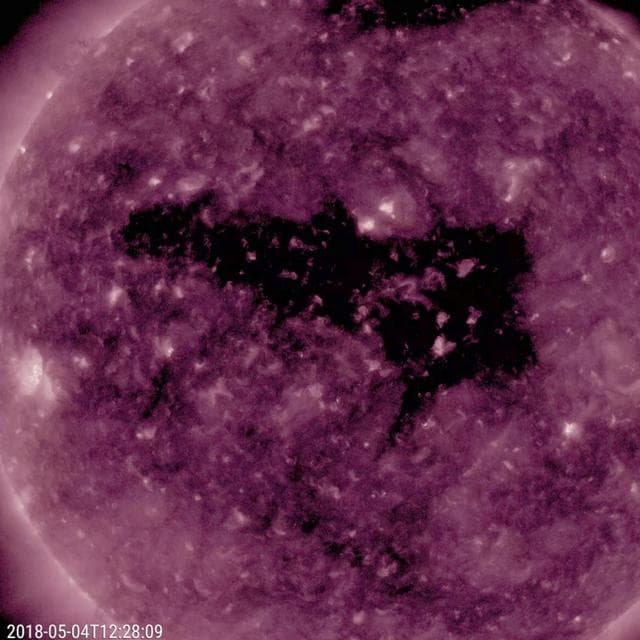
Coronal Hole Facing Earth
An extensive equatorial coronal hole has rotated so that it is now facing Earth (May 2-4, 2018). The dark coronal...
JPL
Image
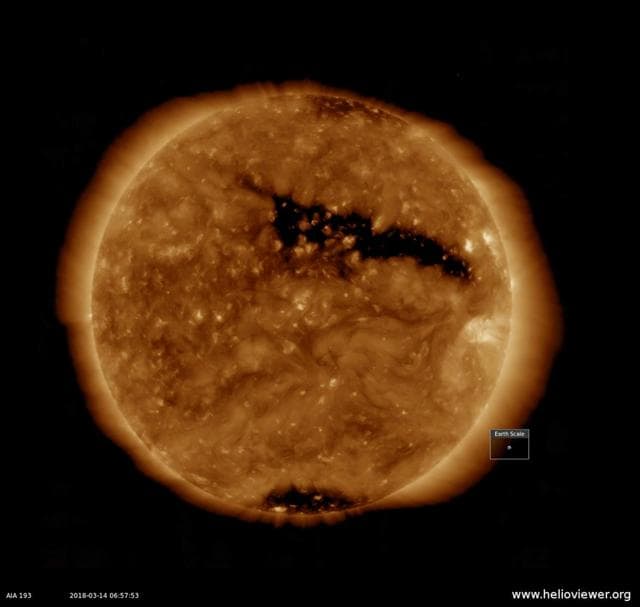
Mar 19, 2018
Elongated Coronal Hole
Over the past week, the single, largest feature on the sun was a long coronal hole that stretched out across more...
JPL
Image
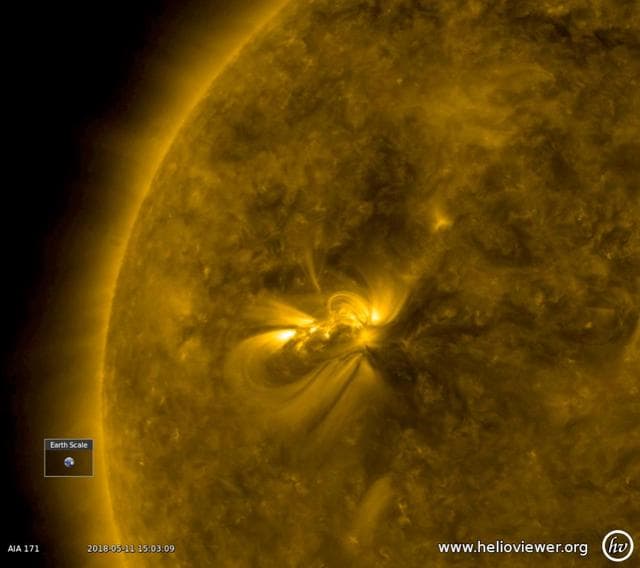
May 15, 2018
Coronal Hole Facing Earth
An extensive equatorial coronal hole has rotated so that it is now facing Earth (May 2-4, 2018). The dark coronal...
JPL
Image
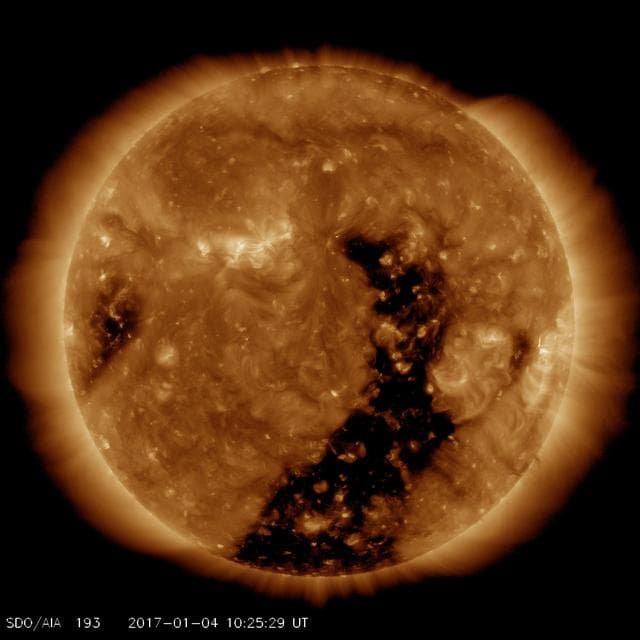
Jan 9, 2017
Lengthy Coronal Hole
An elongated coronal hole rotated across the face of the sun this past week so that it is now streaming solar wind...
JPL
Image
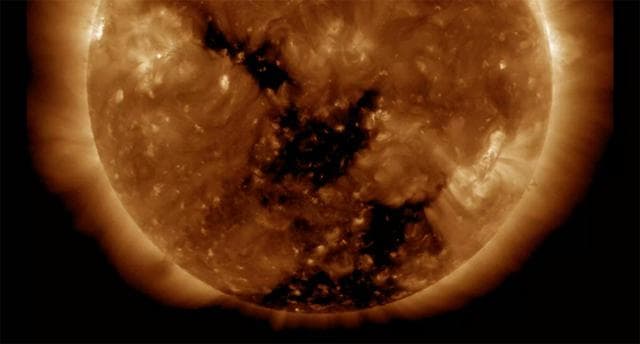
Nov 9, 2016
Earth-Facing Coronal Holes
Two good-sized coronal holes have rotated around to the center of the sun where they will be spewing solar wind...
JPL
Image
Apr 16, 2018
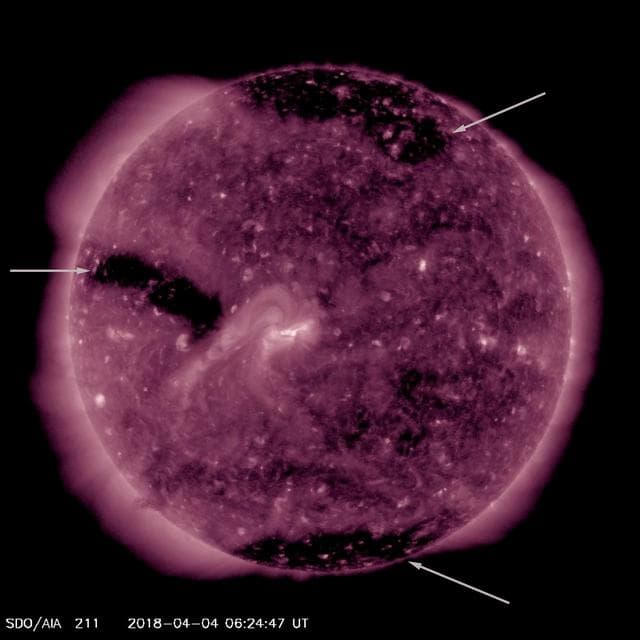
Three Coronal Holes
For much of this week the sun featured three substantial coronal holes (Apr. 3-6, 2018). Coronal holes appear as...
JPL
Image
Sep 2, 2017
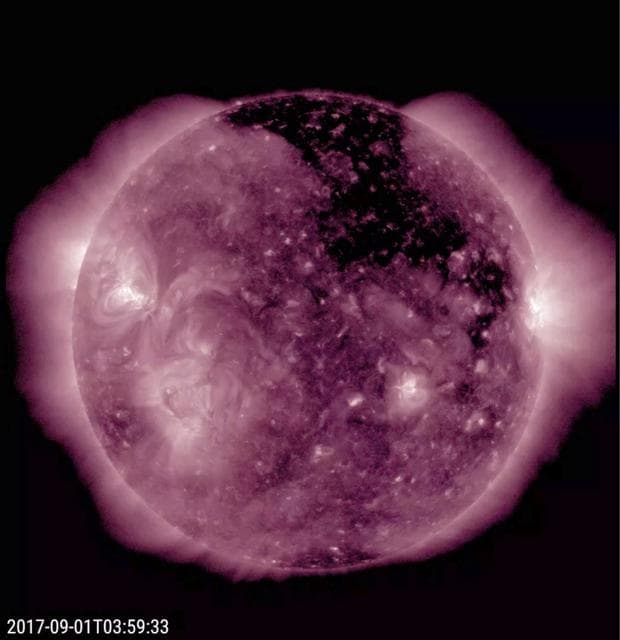
Extensive Coronal Hole
A large coronal hole has been spewing solar wind particles in the general direction of Earth over the past few days...
JPL
Image
May 22, 2018
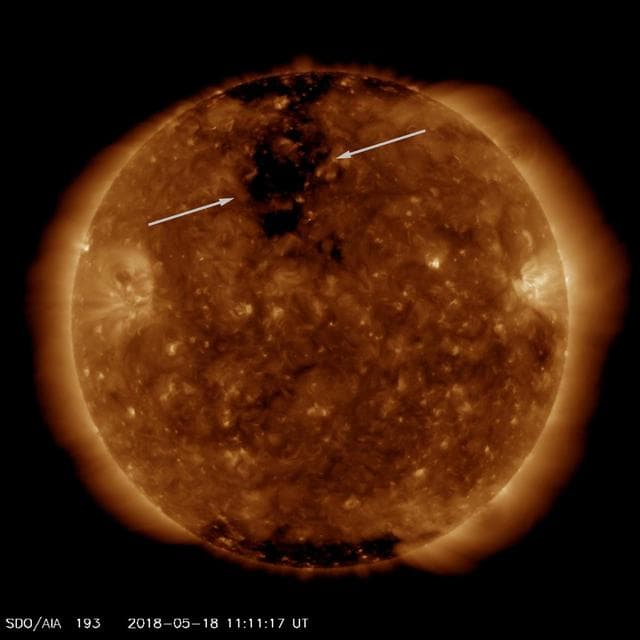
Coronal Hole Rotating Towards Us
A good-sized coronal hole came around to where it is just about facing Earth (May 16-18, 2018). Coronal holes are...
JPL
Image
Nov 16, 2017
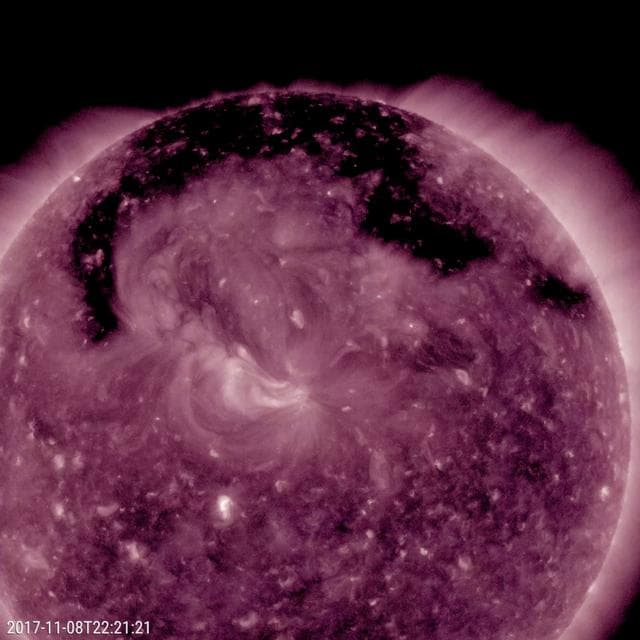
Coronal Hole All Spread Out
This image from NASA's Solar Dynamics Observatory shows a broad coronal hole was the dominant feature this week on...
JPL
Image
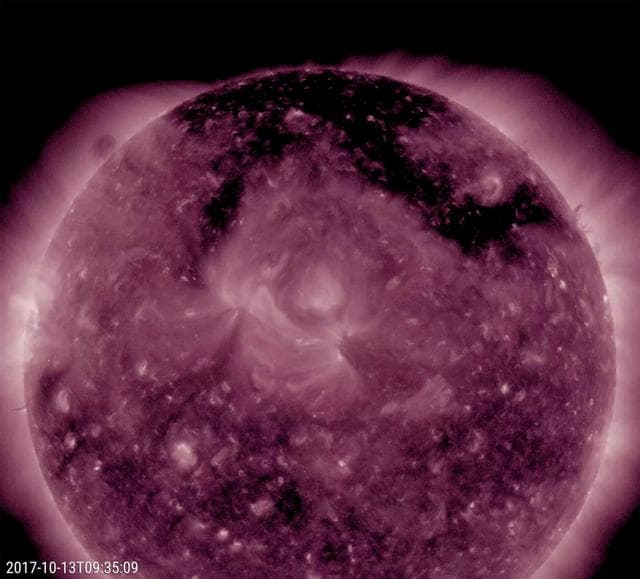
Oct 16, 2017
Sprawling Coronal Hole
A large coronal hole stands out as the most obvious feature on the sun this week (Oct. 12-13, 2017). The dark...
JPL
Image
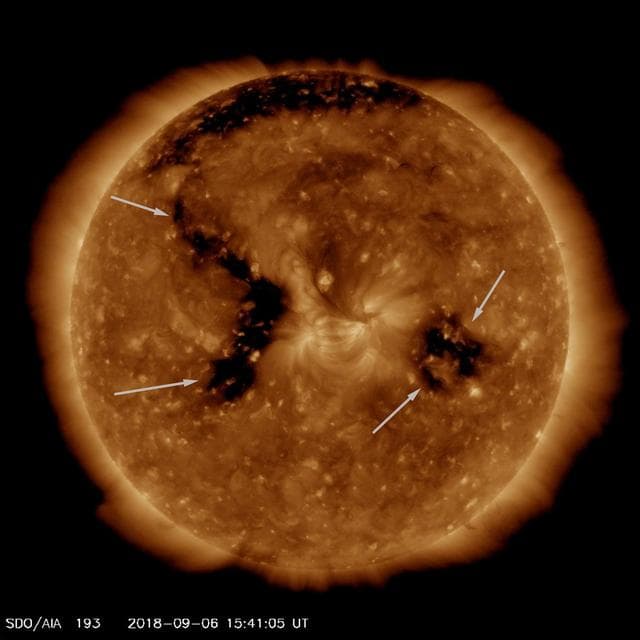
Sep 17, 2018
Emerging Coronal Hole
The Sun already featured one good-sized coronal hole, when another larger coronal hole began to emerge and intensify...
JPL
Image
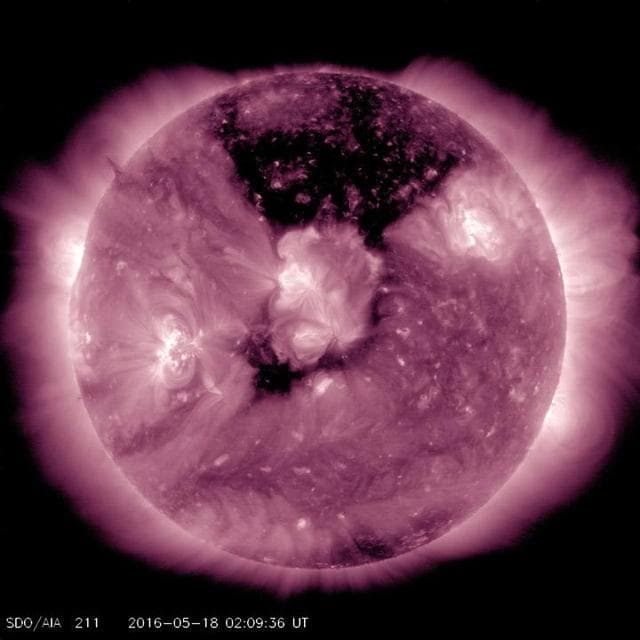
May 18, 2016
Coronal Hole Front and Center
A substantial coronal hole had rotated so that it temporarily faced right towards Earth May, 17-19, 2016. This...
JPL
Image
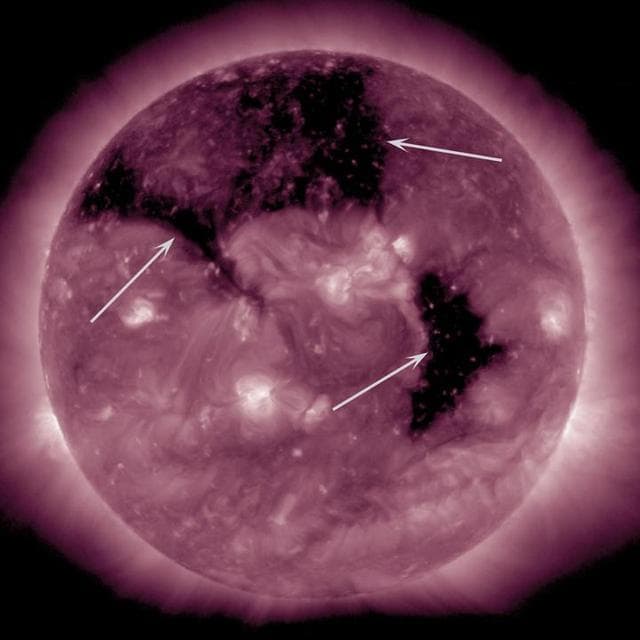
Sep 10, 2015
A Triumvirate: Three Coronal Holes
Three substantial coronal holes rotated across the face of the Sun the week of Sept. 8-10, 2015 as seen by NASA...
JPL
Image
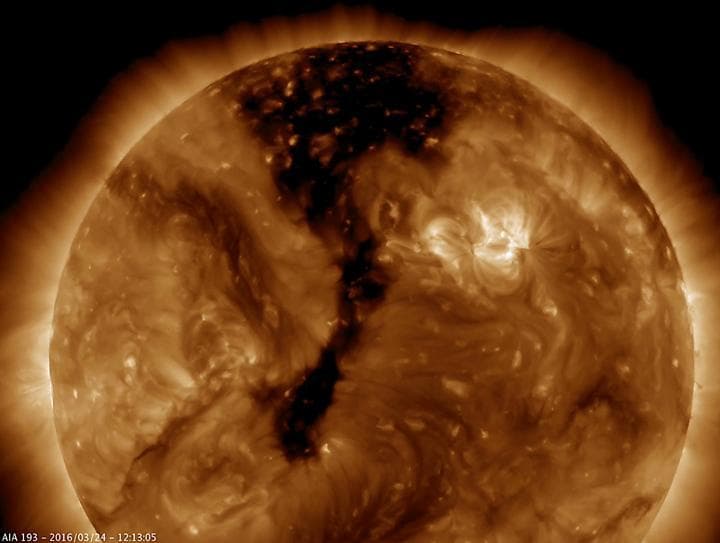
Mar 24, 2016
Elongated Coronal Hole
NASA Solar Dynamics Observatory shows a long coronal hole has rotated so that was temporarily facing right towards...
JPL

Image
Dec 8, 2017
Two Coronal Holes on the Sun Viewed by SDO
NASA’s Solar Dynamics Observatory, or SDO, captured this solar image on March 16, 2015, which clearly shows two dark...
GSFC
Image
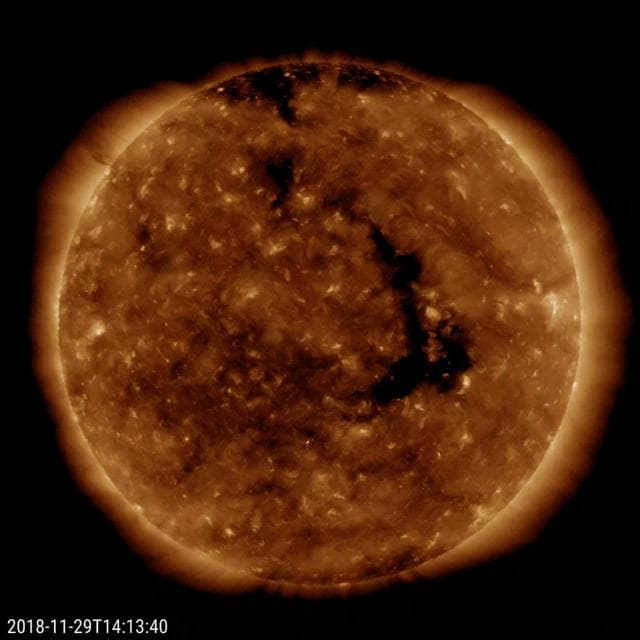
Dec 5, 2018
Reappearing Coronal Hole
A long-lasting coronal hole has again rotated around to face the Earth (Nov. 28-30, 2018). This persistent hole -...
JPL
Image
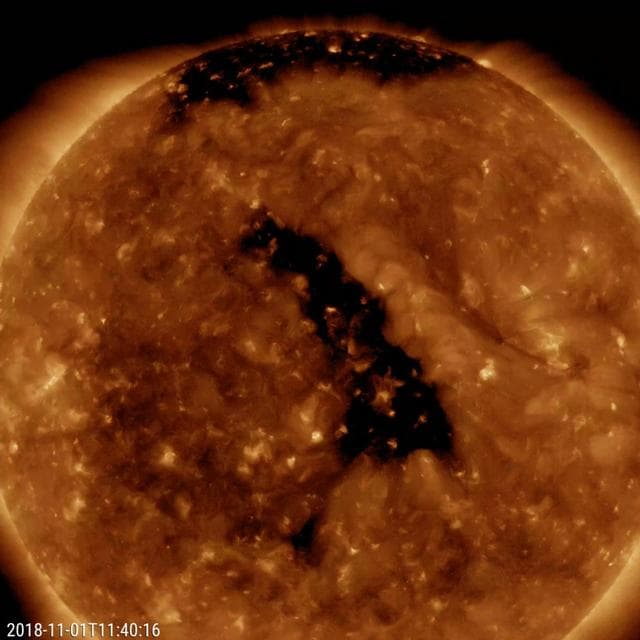
Nov 12, 2018
Central Coronal Hole
The most distinctive feature on the Sun this week was a good-sized coronal hole at a slanted angle nearly centered...
JPL
Image
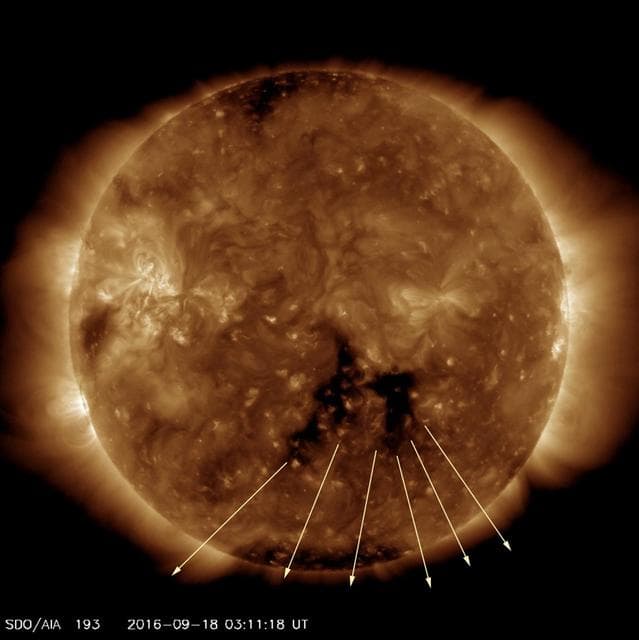
Sep 21, 2016
Earth-Directed Coronal Hole
A dark coronal hole that was facing towards Earth for several days spewed streams of solar wind in our direction...
JPL
Image
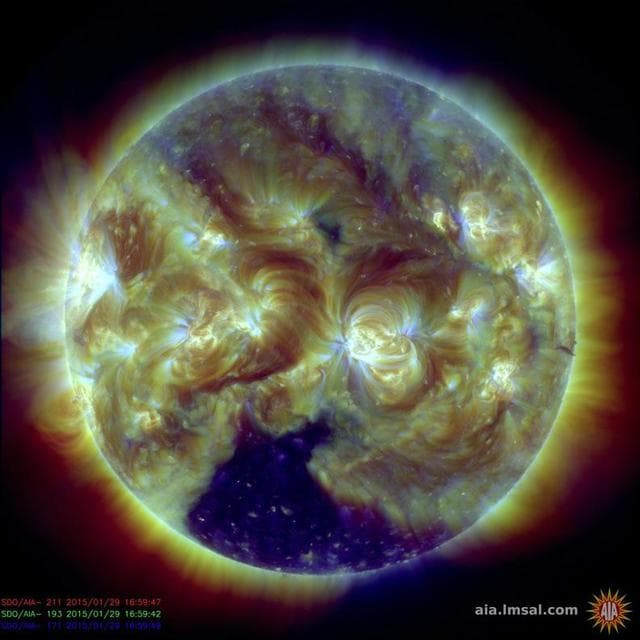
Jan 29, 2015
Substantial Coronal Hole
A large, dark coronal hole at the bottom of the Sun has been the most dominant feature this week Jan. 29, 2014 as...
JPL
Image
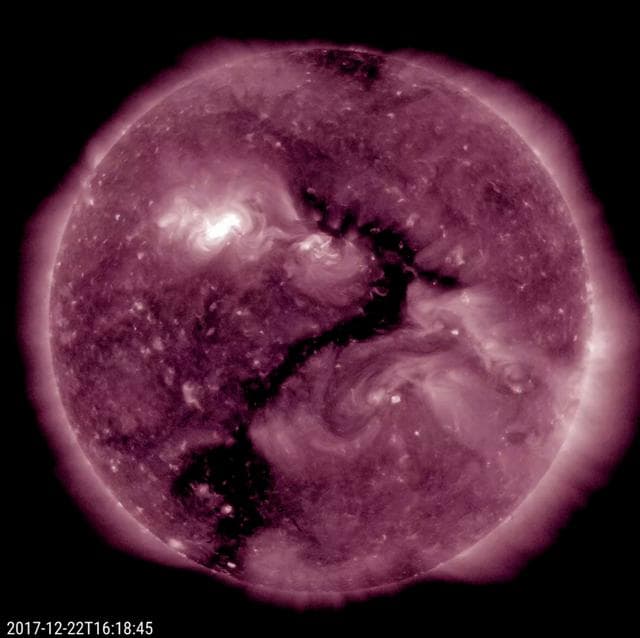
Dec 29, 2017
The Sun Forms a Question
Oddly enough, an elongated coronal hole (the darker area near the center) seems to shape itself into a single,...
JPL
Image
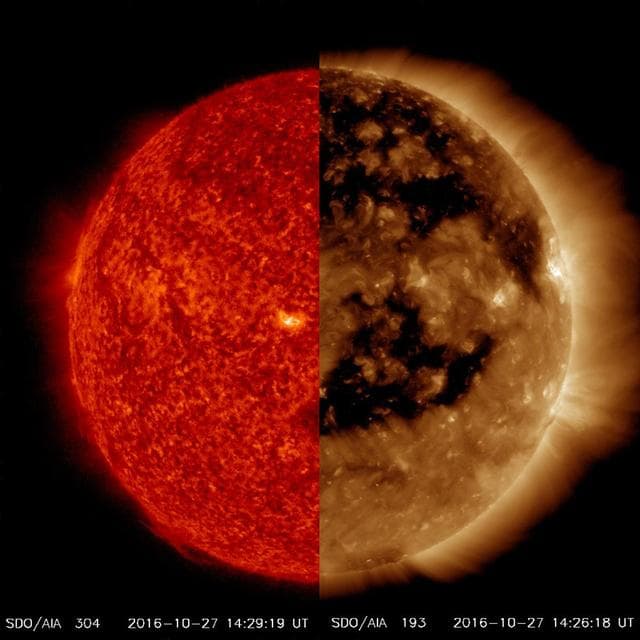
Oct 27, 2016
Wavelength Comparison
The difference in features that are visible in different wavelengths of extreme ultraviolet light can be stunning as...
JPL