Image
Apr 15, 2004
Pathfinder
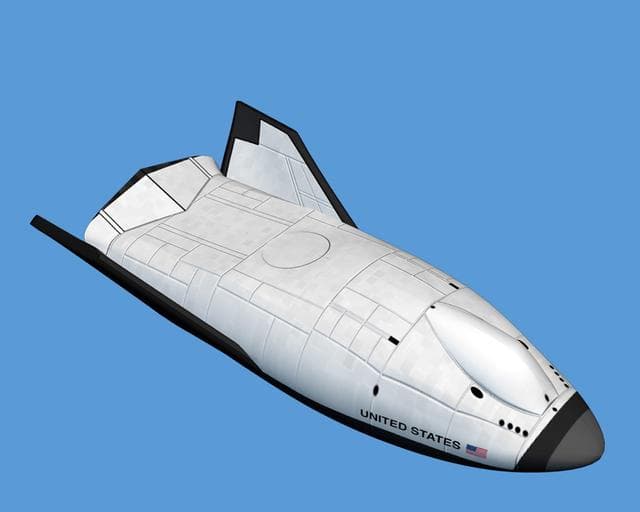
This is an artist's concept of the X-38 Crew Return Vehicle (CRV). The X-38 will take place of the Russian Soyuz...
MSFC
Image
Mar 5, 1999
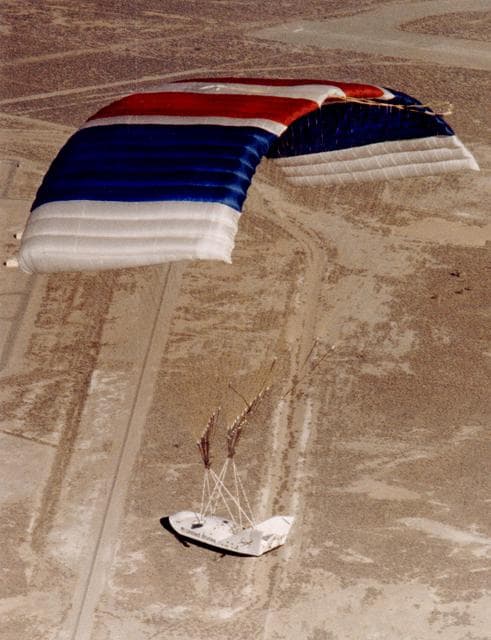
X-38 Vehicle #132 in Flight with Deployed Parafoil during First Free Flight
The X-38, a research vehicle built to help develop technology for an emergency Crew Return Vehicle (CRV), descends...
AFRC
Image
Mar 5, 1999
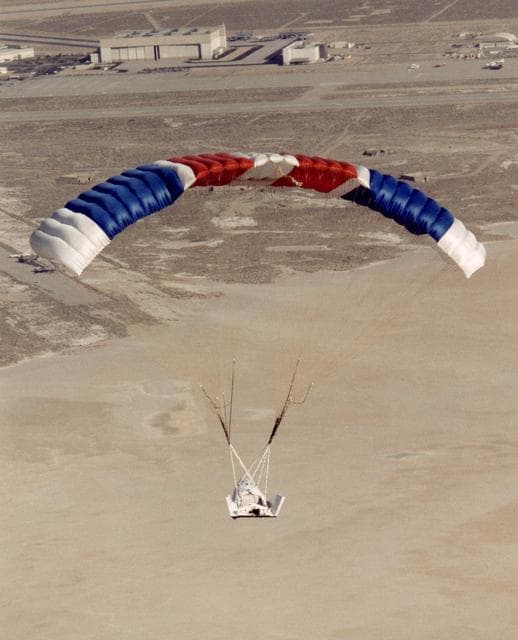
X-38 Vehicle #132 in Flight Approaching Landing during First Free Flight
The X-38, a research vehicle built to help develop technology for an emergency Crew Return Vehicle (CRV), maneuvers...
AFRC
Image
Mar 5, 1999
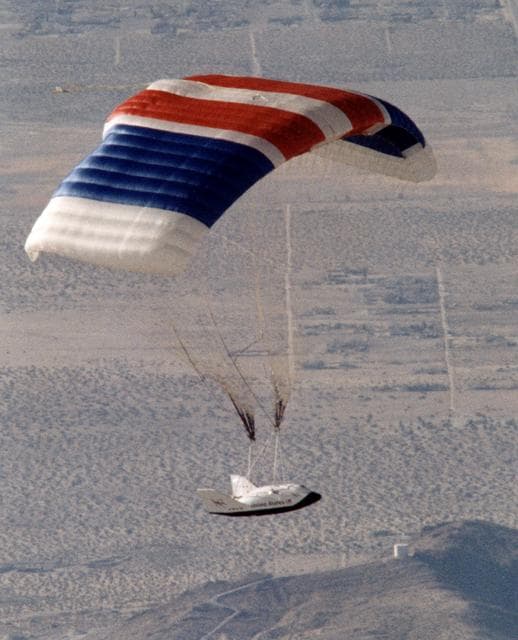
X-38 Vehicle #132 in Flight with Deployed Parafoil during First Free Flight
The X-38, a research vehicle built to help develop technology for an emergency Crew Return Vehicle (CRV), descends...
AFRC
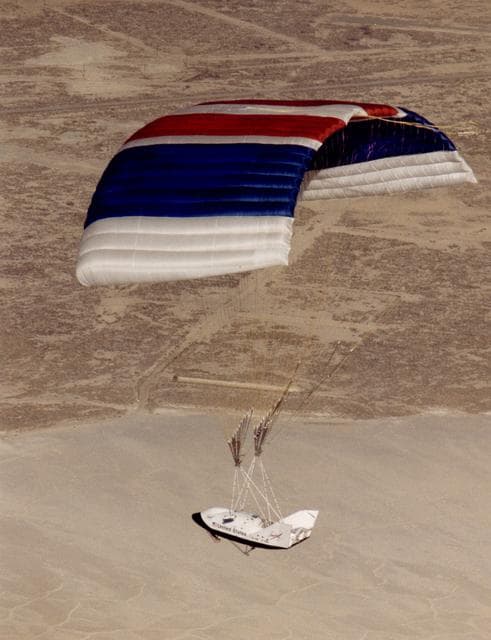
Image
Mar 5, 1999
X-38 Vehicle #132 in Flight with Deployed Parafoil during First Free Flight
The X-38, a research vehicle built to help develop technology for an emergency Crew Return Vehicle (CRV), descends...
AFRC
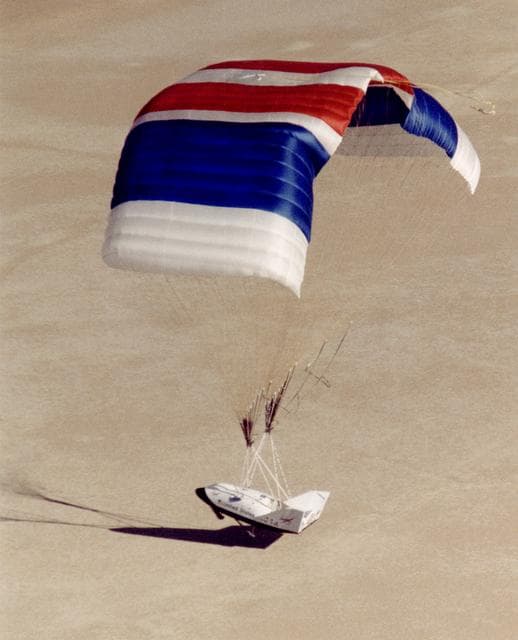
Image
Mar 5, 1999
X-38 Vehicle #132 Landing on First Free Flight
The X-38, a research vehicle built to help develop technology for an emergency Crew Return Vehicle (CRV), flares for...
AFRC
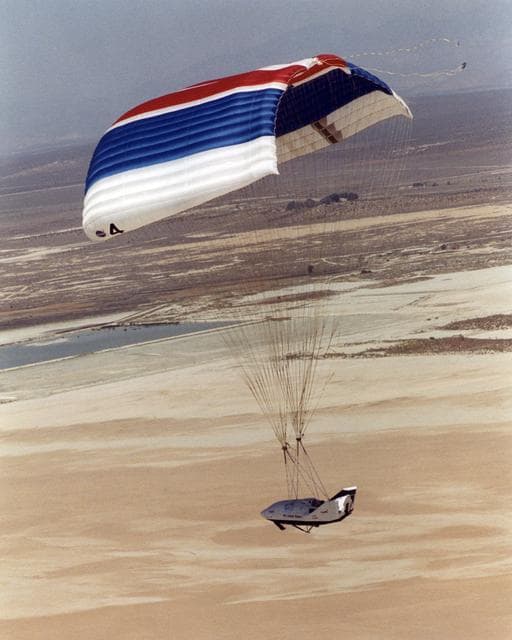
Image
Jul 10, 2001
X-38 sails to a landing at NASA Dryden Flight Research Center July 10, 2001
The seventh free flight of an X-38 prototype for an emergency space station crew return vehicle culminated in a...
AFRC
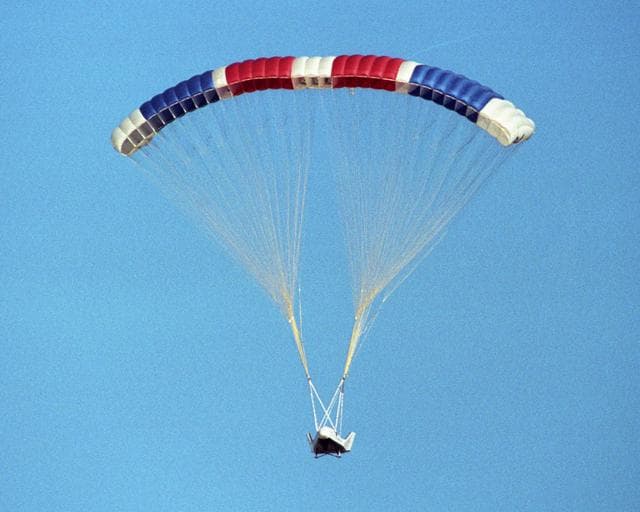
Image
Dec 13, 2001
The X-38 prototype of the Crew Return Vehicle is suspended under its giant 7,500-square-foot parafoil during its eighth free flight on Thursday, December 13, 2001
The X-38 prototype of the Crew Return Vehicle for the International Space Station is suspended under its giant...
AFRC
Image
Dec 13, 2001
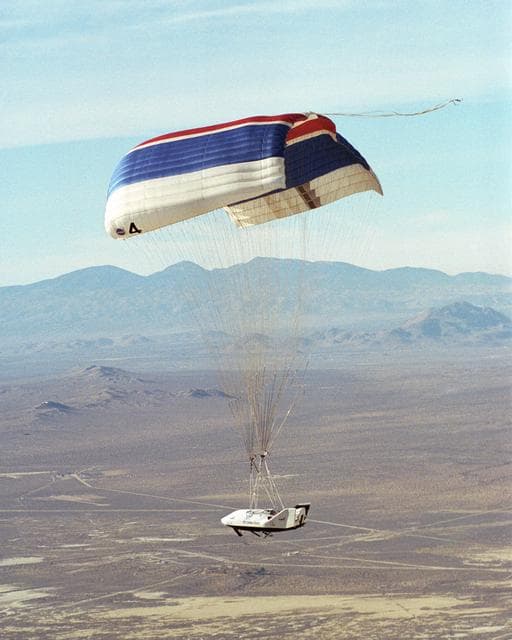
The X-38 prototype of the Crew Return Vehicle is suspended under its giant 7,500-square-foot parafoil during its eighth free flight on Thursday, December 13, 2001
The X-38 prototype of the Crew Return Vehicle for the International Space Station is suspended under its giant...
AFRC
Image
Nov 2, 2000
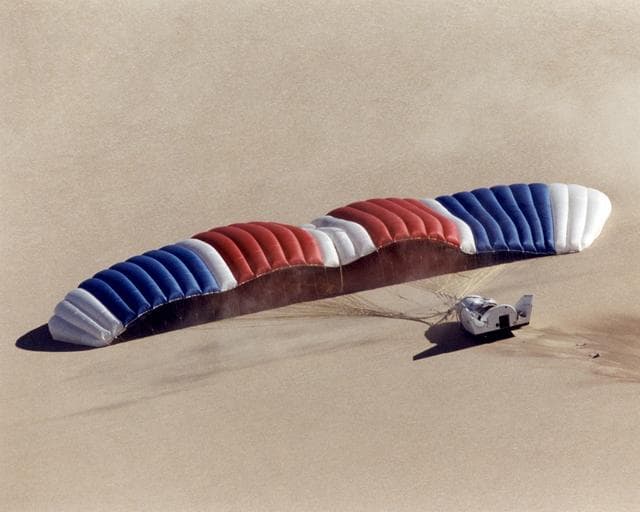
The world's largest parafoil slowly deflates after carrying the X-38, V-131R, to a safe landing
Looking like a giant air mattress, the world's largest parafoil slowly deflates seconds after it carried the latest...
AFRC
Image
Nov 2, 2000
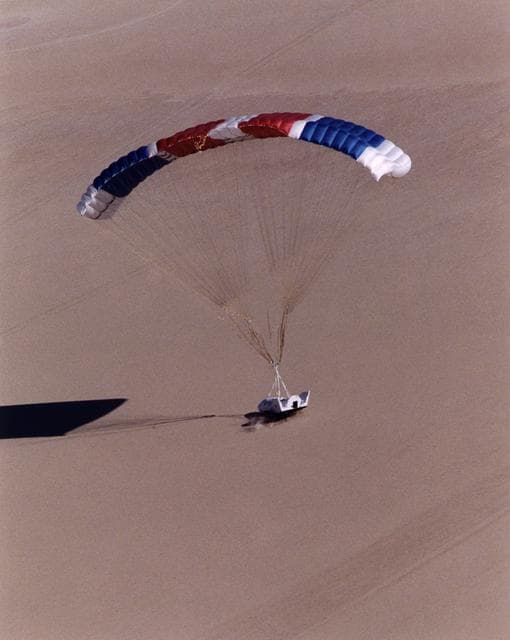
X-38 vehicle #131R during landing on first free flight
The latest version of the X-38, V-131R, touches down on Rogers Dry Lake adjacent to NASAÕs Dryden Flight Research...
AFRC
Image
Nov 2, 2000
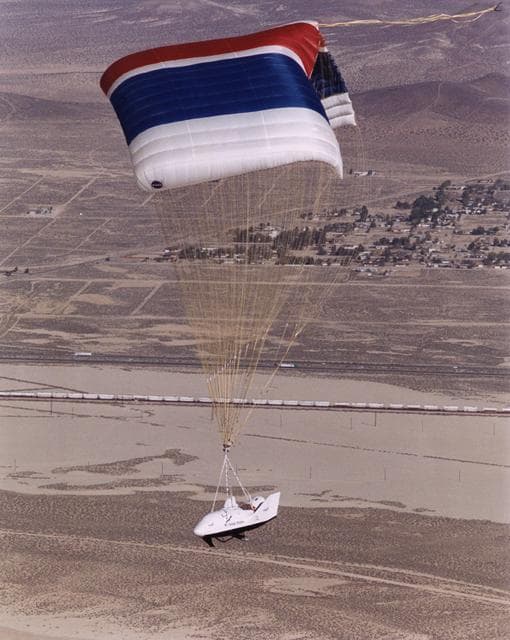
X-38 vehicle #131R in first free flight
The third iteration of the X-38, V-131R, glides down under a giant parafoil towards a landing on Rogers Dry Lake...
AFRC
Image
Feb 6, 1999
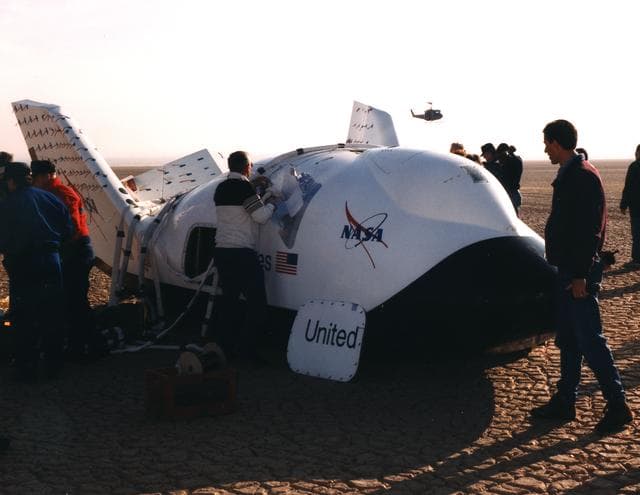
X-38 on Lakebed after Landing on Second Free Flight
NASA's X-38, a prototype of a Crew Return Vehicle (CRV) resting on the lakebed near the Dryden Flight Research...
AFRC
Image
Feb 6, 1999
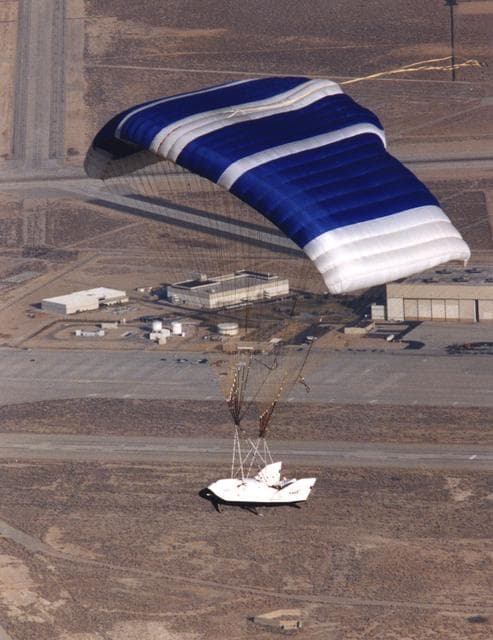
X-38 in Flight during Second Free Flight
NASA's X-38, a research vehicle developed as part of an effort to build an emergency Crew Return Vehicle (CRV) for...
AFRC
Image
Feb 6, 1999
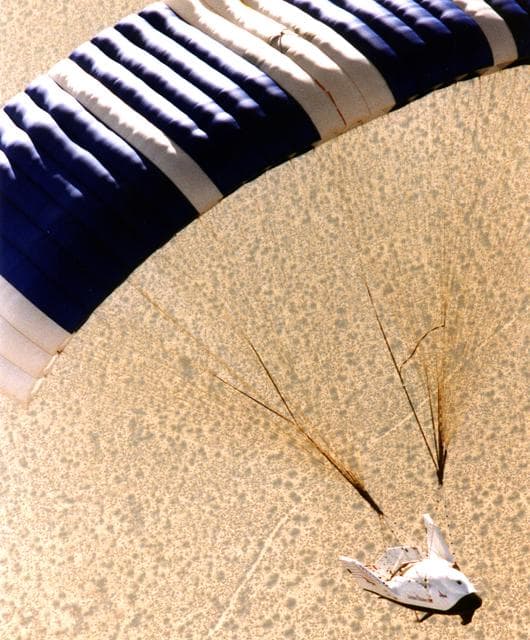
X-38 in Flight during Second Free Flight
NASA's X-38, a research vehicle developed as part of an effort to build an emergency Crew Return Vehicle (CRV) for...
AFRC
Image
Feb 6, 1999
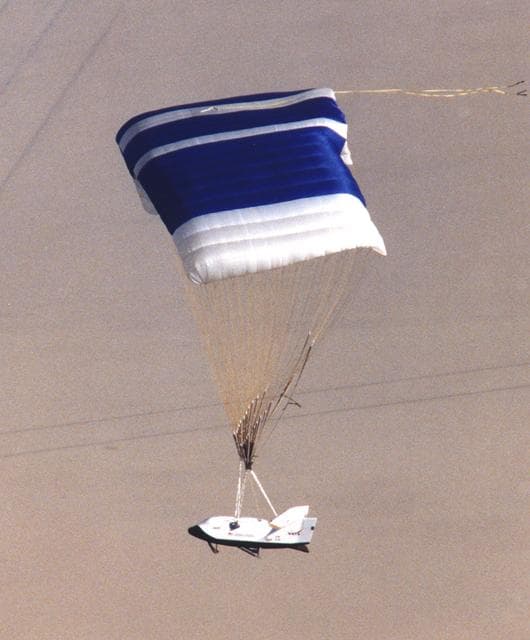
X-38 in Flight during Second Free Flight
NASA's X-38, a research vehicle developed as part of an effort to build an emergency Crew Return Vehicle (CRV) for...
AFRC
Image
Dec 13, 2001
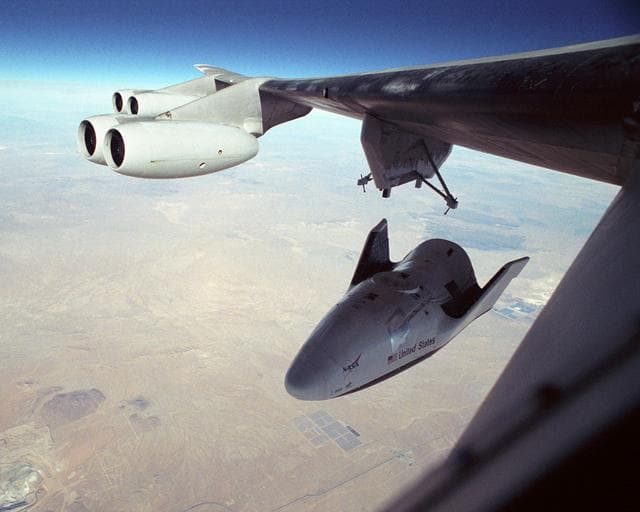
The X-38 Vehicle 131R drops away from its launch pylon on the wing of NASA's NB-52B mothership as it begins its eighth free flight on Thursday, December 13, 2001
The X-38 prototype of the Crew Return Vehicle for the International Space Station drops away from its launch pylon...
AFRC
Image
May 16, 2000
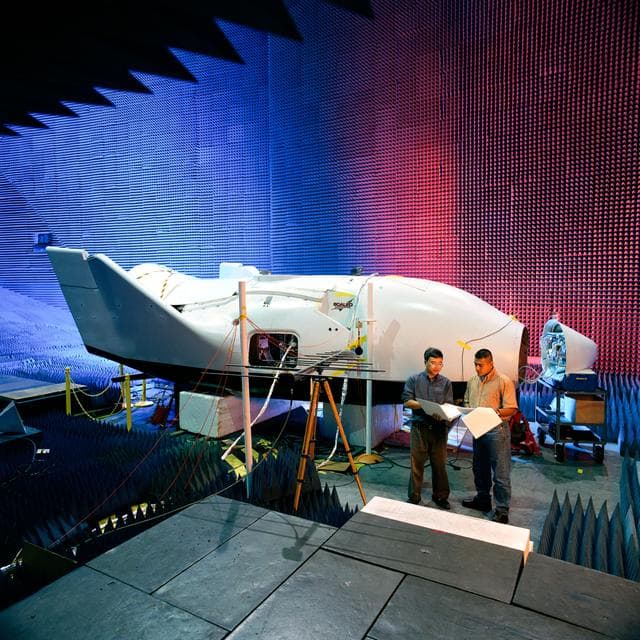
X-38 vehicle in anechoic chamber in building 14
Photographic documentation showing the X-38 Crew Return Vehicle (CRV) undergoing testing in the anechoic chamber in...
JSC
Image
Nov 2, 2000
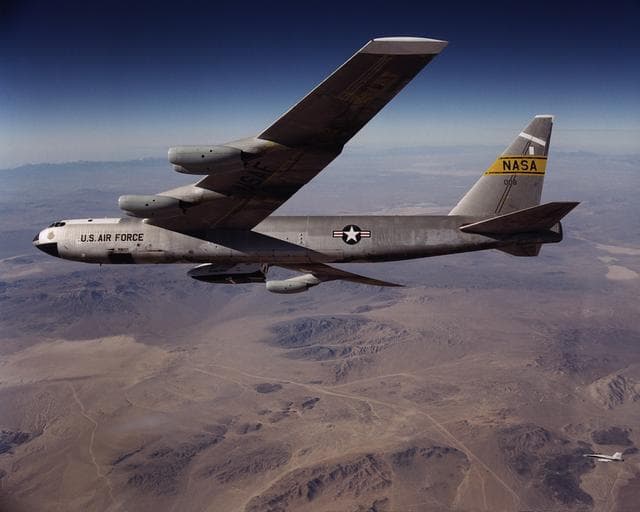
X-38 vehicle #131R during pre-launch with B-52 008 mothership and F-18 chase aircraft
The X-38 prototypes are intended to perfect a "crew lifeboat" for the International Space Station. The X-38 vehicle...
AFRC
Image
Jul 6, 1997
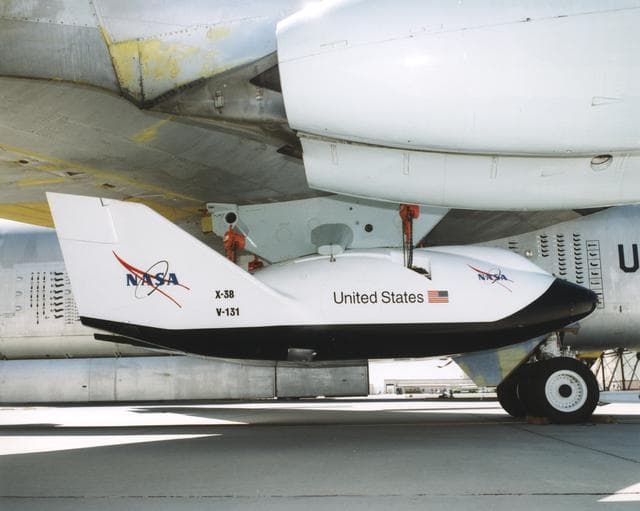
X-38 Mounted on Pylon of B-52 Mothership
A close-up view of the X-38 research vehicle mounted under the wing of the B-52 mothership prior to a 1997 test...
AFRC
Image
Jul 9, 1999
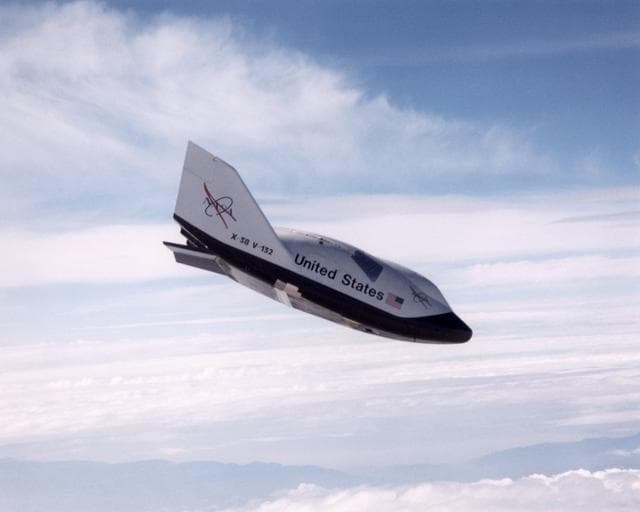
X-38 Ship #2 in Free Flight
The X-38, a research vehicle built to help develop technology for an emergency Crew Return Vehicle (CRV), descends...
AFRC
Image
Jul 11, 2000
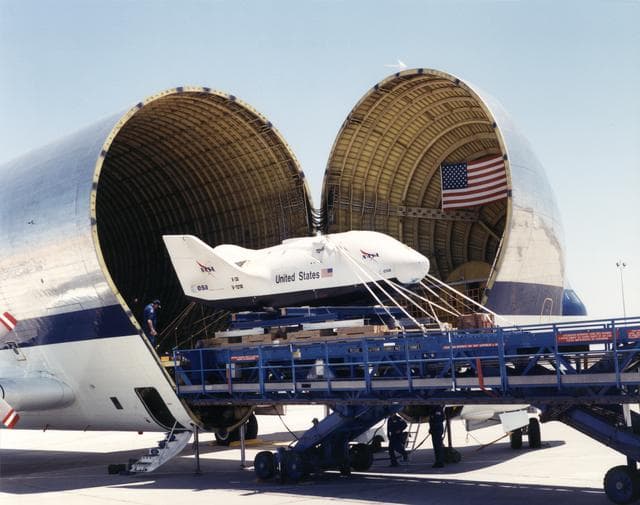
The X-38 vehicle #131R arrives at NASA Dryden Flight Research Center
The X-38 Vehicle 131R, intended to prove the utility of a "lifeboat" crew return vehicle to bring crews home from...
AFRC
Image
Nov 2, 2000
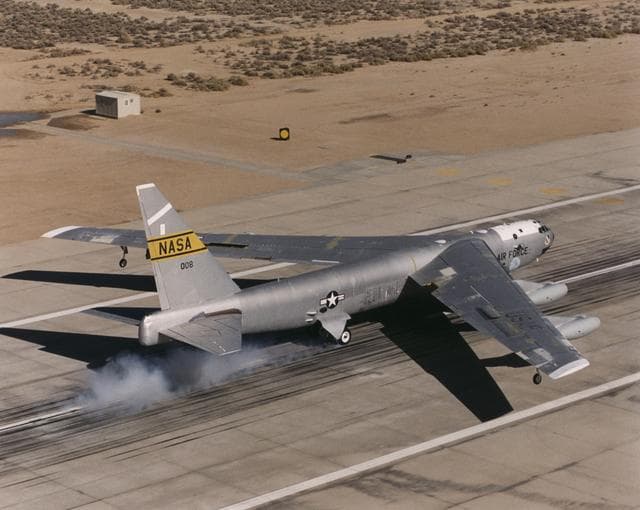
EC00-0318-1
B-52 008 landing on runway 04 at Edwards Air Force Base after first free flight of X-38 vehicle #131R
AFRC
Image
Dec 13, 2001
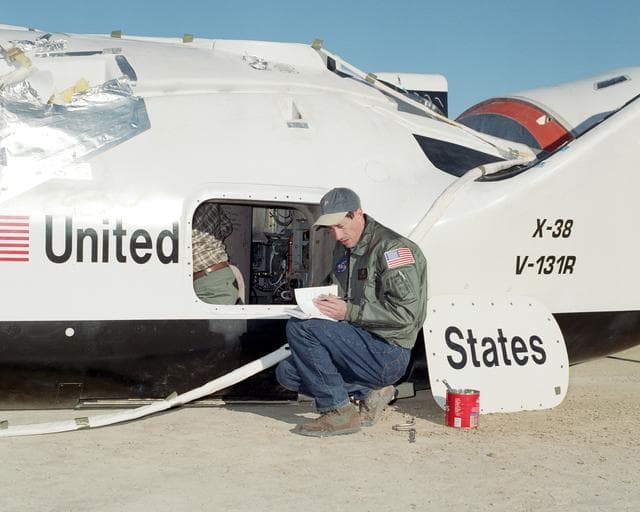
NASA engineer Wayne Peterson from the Johnson Space Center reviews postflight checklists following a spectacular flight of the X-38 Vehicle 131R
NASA engineer Wayne Peterson from the Johnson Space Center reviews postflight checklists following a spectacular...
AFRC