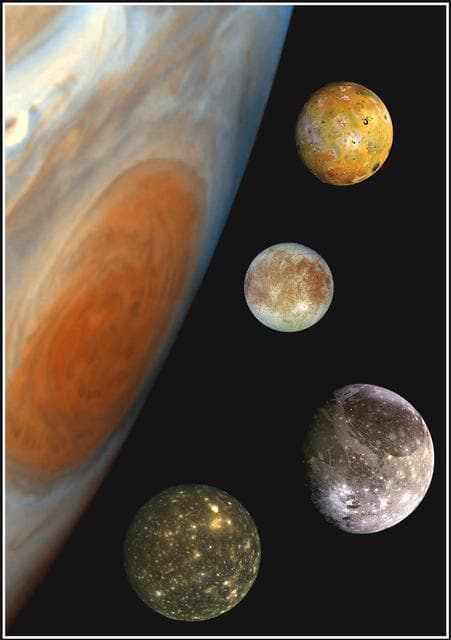
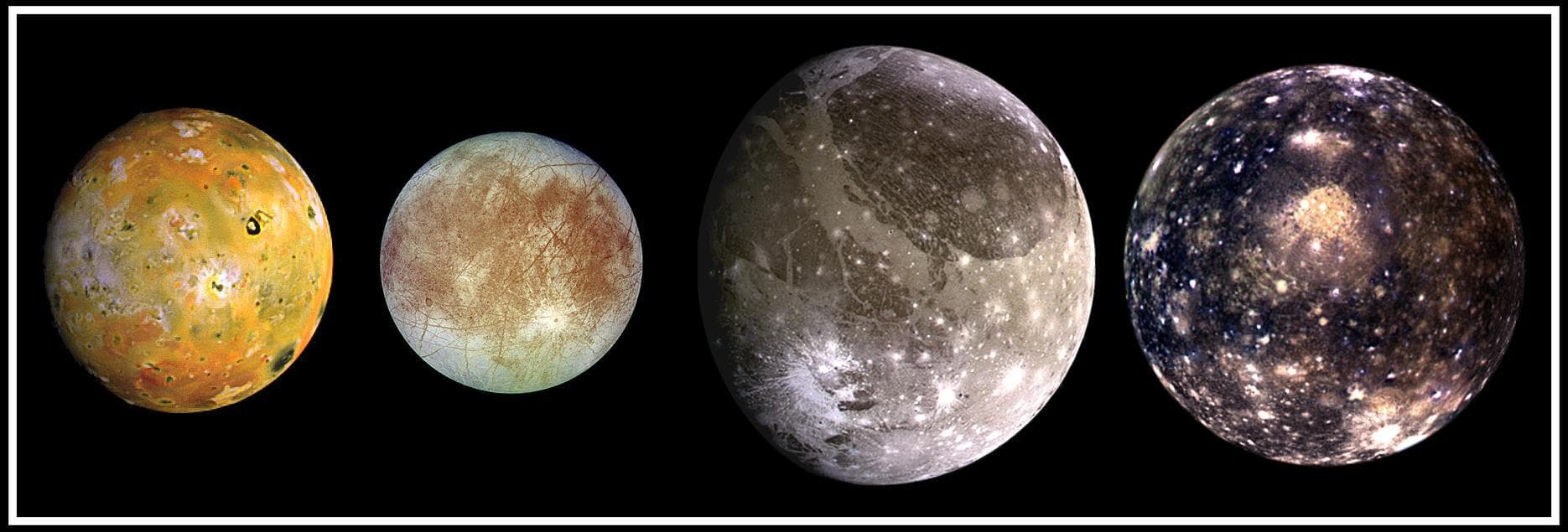
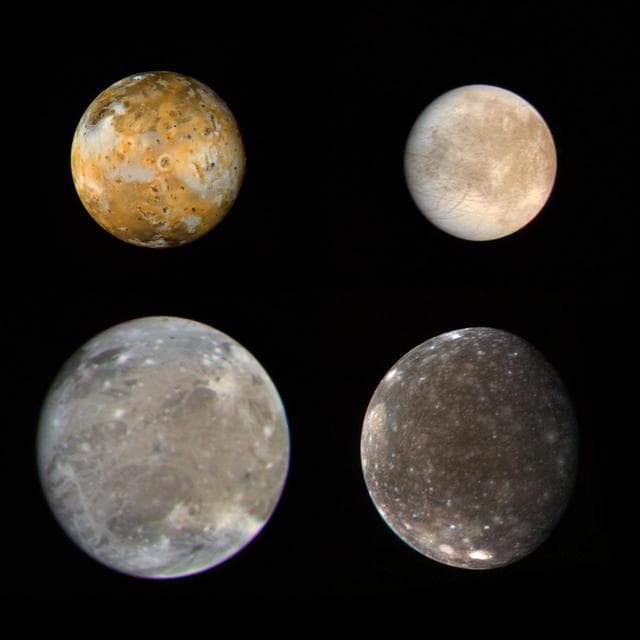
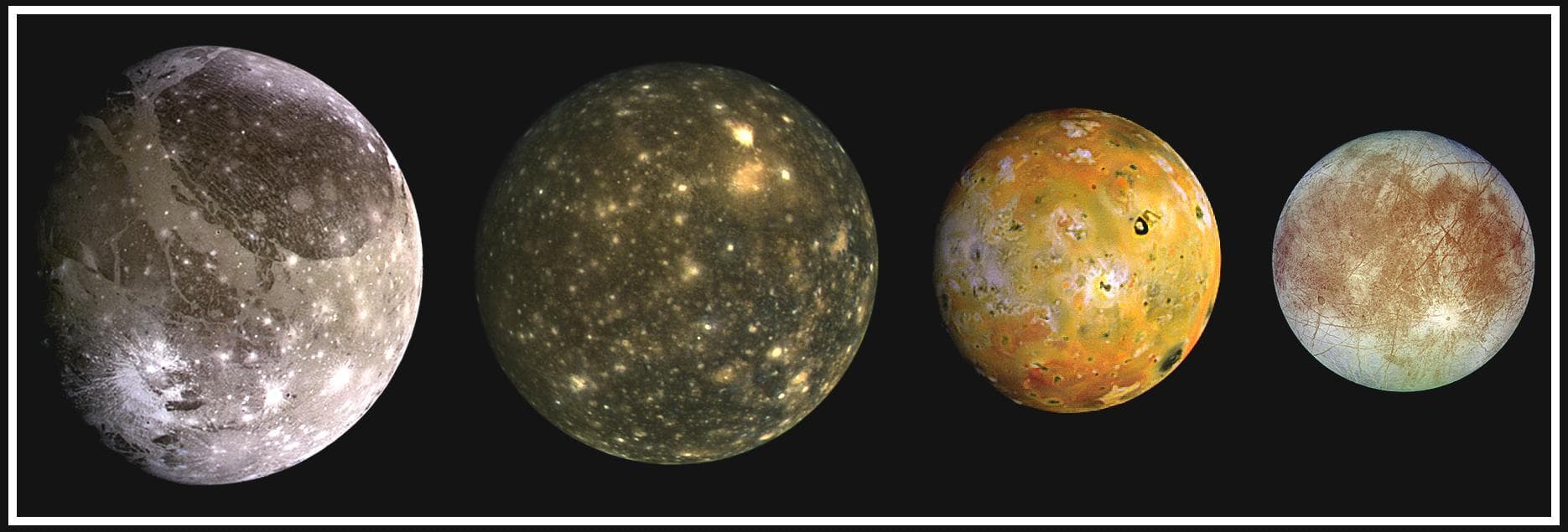
NASA's Hubble Space Telescope recently caught an extraordinary planetary show that takes place only once a decade. With giant Jupiter taking center stage, the telescope witnessed a rare alignment of three moons around the enormous planet. The largest object in the Hubble image is the moon named Ganymede. Ganymede is more than 3,000 miles across and would be big enough to be called a planet if it orbited the sun. Joining Ganymede is Io - Jupiter's most unsettled moon. Slightly larger than our own moon, Io is the most volcanically active body in our Solar System. Io's elliptical orbit around Jupiter produces an irregular gravitational pull on the moon. This uneven tug of gravity causes Io's surface to swell and recede more than 300 feet and remain violently unstable. Hidden in the wings was the third moon, Callisto. Only detectable by its shadow, Callisto is a battered world devoid of any atmosphere or surface activity. From a front row seat the Hubble Space Telescope captured this orchestrated planetary performance. It was a show for the ages, 10 years in the making.
Most NASA images are in the public domain and free to use. Credit NASA as the source. Check NASA's media usage guidelines for details. Images featuring identifiable individuals may require additional permissions.
NASA ID
ksc_120204_jupiter_alignment
Date Created
December 3, 2004
Center
KSC
Media Type
video
Photographer
NASA or National Aeronautics and Space Administration
Download this video in multiple resolutions. All NASA media are free for public use.
Captions
Subtitles