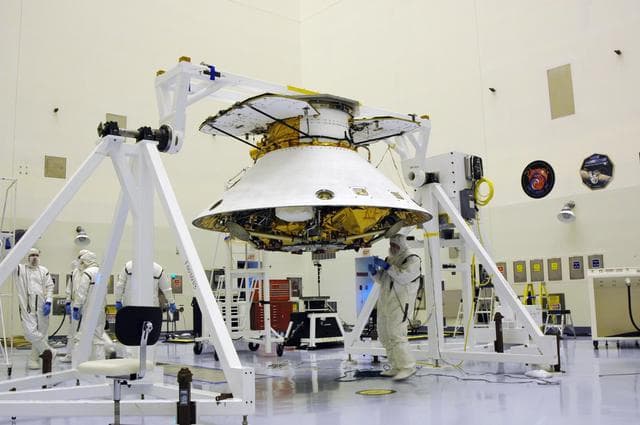
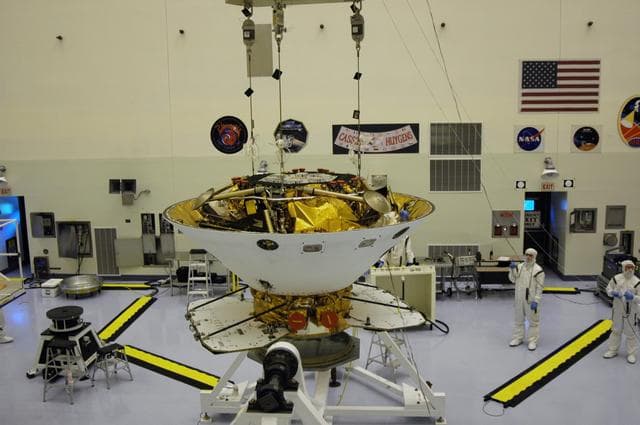
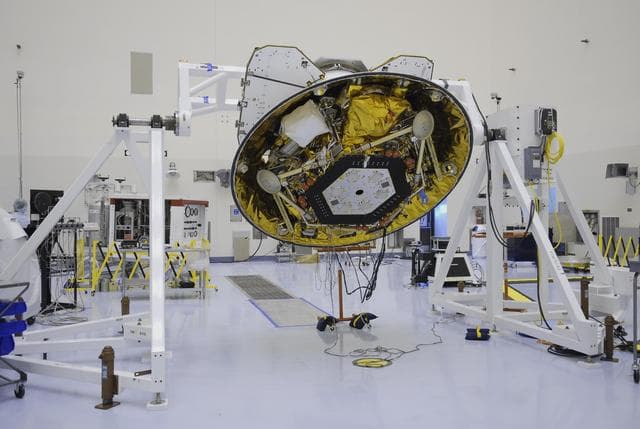
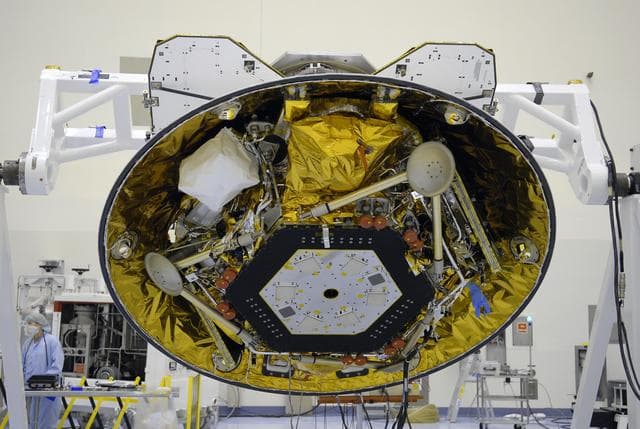
In reward for a job well done, the Mars Odyssey spacecraft's mission is extended by an additional two years. Launched in April of 2001, Odyssey's original mission was to map portions of Mars and analyze the planet's chemical composition. Odyssey is also NASA's first spacecraft ever sent to Mars in preparation for human visitors. Prone to exposure to solar flares and cosmic rays, scientists wanted to measure the planet's radiation levels before astronauts set foot on Martian soil. When the Spirit and Opportunity rovers began roving the Mars surface, Odyssey became their primary communications link to Earth. From its orbit above the planet, Odyssey has relayed back to scientists more than 85% of the images and data gathered by rovers. One of Odyssey's new objectives is to monitor the planet for climatic change. Over its three years in operation, the spacecraft has observed every season as they pass on Mars. Aware of Mars' seasonal variety, scientists want to watch for environmental changes as they span from year to year. In addition to its new scientific duties, Odyssey is also going to scout out landing sites for NASA's Phoenix mission, due to land in 2008.
Most NASA images are in the public domain and free to use. Credit NASA as the source. Check NASA's media usage guidelines for details. Images featuring identifiable individuals may require additional permissions.
NASA ID
ksc_091704_odyssey
Date Created
September 17, 2004
Center
KSC
Media Type
video
Photographer
NASA or National Aeronautics and Space Administration
Download this video in multiple resolutions. All NASA media are free for public use.
Captions
Subtitles