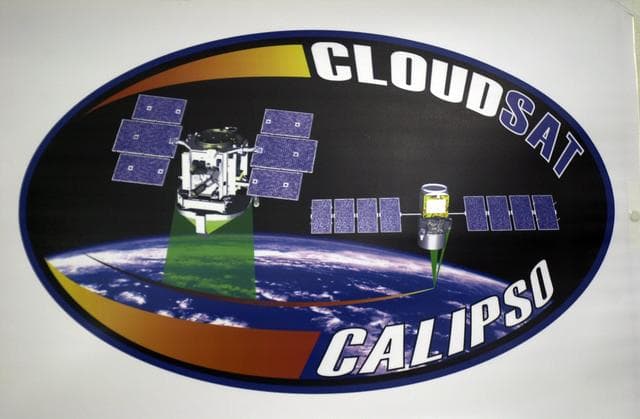
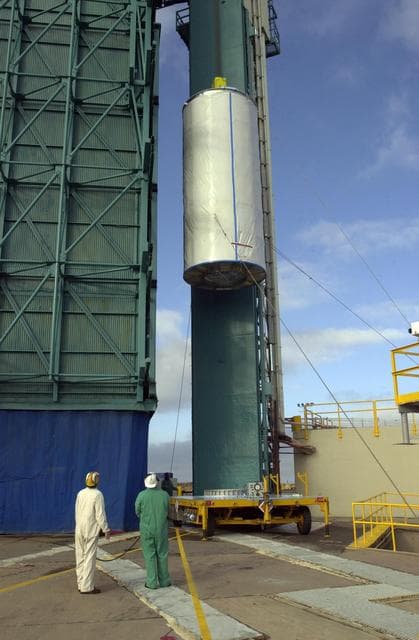
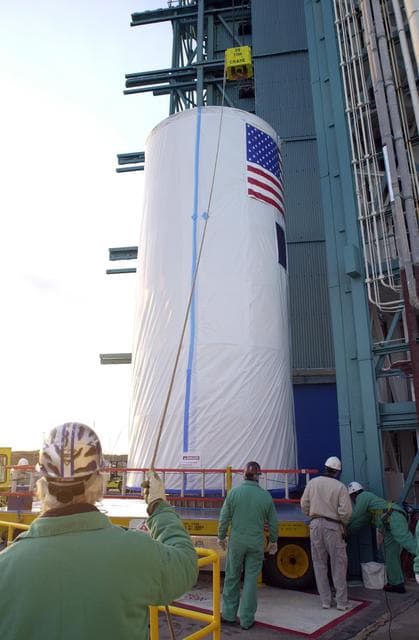
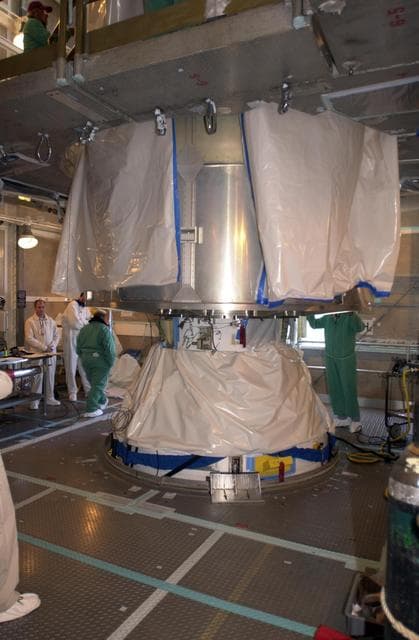
NASA's CALIPSO and CloudSat satellites will be launched in tandem aboard a Delta II rocket from Vandenberg Air Force Base in California. CALIPSO and CloudSat will fly in formation with three other satellites in The Afternoon Satellite Constellation, also known as the 'A-train.' The 'A-Train' satellite constellation presently consists of three satellites, NASA's Aqua and Aura satellites and the French space agency's PARASOL satellite, flying in formation around the globe. The CALIPSO and CloudSat satellite missions will be added into orbit behind Aqua. For much of its life, the A-Train maintains a 15-minute distance between each satellite in orbit, while traveling at more than 15,000 miles per hour. CALIPSO and CloudSat will be in position within 15 seconds of each other, so that both will view the same cloud area at nearly the same moment. This is important for studying clouds, which often have lifetimes of less than 15 minutes. CALIPSO will provide information about the altitude of aerosol layers in the atmosphere that is not provided by current satellites. CloudSat is an experimental satellite that will use radar to study clouds and precipitation from space. The satellites will provide new, never-before-seen 3-D perspectives of how clouds and aerosols form and affect weather and climate.
Most NASA images are in the public domain and free to use. Credit NASA as the source. Check NASA's media usage guidelines for details. Images featuring identifiable individuals may require additional permissions.
NASA ID
ksc_091505_atrain
Date Created
September 16, 2005
Center
KSC
Media Type
video
Photographer
NASA or National Aeronautics and Space Administration
Download this video in multiple resolutions. All NASA media are free for public use.
Captions
Subtitles