Experiments using worms to study muscle weakening, examining how astronauts sleep, and testing high-powered computers in space will be launching, along with more scientific experiments and supplies, to the International Space Station on a Northrop Grumman Cygnus spacecraft. The vehicle launches no earlier than Feb. 20 from NASA’s Wallops Flight Facility in Virginia. Many of the experiments launching on this spacecraft build on previous studies conducted during the more than 20 years of continuous human habitation of the International Space Station, helping us explore farther in to space, and benefiting humans back on Earth. Learn more about the research being conducted on station: https://www.nasa.gov/iss-science Follow Twitter updates on the science conducted aboard the space station: https://twitter.com/iss_research
Most NASA images are in the public domain and free to use. Credit NASA as the source. Check NASA's media usage guidelines for details. Images featuring identifiable individuals may require additional permissions.
NASA ID
Science_Launching_on_NG_CRS-15
Date Created
February 4, 2021
Center
JSC
Media Type
video
Download this video in multiple resolutions. All NASA media are free for public use.
Captions
Subtitles
Microgravity
Jan 31, 2000
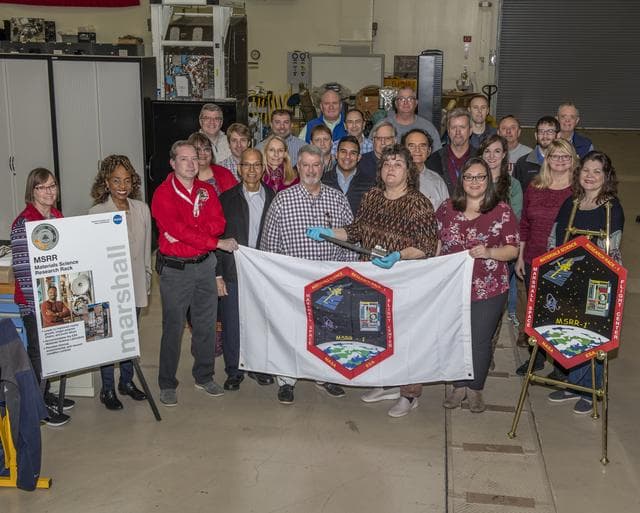
Sample Cartridge Assembly (SCA) Project Group Photograph
Jan 30, 2020
Advanced Combustion via Microgravity Experiments, ACME chamber insert
Jun 22, 2016
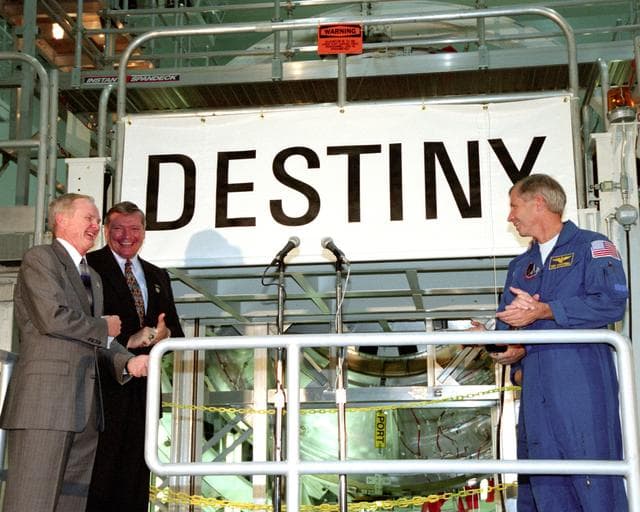
KENNEDY SPACE CENTER, FLA. - In the Space Station Processing Facility, Center Director Roy Bridges (left), Program Manager of the International Space Station (ISS) Randy Brinkley (second from left) and STS-98 Commander Ken Cockrell (right) applaud the unveiling of the name "Destiny" for the U.S. Laboratory module. The lab, which is behnd them on a workstand, is scheduled to be launched on STS-98 on Space Shuttle Endeavour in early 2000. It will become the centerpiece of scientific research on the ISS. The Shuttle will spend six days docked to the Station while the laboratory is attached and three spacewalks are conducted to compete its assembly. The laboratory will be launched with five equipment racks aboard, which will provide essential functions for Station systems, including high data-rate communications, and maintain the Station's orientation using control gyroscopes launched earlier. Additional equipment and research racks will be installed in the laboratory on subsequent Shuttle flights.
Dec 1, 1998