NASA's ECOSTRESS Captures Short-Lived Heat Wave in L.A. Area
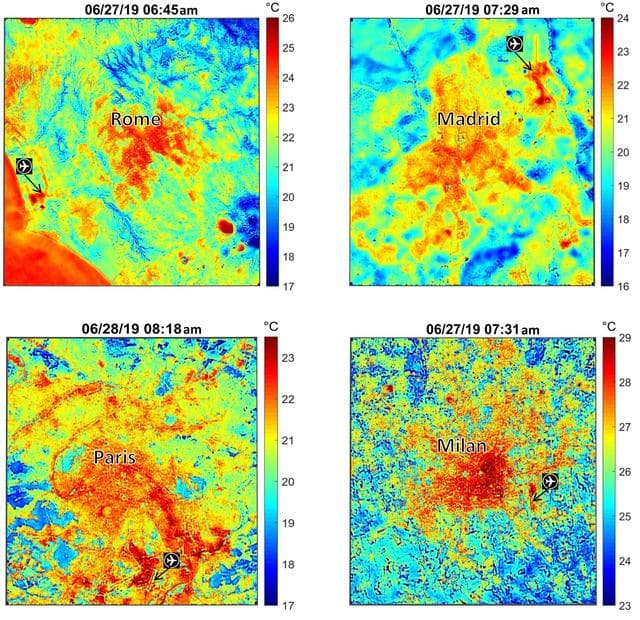
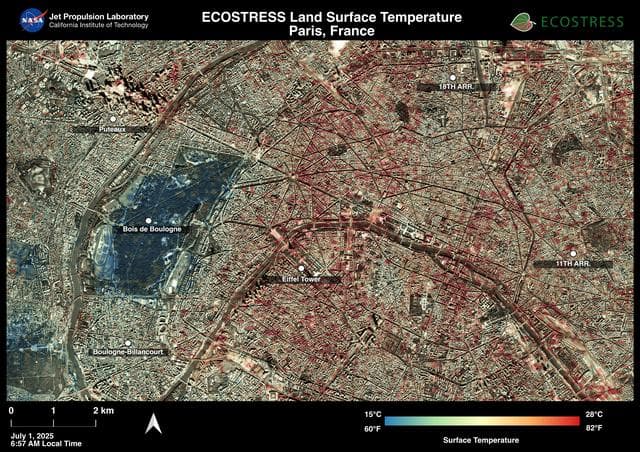
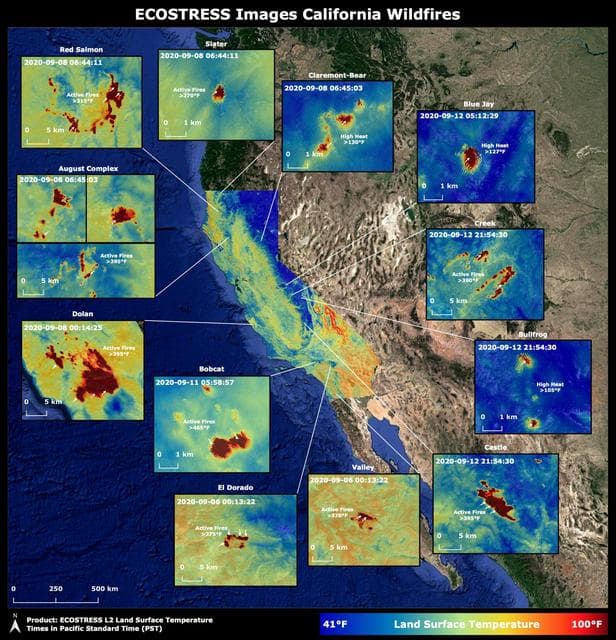
A short-lived heat wave that hit the Los Angeles area the week of July 7, 2025, was the first of summer. The heat lingered into the evening hours, as captured by NASA's Ecosystem Spaceborne Thermal Radiometer Experiment on Space Station (ECOSTRESS) instrument. By nearly 8:45 p.m. local time July 9, surface temperatures in the San Fernando Valley were still over 80 degrees Fahrenheit (27 degrees Celsius). The ECOSTRESS sensor recorded similar temperatures for downtown Pasadena (Figure A) and parts of Altadena, east of NASA's Jet Propulsion Laboratory, which manages the mission. In these data visualizations, dark red indicates higher temperatures, while areas in blue and green are cooler. Coastal regions remained significantly cooler than inland areas. The ECOSTRESS instrument measures thermal infrared emissions from Earth's surface. This enables researchers to monitor plant health, the progress of wildfires, land surface temperatures, and the burn risk to people from hot surfaces such as asphalt. Land surface temperatures are hotter than air temperatures during the day. Air temperatures, which are measured out of direct sunlight, are usually what meteorologists report in a weather forecast. https://photojournal.jpl.nasa.gov/catalog/PIA26651
Usage Rights
Most NASA images are in the public domain and free to use. Credit NASA as the source. Check NASA's media usage guidelines for details. Images featuring identifiable individuals may require additional permissions.
Details
NASA ID
PIA26651
Date Created
July 21, 2025
Center
JPL
Media Type
image
Downloads
Download this image in multiple resolutions. All NASA media are free for public use.