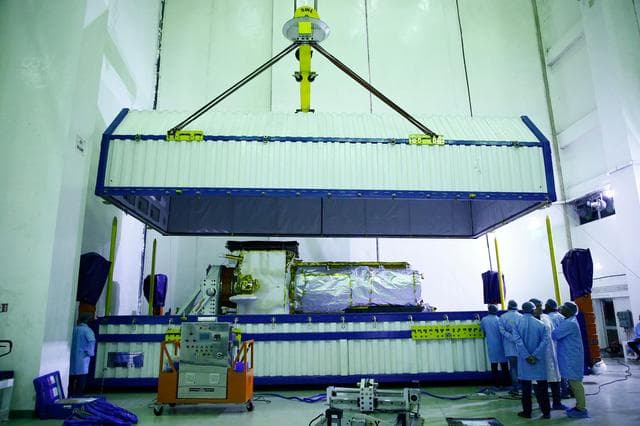
NISAR Arrives at Indian Launch Site
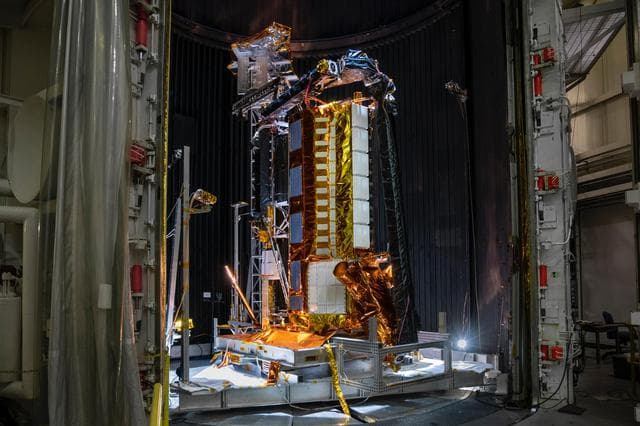
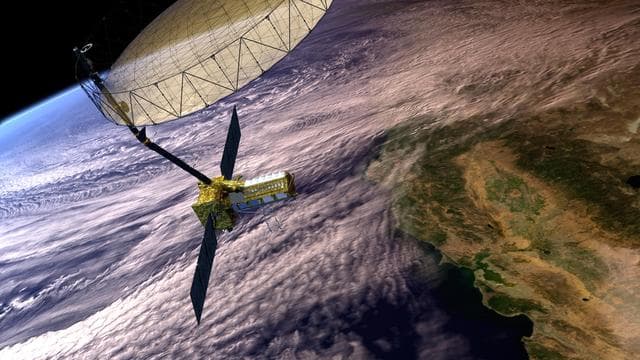
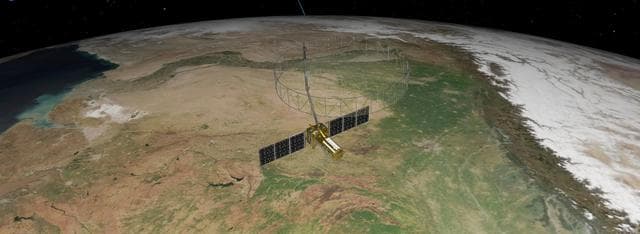
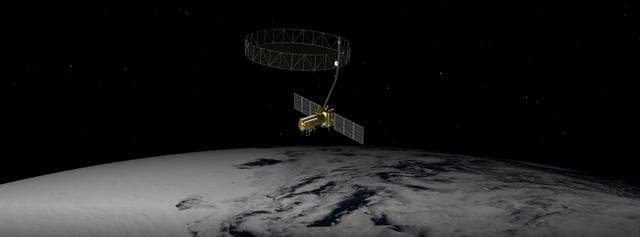
The lid of a specialized container is lifted to reveal NISAR, the Earth-observing radar satellite jointly developed by NASA and the Indian Space Research Organisation (ISRO), shortly after the spacecraft's arrival at ISRO's Satish Dhawan Space Centre in Sriharikota on India's southeastern coast on May 16, 2025. The NISAR (NASA-ISRO Synthetic Aperture Radar) satellite had departed about two days earlier from the ISRO Satellite Integration and Test Establishment (ISITE) in Bengaluru. At ISITE, engineers from the Indian space agency and NASA's Jet Propulsion Laboratory in Southern California, which manages the mission for NASA, had worked together since March 2023 to bring together components and assemble the satellite. They also tested the spacecraft to ensure it can withstand the rigors of launch and function properly in orbit. In the early morning of May 14, crews placed the satellite in the specialized container and transported it about 220 miles (360 kilometers) by truck to the space center. Prior to launch the satellite will be encapsulated in its payload fairing and mounted atop an ISRO Geosynchronous Launch Vehicle Mark II rocket. In orbit, NISAR will collect an unprecedented amount of information about change on our home planet. It will scan nearly all of Earth's land and ice surfaces twice every 12 days, providing insights into the growth and retreat of ice sheets, sea ice, and glaciers, the deformation of the planet's crust due to natural hazards, as well as natural and human-caused changes to its terrestrial ecosystems, including forests and wetlands. https://photojournal.jpl.nasa.gov/catalog/PIA26500
Usage Rights
Most NASA images are in the public domain and free to use. Credit NASA as the source. Check NASA's media usage guidelines for details. Images featuring identifiable individuals may require additional permissions.
Keywords
Details
NASA ID
PIA26500
Date Created
June 12, 2025
Center
JPL
Media Type
image