Creation of Europa's Atmosphere (Artist's Concept)
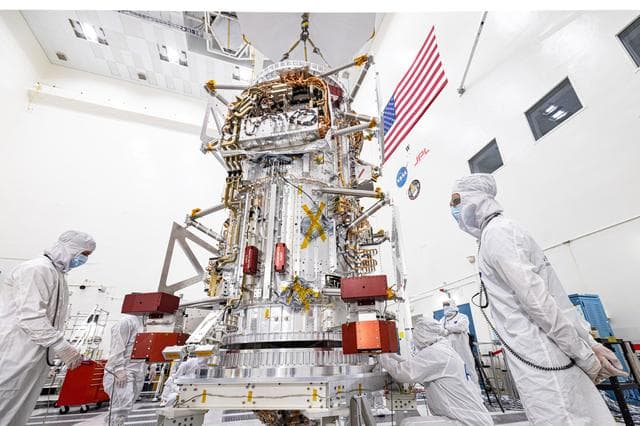
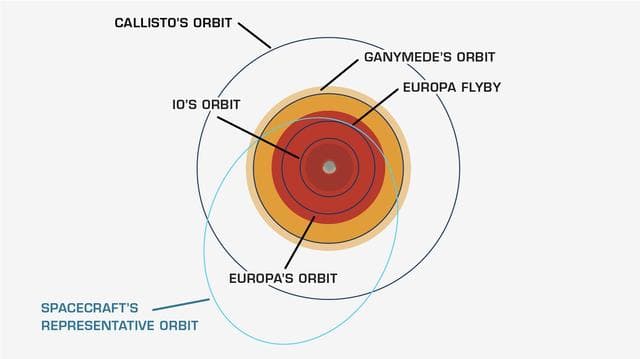
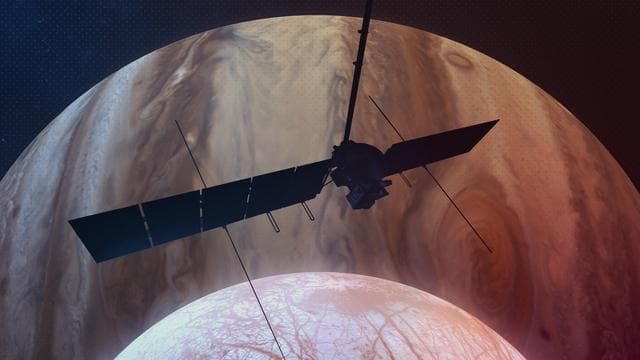
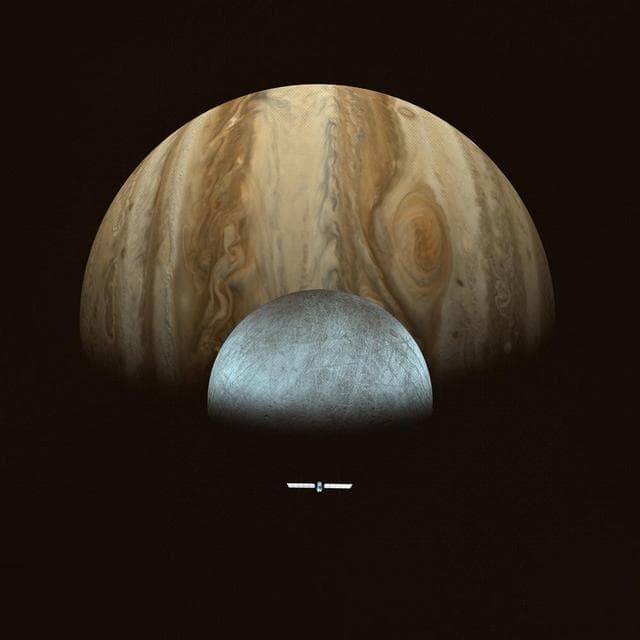
This artist's concept shows how scientists think the thin atmosphere on Jupiter's moon Europa is formed. It illustrates how the impact of high-energy, charged particles can kick up material from the surface and how possible plumes might also contribute to the atmosphere. NASA's Europa Clipper mission aims to better understand the moon's atmosphere by measuring its chemical composition with the MAss Spectrometer for Planetary EXploration/Europa (MASPEX) and "sniffing" the dust grains blasted off the surface with the SUrface Dust Analyzer (SUDA). These two instruments will help scientists understand whether Europa harbors the composition and chemistry required to host life. Europa Clipper's three main science objectives are to determine the thickness of the moon's icy shell and its interactions with the ocean below, to investigate its composition, and to characterize its geology. The mission's detailed exploration of Europa will help scientists better understand the astrobiological potential for habitable worlds beyond our planet. https://photojournal.jpl.nasa.gov/catalog/PIA26107
Usage Rights
Most NASA images are in the public domain and free to use. Credit NASA as the source. Check NASA's media usage guidelines for details. Images featuring identifiable individuals may require additional permissions.
Keywords
Details
NASA ID
PIA26107
Date Created
October 11, 2024
Center
JPL
Media Type
image
Downloads
Download this image in multiple resolutions. All NASA media are free for public use.