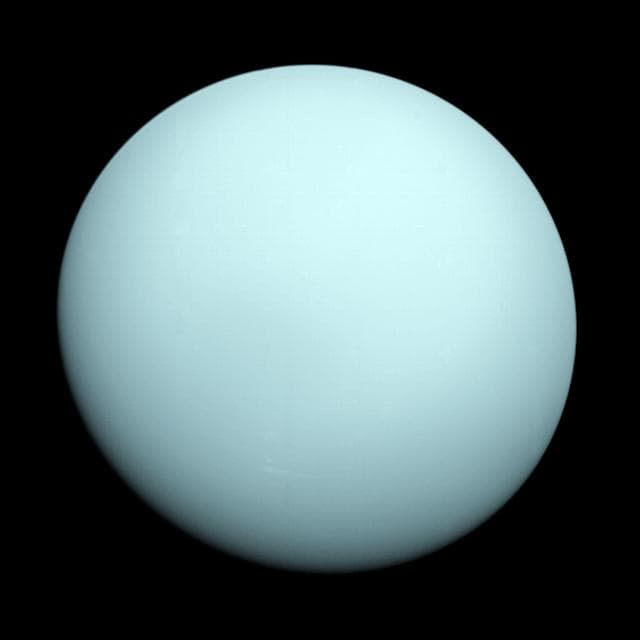
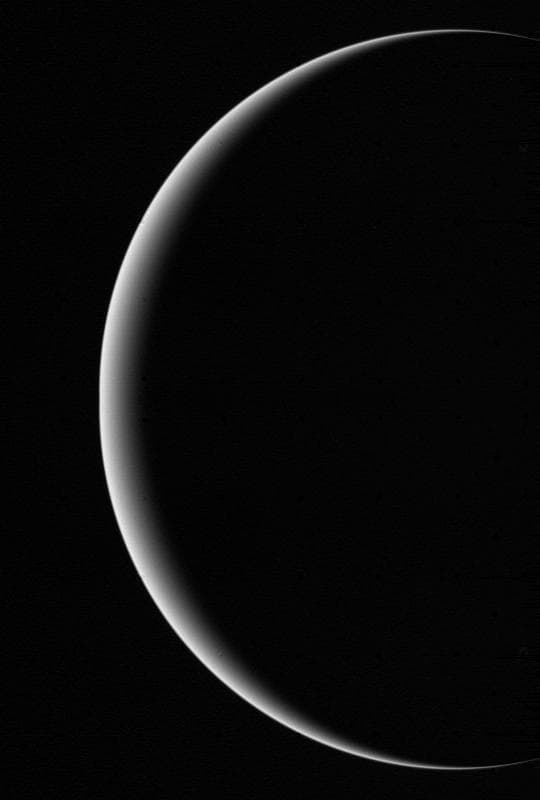
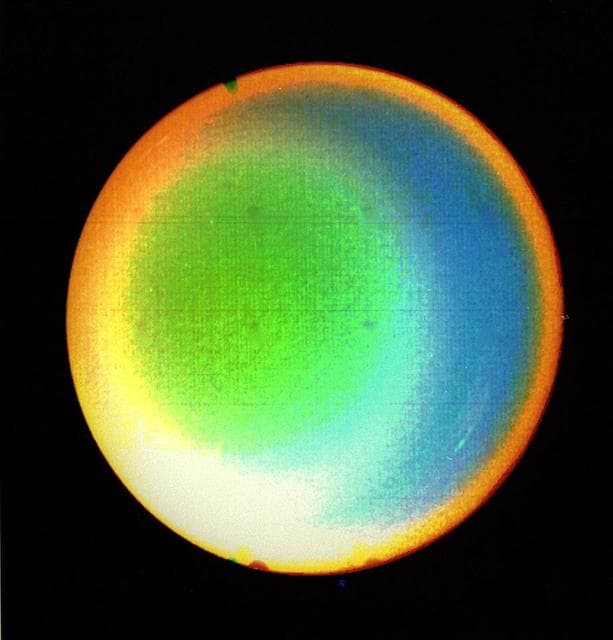
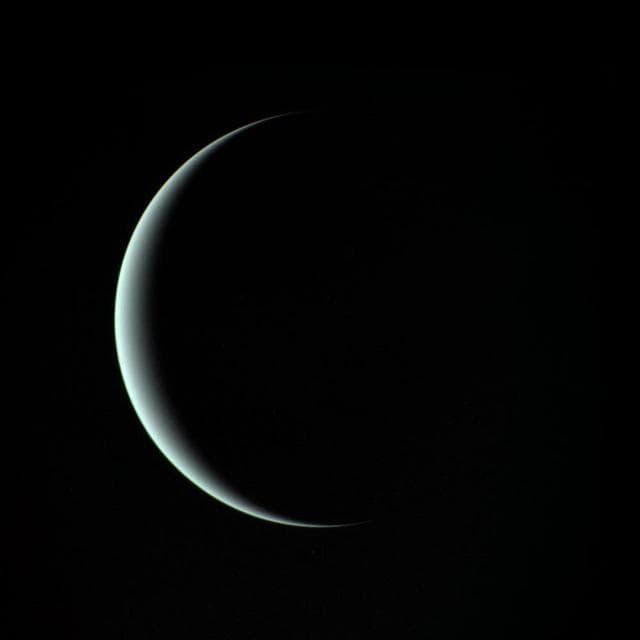
Uranus Magnetosphere Mystery Unlocked (Artist's Concept)
When NASA's Voyager 2 spacecraft flew by Uranus in 1986, it provided scientists' first – and, so far, only – close glimpse of this outer planet. Scientists were confronted by a mystery: The energized particles around the planet defied their understanding of how magnetic fields work to trap particle radiation. The first panel of this artist's concept depicts how Uranus's magnetosphere (its protective bubble) was behaving before Voyager 2's flyby. The second panel shows that an unusual kind of solar weather was happening at the same time as the spacecraft's flyby, giving scientists a skewed view of Uranus's magnetosphere. The work, led by a scientist at NASA's Jet Propulsion Laboratory and described in a paper published in Nature Astronomy in November 2024, contributes to scientists' understanding of this enigmatic planet. It also opens the door to the possibility that Uranus' five major moons may be active. https://photojournal.jpl.nasa.gov/catalog/PIA26069
Usage Rights
Most NASA images are in the public domain and free to use. Credit NASA as the source. Check NASA's media usage guidelines for details. Images featuring identifiable individuals may require additional permissions.
Details
NASA ID
PIA26069
Date Created
November 11, 2024
Center
JPL
Media Type
image
Downloads
Download this image in multiple resolutions. All NASA media are free for public use.