First Image of Europa From Juno's Close Flyby
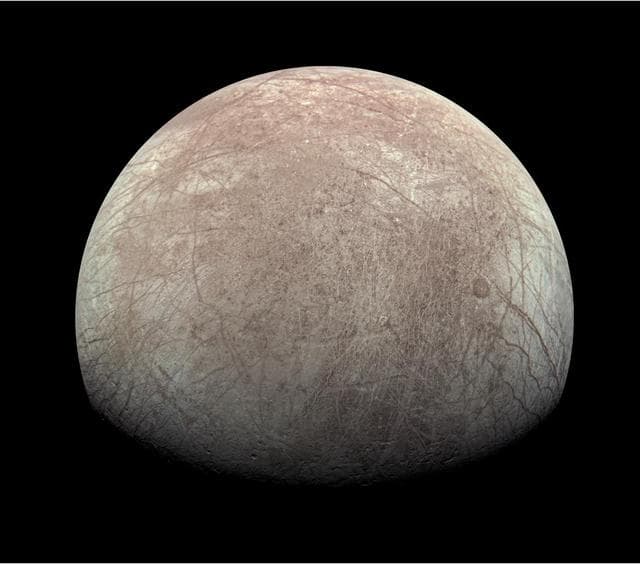
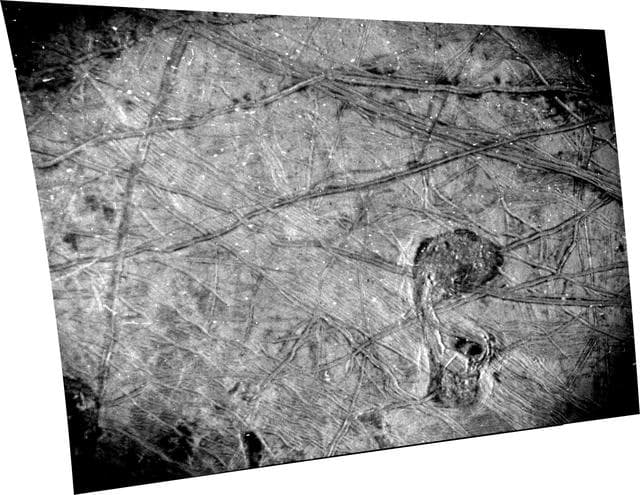
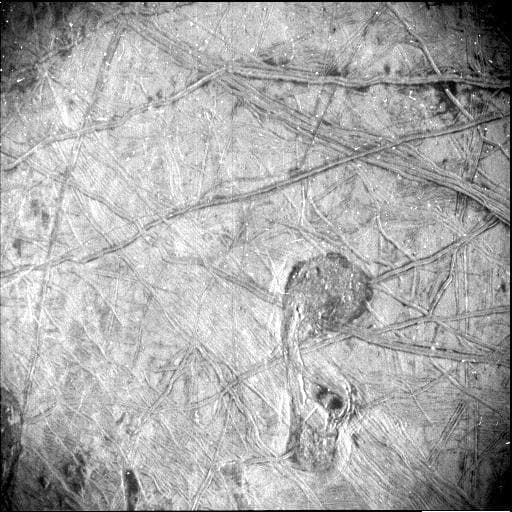
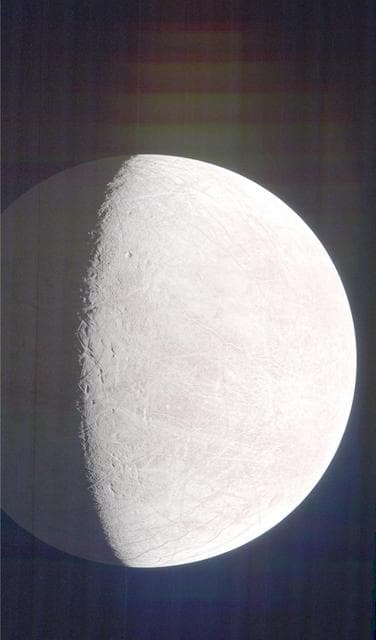
This look at the complex, ice-covered surface of Jupiter's moon Europa came from NASA's Juno mission during a close pass on Sept. 29, 2022. At closest approach, the spacecraft came within a distance of about 219 miles (352 kilometers). Juno's flyby is only the third close pass of the moon in history and the closest look any spacecraft has provided of Europa since Jan. 3, 2000, when NASA's Galileo came within 218 miles (351 kilometers) of the surface. Europa is the sixth-largest moon in the solar system, slightly smaller than Earth's moon. Scientists think a salty ocean lies below a miles-thick ice shell. This segment of the first image of Europa taken during this flyby by the spacecraft's JunoCam (a public-engagement camera) zooms in on a swath of Europa's surface north of the equator. Due to the enhanced contrast between light and shadow seen along the terminator (the nightside boundary, at 10 degrees west longitude), rugged terrain features are easily seen, including tall shadow-casting blocks, while bright and dark ridges and troughs curve across the surface. The oblong pit near the terminator might be a degraded impact crater. The vertical area covered in the image is 155 miles (250 kilometers) tall. The resolution of the image is 0.6 miles (1 kilometer) per pixel. https://photojournal.jpl.nasa.gov/catalog/PIA25330
Usage Rights
Most NASA images are in the public domain and free to use. Credit NASA as the source. Check NASA's media usage guidelines for details. Images featuring identifiable individuals may require additional permissions.
Details
NASA ID
PIA25330
Date Created
September 29, 2022
Center
JPL
Media Type
image
Downloads
Download this image in multiple resolutions. All NASA media are free for public use.