Europa Clipper: Rolling Into NASA's Jet Propulsion Laboratory
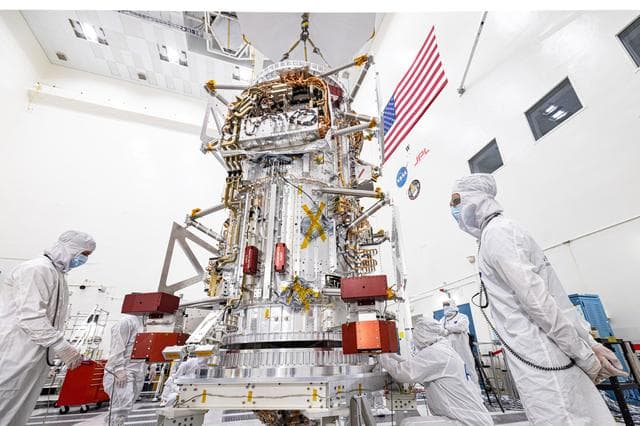
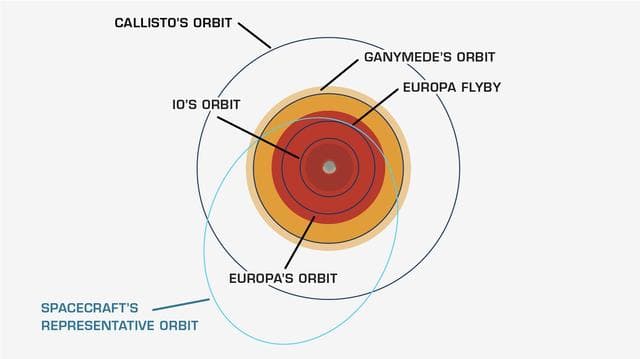
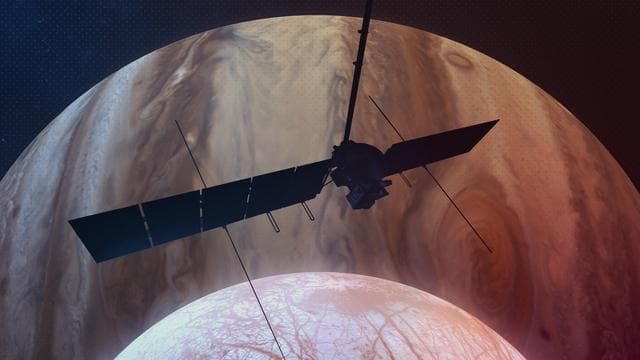
The main body of NASA's Europa Clipper spacecraft is seen in its shipping container as it rolls into the agency's Jet Propulsion Laboratory in Southern California. Over the next two years, engineers and technicians will finish assembling the craft by hand. Then it will be tested to make sure it can withstand the journey to Jupiter's icy moon Europa. The Johns Hopkins Applied Physics Laboratory (APL) in Laurel, Maryland, designed and built the spacecraft body in collaboration with JPL and NASA's Goddard Space Flight Center in Greenbelt, Maryland. Set to launch in October 2024, Europa Clipper will conduct nearly 50 flybys of Europa, which scientists are confident harbors an internal ocean containing twice as much water as Earth's oceans combined. And the moon may currently have conditions suitable for supporting life. The spacecraft's nine science instruments will gather data on the moon's atmosphere, surface, and interior – information that scientists will use to gauge the depth and salinity of the ocean, the thickness of the ice crust, and potential plumes that may be venting subsurface water into space. https://photojournal.jpl.nasa.gov/catalog/PIA25239
Usage Rights
Most NASA images are in the public domain and free to use. Credit NASA as the source. Check NASA's media usage guidelines for details. Images featuring identifiable individuals may require additional permissions.
Keywords
Details
NASA ID
PIA25239
Date Created
June 7, 2022
Center
JPL
Media Type
image
Downloads
Download this image in multiple resolutions. All NASA media are free for public use.