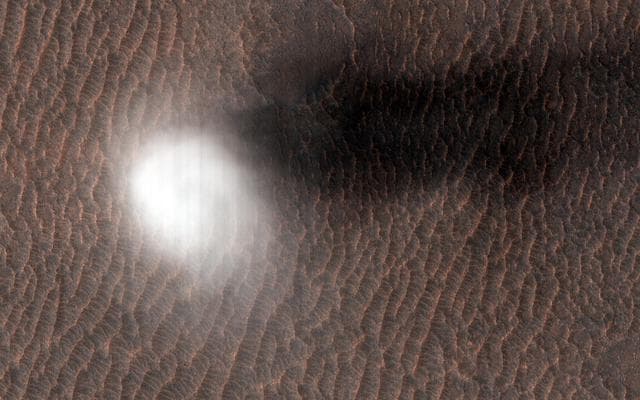
A Dust Devil is Born
Dust devils form by rising and rotating warm air pockets. Air near the soil surface can become heated by contact with the warmer ground during the day. The warm air is less dense and rises through the cooler air above it. As additional air moves inward along the surface to replace the rising pocket, it begins to rotate driven by Coriolis forces, and forms a vortex of spinning air. When the incoming air rises into the column, its rotation picks up speed like a spinning ice skater bring their arms closer to their body. This faster moving air near the soil surface can cause sand grains to bounce and kick up dust which easily rises up into the growing vortex. In this way a dust devil is born. The study of dust devils is important because they indicate atmospheric conditions such prevailing wind directions and speed. They also periodically cleanse the surface of the dust that gradually settles from the atmosphere. This is something that can be extremely helpful to robotic missions like InSight and Curiosity to keep their solar panels from getting too dusty. https://photojournal.jpl.nasa.gov/catalog/PIA24465
Usage Rights
Most NASA images are in the public domain and free to use. Credit NASA as the source. Check NASA's media usage guidelines for details. Images featuring identifiable individuals may require additional permissions.
Details
NASA ID
PIA24465
Date Created
February 26, 2021
Center
JPL
Media Type
image