Mars Sample Return Orbiting Sample Container Concept Model
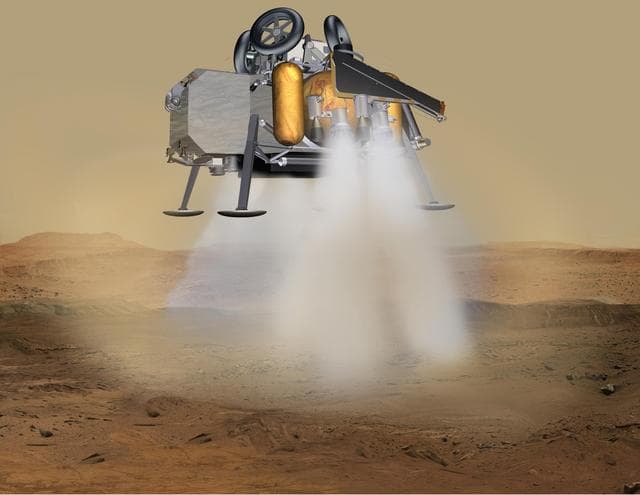
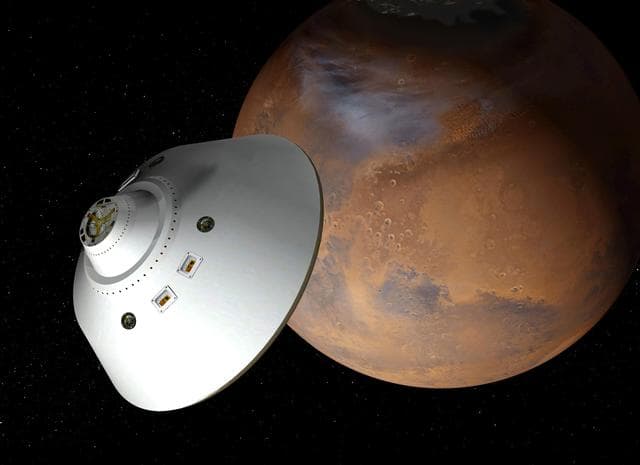
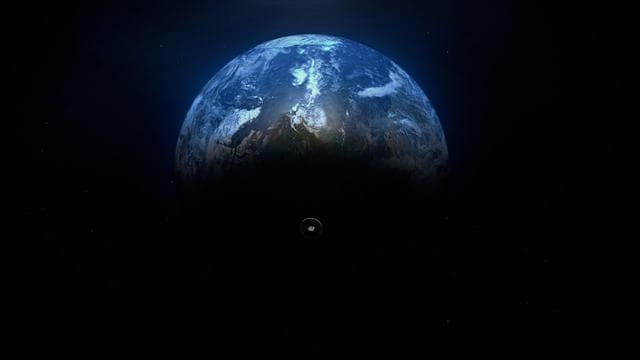
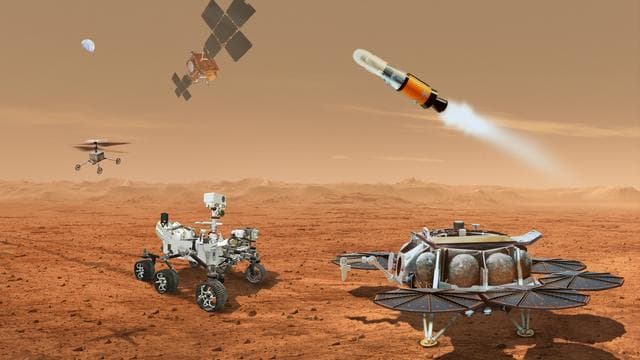
This image shows a concept model of NASA's orbiting sample container, which will hold tubes of Martian rock and soil samples that will be returned to Earth through a Mars sample return campaign. At right is the lid; bottom left sits a model of the sample-holding tube. The sample container will help keep contents at less than about 86 degrees Fahrenheit (30 degrees Celsius) to help preserve the Mars material in its most natural state. NASA and the European Space Agency (ESA) are solidifying concepts for a Mars sample return mission after NASA's Mars 2020 rover collects rock and soil samples and stores them in sealed tubes on the planet's surface for future return to Earth. In the new campaign, NASA will deliver a Mars lander in the vicinity of Jezero Crater, where Mars 2020 will have collected and cached samples. The lander will carry a NASA rocket (the Mars Ascent Vehicle) along with an ESA Sample Fetch Rover that is roughly the size of NASA's Opportunity Mars rover. The fetch rover will gather the cached samples and carry them back to the lander for transfer to an orbiting sample container embedded in the ascent vehicle; additional samples could also be delivered directly by Mars 2020. The ascent vehicle will then launch the container holding the samples into Mars orbit. ESA will put a spacecraft in orbit around Mars before the ascent vehicle launches. This spacecraft will rendezvous with the orbiting sample container and also carry a NASA payload that can capture and contain the sample container before returning the samples to Earth. https://photojournal.jpl.nasa.gov/catalog/PIA23712
Usage Rights
Most NASA images are in the public domain and free to use. Credit NASA as the source. Check NASA's media usage guidelines for details. Images featuring identifiable individuals may require additional permissions.
Keywords
Details
NASA ID
PIA23712
Date Created
February 25, 2020
Center
JPL
Media Type
image
Downloads
Download this image in multiple resolutions. All NASA media are free for public use.