CosmosObservatory
Explore
Solar System
Live
Learn
Tools
About
Cosmos Observatory
ToolsAbout
Cosmos Observatory

Explore the universe through NASA data, real-time ISS tracking, Mars rover imagery, asteroid monitoring, and comprehensive space encyclopedia. Your gateway to the cosmos.

Explore

  • APOD
  • Mars Rovers
  • Earth Imagery
  • NASA Gallery
  • ISS Tracker

Data

  • Asteroids
  • Solar System
  • Exoplanets
  • Space Weather
  • Launches

Tools

  • Glossary
  • News
  • Calculators

Legal

  • About
  • Privacy Policy
  • Terms of Use
  • Space Tools
  • Contact

Stay updated with the cosmos

Get weekly digests of APOD highlights, upcoming launches, and space events.

© 2026 Cosmos Observatory. All rights reserved. Built with for space enthusiasts.

This website is not affiliated with, maintained, authorized, endorsed by, or in any way officially connected with NASA or any of its subsidiaries or affiliates. All NASA imagery is in the public domain unless otherwise noted. Data sourced from NASA Open APIs, Launch Library 2, and other open data services.

  1. Home
  2. Gallery
  3. NASA's AIRS Images Cyclone Fani Before Landfall
NASA's AIRS Images Cyclone Fani Before Landfall

NASA's AIRS Images Cyclone Fani Before Landfall

This image shows Tropical Cyclone Fani just off the east coast of India in the Bay of Bengal. NASA's Atmospheric Infrared Sounder (AIRS) collected the image at about 1 p.m. PDT (4 p.m. EDT) today, May 2. At the time, the cyclone's wind speeds were equivalent to a Category 4 hurricane, with maximum sustained winds of 155 mph (249 kph) and gusts of up to 190 mph (306 kph), according to the Joint Typhoon Warning Center. The cyclone is expected to make landfall on Friday, May 3. AIRS, in conjunction with the Advanced Microwave Sounding Unit (AMSU), senses emitted infrared and microwave radiation from Earth to provide a 3D look at weather and climate. The infrared image shows temperatures of the clouds or surface. The large purple area indicates very cold clouds carried high into the atmosphere by deep thunderstorms. Warmer areas, including the eye of the cyclone, are shown in blue. Shallower rain clouds appear green, while the orange areas represent mostly cloud-free air moving away from the storm. https://photojournal.jpl.nasa.gov/catalog/PIA22838

Usage Rights

Most NASA images are in the public domain and free to use. Credit NASA as the source. Check NASA's media usage guidelines for details. Images featuring identifiable individuals may require additional permissions.

Keywords

AquaEarthhurricanes

Explore More

Browse GalleryPicture of the DayMars PhotosEarth from SpaceLaunch ScheduleSpace News

Details

NASA ID

PIA22838

Date Created

May 2, 2019

Center

JPL

Media Type

image

Downloads

Download this image in multiple resolutions. All NASA media are free for public use.
Original

Full resolution

Small

480px

Thumbnail

240px

Related

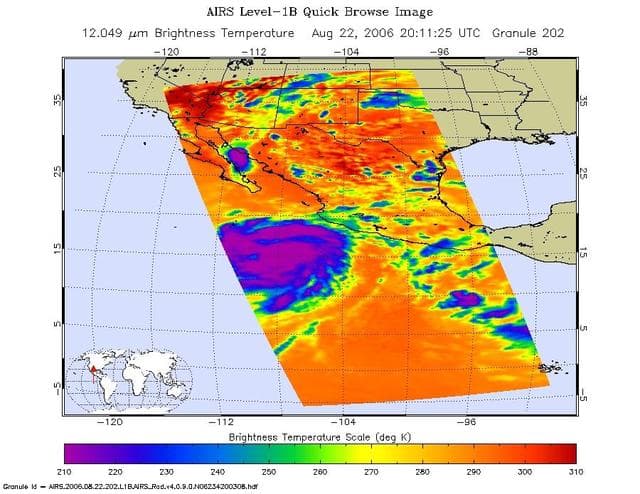
Hurricane Ileana in the Eastern Pacific

Hurricane Ileana in the Eastern Pacific

Aug 22, 2006

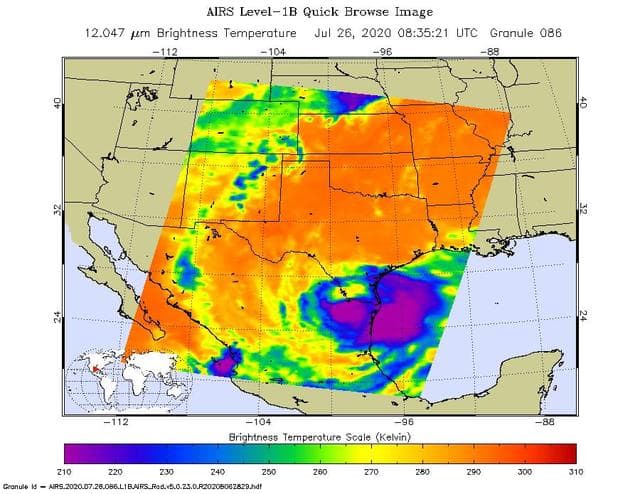
AIRS Captures Tropical Storm Hanna

AIRS Captures Tropical Storm Hanna

Jul 27, 2020

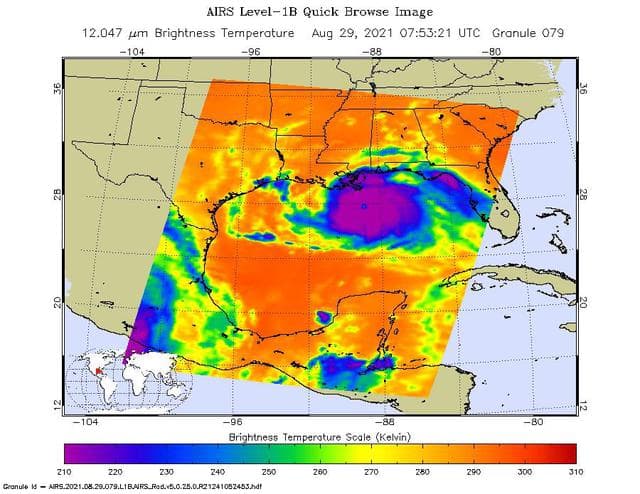
Hurricane Ida Before Landfall

Hurricane Ida Before Landfall

Aug 31, 2021

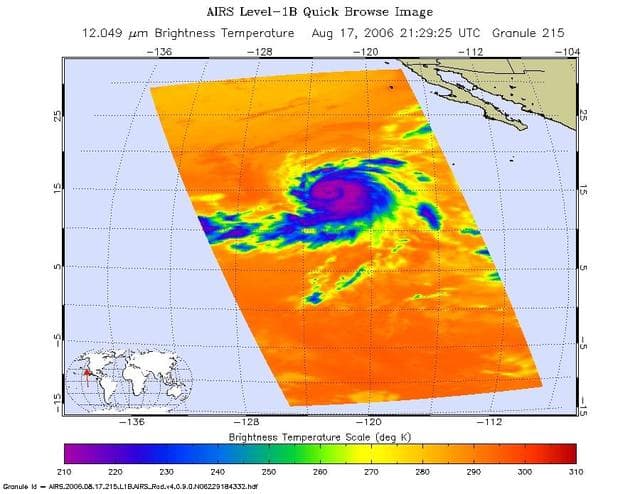
Hurricane Hector in the Eastern Pacific

Hurricane Hector in the Eastern Pacific

Aug 17, 2006