MISR Captures Hurricane Michael's Eye in 3D
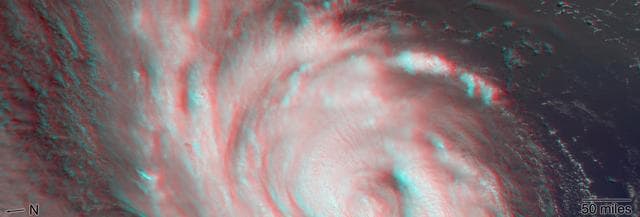
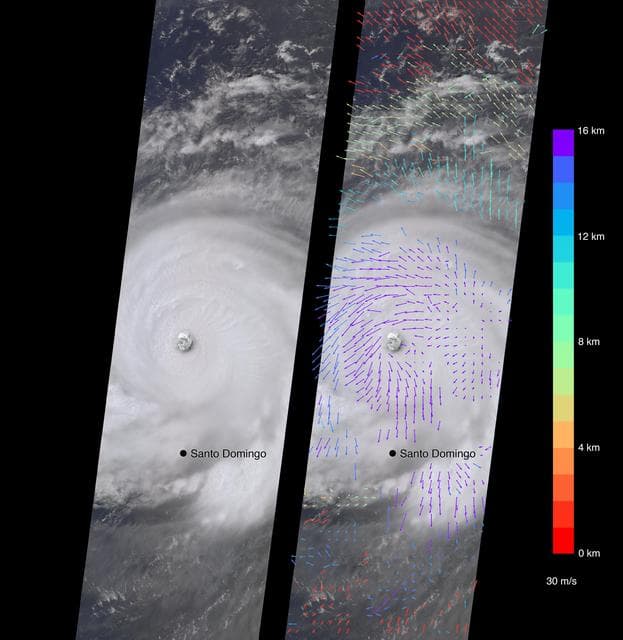
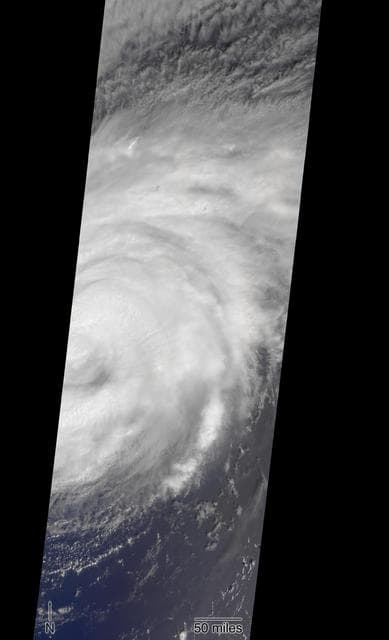
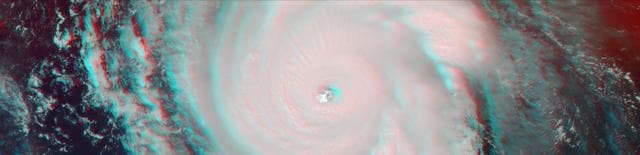
MISR's stereo anaglyph shows a three-dimensional view of Michael and combines two of MISR's nine camera angles. Using 3D red-blue glasses, you can see the 3D effect. Apparent in the 3D stereo anaglyph as well as the height field are a number of bright "clumps." These are groups of strong thunderstorms embedded within the larger circulation of the hurricane. Known as "vortical hot towers" the presence of these features indicates rapid transport of heat energy from the ocean surface into the storm, typically indicative of rapid intensification of the hurricane. In fact, between 11 a.m. and 2 p.m. EDT, while MISR imaged the hurricane, the estimated central pressure dropped 8 hPa and the maximum sustained winds increased about 12 mph (19 kph) and over the next 24 hours Hurricane Michael intensified from a Category 2 to a Category 4 storm. The National Hurricane Center clocked Michael's sustained wind speed at 150 mph (240 kph) just before noon local time on Wednesday. It is expected to bring strong winds, storm surge and heavy rain to much of the southeast. https://photojournal.jpl.nasa.gov/catalog/PIA22748
Usage Rights
Most NASA images are in the public domain and free to use. Credit NASA as the source. Check NASA's media usage guidelines for details. Images featuring identifiable individuals may require additional permissions.
Keywords
Details
NASA ID
PIA22748
Date Created
October 10, 2018
Center
JPL
Media Type
image
Downloads
Download this image in multiple resolutions. All NASA media are free for public use.