RainCube Collects First Storm Data
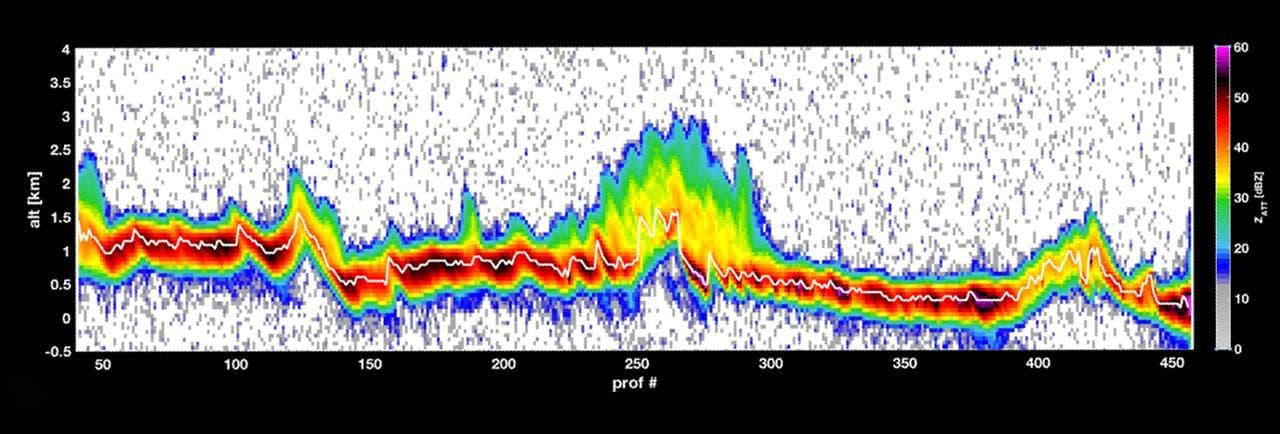
The first data from RainCube, a tiny weather satellite. RainCube is a prototype for a possible fleet of future small satellite missions that can track precipitation from space. RainCube "sees" objects by using radar, much as a bat uses sonar. The satellite's umbrella -- like antenna sends out chirps, or specialized radar signals, that bounce off raindrops, bringing back a picture of what the inside of the storm looks like. This graph shows a storm over the mountains in Mexico in late August 2018, as measured by RainCube's radar. The data shows a vertical snapshot of the storm -- the bright white line shows the ground, while the bright colors around it show the intensity of the rainfall, as well as the more reflective areas of the terrain. Brighter colors, like yellow or red, show areas of higher reflectivity, e.g. heavier rain. https://photojournal.jpl.nasa.gov/catalog/PIA22654
Usage Rights
Most NASA images are in the public domain and free to use. Credit NASA as the source. Check NASA's media usage guidelines for details. Images featuring identifiable individuals may require additional permissions.
Details
NASA ID
PIA22654
Date Created
September 25, 2018
Center
JPL
Media Type
image