Kepler Beyond Planets: Finding Exploding Stars (Type Ia Supernova from a White Dwarf Stealing Matter)
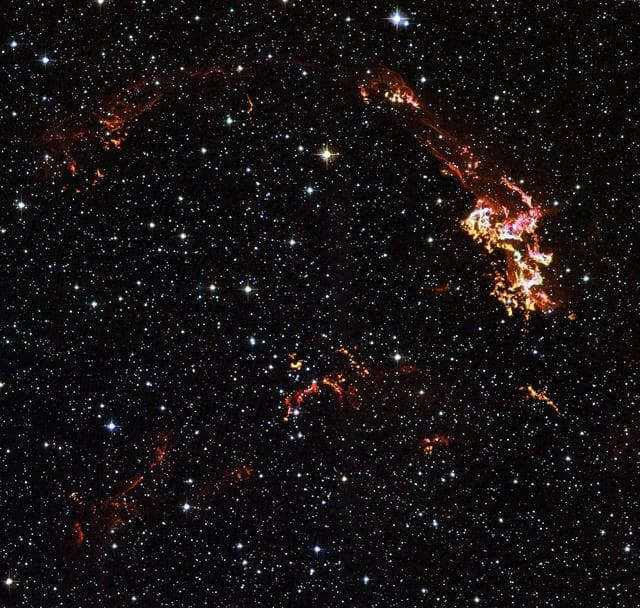
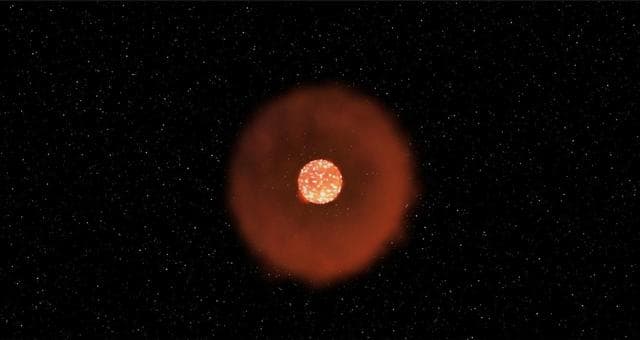
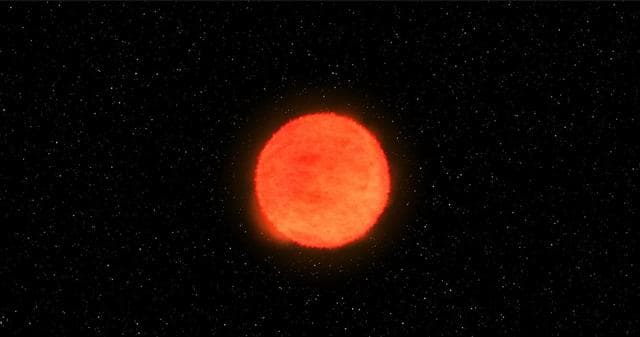
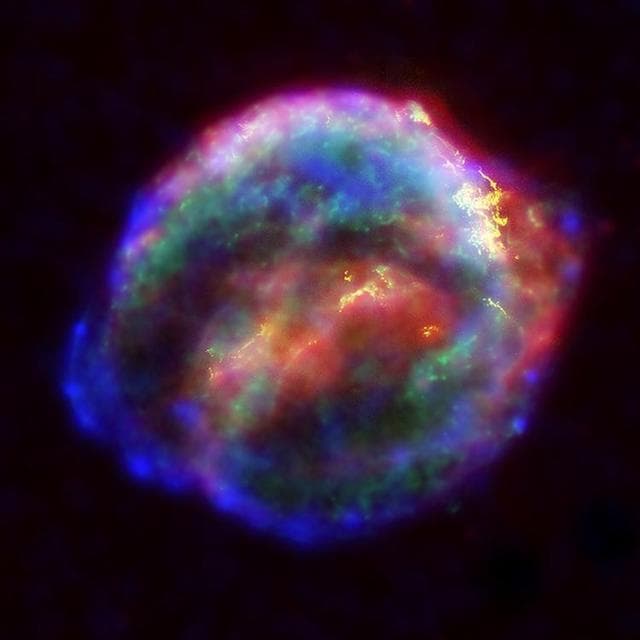
This frame from an animation shows a gigantic star exploding in a "core collapse" supernova. As atoms fuse inside the star, eventually the star can't support its own weight anymore. Gravity makes the star collapse on itself. Core collapse supernovae are called type Ib, Ic, or II depending on the chemical elements present. Stellar explosions forge and distribute materials that make up the world in which we live, and also hold clues to how fast the universe is expanding. By understanding supernovae, scientists can unlock mysteries that are key to what we are made of and the fate of our universe. But to get the full picture, scientists must observe supernovae from a variety of perspectives, especially in the first moments of the explosion. That's really difficult -- there's no telling when or where a supernova might happen next. An animation is available at https://photojournal.jpl.nasa.gov/catalog/PIA22352
Usage Rights
Most NASA images are in the public domain and free to use. Credit NASA as the source. Check NASA's media usage guidelines for details. Images featuring identifiable individuals may require additional permissions.
Details
NASA ID
PIA22352
Date Created
March 26, 2018
Center
JPL
Media Type
image
Downloads
Download this image in multiple resolutions. All NASA media are free for public use.