TRAPPIST-1 Planet Lineup - Updated Feb. 2018
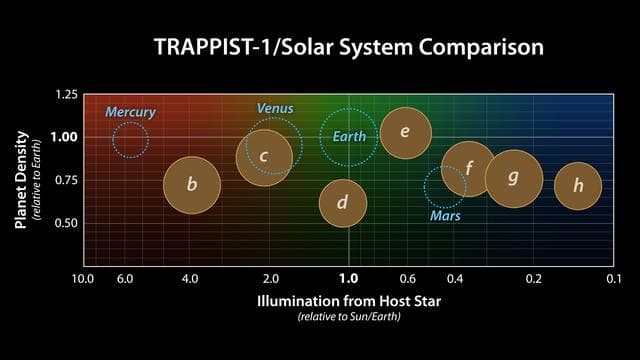
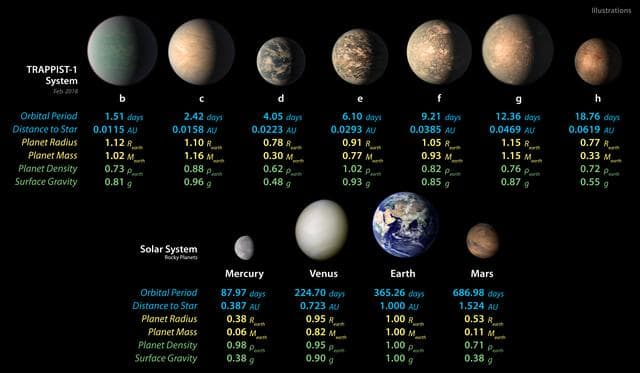
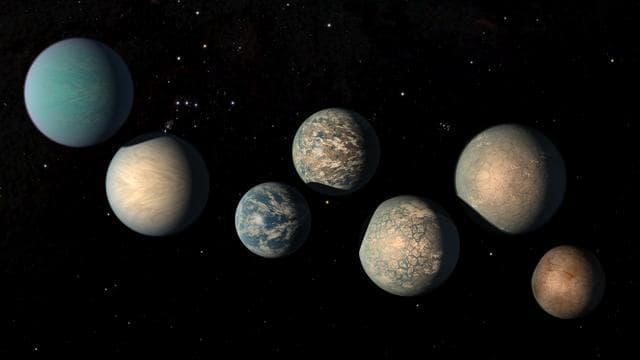
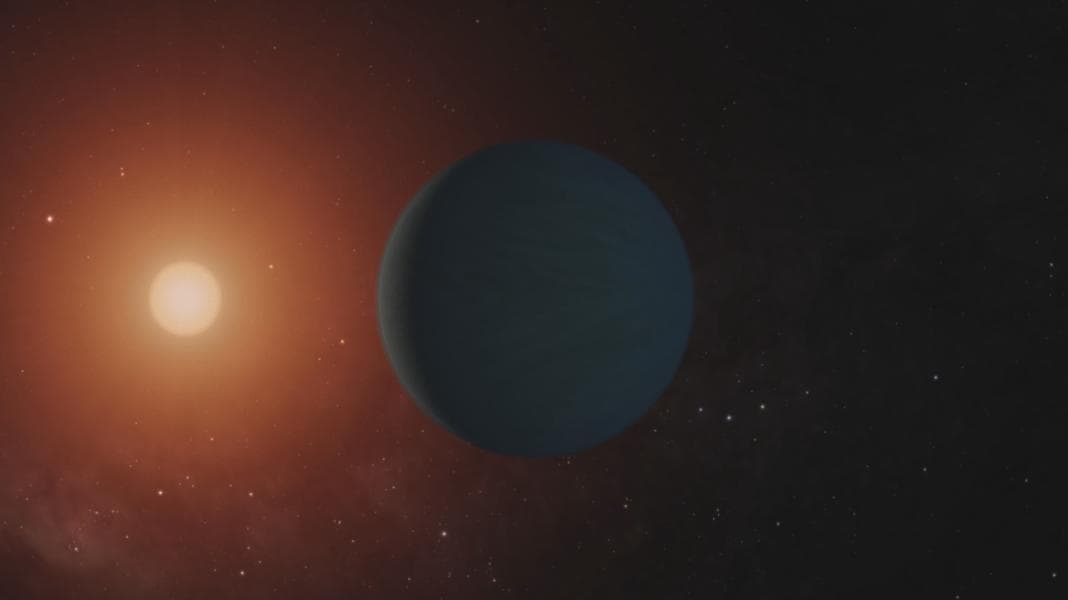
This artist's concept shows what the TRAPPIST-1 planetary system may look like, based on available data about the planets' diameters, masses and distances from the host star, as of February 2018. This image represents an updated version of PIA21422, which was created in 2017. The planets' appearances were re-imagined based on a 2018 study using additional observations from NASA's Spitzer and Kepler space telescopes, in addition to previous data from Spitzer, the ground-based TRAPPIST (TRAnsiting Planets and PlanetesImals Small Telescope) telescope and other ground-based observatories. The system was named for the TRAPPIST telescope. The new analysis concludes that the seven planets of TRAPPIST-1 are all rocky, and some could contain significant amounts of water. TRAPPIST-1 is an ultra-cool dwarf star in the constellation Aquarius, and its planets orbit very close to it. The form that water would take on TRAPPIST-1 planets would depend on the amount of heat they receive from their star, which is a mere 9 percent as massive as our Sun. Planets closest to the star are more likely to host water in the form of atmospheric vapor, while those farther away may have water frozen on their surfaces as ice. TRAPPIST-1e is the rockiest planet of them all, but still is believed to have the potential to host some liquid water. In this illustration, the relative sizes of the planets and their host star, an ultracool dwarf, are all shown to scale. An annotated image is available at https://photojournal.jpl.nasa.gov/catalog/PIA22093
Usage Rights
Most NASA images are in the public domain and free to use. Credit NASA as the source. Check NASA's media usage guidelines for details. Images featuring identifiable individuals may require additional permissions.
Details
NASA ID
PIA22093
Date Created
February 5, 2018
Center
JPL
Media Type
image
Downloads
Download this image in multiple resolutions. All NASA media are free for public use.