Dune Transition in the High Southern Latitudes
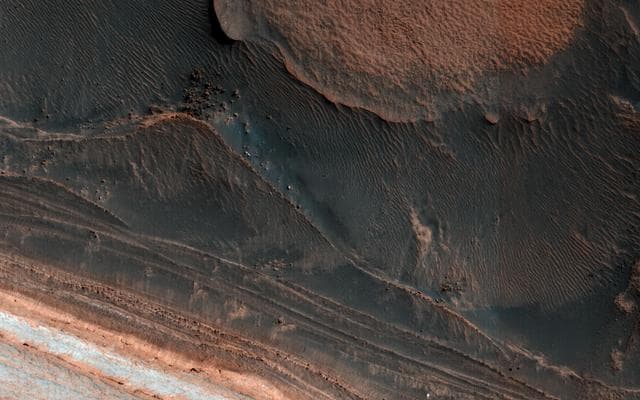
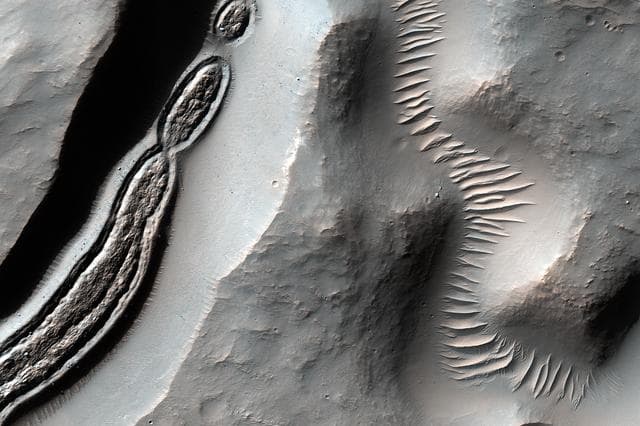
Sand dune populations on Mars can vary widely with respect to morphology, relief, and activity. One of the most striking examples occurs with the many dune fields of the high Southern latitudes. When we venture south of -60 degrees latitude, we see increasing signs of dune degradation, with subdued dune brinks and broad sandy aprons, rather than sharp, dune crests and distinct boundaries. Dunes this far south are also very modest in height, often consisting solely of flat sand sheets. Additionally, global monitoring campaigns are revealing a noticeable lack of changes in these bedform positions, whereas many dunes and ripples to the north are migrating across the surface. This image shows a moderate sized dune field (-72 degrees latitude) that displays most of these morphologic features and a noticeable absence of dune crests. This transition is likely related to polar processes, ground ice, and changes in regional climate relative to the rest of the planet. https://photojournal.jpl.nasa.gov/catalog/PIA21595
Usage Rights
Most NASA images are in the public domain and free to use. Credit NASA as the source. Check NASA's media usage guidelines for details. Images featuring identifiable individuals may require additional permissions.
Details
NASA ID
PIA21595
Date Created
April 19, 2017
Center
JPL
Media Type
image
Downloads
Download this image in multiple resolutions. All NASA media are free for public use.