The Rapid Burster
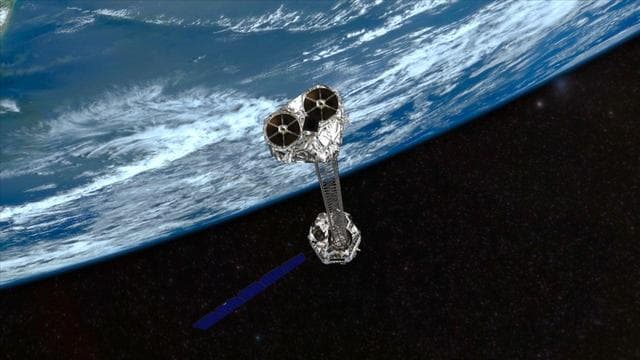
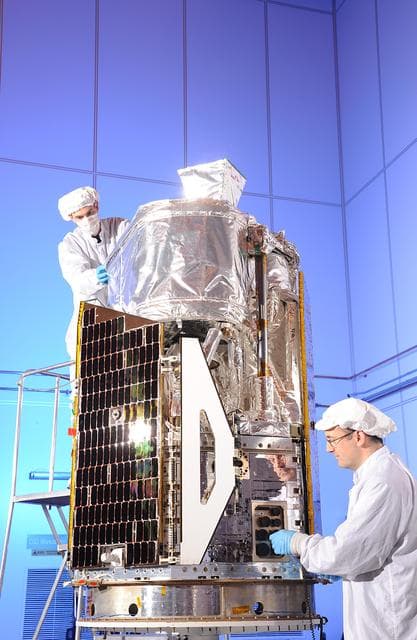
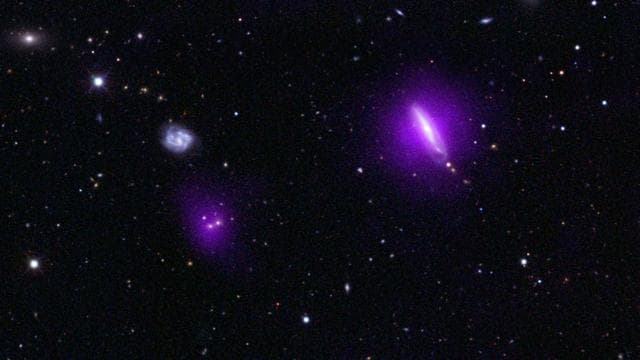
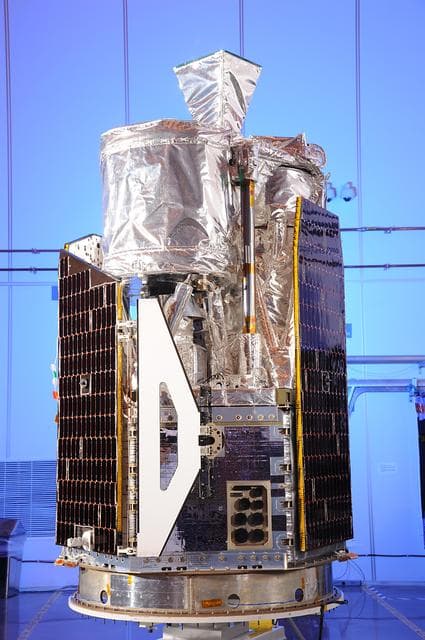
These four images show an artist's impression of gas accreting onto the neutron star in the binary system MXB 1730-335, also known as the "Rapid Burster." In such a binary system, the gravitational pull of the dense neutron star is stripping gas away from its stellar companion (a low-mass star, not shown in these images). The gas forms an accretion disk and spirals towards the neutron star. Observations of the Rapid Burster using three X-ray space telescopes -- NASA's NuSTAR and Swift, and ESA's XMM-Newton -- have revealed what happens around the neutron star before and during a so-called "type-II" burst. These bursts are sudden, erratic and extremely intense releases of X-rays that liberate enormous amounts of energy during periods when very little emission occurs otherwise. Before the burst, the fast-spinning magnetic field of the neutron star keeps the gas flowing from the companion star at bay, preventing it from reaching closer to the neutron star and effectively creating an inner edge at the center of the disk (Figure 1, panel 1). During this phase, only small amounts of gas leak towards the neutron star. However, as the gas continues to flow and accumulate near this edge, it spins faster and faster. http://photojournal.jpl.nasa.gov/catalog/PIA21418
Usage Rights
Most NASA images are in the public domain and free to use. Credit NASA as the source. Check NASA's media usage guidelines for details. Images featuring identifiable individuals may require additional permissions.
Keywords
Details
NASA ID
PIA21418
Date Created
January 31, 2017
Center
JPL
Media Type
image
Downloads
Download this image in multiple resolutions. All NASA media are free for public use.